
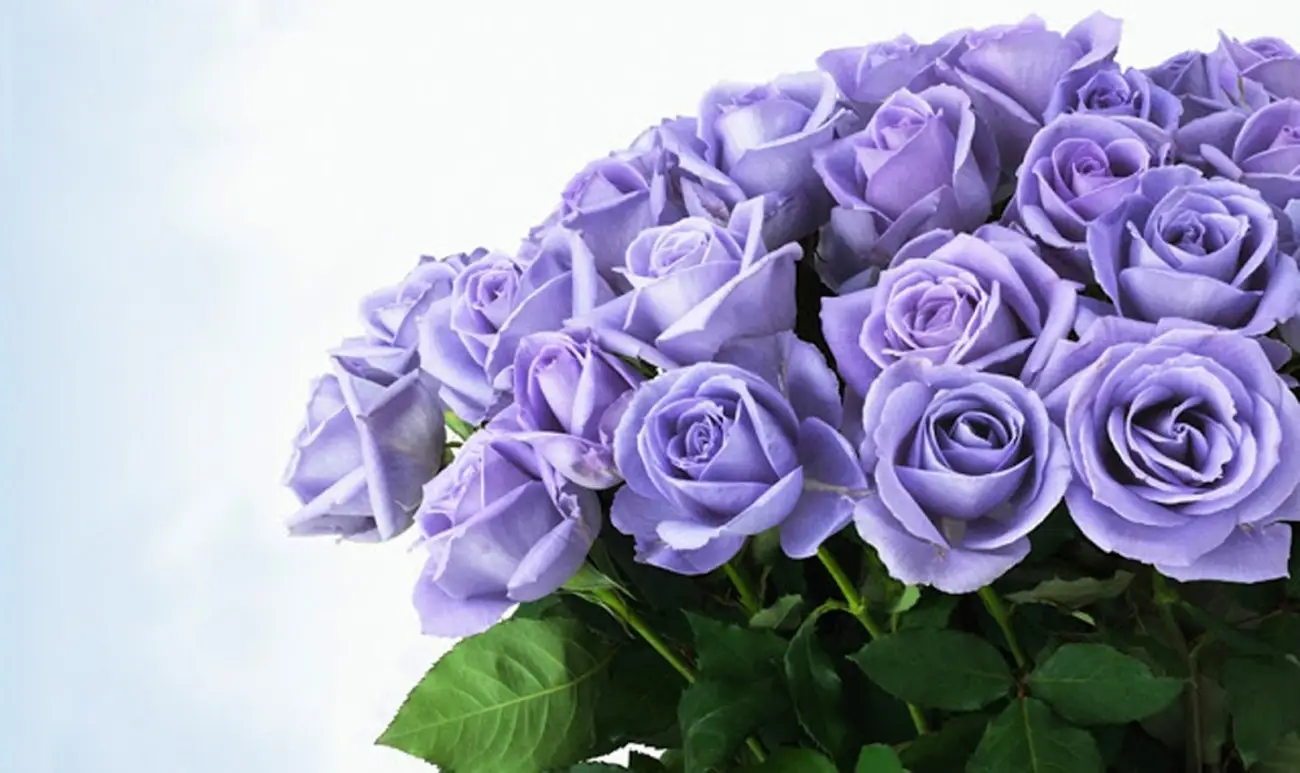
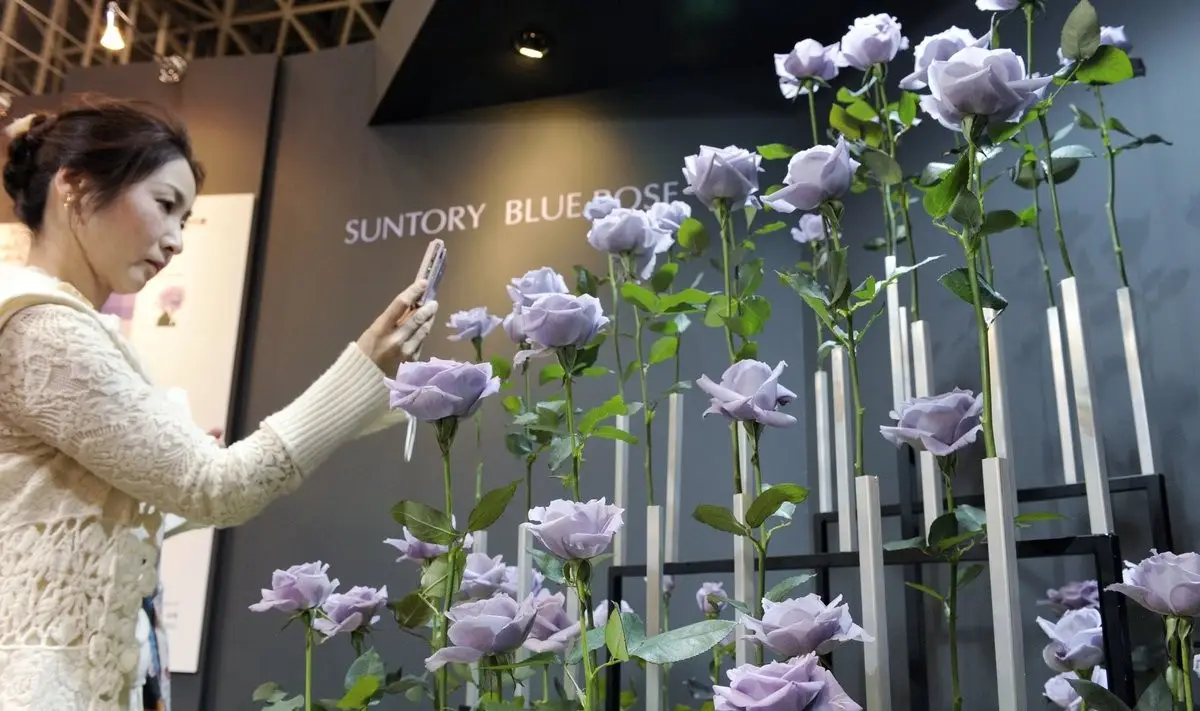
A blue rose exists, but it is not the flat, paint-like blue people often imagine. The best-known example is Suntory Blue Rose Applause, a blue-violet rose developed in Japan after decades of research. Its story begins with a biological limit: cultivated roses do not naturally make delphinidin, the pigment found in many blue flowers.
That limit is why blue roses became a symbol of something unattainable. Breeders had produced roses described as bluish, lavender, or mauve, but conventional crossing could not give rose petals the pigment responsible for a genuine blue hue. Suntory’s work changed that conversation, even if the finished flower still looks more violet-blue than the color of ink.
Contents 9
Why a natural blue rose was so difficult
Flower color depends on the pigments that accumulate in the petals. In roses, familiar red, pink, and orange shades come from different pigment pathways, but the pathway needed to make delphinidin is absent. That is why crossing one rose with another could move colors toward lilac without producing the same pigment found in flowers such as petunias and gentians.
The Japanese project began in 1990. Researchers used biotechnology to make roses accumulate the blue pigment, then spent years selecting plants in which the color change was visible and stable. The development was announced in 2004; after the necessary approval for production and sale, Applause reached the Japanese market in 2009.
The achievement matters because it did not come from adding dye to a cut flower. The rose itself produces and stores delphinidin in its petals. That distinction separates Applause from the blue roses often seen in florists’ displays, which may be white roses colored after cutting.
What color is Suntory Blue Rose Applause?
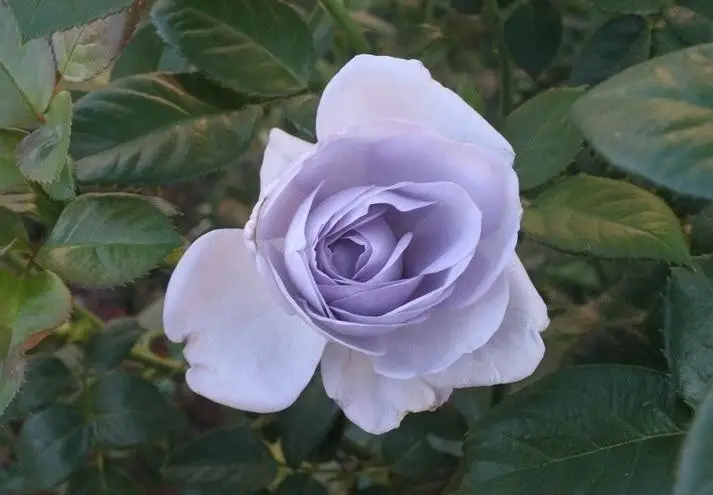
Applause is usually described as blue-violet. Light, the age of the bloom, and the surrounding colors can make it look more lavender or grayish violet. Calling it a perfect primary blue would be misleading, but it is a major step beyond earlier roses marketed as blue simply because their red pigment had been reduced.
Photographs can exaggerate the difference. Phone cameras, filters, white balance, and a dark background may push violet petals toward a saturated blue, so the clearest expectation is a cool, muted blue-violet flower. That nuance is not a flaw in the rose; it is part of what makes the scientific result more interesting than a simple dye effect.
The name also carries a Japanese message. Applause means cheers, and the flower is associated with a dream coming true. If you are choosing a rose for its symbolism, see our guide to the meaning of flowers in Japanese. For the language behind its changing shade, our article on Japanese color words is useful too.
How to tint a white rose blue at home
You cannot turn an ordinary rose into Applause in a vase, but you can create a striking blue flower with food coloring. A freshly cut white rose works best because the added color is easier to see. The colored water travels upward through the stem and reaches the petals; it does not alter the rose’s genes or create a naturally blue pigment.
What you need
- A fresh white rose
- A clean glass or vase
- Warm water
- Liquid blue food coloring
- Sharp scissors or a knife
Steps
- Fill the glass with warm water and mix in a small amount of liquid food coloring. Add more only if the water still looks very pale.
- Trim the bottom of the stem at an angle, preferably while holding it under water. This helps keep the cut end open for uptake.
- Place the rose in the colored water and keep it away from direct heat.
- Check the petals after several hours. A light tint can appear the same day, while a deeper color may take a day or two.
- Move the rose to fresh water once it reaches a color you like.
The result is usually veined, uneven, and more decorative than natural-looking. That is part of the experiment: every stem absorbs water at a slightly different pace. Starting with a white rose, using liquid coloring rather than thick gel, and making a clean diagonal cut all improve the chance of an even result.
Blue rose questions, answered
Are blue roses found naturally?
Not among the cultivated roses used for bouquets. Roses lack the genetic route that lets many other blue flowers make delphinidin, which is why conventional breeding did not solve the problem.
Is Applause completely blue?
No. It is best understood as a blue-violet rose. The presence of delphinidin makes it scientifically unusual, while its visible shade remains softer and more violet than a painted blue.
Will food coloring make a real blue rose?
No. It colors a cut flower through water uptake. It is a simple floral experiment, not a new rose variety, but it is an effective way to see how water moves through a stem.





Community
Comments
0 comments
There are no published comments in this language yet.
Send comment