Nitamago, also known as ramen eggs or ajitsuke tamago, is one of the most iconic and irresistible accompaniments for those who appreciate a good bowl of ramen. That slightly creamy center, wrapped in a firm and seasoned white, transforms any bowl of noodles into a deeper and more flavorful experience. If you have ever tried this marinated egg, you are certainly curious to know how to prepare it at home, right?
In this article, we will dive into the origin of Nitamago, understand its importance in Japanese cuisine, and of course, unveil the traditional recipe for you to impress the next time you prepare ramen. Additionally, we will share valuable tips to achieve the perfect yolk — that middle ground between creamy and firm, so desired by chefs and enthusiasts of Japanese gastronomy.
Origin and meaning of Nitamago
Before we talk about how to make it, it is interesting to understand the meaning and cultural origin of Nitamago. The word “Nitamago” (煮卵) literally translates to “boiled egg,” but within the context of ramen, it takes on a much more special role: that of flavor intensifier.
Its history is closely linked to the development of ramen in Japan. During the 20th century, as regional styles of ramen became popular, chefs began to include various toppings to highlight the character of each dish. Among them, Nitamago quickly gained prominence not only for its appearance but also for its striking texture and flavor.
Interestingly, not all ramen shops follow the same preparation style. Some prefer to marinate the eggs for long hours, while others opt for a brief soak in the marinade, preserving more of the egg’s natural flavor. This diversity creates a sort of personal signature for each chef.
How to achieve the perfect Nitamago
The great challenge in preparing Nitamago lies in the balance between the consistency of the white and the texture of the yolk. Ideally, the white should be firm enough to hold its shape, while the yolk should be slightly creamy but not liquid.
To achieve this result, cooking time is crucial. Generally, the ideal point occurs between 6 to 7 minutes after immersing the egg in boiling water. As soon as the time is up, a thermal shock in cold water prevents further cooking and makes peeling easier.
Have you noticed how Nitamago is perfectly smooth, without those unwanted marks on the white? This impeccable finish comes precisely from the care taken when cooling and peeling. Don’t underestimate this step; it makes all the difference!
Besides cooking, the marinade is another crucial point. The classic combination includes shoyu (soy sauce), mirin (sweet sake), and sometimes a touch of sake or sugar. Each element contributes to creating that characteristic umami flavor, which slowly seeps into the egg during the marinade.
Traditional Nitamago recipe
Now that we have explored the theory, let’s get our hands dirty — or rather, with the eggs! The traditional Nitamago recipe is simple but requires attention to detail. Get ready to transform your ramen dishes with this authentic accompaniment.
Ingredients:
4 large eggs
100 ml of shoyu
100 ml of mirin
100 ml of water
1 teaspoon of sugar
Optional: 1 tablespoon of sake
Preparation method:
Carefully place the eggs in a pot of boiling water. Cook for exactly 6 minutes and 30 seconds for a creamy yolk.
Immediately after cooking, transfer the eggs to a container with cold water and ice. Let cool for 10 minutes.
Meanwhile, prepare the marinade: in a pot, mix the shoyu, mirin, water, and sugar. Heat until the sugar dissolves, but do not let it boil.
After carefully peeling the eggs, place them in a plastic bag or small container, and pour the still warm marinade (not too hot) over them.
Marinate in the refrigerator for at least 4 hours, ideally overnight, for a more intense flavor.
Tip: turn the eggs occasionally if using a container, ensuring that the entire surface is in contact with the marinade.
How to serve Nitamago with style
Although Nitamago is traditionally served over ramen, cut in half to showcase its silky yolk, it can also be an excellent accompaniment to other dishes. Try adding it to a fresh salad, a simple rice dish, or even as a snack with a bit of toasted sesame on top.
Another interesting suggestion is to use it in bentos (Japanese lunch boxes). Its beautiful appearance and striking flavor make it a perfect addition, elevating even the simplest meals.
Have you ever wondered how some chefs achieve that deeper flavor in Nitamago? Many add extra ingredients to the marinade, such as kombu seaweed or dried bonito flakes (katsuobushi), creating an additional layer of umami. It’s worth testing and adjusting according to your palate.
Although today it is an almost mandatory item in ramen, Nitamago has not always been so popular. Its rise accompanies the appreciation of ramen as a gourmet dish, especially since the 1990s, when chefs began to refine each component of the dish, transforming what was once a simple and cheap food into a true delicacy.
Furthermore, in Japanese culture, the aesthetics of the dish are almost as important as the flavor. Therefore, the perfect cut of Nitamago, which reveals that shiny and uniform yolk, is a demonstration of technique and respect for the ingredient.
And we cannot forget an interesting detail: Nitamago is not exclusively Japanese. Variations of marinated eggs appear in various Asian cuisines, such as Chinese lu dan, although with marked differences in flavor and marinating time.
Transform your ramen
Including Nitamago in your homemade ramen is one of those gestures that demonstrate care and attention to detail. It’s not just about adding another ingredient, but enriching the texture, flavor, and presentation of the dish.
Now that you know the history, the recipe, and the curiosities about this classic, how about putting all of this into practice? Cook your own eggs, adjust the marinade to your taste, and discover how Nitamago can transform even the simplest ramen into a true feast.
Understanding quantity expressions in Japanese is essential for those who wish to communicate more naturally and fluently. These expressions function like adverbial phrases and are used to indicate intensity, frequency, or quantity in a sentence. Common examples include words like very, little, many, rarely, among others.
If you are starting to learn Japanese, you might ask yourself: How to use these expressions correctly? Let’s explore the basic rules, practical examples, and some contexts that help reinforce learning.
How to Form Sentences with Quantity Expressions
In Japanese, the word order may seem a bit confusing for those who speak other languages. In the Japanese language, we generally use the structure:
[Noun + Particle + Quantity + Verb]
When quantity expressions are used to modify adjectives, they come before the adjective. Let’s see an example:
とても熱い (Totemo atsui) – Very hot.
This simple logic helps to construct sentences with more precision. Now, let’s get to know some of the most commonly used quantity expressions in the Japanese language.
Main Quantity Expressions
Here are some of the most common expressions and their meanings:
たくさん (takusan) – many, so much
とても (totemo) – very
かなり (kanari) – considerably
ずいぶん (zuibun) – extremely
よく (yoku) – often, frequently
少し (sukoshi) – a little
ちょっと (chotto) – a little (less formal than “sukoshi”)
あまり (amari) – (not) much, (not) so much, rarely (used in the negative)
全然 (zenzen) – not at all (used in the negative)
Examples of Sentences with Quantity Expressions
To illustrate the use of these expressions in everyday life, here are some practical examples:
本をたくさん読みます。
Hon o takusan yomimasu.
I read many books.
とてもおいしいです。
Totemo oishii desu.
It is very delicious.
時間がかなりかかるでしょう。
Jikan ga kanari kakaru deshou.
It will take a considerable amount of time.
日本語を少し話します。
Nihongo o sukoshi hanashimasu.
I speak a little Japanese.
ピアノをちょっと弾くことができます。
Piano o chotto hiku koto ga dekimasu.
I can play a little piano.
あまり違いがありません。
Amari chigai ga arimasen.
There is not much difference.
全然良くなかったです。
Zenzen yokunakatta desu.
It was not good at all.
Note how the quantity expressions vary according to the situation and the verb used. Practice with different combinations to become familiar.
Quantity Expressions Modifying Adjectives
In addition to modifying verbs, these expressions can also intensify adjectives. Here are some examples:
とても暑いです。 (Totemo atsui desu.) – It is very hot.
かなり難しいです。 (Kanari muzukashii desu.) – It is considerably difficult.
ずいぶん高いです。 (Zuibun takai desu.) – It is extremely expensive.
In Japan, moderation is highly valued, so expressions like “sukoshi” and “chotto” are frequently used to soften statements.
Don’t worry if it seems complicated at first; over time, you will get used to it and start using them more naturally. Keep practicing and, whenever possible, listen to dialogues in Japanese to capture the authentic use of these expressions.
If you have ever surfed the internet, you have probably heard someone say “Omae wa mou shindeiru” followed by a loud “NANI?”. This expression went viral in videos, memes, and even musical remixes. But do you know where this phrase came from and what it means? Let’s dive into the origin and context of this cultural phenomenon.
The Meaning of “Omae wa mou shindeiru”
The Japanese expression “Omae wa mou shindeiru” (お前はもう死んでいる) literally means “You are already dead”. The phrase gained popularity thanks to the anime Hokuto no Ken, released in 1983. The protagonist Kenshiro, master of the martial art Hokuto Shinken, uses this expression to declare the imminent death of his opponents after delivering fatal blows.
But why did this phrase become so iconic? Simple: the way Kenshiro pronounces it, with total confidence and coldness, followed by the surprise of the opponent exclaiming “NANI?” (何, which means “What?”). This reaction creates a comedic and impactful contrast, perpetuated as a meme on the internet.
Understanding the Expression
Let’s break down the phrase for better understanding:
お前 (Omae) – You (in a rude and direct way);
もう (Mou) – Already, now, soon;
死んでいる (Shindeiru) – Dead;
The phrase indicates that the opponent’s fate is already sealed, even if they have not yet realized it. Kenshiro usually says this after delivering fatal blows that take a few seconds to take effect, increasing the dramatic tension.
The Origin of the Meme
The meme began to gain popularity in 2017, when videos featuring the phrase “Omae wa mou shindeiru” and the reaction “NANI?” started circulating on social media and YouTube. The expression was already known among anime fans, but its viral explosion occurred with the creation of parodies, remixes, and comedic edits.
Evolution on the Networks
The initial milestone occurred in 2010, with the creation of the page “You Are Already Dead” on the TV Tropes site, explaining the combat technique from the anime. However, it was only in 2017 that the meme gained traction, when hilarious videos mixing the phrase with absurd situations began to be published.
The Anime “Hokuto no Ken”
Hokuto no Ken (北斗の拳), also known as Fist of the North Star, first aired in 1983. Set in a post-apocalyptic world, the anime follows Kenshiro, a warrior who wanders through devastated lands in search of his fiancée Yuria, kidnapped by his rival Shin.
The martial art Hokuto Shinken allows Kenshiro to attack the pressure points of the human body, causing the enemy to explode from the inside out. After delivering the blows, Kenshiro usually says the iconic phrase, while the opponent, unaware that they are already doomed, reacts in shock.
Cultural Impact
The brutal fighting style and muscular appearance of Kenshiro set a standard for action characters of the time. The iconic phrase was so striking that even a Japanese antivirus called VirusKiller, released in 2003, used the expression when eliminating malware.
Animes that Used the Hokuto Shinken Technique
The concept of a fatal blow that takes time to take effect has also inspired other animes:
Battle Angel Alita: The martial art “Panzer Kunst” focuses on delayed strikes, similar to Hokuto Shinken.
Black Bullet: The character “Kisara Tendo” uses a strike that causes the enemy’s death some time after impact.
Dragon Ball: Some characters also use strikes that affect the opponent after a few seconds.
This idea of “delayed death” has become a cliché present in various productions, especially when focusing on supernatural martial arts.
Why Did the Meme Become So Popular?
The formula is simple: the combination of a threatening phrase said with confidence and the exaggerated reaction of shock creates an irresistible comedic effect. Furthermore, the dramatic and exaggerated nature of 80s anime fits well with contemporary internet humor.
The meme also became popular for being easily adaptable: any situation where someone does not realize an imminent danger can be illustrated with “Omae wa mou shindeiru… NANI?”. This allowed for the creation of countless remixed videos and parodies.
When we think of Japanese cuisine, it is almost automatic to imagine someone using chopsticks (箸) to savor a typical dish. However, do the Japanese eat exclusively with these sticks? And do utensils have any place in meals? Let’s explore this curiosity and better understand food practices in Japan.
The Role of Chopsticks in Japanese Cuisine
Chopsticks are a symbol of Japanese gastronomy and have been part of the food culture for thousands of years. They are especially practical for consuming typical foods, such as:
Sushi and sashimi: The shape of chopsticks allows for delicately holding the pieces.
Noodles (like ramen and soba): The technique of slurping the noodles directly from the bowl is facilitated with chopsticks.
Japanese rice: The sticky texture of Japanese rice makes it easier to pick up the grains.
But… what about spoons?
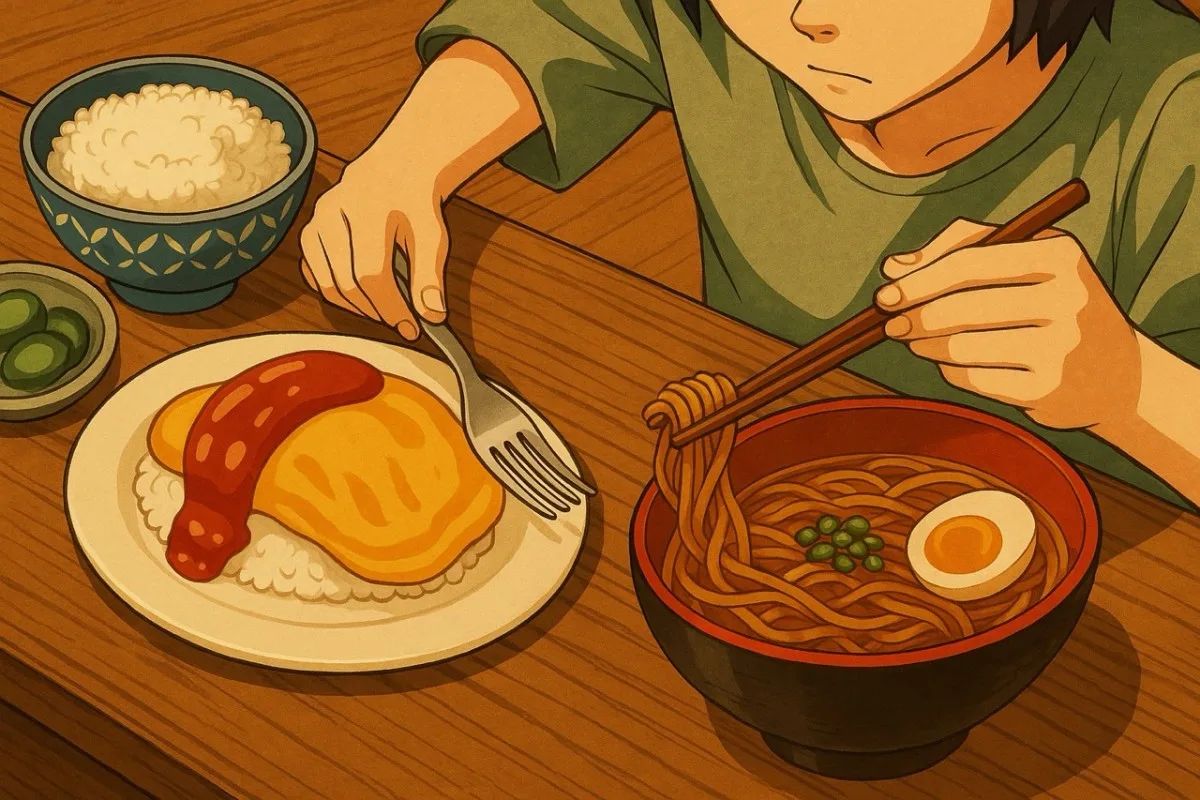
Not everything is limited to chopsticks. Some traditional Japanese dishes come with spoons, especially those that have broth. A classic example is ramen, where the combination of chopsticks for the noodles and a spoon for the broth is common. Soups like miso-shiru (miso soup) are also drunk directly from the bowl, but in some cases, a spoon is offered to make it easier.
Additionally, thicker dishes, such as Japanese curry (kare raisu), are traditionally consumed with a spoon, as the rice and sauce form a dense and creamy mixture.
When Utensils Are the Best Option
Although chopsticks prevail, the Japanese do not hesitate to use utensils when necessary, especially when the meal is not part of traditional Japanese cuisine.
Examples of utensil use in Japan:
Western dishes: Italian, French, and fast food restaurants provide forks, knives, and spoons. Eating spaghetti or hamburger with chopsticks would be unfeasible.
Fried rice (chahan): Often served with a spoon, as the rice is looser and does not stick like Japanese white rice.
Desserts: Cakes, puddings, and sweets usually come with a spoon or fork, depending on the texture.
Dishes that involve cutting: Although Japanese cuisine favors foods already cut into small portions, Westernized dishes, like steak, are consumed with a knife and fork.
Adaptation Over Time
With globalization and the increasing popularity of international dishes in Japan, the use of utensils is becoming more present in daily life. Restaurants serving Italian, Chinese, or fast food now place utensils directly on the table or offer them alongside chopsticks.
In modern Japanese homes, it is common to have both chopsticks and utensils available, choosing according to the dish served. This cultural flexibility reflects the Japanese ability to adapt without giving up their traditions.
Why Are Chopsticks Still Preferred?
Even with the popularization of utensils, chopsticks continue to be preferred for many typical dishes for several reasons:
Habit since childhood: The majority of Japanese grow up learning to use chopsticks, so the movement becomes automatic.
Practicality with certain foods: Noodles, sushi, and sticky rice are significantly easier to eat with chopsticks.
Etiquette and tradition: In traditional meals, especially on formal occasions, chopsticks are considered more appropriate.
Silence at the table: Chopsticks do not make noise when touching ceramic bowls, unlike forks and knives.
A Matter of Practicality and Context
In Japan, the choice between chopsticks and utensils depends greatly on the context and the dish served. The idea that the Japanese eat only with chopsticks is a myth. In fact, the blend of tradition and modernity allows both to coexist harmoniously in daily life.
If you visit Japan, do not be surprised to see people using chopsticks for ramen and a spoon for the broth. After all, it doesn’t matter the tool, the important thing is to enjoy the food!
When we talk about traditional Japanese architecture, roofs are one of the most striking expressions. Known as yane [屋根], these roofs blend functionality, aesthetics, and symbolism. From ancient times to the present day, they shape the urban and rural landscape of Japan, adapting to the climate and cultural values.
Even in antiquity, the roof was more than protection against rain; it showed social status and expressed spiritual values. From contact with China and Korea, new techniques enriched local architecture, giving rise to the complex styles we know today.
The Historical Evolution of Japanese Roofs
The first roofs in Japan were simple thatched coverings, focused on withstanding the humid and rainy climate. With the introduction of Buddhism during the Asuka period, more sophisticated techniques emerged, such as the use of ceramic tiles.
During the Heian era (794–1185), roofs gained greater aesthetic importance, and in the Edo period (1603–1868), elegant curves became a trademark. Each era added new technical and symbolic elements.
Traditional Structures: Main Types of Roofs
Japanese roofs have specific variations, each with distinct functions and meanings. Let’s get straight to the point with the most iconic models.
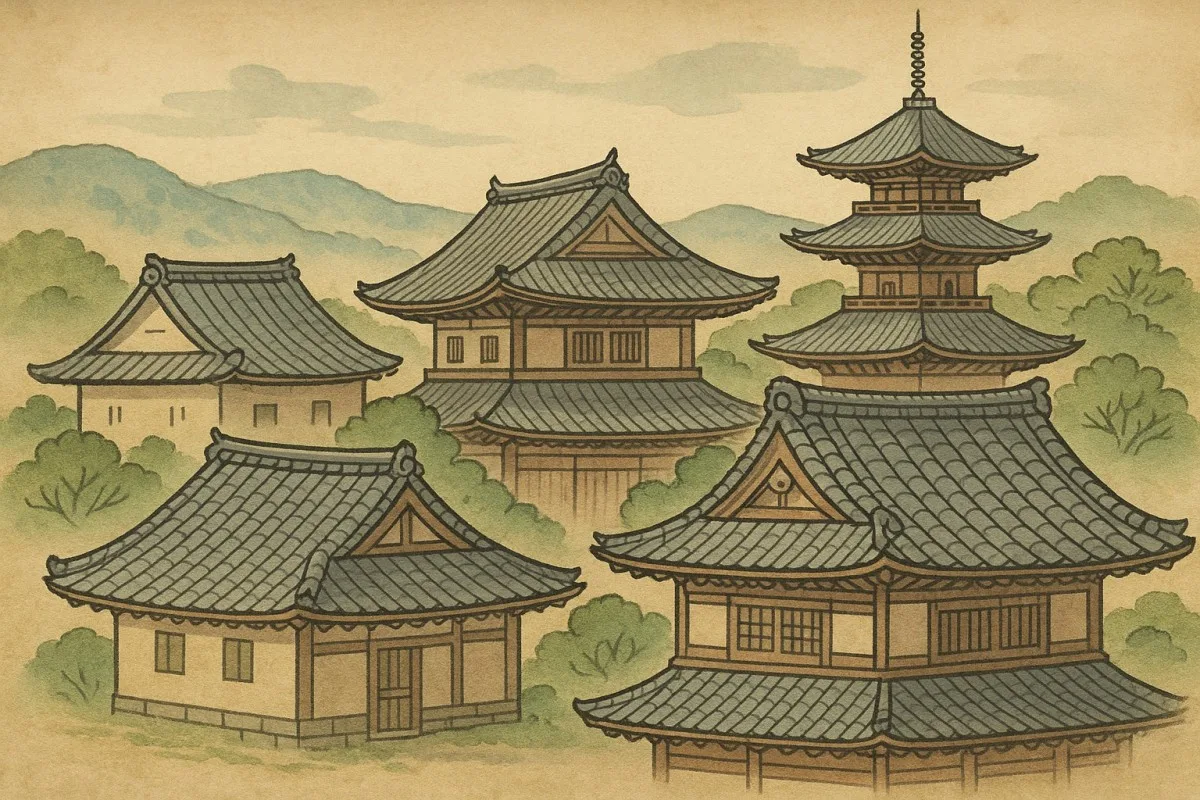
Irimoya-zukuri [入母屋造]
The irimoya-zukuri [入母屋造] combines two slopes at the top and gentler inclines on the lower sides. It is widely used in temples and shrines, creating an imposing yet balanced look. The junction of the lines conveys stability and harmony.
This style became popular mainly after the Kamakura period, when religious architecture began to require larger structures to accommodate more worshippers.
Yosemune-zukuri [寄棟造]
The yosemune-zukuri [寄棟造] features four inclined slopes, forming a gentle pyramid. It is ideal for protecting against heavy rains and strong winds, which is why it is common in rural houses and buildings in mountainous regions.
The simplicity of the structure does not hinder elegance: the extensive eaves create shadows that cool the interior spaces during summer.
Kirizuma-zukuri [切妻造]
The kirizuma-zukuri [切妻造] is the classic gable roof, with a triangular shape. This model is highly functional and easy to build, being found in both traditional houses and in warehouses and shops.
Despite its simplicity, it can gain decorative ornaments at the ends, such as small sculptures or stylized tiles.
Hogyo-zukuri [宝形造]
The hogyo-zukuri [宝形造] is characteristic of Buddhist pagodas. It features a pyramidal roof with four or more inclined sides that meet at the top in a single vertex.
This vertical shape accentuates the spiritual connection with the sky, while its layered structure creates a sense of ascension and elevation.
Shikoro-buki [しころ葺き]
The shikoro-buki [しころ葺き] stands out for the use of multiple layers of overlapping tiles, creating a wavy appearance. This style was very common in castles and fortresses, as it offered greater resistance against fires and attacks.
In addition to protection, the robust and ornate look conveyed authority and power.
The Symbolism of Japanese Roofs
Roofs are not just physical barriers against the weather, but also express spiritual beliefs. Elements such as the onigawara [鬼瓦] — a tile decorated with the face of a demon — are common, serving as protection against evil spirits.
In temples and shrines, the roof represents the transition between the earthly world and the divine. Therefore, they are designed with gentle curves and eaves that seem to float, creating an atmosphere of lightness.
Materials and Craft Techniques
Traditional Japanese roofs are primarily constructed with wood and ceramic tiles. Japanese cypress (hinoki [檜]) is the most valued material, due to its durability and resistance to insects.
The tiles kawara [瓦] are molded from clay and fired, ensuring waterproofing and fire resistance. Often, these tiles are fitted without nails, using only weight and precise positioning — a technique known as yane-bari [屋根張り].
The artisans specialized in building these structures are the miyadaiku [宮大工], masters of traditional carpentry, who pass their skills down from generation to generation.
The Influence on Modern Architecture
Despite urbanization, many elements of traditional roofs remain present in contemporary architecture. Modern architects reinterpret lines and materials, creating designs that balance tradition and innovation.
Examples include museums and cultural centers, such as the Nezu Museum, which uses extended eaves and sloped roofs to integrate with nature, respecting the principles of Japanese design.
This legacy also inspires international works, where architects incorporate Japanese aesthetics into residential and public projects.
Final Considerations
Japanese roofs are much more than utilitarian structures. Each type carries centuries of history, tradition, and spiritual significance. When observing a temple, a castle, or a country house in Japan, notice how the roof shapes not only the aesthetics but also the philosophy and way of life of the country.
Want to deepen your appreciation for Japanese culture? The next time you travel or study architecture, pay attention to the details of the roofs: they tell silent but powerful stories.
Hoikoro is an irresistible combination of pork, cabbage, and miso, cooked and sautéed until achieving a perfect balance between juiciness and intensity. This dish, which originated from the fusion of Chinese techniques and Japanese ingredients, has found a place on family tables and in Izakaya, being one of the most beloved options for those seeking a quick, tasty, and nutritious meal.
Have you ever wondered why dishes like Hoikoro can be so comforting and, at the same time, so striking? The answer lies in the combination of umami from the miso with the tender texture of the pork and the light crunch of the cabbage. Throughout this article, we will explore the origin of Hoi Ko Ro, its evolution in Japanese cuisine, and, of course, teach you how to prepare this delight at home with valuable tips to ensure the best result.
The origin of Hoikoro: from China to Japan
The Hoikoro, written as 回鍋肉 in Japanese kanji, is an adaptation of the Chinese dish huí guō ròu, which literally means “pork returned to the pan.” Its origin dates back to Sichuan province in China, famous for its robust flavors, marked spiciness, and abundant use of fermented ingredients.
When this dish arrived in Japan, it was softened to suit the local palate. While the original Chinese version uses fermented bean paste (doubanjiang) and spicy peppers, the Japanese adopted miso — fermented soybean paste — as the base of the sauce. This adjustment brought a sweeter and less spicy touch, while still preserving the essence of the dish: tender pork, fresh cabbage, and a thick sauce that envelops all the ingredients.
Today, Hoikoro is one of the most popular dishes in teishoku restaurants (set meals) and also a recurring choice in home-cooked meals, thanks to its practicality and the affordable cost of ingredients.
Essential ingredients and possible substitutions
The preparation of Hoikoro requires few ingredients, but each plays a fundamental role in building flavors and textures. Pork is the main element — traditionally, belly or loin is used, due to the balance between fat and lean meat.
The cabbage serves as a crunchy and slightly sweet counterpoint, in addition to absorbing the miso-based sauce very well. Interestingly, despite seeming simple, choosing a good cabbage can make a difference: opt for the firmer and fresher ones, which do not wilt easily during cooking.
The other ingredients are equally important:
Miso: adds depth and umami to the dish. Red miso (akamiso) is the most recommended, but white miso (shiromiso) can be used for a milder version.
Shoyu: enhances the saltiness and complements the flavor of the miso.
Sake and mirin: add a touch of sweetness and help balance the dish.
Sesame oil: for finishing, offering a characteristic aroma.
If you want to vary, you can add bell peppers or thinly sliced carrots, but traditional Hoikoro focuses on the essentials: meat, cabbage, and sauce.
How to prepare Hoikoro: practical step-by-step
Preparing Hoikoro is simpler than it seems, and the result is a dish worthy of the best restaurants. Here is a straightforward guide for you to try at home.
Ingredients:
300g of sliced pork belly or loin
½ medium cabbage cut into large pieces
1 tablespoon of miso
1 tablespoon of shoyu
1 tablespoon of sake
1 tablespoon of mirin
1 clove of minced garlic
1 teaspoon of sesame oil
Vegetable oil for frying
Preparation method:
Mix the miso, shoyu, sake, and mirin in a bowl, forming a thick and aromatic sauce.
Heat some vegetable oil in a large skillet or wok. Quickly fry the slices of pork until golden.
Add the minced garlic and sauté for another minute, being careful not to burn it.
Add the cabbage and sauté until slightly wilted, preserving some crunch.
Add the sauce, mixing well to coat all the ingredients. Let it cook for 2 to 3 minutes, until the sauce thickens and caramelizes slightly.
Finish with the sesame oil and serve immediately, accompanied by white rice.
This preparation values speed and intense heat, keeping the cabbage vibrant and the meat tender. You will notice how the aroma of miso with sesame oil transforms the kitchen into a festival of irresistible smells!
Tips for an even tastier Hoikoro
Want to elevate the flavor of your Hoikoro even more? Here are some practical tips:
Use quality meat, with good marbling of fat, which translates to more flavor and juiciness.
Do not overcook the cabbage; the secret is to maintain a firm texture that contrasts with the tenderness of the meat.
Try adding a pinch of brown sugar to the sauce if you want a slight sweet touch.
For those who enjoy spiciness, a small amount of doubanjiang or black pepper can be incorporated without altering the dish’s character.
Have you noticed how these small choices can completely change the result? This is part of the charm of Hoikoro: simple in essence, but full of possibilities. There is even a Ramen that bears the name Hoikoro, taking advantage of the ingredients and characteristics of the original dish.
Why has Hoikoro become so popular?
In addition to its striking flavor, Hoikoro has gained popularity for being practical, nutritious, and easily adaptable to different dietary preferences. Its combination of protein, vegetables, and robust sauce makes it a complete meal, perfect for everyday life.
Another factor contributing to its popularity is its strong presence on Japanese restaurant menus around the world. Many establishments offer Hoikoro as part of combos, accompanied by rice and miso soup, winning over those looking for a hearty and comforting meal.
So, how about preparing a Hoikoro today? In addition to enjoying a delicious dish, you will also experience a bit of the history of the culinary fusion between China and Japan, which resulted in this recipe full of personality.
Traveling through Japan is a rich and diverse experience, and choosing the right accommodation can make all the difference. Among the various options available, business hotels stand out for offering comfort, practicality, and affordable prices. These hotel chains are mainly designed for business travelers, but they have also become the favorite choice for tourists looking for efficiency and good value for money.
Have you ever thought about staying in a place that combines strategic location, essential services, and competitive rates? That is exactly what business hotel chains provide. In this article, we will present the best chains in this segment in Japan, highlighting what each one offers and why they deserve a place on your travel itinerary.
The concept of business hotel in Japan
Before getting to know the best chains, it is important to understand the concept of business hotel in Japan. Contrary to what the name suggests, these hotels are not exclusive to those traveling for work. They emerged in the post-war period, accompanying the Japanese economic boom and the need for functional accommodations for professionals in transit between cities.
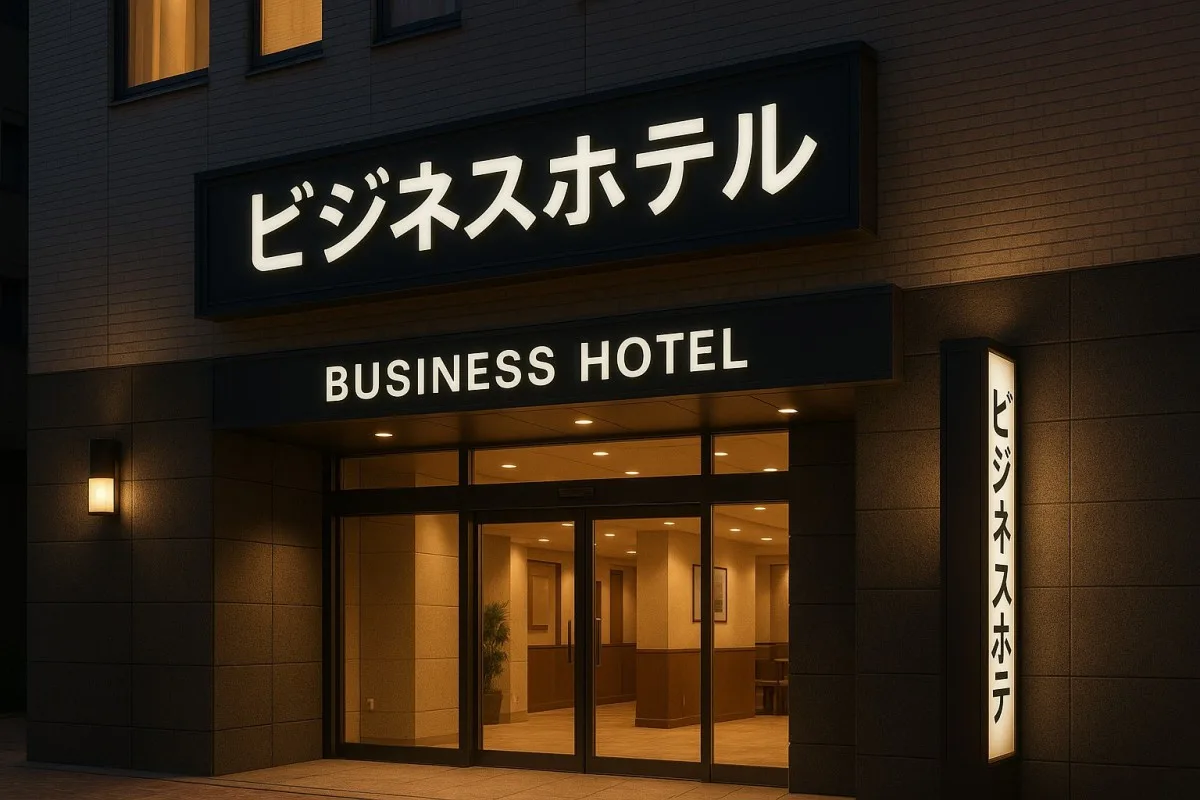
These hotels are characterized by compact but well-equipped rooms; quick check-in and check-out; and prime locations — usually close to train stations or commercial areas. Additionally, many offer amenities such as pajamas, toothbrushes, tea, and even public baths (sentō).
Although the facilities are simple, the impeccable cleanliness and courteous service make the stay very comfortable. You will notice that this type of accommodation perfectly meets the needs of both those who need a functional place to sleep and those who want to explore the city while saving money.
APA Hotels
The APA Hotels chain is known for combining practicality with a touch of modernity. Founded in 1984, it has aggressively expanded throughout Japan and is famous for its extremely compact rooms, but with cutting-edge technology: large televisions, fast Wi-Fi, and even automated check-in systems.
The design is a bit bolder and more modern than in other traditional business hotel chains, with dark colors, strategic lighting, and details that create a more sophisticated atmosphere, even in small spaces.
Another differentiator is the presence of public baths (onsen or sentō) in many units, allowing guests to relax after a tiring day. Additionally, APA offers a robust loyalty program, ideal for frequent travelers in Japan.
Interestingly, many foreign tourists end up choosing APA for its vast presence in tourist cities like Tokyo, Osaka, and Kyoto. I personally liked APA Hotel a lot, which is why I recommend it as the best option.
Toyoko Inn
One of the most well-known and beloved chains in Japan is Toyoko Inn. Founded in 1986, it quickly expanded throughout the country, as well as having units in South Korea and other Asian countries.
The great differentiator of Toyoko Inn is standardization: those staying at one unit know exactly what to expect — clean, comfortable rooms with all the basic items and a simple but efficient free breakfast. The style is minimalist but functional, ideal for those who want a good rest after a busy day.
Another strong point is the location. Practically all units are less than five minutes on foot from major train stations, which greatly facilitates mobility, especially for those using the Japan Rail Pass.
If you are looking for predictability, efficiency, and a fair price, Toyoko Inn is a sure choice.
Dormy Inn
If you want a little more comfort, but still within the proposal of a business hotel, Dormy Inn is unbeatable. This chain became famous for offering a differentiator that delights tourists and business travelers: the onsen — the traditional Japanese hot springs — inside the hotel.
The rooms follow the compact standard, but the bathing areas are spacious, with hot baths and saunas, creating a relaxing experience without leaving the hotel. Additionally, many units offer a free “yozakura soba” — a light bowl of ramen served at night for guests.
Another strong point is the breakfast, which goes far beyond the standard of business hotels: it often includes typical regional dishes and Western options.
Dormy Inn manages to balance efficiency and coziness, being one of the favorites among those who want more than just a place to sleep.
Richmond Hotels
The Richmond Hotels chain bets on a slightly higher standard within the universe of business hotels. The rooms are slightly larger, with comfortable beds and discreet but elegant decor.
Another differentiator is the service: Richmond invests in cordial service, with staff always ready to help — even in English, which can be a relief for those who do not master Japanese.
The breakfast, although paid in most units, is well served, with both Western and Japanese options. Additionally, many units have automatic washers and dryers, which greatly facilitates the life of those on long trips.
For those looking for comfort, quality, and a good price, but want a little more space than traditional business hotels offer, Richmond is an excellent choice.
Hotel LiveMax
The Hotel LiveMax chain is one of the most underrated — but also one of the most efficient. With over 140 units spread across Japan, it mainly serves travelers looking for affordable and well-located accommodations, often outside major tourist centers.
The rooms follow the compact standard but include microwaves and minibars in almost all units, which is great for those who want to save money by making quick meals in the room. Another differentiator is that some LiveMax hotels offer long-term accommodation plans, ideal for those who are relocating or on extended business trips.
Despite the functional focus, the chain invests in continuous modernization and usually offers good prices, especially if the reservation is made in advance directly through the official website.
Other highlights
In addition to the mentioned chains, there are other very good options for business hotels in Japan:
Via Inn: part of the JR West group, offers great integration with train lines, making it ideal for those traveling through Kansai.
Super Hotel: known for its commitment to sustainability and well-being. Many units offer personalized pillow options and hot spring baths.
Sotetsu Fresa Inn: a modern chain focused on practicality, technology, and clean design, ideal for those wanting quick and efficient comfort.
Each of these chains has specific characteristics, but they all follow the standard of functionality and affordable cost that defines the concept of business hotel.
Why choose a business hotel on your trip to Japan?
Besides the evident cost-benefit relationship, business hotels are an intelligent way to experience Japan practically and authentically. They represent an important aspect of Japanese culture: the appreciation of efficiency, cleanliness, and hospitality, even in small spaces.
Whether for a business trip or to explore the wonders of Japan as a tourist, these chains offer exactly what you need: comfort, security, strategic location, and often small treats that make the stay even more enjoyable.
And you, have you ever stayed in a Japanese business hotel? What was your experience? If not, how about considering one of them on your next trip? I bet you will be surprised!
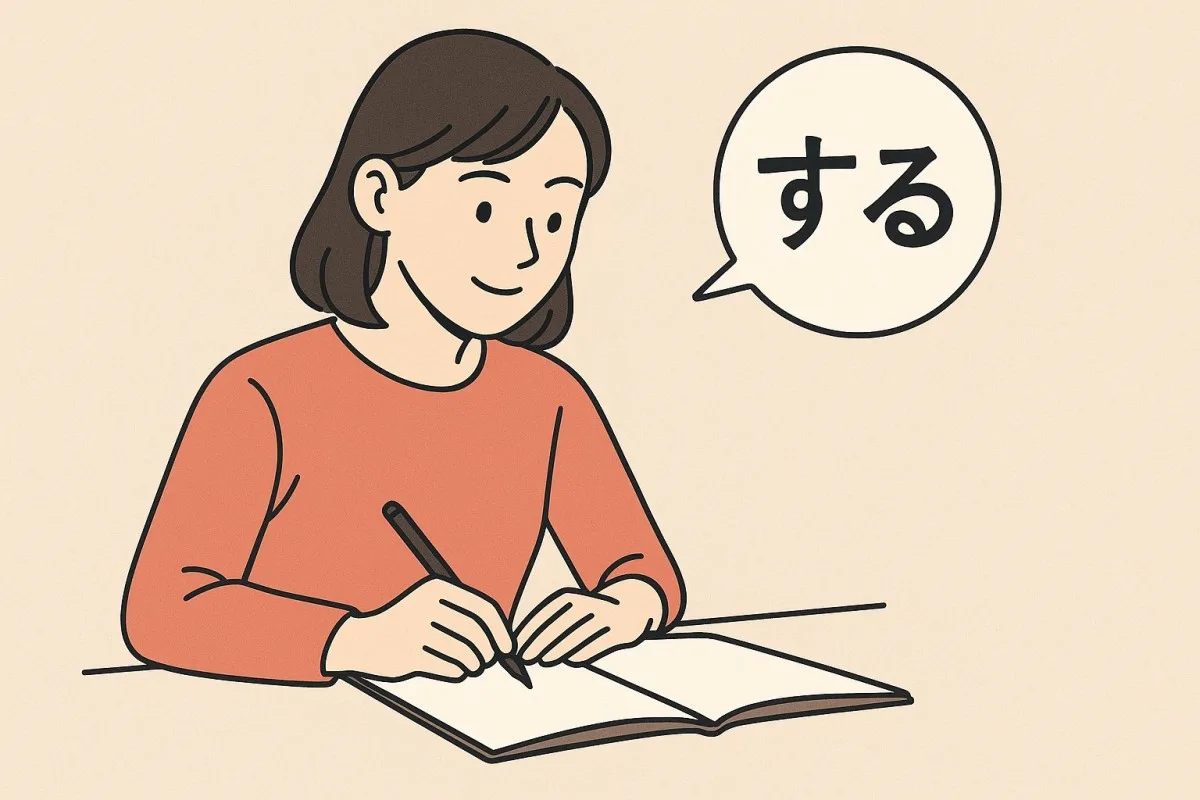
The verb suru (する) is one of the columns of the Japanese language. Behind the simple translation of “to do,” it hides a multiplicity of uses that range from everyday actions to complex constructions of formal language. Those who master suru can navigate more clearly through conversations, texts, and Japanese cultural expressions.
This guide brings 58 fundamental conjugations, separated by usage groups. Each conjugation is accompanied by clear explanations and practical sentences so that you can internalize and apply them with confidence.
So, are you ready to transform your understanding of Japanese?
Affirmative and Negative Forms — Present and Past
These are the essential forms for talking about simple actions in the present or past, affirming or denying.
する
The dictionary form. Used in neutral sentences, titles, combinations with nouns. The starting point for all others.
毎日運動する。
Mainichi undō suru.
I exercise every day.
しない
Negative in the present (informal). Used to indicate that something is not done or will not be done. Very common in everyday conversations.
今日は何もしない。
Kyō wa nani mo shinai.
Today I will not do anything.
します
Polite form of する. Ideal for professional contexts, customer service, or any respectful interaction.
あとで電話します。
Ato de denwa shimasu.
I will call later.
しません
Polite negative. You will use it in situations where denying an action needs to maintain a polite tone, such as in emails or stores.
魚は食べませんし、料理もしません。
Sakana wa tabemasen shi, ryōri mo shimasen.
I do not eat fish and I also do not cook.
した
Informal past. Indicates that the action was done. Quick, direct, and casual.
昨日、掃除した。
Kinō, sōji shita.
I cleaned yesterday.
しなかった
Informal negative past. Perfect for reporting that something was not done. Very used in everyday life.
週末に宿題をしなかった。
Shūmatsu ni shukudai o shinakatta.
On the weekend, I did not do the homework.
しました
Polite version of した. Used when reporting something that was done in a more respectful tone.
先月、大きな決断をしました。
Sengetsu, ōkina ketsudan o shimashita.
Last month, I made a big decision.
しませんでした
Formal negative past form. You say that you did not perform an action and still sound polite.
昨日は運動をしませんでした。
Kinō wa undō o shimasen deshita.
Yesterday, I did not exercise.
Te Form and Derivatives
The て form serves as a base to connect sentences, create requests, instructions, and many compound constructions.
して
て form of する. Used to link actions (“do this and…”), or to use with auxiliaries like いる (to be), ください (please), しまう (to end up doing), みる (to try to do), among others.
部屋を片付けて、勉強して。
Heya o katazukete, benkyō shite.
Clean the room and study.
しないで
Negative form of て. Used to instruct someone to not do something before another action, or to deny an instruction.
心配しないでください。
Shinpai shinai de kudasai.
Please, do not worry.
Willingness, Intention, and Desire
These forms indicate willingness, plans, and desires, both of the speaker and of others.
したい
Expresses personal desire to do something. Very used in informal contexts to indicate willingness.
日本に行って、旅行したい。
Nihon ni itte, ryokō shitai.
I want to go to Japan and travel.
したくない
Negative form of desire. Used to say that you do not want to do something.
今日は外出したくない。
Kyō wa gaishutsu shitakunai.
Today I do not want to go out.
したかった
Past form of desire. When you wanted to do something, but the time has passed.
実はずっとそれをしたかった。
Jitsu wa zutto sore o shitakatta.
Actually, I always wanted to do that.
したくなかった
Negative past form of desire. When you did not want to do something, but need to report it.
本当は行きたくなかったし、何もしたくなかった。
Hontō wa ikitakunakatta shi, nanimo shitakunakatta.
I really did not want to go, nor do anything.
したがる
Used to indicate that another person seems to want to do something, describing perceived willingness of others. The desire is perceived through actions or attitudes, not directly stated.
子供は一人でやりたがる。
Kodomo wa hitori de yaritagaru.
The child wants to do it alone.
したがらない
Negative of したがる. Indicates that the other person shows not wanting to do something.
彼は全然話したがらない。
Kare wa zenzen hanashitagarana i.
He does not want to talk at all.
Causative and Permissive
These forms show situations in which someone is induced, forced, or allowed to do something.
させる
Causative form. You make someone do or allow someone to do. Can be used in a tone of authority or permission.
先生が生徒に挨拶をさせる。
Sensei ga seito ni aisatsu o saseru.
The teacher makes the students greet.
させない
Negative of the causative. Indicates that you do not allow or do not force someone to perform an action.
彼は私に説明させない。
Kare wa watashi ni setsumei sasenai.
He does not let me explain.
させた
Causative in the past. Shows that someone was induced to do something previously.
母が私を料理させた。
Haha ga watashi o ryōri saseta.
My mother made me cook.
させなかった
Negative of the causative in the past. You prevented someone from performing an action.
彼女は彼を行かせなかった。
Kanojo wa kare o ikasenakatta.
She did not let him go.
Prohibitions and Direct Orders
These forms are used to give orders, prohibit, or directly instruct someone. Some are harsh, others more polite.
しろ
Direct and informal order. Can sound authoritative, common among men or in military/anime contexts.
黙ってしろ!
Damatte shiro!
Shut up and do it!
するな
Negative imperative form. Means: “Do not do that!”. Can be harsh.
それをするな!
Sore o suru na!
Do not do that!
やれ
Another imperative. It is an alternative form, commonly used with verbs like やる (to do), which replaces する in some contexts.
早くやれ!
Hayaku yare!
Do it quickly!
やるな
Imperative negative of やる. Also means “Do not do!”, but with a rougher tone.
ふざけるな、やるな!
Fuzakeru na, yaru na!
Stop joking, do not do that!
Expressions of Intention, Plans, and Expectations
These forms show planning, intention, or something expected to happen.
しよう
Informal volitional form. Used to say “I will do” or “let’s do”. It is a way to suggest or motivate oneself.
明日は早く起きて勉強しよう。
Ashita wa hayaku okite benkyō shiyō.
Tomorrow I will wake up early and study.
しましょう
Formal volitional. Used for polite invitations, meetings, or respectful proposals.
一緒に手伝いましょうか?
Issho ni tetsudaimashō ka?
Shall we help together?
するつもり
Indicates firm intention. It is like saying “I intend to do.”
来週からダイエットするつもりです。
Raishū kara daietto suru tsumori desu.
I intend to start a diet next week.
Others’ Desires and Requests
These forms allow you to express what you want someone to do, or what someone shows they want to do. This is where respect, empathy, and reading the other come in.
してほしい
Expresses that you wish for another person to do something. Very common in interpersonal relationships and used carefully not to sound bossy.
もっと早く返事してほしい。
Motto hayaku henji shite hoshii.
I wish you would respond faster.
してほしくない
Negative form. Used to say that you would prefer the person not to do a certain action. Ideal for conveying limits delicately.
そんなこと言ってほしくない。
Sonna koto itte hoshikunai.
I would prefer you not to say that.
Involuntary Action or Regret
These constructions indicate that something was done unintentionally, was inevitable, or had an undesired consequence.
してしまう
Means “end up doing” or “do unintentionally.” It is a useful form to report slips or actions that got out of control.
寝坊してしまった。
Nebō shite shimatta.
I ended up oversleeping.
しちゃう
Informal and contracted version of してしまう. Very used in everyday speech and among young people.
またスマホ見ながら寝落ちしちゃう。
Mata sumaho mi nagara neochi shichau.
I will end up falling asleep again while looking at my phone.
しちゃった
Informal past of しちゃう. Equivalent to “I ended up doing…”.
間違えて送信しちゃった。
Machigaete sōshin shichatta.
I ended up sending it by mistake.
しちゃいました
Polite past form. Good for when you want to admit a mistake or something inevitable with respect.
These forms are not recommended for formal contexts. They appear in animes, movies, or conversations among close people with rude language.
しゃがる
A vulgar form of “to do” with a disdainful or aggressive tone. Can sound offensive depending on the context.
また変なことしゃがるなよ。
Mata hen na koto shagaru na yo.
Here he goes again doing something silly.
しゃがった
Past of the previous form. Carries the same emotional weight or rudeness as the base version.
あいつ昨日も騒ぎしゃがったよ。
Aitsu kinō mo sawagi shagatta yo.
That guy caused a scene again yesterday.
Expressions of Prohibition and Permission
Here come structures that indicate what is or is not allowed to do. Very common in rules, warnings, recommendations, and social interactions with limits.
してもいい
Indicates permission: “you can do.” Used to give authorization or confirm if something is acceptable.
ここに座ってもいいですか?
Koko ni suwatte mo ii desu ka?
Can I sit here?
しなくてはいけない
Obliges to do something: “must do.” Used with a sense of duty.
早く準備しなくてはいけない。
Hayaku junbi shinakute wa ikenai.
I need to prepare quickly.
してはいけない
Prohibition: “you cannot do.” Common phrase in school rules, manuals, and social norms.
試験中はスマホを使ってはいけない。
Shikenchū wa sumaho o tsukatte wa ikenai.
You cannot use your phone during the exam.
しなければならない
More formal version of しなくてはいけない. Expresses inevitable or normative obligation.
この書類は提出しなければならない。
Kono shorui wa teishutsu shinakereba naranai.
This document must be submitted.
してはならない
More rigid and formal. Used in legal, educational, or institutional contexts.
公共の場で大声で話してはならない。
Kōkyō no ba de ōgoe de hanashite wa naranai.
You should not speak loudly in public places.
Expressions of Planning and Expectation
These forms are used to convey planned intention or opinion about what is right.
するつもり
Shows intention: “I intend to do.” Used for defined plans, but still future.
するべき
Means “should do.” Points to something morally or logically correct.
約束は守るべきだと思います。
Yakusoku wa mamoru beki da to omoimasu.
I think promises should be kept.
するべきだった
Expresses regret: “should have done.” A reflection on something that was not done in the past.
If you’ve ever walked through the bustling streets of Tokyo or Osaka, you’ve probably encountered eye-catching facades, filled with neon lights and unmistakable electronic sounds. It is there that one of Japan’s most peculiar and intriguing pastimes resides: pachinko. But is it just a game of chance, or is there something more behind these metal balls and flashing machines?
In this article, we will explore the universe of pachinko in depth — its origin, functioning, social and economic impact, as well as some curiosities that make this activity unique in the world. So, are you ready to finally understand what pachinko is and why it fascinates so many people?
What is the Origin of Pachinko?
Few people imagine, but pachinko was inspired by Western games. In the early 20th century, mechanical toys called “Corinth Game” were quite popular in Europe and the United States. They operated with balls that, when launched, traveled random paths until reaching targets with different scores.
In Japan, these toys arrived around the 1920s and soon caught the interest of local entrepreneurs. The Japanese adaptation began in Nagoya, where the concept evolved into a more robust and vertical machine, which began to be used not only for fun but also as a form of adult entertainment.
By the 1940s and 1950s, with the post-war period and the need for economic reconstruction, pachinko spread rapidly throughout the country, becoming a cheap, accessible, and addictive pastime. Since then, it has continued to grow, becoming part of the daily life of millions of Japanese people.
After all, what is pachinko?
For those who have never seen it, the functioning of pachinko may seem confusing, but the logic is relatively simple. Imagine a vertical arcade machine, filled with metal nails and with a colorful screen in the center. The player inserts dozens, or even hundreds, of small steel balls and, by pulling a lever, launches these balls into the machine.
The objective? To make some of these balls fall into specific areas called “gates” or targets. By hitting these strategic points, the player activates mechanisms that can release even more balls or unlock bonus modes — often displayed on digital screens with vibrant animations.
And what are these balls for? They are the “currency” of the game. The more balls the player accumulates, the greater the possibility of exchanging them for prizes, which range from simple items like candies or lighters to higher-value items.
But be careful: due to legal restrictions in Japan, the balls cannot be exchanged directly for money within the establishment. The solution? A curious and legally accepted system, where the player exchanges the balls for a symbolic prize, which can then be sold at a separate store, often located right next to the pachinko parlor.
How to play pachinko in practice
Many people look at the machines, hear that deafening noise, and think: “I have no idea how to start.” Don’t worry, playing pachinko is easier than it seems. Here’s a straightforward step-by-step:
Buy the balls: At the entrance of the parlor, exchange yen for a set of metal balls.
Choose your machine: It can be one with an anime theme, samurais, or pop idols. There are options for all tastes.
Pull the lever: By pulling, you control the force with which you launch the balls. Too weak, they fall straight down. Too strong, they may escape the course.
Hit the “gates”: Your goal is to make the balls enter these strategic holes. Did you hit? You can win more balls or activate bonus animations.
Exchange the balls: Finished playing? Take the accumulated balls and exchange them for prizes. Want cash? Just go to the exchange store, often discreetly located next to the parlor.
Tip: each machine has its personality. Don’t get discouraged if, on your first attempts, you lose all the balls. It’s part of the fun.
Pachinko: fun, addiction, and economy
Pachinko occupies a paradoxical space in Japanese society: while it is considered a family-friendly and accessible pastime, it also raises heated discussions about addiction and mental health.
It is estimated that there are about 10,000 pachinko parlors spread across Japan, generating an astronomical amount annually — more than the combined global revenues of Las Vegas and Macau casinos! This impressive figure shows how pachinko is not just a game, but a true industry that employs thousands of people and drives entire sectors of the economy.
However, pachinko addiction is a sensitive topic. As the game is based on variable rewards, many players end up spending more than they would like, in a relentless pursuit of that perfect sequence of winning balls. Therefore, awareness campaigns about responsible gaming have been gaining strength in recent years, with warnings inside the parlors themselves and the offer of help for those facing addiction problems.
Why does pachinko fascinate so much?
To understand the fascination, just step into any pachinko parlor: strobe lights, electronic music, animated videos, and that characteristic sound of metallic clinking. Everything is designed to stimulate the senses, creating an environment that mixes excitement and relaxation.
But that’s not all. Pachinko is an escape valve for many Japanese workers, who after long hours seek a moment of distraction. In addition, the potential to win prizes creates that irresistible suspense.
Another factor? The aesthetics of the machines. Many are true works of art, with digital panels, 3D effects, and famous characters. It is not uncommon to find themed machines from series and animes like Evangelion, One Piece, or Ultraman.
The controversial side of pachinko
Of course, not everything is rosy. Pachinko generates over 200 billion dollars a year — more than Las Vegas and Macau combined! — and with that size, comes criticism.
The main problem is addiction. The repetitive nature and the constant promise of reward cause many people to develop dependency. The Japanese government, aware of this, has implemented awareness campaigns and legal limits, but the topic remains sensitive.
Additionally, there is a discussion about who really controls the pachinko parlors. Many are run by Korean entrepreneurs residing in Japan, and there are theories about some establishments’ links to illicit organizations, although this is a controversial topic surrounded by myths.
The future of pachinko: crisis or reinvention?
Despite its historical success, pachinko is undergoing a moment of transformation. The younger generation is increasingly less interested in the game, preferring digital entertainments like video games and smartphone apps.
In response, the industry is heavily investing in innovation: machines with ultra-realistic graphics, augmented reality, integration with loyalty apps, and even online pachinko options.
But will it be enough? No one knows for sure. What is undeniable is that, even in crisis, pachinko remains one of the most authentic and fascinating cultural expressions of modern Japan.
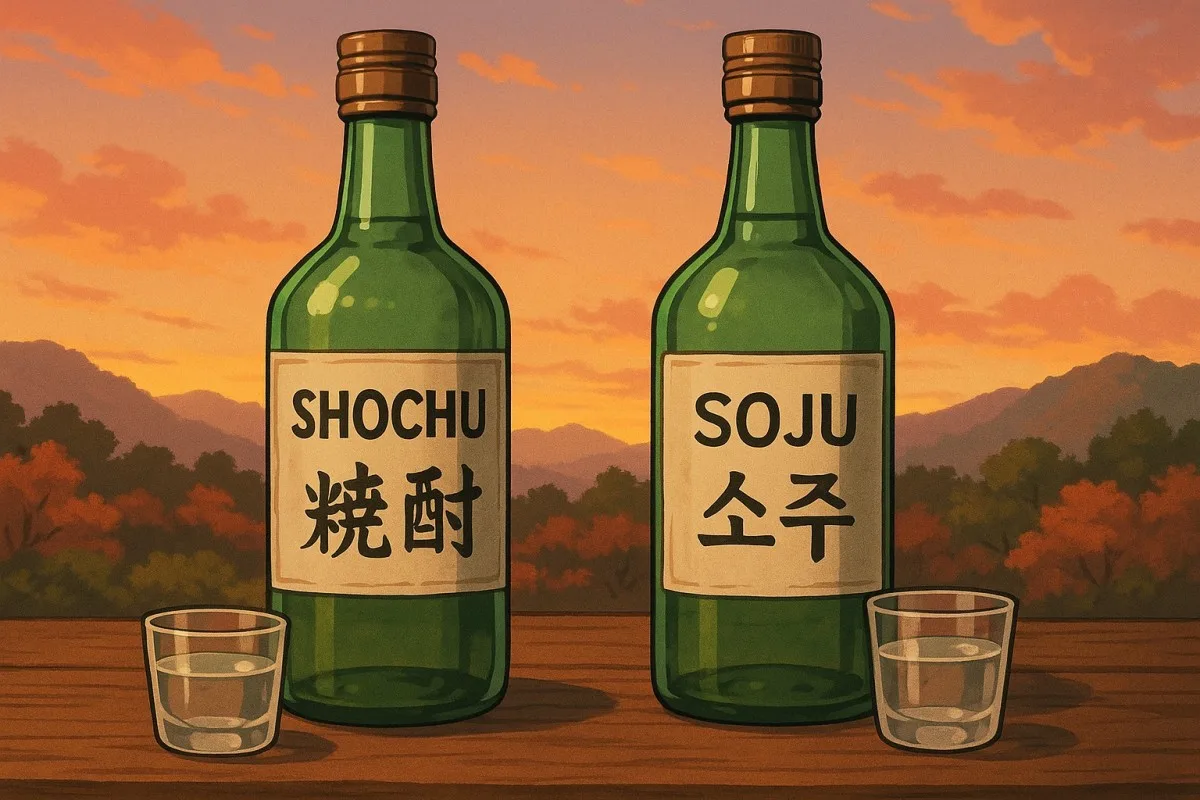
Who has never come across those green soju bottles and, shortly after, with another one of shochu and wondered: is it all the same thing? Don’t worry, you are not alone in this confusion. The names are similar, the cultures intertwine, but the truth is that soju and shochu are two distinct distilled beverages, each carrying centuries of tradition and personality.
In this article, we will break down the main differences between them — from their origins to the right way to enjoy them. And, who knows, by the end you might even feel inspired to try both, each in its own style.
How did they originate? The past that shaped each drink
First of all, it is important to understand: soju and shochu were born out of different needs, in different places, even though they are geographically close.
The soju is a symbol of Korea, with roots dating back to the 13th century, when distillation techniques arrived on the peninsula brought by Mongol invaders. They, in turn, had learned the process from the Persians. Interesting, right? From hand to hand, from culture to culture, soju ended up establishing itself as a typically Korean drink, which over the centuries became popular, eventually transforming into that classic companion for Korean barbecues and dinners.
On the other hand, the shochu was born in the south of Japan, on the island of Kyushu, around the 16th century, according to historical records found in inscriptions left by local carpenters — a true time capsule! The influence came from trade routes with China and, mainly, from the Ryukyu Islands (now Okinawa), where distillation was already mastered.
The curious thing is to notice that, while soju expanded and underwent a process of massive industrialization, shochu maintained a more artisanal touch, more connected to the terroir and local ingredients. Two very different paths, don’t you think?
Differences in Production
It may seem like just a technical detail, but the way each drink is produced completely changes the final result — and your palate will notice this right from the first sip.
The soju most consumed today — that of the green bottles — is made, most of the time, with distilled alcohol from potatoes, barley, rice, or even tapioca. But be careful: this alcohol is often neutral, distilled several times, and then diluted in water, with the addition of sweeteners and flavorings. This explains why it is so light and sweet. It’s no wonder it glides easily down the throat and is a must-have at Korean gatherings. The alcohol content? Around 12% to 20%, much less aggressive than other distilled beverages.
The shochu, on the other hand, preserves a more artisanal character. The so-called honkaku shochu (or “authentic”) is distilled only once, precisely to maintain the flavors and aromas of the main ingredient. And here lies the charm: it can be made from sweet potatoes (imo), barley (mugi), rice (kome), and even buckwheat (soba). The alcohol content is a bit higher, usually between 20% and 30%, but the flavor… ah, the flavor is another story: complex, earthy, with nuances that change according to the raw material.
There is also the korui shochu, which goes through multiple distillations and is closer to industrial soju, but purists tend to prefer the honkaku.
How is it drunk? Rituals and ways to enjoy
Perhaps this is the most fun part: the way each culture has incorporated these drinks into daily life, creating rituals and very particular ways of consumption.
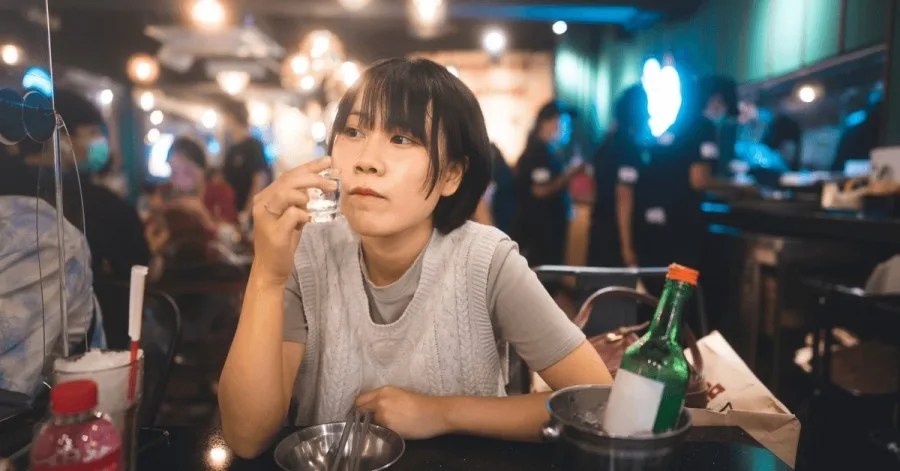
In Korea, soju is practically synonymous with socialization. At a typical dinner, it is served in small glasses, and there is a whole etiquette: one should never pour their own glass and, when receiving, it is good manners to turn your face to the side and hold the glass with both hands. Have you seen this in any K-drama? Probably, yes! And the famous “soju bomb,” a mix of soju with beer, is another classic on Korean tables.
Meanwhile, in Japan, shochu is usually enjoyed with a bit more calm. It can be served neat, on the rocks, diluted in hot water (oyuwari) or cold (mizuwari). The choice depends on the weather, the occasion, and, of course, the type of shochu. In winter, an oyuwari warms the soul; in summer, with ice, it is refreshing. Additionally, specialized bars offer shochus aged for years, some stored in ceramic jars that impart even more complex notes.
Curious how the same distilled drink can have such different uses and meanings, right?
Cultural Differences
More than just a glass in hand, both soju and shochu carry a huge cultural weight that is worth knowing.
In Korea, soju has become almost a pop icon. Its presence is ubiquitous: it’s in supermarkets, at dinners, in K-dramas, in songs. There’s hardly anyone who passes through Korea without, at least once, toasting with soju. In fact, brands like Chamisul and Good Day have gained cult status.
In Japan, shochu is more discreet internationally, but deeply valued internally. In regions like Kagoshima and Miyazaki, it is not just a drink: it is heritage. There is even a “Sweet Potato Shochu Day,” celebrated on November 1st, when distilleries open their doors and the city breathes this tradition.
An interesting detail: many Japanese choose shochu because they consider it a healthier choice. It has fewer purines and residual sugars, which helps to avoid that brutal hangover that other drinks can cause. Convenient, right?
Soju and Shochu? Which one to choose?
There is no definitive answer. It all depends on what you are looking for.
Want a light, social drink that goes well with a night of laughter and friends? Soju will be your choice.
Prefer a drink with more complexity, a variety of ingredients, and a rich artisanal tradition? Shochu is for you.
In doubt… why not try both? Do a tasting: serve the soju chilled, with Korean snacks; then, heat up some shochu and enjoy slowly, as the Japanese do. I guarantee it will be quite an experience!
Mono no Aware is one of the deepest and most refined expressions of Japanese culture. Its literal translation would be something like “the sensitivity to things” or “a delicate melancholy in the face of transience.” However, trying to explain this concept solely through Western words is like trying to capture the breeze with your hands: impossible. Its essence transcends simplistic definitions, profoundly influencing literature, the arts, and the everyday perception of the Japanese.
In the early verses of classics like “Genji Monogatari” by Murasaki Shikibu, this feeling is already perceptible: a gentle sadness that acknowledges the inevitable passage of time. This melancholy does not bring despair, but a calm and reflective acceptance. Perhaps you have already experienced this feeling without knowing how to name it: when seeing leaves slowly falling in autumn or feeling the imminent end of a happy moment.
Origin and meaning of Mono no Aware
The term mono no aware emerged during the Heian period (794–1185), a time marked by the cultural richness of the Japanese aristocracy. However, it was the scholar Motoori Norinaga, in the 18th century, who systematized and clarified the concept by analyzing the work “Genji Monogatari.” For him, the true literary value lay in the ability to awaken this awareness of transience.
The connection with Buddhist philosophy is also fundamental, especially with the concept of impermanence (mujo). Recognizing that all things are transient is at the heart of Buddhism, and this has significantly shaped Japanese thought and aesthetics.
Etymological Meaning
Etymologically, the term “mono no aware” (物の哀れ) is composed of three fundamental elements. The first, mono (物), literally means “thing” or “object,” but in the philosophical and aesthetic Japanese context, it refers to all things in the world, tangible or intangible. The second element, the particle no (の), functions as a possessive, equivalent to “of” or “from” in various languages, establishing a relationship of belonging. Finally, aware (哀れ) derives from an archaic term that originally expressed a spontaneous cry of emotion, whether of admiration, sadness, or deep emotion.
Over time, aware has gained a connotation more associated with delicate sadness and emotional sensitivity, especially related to the perception of the impermanence of things. Thus, etymologically, “mono no aware” literally means “the emotion for things” or “the sensitivity to things”, conveying the idea of an emotional state in the face of the transience of life and the ephemeral beauty of the world.
Mono no Aware in the arts and everyday life
This perception of the ephemeral is present in traditional Japanese arts, cinema, and daily practices. It is not about seeking sadness, but about deeply appreciating the beauty that exists precisely in the fleetingness of moments. The cherry blossom (sakura) perfectly exemplifies this concept: it blooms exuberantly only to disappear shortly thereafter.
In literature, mono no aware is often an invisible character. Works like “Genji Monogatari” and the classic poems of waka and haiku are permeated by this feeling. The writer Yasunari Kawabata, Nobel laureate, deeply explored this sensitivity in books like “Snow Country.”
In cinema, Yasujirō Ozu is an exemplary figure. Films like “Tokyo Story” depict simple, delicately emotional stories, where the narrative does not require grand dramatizations. The viewer naturally perceives the passage of time and its silent transformations. Even anime and manga, such as “Your Name” and “5 Centimeters per Second,” by director Makoto Shinkai, incorporate this sensitivity into their narratives.
Practical and everyday expressions
In everyday Japanese life, hanami, the ritual of contemplating cherry blossoms, clearly symbolizes mono no aware. Gathering under the trees is not just a celebration but also a meditative reminder of the transience of life.
The raku ceramic art, ikebana floral arrangements, and sumi-e paintings also highlight this concept. In them, the white space and simplicity hold as much value as the visible forms. In traditional Japanese architecture, the use of perishable materials like wood and paper reinforces the appreciation of the transient and the natural wear.
Difference in relation to other concepts
Although it resembles nostalgia, mono no aware clearly differentiates itself. Nostalgia often implies a pain and desire to return to the past. In contrast, mono no aware naturally accepts transience as a beautiful and inevitable part of existence.
Another related concept is wabi-sabi, which emphasizes beauty in imperfection and rustic simplicity. However, mono no aware primarily focuses on the emotions evoked by the perception of the passage of time, more than on the aesthetics of objects.
How to incorporate Mono no Aware into everyday life
You don’t have to live in Japan to experience mono no aware. Anyone can cultivate this sensitivity:
Observe nature closely: notice small changes, like the sunset or the arrival of new seasons.
Practice acceptance: recognize that everything passes, which can reduce anxieties and frustrations.
Appreciate small moments: coffee with a friend, an unexpected laugh, a comfortable silence.
Mindfulness can be an excellent ally on this journey, aiding in full attention and conscious acceptance of the present moment.
Try to experience this the next time you find beauty in something transient. Allow yourself to feel fully, without rush or attachment. By doing so, you may discover, just as the Japanese have for centuries, the powerful serenity contained in the acceptance that nothing lasts forever.
K-pop has conquered the world not only for its innovative sound but also for the strength of its dances. The choreographies are a vital part of each group’s identity, drawing attention for their creativity, synchronization, and high technical level. Below, get to know the main types of choreographies in K-pop and why they have become a global reference in performance.
Formation Dance
The formation dance is one of the trademarks of K-pop. In it, the members constantly change positions on stage, forming lines, circles, diagonals, and other impressive visual figures. Each change in formation is planned to create visual impact, maintain the dynamics of the presentation, and highlight different members at key moments.
This type of choreography requires discipline and a lot of practice, as success depends on all members moving with millimeter precision. Groups like SHINee, with “Sherlock,” and BTS, in “DNA,” are classic examples: the dance comes to life with impeccable transitions that fit with the beat of the music, making the performance unforgettable. A well-crafted formation also helps the audience identify who is in the spotlight in each part of the song, facilitating the connection between artist and fans.
Mirror Dance
In the mirror style, all members perform identical and synchronized movements, as if they were each other’s reflection. This uniformity impresses not only for its visual beauty but also for the demonstration of technique and dedication in training. The more synchronized they are, the greater the impact for the audience.
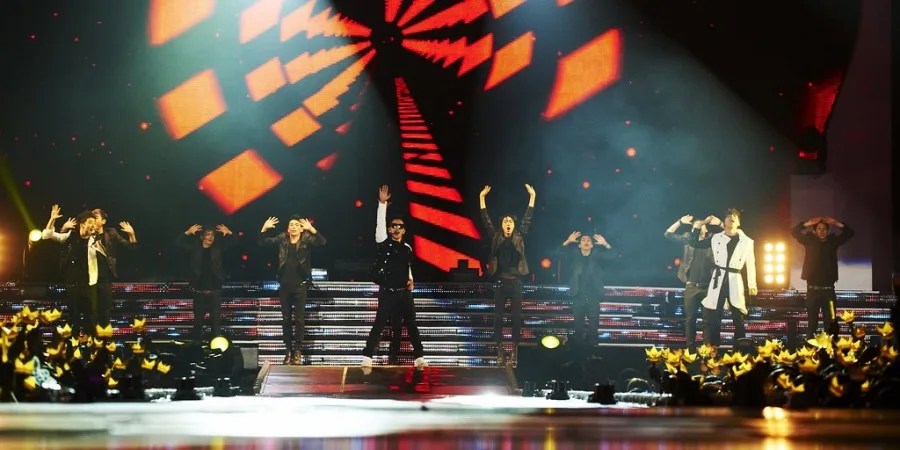
This type of choreography commonly appears in the chorus or main parts of the song, creating a hypnotizing effect. BIGBANG in “Bang Bang Bang” and ITZY with “Dalla Dalla” are references for the use of this technique. Many groups also release “mirror dance” videos to challenge fans and even encourage viral challenges on social media, showing how crucial synchronization is for the success of a K-pop performance.
Pairing/Unit Dance
The pairing dance divides the group into pairs or small subgroups, known as units, to perform movements together or interactively. This adds variety to the presentation, allows for individual skills to be highlighted, and creates moments of greater closeness between the members on stage. The duos can alternate between synchronized and complementary movements, forming figures or telling a small story within the song.
A great example is “Don’t Wanna Cry” by SEVENTEEN, where units swap positions and create new dynamics with each part of the song. This format is also used in songs with rap parts or distinct vocals, to give more emphasis to each member’s talents. Additionally, the units allow the audience to get to know different combinations and interactions within the group, keeping the performance interesting and unpredictable.
Urban Dance Style
The influence of urban dance is increasingly strong in K-pop. Styles like hip-hop, popping, locking, krump, and breakdance are incorporated to make the performance more energetic and modern. Urban choreography often features fast steps, sharp movements, and a lot of bodily expressiveness, creating a striking contrast with softer parts of the music.
Stray Kids in “God’s Menu” and BTS in “Fire” showcase intense movements, mixing strength and precision with elements of street dance. The use of urban dance allows groups to experiment with different styles, convey more personality, and even create a unique identity for each comeback. Many idols even train with internationally renowned choreographers to ensure authentic and innovative performances.
Props Dance
The use of props in choreographies adds an extra layer of difficulty and creativity. Items like chairs, scarves, hats, canes, fans, or umbrellas are incorporated into the movements, transforming the stage into a true visual spectacle. The manipulation of props requires a lot of coordination, as any slip can compromise the entire performance.
Groups like f(x), in “Rum Pum Pum Pum” (with drums), and TWICE, in “Likey” (with fake cameras), are examples of this style. Besides enhancing the presentation, the use of props tends to go viral quickly, as fans enjoy replicating the movements with the same objects. Well-used props help to fix the song in the audience’s memory and differentiate one comeback from other releases.
Contemporary Dance
Contemporary dance appears in K-pop mainly in more emotional or conceptual songs. With fluid, artistic, and expressive movements, this style seeks to convey deep feelings and connect emotionally with the audience. Generally, there is greater freedom of movement, use of the floor, and emphasis on bodily interpretation.
Taemin (SHINee), in “Move,” is one of the greatest representatives of this style, mixing sensuality, softness, and technique. LOONA, in “Butterfly,” also explores contemporary dance to convey lightness and poetry. This type of choreography showcases the versatility of idols and highlights the artistic side of dance in K-pop, going beyond traditional synchronized steps.
Point Dance
The “point dance” is the main step or gesture of the choreography, the one that everyone recognizes and can imitate, even those who are not fans. Simple or elaborate, it is designed to go viral on social media and help promote the song. Often, this movement becomes a trademark of the group or the comeback.
Classic examples include the “TT” gesture with hands on the face by TWICE, the finger heart in “Gee” (Girls’ Generation), or the shooting step from “Bang Bang Bang” (BIGBANG). The success of the “point dance” lies in its visual appeal and ease of replication, serving as a gateway for new fans and helping the group reach an even larger audience.
Large Group Dance
When the group has many members, such as SEVENTEEN (13 members) or NCT (with various units), the large group dance impresses with its scale and synchronization. Mass movements, quick formation changes, wave-like visual effects, and line divisions make the presentation seem even grander.
The difficulty increases, as each member needs to know exactly where to be at each moment, without collisions or failures in synchronization. This type of choreography explores the visual potential of large groups, using the stage to the fullest and delivering memorable shows that capture the audience’s attention from start to finish.
Storytelling Dance
The storytelling dance is an approach where the choreography serves to tell a story or illustrate the lyrics of the song. Instead of focusing solely on synchronized movements or visual figures, the steps translate feelings, situations, and even fictional dialogues. This brings the audience closer to the message and allows the presentation to be understood even without understanding the language.
A good example of this type of choreography is “Spring Day” by BTS, where gestures, glances, and positions of the members help convey themes of longing and reunion. “Love Scenario” by iKON also adopts narrative elements, with steps that evoke farewells and memories. The storytelling dance requires idols not only to have technique but also expressiveness and acting ability.
Floor Work
Some K-pop choreographies make intensive use of the floor, with movements lying down, rolling, hand and leg supports, and smooth transitions between levels. This type of dance adds visual variety, requires physical strength and flexibility, and provides a dramatic and intense atmosphere in certain songs.
Notable examples are “Fake Love” by BTS and “Say My Name” by ATEEZ, where the members alternate between standing and being on the floor, creating dynamic and unexpected transitions. The use of the floor is more common in emotional songs or with choreography inspired by contemporary dance, giving a more performative air to the presentation.
Isolation Dance
Isolation is a technique inherited from popping and urban styles, where the dancer moves one part of the body at a time, creating robotic or segmented effects. This type of choreography highlights the idols’ body control and adds an element of surprise and impact, often synchronized with sound effects or beats of the music.
We can see this resource in “Cherry Bomb” by NCT 127 and “Monster” by EXO. The isolated movements create a striking contrast with smoother steps, making the performance more interesting and showcasing the versatility of the groups on stage.
Canon Dance
In canon choreography, each member repeats the same movement in sequence, like a progressive wave through the group. This style creates fascinating visual effects and highlights the precision of timing, as any mistake can break the visual rhythm. The canon effect is often used to intensify choruses, bridges, or song endings.
An example of this appears in “Not Today” by BTS, especially in the chorus part, and in “Move” by Taemin, during transition moments between verses. The canon is a clever staging trick that highlights synchronization and increases the impact of the show.
Free Style
Although K-pop is famous for highly rehearsed choreographies, some songs or live performances include segments of free style, where members improvise movements, interact with fans, or showcase individual dance styles. This space for freedom creates a more spontaneous connection with the audience and reveals the particular talents of each idol.
Groups like SEVENTEEN and MONSTA X often insert these moments into shows, allowing lead dancers to shine or everyone to demonstrate personality. Free style also appears in covers or special videos, stimulating creativity and renewing the repertoire of movements.
Hand Dance
Some K-pop choreographies focus on detailed and synchronized movements of the hands and arms, creating designs in the air or symbolizing words and emotions. This type of choreography often goes viral on social media for being more accessible to the public, facilitating covers and challenges.
A classic example is “TT” by TWICE, whose gesture became a worldwide sensation, and “Love Shot” by EXO, famous for the sensual hand movement. Hand dance highlights delicacy, coordination, and also the creativity of choreographers, adding charm and uniqueness to the music.
Double Center Dance
In large groups, it is common to divide the choreographic leadership between two main members in certain parts of the song. In this approach, two members stay at the center, leading mirrored or complementary steps, increasing the dynamism of the presentation. This technique also allows for variations in focus and values different talents within the group.
Songs like “How You Like That” by BLACKPINK and “Feel Special” by TWICE alternate between double centers and solos, diversifying the energy on stage. The double center dance makes performances less predictable and encourages fans to identify with more than one idol.
Few TV shows have managed to influence the world of entertainment and entrepreneurship as much as The Tigers of Money or in Japanese Manē no Tora (マネーの虎). Long before Shark Tank became a global phenomenon, it was this Japanese reality show that attracted millions of viewers, combining suspense, business, and a dose of human drama. In this article, we will dive deep into the “cradle” of the format that changed the way entrepreneurship is presented on television.
What was Manē no Tora?
First broadcast in October 2001, by Nippon Television (日本テレビ), the show revolutionized the game show genre in Japan. Unlike traditional entertainment formats that focused on physical challenges or quizzes, Manē no Tora bet on something unprecedented: putting ordinary entrepreneurs face to face with powerful investors, in search of real financial support.
The name — literally “The Money Tiger” — evoked strength and predatory instinct, characteristics associated with both the business world and the investors themselves, known as “Toras” (Tigers). The slogan was direct and provocative: “No Challenge, No Success” — an invitation for participants to risk everything for their dreams.
The show aired until March 2004, totaling over 100 episodes, and left a deep mark on Japanese culture, serving as inspiration for adaptations in various countries, including the popular Shark Tank.
How did the format work?
The operation was simple but loaded with tension: each episode featured two to three entrepreneurs, who had to present their business ideas, products, or services to a fixed panel of investors. These investors, successful businesspeople, had complete freedom to accept or reject the proposal. There was no obligation to finance.
To receive the investment, the entrepreneur needed to convince the tigers to offer the requested amount, either fully or partially. When the investors were interested, they could also suggest changes to the business model or propose additional conditions — which often turned the negotiation into a true verbal battle.
Unlike many reality shows, where the focus is pure entertainment, Manē no Tora placed the commercial viability of the proposals at the center stage. And this created an environment where hope, risk, and pragmatism intersected all the time.
Who were the main “Tigers”?
One of the differentiators of Manē no Tora was precisely the choice of its investors: all real figures from the Japanese corporate world, many of them eccentric, others discreet, but invariably successful.
Among the most iconic, we highlight:
Shinji Hattori: owner of a chain of English schools, known for his aggressive negotiation style.
Yoshihiro Terada: food industry entrepreneur, famous for his direct and ruthless critiques.
Hiroyuki Ariyoshi: more reserved investor, who often surprised with unexpected decisions.
Ritsuko Nagao: one of the few women on the panel, respected for her attentive view of the social aspects of the projects.
Each of them represented a distinct facet of the business world in Japan, and their interactions with the candidates were an essential part of the program’s appeal.
Memorable pitches and unusual inventions
Throughout its seasons, The Tigers of Money received hundreds of proposals, some as creative as they were unfeasible, others surprisingly visionary.
Among the most talked-about pitches:
The robot restaurant: an entrepreneur presented the idea of opening a fully automated restaurant, where orders would be made via tablets and dishes delivered by robotic arms. Although it seemed too futuristic for the time, the project caught attention for its boldness but was ultimately rejected by most investors, who deemed the cost unfeasible.
The instant ramen machine: an inventor proposed a vending machine capable of preparing and serving fresh ramen in less than two minutes. The idea received praise for its practicality and feasibility and received partial investment, with suggested adjustments to make the equipment more compact.
A manners school for teenagers: unusual but quite relevant, this proposal sought to offer extracurricular courses for young people to learn good manners and social skills. While some tigers found the idea outdated, others saw a promising niche and decided to invest.
One of the biggest successes of the program was the proposal for a chain of organic coffee shops, which after receiving the requested funding, managed to expand to several Japanese cities and remains active to this day.
The cultural impact and legacy of the program
More than just a show, Manē no Tora helped popularize the concept of entrepreneurship in Japan. Before it, the Japanese business environment was often associated with large corporations and careers within the traditional model of lifetime employment. The program, by putting individual entrepreneurs in the spotlight, helped open space for a new vision: that of the “self-made man”, or the one who builds his own path.
The format also innovated by exposing the vulnerability of the participants: many of them presented their ideas not just as a business, but as a personal dream, revealing fears, frustrations, and hopes in front of the cameras. This human aspect, combined with the rawness of the tigers’ responses, created an engaging narrative that transcended mere entertainment.
Exporting the format: from Japan to the world
The success of Manē no Tora quickly drew international attention. Its formula was adapted for “Dragons’ Den” in the United Kingdom and later for “Shark Tank” in the United States and various other countries.
Interestingly, while Japan associated its investors with tigers, in the UK they became dragons, and in the US, sharks. Each adaptation incorporated specific cultural traits, but the essence remained the same: entrepreneurs seeking investment and investors deciding who deserves support.
Despite its global influence, few know that the heart of Shark Tank beats with a Japanese accent — something that still impresses the most attentive fans of the franchise.
Why did Manē no Tora end?
Although the program was a success, its airing was ended in 2004. There are various speculations about the reasons: natural wear of the format, difficulty in finding sufficiently prepared entrepreneurs, and even pressures from the advertising market itself, which did not always look favorably on the exposure of failed businesses in prime time.
Still, its short trajectory left deep marks on Japanese and global television. Manē no Tora may have gone off the air, but its influence remains alive. It opened doors, transformed careers, and, above all, proved that good ideas, when well presented, can find those who believe in them.
Whether in the form of a tiger, dragon, or shark, the predatory investor is now a consolidated presence on global TV thanks to the boldness of a Japanese program that, over two decades ago, decided to bet on the unlikely combination of business and entertainment.
Exploring Japan — with its ancestral temples, futuristic metropolises, and serene landscapes — requires immediate and reliable connectivity. In 2025, virtual chips (eSIMs) consolidated as the most practical solution for tourists, eliminating queues at airports, exorbitant roaming costs, and dependence on public Wi-Fi.
This guide details global and local options, focusing on coverage, prices, and real experiences, so you can choose the best plan for your journey through the “Land of the Rising Sun“.
Exploring Japan — with its ancestral temples, futuristic metropolises, and serene landscapes — requires immediate and reliable connectivity. In 2025, virtual chips (eSIMs) consolidated as the most practical solution for tourists, eliminating queues at airports, exorbitant roaming costs, and dependence on public Wi-Fi networks. This guide details global and local options, focusing on coverage, prices, and real experiences, so you can choose the best plan for your journey through the “Land of the Rising Sun”.
Holafly stands out as the ideal choice for those prioritizing unlimited data without daily speed reduction. With plans ranging from 5 to 90 days, its eSIM operates on the SoftBank and KDDI networks, ensuring stable 4G/5G coverage even in mountainous regions like the Japanese Alps or remote islands of Okinawa. Tourists who livestream, use GPS intensively, or work remotely during their trip find the best balance between data volume and price here — a 15-day plan costs approximately US$ 46.90 16.
In addition to convenience, Holafly offers 24-hour support in your language via app, essential for resolving any connectivity issues without language barriers. Activation is simplified: after online purchase, you receive a QR code to scan while still on the plane, ensuring internet upon landing in Narita or Haneda.
Recommended for short trips or those seeking regional flexibility, Airalo offers modular packages from 1GB to 20GB, valid for 7 to 180 days. Its Asialink plan (US$ 20 for 10GB/30 days) covers Japan and 17 other Asian countries, such as South Korea and Thailand — perfect for multi-destination itineraries. The partner network is NTT Docomo, a leader in urban and rural coverage, ideal for exploring from Tokyo’s subway to the historic villages of Shirakawa-go 310.
Airalo’s differentiator is its loyalty program: each purchase accumulates points that guarantee 5% cashback in credits for future trips. The intuitive app allows you to manage data, recharge packages, and activate the eSIM in minutes, without the need for initial Wi-Fi (just use the airport’s network).
Ubigi
For those demanding high-speed real-time connectivity, Ubigi is the only one offering free 5G in covered areas, such as Tokyo, Osaka, and Nagoya. Its plans range from 500MB to 50GB, with a highlight on the 10GB/30 days package for US$ 17. The partnership with NTT Docomo ensures minimal latency, crucial for augmented reality apps, instant translation of kanji signs, or high-definition video calls 68.
Installation is done directly through the Ubigi app, available on iOS and Android, with the option to store multiple eSIMs simultaneously — useful for those combining trips to Japan with stops in other countries. Although focused on data, the network allows the use of VoIP via WhatsApp or Skype without lag. Technical travelers or technology enthusiasts prefer this option for its stability in congested locations, such as Shibuya stations or festivals like Gion Matsuri 412.
Saily
Developed by the same company as NordVPN, Saily combines connectivity with cybersecurity. Its eSIM includes integrated VPN, essential for accessing online banking or social networks on public hotel and café Wi-Fi. Plans start at US$ 3.99 for 1GB, ideal for moderate users who use the internet only for maps and messaging 68.
In addition to the VPN, the app offers ad blocker and tracking protection, enhancing the browsing experience. Coverage is guaranteed by SoftBank, with excellent penetration in underground areas (like subways) and rural zones. Chat support responds in less than 3 minutes, solving everything from activation failures to APN adjustments — a relief for those not fluent in Japanese 512.
Sakura Mobile
Unlike global competitors, Sakura Mobile is a local operator that offers eSIMs with a Japanese phone number. This allows for reservations at traditional restaurants (like ryokans) or booking taxis, services that often require confirmation by phone call. Its unlimited 30-day plan costs US$ 66, but includes support in Portuguese and assistance for network issues in real-time 812.
Sakura uses the infrastructure of KDDI au, ensuring stable signal in less touristy areas, such as the Seto Inland Islands or the mountains of Nikko. The downside is less flexibility: there are only 30-day plans, with no options for reduced data allowance. For group travelers, Sakura offers 15% discounts for two or more lines, making it worthwhile for families or couples 712.
ZenSim
ZenSim stands out for its instant connection upon landing in Japan, with no need to scan QR codes. Just install the eSIM before the trip (via app) and it activates automatically when connecting to local networks. Its 20GB/30 days plan costs US$ 30, the best cost per gigabyte among the options analyzed 812.
The platform is 100% digital, with recharges made in two clicks, and offers real-time consumption reports. ZenSim operates on the Docomo network, prioritizing stable speeds on bullet trains (Shinkansen) and rural areas. For those seeking simplicity, it is the most intuitive option — ideal for elderly travelers or those less familiar with technology 68.
Local Options: Ninja WiFi and Mobal
For those who prefer to buy after arriving in Japan, Ninja WiFi offers physical and virtual eSIMs in airport lockers like Narita and Kansai. Plans start at ¥3,000 (US$ 19) for 3GB/7 days, with the advantage of in-person support at stores in Tokyo and Kyoto. The network is SoftBank, suitable for urban routes 412.
Mobal is the right choice for long stays (over 90 days), with unlimited eSIMs valid for 1 year and a permanent Japanese number. Prices are higher (around US$ 100), but include address registration — useful for renting phones or receiving packages. Both require a passport for purchase, complying with local registration rules 127.
Roamic
Ideal for those seeking simple plans and low prices, Roamic offers eSIMs with coverage in Japan and global activation. Its packages start at €1.99 for 1GB/7 days, scaling up to unlimited data for 30 days for €94.99. Coverage is provided by the major Japanese operators, with stable performance in urban and suburban areas.
The differentiator is the cancellation policy: travelers can request full refunds up to two months after purchase, if they do not activate the plan. Activation is done via QR code sent by email — a common practice among global eSIMs, but with multilingual support directly in the app, a relief for those who do not speak Japanese.
TravelSim
With a solid presence in the global market, TravelSim offers eSIMs that work automatically in Japan without complicated settings. The packages are modular, and you can choose from plans of 3GB to 20GB, valid for up to 30 days.
Highlight for the automatic recharge system that allows extending usage even during the trip, without needing to reinstall or change the QR code. Activation takes less than 2 minutes, and the dashboard allows you to view exact consumption, ideal for those needing to control expenses.
As it operates in over 100 countries, the same eSIM can be reused on future trips — an advantage for those who have Japan as one of the stops but will travel around Asia or Europe.
Final Considerations
When choosing between an eSIM or a physical chip for your trip to Japan, consider factors such as length of stay, required data volume, available budget, and the convenience of activation.
eSIMs offer the advantage of being activated before arrival, while physical chips can be easily purchased after disembarkation. Regardless of the choice, ensuring a reliable internet connection will allow you to make the most of your experience in Japan.
Sadako Yamamura is a name that resonates deeply in global pop culture, known primarily for her frightening appearance in the classic Japanese film Ringu (1998). With long hair covering her face, a white dress, and unsettling movements, Sadako has become an undeniable symbol of modern horror, influencing not only Japanese cinema but also various international adaptations and other contemporary media.
The Literary and Cinematic Origin of Sadako
Sadako Yamamura first appeared in the novel Ring, published in 1991 by Japanese writer Koji Suzuki. In the original narrative, Sadako is introduced as the daughter of Shizuko Yamamura, a famous medium with psychic abilities, and university professor Heihachiro Ikuma. From an early age, Sadako demonstrates special abilities inherited from her mother, such as nensha, which allows her to project images directly onto physical objects using her mind.
The film adaptation directed by Hideo Nakata in 1998 adapts this story to a context more accessible to contemporary Japanese audiences. The plot focuses on a cursed videotape that leads to the death of its viewers seven days after they watch its disturbing images, unless they can transfer the curse to another person. In the film, Sadako is portrayed as a vengeful entity, slowly emerging from a well and, terrifyingly, coming out of screens to attack her victims.
Supernatural Abilities and the Curse of the Videotape
The horror surrounding Sadako comes from her impressive range of supernatural abilities. In addition to nensha, she possesses telekinetic powers, clairvoyance, and, more frighteningly, the ability to manipulate modern technologies to spread her curse. The cursed tape directly reflects her repressed fury, serving as a visual expression of her accumulated hatred and suffering.
The curse operates almost like a supernatural virus: after watching the video, the victim receives a call announcing their death in seven days, creating an endless cycle of terror and paranoia. The only escape is to pass the curse by forcing another person to watch the video, a cruel mechanism that addresses deep themes of guilt and morality.
Main Differences Between Book and Film
Although the essence of the character remains consistent, there are striking differences between the literary and cinematic versions. In Koji Suzuki’s original work, Sadako is described as intersex, adding an additional complexity to the character and addressing deeper social prejudices. However, the film adaptations chose to omit this detail to focus on the visual aspect of horror.
Another important distinction lies in the narrative focus: while the books explore in detail the psychological and scientific aspects of the curse, even suggesting a virus capable of altering the victims’ DNA, the film concentrates on the visual and emotional impact of Sadako’s figure, with iconic scenes such as her terrifying emergence from the television.
Cultural Impact and Legacy in J-Horror
Sadako’s haunting presence quickly transcended the limits of the original media, influencing the entire genre known as J-Horror. Her image and characteristics gave rise to similar characters, such as Kayako Saeki from Ju-On (2002), creating a recognizable visual and narrative pattern within Japanese horror.
Sadako’s influence can also be seen in anime, video games, and advertising campaigns, showcasing her ability to evoke fear and fascination in a lasting way. A major successful work to highlight is Kimi ni Todoke, where the protagonist is often compared to Sadako.
Sadako in Pop Culture and Her International Adaptations
Sadako was not restricted to Japan and soon conquered the world through Western adaptations, especially with the American version The Ring (2002), directed by Gore Verbinski. The character, renamed Samara Morgan, retains the essence of the curse but brings a new story that emphasizes parental abuse and isolation.
Additionally, Sadako has appeared in crossovers of popular video games, such as Dead by Daylight, where she is referred to as “The Onryō.” Her versatility and the universal terror she embodies are clear evidence of her enduring power in different cultural contexts.
For over two decades, Sadako Yamamura continues to be one of the greatest symbols of contemporary horror, reflecting deep fears of modern society and ensuring her permanent presence in the global collective imagination.
The Japanese word ぬるい (nurui) is deeper than simply describing something with an intermediate temperature. It carries cultural and emotional nuances that reflect how the Japanese perceive their environment and social interactions. In this article, we will explore the multiple meanings and contexts of “nurui,” from its literal use to more metaphorical interpretations, showing how this word seamlessly integrates into the Japanese language and culture.
Unlike direct terms like “atsui” (hot) or “samui” (cold), “nurui” occupies a more complex space, often associated with dissatisfaction or discomfort. This subtlety makes it a rich and expressive linguistic tool, capable of communicating not only physical temperatures but also emotional attitudes.
Warm temperature: the literal meaning of “nurui”
In its most immediate use, “ぬるい” describes something lukewarm, neither cold nor hot enough. Generally applied to food and drinks, it refers to those moments when tea has already lost its heat or soup has not been adequately heated. In both cases, the result falls short of expectations, causing a slight frustration.
It is important to note that this connotation of dissatisfaction distinguishes “nurui” from “atatakai” (warm and pleasant). While “atatakai” conveys a feeling that is positive and welcoming, “nurui” indicates that something could be better, creating a light yet persistent sense of disappointment.
Lukewarm attitude: the metaphorical meaning of “nurui”
Beyond its literal sense, “ぬるい” is widely used to describe attitudes and behaviors considered lukewarm or lacking enthusiasm. If someone performs a task with little motivation, without showing passion or commitment, the Japanese may describe that person or situation as “nurui.”
This metaphorical use emphasizes the importance that Japanese culture places on dedication and genuine involvement in social and professional interactions. Being classified as “nurui” can suggest indifference or lack of seriousness, something generally viewed with a certain disdain in Japanese society.
“Nurui” in Japanese pop culture: the character from Naruto
An interesting example of the application of this word is in the anime and manga “Naruto.” “Nurui” is the name of a shinobi from the village of Kumogakure, known for his cautious strategy and hesitation in critical situations. This characterization perfectly reflects the metaphorical use of the term: a reserved individual who avoids fully risking himself in his actions.
The author’s choice of this name is not random. It reinforces the cultural meaning of the word, highlighting how aspects of personality and behavior can be expressed through the semantic richness of Japanese.
The importance of understanding context
Understanding the correct use of “nurui” requires sensitivity to context, as its meaning can vary considerably depending on the situation. The same term can express anything from a mild criticism to a more severe judgment about personal attitudes, demonstrating the subtlety of the Japanese language and the complexity of its application in everyday life.
Conclusion
“ぬるい” exemplifies the depth with which the Japanese language can express emotional and cultural nuances. Whether describing a soup that has lost its heat or apathy in the face of a situation, this word offers insights into expectations, satisfaction, and social commitment. By fully understanding it, we open a fascinating window into Japanese culture and its linguistic subtleties.
Learning the term “nurui” is not just about adding a new word to the vocabulary, but also about understanding a little more about the essence of communication and emotional perception in Japan, always reminding us that the middle ground can sometimes teach more than the extremes.
If you dream of transforming a space with Japanese essence — whether a compact apartment or a spacious house — hiring an interior designer in Japan can be a unique experience. This guide unveils everything from costs to the secrets of renowned professionals, helping you navigate a market that blends ancient philosophy and avant-garde.
Japanese Design: Much More Than Minimalism
Interior design in Japan is a dance between functionality and poetry. Materials like raw wood, bamboo, and washi paper are not just aesthetic choices but reflections of a deep connection with nature. Imagine entering a room where light filtered through shoji doors creates shadows that change throughout the day — it is the materialization of wabi-sabi, the art of finding beauty in imperfection and the passage of time.
Here, each low furniture piece or tatami has a purpose: to promote harmony and flexibility. Multifunctional spaces are the norm, adapting to both a formal dinner and a tea ceremony. And if you are worried that the style won’t fit your daily life, take a deep breath: local designers are masters at balancing tradition and modern needs, such as home offices or spaces for children.
Where to Find the Ideal Professional?
If you are in Japan or plan to hire a professional from there, know that the options are diverse, from renowned studios to specialized freelancers. Major cities concentrate the best offices, but the market is also accessible outside urban centers.
Award-Winning Studios
In Tokyo, the studios Nendo and Wonderwall are synonymous with innovation. The former, led by Oki Sato, is famous for solutions that surprise — like partitions that transform into works of art. The latter, led by Masamichi Katayama, excels in commercial design, creating stores that are true sensory experiences (think of the flagships of Uniqlo!).
Freelancers
Platforms like Lancers attract independent talents specialized in niches: from tiny house apartments in Osaka to ryokans (traditional inns) in Kyoto. One tip: many accept video calls in English, ideal for those outside the country.
Renovations with Design Included
Companies like Sekisui House offer complete packages, from demolition to the selection of the last decorative detail. Perfect for those who want to avoid headaches but demand Japanese quality — known for impeccable plumbing and world-class sound insulation.
How Much Does It Cost to Hire an Interior Designer in Japan?
Prices can vary significantly, depending on the complexity of the project and the reputation of the professional. However, to give you a clear idea, here are the most common price ranges:
Express Consultation (1h): ¥10,000 to ¥30,000. Ideal for quick questions, such as “How to integrate a kotatsu (heated table) into the living room without losing style?”.
Complete Project (50m²): Starting from ¥500,000. Includes floor plans, material selection, and even rendered 3D — yes, they take every centimeter seriously!
Renovation with Premium Design: From ¥3,000,000 to ¥10,000,000. Prices that may scare, but justified by techniques like shinkabe (earthquake-proof outer walls) and hinoki cypress wood, resistant to moisture.
Famous Japanese Designers
Japan is home to some of the most celebrated interior designers and architects worldwide. Shigeru Ban, a Pritzker Prize winner, revolutionized the use of materials like cardboard in social projects — imagine a living room with sustainable structures that defy logic.
Kengo Kuma, architect of the Tokyo Olympic Stadium, brings the forest indoors with yakisugi wood (charred) cladding. And for fans of Instagrammable decor, the studio Nendo is a must-visit: their “floating” shelves or lamps that mimic raindrops are pure Instagram gold.
Checklist Before Signing the Contract
Hybrid Style or 100% Japanese? Some designers propose bold fusions, like an industrial kitchen with a keyaki wood island.
Fluent English or Translator? Request portfolios with projects for foreigners — many include adaptations like tall cabinets (since traditional ones are low).
Sacred Deadlines: In Japan, delays are rare. Agree on realistic dates and expect methodical meetings, complete with meishi (business cards) exchanged ceremoniously.
Why Is the Experience Worth It?
Hiring a Japanese designer is diving into a culture that sees the home as an extension of the soul. Don’t expect just beautiful furniture; be prepared for detailed questionnaires about your habits (“Do you prefer to have breakfast looking at the garden?”) and suggestions that range from ideal solar orientation to the type of fusuma (decorative door) that reduces stress.
And if the budget tightens, remember: even a visit to Muji can yield insights. Their modular shelves and earthy color palettes capture the essence of local design — simple yet transformative.
Even if you opt for a freelancer, ask to include a traditional element, like a tokonoma (art niche) or andon lighting. These are details that transform any environment into a piece of Japan, where every object tells a story. 🏯
In this article, you will understand all the phases of the Japanese school system such as Yôchien, Shôgakkô, Chûgakkô, Kôkô, and Daigaku.
Education in Japan goes far beyond tests and neatly aligned uniforms. Each phase of the school system carries a well-defined purpose and profoundly shapes the behavior and mindset of students.
From the early years in Yôchien, through the halls of Shôgakkô, to the challenges of universities (Daigaku) and technical schools, each stage brings unique demands and memorable experiences. Follow along and understand how the system is organized and what really matters at each phase.
If you have ever wondered how the Japanese manage to maintain such discipline and social cohesion, part of the answer is here.
Yôchien – The Japanese kindergarten
Before compulsory school, many children attend Yôchien, something similar to preschool or kindergarten. It is an optional phase but extremely common in Japan.
Teaching more than just play
The focus goes far beyond toys and songs. From an early age, children learn about social coexistence, responsibilities, and basic rules of etiquette. Activities such as organizing their own materials, storing shoes, and participating in collective events are common.
Age and routine
Normally, Yôchien accepts children between 3 and 6 years old. Attendance is usually half-day, but there are full-time options. And don’t be fooled: students have uniforms, school agendas, and participate in school festivals from this age.
Shôgakkô – Elementary school I
At six years old, the compulsory journey officially begins. Shôgakkô (小学校) corresponds to the first six years of education, similar to elementary school I in other countries.
What is learned in Shôgakkô?
Don’t expect just reading and math. Children study moral education (道徳), calligraphy (書道), home economics, and even participate in cleaning the school. Discipline starts early. They also have a rotating class leader system, which encourages a sense of duty.
Intense school life
The daily journey goes beyond classes: there are extracurricular activities, school-organized lunches, and even earthquake evacuation drills. Parents are also frequently involved in school activities, reinforcing the community-school bond.
Chûgakkô – Elementary school II
Chûgakkô (中学校) comprises the 7th to 9th grades, being a mandatory part of the system. This is where the pressure begins to increase.
More subjects, more responsibilities
In addition to core subjects like Japanese, math, and science, students face frequent tests, mandatory school clubs, and the beginning of grades that have a real impact on the future. It is common for many to attend juku (cram schools) in the afternoon or evening.
Uniforms and social hierarchy
Everyone wears strict uniforms, and there is a clear hierarchy among the grades. Upperclassmen have more voice, and newcomers learn early to respect this structure. Social relationships within the school shape how Japanese teenagers behave in society.
Kôkô – Japanese high school
Unlike the previous ones, Kôkô (高校) is not mandatory, but almost all young people continue. Lasting three years, this phase is crucial.
Entrance exams
Yes, to enter high school, the student must pass exams. The most prestigious schools are extremely competitive. The choice of Kôkô already directs future options for university.
Division by areas
There are academic, technical, and even artistic high schools. Some offer a curriculum focused on exact sciences, others on humanities or languages. This allows for early career direction.
Stress and dedication
The workload can exceed expectations. Many students attend cram schools at night and sleep little. It is common to see young people studying on the train, walking, or during lunch. The routine is demanding but seen as a rite of passage.
Daigaku – The university in Japan
Higher education in Japan is where, finally, the student can breathe a little. But to get there, the path is tense.
National entrance exam
The admission exam for public universities is extremely demanding. There are private universities as well, such as Waseda or Keio, which conduct their own exams. The selection process is relentless.
University life
Upon entering, the routine changes significantly. There is more freedom, less rigidity. Students get involved in clubs, part-time jobs, and even trips. Classes are more theoretical, with less continuous demand than in previous phases.
Renowned colleges
Among the most prestigious are:
University of Tokyo (Todai) – focus on research and academic excellence.
Kyoto University – tradition and strong in humanities and sciences.
Osaka University – highlight in engineering and medicine.
Senmon Gakkô – Technical and vocational schools
Not everyone follows the university path. Senmon Gakkô (専門学校) offer technical courses lasting 2 to 3 years in areas such as design, IT, fashion, nursing, and hospitality.
They are highly practical and job market-oriented, with mandatory internships and specific curricula. Many foreigners also choose this path for being more direct and financially accessible.
Curiosities of the Japanese educational system
Academic year: starts in April and ends in March of the following year.
Short vacations: summer vacations last about a month, much shorter than in many other countries.
Cleaning system: students themselves clean the school daily, strengthening the sense of responsibility.
Public vs. private schools: public schools are strong, but private ones are often seen as a prestigious alternative.
Want to better understand how these schools shape Japanese society? Observe the punctuality of trains, the discipline on the streets, and the courtesy in service. It all starts in the classroom.
If you are thinking of studying in Japan or want to understand how the system forms such dedicated professionals, you now have a good overview. Choose the path that suits you best — and don’t be afraid to go beyond university, because Japan offers much more than degrees.
K-pop, short for Korean Pop, is not just a music genre — it is a cultural force that has redefined standards in the entertainment, fashion, beauty, and even global behavior industries. Originating in South Korea, this movement mixes pop, hip-hop, R&B, electronic, rock, and impactful visual elements, creating a unique experience that captivates crowds on all continents.
What makes K-pop so irresistible? Besides catchy songs, meticulously choreographed dances, and cinematic music videos, there is a highly professionalized industry behind the stage lights. Behind every debut, there are years of intense preparation and an ecosystem that involves training, content production, digital marketing, and a legion of passionate fans.
How Did K-pop Emerge?
K-pop was born in the early 1990s with the group Seo Taiji and the Boys, who revolutionized Korean music by mixing elements of Western pop with local lyrics and themes. The success was so great that it opened doors for the modernization of the Korean music industry. After the Asian financial crisis of 1997, the South Korean government heavily invested in pop culture, boosting the so-called Hallyu (Korean Wave). The goal was clear: to export not only music but also dramas, fashion, cinema, and gastronomy.
The real international leap began in the 2000s, with groups like TVXQ, Super Junior, Girls’ Generation, and BIGBANG conquering neighboring countries, especially Japan and China. In the 2010s, platforms like YouTube and social media broke down borders, making K-pop a global phenomenon.
How Does Idol Training Work?
Being a K-pop idol is the result of extreme discipline and resilience. Candidates go through rigorous auditions at companies like SM Entertainment, JYP Entertainment, YG Entertainment, and HYBE. Those approved become trainees and enter a daily routine of:
Singing and dancing training;
Acting and language classes (English, Japanese, Chinese);
Psychological and physical monitoring;
Performance tests and periodic evaluations.
The trainee period can last from 3 to 10 years. Many give up along the way due to pressure and demands, and only a minority actually debuts. The result, however, is multifaceted artists, ready to dominate any stage in the world.
The Global Expansion: How K-pop Conquered the West?
The explosion of K-pop in the West mainly occurred from the 2010s, with groups like BTS and BLACKPINK achieving historic records. In 2021, “Butter” by BTS broke the world record for debut on YouTube with over 108 million views in 24 hours. The global success was amplified by streaming: Spotify, Apple Music, and TikTok helped spread songs, choreographies, and memes to audiences of all languages.
Moreover, idols began to appear at international festivals like Coachella, Lollapalooza, and awards like the Billboard Music Awards and MTV VMAs, breaking paradigms about music not sung in English.
Main K-pop Groups in 2025
K-pop is dynamic, and the standout names change rapidly. In 2025, the most prominent groups are:
BTS (ARMY): Ultimate reference, pioneers in breaking cultural barriers.
BLACKPINK (Blinks): The most successful girl group globally, uniting pop, rap, and fashion.
Stray Kids (STAY): Known for creativity and self-sufficiency in music production.
SEVENTEEN (CARAT): Famous for complex choreographies and original songs.
LE SSERAFIM (FEARNOT): Rapid rise among new girl groups.
aespa (MY): A group that mixes reality with virtual avatars, a symbol of the new generation.
These groups have organized fandoms that promote charitable actions, voting in awards, and even social impact campaigns.
K-pop Trends in 2025: The Future Has Arrived
K-pop does not rest — it is always innovating. Here are the main current trends:
Artificial Intelligence: Groups like aespa incorporate digital avatars, creating immersive experiences.
International Collaborations: Partnerships with global stars like Lady Gaga and Coldplay expand cultural reach.
Influence in Fashion and Beauty: Idols are brand ambassadors for Dior, Chanel, and Louis Vuitton.
Linguistic Diversity: The number of songs in English, Japanese, and Spanish is increasing to conquer more markets.
Activism and Social Responsibility: Idols speak out on mental health, inclusion, the environment, and social causes.
Curiosities and Behind the Scenes of K-pop
The training of some idols can exceed 16 hours a day.
Groups like BTS and BLACKPINK sell out stadiums in minutes, demonstrating the power of fandoms.
K-pop generates over $10 billion a year, boosting tourism, fashion, and technology.
The first virtual K-pop group, Eternity, debuted in 2021, signaling a new digital era.
The Impact of K-pop on Other Industries
K-pop transcends music. Global brands in cosmetics, electronics, and gastronomy heavily invest in campaigns starring Korean idols. Products launched by them sell out in minutes, and visual trends from music videos become global fashion. If you are an entrepreneur, betting on the K-pop universe — whether in soundtracks, partnerships with influencers, or campaigns with aesthetics inspired by idols — can increase your business reach among young people.
Will K-pop Stop?
K-pop shows no signs of slowing down. In constant renewal, it is a showcase of artistic, technological, and cultural innovation. Those who follow closely realize that the future of this industry is just beginning. And you, will you just watch or take the opportunity to connect with this global wave?
Traveling to Japan is a dream for many people. Rich culture, cutting-edge technology, and a myriad of irresistible shops. But did you know that you can save a lot by taking advantage of the Tax Free system? Understanding how it works will make a difference in your wallet — and avoid headaches.
In Japan, unlike many countries, you don’t have to wait until the airport to request a tax refund. The discount happens at the time of purchase, in accredited stores. But there are some important rules you need to know before you start buying everything in sight.
What is Tax Free in Japan?
Tax Free is a benefit for tourists that allows you to buy products without paying the Japanese consumption tax, currently at 10%. This means that when you make a purchase, you only pay the actual price of the product, without the added tax.
The idea is to stimulate consumption among foreign visitors and make the shopping experience more attractive. Japan is known for being extremely organized and transparent, so all stores clearly display prices with and without tax.
But it’s not enough to just be a tourist: there are criteria that determine who can, when they can, and what they can buy using Tax Free.
Who can take advantage of Tax Free in Japan?
If you are in Japan with a tourist visa or temporary visa (up to 6 months), you can comfortably enjoy this benefit. It doesn’t matter which country you came from. But be careful: residents in Japan cannot use Tax Free — it is exclusive for those who are just passing through.
Additionally, to be eligible for the exemption, you must spend at least 5,000 yen (about 30 to 35 dollars) in the same store and on the same day. This amount can be reached by combining several items, but the payment must be made all at once.
How to shop Tax Free in Japan?
Here’s a quick and practical step-by-step:
1. Look for the signage: stores that offer Tax Free usually have visible signs with the “Japan Tax Free Shop” seal. There are thousands scattered throughout the country, from large department stores to small electronics and cosmetics shops.
2. Go to the special counter: usually, there is a specific counter or register for tourists. There, you will present your passport.
3. Receive the discount on the spot: the store will automatically exempt the tax and will attach a receipt to your passport. This paper proves the purchase and the exemption.
4. Do not use the products before leaving Japan: especially in the case of consumable items, such as cosmetics or food, they must remain sealed until your departure.
Does it seem bureaucratic? Not really. The process is usually quick, and the staff is well trained to deal with tourists.
Important rules about Tax Free in Japan
Despite the convenience, Tax Free in Japan has some specific rules that may catch you off guard:
The minimum purchase amount is 5,000 yen, but there is also a maximum value for consumable items, which usually should not exceed 500,000 yen (about 3,500 dollars).
Consumable products (food, drinks, cosmetics) must be specially packaged by the store and cannot be used in Japan. On the other hand, general products (clothes, electronics, souvenirs) do not have this restriction.
The store will staple a receipt to your passport. When leaving the country, the immigration officer may — or may not — ask to see these receipts and confirm that the products were taken away. Generally, the process is simple: you remove the papers yourself and deposit them in a collection box at the airport.
It is important that you do not lose the receipt and keep the product with you until the end of the trip, especially if it is a high-value item.
What if I forget to do Tax Free at the store?
Unlike Europe, where refunds can be requested at the airport, in Japan the process occurs exclusively at the time of purchase. There is no way to request a refund later.
So, be attentive: if the store does not have the Tax Free seal or if you forget to present your passport, you will end up paying the tax normally and will not be able to recover it later.
Is it worth taking advantage of Tax Free in Japan?
Without a doubt. Imagine buying a state-of-the-art camera or a suitcase full of Japanese cosmetics and saving 10% on each item. Does it seem little? Do the math at the end of the trip and see the difference it makes!
Additionally, Japan is a paradise for those who love shopping: electronics, clothes from local brands, traditional items, household goods — all of the highest quality.
Just a warning: don’t get too excited and exceed the import limits allowed in your home country. Always check the customs rules to avoid unpleasant surprises on your return.
Final tips to make the most of Tax Free in Japan
Always carry your original passport — copies are not accepted.
Ask the seller if the store offers Tax Free, even if there is no signage.
Prefer to concentrate your purchases in the same store to reach the minimum amount more quickly.
Keep the products in an accessible place until you pass through immigration.
The system is efficient, designed to make life easier for tourists. Enjoy, shop wisely, and make your trip to Japan even more unforgettable.
In 2001, the anime industry seemed to have found a new maturity. It was no longer necessary to choose between beautiful visuals and deep plots — studios were hitting the mark on both. It was a year of creative diversity: from philosophical sci-fi to crazy romantic comedies, passing through instant classics that changed the course of modern anime.
If 2000 was the experimental turning point, 2001 consolidated trends. Many of the animes that premiered that year still serve as references today, whether in debates, remakes, or the eternal affection of the audience. And yes, this year has true masterpieces that, if you haven’t seen yet, you need to correct that mistake immediately.
Below, I gathered the 20 best animes of 2001, not only for their fame but for content, legacy, and current relevance. Get ready to make a list of what to watch next.
Don’t confuse it with the remake. The 2001 version of Fruits Basket was many people’s first contact with more sensitive dramas and characters with real traumas. Tohru Honda, the girl who goes to live with a family cursed by the Chinese zodiac signs, became a symbol of empathy and resilience.
Even incomplete, this anime helped pave the way for more faithful adaptations of drama mangas.
2. Hellsing
Before the edgy style became fashionable, Hellsing was already doing all that — with more style. Alucard, the most charismatic (and dangerous) vampire in anime, fights supernatural threats under the command of the Hellsing organization. Stylized violence, imposing characters, and a soundtrack with its own identity.
Don’t watch expecting total coherence, but surrender to the elegant chaos of the narrative.
3. Azumanga Daioh (Pilot Webcast)
Although the complete series came out in 2002, the pilot of Azumanga Daioh was released in 2001. And just that shows what was to come: a nonsensical slice of life, funny, and surprisingly reflective.
Each character has their moment, and the silences are as important as the dialogues. Root Japanese humor.
4. Noir
A mix between Kill Bill and Serial Experiments Lain, but with much less noise. Noir follows two professional assassins in search of answers about their past. European noir aesthetics, French soundtrack, and silent shootouts like dance. The slow narrative may drive away the impatient, but it’s a delight for those who enjoy building tension gradually.
5. Shaman King
Yes, the 2021 remake is more faithful to the manga. But the original from 2001 has a charisma that cannot be replicated. The story of Yoh Asakura and the shaman tournament marked a generation, mixing light humor with well-choreographed spiritual battles.
The original Japanese dubbing (and even the Western one) helped keep this anime alive in the popular imagination for two decades.
6. s-CRY-ed
Powers, chases, and intense rivalry. s-CRY-ed was one of the first to bring that dynamic of “two ideologies colliding” with emotional intensity. Kazuma and Ryuhou are rivals with distinct goals, but both carry the weight of a divided world.
If you enjoy X-Men and Akira, you’ll feel right at home.
7. Beyblade
Let’s be honest: Beyblade became a worldwide craze not only because of the anime but also because of the toys. Even so, the series was much more than marketing. The battles were well animated, the personalities were striking, and the soundtrack was exciting.
It’s impossible to hear “Let it Rip!” and not feel nostalgia.
8. The Twelve Kingdoms (Juuni Kokuki)
Want serious worldbuilding? The Twelve Kingdoms delivers. Far beyond “generic isekai,” it presents a complex political universe, with mystical creatures and deep moral dilemmas. Youko Nakajima is thrown into this world unprepared — and evolves in a raw and realistic way.
A must-read for those who enjoy dense fantasy and well-written characters.
9. Chobits
One of CLAMP’s most well-known works. Chobits mixes romance, sci-fi, and philosophical questions about artificial intelligence. Hideki finds an abandoned “persocom” (android), and the relationship between the two challenges the line between real love and emotional projection.
Despite some somewhat dated ecchi scenes, the social critique remains current.
10. Full Metal Panic!
Teenage soldiers infiltrated in schools, military mechs, terrorists, and romantic comedy — all together and working. Full Metal Panic! manages to alternate between tension and humor without losing its way. Sousuke Sagara is the most out-of-place soldier of all time, and his interaction with Kaname Chidori yields priceless moments.
And yes, there are several seasons after this. But it all started here.
11. Gensoumaden Saiyuki: Requiem (Movie)
This movie from the Saiyuki franchise expands Goku and company’s journey with a darker narrative and elaborate fights. Although it’s aimed at those who already follow the series, it has above-average production and is worth it for its aesthetics and soundtrack.
12. Prétear
A mix of Sailor Moon with Charming Prince. Prétear reinvents fairy tales with a strong female protagonist and a varied male cast. Short, light, but with its serious moments. The protagonist’s transformation symbolizes more than aesthetics — it speaks of acceptance and growth.
13. Cosmo Warrior Zero
Spin-off of Captain Harlock, this space adventure shows the struggle between humans and cyborgs in a universe on the brink of collapse. It didn’t have much impact in the West, but for fans of retro sci-fi, it’s a treat.
14. A Little Snow Fairy Sugar
It seems childish, and it is, but Sugar has a unique delicacy. It mixes fantasy and everyday life in an almost therapeutic way. It’s about fairies that control the weather, but also about friendship, growth, and the little joys of life.
Ideal for those who want to rest their minds.
15. Hikaru no Go
Hard to imagine an anime about Go (board game) being exciting. But Hikaru no Go manages to be. The presence of an ancient spirit that helps the protagonist play adds a supernatural layer, while Hikaru’s development and his rivals captivate with authenticity.
Inspirational and educational at the same time.
16. Galaxy Angel
Fun animation, focused on a group of space girls dealing with… strange missions. It’s nonsensical, slapstick, and colorful. It doesn’t try to be deep, and that’s part of the charm.
Worth it for some good laughs and relaxation.
17. Vandread: The Second Stage
Direct continuation of the 2000 anime, this phase deepens the relationship between men and women in a gender-divided universe. More action, more drama, and more development. A real evolution of the original series.
18. Mahoromatic
A domestic android with a lifespan. This is the premise of Mahoromatic, which surprisingly mixes romantic comedy, fanservice, and existential drama. Mahoro is adorable and tragic at the same time.
The ending divides opinions, but the journey is worth it.
19. Angelic Layer
Another work from CLAMP, but now focused on electronic battles between dolls controlled by thought. Behind the action, there are themes like overcoming, mother-daughter connection, and self-confidence.
Simple, but with heart.
20. Captain Tsubasa: Road to 2002
The new version of the classic Captain Tsubasa arrived in 2001, paving the way for the 2002 World Cup. With a renewed look and plenty of energy, it reignited interest in sports anime about soccer in the new millennium.
Exploring South Korea — from hyper-connected Seoul to the serene temples of Jeju — requires continuous, high-speed internet. With one of the world’s most advanced 5G infrastructures, the country offers exceptional coverage, but traditional roaming is still expensive and physical SIM cards require bureaucratic registration. eSIMs (virtual SIM cards) emerge as the ideal solution: instant activation, transparent pricing, and total flexibility. This guide details the best global and local options for you to navigate, translate, and share every moment of your Korean journey.
Holafly leads for those who prioritize unlimited data. Its plans (5 to 30 days) operate on the SK Telecom network, covering 99% of South Korean territory — including subway stations, rural areas, and islands like Jeju. Ideal for streaming K-dramas, live broadcasts in Bukchon Hanok Village, or intensive GPS use. A 10-day plan costs $34, with Portuguese support available 24/7 via the app.
Activation is simplified: buy online, receive the QR code by email, and scan it upon landing in Incheon. Unlike Japan, Korea requires compatibility with 5G bands (n78/n79) for maximum speeds — check if your phone supports it (iPhone 12+ or Android flagship post-2021).
Perfect for itineraries that include Korea + Japan or China, Airalo offers the Asialink plan (10GB/30 days for $24), covering 19 Asian countries. In Korea, it uses the KT Olleh network, stable in congested locations like Myeongdong or festivals like the Boryeong Mud Festival. Its app allows you to manage data, recharge packages, and activate up to 5 eSIMs simultaneously.
For short stays, the 1GB/7 days plan costs $5. The loyalty program offers 5% cashback in credits for future trips.
Ubigi
Ubigi excels in the ultra-fast segment: it offers free 5G in Seoul, Busan, and Daegu with minimal latency (1~3ms). Plans start at $12 for 3GB/30 days, using the LG U+ network — the only one with full coverage in subway stations and KTX trains. Ideal for online gaming, 4K calls, or augmented reality in digital museums like the MMCA.
Its differentiator is the integration with Naver Map (a Korean map app superior to Google Maps), which consumes less data with offline navigation. Automatic activation occurs upon detecting local networks, eliminating the need for manual configuration.
Saily
In a country with strict data legislation, Saily’s integrated VPN protects your browsing on public networks. Plans start at $4.50 for 1GB, using SK Telecom. The app blocks ads and trackers — crucial for avoiding malware when accessing K-pop sites or shopping on local platforms like Coupang.
Recommended for those using Wi-Fi from guesthouses or cafés in Hongdae. Support responds in less than 5 minutes for APN adjustments or connection issues.
Nomad
Specializing in regional coverage, Nomad offers the Asia-Pacific (APAC) plan, valid simultaneously in Japan and Korea – perfect for those including both countries in the same itinerary. With 10GB for $26 (valid for 30 days), it operates on the KT Olleh (Korea) and SoftBank (Japan) networks, ensuring automatic transition when crossing borders.
The differentiator is the “add-ons” system: when data runs out, you can purchase additional blocks of 5GB ($12) without altering the original plan’s validity.
Roamless
Revolutionary for the concept of “Single Global eSIM”, Roamless works in 200+ countries – including Japan and Korea – with a single virtual chip. It offers two models:
RoamlessFlex: Pay only for consumption ($0.10/MB), ideal for sporadic use;
RoamlessFix: Pre-defined packages (e.g., 20GB/30 days for $59).
The major innovation is the integration with VoIP calls: through the app, you can make international calls for $0.01/minute, using eSIM data. Free 5G support in Seoul and Tokyo.
Local Operators (LGU+ / SK Telecom)
Upon arriving in Korea, find kiosks from LGU+ and SK Telecom at Incheon and Gimpo airports. They offer tourist eSIMs with temporary local numbers (useful for reservations at restaurants like Gwangjang Market). Prices start at ₩30,000 ($22) for 10GB/30 days, including unlimited local calls.
Advantages:
In-person support for immediate setup.
Exclusive benefits (discounts on attractions like Lotte World).
Simplified registration with passport (no need for ARC).
Disadvantage: Plans are only available in Korean or English.
eTravelSim: Temporary Local Numbers
For those needing to make local calls, eTravelSim provides eSIMs with a temporary South Korean phone number (prefix +82). This facilitates reservations at traditional restaurants in Seoul or SMS confirmations for services like KakaoTalk.
Plans combine data and minutes: 5GB + 60 minutes of calls cost $24/15 days. The main network is LG U+, performing well in rural areas like Jeju Island. Attention: requires passport registration for activation, according to local laws 16.
Conclusion
Choose based on your itinerary:
Unlimited data and 24/7 support: Holafly
Multi-country itineraries + savings: Airalo
Premium 5G and low latency: Ubigi
Security on public networks: Saily
Local number and cultural discounts: Local operators (LGU+/SK)
✨ Strategic tip: Korea offers free Wi-Fi on buses, subways, and public squares (network “Public Wi-Fi Safe”). Combine a moderate quota eSIM (e.g., 5GB) with these points to save.
With 98% of the territory covered by 5G, you’ll always be connected to capture every mukbang, translate signs in hangul, or find the best cosmetics store in Myeongdong. Annyeonghaseyo and safe travels!
In 2002, the anime industry reached a new maturity. If before studios were still testing formulas and styles, this was the year when many found their signature. The experimental gave way to solidity, and diversity took over the genres — we had everything from deep philosophical works to chaotic comedies, not to mention the bold sci-fis and dense dramas that marked the era.
This rare balance between technical quality, engaging narrative, and memorable characters made 2002 a decisive year for the consolidation of trends that would dominate the following years. Below, you can check the 20 best animes released in 2002, with deeper comments on each one. If you thought this year was lukewarm, prepare to rethink.
This series brought a new rhythm to the world of Ghost in the Shell. Unlike the 1995 film, there is space here for gradual character development and episodes with closed plots that enrich the cyberpunk universe without feeling repetitive.
The Laughing Man arc is just the surface of a series that discusses digital identity, corporate espionage, informational terrorism, and free will with clarity and depth. A landmark of mature science fiction on Japanese TV.
2. Naruto
The anime premiered at the end of 2002, opening a journey of almost two decades. But this first phase, still without exaggerations, shows a more human Naruto: lonely, rejected, and hungry for connection. It is here that he becomes a symbol of persistence.
The Chuunin Exam arc began this year and already showed what would become a phenomenon. Choreographed fights, sincere emotion, charismatic characters, and a catchy soundtrack. It’s not just nostalgia — it’s merit.
3. Haibane Renmei
Silent, poetic, and deeply symbolic. Haibane Renmei does not explain, it insinuates. Its characters — winged beings who do not know why they are there — live in a city enclosed by walls. Every gesture, every choice, carries weight.
The anime deals with guilt, rebirth, acceptance, and possibly, life after death. Reki and Rakka, its protagonists, are not heroines — they are emotional mirrors of the viewer. One of the most delicate and profound animes ever made.
4. Full Metal Panic? Fumoffu
No war or mechs here. Instead, Sousuke is trying to live like a normal teenager, but he fails miserably. The contrast between his military logic and school life creates one of the best comedies of the year — perhaps of the decade.
Kaname shines even more in this comedic environment, balancing nonsense with believable reactions. It’s impossible not to laugh at the episodes of the “bomb bear” or the swimming pool. Physical humor, absurd timing, and well-rounded scripts.
5. .hack//SIGN
Long before SAO, hack//SIGN already dealt with virtual isolation as a central theme. But here, the focus is not on action — it’s psychological. Tsukasa is trapped in an MMORPG, and the game reflects his internal anguish, creating an introspective and unique narrative.
With an atmospheric soundtrack by Yuki Kajiura, the anime creates a world that feels like an extended dream. It is slow, yes, but this pace serves the theme. Ideal for those looking for an anime to feel, not just watch.
15 best mmorpg animes
6. RahXephon
Despite comparisons to Evangelion, RahXephon walks on its own. Music is a narrative element, not just a soundtrack. Ayato is dragged into a parallel world where his perception of reality begins to crumble.
The plot mixes dimensional travel, mystery, and romance, with beautiful animation. It’s an anime that demands attention, but delivers a rich, aesthetic, and emotional experience.
7. GetBackers
Ban Mido and Ginji Amano are “retrievers” — they get back anything that has been stolen. The simple premise allows for creative confrontations and eccentric characters with unique abilities.
But as the episodes progress, the anime delves into themes like identity, erased memories, and repressed past. The Mugenjou arc, for example, breaks the episodic rhythm and transforms everything into something much denser.
8. Chobits (TV)
Hideki finds a persocom, Chi, thrown in the trash. It seems like a comedy, but Chobits quickly turns into a treatise on relationships between humans and technology. Chi is not just a machine: she learns, questions, and even loves.
The work of CLAMP uses a cute style to address dense themes like loneliness, desire, and purpose. An anime that starts simple and ends up making the viewer think — a lot.
9. Kiddy Grade
In a future where special agents solve planetary crises, Kiddy Grade starts with action and comedy, but soon dives into interstellar politics and ethical dilemmas. Éclair and Lumière have chemistry and history — and that history matters.
It’s not just pretty gunfire. The series discusses identity, erased memory, and social control with more seriousness than it appears. It’s a sleeper hit that deserves a revisit.
10. Ai Yori Aoshi
Kaoru reunites with Aoi, his promised childhood fiancée. But instead of crazy twists, the anime delivers a mature, sensitive, and well-constructed romance. The ecchi exists, but never crosses the line — the focus is on emotional connection.
Aoi is one of the kindest and most consistent female characters in the genre. The relationship between the two is respectful, without forcing ridiculous situations. A love story in the most traditional and honest sense.
11. Witch Hunter Robin
Robin is a witch sent to hunt other magic users. But the morality of it all begins to be questioned as the episodes progress. The anime creates a modern noir atmosphere, with a cold palette and a more investigative pace.
Tension builds slowly, until the viewer realizes that no one there is truly trustworthy. A great example of an anime that works with atmosphere building, not with pyrotechnics.
12. Mahoromatic: Something More Beautiful
The second season of Mahoromatic abandons some of the lightness of the previous one to invest in drama. Mahoro, an android created for war, now deals with her imminent deactivation — and the pain of loving while being finite.
The contrast between everyday life and Mahoro’s inevitable fate gives the series a melancholic and mature tone. It’s hard not to get attached and not be moved by the ending.
13. Spiral: Suiri no Kizuna
Ayumu Narumi is pulled into a series of enigmas related to the mysterious Blade Children. What begins as school suspense soon turns into a logic game involving life and death.
Despite its modest appearance, the anime is clever, with smart dialogues and mental confrontations that keep you engaged until the end. A feast for those who enjoy narrative puzzles.
14. Rockman.EXE
This spin-off of MegaMan gets it right by turning network battles into intense duels between programs with personality. Lan and MegaMan have a partnership that carries much of the story.
It’s fun, creative, and even educational in the use of digital language. And for those who played the Battle Network series, it’s a trip back in time — with plenty of nostalgia.
15. Pita-Ten
A clumsy angel moves in next to an introverted boy. What seems like just cute comedy soon turns into a narrative about loss, childhood trauma, and emotional responsibility.
The balance between visual lightness and emotional depth is surprising. An underestimated gem that delivers more than it promises.
16. Heat Guy J
In a futuristic world, Daisuke Aurora investigates crimes alongside his android partner J. The series mixes action and politics with a modern noir vibe. Visually stylish, with a striking soundtrack.
But don’t be fooled: behind the action, there are critiques of social inequality, corruption, and corporate manipulation. It’s one of those animes that flies under the radar but deserves attention.
17. Sister Princess
Dozen adoptive sisters, each with a unique personality, interact with a single older brother. It seems chaotic — and it is. But the series surprises by focusing more on affection and family dynamics than on romance.
Even with a fantastical tone, there is a real attempt to create sincere connections. A slice of life that hits the unexpected.
18. Hellsing (TV)
Although it was later remade with more fidelity, the Hellsing of 2002 has its own charm. Alucard, the vampire in service of the British royalty, faces supernatural threats with overwhelming power and a sadistic smile.
Style is the word. Each scene is loaded with aesthetic weight, from the soundtrack to character design. An intense experience.
19. Tokyo Mew Mew
Magical girls with animal DNA fighting against aliens who want to take over the Earth. Tokyo Mew Mew follows the formula but executes it with charisma and heart.
Ichigo, the protagonist, is clumsy but determined. The series balances action and romance efficiently, making it a good entry point for new fans of the mahou shoujo genre.
20. Nanaka 6/17
After an accident, a 17-year-old student starts acting as if she were 6. The absurd premise is treated lightly but surprises by touching on themes like trauma, social expectation, and maturation.
The comedy opens space for sincere reflections, and the contrast between “adult Nanaka” and “child Nanaka” creates situations that are both funny and touching.
2002: Less volume, more soul
Instead of betting only on big names, 2002 was the year of works that surprised those watching without expecting much. Narrative quality rose, and the audience also began to demand more. And the studios responded.
If you are one of those who think that “good anime only came out after 2010,” you might need to review this list carefully. I bet you will find something that was missing in your marathons.
Have you ever come across the number 177013 in forums or memes on the internet? If not, consider yourself lucky. This seemingly harmless code hides one of the most disturbing stories ever created in the world of manga: Metamorphosis (or Henshin). But what makes this work so striking — and so painful?
In this article, we go beyond the meme. We will understand what this manga is, what the plot is, the reason for the trauma, and why it has become an almost mystical reference in online culture. Get ready: the subject is not light, and Saki Yoshida’s story may be closer to reality than many imagine.
The number 177013
If you search for “177013” on Google, you will find memes, reactions, and warning comments. Everything revolves around an adult manga with a tragic plot. The number is the identifier of the work on the nhentai website, and it ended up becoming a nickname that avoided mentioning the real name. Over time, it became code among otaku.
Metamorphosis is a story that shatters expectations, drags the reader through an emotional descent, and ends mercilessly. The author, Shindo L., is known for exploring dark themes, and this time he went too far with a devastating plot.
The plot of Metamorphosis
Metamorphosis is not a story about monsters or ghosts. Its terror lies in the raw reality it portrays.
The protagonist, Saki Yoshida, is a shy teenager who decides to reinvent herself when she enters high school. She wants to be noticed, make friends, feel special. And at first, it seems like everything will go well — until an older man enters her life.
What starts as a simple romance quickly descends into abuse, manipulation, and addiction. The narrative does not spare any details:
Sexual exploration disguised as affection;
Chemical dependency as an escape from reality;
Family abandonment and extreme loneliness;
Violence without any romanticization.
The most distressing part? Saki tries to escape, but the system — and the people around her — fail her repeatedly. There is no happy ending, only consequences.
Why does Metamorphosis traumatize so many people?
Because that is not what the reader was expecting!
Many accessed Metamorphosis thinking it was just another hentai. The title, the art, and the beginning of the plot give this false impression. But as the chapters progress, the mood changes. There is no pleasure, only discomfort. And what should be fantasy turns into drama. Heavy, dry, and cruel!!!
Have you ever felt guilty for watching or reading something? That is the feeling the manga leaves. Not because you did something wrong, but because you followed a destructive tragedy. Elfen Lied doesn’t even come close to the terror and trauma that 177013 will cause!
What is the message?
It is hard to have a single interpretation. But it is undeniable that Metamorphosis touches on real themes, albeit in an extreme tone. It is not about fantasy, but about real issues such as:
Predatory figures
Family neglect;
Addiction and marginalization;
Shame and silence;
The number circulates on the internet as a joke, but the content is far from funny. Many use the term as a way to provoke or test the curiosity of others. But deep down, there is always a warning: “You don’t come out the same after reading.”
If you have never read it, think carefully. If you decide to face it, you will suffer the consequences!
What happens at the end of Metamorphosis?
Attention, the text below contains SPOILERS of the end of the Manga:
After running away from home, being betrayed and exploited, Saki sinks into drug addiction and forced prostitution. She loses everything: family, dignity, and health. In a moment of hope, she becomes pregnant and decides to change her life, but is brutally assaulted by people who steal her money and cause her to lose the baby.
Alone, hurt, and desperate, Saki goes to a public restroom, looks at her reflection, and, unable to bear her reality, ends her own life using a drug overdose. Before dying, she has a vision of an alternative life where she raised her daughter and was happy, but this only increases the tragedy, as it never materializes.