
Have you ever been so in love that you wanted to say "I love you" in another language? Japanese is full of subtle, beautiful ways to express feelings, and love is no exception. Whether you want something more poetic, something sweeter, or simply a bigger vocabulary for affection, the phrases below will help you say what you mean.
This guide collects 23 romantic phrases, grouped by situation and mood, each with the Japanese writing, the romanization, and an English translation. Some are shy and delicate; others are intense and direct. The important part is choosing the version that matches your relationship and the moment.
Contents 7
Direct confessions of love
These are clear declarations. They work when you want to be direct without losing warmth:
わたしは、あなたを愛しています
Watashi wa, anata o aishiteimasu
I love you. (polite and serious; suitable for a formal or deeply sincere moment)
あなたが好きです
Anata ga suki desu
I like you. (polite, and in Japanese often already a confession)
大好きだよ
Daisuki da yo
I really like you. (casual and warm, common between friends and couples)
あなたのことが好きでたまらない
Anata no koto ga suki de tamaranai
I can't help loving you.
愛してる
Aishiteru
I love you. (the intimate, intense form; rarer in daily speech than learners expect)

Poetic expressions about love
Japanese often expresses feelings through images. These phrases suit deeper, more romantic messages:
愛は風のようなもの。見えないけれど、感じることはできる。
Ai wa kaze no yō na mono. Mienai keredo, kanjiru koto wa dekiru.
Love is like the wind: you cannot see it, but you can feel it.
愛はただ愛。説明なんてできない。
Ai wa tada ai. Setsumei nante dekinai.
Love is simply love. It cannot be explained.
月がきれいですね
Tsuki ga kirei desu ne
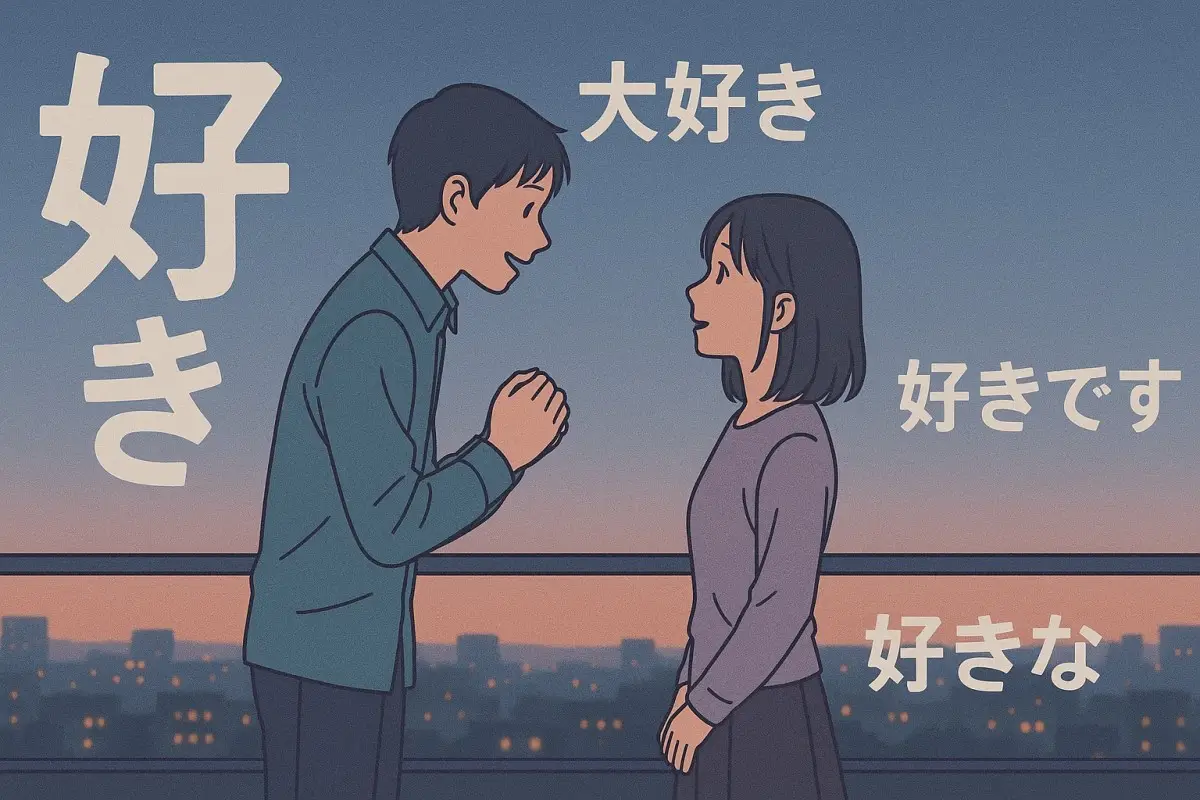
The moon is beautiful, isn't it? This line is often described as a poetic way to say "I love you"; the anecdote behind it is attributed to the writer Natsume Sōseki.
Phrases for dating and everyday romance
For a date, a message, or a relaxed moment, the small phrases matter more than big declarations:
あそびにいこう!
Asobi ni ikou!
Let's hang out!
キスしたい
Kisu shitai
I want to kiss you.
キスしよう
Kisu shiyou
Let's kiss.
ハグしよう
Hagu shiyou
Let's hug.
手をつなごうよ
Te o tsunagou yo
Let's hold hands.
デートに行こう!
Dēto ni ikou!
Let's go on a date!

Phrases about longing and affection
Use these when distance is hard, or when you want to show that you care:
あなたがいないと寂しい
Anata ga inai to sabishii
I feel lonely without you.
あなたが恋しいです
Anata ga koishii desu
I miss you.
守りたい
Mamoritai
I want to protect you.
大事にしたい
Daiji ni shitai
I want to treasure you and treat you well.
Phrases about being together and commitment
These fit a relationship that is already serious:
ずっと一緒にいたい
Zutto issho ni itai
I want to be with you forever.
一緒にいると楽しい!
Issho ni iru to tanoshii!
I have fun when I'm with you!
カップルです
Kappuru desu
We're a couple.
私と付き合ってください
Watashi to tsukiatte kudasai
Would you go out with me? (a polite request to start a relationship)
結婚しよう
Kekkon shiyou
Let's get married.
Pronunciation and tone
Romaji is a helpful bridge, but it is not a substitute for listening. Three points make the biggest difference. First, vowels are short and clear, except for long vowels: "yō" and "dēto" hold the vowel longer, and that length changes the word. Second, the Japanese "r" sits between an English "r" and "l". Third, the "u" at the end of "desu" is almost silent, so it sounds like "des".
Tone matters as much as pronunciation. The "-desu" form sounds polite and distant, while the plain form sounds familiar. "Aishiteru" is more intimate than "suki desu", and a final "ne" invites agreement. Mixing these levels is one of the fastest ways to sound unnatural, so pick the level that fits the person you are speaking to.
Conclusion
With these phrases you have a small repertoire for romantic moments in Japanese, whether in a conversation, a letter, or while watching your favorite anime. Choose the line that fits your relationship and the situation, and do not worry about perfect grammar: sincerity carries further than a flawless sentence.
If you want to go deeper, our article on how to say "I love you" in Japanese covers more variations. And if you prefer music, take a look at sung and romantic phrases in Japanese.







Community
Comments
0 comments
There are no published comments in this language yet.
Send comment