
Kimi no na wa (君の名は。) was without doubt one of the most talked-about Japanese films of 2016. Directed by Makoto Shinkai and produced by CoMix Wave Films, the film earned over 25 billion yen at the box office, reached number one on Myanimelist, and was placed on the shortlist for the Academy Award for Best Animated Feature. Once you have seen it, the images stay with you – and almost all of them are drawn from real places you can visit.
In this article we have gathered photos of the locations that inspired the film, so you can compare the scenes with the originals. If you do not yet know the plot of Makoto Shinkai's work, here is a short synopsis:
Synopsis: The story takes place a month after a comet falls to earth in Japan for the first time in a thousand years. Mitsuha, a high school girl living in the countryside, wants to live in the city because she is tired of country life. Taki, meanwhile, is a high school boy in Tokyo, works part-time at an Italian restaurant, and is passionate about architecture and visual arts. One day, Mitsuha dreams she has become a young man. On the other side, Taki dreams he is a high school girl in the countryside.
Contents 9
Video of the scenarios
The team from the Online Japan Program recently had the opportunity to visit Tokyo and shot a comparison video of the real filming locations of Kimi no na wa. We have good memories because we watched the film in the cinema on the previous trip with the class group. Years later the team was finally able to visit the spots in person – it is a shame we could not go along.
The comparison video is a clip recorded by the Online Japan Program team and is no longer publicly available, but the original scenes from Kimi no na wa can still be found on the official YouTube channel of the film. If you have not seen the movie yet, you can start with the official trailer before planning any of the trips below.
About the film
Kimi no na wa is a Japanese animated film released in 2016, written and directed by Makoto Shinkai and produced by CoMix Wave Films. The original Japanese title 君の名は。 translates literally as "Your Name", and the film became known internationally as Your Name. It opened in Japanese cinemas on 26 August 2016 and quickly became a cultural phenomenon.
The film combines a supernatural body-swap story with a longing, almost dreamlike search and broke several records at the time: it became the highest-grossing anime film ever, the first non-Miyazaki anime to cross the 20 billion yen mark in Japan, and the first anime film to top the Chinese box office. At the 2017 Academy Awards it made the shortlist for Best Animated Feature, but the award eventually went to Zootopia.
Lake Suwa in Nagano
There is no real city called Itomori in Japan. The settings shown in the film are actually spread across the Gifu and Nagano prefectures – and the most iconic of them is a lake that supplies one of the movie's most memorable images.
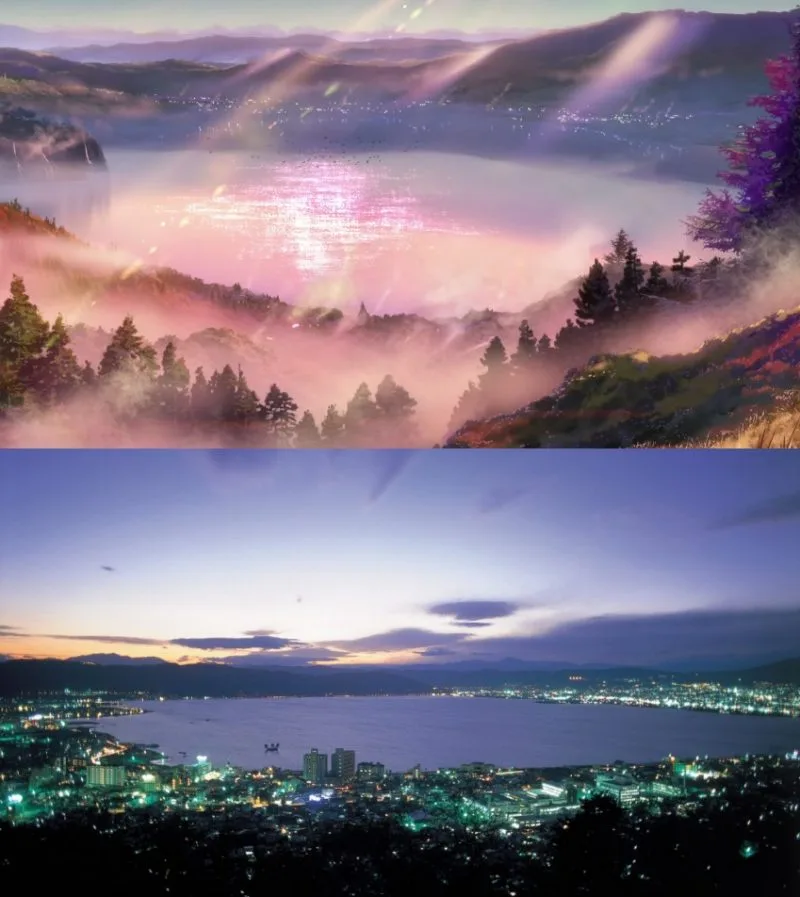
The photo above shows one of the most important locations in the anime: the lake that plays a central role in the fictional town of Itomori, especially in the famous comet scene. In real life, that lake is Lake Suwa (諏訪湖), in the city of Suwa, Nagano prefecture. It is the largest lake in Nagano, a popular summer destination, and in winter the so-called omiwatari (御神渡り) can be seen along the shore – ridges of ice pushed up against the bank, considered in the Shinto tradition to be the footsteps of the gods.
You can reach Suwa from Shinjuku Station in Tokyo in roughly two and a half hours on the JR East Limited Express Azusa. From Suwa Station it is only a few minutes by bus or taxi to the lake shore.
Tokyo filming locations
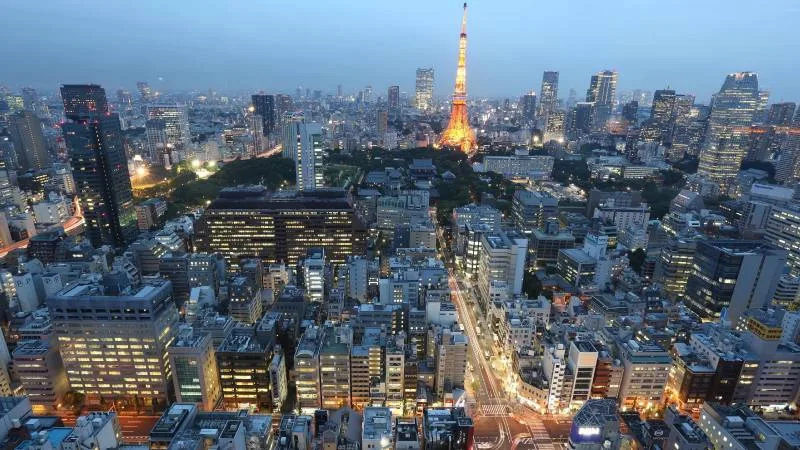
Alongside the countryside scenes, a large part of the film is set in Tokyo. Several well-known spots served as direct references – you will recognise some of them as soon as you walk through Shinjuku or Yoyogi.
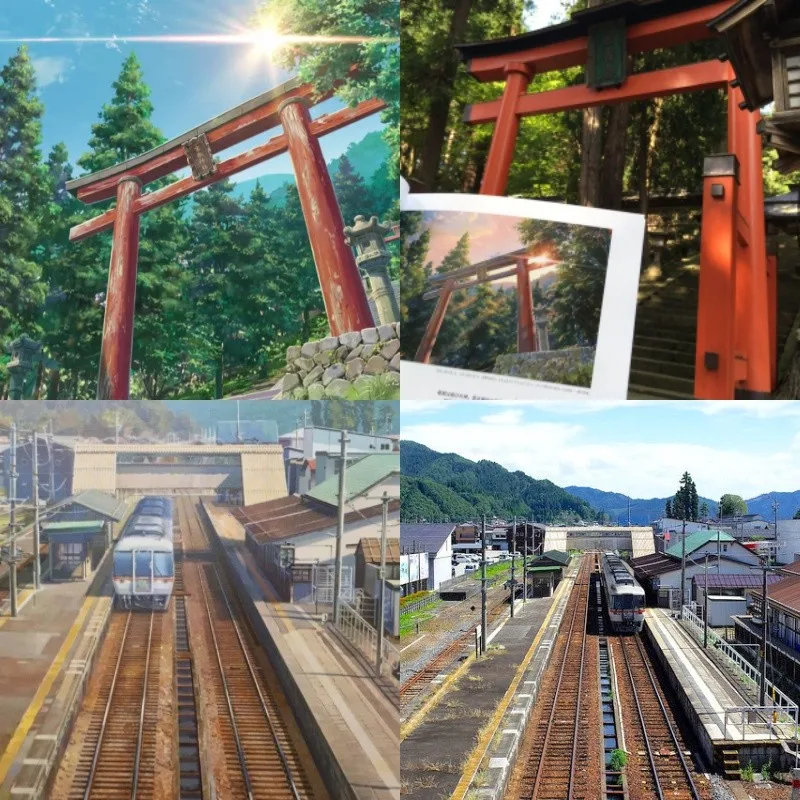
The photo above highlights a few of the Tokyo locations used in the film. In Gifu prefecture, Hida-Furukawa Station and the Hida Sannogu Shrine are the real places that were transformed into the Miyamizu Shrine and the small town where Mitsuha lives. In Tokyo itself, the main locations are:
Yoyogi and Shinanomachi
The striking NTT DOCOMO Yoyogi building, near Shinjuku Station, appears clearly recognisable in the film. Shinanomachi Station in Shinjuku is another direct reference: a good part of Taki's daily routine starts and ends here in the movie.
Suga Shrine and Shinjuku Crossing
Suga Shrine (須賀神社) in Shinjuku is one of the most visited pilgrimage spots for fans: in the film it serves as the shrine where Mitsuha and Taki finally meet. Right in front of the shrine is the famous staircase that plays a central role in the film's final minutes. A short walk away, at the east exit of Shinjuku Station, you will find the famous Shinjuku Crossing – it appears in the background of several scenes as Taki moves through the city.
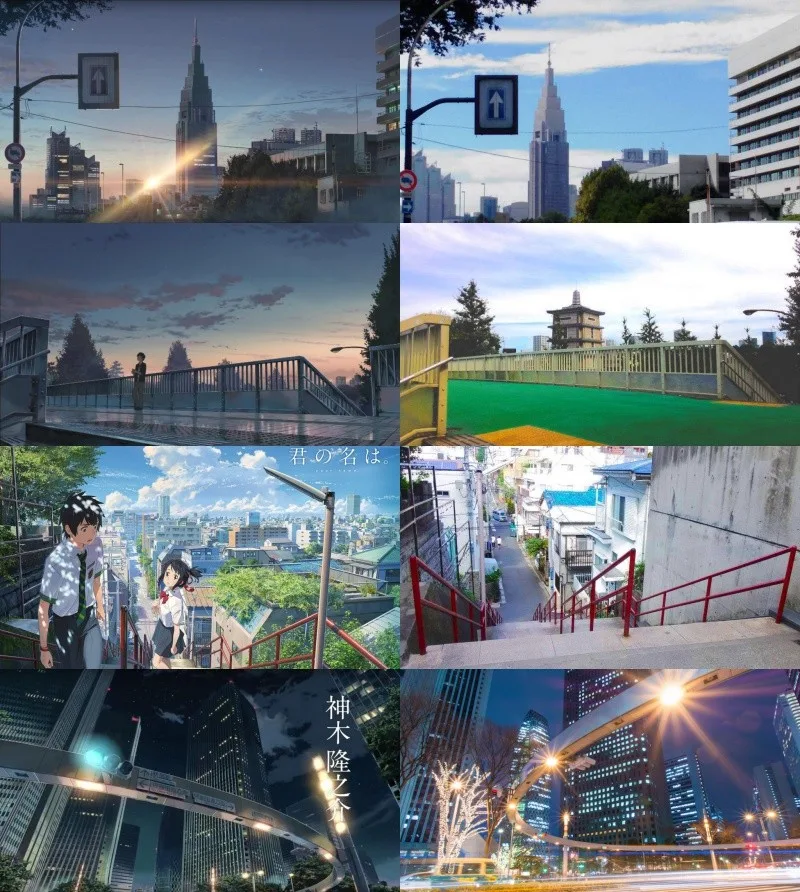
If you want to tick off the Tokyo locations in a single day, the most efficient route is: Suga Shrine first thing in the morning, before the wedding parties arrive – the staircase by the shrine – Shinanomachi Station (two stops on the JR Yamanote Line) – NTT DOCOMO Yoyogi (about a five-minute walk) – Shinjuku Crossing in the evening, when the neon signs come on.
Aogashima
The rural town where Mitsuha lives is one of the most striking settings in the film, and the visual model behind it is the small volcanic island of Aogashima – a volcanic island inside a volcanic caldera, roughly 358 kilometres south of Tokyo.
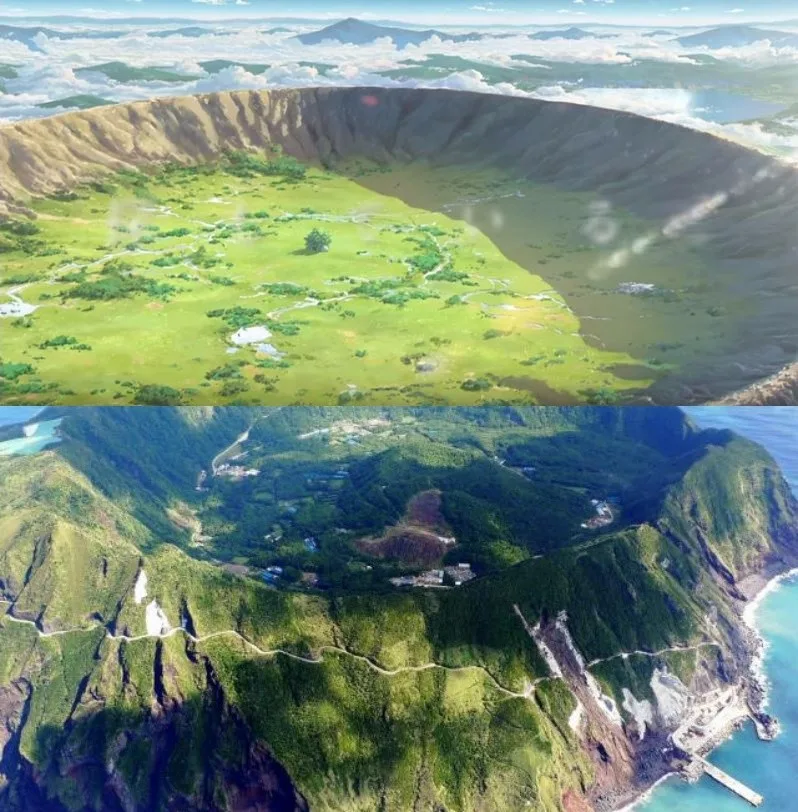
Aogashima belongs to the Izu Islands, covers only about 9 square kilometres, and has around 170 permanent residents. The island is reachable in two ways: by plane from Haneda to Hachijojima (about 50 minutes) followed by helicopter or boat to Aogashima, or by ferry and small boat from Tokyo's Takeshiba Terminal, which takes considerably longer. On the island you will find simple guesthouses, a campsite, a small village and an onsen – advance planning is essential, because there are only a handful of hosts and no ATM.
Planning your visit
Anyone planning to visit the real scenarios from Kimi no na wa should allow three to five days if Tokyo, Lake Suwa and possibly Aogashima are all on the itinerary. A few practical tips:
- Best season: Spring (March to May) and autumn (October to November) – mild weather, clear views of Mount Fuji and no peak typhoon season on the islands.
- Suggested order: Tokyo first, when the jet lag still feels light; Lake Suwa on the second or third day, with an overnight in a traditional ryokan; Aogashima only if you can spare four to five extra days and are comfortable with heights.
- Getting around: In Tokyo, a Suica or Pasmo card plus a Japan Rail Pass for the run to Nagano is enough. For Aogashima you need a domestic flight or ferry plus a helicopter transfer.
- Photo tip: Try to capture the film scene and the real location at the same spot, in the same direction, ideally early in the morning or in the golden hour, so the light matches the animation.
- Respect: Both Suga Shrine and the Suwa area shrines are active Shinto sites, not pure tourist attractions – keep your voice down and do not photograph the strictly sacred areas.
Final thoughts
Kimi no na wa shows how strongly Makoto Shinkai draws on real surroundings as inspiration. From Lake Suwa and the Shinjuku Crossing to the volcanic island of Aogashima, almost all of the film's iconic scenes sit in places you can reach with regular public transport. If Japan is on your travel list already, a trip to the real scenarios is a good way to rewatch the film with fresh eyes – and to discover a few spots you would never have visited otherwise. For broader travel planning, our first-trip-to-Japan guide and the Tokyo neighbourhood guide are useful companions to this itinerary.



Community
Comments
0 comments
There are no published comments in this language yet.
Send comment