Blog

  • The real animals that inspired the fossil Pokémon!

    The real animals that inspired the fossil Pokémon!

    Many Pokémon are inspired by real animals, like Charmander, which is inspired by a salamander. The same goes for fossil Pokémon.

    Some of these prehistoric animals are well known, like the Tyrannosaurus, but others are not so famous. In this post, we will discover where the ideas for fossil Pokémon came from!

    1st generation

    Omanyte/Omastar

    Omanyte is inspired by ammonite mollusks, which lived long before the dinosaurs and went extinct along with them. There were many species of ammonites, some of which could be very small and others quite large, with shells up to two meters in diameter! Omanyte also seems to have been inspired by the nautilus, another mollusk that still lives today.

    Kabuto/Kabutops

    Kabuto, in turn, is inspired by the trilobite, an arthropod (arthropods are animals like insects, crustaceans, arachnids, etc.) that lived for millions of years before the dinosaurs, in the Paleozoic era. There were several species of trilobites, and they could feed on various things. The horseshoe crab, a crustacean similar to the trilobite and that still lives today, may also have inspired Kabuto.

    Aerodactyl

    The prehistoric animal that inspired this fossil Pokémon is well known to everyone: the pterodactyl! But “pterodactyl” is a very generic name for a large number of related animals that lived during the Mesozoic era, the age of dinosaurs, and that, nonetheless, were not “true” dinosaurs. Pterodactyls came in all sizes, some being small and others really large, like Quetzalcoatlus, which with a wingspan of about 10 meters, was like a small airplane!

    pokemoniguais

    3rd generation

    Lileep/Cradily

    Although they resemble plants, these two fossil Pokémon were inspired by crinoids, marine animals belonging to the class of echinoderms, meaning they are relatives of starfish and sea urchins! These animals appeared long before the dinosaurs and, although they were much more abundant in the past, they still survive today!

    Anorith/Armaldo

    These fossil Pokémon are based on anomalocaris, which belonged to a family of animals that may have given rise to modern arthropods. They lived long before the dinosaurs, in the Cambrian period, a time when life flourished on land and there were many species of animals. Anomalocaris were predators.

    Relicanth

    Although this is not a fossil Pokémon, it deserves to appear on this list because the animal that inspired it, the coelacanth, is a living fossil. It was thought that the coelacanth was extinct, but in 1938 a living specimen was discovered! And just look at a picture of a coelacanth to see how it is really different from the other fish we are used to!

    4th generation

    Cranidos/Rampardos

    These fossil Pokémon were inspired by pachycephalosaurs, dinosaurs that lived in the Cretaceous period. These animals were herbivores and it is believed that they used their massive heads in disputes just like rams and other animals use their horns in head-butting fights!

    Shieldon/Bastiodon

    These were also inspired by dinosaurs, the ceratopsians. Shieldon resembles the Protoceratops, while Bastiodon looks more like the famous Triceratops! These animals were herbivores and lived in herds. They may have used their horns and head shields to compete with each other or to defend themselves from predators.

    pokemonsiguais2

    5th generation

    Tirtouga/Carracosta

    Tirtouga seems inspired by Protostega, an extinct turtle that measured 3 meters! If such a large turtle existed, imagine the Archelon, the fossil turtle that Carracosta seems to have been inspired by, which measured up to 5 meters!

    Archen/Archeops

    These two were inspired by Archaeopteryx, a fossil animal considered one of the oldest birds, as modern birds evolved from small carnivorous dinosaurs. Remember, whenever you eat chicken for lunch, you are eating a distant relative of the Tyrannosaurus!

    6th generation

    Tyrunt/Tyrantrum

    I don’t even need to talk about these two! They are clearly based on the Tyrannosaurus, the most famous dinosaur of all!

    Amaura/Aurorus

    These two fossil Pokémon seem to have been based on sauropods, the famous “long-necked” dinosaurs. The Amargasaurus, one of these animals that may have had a sail on its neck (just like Spinosaurus had a sail on its back) may have inspired these Pokémon.

    Well, these are the fossil Pokémon! We tried to talk a little about each one! Which one is your favorite? We recommend reading our article that lists the names of Pokémon in Japanese.

  • Horrifying animals from Japan!

    Horrifying animals from Japan!

    Japan may be known as the land of cute things, but beneath the surface lies the horrifying truth… Japan is home to some of the scariest animals on the planet. And that’s why today I’m telling you about the 5 most horrifying animals in Japan.

    Goblin Sharks

    Say hello to our goblin shark, known in Japanese as mitsukurizame or tenguzame. The word tengu refers to a mythical creature with a long nose. These sharks can also be found outside of Japan. However, the highest catch rate of them is found in Japan even though most of these encounters are accidental. They live in the depths of the ocean at a depth of 1,200 meters and can grow to about 6.2 meters and weigh up to 210 kg.

    Of course, it is not bigger than the great white shark (11 meters), but the intimidation factor here is different. Just look at the irregular teeth that remind us of barbed wire and the nose that resembles a saw, as well as the eyes like those of a mad being. These guys are literally “living fossils,” the last members of an ancient lineage dating back 125 million years that still retains the same “primitive” characteristics.

    (photo at the beginning of the article)

    Spider Crabs

    Known as takaahashi gani in Japanese, literally “Spider Crab,” these beings are the largest arthropods on Earth. With legs measuring one meter in length, the result is a leg span of over 3.8 meters. The reason these guys are only at number five is because they are, surprisingly, GENTLE, despite their monstrous appearance.

    They prefer to group at the bottom of the ocean, covering themselves with sponges and other marine animals, basically consuming everything they can find. Still, I personally wouldn’t want to be face-to-face with one of these creatures. These guys are found off the southern coast of Honshu, Japan’s main island, so I recommend staying out of the ocean there. If you still want a chance to meet our “little friend” in person, you can do so by visiting the Osaka Aquarium.

    Coconut Crabs

    Coconut crabs (known in Japanese as yashigani.) may have a silly name, but not when you know the meaning behind it. They are named so because their claws are strong enough to open a coconut. These things are not only the largest living arthropods but also the largest invertebrates. With a leg span of up to 0.9 meters and weighing up to 4 kg, it’s no wonder they have no natural predators, other than humans and other coconut crabs.

    salamander

    Giant Salamanders

    Salamanders are generally not that bad, just a few that are slippery and climb walls and eat pests. The problem arises, however, when the salamander in question is 1.9 meters long. The Giant Salamanders of Japan and China are the largest amphibians in the world. They usually spend their time in the rivers of northern Kyushu and western Honshu (another reason not to go into the water), blending in with the rocks and mud so they can catch and eat basically everything that comes by, such as: insects, fish, rats, crabs. They also cover their skin with mucus, which acts as a thin shield against scratches and parasites. Their first act of self-defense occurs by producing a milky sticky secretion. Making them not only one of the most chilling things we can see but also one of the most disgusting.

  • Hygiene Habits Practiced in Japan

    Hygiene Habits Practiced in Japan

    Hygiene is very important to avoid diseases, contaminations, and other various things. In this article, we will see some acts and hygiene habits practiced by the Japanese in Japan.

    Each country has its hygiene habits and customs, and Japan has several customs, and the interesting thing is that they are mostly followed by everyone. Not following these habits can be embarrassing for you!

    Public Hygiene Habits – Blowing Your Nose and Eating

    You should not blow your nose in public. Even for us Brazilians, this practice is strange and vulgar; in Japan, it is no different. Furthermore, you should not eat while walking down the street; you might bump into someone and dirty them.

    Normally, we always carry a handkerchief or a piece of toilet paper to avoid being in this situation, but there, the Japanese prefer to go to a bathroom to do their proper hygiene. Don’t even think about blowing your nose in front of others.

    When you are on the street, don’t think about throwing trash on the ground. It may be difficult to find a trash can, but simply carry your trash home or to a convenience store. If you want to eat, there is usually a space for that in these convenience stores.

    Hygiene and Cleanliness in Religion

    Religion plays a significant role in the cultural meaning of cleanliness and hygiene in Japan. Shintoism greatly values purity; in fact, you must wash your hands and face before entering a Shinto shrine.

    It is said that the Shinto Gods (Kami) hate dirt, and since everything can end up being a God for Shintoists, it makes sense to keep everything clean. Buddhism also teaches that cleanliness is the key to having a peaceful mind and teaches good morals.

    Even if you do not believe in any of the religions, cleanliness has become ingrained in Japanese culture, so it is better to follow the “rules.”

    Hygiene Customs in the Shower and Bath

    The way people bathe in Japan is a bit different from that in Western countries. In Japan, it is common for people to take a shower to clean themselves and then go into a hot bath to relax.

    In a typical Japanese apartment, the bathtub, shower, sink, and toilet will all be in the same room. The entire bathroom can get wet, so don’t be afraid to wet everything. It is extremely important that soaps, shampoos, and others are not used inside the bathtub; always do this outside of it.

    The showers in Japan are usually detachable from the wall; you can enter the bathtub to take a shower and place the showerhead wherever you want. Everything resembles the hygiene habits in the onsen and bathhouses of Japan.

    Generally, the order in which Japanese families use the bathtub follows a family hierarchy, with the father going first. The same bathwater is used by each family member. After everyone has bathed, the bathtub is drained and cleaned.

    hygiene

    Hygiene with Chopsticks

    The chopsticks are not disposable, so it is important to maintain constant hygiene. Of course, there are disposable chopsticks, especially in restaurants, but it is easy to differentiate one from the other.

    It is important to know where you place them and how; always prefer to leave them wrapped in a cloth or napkin. Also, remember not to play with them; this is disrespectful and rude!

    Some people make a lot of artwork with used chopsticks, so know that they can be reused in a way that does not harm the environment.

    chopsticks

    The Habit of Wearing Surgical Masks

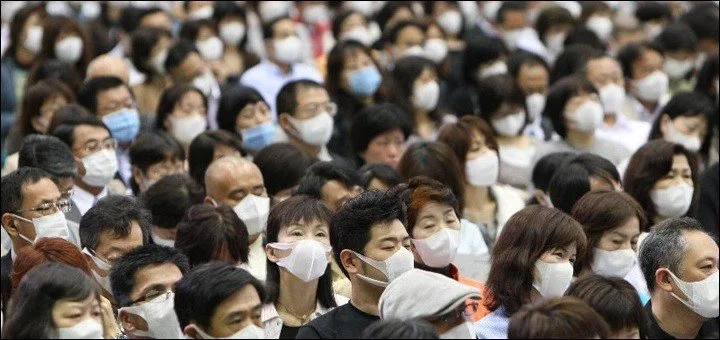
    The practice was only adopted after 2003, following the SARS outbreak. After a shortage, people began to stock these masks, and over time they became a habit.

    They wear them even when they don’t need to; the main reasons are to avoid catching native flu and also to avoid passing it on and to reduce the risk of being contaminated by another person.

    In addition, they can be used for fashion, protection against the cold, hiding imperfections on the face, protecting from radiation and pollution, and also to feel more confident.

    hygiene

    Removing Shoes Before Entering Any Home

    This is one of the most important practices and should be adopted by us Brazilians.

    In Japan, it is common for houses to have tatami floors, so shoes and others easily dirty these floors. Furthermore, we do not know where other people have stepped and even less where they have been, so it is good to take precautions.

    In Japanese homes, there will always be specific footwear to be used inside the residence. It is also certain that there will be an area to store the shoes. This also applies in Japanese schools.

    shoes

    Cleaning in Schools

    This act is more general, but it also counts.

    We have said several times that those who clean the schools are the students themselves; this is very important for their growth. Therefore, they are fully aware that if they make a mess, they will have to clean it up themselves.

    Moreover, they learn to have responsibilities and also learn household chores, something that is greatly lacking in our Brazilian youth. This involves hygiene in general. In addition to having very well-prepared hygiene materials, another thing that is lacking in our Brazilian schools.

    The Habit of Separating Trash

    Selective collection starts at home, and organic packaging is taken separately, where each material has a specific day for collection.

  • Popular Insects in Japan and Their Cultural Fascination

    Popular Insects in Japan and Their Cultural Fascination

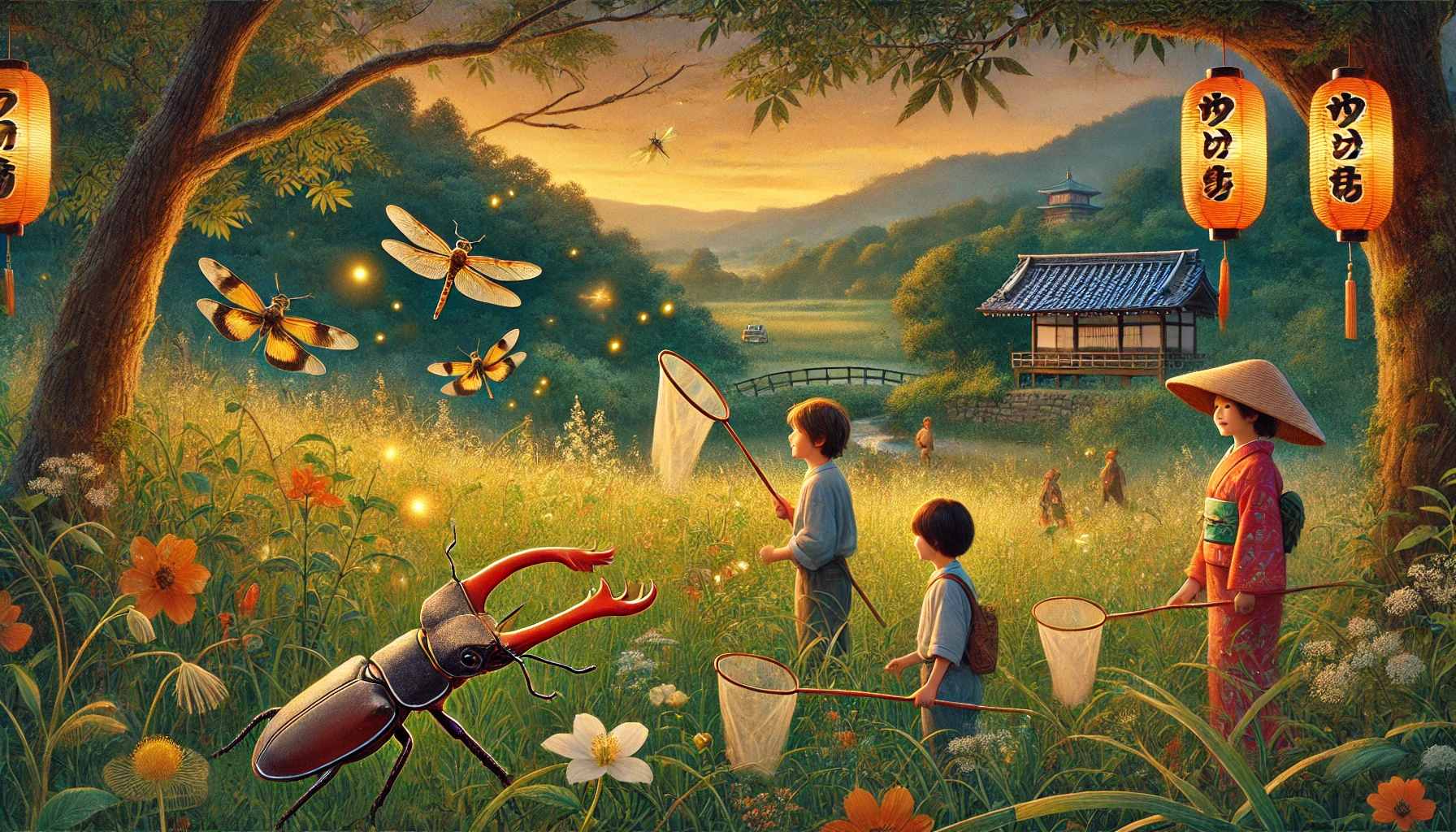
    In Japan, the admiration for insects is a fascinating part of the culture. From children to the elderly, the Japanese have a special affection for these small beings, which are seen almost as miniature heroes. This enthusiasm is particularly strong among boys, who are enchanted by the strength, resilience, and uniqueness of insects. Insect hunting is a popular pastime among Japanese children, with specific equipment that makes the activity even more engaging. This hobby was, in fact, one of the inspirations for the creation of the famous Pokémon franchise.

    In this article, we explore some of the most beloved insects in Japan, their peculiarities, and why they are so emblematic for the Japanese people.

    Cicadas – Semi

    If there is a sound that defines the Japanese summer, it is the incessant singing of cicadas. These insects, known as “semi” in Japanese, have a significant cultural role, being true symbols of this season. The song of the cicadas, despite being loud and repetitive, is seen as a melodic reminder of the heat and the ephemerality of summer.

    Japan is home to more than 350 species of cicadas, which can be found almost everywhere, from rural areas to the bustling streets of Tokyo. Some of the most famous species include the Abura-Zemi, with its deep song, and the Min-Min-Zemi, which produces a higher-pitched sound. The short life of adult cicadas also brings reflections on the transient beauty of life, a concept highly valued in Japanese culture.

    The popular insects of Japan

    Beetles – Kuwagata and Kabutomushi

    Kuwagata – Horned Beetle

    The Kuwagata are extremely popular among Japanese children. These beetles have powerful jaws that resemble the stylized horns of samurai helmets, making them true cultural icons. Besides being small and easy to raise, they symbolize strength and resilience, characteristics valued in Japan. Children often capture and raise Kuwagata, frequently organizing friendly “battles” between them.

    mushi

    Kabutomushi – Rhinoceros Beetle

    Known as the “King of Insects”, the Kabutomushi is another favorite. Its name comes from the Japanese word kabuto, which means samurai helmet, due to its robust and striking appearance. These beetles are incredibly strong, able to lift objects many times heavier than their own body, which adds to their allure. They frequently appear in anime and toys, solidifying their position as a symbol of childhood in Japan. Raising a Kabutomushi as a “pet” is a common practice, with affordable prices ranging from 600 to 1,000 yen.

    mushis

    Fireflies – Hotaru

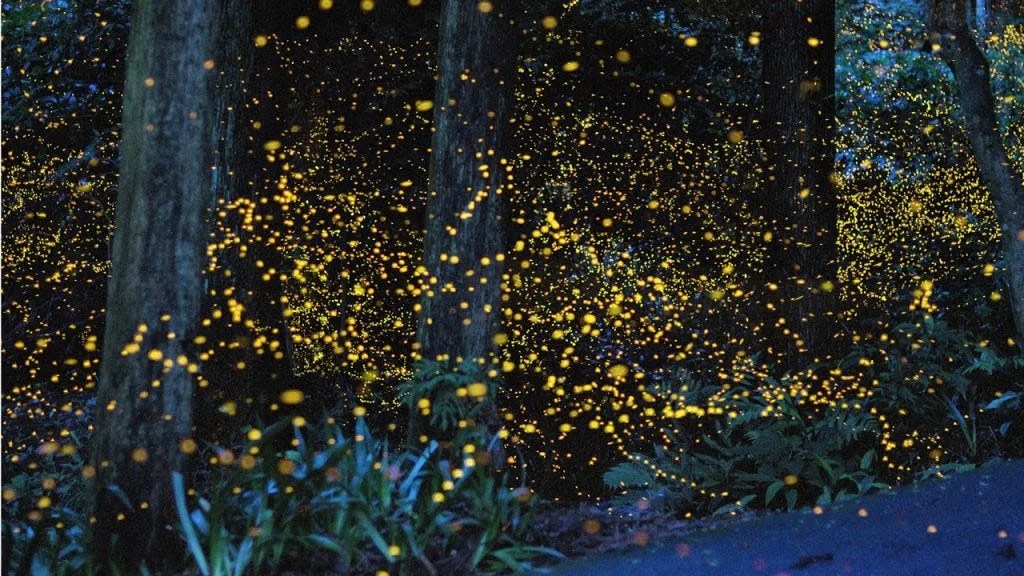
    The fireflies, called hotaru, illuminate the early summer nights in Japan, symbolizing the ephemeral and fragile beauty of nature. Traditionally, the Japanese associate these insects with purity and renewal, and their appearance marks the transition between spring and summer.

    Natural displays known as “Hotaru-gari” (firefly watching) are held in various regions, where families and couples gather to admire the insects in fields and by riversides. These events are so significant that they have inspired classic works of Japanese literature and cinema, such as the poignant film Grave of the Fireflies.

    Dragonflies – Tonbo

    Dragonflies, or tonbo, have a rich history in Japan, dating back to the time of the samurai. Known as katchimushi (victory insects), they represent perseverance and courage, as they only fly forward. This characteristic inspired warriors to always advance and never retreat on the battlefield.

    In Japanese folklore, dragonflies are also associated with good luck and prosperity. Many cultural items, such as armor, swords, and fabric patterns, feature dragonfly designs as a symbol of protection and triumph.

    Butterflies – Choucho

    In addition to the mentioned insects, butterflies (choucho) are admired in Japan for their delicacy and spiritual symbolism. They represent transformation and rebirth, frequently appearing in traditional ceremonies and Japanese art. Some native species, such as the Menelaus Blue butterfly, are especially valued for their unique beauty.

    The Unique Relationship between Children and Insects

    The love for insects in Japan goes beyond mere curiosity. For children, hunting and caring for insects is a way to connect with nature, especially in a country where urban spaces prevail. Equipment such as nets, cages, and identification books are part of this adventure. This playful and educational relationship also shapes the perception of insects as something to be respected and appreciated, a trait that persists into adulthood.

    Insects hold a special place in the hearts of the Japanese, transcending generations and cultural contexts. From cicadas and beetles to fireflies and dragonflies, each species has its unique charm and symbolism. By observing this relationship, we understand how Japanese culture values both the small wonders of the natural world and the lessons they can teach.

  • Japanese Emperors – Emperor Meiji

    Japanese Emperors – Emperor Meiji

    Japan is a monarchy and consequently it will have a King to represent it, in Japan, known as Emperors.

    Japan has had more than hundreds of emperors, however, some Kings are separated by “Periods”. One of the Periods that is widely discussed and cited is the “Edo Period”. The Modern Era currently has 4 Emperors, one of whom is the current Emperor, Emperor Akihito.

    Among them is Emperor Meiji. He was the one who took the first great step in his time towards the so-called “Modern Era”. Below we will see the achievements and a little about him!

    Posthumous Name

    Posthumous can be literally translated as “After death”, being also an honorary name given to emperors, nobles, and in exceptions and in some cultures, this title is also given to officials and others.

    In the case of Japan and relating to the Emperors, the posthumous name is given to him according to the name of his reign. In Japanese culture, there is also kaimyo, which is a Buddhist practice with the same purpose, however, it is more used while alive.

    But one should not confuse the posthumous name with the era name and temple name. The era name refers to the years in which an Emperor/Governor ruled a country, and his name after the reign is usually remembered with the era name, but always referring to the posthumous.

    meiji2

    Emperor Meiji (Mutsuhito)

    His name is Mutsuhito (睦仁), Emperor Meiji (明治天皇, Meiji Tennō) was one of the crucial Emperors for the beginning of the Modern Era, he is the one who made Japan what it is today!

    He lived for 59 years and his reign lasted 35 years, a long reign, so to speak.

    Prince Mutsuhito succeeded to the throne at just 14 years old, in 1867, and in the same year he married Masako, later her name will be Haruko. She was very important to Meiji, as she also acted in political matters, something that had not happened for many years. She could not give him heirs, however, he had 15 children with 5 ladies-in-waiting.

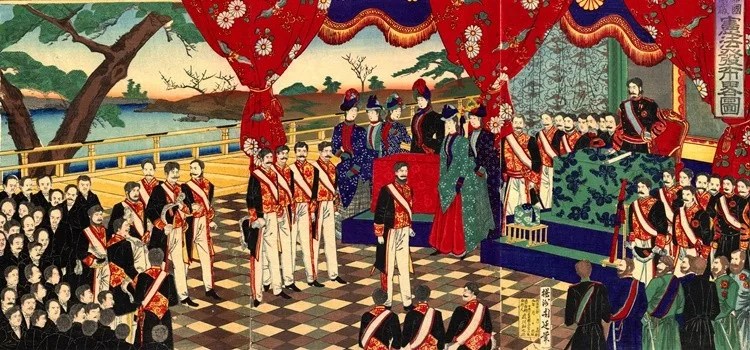
    And it was during Meiji’s reign that the feudal regime and the shogunate were abolished. Shogunate is the title given by the Emperor to a general to command all the troops.

    Another change was the capital of Japan moving from Kyoto to Edo, which is now called Tokyo. There was also the emergence of a new constitution.

    meiji3

    One of Meiji’s greatest achievements was making Japan a country known worldwide. During the 19th century, Japan was able to clearly dictate its objectives to other Western powers. The major powers were very interested in Japan, and with this, he was able to grow and become the great power it is today. At that time, Japan was a country in industrial and economic development, also a country devoted to its Emperor!

    Meiji Restoration

    • It occurred between 1866 and 1868;
    • The feudal dictatorship, Tokugawa shogunate, was abolished due to imperial victories in the Boshin war;
    • Declaration of the end of feudalism and proclamation of a democratic and modern government for Japan;
    • During the Meiji period, it was declared that Japan would act according to international laws;
    • The Samurais stopped obeying their lord, daimyō, and then began to obey the Emperor;
    • Meiji, despite being the Emperor, had no actual power, however, he was a symbol for the people. And today he is acclaimed as a source of pride for the Japanese for having made Japan what it is today!

    Some curiosities about Meiji

    • Mutsuhito was crowned at just 14 years of age;
    • Like in many other monarchies, Meiji’s education was entrusted to a Noble;
    • He received two titles in a single day, that of Imperial Prince and also that of Crown Prince;
    • Only 5 of his children reached adulthood, among them, 1 prince and 4 princesses;
    • He was one of the Emperors who maintained the longest longevity, this after the abdication of Emperor Ougimachi, having lived more than 50 years;

    Of course, this is just a summary of the Emperor and what happened in his era and afterwards. This is a very delicate and lengthy subject that may require even an entire website studying the whole topic. If you want to delve deeper into the subject, be prepared to read a large book or many wiki pages.

  • Are Japanese people cold and independent?

    Are Japanese people cold and independent?

    Concepts and wrong ideas tend to spread like water. Sometimes people have an experience and spread it, causing others to believe and have wrong ideas about a certain subject.

    Because of these rumors, Brazilians have an idea that Japanese people are cold and independent. I had a completely different vision and experience on my trip to Japan in 2016. With my personal experience, from Brazilians and even Japanese people, and after much research, I wrote this article to discuss the subject.

    Why do people have this idea?

    There are many reasons for people to come to the conclusion that Japanese people are cold. Cultural differences, Japanese immigrants living in Brazil, the influence of ancient Japan, and various other factors.

    One of the points that Brazilians use to say that Japanese people are cold is the lack of contact, that handshake and hugs that happen among Brazilians. But all of this is a matter of respect and hygiene; Japanese people who have a great friendship and intimacy feel comfortable leaning against each other.

    Another thing that can lead to the belief that Japanese people are cold is the lack of communication with strangers. If you get on a train, it is unlikely that someone will strike up a conversation with you. But this happens because no one wants to make noise, or due to the great shyness that exists among Japanese people, especially if you are a foreigner, this ends up becoming a greater difficulty for them to communicate.

    Of course, there are some scenes in Japan and even with immigrants and descendants living in Brazil. This ends up making people have this idea that Japanese people are cold. But all of this is taken in a generalized way and ends up tarnishing the name of the Japanese. What makes me saddest is the fact that Brazilians say that Japanese people are cold, amidst so many horrible cases of coldness that happen within our country.

    balancing

    Of course, there are cold Japanese people, just as there are cold Brazilians. One big fact is that Japanese people are reserved, avoid contact with strangers, avoid getting involved in others’ lives, and especially bothering others. Japanese people have a serious communication problem and difficulty socializing, but this is mostly due to their shyness. This also results in the difficulty of expressing emotions and affection.

    What are Japanese people like?

    The Japanese are the opposite of cold and independent. Do you know what a cold person is? A cold person has no feelings, does not cry, does not show pain, fear, anger, or sadness. Now watch a Dorama or Anime to see how much crying and drama there is. Japanese people do their best to avoid letting their problems affect others, for this reason, they avoid crying, complaining, and showing their feelings and weaknesses, but they have all of this, and when it bursts, you can see that Japanese people are quite the opposite of cold people.

    I don’t even need to comment much on the individuality of Japanese people because the opposite is quite visible. Japanese people are independent and try to solve their problems on their own, but they always work in teams and do everything to help others. The Japanese people were raised to always think of others and not themselves.

    Japanese people apply the “golden rule” or “ethics of reciprocity” well, where everyone should treat others as they would like to be treated.

    We cannot say that Japanese people are independent just because they keep their feelings and problems to themselves. In reality, they always work as a team; teamwork is taken very seriously in Japan. People who want to be independent in Japan are viewed unfavorably.

    enko

    My experience with Japanese people

    I also thought that Japan would have a somewhat cold climate, and I saw some signs of individuality and coldness. But I also saw quite the opposite, smiling people, talking and laughing all the time. The education is top-notch; I got tired of hearing sumimasen (sorry). All the time, sometimes the person didn’t even touch me and apologized. Not to mention the service; people were incredibly patient and served me with a smile on their faces.

    I could feel the regional difference between Tokyo and Kansai. In Tokyo, no stranger spoke to me, but when I climbed a mountain in Kyoto, all the Japanese people passing by greeted me, one even gave me a chocolate. Meanwhile, all the foreigners who passed by me said absolutely nothing.

    I also noticed a lot of public displays of affection. I saw Japanese people hugging, kissing, and always holding hands, the opposite of what people said. I had the opportunity to stay at several Japanese families’ homes and witnessed a wonderful environment, full of love and affection. I really didn’t notice anything cold in Japan; everything was beautiful and warm. Of course, each person has different experiences, but don’t draw conclusions because of a few people.

    And remember, I’m not saying that the lives of Japanese people are perfect and that everyone is happy and smiling. But I noticed that many Japanese people prefer to smile and forget their problems rather than have a cold and distant appearance.

    And now? Are Japanese people cold?

    The simple fact that Japanese people do not have much physical contact, like handshakes or hugs, does not indicate coldness. The fact that Japanese people keep their problems and feelings to themselves, or remain alone most of the time, does not demonstrate independence. Many Japanese people do end up isolating themselves and do not share their feelings and problems with others. This is a significant problem that can end up resulting in suicides or depression.

    But it is worth remembering that there will always be cold and independent people anywhere in the world, and they are not few. For this reason, never conclude that in one country people are colder than in others. Take into account your culture and education! And try to look at the beam in your own eye instead of looking at the speck in your brother’s.

    Before concluding that Japanese people are cold, try to reconsider the concept of what it really means to be a cold person. I don’t like to make comparisons! But saying that Japan is a cold country because of the culture of being reserved and some reported cases, while our country has many more people without a shred of love, compassion, and respect for others, is a great hypocrisy!

    Thus, Japanese people who do not like to talk or have physical contact, prefer to keep their feelings and problems to themselves, or have difficulties socializing, are not cold people but rather reserved. Cold people are those who do not care about others, who have no feelings, compassion, or pity, who do not respect others. In other words, cold people are thieves, murderers, and ill-mannered individuals, which is the sad reality that dominates our beloved Brazil.

  • Discover the Works and Career of Jun Maeda

    Discover the Works and Career of Jun Maeda

    Jun Maeda (前田純) is one of the most influential names in the world of visual novels and animes, known for his emotional narratives and memorable soundtracks. As a writer, composer, and co-founder of Key Studios, he played an essential role in the advancement of modern visual novels, establishing a quality standard that influenced both the gaming industry and its adaptations into anime.

    Despite his undeniable talent, Maeda’s journey has been marked by challenges, from early career rejections to health issues that later ironically connected to the stories he created. His works, such as ClannadAngel Beats! and Little Busters!, are known for exploring universal themes of love, loss, and hope, winning fans in Japan and around the world.

    The Works of Jun Maeda: A Legacy of Emotion and Creativity

    Jun Maeda is responsible for some of the most remarkable works in the universe of visual novels and animes, each carrying his unique signature of emotional themes and deep narratives. Below, we explore some of his main creations:

    1

    One of Key Studios’ early standout works, Kanon is a visual novel that combines romance with supernatural elements. The story follows Yuichi Aizawa, who returns to the city where he lived during childhood and faces lost memories, interactions with various female characters, and magical events that change his life.

    1

    Air is a visual novel that delves into family bonds and unconditional love. Yukito Kunisaki, a traveler in search of the “winged girl” from an ancient legend, meets Misuzu Kamio, a mysterious girl who holds secrets related to that legend. The narrative is emotionally intense, addressing themes such as sacrifice and destiny.

    1

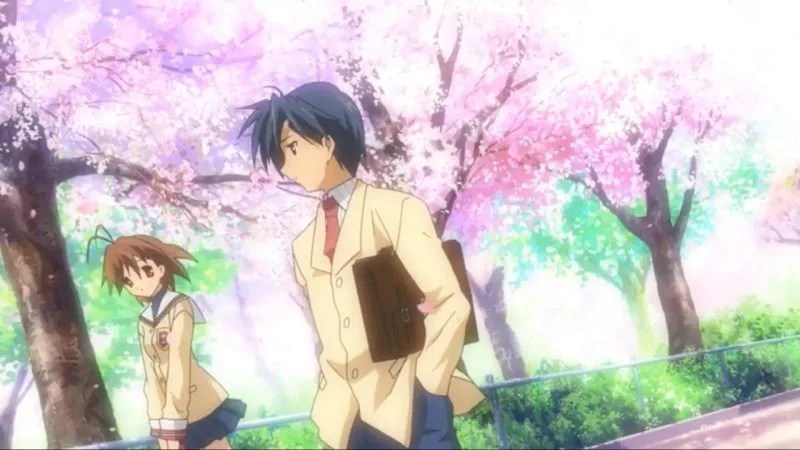
    Perhaps Maeda’s most famous work, Clannad explores the everyday life of Tomoya Okazaki and his relationship with Nagisa Furukawa. More than just a simple romance, Clannad addresses themes such as family, redemption, and the struggle to overcome difficulties. The “After Story” arc is widely recognized as one of the most emotionally impactful narratives ever created in visual novels.

    Discover the Works and Career of Jun Maeda

    1

    With a focus more on friendship and the meaning of unity, Little Busters! tells the story of a group of friends who form a baseball team while facing personal challenges. The plot mixes light moments with dramatic twists, once again marking Maeda’s characteristic style.

    1

    Although it started as an anime, Angel Beats! also had adaptations into visual novels. The story takes place in a post-death world, where characters must deal with regrets and find peace. The combination of emotional narrative and action ensured the success of this work, making it an icon among fans.

    Discover the Works and Career of Jun Maeda

    1

    In Charlotte, Maeda explores the concept of superpowers in an innovative way. The story follows Yuu Otosaka, a teenager who discovers he can control other people for brief moments. As he learns more about his abilities and his past, the plot becomes an emotional journey of self-discovery and sacrifice.

    Discover the Works and Career of Jun Maeda

    Summer Pockets (2018)

    One of his most recent works, Summer Pockets is a visual novel focused on summer memories, regrets, and reconciliation. The story follows Hairi Takahara, who visits a coastal island where he discovers secrets that connect the local inhabitants to mysterious and emotional events.

    Early Steps and Rise at Key Studios

    The Years Before Key

    Before founding Key Studios, Maeda worked on titles such as Moon and One: Kagayaku Kisetsu e. These projects were his first steps in the industry, allowing him to develop skills as a scenario writer. Although these works gained recognition, it was at Key that he truly found space to innovate and stand out.

    In 1998, Key was founded, and Maeda quickly became a central figure in creating stories like Kanon and Air. These visual novels brought emotional depth to the genre, introducing elements of magical realism and family themes that are still hallmarks of his narratives today.

    The Emotional Formula for Success

    Maeda became known for creating stories that bring audiences to tears. He combines complex characters with deep themes, such as family relationships and different forms of love. Many of his works follow a structure that includes:

    • Introduction of a hidden past: Traumas or secrets of the characters are gradually revealed.
    • Memorable moments: Emotional connections are created between the characters and the audience.
    • Intense climax: A turning point that challenges expectations.
    • Touching conclusions: Melancholic endings that leave a lasting mark.

    These elements are evident in works like Clannad, where family dynamics and the challenges of parenthood are explored in a unique way.

    Discover the Works and Career of Jun Maeda

    Angel Beats!: A Personal and Impactful Work

    Although it did not start as a visual novel, Angel Beats! is one of Maeda’s most impactful projects. The story takes place in a post-death world, where characters must confront their pasts to achieve peace. The combination of drama, fantasy, and music created by Maeda makes this work unforgettable.

    The main character, Otonashi, and his relationship with Angel (Tenshi) are the heart of the narrative, involving themes of sacrifice and redemption. Interestingly, elements of the story – such as heart transplants and medical challenges – later became parallels to Maeda’s real life years later.

    The Twist of Real Life

    In 2016, Jun Maeda announced that he had been hospitalized due to idiopathic dilated cardiomyopathy, a serious condition affecting the heart. He required constant treatment and later revealed that he needed a heart transplant. In a tragic coincidence, his life seemed to mirror some of the stories he had created.

    Even while facing these challenges, Maeda remained optimistic and determined to continue writing. His commitment to his art and the connection he has with his fans are examples of his resilience.

    Discover the Works and Career of Jun Maeda

    The Legacy of Jun Maeda

    Jun Maeda is not just a creator; he is an inspiration. His stories and music continue to move and connect people around the world. The depth of his narratives, combined with his musical talent, ensures that his legacy will remain alive for many generations.

    Whether through his visual novels or animes, Jun Maeda has shown how art can touch the heart and transcend cultural barriers. He remains a key figure in the industry, proving that challenges can be overcome with passion and dedication.

  • Meat in Japan – Prices, curiosities, and consumption

    Meat in Japan – Prices, curiosities, and consumption

    The media often shows exorbitant prices for Japanese-origin meats, and we already know that daily consumption of beef is not common in Japan. These and other factors make people think that meat is absurdly expensive in Japan, which is why Japanese people do not eat much meat. But is that really true? Do Japanese people really not eat meat because it is too expensive? How much does meat cost in Japan? In this article, we will answer this and other questions.

    People think that just because Japan is small, it has the most expensive meat in the world. It is logical that meat in Japan is priced higher than in Brazil, but it is worth noting that in several countries like Canada, meat costs much more than in Japan or Brazil.

    Meat in Japan

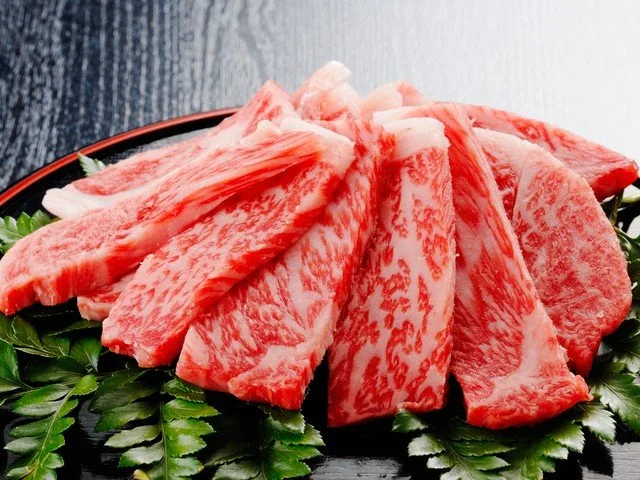
    Japan is famous for having some of the best and most expensive premium meat in the world, such as kobe beef. Because of this meat, people think that all meats in Japan cost 200 reais per kilo. Anywhere in the world, this meat will indeed cost a fortune, but how much does regular beef, pork, and poultry cost in Japan?

    We don’t need to talk about fish because everyone knows that fish and seafood are part of Japanese cuisine. But it is wrong to imagine that Japanese people only eat fish. I spent 30 days in Japan and only ate fish twice.

    I was completely lost with the immense variety of foods in Japan. Daily consumption of large quantities of beef is not common, but they use a lot of poultry and pork in most of their recipes.

    Meat in Japan - Prices, curiosities, and consumption

    The price is not one of the main reasons for the low number of meat sales in Japan. Most Japanese people eat out at restaurants or buy a bento box; they have the opportunity to try various different dishes every day. If a Japanese person wants, they can eat a gyudon (a dish topped with meat) every day, or a meat udon/soba.

    There is no idea that if you go to Japan, you won’t eat meat. Meat is very accessible in Japan! I went to a Yakiniku, a restaurant where you pay 1,000 yen (30 reais) to spend 2 hours eating meats and various other foods, a kind of all-you-can-eat. During my trip, I witnessed several barbecues being held by Brazilians.

    The simple fact that Japanese people do not consume meat like we Brazilians do is because there is no need; Japanese cuisine is rich and diverse enough that there is no need to consume a lot of meat every day.

    Meat in Japan - Prices, curiosities, and consumption

    How much does meat cost in Japan?

    Meat in Japan is not sold by the kilo but in 100 grams, which usually costs between 90 to 500 yen, but can exceed this value depending on the meat. Just like in Brazil, pork and poultry are cheaper.

    Thus, it is possible to buy chicken or pork meat at prices between 30 to 50 reais per kilo. Beef can be found starting at 50 reais per kilo.

    The cuts of meat in Japan are also different; Japanese people tend to use all parts of the meat, which is usually sold chopped or in trays. The fact that meat is sold in 100-gram portions does not mean it is consumed little; almost everything in Japan is sold in small quantities, all because people eat out more often.

    Another common thing is the mixture of beef with pork in products like ground meat. To better understand the price of meats, see the image below:

    Meat in Japan - Prices, curiosities, and consumption

    Is meat in Japan expensive and consumed little?

    It seems expensive for the Brazilian wallet, but it is a value that is totally accessible to the Japanese. If we take the minimum wage in Japan, which is between 150,000 to 300,000 yen (4 to 9 thousand reais), we will spend much less on meat than in Brazil, where the salary is around 1,000 reais. Would you prefer to earn 5 thousand and pay 60 reais for a kilo of meat, or earn a thousand and pay 20?

    It is worth noting that meat exported from other countries to Japan is usually much cheaper than meat produced in Japan, which can exceed 1,000 yen for 100 grams. This is the main reason people imagine that meat in Japan is very expensive.

    Meat is indeed widely used in Japanese cuisine; it just isn’t consumed like in other countries, where you have a plate full of rice and 3 steaks of meat. Meat is used in recipes like gyudon, which is quite popular in Japan.

    Meat in Japan - Prices, curiosities, and consumption

    In my opinion and experience in Japan, I ate more recipes that contained meat than fish. Among the recipes I tried, I would like to highlight:

    Thus, we can conclude that:

    • Meat in Japan is cheaper than in several countries;
    • The Japanese salary is more than enough to consume meat daily;
    • Japanese people are used to eating in restaurants or buying bento boxes;
    • Japanese people have the opportunity to consume various meat dishes every day;
    • Imported meat in Japan is cheaper than Japanese meat;
    • Meat is sold by weight of 100 grams instead of a kilo;
    • Meat is widely used in Japanese recipes;

    Names of Meats in Japanese

    Below we have a list with the names of the main cuts of meat in Japanese. If you want to see more colors, we recommend our article with the types of meats and fish in Japanese.

    Chuck 肩ロース kata roosu
    Meat around the rib バラ bara
    Sirloin サーロイン saaroin
    Rib and ribeye リブロース ribu roosu
    Bone-in rib 骨付バラ肉 honetsuki baraniku
    Round 外もも sotomomo
    Inside round 内もも uchimomo
    Brisket コブ肉 kobu niku
    Filet mignon ヒレ hire
    Top sirloin ランプ ranpu
    Shankすね sune
    Flank and flank steak しんたま shintama
    Brisket ミスジ misuji
    Neck ネック necku
    Picanha イチボ ichibo
    Tail テール teeru
    Racket トンビ tonbi

    Videos about Meat in Japan

  • Teru Teru Bozu – The Bald Japanese Doll

    Teru Teru Bozu – The Bald Japanese Doll

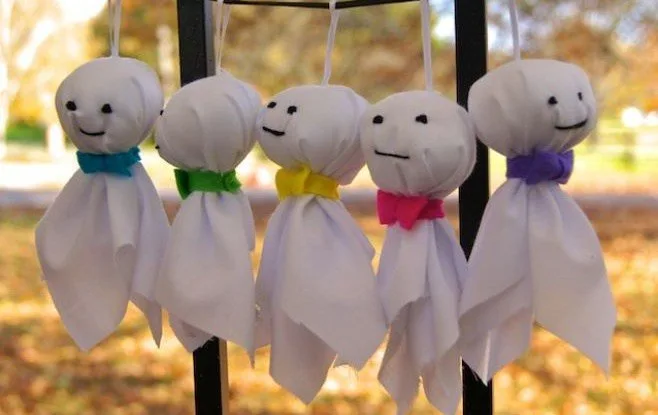
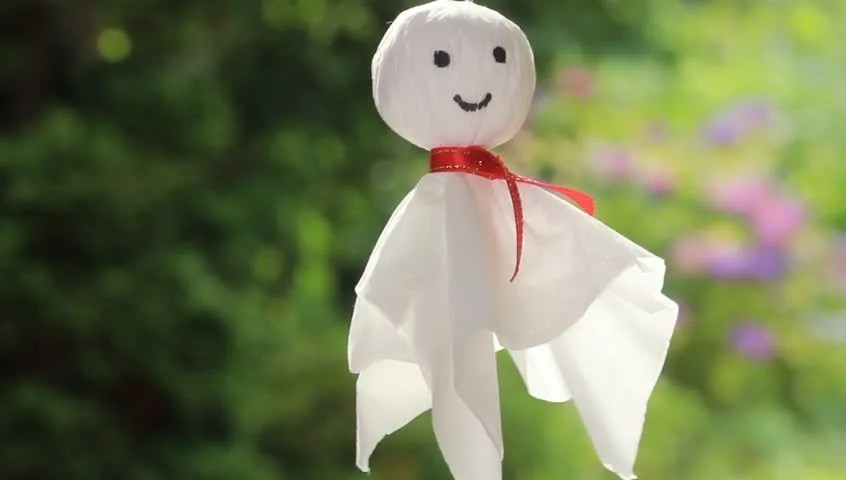
    Have you ever seen a white cloth doll that looks like a ghost hanging in houses and some places in Japan? This doll is called Teru Teru Bozu and in this article, we will see some curiosities about this bald doll, its song, and its origin.

    This cloth doll is hung at the edge of houses in the hope that the weather will be good the next day.

    The meaning of Teru Teru Bozu

    In Japan, children are taught from an early age about the wonderful powers of Teru Teru Bozu [てるてるぼうず] literally means something like bright bald head (a reference to monks).

    Easily constructed from two squares of fabric or cloth, the doll is made in such a way that it represents the bald head of a monk. It can also be called teruteru houshi, terere bozu, hiyori bouzo depending on the region.

    It is constructed while the weather is good, which keeps its head dry and shiny (as it wouldn’t get wet). It is usually hung in the window wishing for the rain to stop and for the weather to remain good.

    Teru Teru Bozu - The Bald Japanese Doll

    Origin of Teru Teru Bozu

    While the tradition is well practiced and known, many Japanese people remain unsure about the origins of the doll. It seems that this custom emerged in the mid-Edo Period due to similarities with origami dolls and names mentioned in literature.

    The origins of the “talisman” Teru Teru Bozu remain vague. Some say that the obscure lyrics at the end of the song refer to a “good weather monk,” who was able to bring good weather with an enchantment.

    However, after promising good weather to a feudal lord, the sun did not appear as promised, and the monk’s head was cut off as punishment. It is said that the monk’s head was wrapped in a cloth and hung outside to stop the rain and bring the sun.

    The less horrific story suggests that the “talisman” represents a yokai (mountain spirit) called Hiyoribo, who brings good weather and cannot be seen on rainy days.

    In China, there is a cut paper doll with a sword in hand, a squirrel girl, and the resemblance between her and the Teruterubouzu has already been pointed out in Sakakibara Takasu during the Edo period.

    Teru Teru Bozu - The Bald Doll

    Appearances in Animes

    Teru Teru Bozu has appeared as a reference in various animes; we have selected some scenes, see if you recognize each anime? I remember well its appearance in the classic anime Detective Conan.

    teruteru

    Song Teru Teru Bozu

    There is a classic song that talks a little about this doll. Below we will see the lyrics of the song teru teru bozu in Japanese, romanized, its translation, and some videos of the song. The song is from the year 1921 written by Kagamimura Asahara and composed by Shinpei Nakayama.

    Lyrics of the Song Teru Teru Bozu in Japanese

    てるてるぼうず、てるぼうず
    明日天気にしておくれ
    いつかの夢の空のように
    晴れたら金の鈴あげよ
    てるてるぼうず、てるぼうず
    明日天気にしておくれ
    私の願いを聞いたなら
    甘いお酒をたんと飲ましょ
    てるてるぼうず、てるぼうず
    明日天気にしておくれ
    それでも曇って泣いてたら
    そなたの首をちょんと切るぞ

    Romanized Lyrics of the Song Teru Teru Bozu

    Teru-teru-bōzu, teru bōzu
    Ashita tenki ni shite o-kure
    Itsuka no yume no sora no yō ni
    Haretara kin no suzu ageyo
    Teru-teru-bōzu, teru bōzu
    Ashita tenki ni shite o-kure
    Watashi no negai wo kiita nara
    Amai o-sake wo tanto nomasho
    Teru-teru-bōzu, teru bōzu
    Ashita tenki ni shite o-kure
    Sorete mo kumotte naitetara
    Sonata no kubi wo chon to kiru zo

    Translation of the song Teru Teru Bozu

    • Teru teru bozu, teru bozu.
    • Make tomorrow a sunny day.
    • Like the sky of a dream I had.
    • If it’s sunny I will give you a golden bell.
    • Teru teru bozu, teru bozu.
    • Make tomorrow a sunny day.
    • If my dream comes true.
    • We will drink plenty of sweet rice wine.
    • Teru teru bozu, teru bozu.
    • Make tomorrow a sunny day.
    • But if it rains you will be crying.
    • Then I will cut off your head with scissors.

    Videos of the song Teru Teru Bozu

  • Bushu – Radicals – Structures of Kanji and their variants

    Bushu – Radicals – Structures of Kanji and their variants

    The kanji are classified in dictionaries according to their main components. These components are called Radical in English and 部首 (bushu) in Japanese. Its original name in Japanese is composed of the Kanji which means division, section, group, and with the kanji which means head or neck.

    The Radicals are kanji or elements that are found in the structure of an ideogram. Many think that a kanji is formed from several radicals, to some extent yes. However, each kanji only has one radical which is its head. This radical may or may not relate to the final meaning of the kanji word. The radicals are not named and not all have their own meaning, currently there are about 214 radicals.

    How is a Kanji formed using Radicals? See below radicals being applied and forming different Kanji:

    • 時 – The radical of this kanji is “sun” 日 – The meaning of the Kanji is “time”;
    • 詩 – The radical of this kanji is “word” 言 – The meaning of the kanji is “poetry, poem”;
    • 持 – The radical of this kanji is “hand” 扌 – The meaning of the kanji is “to hold”,

    Did you notice that the radical for hand 扌 is not the same as 手. This is because not all radicals are being used in the Japanese language, most are used only to form the kanji. You should also know that Japanese is full of ideograms that have the same meaning.

    Classification of Radicals – Position

    The radicals are usually classified by the position they occupy in the kanji, knowing this position will facilitate their use.

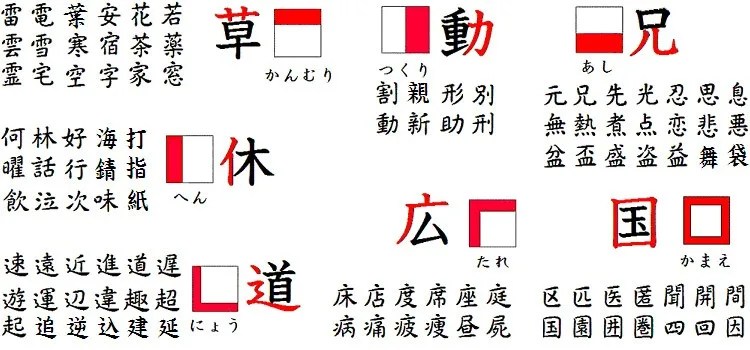
    JapanesePosition
    へん (hen)left side
    つくり (tsukuri)right side
    かんむり (kanmuri)on top
    あし (ashi)below
    かまえ (kamae)surrounds the kanji from outside to inside
    たれ (tare)covers the kanji from top to bottom.
    にょう (nyou)left side encompassing also the bottom part of the kanji.

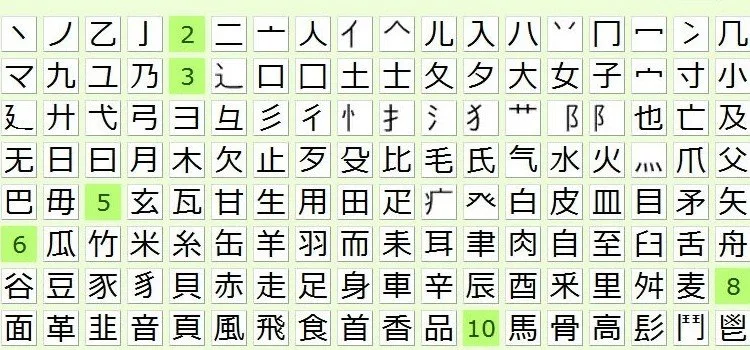
    The image below will show examples of kanji and the positions of their radicals.

    Bushu - Radicals - Structures of Kanji and their variants

    What are the benefits of knowing the Radicals of Japanese?

    It is important to have knowledge of these elements that compose the kanji, so it becomes easier to find a certain kanji in a dictionary and even understand the essence of its meaning.

    Another advantage is that over time, you will be able to identify meaning in the ideograms and will stop seeing only strokes. Knowledge of these elements helps you remember the kanji and its meaning.

    We know that several words in the Japanese language are the combination of kanji, for example: 手紙 (letter) is the combination of the ideograms for hand (手) and paper (紙). The same thing happens with the radicals. See some examples:

    • The Kanji and Radical 木 (tree) can become 林 (grove) and 森 (forest);
    • The Kanji and Radical 木 together with 几 (table) form the kanji 机 (desk / work table)

    Imagine that you found a kanji and do not know its meaning or how to look for it. You can use the radical search on the jisho website or on Windows itself in a feature called IME Pad, which can be accessed by right-clicking on the Japanese language keyboard icon in the Windows taskbar.

    Table with Radicals of Japanese

    Below we have a table with the main radicals, the number of strokes, a meaning, and their position in Japanese. Remembering that the meanings of the radicals are quite varied, do not cling to that, it is just an informative meaning.

    StrokesRadicalPositionMeaningNotes
    1 one, horizontal stroke 
    1 vertical stroke 
    1 dot 
    1 stroke for a diagonal stroke 
    1 the second 
    1 the secondvariant of ⼄(おつ)
    1 vertical stroke with a hook 
    2 two 
    2かんむりcap, top 
    2 person 
    2 personvariant of ⼈(ひと)important
    2?かんむりpersonvariant of ⼈(ひと)
    2 human legsimportant
    2 enter 
    2 eight 
    2けいがまえinclude 
    2かんむりcovering, crownimportant
    2へんice 
    2 table 
    2かんむりwindvariant of ⼏(きにょう)
    2 container, open box 
    2 knife, sword 
    2つくりknife, swordvariant of ⼑(かたな)important
    2 power 
    2 wrap 
    2つくりspoon 
    2 box 
    2はこがまえhide, hide 
    2 ten 
    2 oracle 
    2つくりstamp, a seal 
    2 cliffimportant
    2 private, Katakana Mu 
    2 again, the right hand 
    3 mouth 
    3くにがまえborder, territorial bordersimportant
    3 earth 
    3 man, scholar, samurai 
    3 the following 
    3あしgo slowly 
    3 night 
    3 big, large 
    3 woman 
    3 child, son 
    3かんむりroof, houseimportant
    3 inch (2.25 cm) 
    3 small 
    3かんむりsmallvariant of ⼩(しょう)
    3つくりlame leg 
    3たれcorpse, awning 
    3 sprout 
    3 mountain 
    3 meandering river 
    3 rivervariant of ⼮(まがりがわ)
    3 work, carpenter, skill 
    3 ego 
    3 cloth 
    3 dry, shield 
    3 young, slight 
    3たれslanted roofimportant
    3にょうto move, stretch 
    3あしthe folded hands 
    3 dart 
    3 bow (in archery) 
    3 pig’s head 
    3 pig’s headvariant of ⼹(けいがしら)
    3 pig’s headvariant of ⼹(けいがしら)
    3つくりhair-style, rays of light 
    3へんstep, step, street, goimportant
    3かんむりgrassvariant of ⾋(くさ)important
    3にょうroad, on foot, advancevariant of ⾡(しんにょう)important
    3つくりvillage, country, cityvariant of ⾢(むら)important
    3へんhill, moundvariant of ⾩(こざと)important
    3かんむりkatakana Tsu 
    3へんheart, mind, spiritvariant of ⼼(こころ)important
    3へんhandvariant of ⼿(て)important
    3へんwatervariant of ⽔(みず)important
    3へんbeastvariant of ⽝(いぬ)important
    4 heart, mind, spirit 
    4あしheart, mind, spiritvariant of ⼼(こころ)
    4 spear, weapon 
    4 door 
    4⼿ hand 
    4 branch 
    4つくりactivity, to strike, hit 
    4つくりactivity, to strike, hitvariant of ⽁(ぼくづくり)important
    4 literature, letters 
    4つくりBig Dipper, shell, 18 liters 
    4つくりaxe 
    4 direction, flag 
    4 no 
    4 sun, day, hour 
    4 to say 
    4 moon, month, period 
    4へんmoon, month, periodvariant of ⽉(つき)
    4 tree, wood 
    4 to lack, yawn 
    4 to stop 
    4 death and die, to decompose 
    4つくりshaft of a spear, action 
    4 no, mother 
    4 to compare 
    4 hair 
    4 family, clan 
    4 steam, air 
    4 water 
    4 fire 
    4あしfirevariant of ⽕(ひ)important
    4 claw, nail 
    4かんむりclaw, nailvariant of ⽖(つめ)
    4かんむりclaw, nailvariant of ⽖(つめ)
    4 father 
    4 to mix 
    4へんwood of division 
    4 wood of division 
    4 cow 
    4 dog 
    4へんaltar, festival, religious servicevariant of ⽰(しめす)
    4 liquidvariant of ⽹(あみ)
    4かんむりage, old agevariant of ⽼(おいかんむり)
    5 darkness 
    5 jewels 
    5 tile 
    5 sweet 
    5 birth, to be born, alive 
    5 to use 
    5 rice field 
    5 piece of cloth 
    5へんpiece of clothvariant of ⽦(ひき)
    5たれdiseaseimportant
    5かんむりopen legs, departure 
    5 white 
    5 skin, to hide 
    5 dish, bowl 
    5 eye 
    5 halberd 
    5 arrow 
    5 stone 
    5 altar, festival, religious service 
    5 footprint 
    5へんgrainimportant
    5 hole, cave 
    5 to rest 
    5 watervariant of ⽔(みず)
    5かんむりliquidvariant of ⽹(あみ)
    5? liquidvariant of ⽹(あみ)
    5へんclothingvariant of ⾐(ころも)important
    5 novariant of ⽆(むにょう)
    6 bamboo 
    6かんむりbamboovariant of ⽵(たけ)important
    6 rice 
    6 thread 
    6 clay jar 
    6 liquid 
    6 sheep 
    6 sheepvariant of ⽺(ひつじ)
    6 feather, wing 
    6 feather, wingvariant of 羽(はね)
    6 age, old age 
    6 and also 
    6へんplowed 
    6⽿ ear 
    6 writing brush 
    6 meat, meats 
    6 retainer, minister 
    6 ego 
    6 to arrive 
    6 mortar, quern 
    6 tongue 
    6 opposite, to err 
    6 ship, boat 
    6 limit 
    6 color 
    6 grass, plant 
    6かんむりtiger 
    6 worm, insect 
    6 blood 
    6ぎょうがまえto goimportant
    6 clothing 
    6 cap, to the west 
    6 cap, to the westvariant of ⾑(にし)
    6 melonvariant of ⽠(うり)
    7 gate, door 
    7 hill 
    7つくりto capture 
    7 small bird 
    7 rain 
    7かんむりrainvariant of ⾬(あめ)important
    7 blue, green 
    7 blue, greenvariant of ⾭(あお)
    7 wrong, no 
    7へんfood, to eatvariant of ⾷(しょく)
    7 similarvariant of ⿑(せい)
    8 metal, gold, mineral 
    8 long 
    8もんがまえgate, door 
    8 hill 
    8つくりto capture 
    8 small bird 
    8 rain 
    8かんむりrainvariant of ⾬(あめ)important
    8 blue, green 
    8 blue, greenvariant of ⾭(あお)
    8 wrong, no 
    8へんfood, to eatvariant of ⾷(しょく)
    8 similarvariant of ⿑(せい)
    9 face, surface 
    9 leather 
    9 leek 
    9 sound, noise 
    9つくりhead, pageimportant
    9 wind 
    9 to fly 
    9 food, to eat 
    9 head 
    9 perfume 
    10 horse 
    10 bone 
    10 high 
    10かんむりlong hair 
    10もんがまえfight 
    10⾿ herbs 
    10 tripod 
    10 demon 
    10 leathervariant of (なめしがわ)
    11 fish 
    11 bird 
    11 salt 
    11 deer 
    11 wheat 
    11 hemp 
    11 yellowvariant of ⿈(き)
    11 blackvariant of ⿊(くろ)
    11 turtlevariant of ⿔(かめ)
    12 yellow 
    12 millet 
    12 black 
    12 to embroider 
    12 toothvariant of ⿒(は)
    13 frog 
    13 tripod 
    13 drum 
    13 mouse, rat 
    14 nose 
    14 similar 
    15 tooth 
    16 dragon 
    16 turtle 
    17 flute 
  • Pen-Pineapple-Apple-Pen – Japanese viral

    Pen-Pineapple-Apple-Pen – Japanese viral

    Japanese comedian and the new song by DJ Kosaka Daimou may soon be circulating around the world through people around the world (笑 – lol). Some people are even predicting that the song could surpass the mega-hit on YouTube “Gangnam Style” by South Korean artist Psy. Although I find it hard…

    We do not know the current status of this viral as you read this post… But it is amazing how a video of just 1 minute, with lyrics that make absolutely no sense, has gone viral so quickly.

    Pen-Pineapple-Apple-Pen Video

    You can watch the music video in the video above. But be warned, from the moment you hear the song, it will not leave your head and it may keep playing in your head unconsciously for days and days.

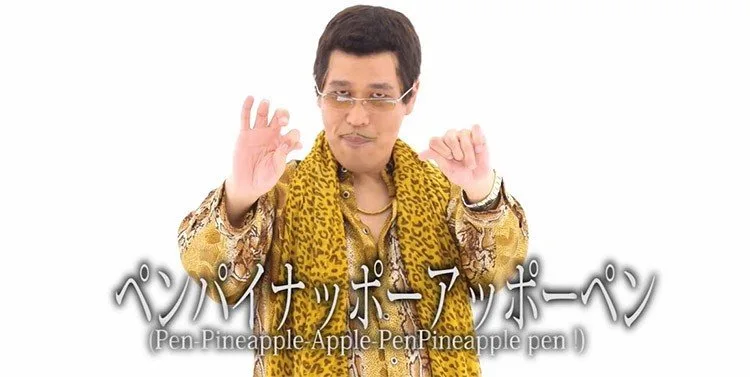
    The song is performed by “DJ Piko-Taro,” a character created by Kosaka Daimou (40 years old), during his live shows. “Pen-Pineapple-Apple-Pen” has all the elements of a viral hit: catchy melody, nonsensical lyrics, and a man in a completely ridiculous outfit, not to mention the scarf.

    applepen

    The video has already been viewed more than 53 million times on the comedian’s official channel, not to mention that it has also been featured on several other channels. For example, just one channel called 9GAG, which was just one of the many channels that featured the hit, managed to accumulate over 25 million views.

    We have already seen several parodies and images shared online. Even Apple’s Siri Assistant joined the fun, just say this to her and she will sing a song related to Apple products.

    Videos of people infected with the virus

    Do you think this short song can really surpass Psy’s hit? Not in views, but in our heads… Or more importantly: Will we ever be able to get this hit out of our heads? Anyway… Only time will tell.

  • See how to write your name in Kanji – Ideograms!

    See how to write your name in Kanji – Ideograms!

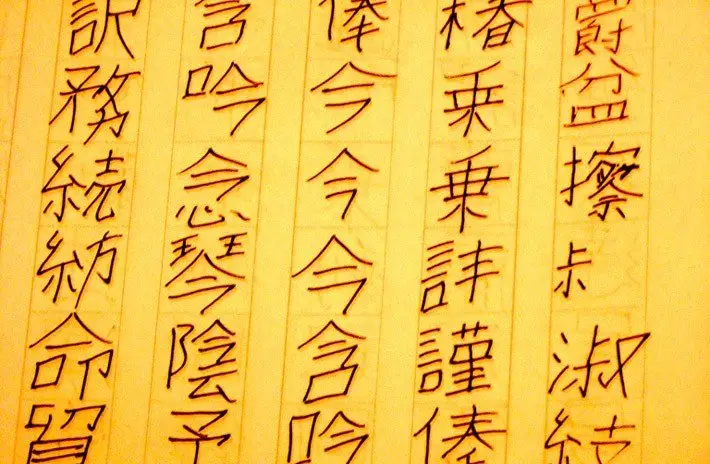
    Did you know that it is possible to write your name in kanji (ideogram), even if your name is not Japanese? Those who study Japanese know that it is common to use katakana to write foreign names, but there is no problem writing your name in kanji. In fact, this is very fun because you choose ideograms that give a certain meaning to your name.

    There is no problem writing foreign names using kanji, because before katakana existed, only kanji existed. Take the Chinese language, for example; it only has ideograms. Of course, if you are going to write your name in everyday situations, it is better to use katakana. But have you ever thought about how your name would look in kanji? Which kanji and which meanings to choose? In this article, we will teach you how to do that!

    Choosing Kanji for Your Name

    Choosing kanji for your name is not an easy task. Japanese ideograms have many ways of reading, and the readings of names can be different from what you learned when studying that kanji. Remember that you are not going to change your name; you will just use the syllables of your name written in katakana and find kanji that fit to replace them.

    You should also be careful not to choose a feminine or masculine kanji. It is not easy to determine whether an ideogram is appropriate for your name or not; pay attention to the meaning and decide if that kanji is suitable for you. Another issue is that there are ideograms that are not commonly used in names, not to mention their standard reading and the different readings for names, so be very careful.

    It is possible to write your name in Kanji!

    Where to find the correct ideograms? We recommend that you visit the website jisho.org and search syllable by syllable for your name in the Names category of the site. There you will find all the kanji with their correct readings used in names along with their meanings in English.

    This is another way to write your name in Japanese and give it a real meaning. It is worth remembering that this is not your official name, so it is not advisable to sign documents with it; a Japanese person might confuse the reading.

    Another alternative to Jisho is the website kanjizone.com where you simply write your name in Portuguese, and it presents suggestions of ideograms and their meanings for you to form your name. It is quite easy and practical.

    How Did I Choose My Name?

    I only found out that there is no problem using kanji in my foreign name when a Japanese family asked me and suggested that I choose kanji for my name. I used Jisho to find kanji and learn their readings, and with the help of the Japanese, I came to the following results:

    • My name is Kevin (ケビン or ケヴィン).
    • 計敏 – ke (計) means plot, plan, scheme, measure. / bin (敏) means intelligent, agile, and alert;
    • 花敏 – ke (花) – means flower;

    I liked the meaning of my name. I kept these two options because the Japanese started saying that using [花] was a bit feminine, but then they said it was not a problem. Of course, there are many other ideograms with different meanings to choose from, but it is not easy.

  • Are Japanese houses really small?

    Are Japanese houses really small?

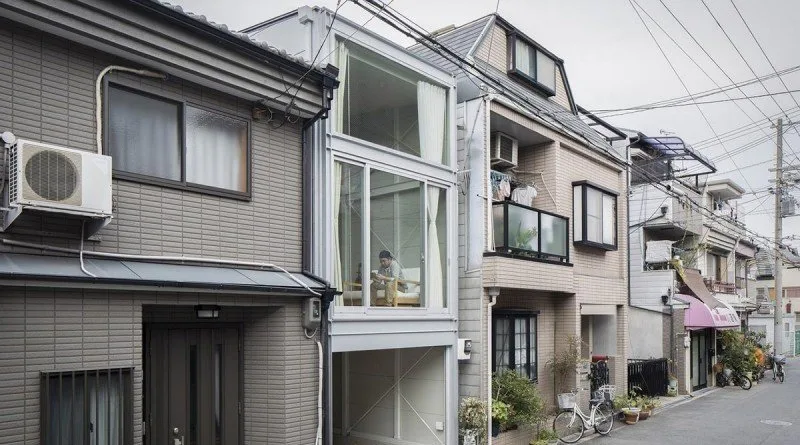
    Most people think that just because Japan is small and has 127 million inhabitants, most houses are tiny. The media really shows some absurdly small apartments in Tokyo, and for sure Japanese houses are smaller than houses in our immense Brazil.

    During my experience in Japan, I had the opportunity to understand that many Japanese houses are huge as well as practical. In this article, I will debunk some exaggerated ideas about Japanese houses being small and cramped and also address some topics related to houses in Japan.

    They are not that small

    Tokyo is one of the largest cities in the world, many young Japanese and people from all over the world dream of living in Tokyo. This means that almost one-third of the Japanese population lives in Tokyo or other large cities like Osaka. Of course, if 13 million people want to live in just one city, thousands of tiny houses and apartments will be the home for these people.

    Still, walking through various neighborhoods in Tokyo, I was able to find several traditional Japanese houses with a quite pleasant size, more than enough for comfort and inviting friends. Of course, there are thousands of tiny apartments, but it’s no different from Brazil where thousands of people live in shanties or studio apartments.

    If even in Tokyo it is possible to find large houses with up to 4 bedrooms, what can be said about small towns? Japan does not suffer from a lack of space; in fact, it is the opposite, the government is predicting cities being extinct due to a lack of residents. Below we will see what the standard of houses in Japan is and their respective sizes.

    Traditional Japanese wooden house with tiled roof and small garden

    What are houses like in Japan?

    In Japan, there are approximately 53 million households, including houses and apartments. Although urban areas are known for their compact housing, the average size of Japanese residences is surprisingly generous, about 94 m², distributed over about four rooms. For detailed information, visit our guide on houses in Japan. It is worth noting that, unlike Brazil, where it is common to find lots of 300 m², Japanese lots are smaller, usually offering space for a small garage and a limited yard. Even so, many believe that a 90 m² house is quite comfortable.

    More than 40% of houses in Japan are built of wood, a traditional material that still prevails, especially in rural areas.

    Learn about the challenges of urban population growth and housing in Japan in our detailed post Overcrowding and the growing urban population of Japan.

    Moreover, more than 50% of Japanese households are located outside the major urban centers, where the lots are a bit larger. This factor influences the lifestyle of families who choose houses with more spacious outdoor areas, even if simple. And yes, it is true that most houses have two floors, which helps optimize the space available on smaller lots.

    However, for many, owning a home in Japan remains a distant dream, especially for foreigners or single people. As a result, one- or two-room apartments are quite common, and even large families end up opting for more compact housing to save on rent. It is a reflection of high housing costs, but even under these conditions, Japanese design manages to make the most of the space, making the environment functional and comfortable. Later, we will explore the characteristics of these homes in detail, from their floor plans to the materials used in construction.

    In summary:

    • Number of households: Japan has approximately 53 million households, including houses and apartments.
    • Average size of residences: The average area of Japanese residences is about 94 m², distributed over approximately four rooms.
    • Location of households: More than 50% of households are located in rural areas, where the lots are larger.
    • Construction material: About 40% of houses are built of wood, a traditional material widely used in the country.
    • Number of floors: Most residences have two floors, optimizing the use of space on smaller lots.
    Traditional Japanese wooden house with two floors

    Practicality and comfort

    For some, Japanese apartments and houses may be small, but their practicality is undeniable. Most houses have bathtubs, and the toilet is not in the same place as the shower. Additionally, many traditional houses have sliding doors, cabinets, and built-in secret compartments. Sliding doors are super practical and can transform a large room into a separate bedroom for guests. Another thing to note is that there are no walls between houses, further proving the trust and freedom that one has.

    My experience

    During my trip, I stayed in a huge house, and in this neighborhood, there were several identical houses. The house had a large kitchen and living room and another room on the lower floor. It had the bathroom and the washing area on the first floor. On the second floor, it had 3 bedrooms and another bathroom. The owner said she financed it and paid about 25 million yen at the time, around 700,000 reais, a low amount considering the Japanese salary and comparing it to houses in Brazil.

    In total, I visited 3 apartments and 3 houses, and I didn’t find any of them small. Only one of the apartments, which could be considered small, had just 1 room with a kitchen at the entrance and the toilet next to the shower area. It is probably an apartment for just one single person, and this apartment is located in the city of Osaka.

    Traditional Japanese wooden house with garden and driveway

    Thus, I concluded that the houses in Japan and Brazil are not so absurdly different in size; it all depends on financial conditions and whether the person actually lives in a house or an apartment. The only thing that can be called small is the lot, which in my opinion means less work to clean. And you? What do you think of Japanese houses?

  • Shoyu – Curiosities about Soy Sauce

    Shoyu – Curiosities about Soy Sauce

    In this article, we will talk about one of the main ingredients that accompanies Japanese cuisine, the famous shoyu (醤油) or soy sauce. We will answer the following questions about this sauce: What is the origin of shoyu? What are the benefits of soy sauce? What are the dangers of shoyu? What are the ingredients of Shoyu? How to use soy sauce? These and many other curiosities and questions will be answered in this article.

    What is the Origin of Shoyu? The origin of shoyu is Chinese, records indicate its use around the year 500 AD, while Japanese records indicate around the year 700 AD. The word shoyu 醤油 is composed of 2 ideograms that mean 醤 (paste or puree, similar to miso.) 油 (oil, fat). In Chinese, the ideograms are the same but pronounced jiangyou.

    Since ancient times, Japan used animals and other vegetables to create preserves and sauces to salt and season food. This must be one of the reasons the word shoyu uses an ideogram that refers to miso paste. In fact, the famous tamari shoyu used mainly in sushi and sashimi was extracted from miso.

    soy sauce shoyu

    How is shoyu used?

    Soy sauce is used to replace salt, add aroma, and enhance the color of food and is quite popular in all Asian countries. Shoyu can be used in practically any recipe of Asian cuisine, including desserts like dango.

    Unlike Westerners, in Japanese cuisine, soy sauce is not used in large quantities, in salads or in prepared dishes. Most of the time, it is used to season meat before cooking, or it is used in recipes before preparing them. Of course, shoyu and soy derivatives are always available in restaurants for you to season your dish as you wish.

    Most of the time, shoyu is used with sugar or it is already sweetened. Pure or salty shoyu is mostly used in sushi or sashimi. In reality, there are several different types of shoyu or even other sauces made from soy that you might confuse with shoyu; below we will see some types of soy sauce and where they are used:

    • Koikuchi (shoyu) – The most common soy sauce. It is salty and has a slightly sweet flavor and is rich in umami;
    • Tamari – Thicker soy sauce used for eating with sushi, sashimi, and making teriyaki;
    • Saishikomi – Fermented in the soy itself, it is also used in sushi, sashimi, and tofu;
    • Usukuchi – Originated in Kansai and has 10% more salt than the common one and has a light and clear color;
    • Shiro – Used in soups, shiro is whiter, lighter, and sweeter;
    shoyu soy sauce

    How is soy sauce made?

    Soy sauce is not entirely made of soy. The soy is soaked in water, steamed, and mixed with roasted and ground wheat, a type of fungus called koji. This mixture is made together with a brine forming the momori that is aged from 6 months to 2 years. After this long fermentation process, it is completed with compression and heating.

    Because of the high consumption of soy sauce, this process can be faster (1 week) using a synthetic process where the amino acids from soy are separated by hydrolysis, added with caramel and flavorings.

    [trp_language language=”pt_BR”]

    Brazil vs Japan

    What is the difference between Brazilian and Japanese sauce? If you are concerned about the amount of sodium, it doesn’t matter where it was made, it will have plenty of sodium. The difference between the soy sauce of each country lies in its flavor and color. Brazilian soy sauce tends to be saltier and black, and usually uses the synthetic production method and is full of coloring and artificial ingredients. On the other hand, Japanese soy sauce has several variations and is usually made with nothing but salt, wheat, soy, and fermentation ingredients.

    What are the differences in consumption? Unlike Brazilians, Japanese people use soy sauce in very small quantities. They avoid spreading the sauce on sushi rice and only lightly dip the fish.

    soy sauce shoyu

    [/trp_language]

    What are the dangers and benefits of shoyu?

    The main danger of shoyu is its high sodium content. It is recommended to eat a maximum of 1 to 2 tablespoons of soy sauce per day. Therefore, we recommend not using shoyu in salads or in recipes that require a large quantity. But sodium is not the only danger; unfortunately, we have to be cautious with any type of industrialized product.

    But since it is made of soy, it is rich in proteins, iron, calcium, and vitamins, especially vitamin B. Soy and its derivatives have antioxidant properties and help prevent diseases such as osteoporosis and cancer. Thus, it is necessary to have discernment and know the best way to consume this sauce and its derivatives.

  • Kaiji and the World of Bets – Recommendation

    Kaiji and the World of Bets – Recommendation

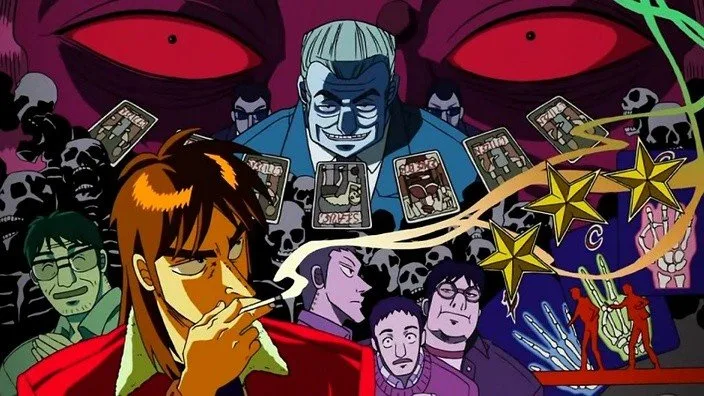
    In today’s article, I will talk about one of the best animes I had the pleasure of watching, the unpopular Gyakkyō Burai Kaiji. Why unpopular? What is this anime about? Is it worth watching Kaiji? In this article, I will talk about everything regarding this great work, without revealing spoilers.

    Why is Kaiji unpopular? Because most people do not accept the art style and drawings that are quite different from traditional animes; it is based on an old manga and has very thick lines. I myself hesitated for years to watch this anime because of the art style, but finally, when I gathered the courage, after 2 episodes I was already used to the style and finished it in 2 days.

    For this reason, if you are someone who has not watched this anime because of its art style, you are missing out on a great work that is even compared to Death Note, Steins;Gate, and several other Psychological Thriller animes.

    What is the anime Kaiji about?

    Kaiji is an anime quite similar to Liar Game where the main character has to participate in gambling games that use a lot of strategies, cheating, and can even be deadly. The synopsis of the anime and manga Gyakkyō Burai Kaiji tells the story of Kaiji, a bum who inherits a debt of millions of yen from a friend, whom he agreed to be a guarantor. He is invited to participate in a ship where he will bet on trivial games with other players to pay off his debts. It seems simple, but the anime goes much deeper.

    Unlike Liar Game, the main character Kaiji is not super intelligent; in reality, he is foolish, always getting into trouble, but he manages to turn things around, only to get into trouble again. The anime works a lot with our psychology and keeps us engaged from start to finish. Although the art style may seem childish, the anime has very heavy scenes that affect our emotional and psychological state. Sometimes Kaiji becomes more agonizing and frightening than horror movies and animes, even though it is not an anime focused on fights and action.

    kaiji2

    Details of the Kaiji Work

    The Kaiji work has 2 seasons adapted from 26 episodes and 2 Live Action movies. The manga was created by Nobuyuki Fukumoto and deals very well with the art of gambling. It is divided into arcs. I will leave a list of all Kaiji works:

    • Anime 1 – Gyakkyō Burai Kaiji: Ultimate Survivor
    • Anime 2 – Gyakkyō Burai Kaiji: Hakairoku-hen
    • Manga 1 – Tobaku Mokushiroku Kaiji
    • Manga 2 – Tobaku Hakairoku Kaiji
    • Manga 3 – Tobaku Datenroku Kaiji
    • Manga 4 – Tobaku Datenroku Kaiji: Kazuya-hen
    • Manga 5 – Tobaku Datenroku Kaiji: One Poker-hen
    • Movie 1 – Kaiji: Jinsei gyakuten gêmu
    • Movie 2 – Kaiji 2: Jinsei dakkai gêmu

    We recommend that you watch the 2 seasons of the anime and then follow the manga in the Dantenroku arc. The anime is full of twists, suspense, cheating, techniques, terror, and fear. Despite the art style, it is a great work on par with Death Note and Steins;Gate, but like all works, there are points that failed in its adaptation to anime. To conclude the article, I will leave the anime’s opening for you to get to know the music and the proposal of the anime:

  • What can Japanese education teach us?

    What can Japanese education teach us?

    Japan, through its exemplary educational system, has managed to achieve a balance between academic training and human development, becoming a global reference. Its unique approach goes beyond teaching traditional subjects, prioritizing the construction of conscious citizens committed to society. But what is the secret to this success, and what can we learn from it? Below, we explore the pillars of Japanese education that inspire the world.

    Forming Citizens from the Beginning

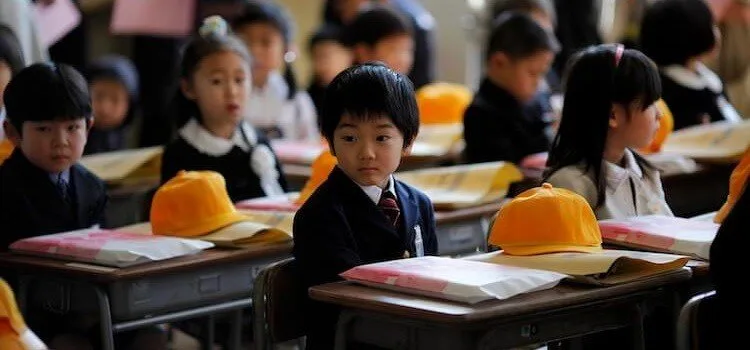
    In Japan, behavioral education is a priority. In the early school years, the focus is not on exams or tests, but on teaching fundamental values such as respect, honesty, generosity, and responsibility. Until around the age of ten, students primarily learn to coexist in society, developing self-control and cooperation skills.

    This initial investment forms the basis for ethical and conscious behavior that accompanies students throughout their lives. In addition to preparing competent future professionals, this approach creates citizens who understand their role in building a fairer and more harmonious society. As a result, Japan manages to maintain its economy stable, drive growth, and stand out on the global stage.

    From the age of 6, children go to school alone to help develop independence and maturity.

    Children go to and from school alone in Japan! Why?

    Collective Responsibility: Hands-on

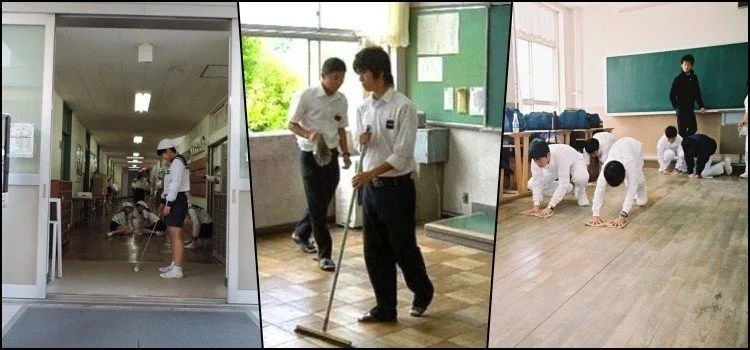
    A unique characteristic of Japanese schools is the practice of ōsōji (big cleaning). At the end of classes, students organize themselves to clean classrooms, bathrooms, hallways, and other common areas. This activity is not just a practical matter, but a daily exercise in responsibility and teamwork.

    The experience teaches students the importance of taking care of the space they share, reducing waste generation and promoting respect for the environment. In addition, it helps create habits they take home, making them less dependent on their parents and more aware of the importance of the collective.

    How students clean schools in Japan?

    Connection with Tradition: Cultural Identity

    Japan deeply values its roots, and this is reflected in the school curriculum. From an early age, students learn traditional practices such as shodō (Japanese calligraphy) and tanka poetry, artistic forms that connect the past to the present. With bamboo brushes and ink, students explore the history and aesthetics of their culture, understanding the importance of preserving traditions that have shaped their national identity.

    This emphasis on cultural roots not only keeps centuries-old traditions alive but also reinforces the sense of belonging and respect for the values that define the Japanese people. For them, it is only possible to plan a solid future by knowing and respecting the past.

    Shodo - The art of Japanese calligraphy

    What Can We Learn from the Japanese Model?

    The Japanese educational system teaches that education is not limited to academic learning. The formation of responsible citizens, the appreciation of collective work, and the preservation of culture are pillars that support a more balanced and harmonious society.

    By integrating these concepts in Brazil and other countries, it would be possible to transform schools into spaces that promote not only knowledge but also citizenship and mutual respect, positively impacting society as a whole.

  • Translating songs – Oto No Naru Hou E – Goose House

    Translating songs – Oto No Naru Hou E – Goose House

    In today’s article we will translate the song Oto No Naru Hou E by the band Goose House. This song can be found in the second ending of the Anime Gin no Saji or Silver Spoon. Follow the Official Live in the video below:

    Below, follow a Brazilian version they made of the song:

    Song Lyrics – オトノナルホウへ

    Click here to expand the text

    遠く離れた場所にいる時も 僕らの声が届きますように
    迷ったときはオトノナルホウヘ→

    笑う門にはちゃんと(ちゃんと)福はやって来るから(Yeah Yeah!!)
    泣いて腫らしたその目だって ほら笑顔が似合う(Ah Ah Ah Ah)

    息が詰まるこんな世の中で 出会えたんだ(Oh Oh Oh)
    色とりどりの世界を一緒に見に(ホイ!)行こう

    頑張り屋の君だから 壁にもぶつかるでしょう
    でももう平気 ひとりでは背負わないでいいんだよ(Yeah Yeah Yeah Yeah)

    君が笑えば 僕も笑うから(Yeah Yeah!!)
    めぐりめぐりまた違う誰かのとこまで(Fu!!)
    遠く離れた場所にいる時も 僕らの声が届きますように
    迷ったときはオトノナルホウヘ→

    季節変わり新しい日々 賑やかな駅のホームにひとり
    上がり(上がり)下がり(下がり)
    慣れない環境ココロ戸惑う(もういっちょ!)

    早歩きする街を うまく歩けないけど
    ビルの隙間にはほら 今日も空は広がっている

    誰にも見せない涙 拭いて歩いてゆけ
    風が動き出す 髪がなびく 未来がはじまる(Yeah Yeah Yeah Yeah)

    君が歌えば 僕も歌うから(Yeah Yeah!!)
    うまくなくてもいい 君の声を聞かせて(Fu!!)
    ひとりひとりの音は違うから(Yeah Yeah!!)
    ヒカリが届かなくなったって君を見つけるよ(Oh Yeah!!!)

    君が笑えば 僕も笑うから(Yeah Yeah!!)
    めぐりめぐりまた違う誰かのとこまで(飛ばせ)(Fu!!)
    遠く離れた場所にいる時も 僕らの声が届きますように
    迷ったときはオトノナルホウヘ→ オトノナルホウヘ→

    Romanization of the song (Oto No Naru Hou E)

    Click here to expand the text

    Tooku hanareta basho ni iru toki mo
    Bokura no koe ga todokimasu you ni
    Mayotta toki wa oto no naru hou e

    Warau kado ni wa chanto fuku wa yatte kuru kara (yeah yeah)
    Naite harashita sono me datte hora egao ga niau (ah ah ah ah)

    Iki ga tsumaru konna yo no naka de deaetanda
    Iro toridori no sekai o issho ni mi ni yukou

    Ganbariya no kimi dakara kabe ni mo butsukaru desho
    Demo mou henki hitori de wa seouwanaide iinda yo (yeah yeah yeah yeah)

    Kimi ga waraeba boku mo warau kara (yeah yeah)
    Meguri meguri mata chigau dare ka no toko made
    Tooku hanareta basho ni iru toki mo
    Bokura no koe ga todokimasu you ni
    Mayotta toki wa oto no naru hou e

    Kisetsuhenwari atarashii hibi
    Nigiyaka na eki no hömu ni hitori
    Agari(agari) sagari(sagari)
    Narenai kankyou kokoro tomadou

    Hayaru kisuru machi wo
    Umaku arukeinai kedo
    Bïru no sukima ni wa hora
    Kyou mou sora wa hirogatteiru

    Dare ni mo misenai namida
    Fuite aruite yuke
    Kaze ga ugokidasu
    Kami ga nabiku
    Mirai ga hajimaru (yeah yeah yeah yeah)

    Kimi ga utaeba boku mo utau kara (yeah yeah)
    Umaku nakutemo ii
    Kimi no koe o kikasete

    Hitori hitori no oto wa chigau kara (yeah yeah)
    Hikari ga todokanaku
    Tatte kimi o mitsukeru yo (oh yeah!)

    Kimi ga waraeba boku mo warau kara (yeah yeah)
    Meguri meguri mata chigau dare ka no toko made (tobase!)
    Tooku hanareta basho ni iru toki mo
    Bokura no koe ga todokimasu you ni
    Mayotta toki wa oto no naru hou e

    Oto no naru hou e

    Song Translation

    Click here to expand the text

    Even if we are separated in distant places, let our voice reach (and reach)
    And when you are lost, follow the direction of the sound!

    If you are always smiling (smiling), good luck will certainly come to your door
    Even your eyes that were crying will be able to rejoice.

    We managed to meet in this suffocating world
    Let’s see this colorful world together

    For someone like you who works hard, there will be times when you will hit the wall,
    But it’s okay, you don’t have to bear it alone

    If you laugh, I will laugh too
    Spinning and spinning, it will reach someone again.

    Even if we are separated in distant places, let our voice reach (and reach)
    And when you are lost, follow the direction of the sound!

    When the season changes, in these new days, I am alone on the busy train platform.
    I went up, and down (going up and down)

    My heart is perplexed with the environment I am not used to.
    I cannot walk well on the busy streets
    Look through the gaps between the buildings, the sky is so wide today.

    Wipe the tears that I cannot show to anyone and keep walking
    The wind starts to blow, and my hair moves along. The future is starting

    If you sing, I will sing too
    It’s okay, even if you are not good at it. Let me hear your voice

    Each sound is different
    I will find you even in places where the light cannot reach
    If you laugh, I will laugh too

    Spinning and spinning, it will reach someone again.
    Even if we are separated in distant places, let our voice reach (and reach)

    And when you are lost, follow the direction of the sound! follow the direction of the sound!

    Breaking Down the Song

    遠く離れた場所にいる時も 僕らの声が届きますように
    Tooku hanareta basho ni iru toki mo bokura no koe ga todokimasu you ni

    Even if we are separated in distant places, let our voice reach (and reach)

    • 遠く – far, distant
    • 離れた – distant
    • 場所 – place
    • いる時も – even when
    • 僕ら – we, our
    • 声 – voice
    • 届きます – reach, cross, deliver
    迷ったときはオトノナルホウヘ→
    Mayotta toki wa oto no naru hou e

    And when you are lost, follow the direction of the sound

    • 迷ったとき – In case of doubts, if you are lost
      • 迷った lost
      • とき – case, occasion
    • オトノナルホウヘ – reach the direction of the sound (echo)
      • オト = 音 – sound
      • ナル = 成る – become, obtain, grow, reach, achieve
      • ホウヘ = 方 – direction, way
    笑う門にはちゃんと(ちゃんと)福はやって来るから(Yeah Yeah!!)
    Warau kado ni wa chanto fuku wa yatte kuru kara (yeah yeah)

    If you are always smiling, good luck will certainly come to your door (will come).

    • 笑う – smile, laugh
    • – door, gate, enter
    • ちゃんと – certainly, exactly, quickly
    • – good luck
    • やって来る – will come, will arrive
    泣いて腫らしたその目だって ほら笑顔が似合う(Ah Ah Ah Ah)
    Naite harashita sono me datte hora egao ga niau (ah ah ah ah)

    Even your eyes that were crying will be able to rejoice.

    • 泣いて – crying
    • 腫らし – swollen, inflamed
    • – eyes その目 (your eyes)
    • ほら – look
    • 笑顔 – smile, smiling face; to smile
    • 似合う – to match, to become, to be like
    息が詰まるこんな世の中で 出会えたんだ
    Iki ga tsumaru konna yo no naka de deaetanda

    We managed to meet in this suffocating world.

    • 息が詰まる – suffocating, difficulty breathing
      • – breath
      • 詰まる – blocked, full, clogged, lose, press, end
    • – world (世の中 – society, world)
    • 出会えたんだ – to gather, to meet
    色とりどりの世界を一緒に見に(ホイ!)行こう
    Iro toridori no sekai o issho ni mi ni yukou

    Let’s see this colorful world together.

    • 色とりどり – multicolored, various colors
    • 世界 – world
    • 一緒 – together, at the same time, in conjunction, mixed
    • 行こう – go, let’s
    頑張り屋の君だから 壁にもぶつかるでしょう
    Ganbariya no kimi dakara kabe ni mo butsukaru desho

    For someone like you who works hard, there will be times when you will hit the wall.

    • 頑張り屋 – someone who fights in difficult circumstances
    • – you
    • だから – thus, therefore
    • 壁にも – wall, barrier, obstacle
    • ぶつかる – to hit, to collide, to bump, to beat, to conflict
    でももう平気 ひとりでは背負わないでいいんだよ
    Demo mou henki hitori de wa seouwanaide iinda yo

    But it’s okay, you don’t have to bear it alone.

    • でも – but, however
    • もう – interjection used to strengthen the expression of an emotion
    • 平気 – okay, calm, relaxed, unconcerned
    • ひとり – alone, one person
    • 背負う – to overload, to assume, responsibility, to carry, to be ahead
      • 背負わない – negative
    君が笑えば 僕も笑うから(Yeah Yeah!!)
    Kimi ga waraeba boku mo warau kara (yeah yeah)

    If you laugh, I will laugh too.

    • – you
    • 笑え – to laugh, to smile
    • – I
    • から – after, from, if
    めぐりめぐりまた違う誰かのとこまで(Fu!!)
    Meguri meguri mata chigau dare ka no toko made

    Spinning and spinning, it will reach someone again.

    • めぐり – circumference, circulation
    • また – again, also, still
    • 違う – different, not usual
    • – someone
    • とこ – place, scene
    • まで – until, to
    遠く離れた場所にいる時も 僕らの声が届きますように
    Tooku hanareta basho ni iru toki mo bokura no koe ga todokimasu you ni

    Even if we are separated in distant places, let our voice reach (and reach).

    • 遠く – far, distant
    • 離れた – distant
    • 場所 – place
    • いる時も – even when
    • 僕ら – we, our
    • – voice
    • 届きます – reach, cross, deliver
    迷ったときはオトノナルホウヘ→
    Mayotta toki wa oto no naru hou e

    And when you are lost, follow the direction of the sound.

    • 迷ったとき – In case of doubts, if you are lost
      • 迷った – lost
      • とき – case, occasion
    • オトノナルホウヘ – reach the direction of the sound (echo)
      • オト – 音, sound
      • ナル – 成る, become, obtain, grow, reach, achieve
      • ホウヘ – 方, direction, way
    季節変わり新しい日々 賑やかな駅のホームにひとり
    Kisetsuhenwari atarashii hibi nigiyaka na eki no hömu ni hitori

    When the season changes, in these new days, I am alone on the busy train platform.

    • 季節変わり – change of season
    • 新しい – new
    • 日々 – every day, daily
    • 賑やか – busy, lively, bustling, occupied
    • – train station (駅のホーム – train platform)
    • ひとり – one person, alone
    上がり(上がり)下がり(下がり)
    Agari(agari) sagari(sagari)

    I went up, and down (going up and down).

    • 上がり – go up, going up
    • 下がり – go down, going down
    慣れない環境ココロ戸惑う
    Narenai kankyou kokoro tomadou

    My heart is perplexed with the environment I am not used to.

    • 慣れない – unaccustomed, not usual, inexperienced (negative verb)
    • 環境 – environment, circumstances
    • ココロ – heart (心)
    • 戸惑う – perplexed
    早歩きする街を うまく歩けないけど
    Hayaru kisuru machi wo umaku arukeinai kedo

    I cannot walk well on the busy streets.

    • 早歩きする – to walk fast (verb suru)
    • – streets, city, neighborhood
    • うまく – skillfully, skilled, well, appropriately
    • 歩けない – cannot walk (negative verb)
    • けど – however, despite, but
    ビルの隙間にはほら 今日も空は広がっている
    Bïru no sukima ni wa hora kyou mou sora wa hirogatteiru

    Look through the gaps between the buildings, the sky is so wide today.

    • ビル – building, multi-story building
    • 隙間 – gap, crack, gaps
    • 今日 – today
    • ほら – look
    • – sky
    • 広がっている – spreading, extending, stretching
    誰にも見せない涙 拭いて歩いてゆけ
    Dare ni mo misenai namida fuite aruite yuke

    Wipe the tears that I cannot show to anyone and keep walking.

    • 見せない – not show
    • – tears
    • 拭いて – to wipe, to dry
    • 歩いて – walking
    • ゆけ – command of movement, go, continue
    風が動き出す 髪がなびく 未来がはじまる (Yeah x4)
    Kaze ga ugokidasu Kami ga nabiku. Mirai ga hajimaru

    The wind starts to blow, and my hair moves along. The future is starting.

    • – wind, breeze, behavior, cold, influenza
    • 動き出す – start to move
    • – hair
    • なびく – to flutter, to wave in the wind, to bend, to sway
    • 未来 – future
    • はじまる – starting
  • Experiences after watching more than 100 animes

    Experiences after watching more than 100 animes

    After watching 100 animes you notice some changes in your way of thinking and acting, some of these experiences are good, others not.

    I am a very lazy person when it comes to organizing my MAL, so I don’t know how many I have watched. But I guess it’s something around 300 to 500. Compared to me, there are people with over 1000 animes in their curriculum, I think I am destined for that.

    Not everything is remarkable, but by looking at the opinions of other people you realize things about yourself. Of course, about your new tastes too, tastes that are not always refined, maybe you understand me.

    Not everyone undergoes changes with 100 animes, it can be with less or more. In my case, it was around 50 to 70, but without a very critical view.

    The list was based on myself and I will also give credits to the site OtakuBFX which served as inspiration for the idea of this article. So if you disagree, feel free to comment, no offense, please.

    Anyway… This delay is getting boring, so shall we go to the list?

    Sanity, what is that?

    Dear friends, this is something that happens to all of us at some point, whether we like it or not. If this is your case, take a break, have a limit in your life.

    When you enter this wonderful world of animes, the most common thing is to start binge-watching frantically, without breaks or anything. Hours and hours watching animes, full of magic and fantasy that at some point attacks your brain. Some try to conjure portals, others try to use a spell, some a simple KAMEHAMEHA, others more hardcore simply try to use the Gess or the Sharigan that is hidden within them.

    As mentioned, some pretend to be Chuunibyou’s. But others, and the most common ones, like me, simply fall into deep crises. Indeed, they are crises… Like wanting to isolate yourself, crying for nothing, and in some cases, having a Waifu/husbando as your only friend and love.

    Experiences after watching more than 100 animes

    Subtitles, for what?

    In the beginning, not knowing anything about Japanese, you feel lost in this world, but then you have an encounter with subtitles. But after a while, you no longer feel tied to them, but they are still there for you.

    It’s something natural, after watching many animes you realize that there are dialogues in the animes that you don’t need to read to know what’s happening. In some cases, you can know the next line by the characters’ expressions or by knowing the character well enough to predict their lines, even without having watched that episode.

    But of course, you don’t abandon the subtitles until… Not to mention those who want to start reading Light Novels and Mangas in Japanese after a while…

    Experiences after watching more than 100 animes

    Greater interest in Japan

    And this is how Japan becomes a wonderful country for many people.

    As a child, I was always given the wrong idea about Japan, like they only eat sushi or that everyone is a copy of one another. But upon starting to watch animes and receiving great Japanese influences, I saw that it was all different. It was my desire to gain more knowledge and to learn to speak Japanese that led me to Suki Desu, which today opens many different doors for me.

    So seek to know, seek to learn. Learning the Japanese language is not impossible, so at least try, don’t give up. If your dreams are different, persist. One of the values that animes convey to us is precisely this, to persist in your dreams.

    And you? If you are afraid to enter this world, don’t worry. It is a country made for people like you and me, not because we watch animes, but because we feel good being whole in this unique country.

    Experiences after watching more than 100 animes

    Self-identified clichés

    Our brain becomes a machine in identifying unfortunate clichés.

    It is difficult to create something completely new, but it is not impossible to create something innovative. Like in “Re:Zero”, after the tremendous success of the animation, many authors began to write with similar themes, and these authors will eventually fall into the failure of becoming clichés.

    Cliché is something terrible, for this reason many animes are dropped. But there are some that you will love, like fanservice, and others you will hate, like similar stories.

    Experiences after watching more than 100 animes

    Fillers become nightmares

    Naruto fans understand me.

    Fillers are episodes that are not part of the official story or chronological order, diverging from a canonical anime. And it is regrettable that the Japanese industry still invests in them, there are cases where fillers are necessary to fill the story, but they are exceptions.

    Over time, it is possible to identify a filler just by watching for a brief moment. Few people like fillers. In an anime, preferably one that doesn’t have them.

    Experiences after watching more than 100 animes

    Critical sense and refinement of tastes

    Any human being gains skills and knowledge in things that they have great influence and contact with. In this case, we have an increased critical sense and our tastes are shaped.

    I have been watching animes for 2 years, I am not an expert, but I know how to evaluate an anime that I watch and I also know how to standardize my tastes. These characteristics that we gain are unique and divine in some cases.

    If you are good at this, invest in creating your own site or writing for one, like Suki Desu, your talent will be appreciated and you will be able to develop various things, like languages and you will get to know many new things.

    Experiences after watching more than 100 animes

    Strange tastes

    The Japanese culture has many peculiar tastes, this nobody can deny. And by watching animes it is possible to acquire some of these tastes.

    This topic is a bit difficult to comment on for everyone, but it is the gain of new discoveries. Some are prohibited for minors and others are just strange practices to foreign eyes.

    Experiences after watching more than 100 animes

    Waifu/Husbando

    Waifu or husbando is almost like your anime wife <2D>, in more hardcore levels, being more used by weeaboo’s.

    It is natural for you to have one, whether by popular taste or by your own taste. That lovable character is impossible not to love. Be it that vocaloid, Hatsune or others, or that bloodthirsty vampire.

    The love for them is relentless, undeniable, and platonic. You can read a bit more of my opinion here.

    After watching more than 100 animes you will realize your love for these wonderful characters, Kawaii Desu?

    Experiences after watching more than 100 animes

    Excitement for animation 10/10

    Imagine that awesome animation in every episode. Without being a fanboy, but imagine “Fate” and come to a conclusion…

    I mean… Not a conclusion, but a consensus among your emotions. It’s a unique feeling, where your pupil dilates and you become euphoric after such beauty.

    It’s impossible not to feel good for being alive after seeing something grand, well-crafted, and without budget limitations.

    Becoming an expert

    After a while watching animes you won’t want to be left in the dark, this way you will want to know more about genres, terms, and dive deeper into this world. This is something that only a few do, but if you do, congratulations!

    You will become an expert and still have the respect of your other ‘Otakus’ friends. When they want suggestions, they will look for you, and you will be the one recommending and stating the pros and cons of that anime. The more animes, time, and research you do, the better you will be in this world.

    Tiring of animes, but returning consequently

    There comes a time when you feel like giving up on this life. Some reasons are plausible, like the criticisms received, family, or others.

    You give up, but then you realize that your life no longer makes sense without this wonderful world. Some even fall into depression or become isolated after starting with animes, this is bad, but then you start to have another idea of your life before the animes, and realize that it was crap, at least for me.

    If you manage to get out for good, know that you will miss it at some point.

    Experiences after watching more than 100 animes

    Inspirations and essences acquired

    Every anime, character, and author has a lesson to pass. The essence of some moments starts to become part of you, and you will take that for yourself. With new lessons and new perspectives, fanciful or not, that is what it is.

    It is also notable that many start to be inspired by their favorite characters or to use the same strategies as them, whether in love or in war. This is something I really like, having inspirations. And over time you will find your own.

    Experiences after watching more than 100 animes

    New dreams

    You start to love Japan, and with that new goals and dreams arise, at least for me.

    The desire to live or travel to Japan arises, to meet the Japanese people and have contact with them, to learn to speak Japanese, to acquire more and more knowledge about animes and this Otaku world.

    It doesn’t matter what your dream is, you will persist, if not, all those hours of overcoming animes will have been for nothing. This is a theme that greatly depends on your dreams, so interpret and reflect in whatever way you want!

    Experiences after watching more than 100 animes

    Overcoming barriers… 1000 animes?

    Organizing all these animes is the biggest challenge, so use “MAL” whenever you can!

    Like the Kitsune, at 900 you will be a great Sage, like them, at 1000 you will be a Divine being (Chuunibyou idea). But with that, consider yourself a true lover, fan, and sage of animes.

    With that you will have all the experiences mentioned in this post and many others that only you and others who have achieved the same can share and say how and what it is.

    Don’t ruin your life, have limits! Comment on your experiences and the number of animes you have seen, not that the quantity changes anything for those who are truly fans, haha!

  • The secret of Japanese beauty, slimness, and longevity

    The secret of Japanese beauty, slimness, and longevity

    Have you ever wondered what the secret of Japanese beauty is? Many Japanese women are in their 30s and 40s, but they look so young and full of energy. Many are very slim, have a clean face, not to mention that Japan has the highest number of centenarians.

    In this article, we will analyze some points that are likely responsible for the youth and slimness of the Japanese. We will try to understand how they manage to maintain their health, their youthful skin, their bodies, and other aspects that represent Japanese beauty.

    Look at the girls in the photo below, all of them are around 40 years old. You can see how slim they are and they look under 20. I have been to Japan and I really noticed that most of the girls I knew were 25 to 30 years old and looked like 18-year-olds.

    The secret of Japanese beauty, slimness, and longevity

    But they are not just slim and young; we can notice that their voices and sizes are really smaller, so this beauty might be somewhat in the genes. They also wear youthful clothes and act like teenagers in attitude and voice.

    JAPANESE DIET CONTRIBUTES TO LONGEVITY

    A good diet is fundamental to keep the body slim and young, but Japan has a controversial diet. Although the cuisine has many healthy ingredients, the country is famous for consuming processed products.

    There are thousands of vending machines spread throughout the country, markets, and restaurants on every corner, and most Japanese people eat through bento boxes. Not to mention fried foods like tempura, tonkatsu, and karagee.

    The secret of Japanese beauty, slimness, and longevity

    Looking at the positive side of food in Japan, even processed products are well supervised, and they do not contain as many chemicals as in Brazil. Japan ranks fourth in the best food ranking, while Brazil doesn’t even appear among the top 50.

    Our country allows various chemicals that are even banned in several countries, a major contributor to obesity in Brazil. Many even feel a huge difference between sodas in Brazil and Japan.

    Japanese sweets use little sugar and the cuisine uses little salt, which has a very positive effect on health and appearance. One of the things that help keep the Japanese young and slim is miso soup and green tea every day.

    The secret of Japanese beauty, slimness, and longevity

    Moreover, the high consumption of vegetables, fish, and soy products is part of most Japanese recipes. Even though fruits are more expensive than in the West, Japanese people tend to consume a lot.

    Hot Springs and Baths REJUVENATE

    Something fundamental to Japanese culture is bathing in hot springs called onsen, which are extremely hot and full of minerals that greatly help rejuvenate the skin.

    Hot springs are rich in various minerals and help combat various diseases, relax, burn calories, remove impurities, improve blood circulation, relieve pain, reduce pressure, hydrate the skin, and thousands of other benefits.

    The secret of Japanese beauty, slimness, and longevity

    Some Japanese people go to an onsen almost every day or week. Besides going to an onsen, most Japanese houses have a bathtub, and using it has similar benefits to a hot spring.

    It is worth noting that the pH of both hot spring water and tap water in Japan is much higher than the pH in Brazil. Treated water in Japan also does not contain fluoride; in fact, even Japanese toothpaste contains no fluoride.

    The climate of Japan contributes

    One of the main reasons for skin aging and wrinkling is the strong heat of the sun. Something that is provided by our tropical climate. In Japan, the weather is cool and cold, and the sun likes to hide a lot behind the clouds.

    The secret of Japanese beauty, slimness, and longevity

    Some even come to the conclusion that Eastern people have slanted eyes due to the climate; we can reach the same conclusion about their skin.

    Not everyone possesses this beauty; in reality, many Japanese neglect their health and beauty. Some end up not taking care of their teeth or only eating junk food until they gain weight.

    And having clean skin and being slim is not synonymous with beauty. Although there seem to be many beautiful Japanese women, they are not free from pimples and wrinkles, and many use a lot of makeup.

    The secret of Japanese beauty, slimness, and longevity

    Just like in any country, there are ugly people, beautiful people, fat people, slim people, and there are also different tastes and definitions of beauty. But it is undeniable that the combination of size, weight, face, voice, and skin ends up deceiving us when guessing a person’s age in Japan.

    Of course, one day wrinkles will come, and beauty will fade. And elderly Japanese people are funny because they are short. So enjoy your youth and do your best for your health and beauty.

  • Sutanpu – Tourist stamps and train station stamps in Japan

    Sutanpu – Tourist stamps and train station stamps in Japan

    We know that Japan uses a seal/stamp to sign the name. Today we go further and talk about stamps that serve as a collection and can be found in various tourist spots and train stations. The famous “Sutanpu” [スタンプ] that are found in various places in Japan, temples, stations, islands, onsen, cities, parks, gardens, shops, konbini, and others.

    These stamps are used for you to register, collect, and remember the place you visited. It is believed that these stamps are also a good marketing strategy. They can be of any size, color, and shape. Some are stamped in the traditional way, placing the stamp on the pad and stamping, but there are stamps that look like a giant stapler, or that already have the pad built-in.

    There are various types of different stamps, some are released to commemorate a special occasion, sometimes there are even competitions to see who collects the most stamps. The good thing is that these stamps found at tourist spots can replace a souvenir or postcard. In most of these places, you can find blank sheets, or you can buy a postcard and stamp it for your friends.

    In most castles and museums, you will find one or more stamps of different sizes or shapes. At the Osaka aquarium, you can find stamps of marine animals all over the place. Sometimes you find these stamps in the most unlikely places.

    carimbo3

    Eki Sutanpu – Train Station Stamp

    These stamps tend to be large and represent something notable about the place or neighborhood. Since there are over 9,000 train stations in Japan, it is believed that there may be over 5,000 stamps. It is worth noting that these stamps are updated, some have limited editions, etc.

    In most stations, the stamp is usually located at the entrance or in a prominent place, but each station is different from one another. It can be either outside or inside the station, you can ask an official where the stamping location is by saying:

    駅スタンプはどこですか
    Eki sutanpu wa doko desuka?

    The stamp may be inside some department of the station like the Ticket Office. It may also happen that the station does not have a stamp, depending on its size or company.

    I Want to Collect!

    The first place I found a stamp was at the Sky Tree, unfortunately, I didn’t have the notebook, so the first thing you need to do is get a notebook. Although there are several bookstores in the area, the blank notebooks I found are expensive and strange. I found the perfect notebook in a 100 yen store, and then I put a bunch of stickers to cover the notebook’s logo.

    I walked through several stations in Tokyo and managed to get various stamps, I had to exit most of the stations, but I didn’t spend because I used the JRPass. I found some stamps unrelated to the location, anime characters, fish, buildings, etc. I made a video of my little stamp notebook and I will leave it for you to watch below:

  • Real scenarios used in the movie Kimi no na wa

    Real scenarios used in the movie Kimi no na wa

    Your Name was undoubtedly the best film/animation released in Japan in 2016. This animation grossed over 18 billion yen at the box office, ranked first on Myanimelist, and may compete for an Oscar. There’s no way to watch this film without getting emotional, and you probably agree or are very eager to watch it.

    In this article, we have separated some photos of locations that were used in the film for you to compare with the real places. If you still don’t know the synopsis of this work written by Makoto Shinkai, we will leave it below:

    Synopsis: The story takes place a month after a comet falls for the first time in a thousand years in Japan. Mitsuba, a high school girl living in the countryside, wants to live in the city because she is tired of life in the country. Then there’s Taki, a high school student living in Tokyo with his friends while working part-time at an Italian restaurant. He also has a strong interest in visual arts involving architecture. One day, Mitsuba dreamed of herself as a young man. On the other hand, Taki also has a dream in which he is a student attending high school in the countryside.

    Video of the Scenarios from Your Name

    Recently, the team from the Online Japanese Program had the opportunity to visit Tokyo and recorded a comparative video of the real scenarios from Your Name. I have good memories because on the previous trip with the course group, I had seen the film in theaters. Years later, the team had the opportunity to visit the tourist spots; it’s a shame I couldn’t go with them.

    Scenarios from Your Name

    Unfortunately, there is no real city called Itomori in Japan. But the images in the film represented quite well the actual locations of the tourist spots that we will see now in Gifu and Nagano prefectures.

    lagosuwa

    In the image above, you can find one of the most important points of the animation, the lake that is a major tourist attraction of the city of Itomori; in real life, this lake is called Suwa and is located in the city of Suwa in Nagano prefecture.

    In the images below, we will see some highlights from Gifu prefecture. First, the Hida Furukawa station, and then the Hida Sannogu shrine, which served as a model for the Miyamizu shrine that appears in the film.

    locais

    The next image shows one of the main points of the film; in real life, it is an island called Aogashima. To reach this island in real life, it is necessary to take a helicopter from the city of Hachijojima.

    aogashima

    Besides the Gifu and Nagano prefectures, the film takes place in Tokyo and has several highlights. In the first image below, the NTT DOCOMO building in the Yoyogi neighborhood of Tokyo was used. The second image is located at the Shinanomachi station in Shinjuku – Tokyo. The third image is the Suga shrine, while the fourth is an intersection, and both are located in Shinjuku.

    If you want to see the photos in better quality and compare details, access this article by clicking here.

    kiminonawa
  • Escape Room – Can you escape?

    Escape Room – Can you escape?

    This is an escape room: an immersive puzzle-solving experience that will test your mental skills and problem-solving abilities, and for everyone’s delight, it is being offered in English and Chinese.

    An escape room is basically a real-life version of a “video game” where you are trapped in a room along with some other participants and must explore your surroundings until you find the key to escape within a certain time limit. Some escape rooms are purely problem-solving, while others have a story with an immersive atmosphere to drive the participants’ actions.

    In recent years, Escape Rooms have become very popular. Since the first realizations of the game that began around the year 2000, the number of fixed escape rooms has grown to approximately 3,000 occurring globally, with the number of participants around 1.6 million.

    Escape Room in Asakusa

    In Japan, the SCRAP corporation is a pioneer in the genre and has a lot of popularity among Japanese puzzle fans. In addition to offering various scenarios for their escape rooms, they also host large-scale special events. For example, they have held a escape event at the Tokyo Dome.

    Since 2015, SCRAP has started offering two of its most popular escape rooms, Escape from the Red Room and Escape from the Haunted Manor, both have English and Chinese versions at the Real Escape Room Asakusa. Both cost ¥ 1,800 in advance and ¥ 2,300 at the door.

    The Escape from the Red Room seems extremely simple, but it is not. Six participants are locked in a room painted entirely red, with nothing but two locked doors. They have 30 minutes to figure out the code that will unlock the exit, something that only about 3% of groups manage to do. Fortunately, participants can get a 10-minute extension for an additional ¥ 800, but even so, the success rate is about 15%.

    The Escape from the Haunted Manor has a somewhat scary story as it concerns a murdered child and strange disappearances that horror fans will love. The gameplay is more involved than the Escape from the Red Room, combining elements of haunted house, treasure hunt, and problem-solving, along with low lights and eerie music to distract and scare. The cost and time rules are the same as Red Room.

    escape

    Other Escape Rooms

    For the third consecutive year, SCRAP is also collaborating with the Tokyo Metro to offer The Underground Mysteries, a problem-solving game that takes you around the Tokyo subway system to find clues. If you can complete all the puzzles, you can enter the final answer on the SCRAP website to complete the game. Since 2015, this game has started to be offered in English and Chinese.

    Unlike the traditional format of Escape Rooms, The Underground Mysteries allows you to solve the puzzle at your own pace. In addition to the game materials, it includes a whole day with the Tokyo Metro open only for the event, so participants can move freely between the stations and it takes about four hours to complete the game. One of the cool things about the game is that participants can access places they normally wouldn’t be able to visit.

    With multiple languages and a variety of different games now available, there is nothing stopping you from pitting your brain against SCRAP’s puzzle masters if you are in Japan, except perhaps a bit of claustrophobia. But even so, you won’t feel like the walls are starting to close in on you. Unless, of course, they really are closing in…

    There is also an Escape Room in Brazil in the city of São Paulo. To finish, we will leave some links that may help you learn more about an Escape Room.

  • How to do an Anime marathon in 10 steps

    How to do an Anime marathon in 10 steps

    A marathon is done when you take an entire season of your favorite anime to watch, or, if not, a movie session or various episodes of anime and other titles of your preference.

    Many people do this, but in the wrong way. Not that there is a manual with rules, but using some practices can make your marathon much more fun and comfortable.

    These tips apply not only to anime but also to series, movies, dramas, and other interests of yours.

    We gathered various information from the internet and also experiences lived by us, with the belief that you can do it the right way!

    Here are the tips:

    Choose what to watch

    Always go prepared for a marathon, nothing is more frustrating than watching one episode of each thing and not liking anything.

    Make a list of what you want to watch, if it’s hard to know what to watch, watch one episode of each from your list and then see which one you like the most. Once that’s done, go with the idea of not switching to another anime, unless you’re going to do a marathon of various anime.

    How to marathon Animes in 10 steps

    Set a limit

    It is very important to have a limit on yourself. You can set a time limit or a limit of episodes per day. We recommend that it be between 12 to 25 episodes at most, or 8 hours a day. Remember that it can be 1 anime with 24 episodes or 2 anime with 12, or several anime titles, but if that’s the case, they should preferably be anime released weekly.

    Not following a limit can bring serious problems to your body and mental state. Examples include insomnia, numbness, vision problems, and impaired hearing (if you use headphones).

    Other more serious cases could lead to depression or a loss of the will to leave the house and do other activities. This happened to be my case as well, since not long ago I was watching about 40 to 50 episodes in a row with only a few breaks.

    Choose the location and date of your marathon 

    It is very important to choose the right location and the right day for you. Of course, for some, any place is fine and any time is a time for a session of thousands of episodes, NEETs perhaps. But if you are like that, know that it is a mistake!

    Prefer places where there are no televisions or other sound devices on, also prefer places without much movement. For most, the place in question is their own home, right? This is because too much noise and movement will take your attention away and you will lose many of the emotions that the episode wanted to convey.

    How to marathon Animes in 10 steps

    Besides the location, prefer to do your marathon using a Television, monitors, or laptops and tablets. This is because a small screen can force you to strain your eyes too much, and also a larger screen will give you more pleasure during an episode. But use this tip if you think it’s better.

    Choose a date when you have no commitments or when you know you won’t be interrupted in the middle of an episode.

    Personal hygiene and cleanliness of the chosen location

    Nothing is worse than feeling dirty, right? You don’t need to do a purification ritual, but at least brush your teeth, wash your face, and smell good. This is to avoid being uncomfortable in the middle of the marathon, because once you start, it’s hard to stop for other things…

    Also clean your little corner. Remove the trash, dust, and make it smell pleasant. Change the tissues and cloths that have been used for a long time, make it a perfect environment for you.

    Of course, these things are to enhance your experience, but do it according to your needs and desires.

    Snacks and isotonic drinks 

    Nothing is worse than watching something and feeling hungry and having nothing nearby… We end up getting hungry, but change that. Prepare snacks to accompany you during the marathon, they don’t need to be big things or meals, just so you don’t starve like many do.

    The drink is to keep you awake and also to replenish the energy and nutrients your body needs while staying still for some time.

    How to marathon Animes in 10 steps

    Inform your family

    Tell them not to disturb you for a while because you will be busy. After all, it’s quite annoying to be interrupted by silly things. If they insist or get worried, tell the truth or say something that convinces them it’s not a bad thing.

    But if your family notices something and gets worried, just try to do marathons only 1 or 2 times a week. Remember that you can do this every day, but sometimes it’s good to take a break, okay?

    Avoid distractions, keep your focus

    Remove distractions. Put your phone on silent, remove that manga, book, or figure from nearby. Prefer to keep anything that distracts you away, distractions take your focus away and a good part of the story may be lost due to this lack of focus.

    Small Breaks

    The most important item on this list, by the way, difficult for some and simple for others.

    If you feel the need to use the bathroom, do so. If you feel like drinking water, drink. If you feel like stretching your body, stretch. Don’t let silly things make you take breaks, but know when to do it, it’s important for your body.

    If you prefer, take breaks of 5 to 10 minutes every 1 or 2 hours. Whether to eat or anything like that.

    How to marathon Animes in 10 steps

    Prepare tissues to clean your crying sessions after emotional scenes

    I don’t know if it’s just me, but I’m very weak for any impactful or sad scene. My eyes simply fill with water.

    And there isn’t an anime that brings me this emotion. Even if you don’t have this weakness like mine, it would be good to prepare tissues or a cloth, maybe you will suddenly feel the urge to cry, don’t be ashamed, it’s natural (I think).

    And anime can be of any genre, it will still have a sad emotional side. Over time you realize that this doesn’t even need to be forced for the most part, it simply happens. But if you’re going to watch CLANNAD or something similar, take a lot of tissues.

    MAL

    MAL is short for My Anime List, MAL is a site that has a huge collection of animes, mangas, and others. On this site, users can rate each work, which in the end creates a ranking and list of the most voted with all the ones present on the site.

    It is also possible through your account to organize all the animes you have watched. Thus, you can always organize your watched animes.

    The site offers many other functions, I recommend you visit and see for yourself.

  • Curiosities and recipe for Gyoza

    Curiosities and recipe for Gyoza

    Gyoza or Guioza is a famous Chinese dumpling that was spread in Japanese cuisine. In China, this dish is known as Jiaozi, its dough is similar to that of a common pastry, but it is steamed and then lightly fried or grilled.

    The gyoza is usually filled with meat and vegetables, it has an oblate shape and is consumed with a soy sauce-based dip. Its dough does not become crispy like a pastry since it is cooked, it actually remains moist but flavorful.

    Curiosities and recipe of Gyoza

    History of Gyoza

    The first Gyoza, which usually has a thicker dough and was only boiled, came to Japan during the Edo period through Zhu Shun Shui who was visiting Japan and made Gyoza for the Daimyo Tokugawa Mitsukuni.

    The popular Japanese Gyoza that we know today only came to Japan after World War II. Japanese people returned from China to Japan and began selling Gyoza with a much thinner dough, due to food scarcity.

    History of Gyoza

    Curiosities about Gyoza

    There are 3 main types of Gyoza which are:

    • The Yaki Gyoza (fried gyoza), are fried in a hot pan before being cooked in water and steam;
    • The Sui Gyoza are boiled and served with a light broth;
    • The Age Gyoza are fried until they become very crispy;

    Gyoza can be found in specialized restaurants, street food stalls, in some ramen restaurants, Chinese restaurants, and izakayas. Gyoza usually costs around 300 to 600 yen for half a dozen.

    Gyoza is usually enjoyed with a soy sauce and vinegar dip. Sometimes a little Rayu chili oil is added. Gyoza is popular in Utsunomiya, Tochigi, and Hamamatsu. Some specialized restaurants offer Gyoza filled with shrimp, cheese, or unconventional ingredients.

    Curiosities about Gyoza

    Gyoza Recipe

    Below we will teach a Gyoza recipe. It is worth remembering that you can also use the common pastry dough that is bought in markets.

    Ingredients for the dough 

    • 1/4 teaspoon of salt.
    • 1 and 1/4 cups of warm water.
    • 3 cups of wheat flour or 2 cups of wheat flour and 1 cup of rice or tapioca flour.

    Making the dough 

    1. In a bowl, place the flour and salt;
    2. Mix and gradually add the water until the dough is smooth and comes away from your hands;
    3. Place the dough in a plastic bag, close it, and let it rest for 1 to 2 hours;

    Filling Ingredients

    • 500g of ground meat;
    • 1 tablespoon of soy sauce.
    • 1 teaspoon of salt.
    • 1 tablespoon of rice wine.
    • A little ground pepper. 
    • 3 tablespoons of sesame oil.
    • 1 stalk of finely chopped green onion or onion. 
    • A little chopped cabbage.
    • A little fresh ginger, finely chopped.
    • A little chopped Swiss chard (optional).
    • 1 crushed garlic clove. (optional);
    • Ajinomoto (optional).

    You can season and make the filling as you wish. Mix all the ingredients in the way you find best, until the meat binds together. You can steam for 10 minutes, you can use a colander. You can try other methods like boiling in hot water, or lightly frying before or after cooking it.

    You can make the sauce to dip the Gyoza before eating, with 100ml of soy sauce, 100ml of vinegar, and a little chopped ginger, garlic, and sesame oil.

    The Allrecipes Brazil website teaches in detail in the video below how to make this delicious and simple recipe, using common pastry dough. You can watch the video even while following other recipes, to get a brief idea of how to cook, fold, and seal the dumplings.