
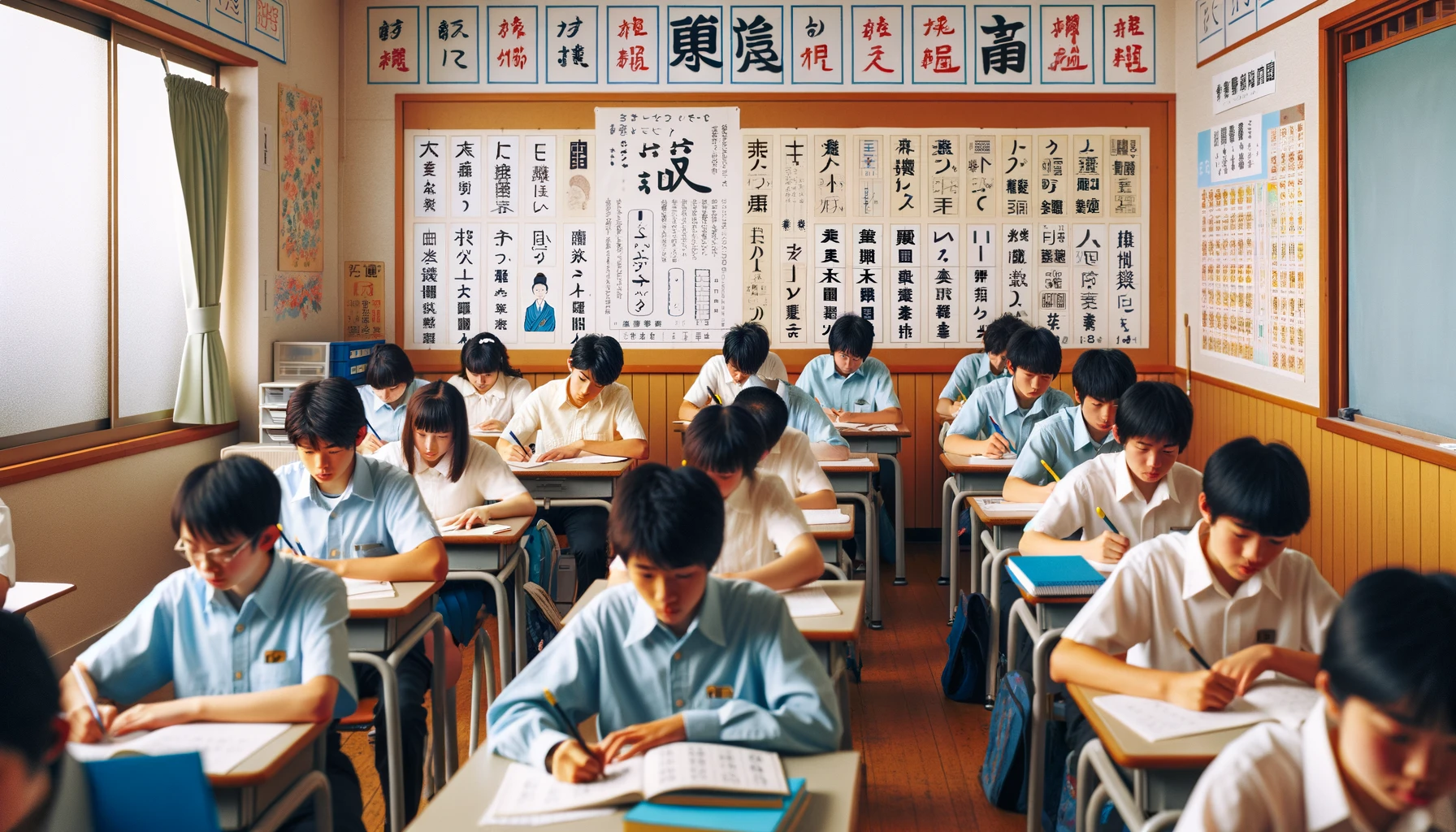
For many learners, the first look at real Japanese text feels less like an alphabet and more like a puzzle: characters that do not only sound a certain way, but also mean something. Those are kanji (漢字) — Chinese-origin logographs that, from roughly the 5th century onward, blended with hiragana and katakana into Japan’s writing system.
The hard part is rarely volume alone. The same character can take different readings depending on the word, and the visual logic only clicks once you understand origin and structure. When you see why kanji exist and how they work, studying them becomes calmer — and far more sticky.
Contents 5
Origin and evolution of kanji
Kanji history in Japan starts around the 5th century, when Chinese characters arrived via the Korean peninsula. Japan did not yet have a native writing system of its own. Adopting the script was not only a linguistic leap; it reshaped administration, religion, and scholarship through Chinese texts.
At first, writers often worked in classical Chinese. Over time, methods grew that bent those characters toward Japanese grammar — a language very different from Chinese. That process produced the dual-reading system still central today: on’yomi (音読み, Sino-Japanese reading) and kun’yomi (訓読み, native Japanese reading).
The result is unusual worldwide: meaning-bearing characters paired with phonetic syllabaries. Kanji carry the semantic core; kana mark grammar, endings, and many purely sound-based words. Together they form everyday Japanese writing.
How kanji work in practice
Each kanji typically stands for an idea or concept. The character 木 means “tree” or “wood.” It can appear alone or combine with others to form words.
A clear example of visual logic:
- 木 (ki) – tree
- 林 (hayashi) – grove / small wood (two “trees”)
- 森 (mori) – forest (three “trees”)
Three trees for a dense forest — images like this help memory, but they do not replace systematic study. Readings also shift with context:
- 木を見ます (ki o mimasu) – “I see the tree” → typical kun’yomi
- 木曜日 (mokuyōbi) – “Thursday” → typical on’yomi inside a compound
Useful heuristics: multi-kanji compounds (jukugo) often use on’yomi; a single character with okurigana (trailing hiragana) often uses kun’yomi. There are exceptions — so vocabulary in context beats memorizing isolated reading lists. For more pattern work, see how to tell on and kun readings apart.

How many kanji do you need to learn?
Tens of thousands of characters are cataloged — but nobody needs all of them for daily life. The Japanese government maintains the Jōyō Kanji (常用漢字) list of 2,136 characters for general use. It covers most of what appears in newspapers, books, and websites.
Schools also follow a graded order of characters; there is a list of school kanji in learning order. For exams such as the JLPT, many learners aim for approximate ranges:
- N5: about 100 kanji
- N4: about 300 kanji
- N3: about 600 kanji
- N2: up to about 1,000 kanji
- N1: over 2,000 kanji
With a plan and spaced review, mastering the essentials for fluent reading is realistic — without the myth of “all 50,000” hanging over your desk.
How to study kanji effectively
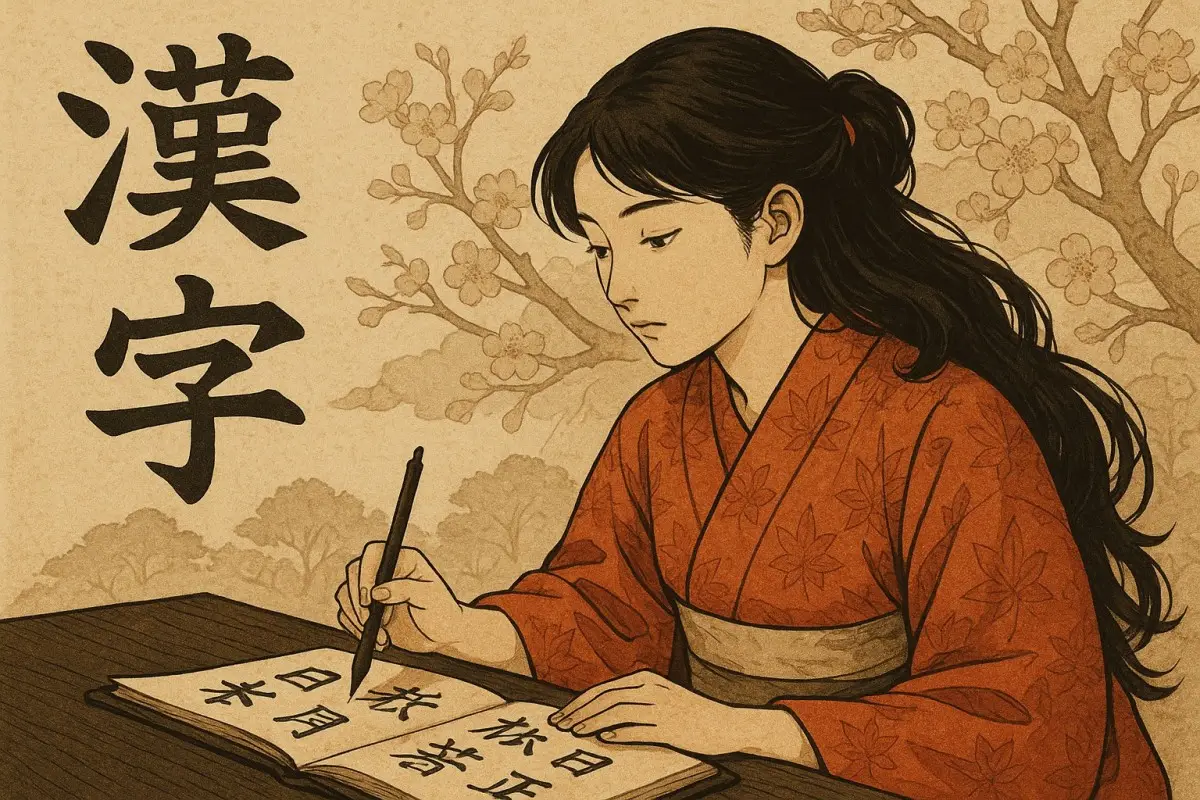
Learning kanji needs technique. Mindless copying without meaning rarely sticks. Strategies that link form, meaning, and real words work better:
- Learn in context: real sentences and everyday vocabulary instead of isolated lists.
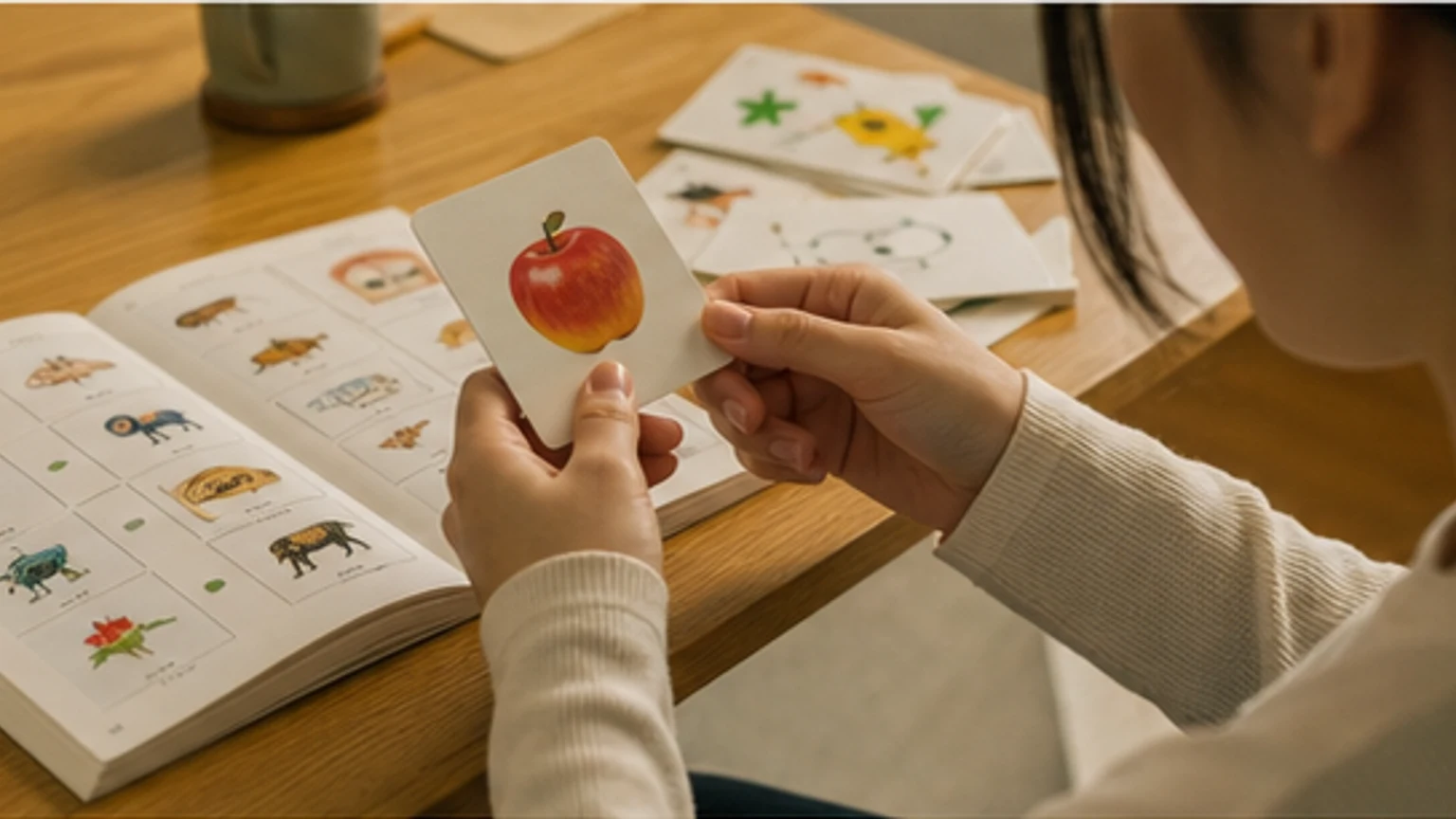
- Use flashcards with spaced repetition (SRS) so characters reappear on time.
- Write by hand to lock in stroke order and proportions.
- Read manga or graded texts with furigana to strengthen recognition.
- Link mental images or short stories to shapes — especially radicals.
Radicals (部首) are recurring building blocks. Recognizing 氵 as a water element or 木 as a tree element helps you break down unknown characters and confuse fewer similar-looking kanji. A practical habit: one core meaning + one frequent reading + one or two real words — extra readings arrive through vocabulary.
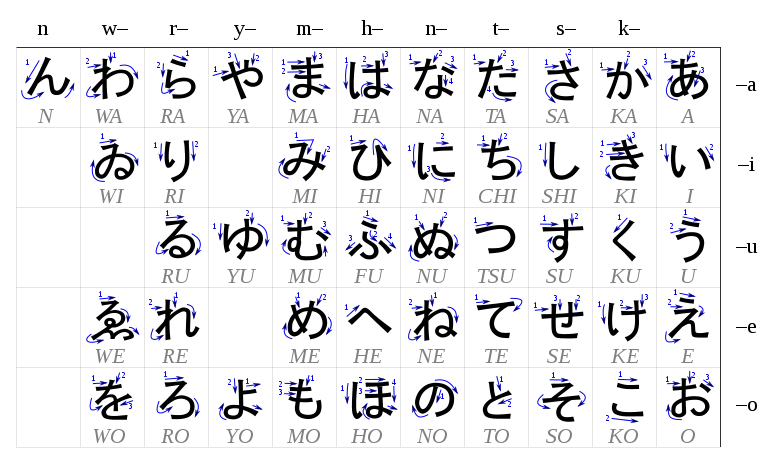
Hiragana and katakana should come first; the kana guide is the foundation. Delaying kanji “until later” often becomes never — small, steady batches after the kana work better.
Curiosities and cultural uses
Kanji do not stop at textbooks. They appear on signs, products, personal names, tattoos, and on omamori protective charms. In shodō (書道), calligraphy, writing itself becomes an expression of form and posture.
Each year, many people in Japan choose a “kanji of the year” (今年の漢字) — one character that captures the mood of the times. In 2023 it was 税 (zei, “tax”), against a backdrop of tax debates and new reporting systems.
Understanding kanji also opens a window onto Japanese history and thought: centuries of meaning that still shape how people read, write, and name things. Mastery is not a weekend project — but with consistency, context, and a clear focus on Jōyō and real words, it is reachable. Whether you want manga without constant translation, forms you can parse, or anime names you can decode, it starts here: with the characters that carry meaning.





Community
Comments
0 comments
There are no published comments in this language yet.
Send comment