
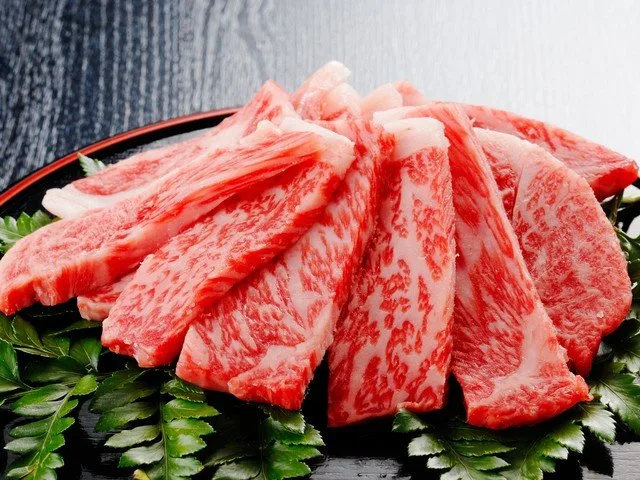
Order yakiniku and the menu turns into a puzzle of short Japanese cuts: harami, karubi, momo. At the fish market the same thing happens with maguro, saba, and hotate. Learning the meat and fish vocabulary is less about memorizing a dictionary and more about reading what is actually on the plate, the package, and the chalkboard.
This guide gathers the everyday Japanese names for meat, common cuts, classic meat dishes, and the fish and seafood you meet in supermarkets and restaurants. It is not every cut in Japan — that list would never end — but it is enough to order with confidence and understand labels without guessing.
Contents 4
Names of meats in Japanese
Start with the umbrella word 肉 (niku), “meat.” In daily speech, bare niku often points to beef, even though pork is cheaper and very common. For chicken, people usually say とり (tori) more than the full 鶏肉 (toriniku). So “chicken breast” becomes simply とりのむね (tori no mune).
The table below mixes basic meats, supermarket cuts, butcher terms, and a few processed items. Japanese labeling often uses short names that work across beef, pork, and chicken — context tells you which animal you are looking at.
Responsive table: Scroll sideways with your finger >>
| English | Japanese | Romaji |
| Meat | 肉 | niku |
| Beef | 牛肉 | gyuuniku |
| Pork | 豚肉 | butaniku |
| Chicken / poultry | 鶏肉 | toriniku |
| Lamb / mutton | 羊肉 | hitsujiniku |
| Turkey | 七面鳥 | shichimenchou |
| Wagyu (Japanese cattle) | 和牛 | wagyuu |
| Types of meat | 肉類 | nikurui |
| Butcher / meat shop | 肉屋 | nikuya |
| Ground meat | ひき肉 | hikiniku |
| Thinly sliced meat | 薄切り肉 | usugiriniku |
| Thick-cut meat | 厚切り肉 | atsugiriniku |
| Shredded / julienned meat | 細切り肉 | hosogiriniku |
| Meatball | 肉団子 | nikudango |
| Bacon | ベーコン | beekon |
| Ham | ハム | hamu |
| Sausage | ソーセージ | sooseeji |
| Salami | サラミ | sarami |
| Beefsteak | ビーフステーキ | biifusuteeki |
| Chuck / shoulder loin | 肩ロース | kata roosu |
| Shoulder | 肩肉 | kataniku |
| Short plate / belly side | ともばら | tomobara |
| Rib / belly strip | バラ | bara |
| Pork belly | 豚バラ | butabara |
| Bone-in short rib | 骨付バラ肉 | honetsuki baraniku |
| Ribs | あばら肉 | abaraniku |
| Ribeye / rib loin | リブロース | riburoosu |
| Sirloin | サーロイン | saaroin |
| Loin | ロース | roosu |
| Filet / tenderloin | ヒレ | hire |
| Rump | ランプ | ranpu |
| Rump cap (ichibo) | イチボ | ichibo |
| Outside skirt / diaphragm | ハラミ | harami |
| Blade / flat iron area | ミスジ | misuji |
| Thigh / round | もも | momo |
| Inner thigh | 内もも | uchimomo |
| Outer thigh | 外もも | sotomomo |
| Chicken thigh | 鶏もも肉 | tori momoniku |
| Chicken breast | 鶏むね肉 | tori muneniku |
| Chicken tender / white meat | ささみ | sasami |
| Chicken wings (tips) | 手羽先 | tebasaki |
| Chicken heart | ハツ | hatsu |
| Liver | レバー | rebaa |
| Shank / shin | すね肉 | suneniku |
| Beef tendon | 牛すじ | gyuusuji |
| Neck | ネック | nekku |
| Tail | テール | teeru |
| Pork trotter | 豚足 | tonsoku |
| Pork cutlet (dish cut) | 豚カツ | tonkatsu |
| Heel of round (yakiniku “tonbi”) | トンビ | tonbi |
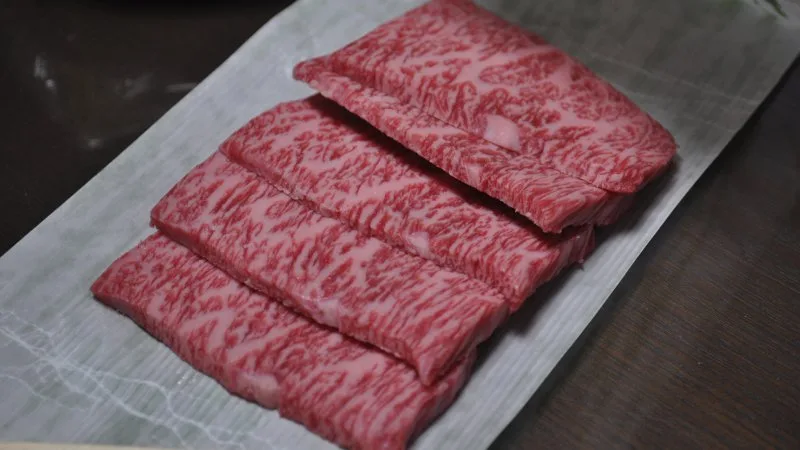
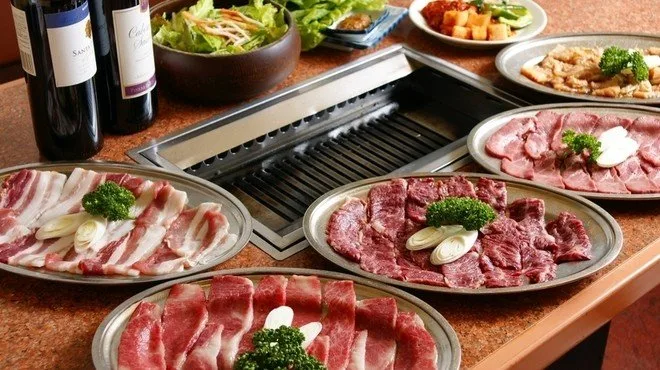
At the counter, short labels do a lot of work. バラ (bara) is the fatty belly strip prized for yakiniku; ハラミ (harami) is the flavorful outside skirt; ヒレ (hire) is tenderloin. For chicken, むね is breast, もも is thigh, and ささみ is the lean tender. We also recommend reading about wagyu and Kobe beef and about yakitori chicken skewers.
Main meat dishes in Japanese
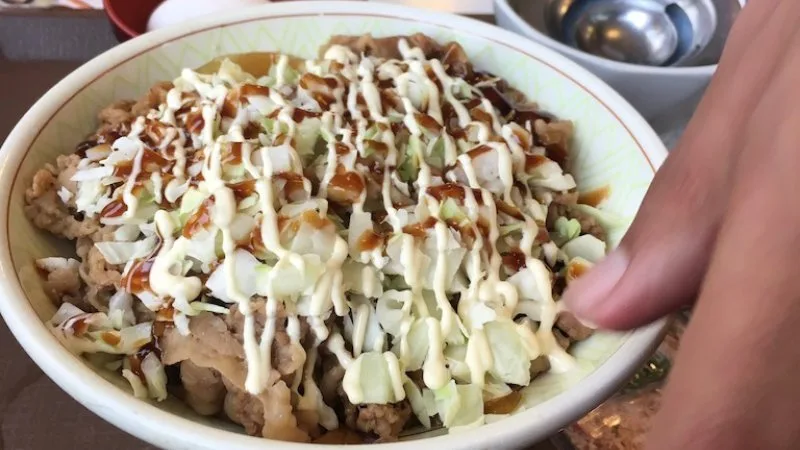
Beyond raw ingredients, menus name whole cooking styles. Knowing these dish words helps you move from “I want beef” to “I want thin slices for shabu-shabu” or “I want a grilled yakitori set.” For culture and prices around meat in Japan, see also our article on meat in Japan.
Responsive table: Scroll sideways with your finger >>
| English | Japanese | Romaji |
| Grilled meat (yakiniku) | 焼肉 | yakiniku |
| Sukiyaki | すき焼き | sukiyaki |
| Shabu-shabu | しゃぶしゃぶ | shabushabu |
| Beef rice bowl | 牛丼 | gyuudon |
| Yakitori | 焼き鳥 | yakitori |
| Ginger-grilled pork | 生姜焼き | shougayaki |
| Karaage (Japanese fried chicken) | から揚げ | karaage |
| Steak | ステーキ | suteeki |
| Roast beef | ローストビーフ | roosutobiifu |
| Hamburg steak | ハンバーグ | hanbaagu |
| Meatloaf | ミートローフ | miitoroofu |
| Tartare | タルタルステーキ | tarutaru suteeki |
| Horse sashimi | 馬刺し | basashi |
| Yukhoe (Korean-style raw beef) | ユッケ | yukke |
| Carpaccio | カルパッチョ | karupaccho |
| Genghis Khan (grilled mutton) | ジンギスカン | jingisukan |
| Bulgogi | プルコギ | purukogi |
| Samgyeopsal (pork belly BBQ) | サムギョプサル | samugyopusaru |
| Curry dishes | カレー料理 | karee ryouri |
| Fried chicken (Western style) | フライドチキン | furaido chikin |
Names of fish and seafood in Japanese
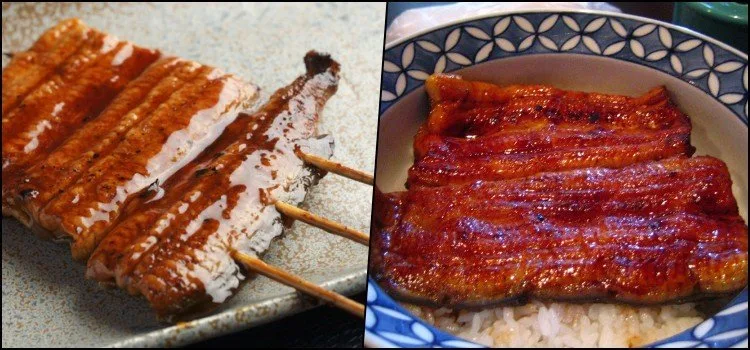
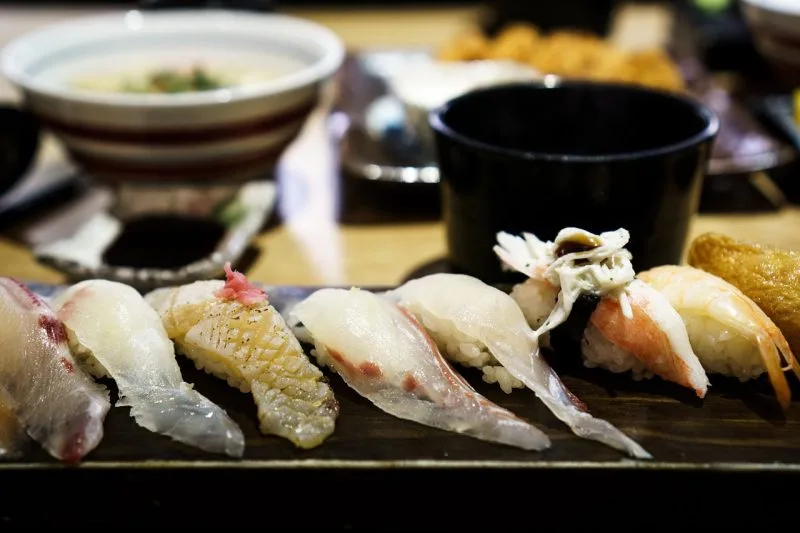
Fish is 魚 (sakana). Broader seafood is often 魚介類 (gyokairui) or the loanword シーフード (shiifuudo). Japan eats hundreds of species, so menus and sushi lists jump between kanji, hiragana, and katakana. The same fish can also change name by cut — for example tuna as maguro, with fatty belly called toro.
Below is a practical set of fish, shellfish, and other seafood names you will actually see at markets, conveyor-belt sushi, and izakaya. For a deeper dive into fish vocabulary and popular species, continue with our guides on fish in the Japanese language and the most consumed fish in Japan.
Responsive table: Scroll sideways with your finger >>
| English | Japanese | Romaji |
| Fish | 魚 | sakana |
| Seafood | 魚介類 | gyokairui |
| Seafood (loanword) | シーフード | shiifuudo |
| Shellfish (general) | 貝 | kai |
| Tuna | 鮪 / マグロ | maguro |
| Canned / Western-style tuna | ツナ | tsuna |
| Salmon | 鮭 | sake |
| Salmon (loanword) | サーモン | saamon |
| Skipjack tuna | かつお | katsuo |
| Dried skipjack flakes | 鰹節 | katsuobushi |
| Mackerel | 鯖 | saba |
| Sardine | 鰯 | iwashi |
| True sardine | マイワシ | maiwashi |
| Yellowtail / young amberjack | はまち | hamachi |
| Sea bream / red snapper family | 鯛 | tai |
| Cod | 鱈 / タラ | tara |
| Flounder / flatfish | カレイ | karei |
| Eel (freshwater) | 鰻 | unagi |
| Shrimp / prawn | 海老 / えび | ebi |
| Crab | 蟹 / かに | kani |
| Lobster | ロブスター | robusutaa |
| Squid | 烏賊 / いか | ika |
| Octopus | 蛸 / たこ | tako |
| Oyster | カキ | kaki |
| Scallop | ほたて / 帆立 | hotate |
| Mussel | ムール貝 / いがい | muuru-gai / igai |
| Sea urchin | ウニ | uni |
| Jellyfish | クラゲ | kurage |
| Shark | 鮫 | same |
| Carp | 鯉 | koi |
| Goldfish | 金魚 | kingyo |
| Pufferfish (fugu) | ふぐ | fugu |
Two reading tips save confusion on menus. 鮭 can be read sake or shake depending on region and shop, and the katakana サーモン is common for sushi-counter salmon. えび covers shrimp and prawns broadly; fried versions often appear as エビフライ. If you are curious about the careful, high-stakes side of seafood culture, read about fugu, the pufferfish.
How to use these words in Japan
In a supermarket, look for origin labels: 国産 (kokusan) means domestic, while 輸入 (yunyuu) means imported. Ground meat is split as 牛ひき肉, 豚ひき肉, 鶏ひき肉, and mixed 合いびき肉. At yakiniku, order by cut name; at sushi, order by fish name. The tables above are meant to be used that way — as a pocket map for real counters, not as a complete encyclopedia of every living creature in the sea.
Keep this page open when you study menus, pack for a trip, or review vocabulary for Japanese class. The useful skill is pairing sound, script, and plate: once niku, sakana, toro, and tebasaki stick, the rest of the board starts to make sense.


Community
Comments
0 comments
There are no published comments in this language yet.
Send comment