
You already know that Japan uses seals and stamps to sign the name. Today we go a step further and talk about stamps you take home as a little collection: the famous Sutanpu [スタンプ], which you can find in many places across Japan — in temples, train stations, on islands, in onsen, in cities, parks, gardens, shops, konbini, and plenty more.
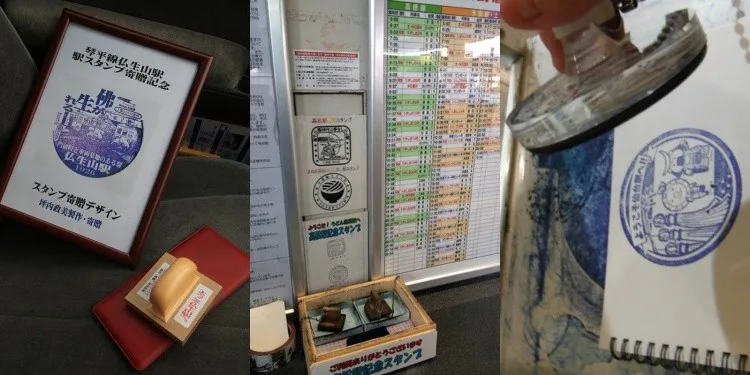
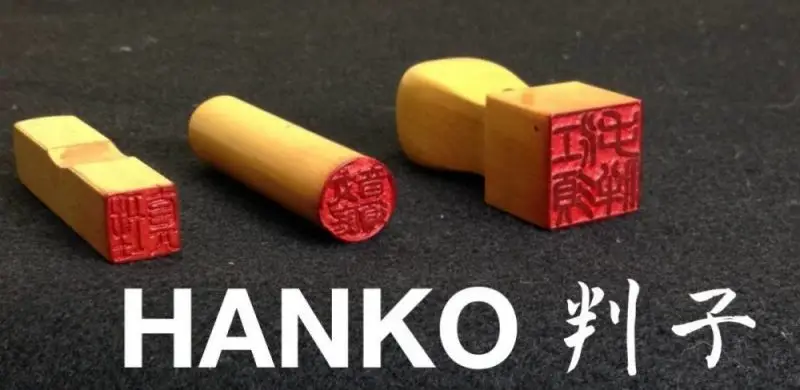
These stamps are there for you to register, collect and remember the place you visited. They're also a clever marketing strategy on the part of the venue. They can come in any size, color and shape. Some are pressed the traditional way, by pushing the stamp onto an ink pad and then onto the paper; others look like a giant stapler, or have the ink pad already built in.
There are different kinds of stamps. Some are released to mark a special occasion, and sometimes there are even small competitions to see who collects the most. The nice thing is that these stamps can replace a souvenir or a postcard. At most of these places you can find blank sheets, or you can buy a postcard and stamp one for your friends back home.
In most castles and museums you'll find one or more stamps in all kinds of sizes and shapes. At the Osaka Aquarium you can find marine animal stamps scattered across the whole venue. Sometimes the stamps turn up in the most unlikely places.
Contents 5
What are Sutanpu?
The word Sutanpu is the Japanese reading of the loanword スタンプ, which itself comes from the English "stamp". It refers to tourist stamps that you press on the spot into a notebook, a postcard or a small memo pad. They are almost always free, and they are one of the most relaxed ways to keep a record of a trip through Japan.
Sutanpu come out for special events, anniversaries and seasonal campaigns, but many are also available year-round at classic tourist spots. After a couple of weeks on the road, you end up with a small album of memories — from a quiet temple in Kyoto to a factory tour in Hokkaido.
Eki Sutanpu – Station stamps
The most popular category of Sutanpu are the Eki Sutanpu [駅スタンプ], literally "station stamps". They tend to be a little larger and show something distinctive about the place or the neighborhood. With over 9,000 train stations in Japan, estimates put the total number of Eki Sutanpu at well over 5,000. They're updated regularly, and some come in limited editions or only appear during certain seasons.
At most stations the stamp sits right at the entrance or in another prominent spot, but every station is different. It can be outside or inside, at the ticket office, in the waiting area, or tucked into a quiet corner of the concourse. When in doubt, ask the staff — in Japanese, for example, like this:
駅スタンプはどこですか
Eki sutanpu wa doko desuka?
Sometimes the stamp sits at the counter, sometimes inside the station office. At very small stations, or with some of the private rail companies, there simply isn't an Eki Sutanpu — and that's worth knowing before you set out to "collect them all".
Where to find stamps
You can stumble on Sutanpu at a surprisingly wide range of places. A few everyday examples:
- Train stations — the classic Eki Sutanpu at JR, private railway and metro stations.
- Temples and shrines — most Buddhist temples and Shinto shrines have a stamp book, often with a paid goshuin for a small donation and a separate, free Sutanpu as a memento.
- Castles, museums and observation decks — usually near the entrance or in the gift shop.
- Aquariums and theme parks — for example, the Osaka Aquarium with its marine animal stamps spread across the venue.
- Onsen, islands, parks, gardens and viewpoints — often at the ticket desk or on the way out.
- Konbini, souvenir shops and 100-yen stores — occasionally for special campaigns or anime tie-ins.
The range of designs is huge: anime characters, regional mascots (yuru-chara), famous buildings, animals, classic landmarks. That's the whole point — you never quite know what will be waiting at the next station.
How to collect properly
My first Sutanpu was at Tokyo Skytree. Unfortunately I didn't have a notebook on me, so the first lesson was: get yourself a book. Bookstores in tourist areas often sell lined, grid or travel-format notebooks, but they're surprisingly pricey and sometimes oddly sized. My favorite notebook ended up coming from a 100-yen store, and I covered the store logo with a handful of stickers.
After that I rode around Tokyo with a JR Pass and stamped my way from station to station. The nice part is that you're already moving through the city by train, and each stop offers a new stamp. I didn't even have to leave most of the stations to get them, and aside from the pass I didn't spend a yen. Alongside the classic place-themed designs, there were plenty of surprises — anime characters, fish, vintage postcard art, regional mascots.
A few practical tips from the road:
- Bring a flat, sturdy notebook — postcard size fits well in a jacket pocket and is enough for most stamps.
- Write down the date and station name — the first time you'll think you'll remember. By the fiftieth stamp, you won't.
- Ask politely at the counter if you can't find the stamp — staff almost always help.
- Press straight down, not too hard — some stamps are large and the image smudges if you lean on them.
At the end of the trip you're holding a small, very personal album that you can't buy in any souvenir shop — and that, more than anything, is why Sutanpu have stayed so popular in Japan.
More around Japan to explore
If you're interested in Japanese travel culture and the stories behind the everyday things you see on a trip, these pieces pair well with this one:




Community
Comments
0 comments
There are no published comments in this language yet.
Send comment