
If you opened YouTube in the autumn of 2016, there is a good chance you were greeted by a man in a slightly crooked leopard-print jacket, a loud Hawaiian shirt and an oversized scarf, holding a pen, a pineapple and an apple up to the camera with wide, unblinking eyes. The song ran for just under a minute, the lyrics barely made sense in any language, and yet within a few weeks almost everyone on the internet seemed to know it: Pen-Pineapple-Apple-Pen, soon shortened to PPAP. What started as a goofy sketch in a Japanese comedy show became one of the strangest global viral moments of the decade.
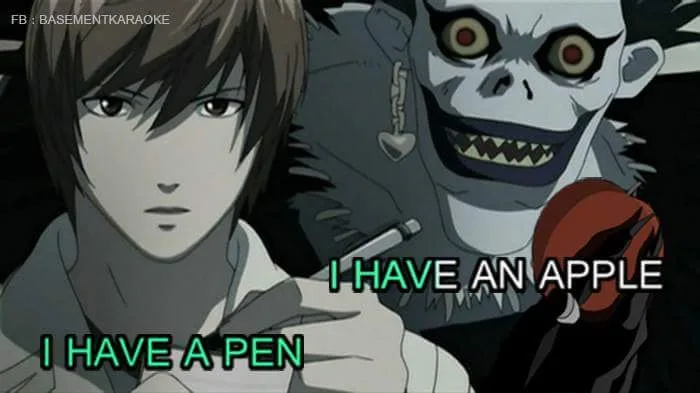
The appeal of PPAP is its radical simplicity. There is no complicated choreography, no dramatic storyline and no lyric that demands intellectual effort, yet the song lodges itself in your head for hours. That mix of minimalism, slapstick and a tight musical hook is exactly why Japan keeps producing internet moments that travel well past the country's borders.
Contents 5
The Phenomenon: A YouTube video that broke the charts
The official music video for Pen-Pineapple-Apple-Pen was uploaded to Pikotaro's YouTube channel on 25 August 2016. Within weeks it crossed 50 million views, racked up millions more through mirror uploads, and was shared millions of times on 9GAG, Twitter, Facebook and LINE. 9GAG alone generated more than 25 million views on its own version of the clip, and that was just one of countless unofficial uploads. The track eventually entered the US Billboard Hot 100, which made PPAP officially the shortest song ever to chart there, a fact later recognised by Guinness World Records. At the time, several commentators floated the idea that Pikotaro's silly sing-along could outgrow even PSY's Gangnam Style as a global meme, an exaggeration, but a useful measure of how fast the song was spreading in late 2016.
The single sentence you have to remember before you press play is this: once you have heard the song, you will not be able to get it out of your head. That is not a marketing line, it is the whole joke. PPAP is designed as a tiny, looping mental trap. The melody is built from only a handful of notes, the rhythm never changes, and the words are short enough that even a non-English speaker can sing them back after one listen. The combination is closer to a kids' TV theme than to a pop single, which is part of the reason it spreads so well across age groups and languages.
Who Is Pikotaro? The Comedian Behind the Scarf
The character singing PPAP is called Pikotaro (ピコ太郎), a deliberately goofy alter ego created by the Japanese comedian and TV personality Daimaou Kosaka (古坂大魔王). By the time PPAP went viral, Kosaka was already a familiar face on Japanese television, with a career stretching back to the early 2000s and a long string of variety show appearances. The Pikotaro persona, with its leopard-print jacket, gaudy shirt and comically long scarf, was developed for his live comedy work as a parody of a cheesy enka or city-pop performer, the kind of overconfident lounge singer you might see on a regional TV talent show.
What made the disguise effective was the contrast with Kosaka's real public image. Off stage he is a thoughtful, somewhat ironic comedian known for sketch writing and character work; on stage as Pikotaro he commits fully to the bit, dead-eyed, monotone, completely straight-faced. That tension between knowing wink and total sincerity is a classic Japanese comedy technique, and it is one of the reasons PPAP landed so well with a domestic audience before it ever left Japan. The joke only works if the performer is in on it, and Kosaka very much is.
The name itself is a small piece of the joke. Pikotaro echoes Piko Taro, a pun on the piko piko sound effect, a kind of silly onomatopoeia you would hear in a children's cartoon. It is the same family of humour that gave Japan viral hits such as Piko Taro's PPAP and the earlier craze around Pecola and Yōkai Ningen Bem (妖怪人間ベム) themed novelty content. The character feels homemade, almost amateur, which is exactly the texture that helps a video spread on a platform like YouTube.
The Formula: Pen, Pineapple, Apple, Pen
If you strip PPAP down to its mechanics, it is almost embarrassingly simple. The whole song is built from a four-line chant, repeated twice with minor variations:
I have a pen, I have an apple. Uh! Apple pen.
I have a pen, I have a pineapple. Uh! Pineapple pen.
Apple pen, pineapple pen. Uh! Pen-Pineapple-Apple-Pen.
Pen-Pineapple-Apple-Pen.
That is the entire lyrical content of the chorus. The verses are barely longer, and most of the runtime is the chant itself, layered over a clapping beat and a stiff hip-sway that looks like a slowed-down version of a wedding DJ dance move. The joke is a classic portmanteau gag: take two words, smash them together, say it as if it were a profound discovery. Apple. Pen. Apple-pen. Pineapple. Pen. Pineapple-pen. The comedy comes from delivering this kindergarten-level wordplay with the gravity of a TED talk.
That formula, novelty hook, deadpan delivery, repeat-friendly structure, is something Japanese variety television has refined over decades. From manzai duos to skit shows to short YouTube clips, the principle is the same: build a tiny repeatable unit that rewards a second and third viewing. PPAP is a perfect example, and once the YouTube algorithm noticed how often people were replaying the first five seconds of the video, the rest was inevitable.
Remixes and Parodies: How the World Answered
What makes a viral hit stick is not the original upload, it is the wave of reaction videos that follows. PPAP triggered one of the densest remix cycles of 2016. Within days of the song's release, fans were posting sped-up and slowed-down versions, beat-matched edits over dance and EDM tracks, and deep house and trap remixes that turned Pikotaro's flat chant into surprisingly listenable club music. Celebrities piled in. Justin Bieber posted a PPAP clip on his social channels; J Balvin referenced the song in interviews; the US talk-show circuit booked Pikotaro for appearances on The Tonight Show Starring Jimmy Fallon and other programmes.
The parodies were at least as important as the remixes. Brands and tech products joined in, including Apple's own Siri assistant, which was taught to respond to the PPAP chant with a parody line. Anime, manga and game fandoms remixed the song with their own characters, and Japanese variety shows started building entire episodes around Pen-Pineapple-Apple-Pen challenges. Even the UN saw a brief flurry of PPAP-inspired content from its own staff accounts, an indication of just how deep the song had pushed into mainstream pop culture. For a few months in late 2016, almost every platform had its own PPAP version, and the song became a kind of shared language for that corner of the internet.
Legacy: PPAP and the Logic of Japanese Viral Hits
Looking back from a few years later, PPAP is most interesting not as a single song, but as a case study in how Japan produces internet phenomena. The country has a long tradition of novelty music (sometimes called wai wai or kaidan pop) tied to variety TV, manga tie-ins and commercial jingles. Songs from shows like Yōkai Ningen Bem (妖怪人間ベム), or later viral moments like Pen-Pineapple-Apple-Pen and the Imasara / Pikotaro spinoffs, share a few traits: a short runtime, a built-in visual gag, a chorus that fits on a single breath, and a creator who is clearly in on the joke. PPAP took that local template and pushed it through a global platform in a way that very few Japanese novelty acts had managed before.
The song also showed that J-pop (Jポップ) does not have to mean polished idol choreography or carefully produced ballads to travel abroad. A deliberately amateurish aesthetic, a borrowed bit of English, and a memorable gesture were enough to push a comedy track onto the Billboard Hot 100 and into living rooms from São Paulo to Stockholm. That is a quietly important shift: the global image of Japanese pop music expanded, briefly, to include the kind of low-budget, self-aware silliness that had always been part of domestic variety TV.
There is also a useful lesson about the lifespan of a viral hit. PPAP peaked hard, dominated the second half of 2016, and then faded from the conversation almost as quickly as it had arrived. Pikotaro kept performing, the official channel kept releasing new clips, and the song still resurfaces in challenge videos and reaction compilations years later, but it is no longer a chart force. That arc is the rule for this kind of novelty hit, and it is part of the fun: PPAP is less a song you keep listening to and more a shared moment you happened to be on the internet for.
For a longer look at the wave of Japanese novelty and J-pop artists that crossed over in the same period, our guide to the scene is a useful companion. If you are curious about how this kind of sketch-driven content sits inside the wider world of Japanese variety and comedy, the breakdown of Japanese variety shows goes deeper into the format Pikotaro came out of. And for a more serious look at the music industry side, the J-pop industry explainer covers the business and creative structure behind the hits.
Pen-Pineapple-Apple-Pen was never meant to be art. It was meant to be a joke you could not get out of your head, and on that count it succeeded beyond almost anyone's expectations. If you were online in 2016, you probably still remember the exact three objects, the leopard-print jacket and the way the chorus hits just slightly off the beat. If you were not, the videos above are still waiting, and you have been warned.





Community
Comments
0 comments
There are no published comments in this language yet.
Send comment