
Japan is an archipelago of 14,125 islands. For decades the official count sat at 6,852; a digital recount in 2023 more than doubled it. Most visitors still never leave Honshu, Hokkaido, Kyushu and Shikoku — the four main islands of Japan.
The ones that linger are usually the inconvenient ones: a crater nested inside another crater, more cats than people, a coal town that looks like a battleship. These eleven are small, odd, and worth the extra ferry.
Contents 12
Aogashima — the volcano island
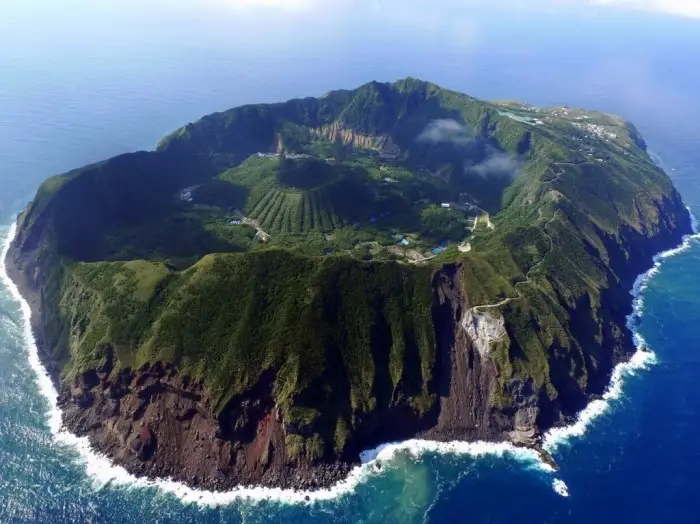
The most interesting thing is that this island is a volcano within another volcano. Aogashima sits in the Izu Islands, about 358 kilometers south of Tokyo. It covers only about 6 square kilometers, and roughly 160 people live there.
There are no hotels in the usual sense — minshuku and a campsite, with meals arranged through the inn. The double-caldera silhouette is often compared to the crater town in the film Your Name (Kimi no Na wa), even if the movie’s village was pieced together from other places.
There is no direct flight or ferry from Tokyo to Aogashima. You fly about 50 minutes from Haneda to Hachijojima — or take the overnight ferry — and only then continue by helicopter (about 20 minutes) or by boat (around three and a half hours). Both last legs cancel often when the Pacific gets rough, so the trip is part of the point.
Okunoshima — Rabbit Island
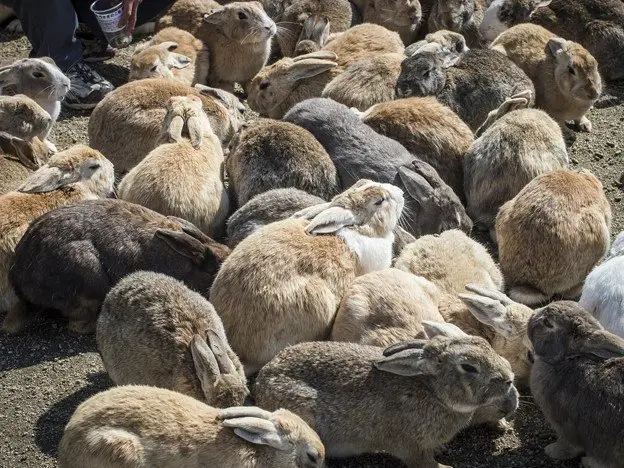
Okunoshima is a small island in Hiroshima Prefecture, famous for rabbits scattered all over the paths, where visitors feed them and pet them.
The usual story is that eight rabbits used in experiments were released in 1971 and multiplied. Reports put the free-roaming population above a thousand.
Despite the peaceful image of adorable rabbits hopping around the island, it has a very dark history. In 1929 a factory was built for chemical weapons and kept producing them until World War II.
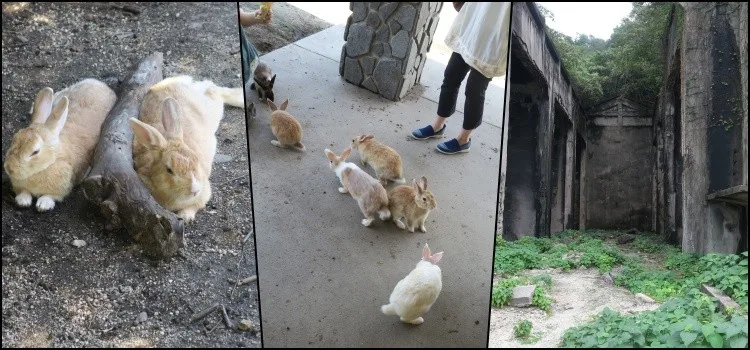
The rabbits were the guinea pigs. Walking the island you still pass bunkers, ruined buildings and a small museum with a miniature of the site. We wrote a longer walk-through of Okunoshima, the island of rabbits.
Gunkanjima (Hashima) — abandoned island
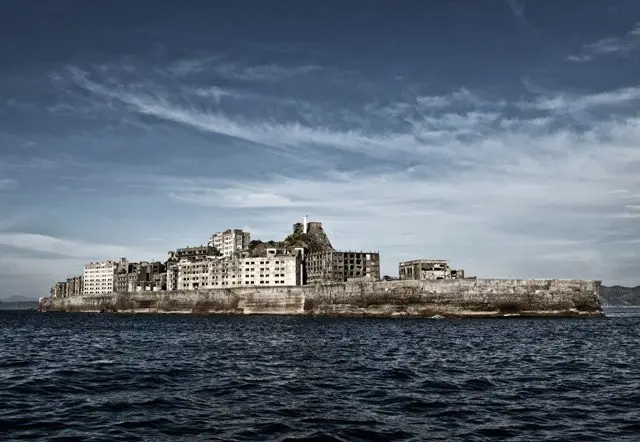
Hashima is known as Gunkanjima, “battleship island,” off Nagasaki. It became famous worldwide after the 2012 James Bond film Skyfall used its silhouette as a visual reference.
Coal mining started in the late 1880s. Miners and their families packed the concrete blocks until the mine closed in 1974 and everyone left — houses, schools, the lot. Tours have run since 2009. In 2015 the Hashima coal mine was inscribed on the UNESCO World Heritage List as part of the Sites of Japan’s Meiji Industrial Revolution.
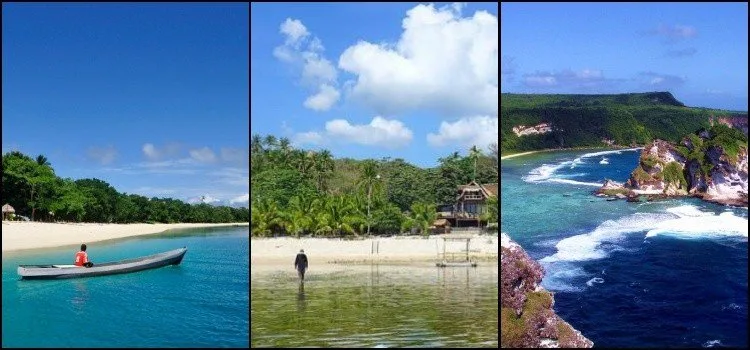
Shikinejima — a tropical island
It is hard to believe that there is a tropical-feeling island just two and a half hours from Tokyo. Visitors hike, camp, dive, swim, sunbathe or sit in natural hot springs on Shikinejima without flying all the way to Okinawa. For a wider beach map, see the best beaches in Japan to visit in summer.
Tashirojima — Cat Island
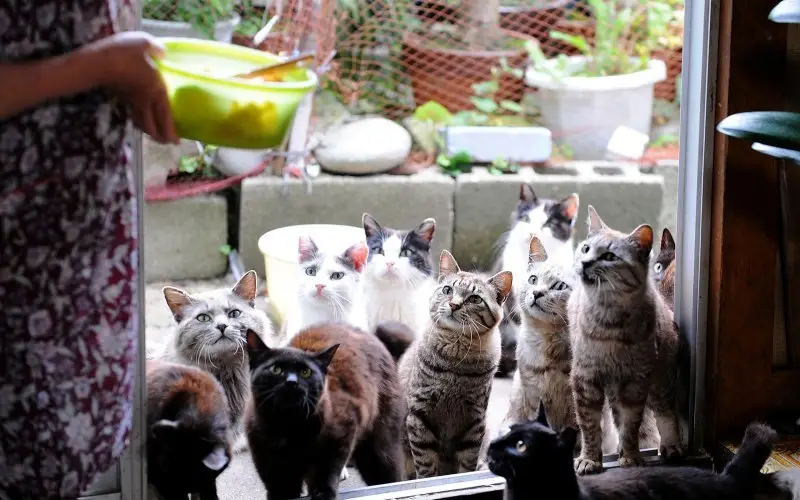
Tashirojima is a small island off Ishinomaki, Miyagi Prefecture, in the Pacific. It is also known as Cat Island. With only about 100 residents, there are more cats than humans.
Dogs are treated as enemies and are prohibited from living on or visiting the island unless they are service dogs. Japan has other cat islands scattered along the coast — and islands of rabbits, deer and foxes besides. The fuller map is in Nekojima: cat islands in Japan.
Itsukushima Island and Miyajima
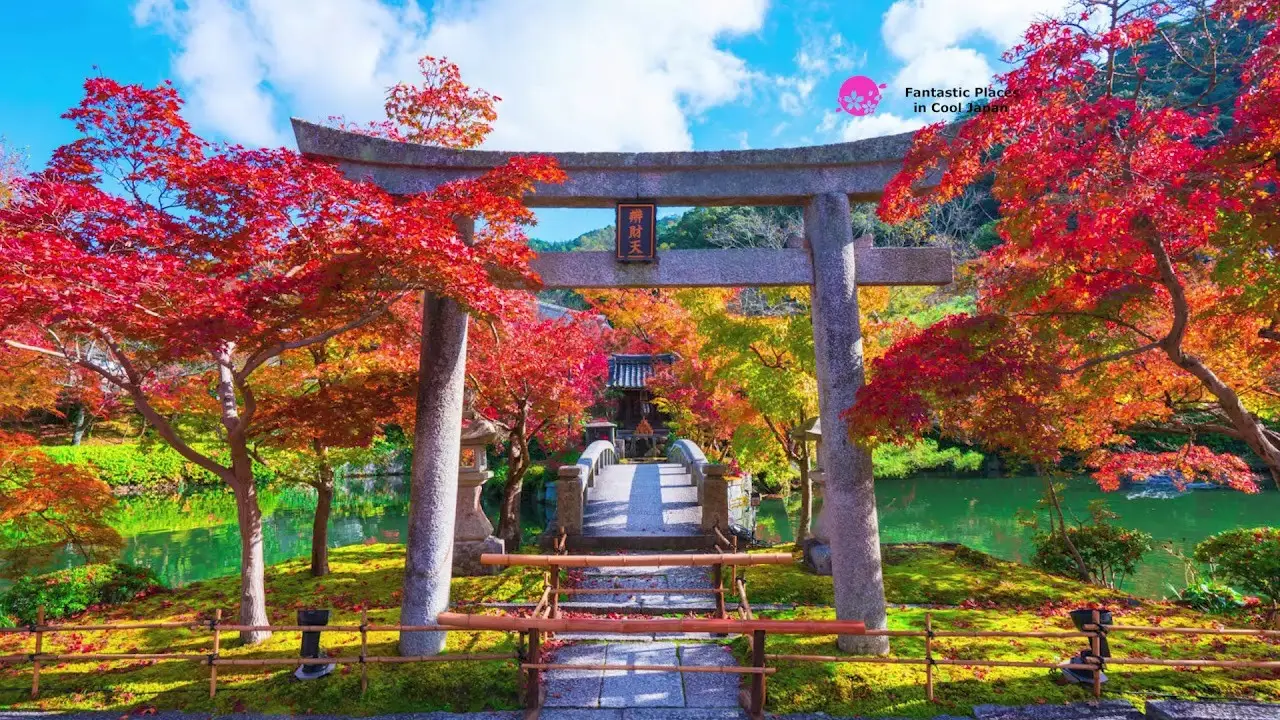
Itsukushima, also known as Miyajima, sits in Hatsukaichi, Hiroshima Prefecture. Itsukushima means “where the gods reside.” The island is famous for its giant floating torii and the shrine built over the water — we explained the meaning of torii gates separately.
Yes, it is normal for islands in Japan to end up with more than one name. Miyajima is the town on Itsukushima Island, and both names get used as if they were the same place.
The island sits in the Seto Inland Sea, Seto Naikai [瀬戸内海]. You reach it by train (about 30 minutes) and a short ferry (about 10 minutes) from Hiroshima, only around 10 kilometers away. The highest point is Mount Misen, 535 meters. Deer wander the streets much as they do in Nara, and there are hiking trails, shops, matcha ice cream, an aquarium and onsen if you stay the day.
The shrine and torii of Miyajima
Built over the bay, the shrine looks as if it is floating at high tide. It is a clear example of Heian-period architecture. At low tide you can walk out to the great torii. Plan the visit around the tide if that floating impression is what you came for; weekdays are calmer than weekends.
Some say Itsukushima Shrine was founded in 593, but its existence is only confirmed from 811. During the Heian period (794–1185) it was called the shrine of the country of Aki, dedicated to the sea kami Ichikishima, Tagori and Tagitsu. Fires forced rebuilds; the last major renovations date to 1875, though some parts go back to around 1200. It has been a UNESCO World Heritage Site since 1996. Another highlight is the Buddhist temple near the summit of Mount Misen.
Tomogashima — World War II island
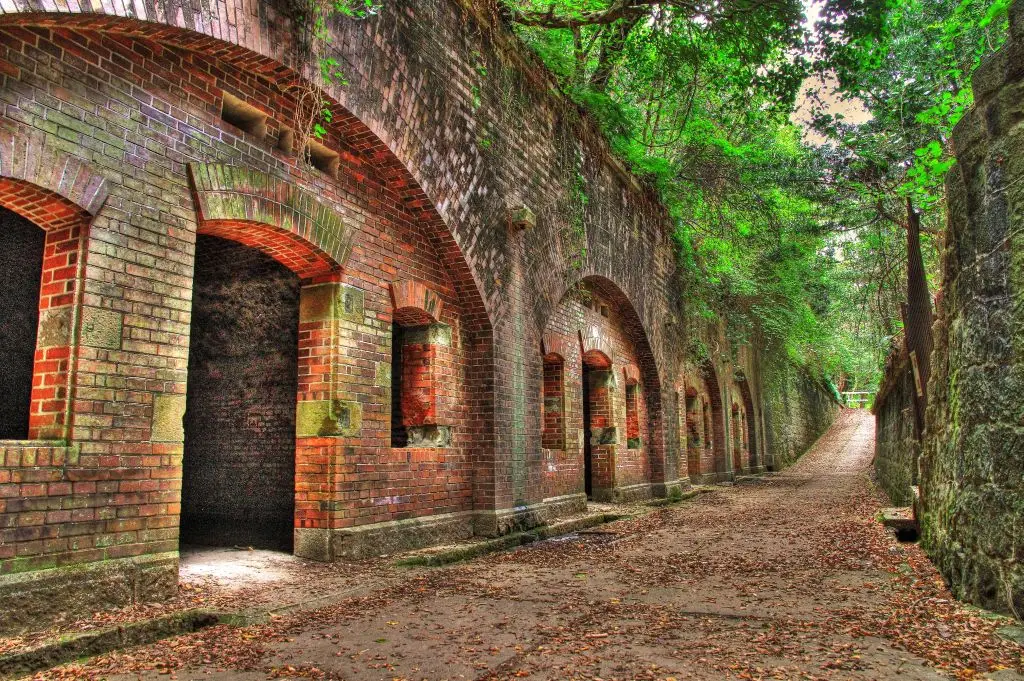
Tomogashima was used as a fortress until the end of World War II, and public access was strictly prohibited. It is now part of Setonaikai National Park. People go to camp and hike among the batteries.
Odaiba — Tokyo’s famous artificial island
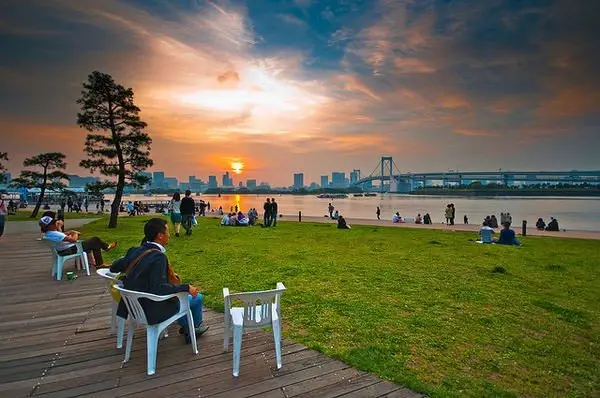
Odaiba is a well-known artificial island in Tokyo Bay: museums, shopping malls, a giant robot statue, a famous onsen, a digital museum and a waterfront promenade. If you want the practical route, we have a separate guide to Odaiba.
Tsunoshima Island and the Ohashi Bridge
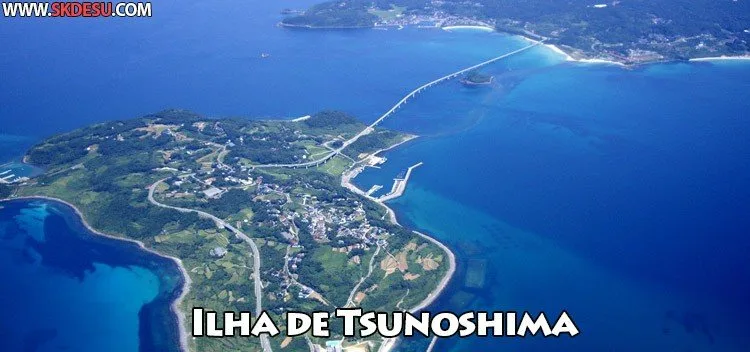
Tsunoshima [角島] is an island in Yamaguchi Prefecture. The name means Horn Island, from the two-horn shape and the cattle that still graze the grassy hill.
You reach it across Tsunoshima Ohashi, 1,780 meters of bridge over cobalt water, arcing past a smaller islet called Hatoshima. It is one of Japan’s longest toll-free bridges to an inhabited island, and a favorite of car commercials. The island itself has a lighthouse, fishing villages, campsites and beaches. A longer stop is in our piece on Tsunoshima and the Ohashi Bridge.
The famous island of Enoshima
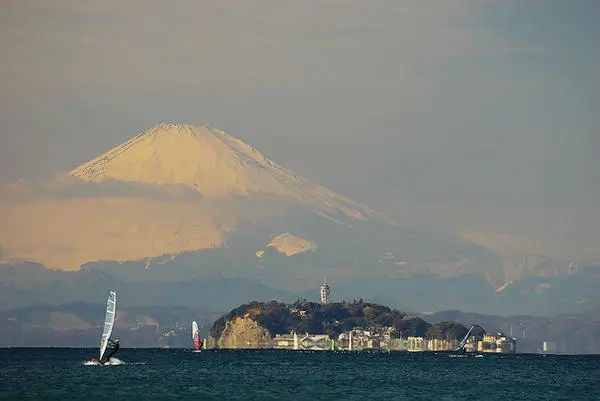
Enoshima sits in Sagami Bay, Kanagawa Prefecture. It has busy beaches and, on a clear day, a view of Mount Fuji. You walk over on Benten-bashi, a 389-meter pedestrian bridge — not the 600 meters older guides still quote.
Most of the attractions sit up the hill, reached on foot or by escalators: a tropical botanical garden and the Enoshima Sea Candle observation lighthouse. More of the caves and love bell are in the Enoshima island guide.
The small island of Aoshima in Miyazaki
Aoshima (青島) is a tiny island south of the beaches of Miyazaki. It covers about 4.4 hectares (10.9 acres) and rises only about 6 meters (20 feet).
A bridge connects it to the mainland. White sand rings a subtropical thicket in the center. In the shallows, a geological formation called Oni no Sentakuita — the Devil’s Washboard — shows at low tide: rock ridges so straight they look man-made, cut by waves rather than by hand.
Walking the beach around the island is about 1.5 kilometers, with a few stalls along the way. In the center there is a shrine, and deeper in the greenery a smaller shrine said to favor couples; visitors buy clay disks and throw them at a target for luck.
Aoshima in Miyazaki should not be confused with the identically named island in Ehime Prefecture, the one known for cats.
These are only some of the small Japanese islands that sit off the usual circuit. The four main islands get the shinkansen; these eleven ask for a helicopter booking, a tide table, or a bag of rabbit food from the station kiosk.


Community
Comments
0 comments
There are no published comments in this language yet.
Send comment