
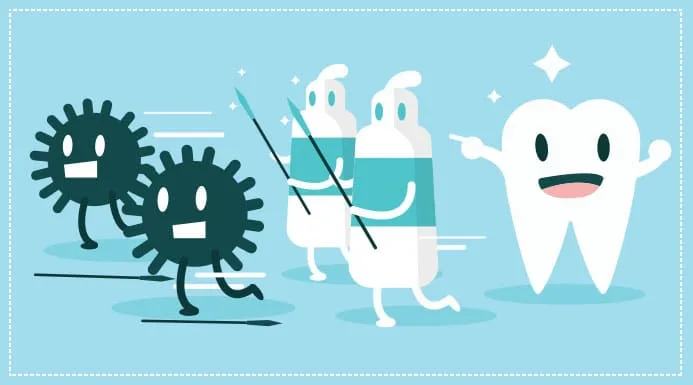
The first toothpaste I tried in Japan tasted nothing like the tubes I was used to in Brazil. Several of the ones I actually used seemed to be mostly baking soda, and I took that to mean the country had dropped fluoride from toothpaste and from the water. The taste was a fair observation. Those tubes were too small a sample for that guess.
I am not a dentist, so I will leave the online fight alone and stick to the shelf and the tap. The tap is the clearer half, so that is where I started.
What is in the tap
Municipal supplies in Japan are not fluoridated. That part of the guess still holds. Drinking water does have a legal ceiling. Under the Water Supply Act, fluoride and its compounds must stay at or below 0.8 mg/L. The Ministry of the Environment publishes that figure as a standard the water has to meet. Utilities are not instructed to dose the network up to the ceiling. On this dilute scale, 0.8 mg/L and 0.8 ppm are the same number.
What comes out of the tap is usually far under the ceiling. A team at Tokyo Medical and Dental University, working from national statistics and records on about 35,000 children, put the average in Japanese tap water at 0.09 ppm. The Asahi Shimbun's report of that study says about 60 other countries, including the United States, aim for roughly 0.7 to 1 ppm, and that U.S. military bases in Japan follow a policy of that kind. The Ministry of Health's page on water fluoridation describes the method as adjusting drinking water to about 1 ppm, and it notes that some places in Japan already sit around 0.4 ppm from the source, with a modest effect on tooth decay. A flat claim of no fluoride in the water misses that trace.
The programs people remember were local trials. The same ministry page, updated in February 2026, lists three. In Kyoto, Yamashina added fluoride at 0.6 mg/L from 1952 through 1965. Okinawa, under U.S. administration, fluoridated water from 1957 until the 1972 reversion. Asahi, in Mie Prefecture, ran from 1967 to 1971 and stopped when the distribution system changed. I had squeezed that into one line about several provinces until 1972. The dates belong to three experiments.
Is fluoride toothpaste used in Japan?
The baking-soda tubes I tried are easy to buy if you pick them. They are a poor guide to what the factories ship. The Japan Dentifrice Manufacturers Association, in its figures for 2025, counts fluoride toothpaste as 91.1% of paste shipments by number of units, 94.2% by the weight of the contents, and 92.3% by sales value. The old line that only about 10% of Japanese toothpaste contains fluoride does not match those shipments.
The amount allowed in the tube changed as well. Until 17 March 2017, fluoride in toothpaste on sale in Japan was capped at 1,000 ppm. From that date the health ministry has also approved products up to 1,500 ppm. The Japanese Society of Pediatric Dentistry calls 1,500 ppm the international reference and passes on the ministry notice: households should avoid toothpaste at or above 1,000 ppm for children under six, and store it out of their reach. In the 2025 shipment count, paste above 1,000 ppm and up to 1,500 ppm was 41.6% of units. For anyone old enough to spit, the practical habit is a small amount on the brush, then spit. I do not stand behind the health warnings I used to attach to ordinary toothpaste. They confused the compound in the tube with a different industrial chemical.
Schools are the other place fluoride shows up in ordinary life. The school-based fluoride mouth-rinsing program, S-FMR, has children swish a sodium-fluoride solution and spit it out. A national survey as of March 2010, published in the International Dental Journal, found the program in 11% of schools and among 6% of children aged 4 to 14. Saga had it in 76% of target schools that year and Niigata in 54%. A release from Tohoku University in March 2026 still describes adoption across the country as incomplete, and different from one prefecture to the next. None of those figures is a national order that every school has to join.
I used to wonder whether the decayed teeth I noticed were the price of less fluoride. I am more inclined to blame the habit of putting off the dentist, and the bill is part of that habit. The yen figures are in a separate note on what a dental visit costs in Japan.
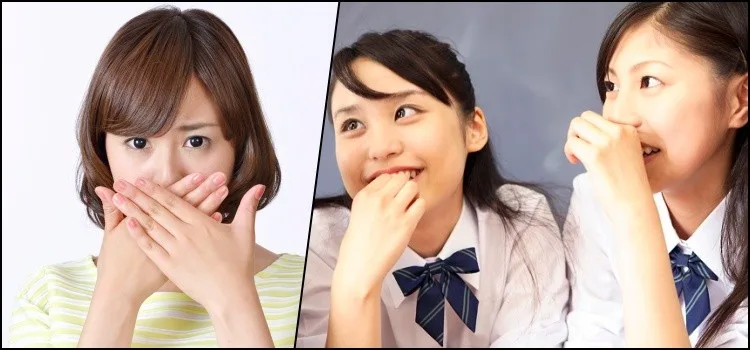
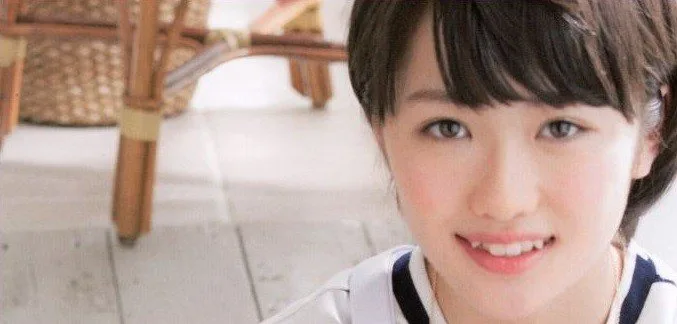
Two other tooth subjects still sit next to this one for me. Covering the mouth while laughing is a habit you can see on the street and in a school uniform. Yaeba, the slightly irregular canine some people treat as a charm, is a different conversation, and the second photo belongs with that one.
I still do not have a dentist's verdict on which tube to buy. Once the shelf is set next to the rumor, the useful part is smaller than the headline I started with. Municipal water in Japan stays under a ceiling of 0.8 mg/L, and the network is not dosed up to that line. Fluoride toothpaste is the ordinary shipment now, including paste above the old 1,000 ppm cap. The baking-soda taste that surprised me beside Brazilian toothpaste was the formula in the tubes I picked up.



Community
Comments
0 comments
There are no published comments in this language yet.
Send comment