
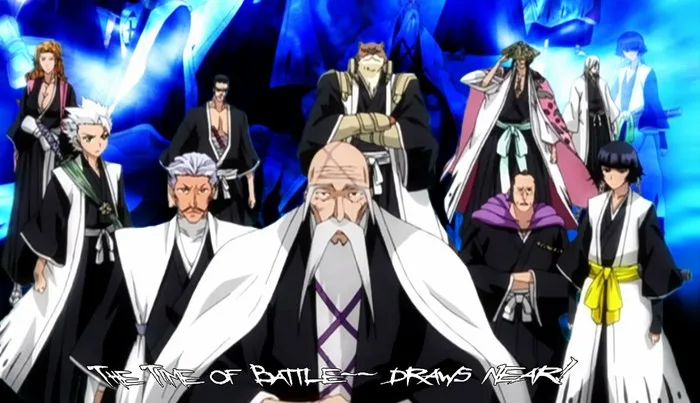
"Bankai!" — the shout lands in arenas, streams, and memes. What often stays blurry is what the word actually carries: not only "final release," but a writing with the manji (卍) that goes deeper than the combat payoff. Alongside it sits Shikai, the first stage of Zanpakutō release. Once you know the Japanese characters, Bleach sounds like more than a ladder of power-ups.
This piece walks through the meaning of Bankai and Shikai in the anime and manga, the etymology, how the two stages differ, and the manji folded into the kanji — a symbol that is easy to misread outside Japan.
Contents 5
What is Bankai in Bleach?
In Bleach, Bankai is the advanced release of the Zanpakutō, the Shinigami's sword. Reaching it unleashes the blade's full force and special abilities that sit far beyond the first form.
To achieve Bankai, a Shinigami must materialize and subjugate the spirit of their own Zanpakutō. That training usually takes years — often about ten years or more, depending on talent and the bond. Bankai is typically several times stronger than the same weapon's Shikai (often described as five to ten times the effect, varying by character and context).
Those who master Bankai often shape the major conflicts of the Soul Society. There are clear risks, though: if a Bankai is broken, it usually cannot simply be restored. If it vanishes against the user's will, that can signal a life-threatening situation. Form and strength also depend on how fully the Zanpakutō acknowledges its wielder — Bankai is a relationship, not only a technique.
The meaning of Bankai in Japanese
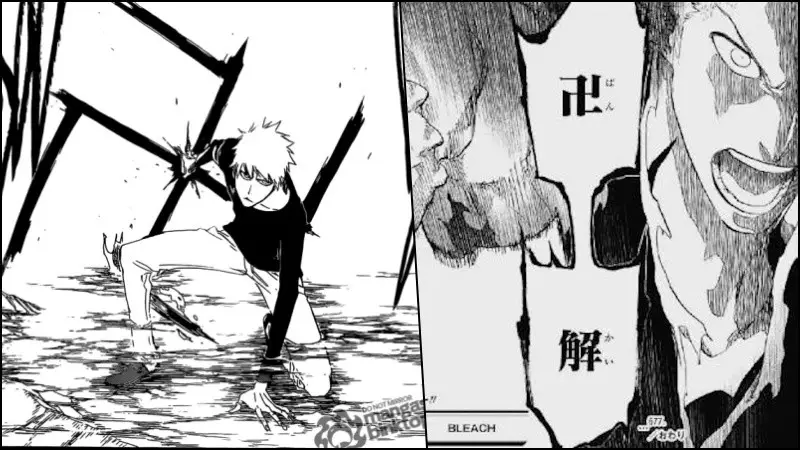
In Japanese, Bankai is written 卍解. The first sign, 卍, is read as manji (and can also be read ban in this compound). It is a Buddhist symbol associated with harmony, good fortune, and the totality of existence — not the Nazi symbol, which is a later, inverted appropriation.
The second character, 解 (kai), means release, unlocking, or solution. Together they form Bankai, often rendered as "final release" or "complete liberation." The same kai also carries the sense of explanation and resolving a problem — which fits a strike meant to break through what stands in the way.
"Bankai" as a Bleach technique is a series coinage: it is not a everyday dictionary word for a sword form. Separately, Japanese has 挽回 (bankai) meaning recovery or restoration — same sound, different kanji and meaning. In the story, Bankai is the highest release a Shinigami can normally show with their Zanpakutō.
What does Shikai mean in Bleach?
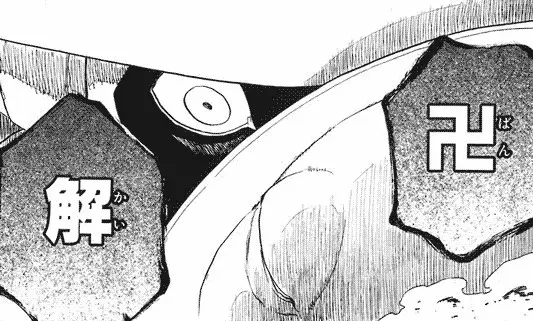
Shikai 始解 is the first release stage of the Zanpakutō. When a Shinigami reaches Shikai, they can call out the sword's special ability.
The wielder needs to communicate and harmonize with the spirit inside the blade's inner world. Gaining Shikai and unleashing it for the first time is known as Manifestation (顕現, Kengen). Achieving Shikai signals control over the Zanpakutō and is a practical requirement for rising through Shinigami ranks — most seated officers can use it.
The word breaks into two kanji: 始 (shi), "beginning" or "start," and 解 (kai), "release" or "unlocking." Literally, Shikai is the "initial release" — the door that opens before Bankai.

Shikai vs Bankai: what actually changes
Both stages release the Zanpakutō, but they sit on different rungs of the same relationship. Shikai is the first reliable step: name the spirit, speak the release command, show the specialized power. Bankai is the second and final upgrade form for most Shinigami swords — materialize the spirit in the outer world, subjugate it, and unlock the weapon's fullest shape.
Creator Tite Kubo has framed the difference in terms of whose "ego" is in play: Shikai is the state in which the wielder's power is reflected into the sword; Bankai is the state in which the sword's own ego has been developed and made manifest. In practice, that is why Bankai demands years of training and a bond deep enough for resonance, not only raw spiritual pressure.
On the battlefield the gap is obvious: Bankai multiplies scale, range, or specialty far past Shikai, and it is rarer. Captains and other top fighters are expected to hold it; many lower-ranked Shinigami never reach that far. The cost matches the power — a destroyed Bankai is a lasting wound to the weapon and the fighter's toolkit.
The meaning of the manji in Bankai
Although Hitler later twisted a related mark into a political emblem, the original manji is not malicious. It ties to Buddhism, Hindu traditions, and the Indian subcontinent, with roots going back well before the Common Era — long before modern European misuse.
The manji 卍 inside Bankai goes further than a flat "total release." Its four arms can stand for the four directions, for heavenly bodies, for heaven and earth as a whole. It can mark the auspicious footprints of the Buddha, serve as a meditation aid, and suggest "ten thousand" as an image of completeness. In that light, Bankai is not only a special attack: it shows who the character is in relation to that whole.
Fighters who master Bankai often reveal a clearer core of self; even the names of many Bankai lean into that depth. Ichigo's Tensa Zangetsu — often glossed along the lines of a heavenly moon cutter — plays on lunar imagery that sits comfortably next to Buddhist symbolism. Because of how loaded the manji is, no single English phrase fully replaces "Bankai."
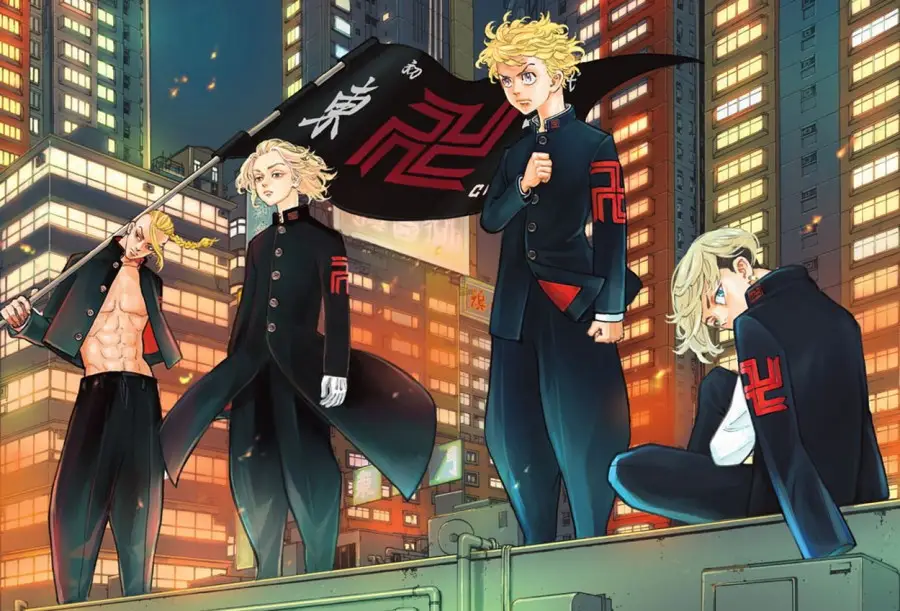
If the symbol itself still confuses you in anime and manga, two related reads help separate sacred use from propaganda: the Buddhist swastika versus the Nazi mark, and how the manji shows up in Japanese pop culture.



Community
Comments
0 comments
There are no published comments in this language yet.
Send comment