
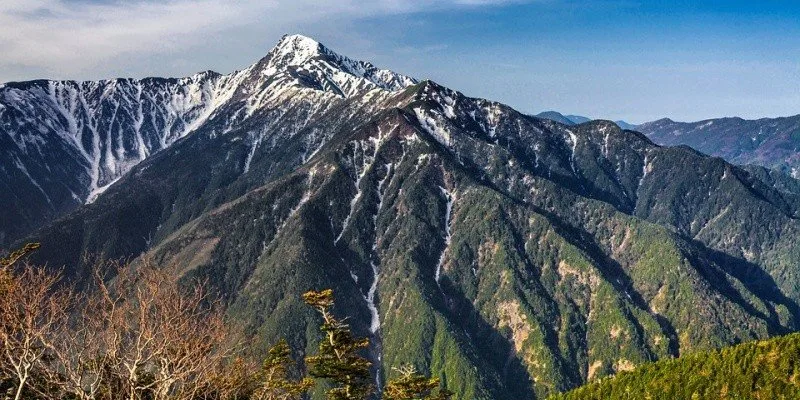
Have you ever wondered how to say mountain in Japanese? The kanji for mountain, 山, comes up early for beginners of Japanese, but there is more than one word for a mountain.
Mountains are an important part of Japanese geography and culture, since roughly 73% of the country is mountainous. In central Japan, the Hida, Kiso, and Akaishi ranges form the Japanese Alps.
The mountain is an important symbol in Japanese culture and is often seen as a sacred place where gods and spirits are revered. Place names carry this kanji as well, as in Yamagata (山形) and Yamanashi (山梨).
Contents 3
The Kanji for Mountain: Yama (山)
山 is one of the first 80 kanji taught in Japanese elementary school, and it stands for mountains in the language.
The character is a pictograph: it shows a mountain with three peaks. 山 is itself a radical, and it appears inside characters connected with mountains, such as 岩 (iwa, rock) and 峰 (mine, peak).
The same kanji shows up in compound words like fuyuyama (冬山), a mountain in winter, and yamazumi (山積み), a heap or pile.
Mountains also run through art, literature, and religion.
Common expressions build on the same image: yamaaruki (山歩き), a mountain walk or hike, and yamabiko (山彦), the echo in mountainous regions.
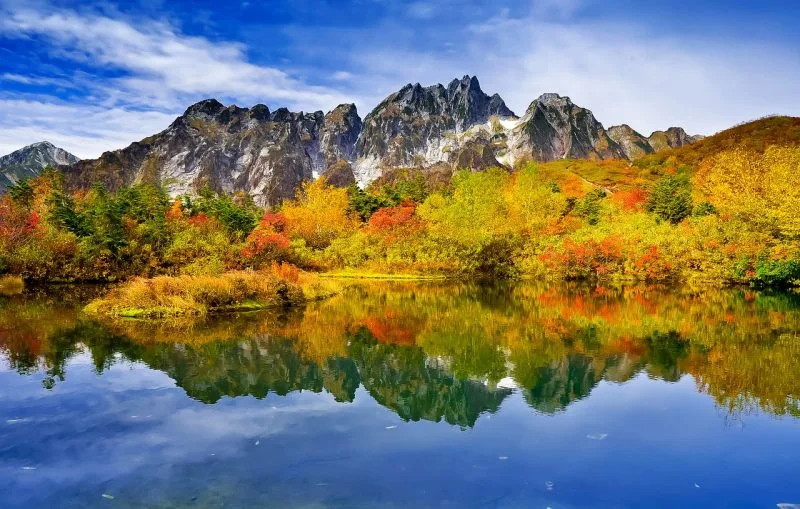
Different Ways to Say Mountain in Japanese
There are several ways to refer to hills and mountains in Japanese. Here are some of the main ones:
- 山 (yama) - the most common word for a mountain in Japanese. It describes any type of mountain, from small hills to large peaks.
- 岳 (take, often dake in mountain names) - a word for high, rugged mountains, often placed at the end of a mountain's name, as in 北岳 (Kitadake, 3,193 metres), the highest summit of the Japanese Alps.
- 峰 (mine) - the summit or a prominent point on a ridge. The top of Mount Fuji is called 剣ヶ峰 (Kengamine) and stands at 3,776 metres.
- 坂 (saka) - a slope or an incline on a mountain. 雲母坂 (Kirarazaka) is an old trail that climbs from Kyoto to Mount Hiei.
- 隆起 (ryūki) - the uplift of the earth's crust, the geological process that raises mountain ranges.
In general, Japanese culture values mountains and nature, and many people hike and climb to appreciate the landscapes of these regions.
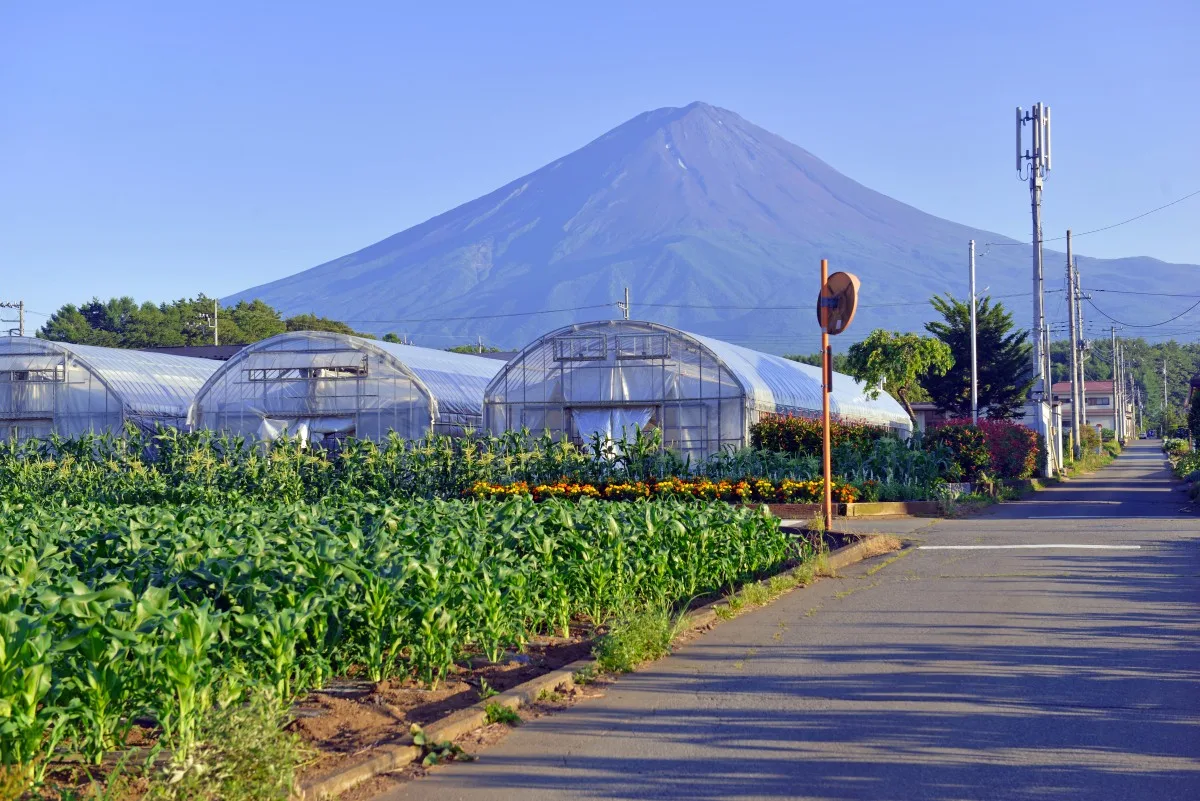
Mountain Names That Use San
Why is Mount Fuji called Fuji-san in Japanese? The ending san is the on'yomi, the Chinese-derived reading of 山 used in compounds, and it appears mostly in the names of high mountains with shrines. Lower mountains near towns are usually called yama. Fuji is the highest mountain in Japan, and the guide to climbing it covers the main routes.
Besides the famous Fuji-san, other mountains take this reading of the kanji 山:
- 筑波山 (Tsukubasan) - a mountain in Ibaraki Prefecture.
- 白山 (Hakusan) - a mountain on the border of Ishikawa and Gifu prefectures.
- 羊蹄山 (Yōteizan) - a mountain in Hokkaido.
For learners, it helps to keep the three characters apart: 山 appears in most mountain names, 岳 marks high peaks, and 峰 the highest point of a ridge. Once the on'yomi is familiar, Japanese mountain names become easier to place.


Community
Comments
0 comments
There are no published comments in this language yet.
Send comment