In this article, we will talk about Japanese verbs, today we will study the dictionary form and the masu form. In other articles, we will study various conjugations.
In Japanese, verbs are not affected by the subject. In other words, whether the subject is singular or plural, first person or second person, the verbs do not change their form. As for verb tenses, there are only two divisions of time; non-past (present and future) and past. Present and future tenses are the same, and can be differentiated by context.
First, we have the simple and original form of the verb, the dictionary form. This form can be used in some casual occasions, we will use it as a basis to change the tense and verb form in this article. In the dictionary form, all verbs end with the letter “U”.
By learning the masu form and the dictionary form, we will be ready to learn new conjugations and forms of verbs.
Throughout the articles, we will learn all the verb forms that are:
the dictionary form (infinitive)
the non-past form
the negative form
the -ta form (preterite)
the -te form
the transitive and intransitive forms
the passive form (-areru, -rareru)
the causative form (-aseru, -waseru)
the potential form (-eru, -rareru)
the conditional form (-eba, -tara)
the imperative form (-nasai)
the desiderative form (-tai)
the volitional form (-ō)
Masu Form ます形
The “ます masu” form is the formal way of speaking a verb. Taking a verb from the dictionary form and converting it to the ます form varies according to its ending, the verbs are divided into groups. (We will see more about this group division in another article).
To facilitate this division and transformation, we should divide the verbs ending in “る – ru” from the other verbs. Once that is done, we can do the following:
Verbs that do not end with “る” should have the last hiragana that ends with “U” replaced by the hiragana of the same group that ends with “i”. See the table with some examples:
Verb
Dictionary Form
Masu Form
Endings
Speak
話す (hanasu)
話します
す = し
Write
書く (kaku)
書きます
く = ぎ
Swim
泳ぐ (oyogu)
泳ぎます
ぐ = ぎ
Read
読む (yomu)
読みます
む = み
Play
遊ぶ (asobu)
遊びます
ぶ = び
Stand
立つ (tatsu)
立ちます
つ = ち
Die
死ぬ (shinu)
死にます
ぬ = に
Sing
歌う (utau)
歌います
う = い
There are verbs with “る” that should be changed to “り” but there are verbs ending in “る” that should have the “る” removed and directly add “ます” such as (Eat – taberu – 食べる = 食べます).For this reason, one should focus on learning the words;
There are other verbs where the rule of replacing the ending does not work, examples:
Verb
Dictionary Form
Masu Form
Do
する
します
Come
来る (くる)
きます
Now let’s see how to conjugate verbs in the ます form according to their verb tense:
Tense
Masu Form
Example (遊ぶ – asobu)
Present / Future
ます
遊びます – Play
Negative
ません
遊びません – Do not play
Past
ました
遊びました – Played
Past Negative
ませんでした
遊びませんでした – Did not play
本を読みます (ほんをよみます) – Read a book
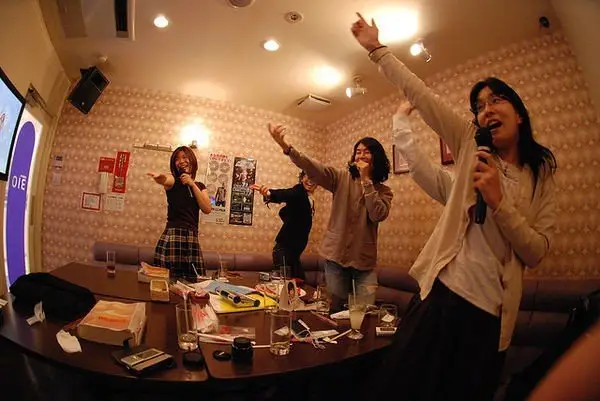
カラオケで 歌いました (カラオケで歌いました) – I sang at karaoke
The same thing happens with the verb in the dictionary form. It is possible to conjugate the verb directly in the dictionary form without converting to the masu form, for that we must learn more verb conjugations. But below I will leave some examples:
Tense
Example (遊ぶ – asobu)
Present / Future
遊ぶ – Play
Negative
遊ばない – Do not play
Past
遊んだ – Played
Past Negative
遊ばなかった – Did not play
本を読む (ほんをよむ) – Read a book
カラオケで歌った (カラオケでうたった) – I sang at karaoke
It is worth remembering that there are other verb conjugations that we will study in another article, which use both the masu form and the dictionary form. We just need to keep in mind that the dictionary form is informal and the masu form is formal, and thus simplify our minds to conjugate verbs in other forms.
As an exercise, I would like you to comment with example sentences in the dictionary form and in the masu form. I will already thank you for the comments and shares, and see you next time!
Automatic vending machines make our lives easier. In Japan, they are known as jidohanbaiki (自動販売機) or simply hanbaiki, and there are over 5 million of them spread across the country. You can find one or five on every corner, even at the entrance of markets and stores. They can even be in the middle of the woods, and no one breaks them or litters nearby.
Most hanbaiki serve hot and cold drinks like teas, sodas, coffees, energy drinks, beers, and others. In reality, there are countless machines that sell even bizarre things that you wouldn’t imagine being sold in an automatic machine; in this article, we will see many types of these machines.
What do Japanese machines sell?
Besides normal products like drinks, snacks, and sweets, there are some hanbaiki that sell rice of all types. Others sell milk, some even sell umbrellas and batteries. There is one that is a drawer where you can place your phone to charge inside. And of course, there are Hanbaiki that sell fruits and vegetables.
It’s not just snacks; some machines sell real savory foods like hot dogs made on the spot. In some temples and shrines, there are automatic machines that sell charms and fortune slips. Some machines dispense ice cream shops, selling ice creams of various flavors.
Why go to a toy store if there is a hanbaiki that sells toys? Those who are shy about going to clothing stores can buy their ties from a hanbaiki. Eggs are also commonly found in hanbaiki.
There are some machines that sell Cup Noodles. Hanbaiki that sell clothes, t-shirts, and accessories for the shy also exist. Going to the extreme, there are machines that sell used panties for the perverts on duty. Others sell gold bars, koi food, and bananas.
We cannot forget to mention the automatic machines that exist in train stations and other places, which sell tickets for trains, tickets for events, or things like that. Even gas stations have automatic machines for payment.
There are many bizarre automatic vending machines that we haven’t mentioned. Some sell bicycles; there is even one that sells cars. Just like the konbini, these machines make life much easier for people in Japan. To explore these machines better, we will leave a playlist of videos below from the channel Japão nosso de cada dia that shows various hanbaiki.
The thermal bath sources like onsen, sento is undoubtedly one of the places highly sought after by tourists and greatly valued by the Japanese. Inexperienced people may have difficulties if it is their first time at the bathhouse or in the onsen. There are some rules on how to behave inside an onsen or sento. For this, we created this article giving some tips and tutorials on how to take this bath without feeling embarrassed.
The onsen (温泉) are natural volcanic hot springs that are appreciated and help to relax, bringing numerous health benefits. We have previously written an article detailing the Onsen in Japan.
Basic rules for entering an onsen
There are some basic rules to follow inside an onsen:
You must wash your body before entering the water;
Do not disturb others, nor swim in the water;
Women with long hair must tie it up;
You should not put the towel in the water (some places allow it);
There are also some important rules and factors that you should not forget:
Take off your shoes – Onsen always have traditional floors (tatami) in the changing rooms, entering with shoes on these floors is a major cause of embarrassment. There will always be a place for you to take off your shoes before entering the changing room or even the location;
Do not enter the wrong bath – Bathhouses are usually divided by gender, most of the time the women’s bath is represented by a red towel with the kanji for woman (女) and the men’s bath will be represented by a blue towel and the kanji for man (男);
Remove your clothes – Practically all onsen prohibit entering with clothes in the bath. So do not be embarrassed to be naked around others. Take off your clothes and place them in the baskets or lockers provided. The only thing you can take with you to the onsen is a small towel, which should not get wet and can be placed on your head;
Shower first – No onsen allows you to enter the bath without washing first. Some provide a small stool with a showerhead. Others you will find a bucket with
Tattoo – In Japan, some places prohibit entry with tattoos. You should try to find a place that allows entry with them, or if they are small, try to hide them in some way. I do not recommend it, it can cause problems;
Of course, there are small differences in the rules from onsen to onsen. They are usually posted on the walls in Japanese. See what people do to imitate them.
Tips for bathing in hot springs
Drink plenty of water before taking a bath. You can avoid dehydration and sweating due to the heat of the springs;
Before entering the bath rinse your body to get used to the temperature. During the cold season, start warming your hands and feet first, and then gradually warm the rest of your body. (Blood pressure is generally higher before the bath.)
When leaving the bath simply drying off with a towel will be enough. The sodium content will preserve the skin’s natural moisture. But exit calmly.
After the bath you will feel relaxed, but your body is tired, so it is recommended that you rest for 30 to 60 minutes, stay hydrated, and enjoy a good meal;
The importance of making a good impression
In the 1990s, foreign sailors drunk caused some problems in several onsen in a port city in Hokkaido. The onsen responded by banning all foreigners from entering. This ended up causing an uproar throughout Japan, and some foreigners found such policies racist.
But that is the past, and the Japanese enjoy seeing foreign visitors visiting the onsen and learning their culture. These etiquette rules will help you impress the locals and not feel embarrassed or cause confusion.
The particles へ, に, and で have significant differences, but in some cases, it can be difficult to know which one to use. In this article, we will look at some examples and occasions to clarify this doubt.
Particle へ
The particle へ (e) is used to indicate the direction of an action, similar to “to” in Portuguese. It is also used to indicate the person (or thing) to whom the action is directed.
I go to school
学校へ行きます
gakkō he ikimasu
I go to the second floor
2階へ行きます
nikai e ikimasu
Remembering that it can be “I go,” “to go,” and “we go” depending on the context of the conversation;
Particle に
The particle に (ni) has many different grammatical functions; it can indicate existence, location, destination, direction of an action, time span, and many other things.
There are fish in the sea
海に魚がいます。
Umi ni sakana ga imasu
Come to my house
うちに来る。
uchi ni kuru
Show to the police
警察に見せます。
Keisatsu ni misemasu
Particle で
In Japanese, the particle “で” (de) is used to indicate the place where an action occurs or with what the action is performed. It is often used in conjunction with nouns to provide more information about the situation in which an action takes place. Here are some examples to better illustrate its use:
I study at school
学校で勉強する。
gakkō de benkyō suru
We will go by train
電車で行きます。
densha de ikimasu
We will sleep on the futon
ふとんで寝ます。
futon de nemasu
へ vs に
There are some situations where both particles have the same meaning in the sentence; both are used to indicate destination or direction. In such cases, either of the two can be used, and it will be correct and have the same meaning. Examples:
家に帰ります。 (uchi ni kaerimasu)
家へ帰ります。(uchi e kaerimasu)
Both sentences are correct and mean: “to return home.” But in situations like welcoming someone to a place, it is better to use the particle へ.
Phrase: Welcome to Japan
日本へようこそ。
Nihon e Yokoso.
These two particles are used to express a direction, but the particle に is more specific than the particle へ. While に (ni) defines a precise location, the particle へ (e) defines more of an area. Example:
I go to my company
私は会社に行きます。
watashi wa kaisha ni ikimasu.
I will go to Japan next year
私は来年日本へ行きます
watashi wa Rainen nihon e ikimasu.
To simplify the situation further, we should keep in mind that “へ” indicates direction and “に” indicates destination. And that the particle “に” emphasizes the location while the particle “へ” emphasizes the movement or direction.
に vs で
The Japanese particle へ (he) and the particle に (ni) have similar functions but are used in different contexts.
The particle へ (he) is used to indicate movement or direction. For example:
I go to Tokyo
東京へ行きます。
Tōkyō e ikimasu
I go to the cinema
映画館へ行きます。
Eigakan e ikimasu
The particle に (ni) is used to indicate place or time. For example:
Let’s meet tomorrow
明日に会いましょう。
Ashita ni aimashō.
I will meet a friend
友達に会いに行きます。
Tomodachi ni ai ni ikimasu
Additionally, the particle に (ni) is also used to indicate means or purpose. For example:
I go by car
車に乗ります。
Kuruma ni norimasu
I go by bus
バスに乗ります。
Basu ni norimasu
Both particles are used to indicate a place. But the particle で is used together with an action verb. Meanwhile, the particles ni or e are used together with a direction verb.
Eat in the park
公園で食べる。
kouen de taberu
Go to the park
公園に行く。
kouen ni iku
Of course, there will be identical sentences where you have to decide which particle to use. See the sentence below:
ベッドに横たわる。
ベッドで横たわる。
Beddo _ Yokotawaru;
Both sentences mean to lie down on the bed. What is the difference? When you focus on the action (sleeping), you use で (de); when you focus on the place where you will sleep, you use に (ni).
So there is no reason to confuse the use of the particle; just remember that the particle に indicates the location or when an action is done in a certain direction. And that the particle で indicates the place where some action occurs. And the particle へ indicates movement or direction. I hope this article has helped you clarify your doubts; feel free to leave your comments and example sentences to help readers.
Yakitori (焼き鳥), which literally means “grilled chicken,” is much more than just a skewer from Japan. Popular in bars, festivals, and events, yakitori is a quick, tasty, and affordable food option. However, the term is not limited to chicken: it encompasses a wide range of skewers, also known as kushiyaki, which means “grilled skewer.”
This article explores the richness and diversity of Japanese skewers, highlighting the unique flavor they bring to everyday life in Japan.
Yakitori in Japanese Culture
Those who think Japan doesn’t have its version of barbecue are mistaken. Yakitori is one of the most appreciated dishes, found mainly in yakitori-ya (small specialized establishments), izakayas (Japanese bars), and in street stalls during festivals. It is common to see young people and workers enjoying a skewer accompanied by a drink before heading home.
One of the striking features of yakitori is customization. Customers can choose between two main seasonings:
Salt (shio): Simple and straightforward, highlighting the natural flavor of the ingredients.
Tare sauce: A sweet and savory combination of mirin, sake, soy sauce, and sugar, brushed onto the skewer before and during cooking.
This duality between salt and tare creates unique experiences, with flavors that please all palates.
Types of Yakitori and Kushiyaki
The variety of skewers in Japan is immense. Besides traditional chicken, many parts of the animal and other ingredients are transformed into grilled delights. Below, we highlight some of the most popular options:
Chicken Skewers
Torikawa: Grilled chicken skin until crispy.
Hāto / hatsu: Chicken heart, known for its unique texture.
Nankotsu: Chicken cartilage, slightly crunchy.
Sunagimo: Chicken gizzard, rich in flavor and firmness.
Reba: Chicken liver, with intense flavor and tenderness.
Negima: Pieces of chicken interspersed with negi (a vegetable similar to green onion).
Tebasaki: Chicken wings, juicy and well-seasoned.
Bonjiri: Chicken tail, famous for its fat and strong flavor.
Tsukune: Chicken meatballs, often mixed with pieces of cartilage for a special texture.
Pork Skewers
Butabara: Grilled pork belly.
Enoki Maki: Enoki mushrooms wrapped in slices of pork.
Asuparabekon: Asparagus wrapped in bacon, a balance between freshness and fat.
Vegetarian and Unique Options
Piman: Green pepper stuffed with cheese or meat.
Shiitake: Grilled shiitake mushrooms, often topped with katsuobushi (dried bonito flakes).
Ginnan: Seeds from the ginkgo biloba tree, slightly bitter.
Atsuage: Fried tofu on a skewer.
Shishito: A mild Japanese pepper, grilled until soft.
Unusual Skewers
Gyutan: Beef tongue, a classic for those who enjoy robust flavors.
Ikada: Leek, usually with two skewers to prevent the ingredient from spinning.
Mentaiko: Spicy cod roe.
Ninniku: Grilled garlic cloves, intense and aromatic.
Chorizo: Spanish pork sausage, an international touch on the menu.
Yakitori at Festivals and Bars
The atmosphere of a Japanese festival is incomplete without the smells and flavors of yakitori. These skewers are convenient to eat while strolling and allow you to sample various flavors at once. In bars, yakitori is more than a meal; it is part of a tradition of socialization, where the skewers are accompanied by beer or sake.
Conclusion
Yakitori is not just food; it is a reflection of Japanese creativity and culture, transforming simple ingredients into incredible culinary experiences. With its variety, from chicken to vegetables and unusual meats, the skewers win over palates around the world. And you, have you tried any of these skewers? What is your favorite?
The Japanese language is known for its richness and versatility, especially when it comes to adjectives. In today’s article, we will dive into the forms “-sa”, “-sou”, and “-me”, explaining how they work and when to use them. If you are already familiar with the basic past and negative forms of Japanese adjectives, this reading will be an interesting and practical deepening.
Form “-sa”: Transforming Adjectives into Nouns
The form “-sa” is one of the most straightforward ways to manipulate adjectives in Japanese. It allows you to transform an adjective that ends in “-i” into a noun that expresses a quality or characteristic. This is useful for talking about abstract concepts like joy, beauty, or greatness.
How to Use the Form “-sa”
To apply this form, you replace the final “i” of the adjective with “-sa”. It’s a simple rule, but it brings great possibilities for constructing more elaborate sentences. For example:
美しい (utsukushii, beautiful) turns into 美しさ (utsukushisa, beauty).
新しい (atarashii, new) transforms into 新しさ (atarashisa, novelty).
Next, some practical examples:
日本のお寺の美しさが好きです
Nihon no otera no utsukushisa ga suki desu
Translation: I like the beauty of Japanese temples.
大きさが重要です
Ookisa ga juuyou desu
Translation: The size is important.
Why Use “-sa”?
This form is especially useful when you want to highlight a characteristic in an abstract way or discuss qualities without pointing to something specific. If you need to talk about the beauty of a place, the joy of an event, or the importance of the size of an object, the form “-sa” will be your ally.
Form “-sou”: Expressing Probability or Appearance
The form “-sou” is used to indicate that something seems or appears to be a certain way. You will often find it in everyday conversations, especially when people want to express an impression or assumption without being absolutely sure.
How to Form the “-sou” Form
To create the “-sou” form, remove the “i” from the end of the adjective and add “-sou”. This completely changes the meaning, transforming the adjective into an expression that means “seems to be”. Here are some examples:
美しい (utsukushii, beautiful) turns into 美しそう (utsukushisou, seems beautiful).
赤い (akai, red) transforms into 赤そう (akasou, seems red).
Example sentence:
この料理はとても美味しそうです;
Kono Ryouri wa totemo oishisou desu;
Translation: This dish seems very delicious;
このスポーツは簡単そう。
Kono SUPOUTSU wa kantansou;
Translation: This sport seems simple;
Common Uses and Contexts
The form “-sou” is extremely useful when you want to comment on something you observe, but without making a categorical statement. It is a polite and subtle way to express opinions or observations. Imagine, for example, that you see someone carrying a stack of heavy books and want to comment: 重そう (omosou, seems heavy).
Form “-me”: A Nuance of Comparison
The form “-me” is a bit more complex and offers a way to make soft comparisons or indicate that something is “more or less” a certain way. It is similar to the use of “-ish” in English, as in “reddish” or “biggish”. Although the concept seems simple, using it correctly requires practice and cultural sensitivity.
How the “-me” Form Works
To form the “-me” form, you replace the final “i” with “-me”. This form is used to create an expression that suggests an approximate measure or a moderate degree. It is important to note that the kanji 目 (me), which means “eye”, is the origin of this form and denotes a tendency or inclination. However, when using “-me”, you should not confuse this with the literal meaning of “eyes”.
Practical Examples
大きい (ookii, big) becomes 大きめ (ookime, bigger or more big).
早い (hayai, fast) turns into 早め (hayame, early).
小さい (chiisai, small) transforms into 小さめ (chiisame, a little small).
Example sentences:
早めに着いた
Hayame ni tsuita
Translation: I arrived early.
このシャツは少し大きめです
Kono shatsu wa sukoshi ookime desu
Translation: This shirt is a little big.
Complexity and Usage Tips
The form “-me” can be difficult to master because the exact meaning depends on the context. It is useful in situations where you want to soften a statement or indicate that something is not exactly as it seems. For example, saying that something is “a little small” instead of “very small” can be more polite or appropriate in certain circumstances.
Bowing is the most traditional form of greeting in Japan since the 8th century. It may seem simple, but the act of bowing in reverence, called ojigi [お辞儀], literally means “bow.” This custom is full of meanings.
This demonstration of respect is so important that Japanese people bow even when they are talking on the phone with no one watching. In today’s article, we will see various occasions when people should bow.
Depending on how it is done, it can indicate the degree of importance of both the person being greeted and the one greeting. There are situations where some prostrate themselves on the ground in another bow called dogeza.
See a list of situations where Japanese people usually bow, then we will talk a little about each of them.
When apologizing
During Greetings
Thanks
Introductions
As a form of Respect
To customers
In Sports
In Performances
In religious situations
Bowing when apologizing
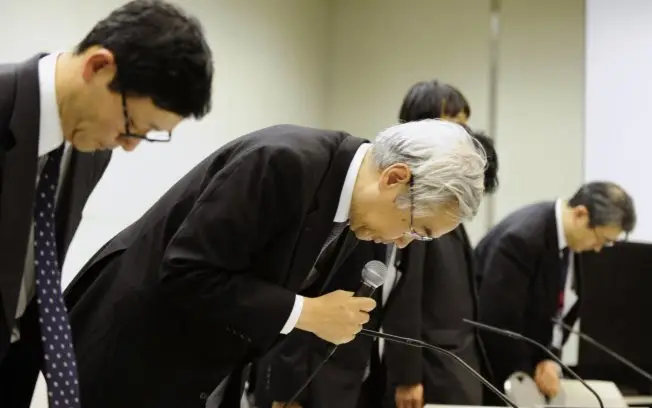
As shown in the illustration at the beginning of the article, if you make a mistake, you should apologize and bow. A light apology requires you to slightly lower your head by 10 degrees.
Let’s say you are a waiter and spill hot coffee on a customer. You can bow at a 45-degree angle and say: Moushiwake Gozaimasen, which literally means “I’m very sorry.”
Now let’s say you committed a crime and want to apologize to the victim. You should bow in a kneeling position and say: Makoto ni Moushiwake Gozaimasen deshita, which means “I sincerely apologize for what I did.”
Bowing during Greetings
The most common greeting is to slightly lower the head and shoulders by up to 10 degrees. For Japanese people, this movement is somewhat automatic and sometimes goes unnoticed due to how quick and short the head tilt is.
This gesture of respect is used both to greet and to say goodbye. In extremely formal circumstances, a full bow can be performed. There are occasions when the classic handshake can be performed.
Bowing when giving Thanks
If someone gives you a place in line, it is common to bow your head slightly in thanks. It is also very common for drivers to bow their heads in gratitude for small courtesies.
Any occasion where you feel the need to thank someone can be a moment to bow. It is likely that the person who also did the favor will slightly bow their head as a sign of “it was nothing.”
Bowing in Introductions
In casual and formal introductions, you should bow the upper part of your body at an angle of up to 30 degrees. If the person is extremely important, you can bow up to 45 degrees. It is important to keep your head and shoulders straight and your arms aligned. There is no reason to maintain eye contact during a bow (it is considered rude).
In business, after exchanging “meishi” (business cards), those involved should bow and remain in that position for a moment before returning to an upright position. Maintain a distance to avoid bumping heads (this happens).
Bowing as a form of Respect
The act of bowing is an expression of humility and always indicates respect. Some people tend to bow to animals or even objects. Even animals have gotten used to it, and in Nara, you can see some deer bowing. In the photo, we have a caretaker bowing to a whale.
Bowing to customers
In Japan, customers are considered very important. It is very common for employees to bow before customers. Some stores and companies instruct their employees on the correct way to bow to a customer.
Bowing in Sports
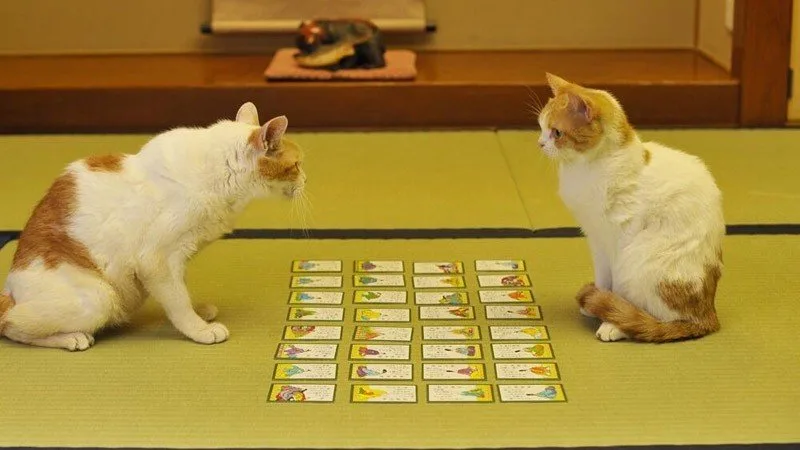
Other occasions when Japanese people bow are before or after sports matches, martial arts, sumo, and even card games like Karuta. On these occasions, it is customary to bow by up to 20 degrees.
At the beginning of a sport, the person bows and says “yoroshiku onegai shimasu,” and at the end, while bowing, they say “arigatou gozaimashita.” In some sports like martial arts and karuta, you should bow not only to your opponent but also to the coach or the person executing the game.
Bowing in Performances
Like in the West, it is common for artists to bow in response to applause. In a theater performance, geisha, events where actors, voice actors are present performing, and even music shows.
In the case of geishas or traditional performances, artists often bow completely on their knees.
Bowing in religious situations
It is also common to bow slightly to the gods at a Shinto shrine. Shinto ceremonies almost always require a full bow from a kneeling position.
Of course, there are many other occasions when you should bow. If you know one that was not mentioned, comment here.
Today I will talk about a card game called Karuta, a game that mixes poems, reading, listening, memorization, and agility. Karuta is usually taught to children in elementary school I and II during classes, as an educational activity. But it is also played among adults, where championships take place across the country.
The idea of the Karuta game is to quickly determine which card, among many, is the correct one and then grab it before your opponent. This allows for various decks and different ways to play Karuta.
In this article, we will talk about the classic, the competitive Karuta that uses a set of uta-garuta cards that includes 100 poems from “Ogura Hyakunin Isshu” created in the early 13th century by the poet Fujiwara no Teika.
About Karuta
To play traditional Karuta, you must have a basic knowledge of the Japanese language and be able to understand the poems. Karuta players must memorize the 100 poems in order to perform well in the game.
The game consists of 200 cards. 100 have the reading of the poem (Yomifuda), and the other 100 are the cards to be grabbed used in the game called Torifuda that must be shuffled and divided among the players.
The reading cards of the poem Yomifuda usually have a short poem known as tanka which has 5 lines totaling 31 syllables divided into lines of 5-7-5-7-7. The grabbing cards have the ending of the poem with the last 2 lines of 7 syllables or 14 hiragana.
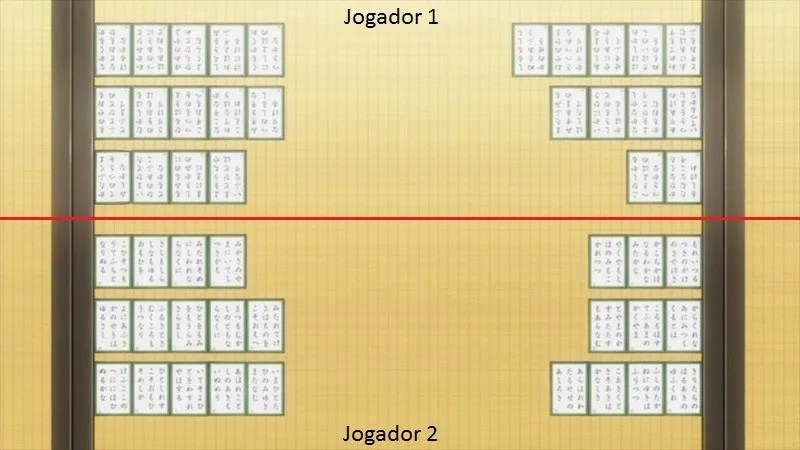
Of the 100 Torifuda cards of the players, 50 are set aside in the game and 25 are distributed to each of the 2 players, who must organize them on both sides in 3 rows. Before starting, the players have 15 minutes to memorize the position of all the cards.
An audio recording or a person is responsible for reading the poems using the other 100 Yomifuda cards that have the entire poem written. An introductory poem is read first, and as soon as they start reading the poem from the card, the players must desperately touch the corresponding card to the poem being read.
If the poem that was read does not correspond to any of the cards in the game, it is a dead card. When an existing card in the game is read, the player must quickly touch that card before the opponent; whoever succeeds must remove that card from the game. If that card is in the opponent’s field, you must take one of their cards and send it to their field. When all the cards in your field are gone, it means victory.
The secret of the game is not only in memorizing the cards, listening to the poems, and being quick; even the way you shuffle your cards, or when you grab a card from the opponent’s field will have significant effects on the game. It will be normal for cards to fly across the scene, or for your hand to mess up the cards. The game has some other rules and fouls that can be seen below:
Otetsuki (Fouls)
Touching the wrong card in the same territory as the correct card is not considered a foul. As a result, players can “sweep” the correct card and the nearby cards away from their territory;
Touching the wrong card in the opponent’s territory where the card is results in a foul. The opponent can then pass one card from their territory to the other player;
Touching a card when a dead card is read results in a foul;
Double Fouls
If a player touches a card in the opponent’s territory and the opponent touches the correct card in the other player’s territory, a double foul has occurred. Penalty of two cards;
If a player touches BOTH territories when a dead card is read, they have just generated a double foul;
The cards can be repositioned at any time during the game. However, doing this frequently is considered unsportsmanlike and a lack of sportsmanship.
There are seven poems that have unique syllables (Fu, Ho, Me, Mu, Sa, Se, Su) and 86 poems with three unique syllables. There are three cards that start with “Chi,” which are: “Chihayafuru,” “Chigirikina,” and “Chigiriokishi,” so the player must react as soon as he/she hears the decisive part of the poem, which is called kimariji. As a result, quick reasoning, good reaction time, and good speed are required.
Chihayafuru
To understand more about Karuta, there is a great anime, with 3 seasons and good reviews that shows the story of a girl named Chihaya who is addicted to Karuta. I recommend this anime even if you don’t like the game.
This is the kind of anime that grabs you from the first episode, has that touch of romance, and even though the sport may not seem appealing, it manages to engage those who watch the anime.
Learning Japanese with Karuta
Playing Karuta will enhance your Japanese, both in listening and reading, and will increase your agility and memorization. It will be a long challenge to memorize the 100 poems. Your eyes must be wide open during the game to visualize and grab the correct card. A traditional deck of Karuta is not expensive and can be found for 40 dollars on eBay.
Besides the Karuta of 100 poems, there are countless other ways to play Karuta. Searching for Karuta in your smartphone’s store, you will find apps focused on learning hiragana, kanji, and various others. Karuta has infinite possibilities; you can even invent a Karuta in Portuguese, since the game consists only of grabbing the card before your opponent.
You also do not need to follow the traditional rules of competitive Karuta. You can play with as many cards as you want, shuffle them however you like, and play with as many people as you want.
Thus, I encourage you to play this game, which is quite simple yet promises great challenges and fun. To finish, I will leave a short video showing a game of Karuta held right here in Brazil:
Join their YouTube channel to know details about how to play Karuta here in Brazil; there you will find the Facebook page and the website with some tips and tricks of the game.
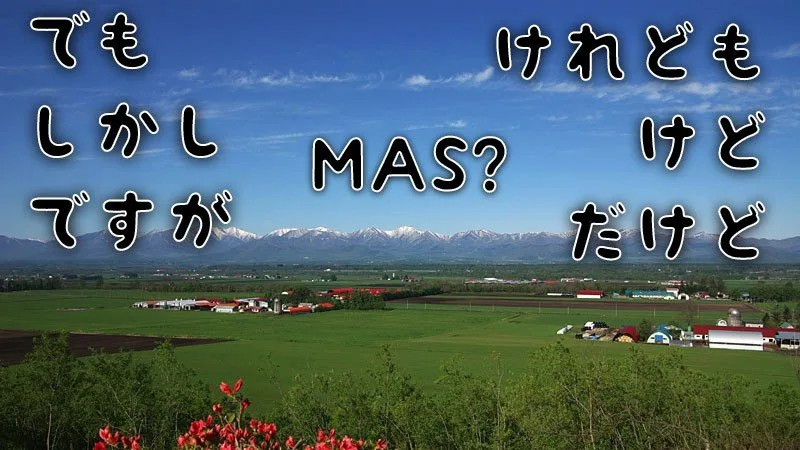
Today we will learn the various ways to say “but” in Japanese. You can say “but” using the particle ga [が], kedo [けど], demo [でも], shikashi [しかし], tadashi [ただし], and others. But there is always the question of which one to use. These will be answered with some examples and explanations in this article.
Demo (でも)
This is one of the most well-known and used forms, usually placed at the beginning of the sentence, but it can never appear at the end or in the middle of a sentence like kedo (けど) and others. Demo is used for more colloquial tones; a more formal way to say “but” at the beginning of a sentence is Shikashi (しかし).
Examples:
友達の家に行くつもりでした。 でも、彼女は病気です。
Tomodachi no ie ni iku tsumorideshita. Demo, kanojo wa byōkidesu;
I was going to a friend’s house. But, she is sick;
今日、学校に行きません。でも明日行きます
Kyou, gakkou ni ikimasen. Demo ashita ikimasu;
Today I am not going to school, but tomorrow I will;
私はあなたがすき。でも、君はバカです
Watashi wa anata a suki。 demo, kimi wa baka desu;
I love you. But you are an idiot;
でも、あなたにあげるりんごはありません
Demo, anata ni ageru ringo wa arimasen
But I don’t have apples to give you;
Kedo ou Keredomo (けど ou けれども)
Kedo can mean: but, however, or despite everything. Unlike でも, けど is used between clauses to create a compound sentence, forming opposing phrases. There are some degrees of formality which are:
Keredomo (けれども) = Quite formal
Keredo (けれど) = Formal, but not too much
Kedo (けど) = Informal
Usage examples:
頼まれた仕事は終わりましたけど、部品が一個足りなかった。
Tanomareta shigoto wa owarimashitakedo, buhin ga ichi-ko tarinakatta;
I finished the job I was asked for, but one part was missing;
彼はあまり勉強しないけれども、成績がいい
Kare wa amari benkyō shinaikeredomo, seiseki gaii
He doesn’t study much, but he gets good grades;
When a sentence ends with nouns and adjectives of the type NA, it is necessary to place the verb “to be” in the simple form (da – だ) before the けど, thus transforming it into だけど. Examples:
ケビンは先生だけれども、教えるのが嫌いです。
Kebin wa sensei da keredomo, oshieru no ga kirai desu;
Kevin is a teacher, but he doesn’t like to teach;
友達はたくさんいるんだけど、 なんか寂しい。
Tomodachi wa takusan irun dakedo, nanka sabishii;
I have many friends, but I feel lonely;
Shikashi (しかし) e Tadashi [ただし]
Shikashi also means “but” or “however,” but it is more formal and has a stronger impact than でも. Shikashi is more commonly used in official speeches or writings. [しかし] has a similar meaning to [けれども] but is used at the beginning of sentences.
Let’s see some examples:
しかし今や事態は大きく変わった
Shikashi imaya jitai wa ōkiku kawatta;
But now the situation has changed a lot;
しかし、私はあなたが大好きですよ
Shikashi, watashi wa anata ga daisukidesu yo;
However, I really like you;
Another quite similar expression is Tadashi [但し], which has the same meaning, derived from the adverb meaning only, and usually states conditions and exceptions. Like in the sentence below:
入場自由。ただし、6歳未満は保護者同伴のこと
Nyūjō jiyū. Tadashi, 6-sai-miman wa hogoshadōhan no koto
Free Entry. However, children under 6 years must be accompanied by a guardian.
What is the difference between Shikashi and Tadashi?
Both have the same meaning, but shikashi tends to follow more in the opposite direction of the previous sentence, an inverse questioning, while tadashi is a supplementary conjugation. Do not confuse tadashi [但し] with [正しい] which means correct.
Particle GA (が)
When you find the particle ga (が) after “desu,” it is linking 2 sentences. It can be translated as “but,” “and,” or “however.” Unlike けど, が makes the opposition a little softer, less evident, adding a bit of hesitation.
You can use が after です even if you are not going to finish the sentence. Like a but… Kind of indecisive. Using が too much instead of けど will indicate that you are somewhat indecisive about what you are saying.
Remember that not always the particle が after the verb means a “but” or an opposition.
明日は雨だが、ピクニックに行く
Ashita wa amedaga, pikunikku ni iku;
It will rain tomorrow, but we are going to a picnic
学ぶつもりですが
Manabu tsumoridesuga
I am going to learn, but..;
In summary, we can conclude that でも and しかし are used at the beginning of the sentence, with でも being more informal and colloquial. While the family of けど and が are used at the end of the sentence to create an opposition, with が being a softer and less evident opposition.
This topic is not very complicated; with time we will learn to use it, but the best way to know which condition to use will depend on knowing the whole language and understanding the feeling that the Japanese have when speaking such words.
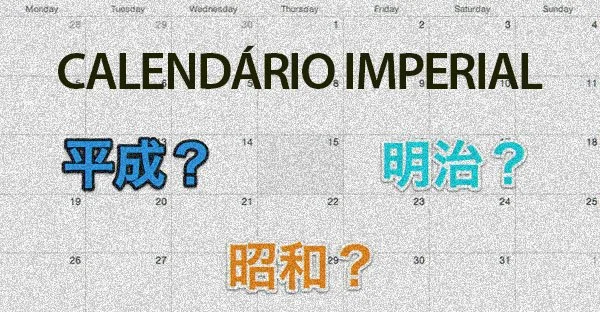
In ancient Japan, the years were counted according to the reign of an emperor, this system is known as nengō or Japanese Imperial Calendar.
But in the Meiji Restoration, which took place in 1873, the government announced the adoption of the Gregorian calendar (the one we use).
Even today, the nengō system is used among the Japanese, being required in some official government documents. Let’s learn a little about this system and the eras (or periods) that are vital in the use of the Japanese Imperial Calendar.
The eras (periods) of Japan
The eras of Japan (元号; gengō or 年号; nengō) is a means of counting time that starts from the beginning of an emperor’s reign until the end of that reign. The Japanese used to use this counting to indicate their year of birth, or the year in which they lived.
Example: The Heisei era started in 1989 with the reign of Emperor Akihito. I was born in 1995, so in the Japanese Imperial calendar I was born in the year 7 of the Heisei era (平成7年). And in 2016 we are in the year 28 of the Heisei era (平成28年).
In the table below you will find the beginning of each era, starting from the Meiji era or Modern Japan:
Period / Era
Kanji
Emperor
Calendar / Start – End
Meiji
明治
Emperor Meiji
1868-1912
Taishō
大正
Emperor Taishō
1912-1926
Shōwa
昭和
Emperor Shōwa
1926-1989
Heisei
平成
Emperor Akihito
1989… (Current Emperor)
Throughout Japan’s history, there have been thousands of internal wars, and many emperors had a short reign. So the periods (or eras) that we will see in the table below were counted according to historical events and not by the reign of an emperor.
This counting system was adopted in 645 by Emperor Kotoku, with the first era known as Taika, which is present in the Asuka Period.
Era (Period)
Start of Era
End of Era
Asuka Period
538
710
Nara Period
710
794
Heian Period
794
1185
Kamakura Period
1185
1333
Daikakuji and Jimyōin
—
—
Muromachi Period
1392
1573
Sengoku Period
1467
1573
Azuchi-Momoyama Period
1573
1603
Edo Period
1603
1867
At the end of the article, we will leave a list with the names of all the eras according to the reign of each emperor.
It is worth remembering that the name of the Era or Period is not the same as the name of the emperor; he can determine the name, and sometimes after his death, he ends up being called by the name he gave to his period of reign.
Japanese Imperial Calendar
As already explained, the Japanese Imperial Calendar is calculated by the year of reign of each emperor. It is not very difficult to understand.
The Gregorian calendar that we use in Brazil is indicated by Day/Month/Year; in Japan, they reverse it and use Year 年/Month 月/Day 日. The Japanese imperial calendar is represented by the year of the period or era.
The number comes after the Kanji of the Era and then comes the kanji for year 年. Example: 昭和7年/12月/ 21日
Meiji
明治
Taishō
大正
Shōwa
昭和
Heisei
平成
If you need to know in which year you were born in the Japanese imperial calendar, we recommend this site (click here), or you can check the table below, which is in descending order:
Gregorian Year
Imperial Year
Gregorian Year
Imperial Year
2014
Heisei 26
1970
Showa 45
2013
Heisei 25
1969
Showa 44
2012
Heisei 24
1968
Showa 43
2011
Heisei 23
1967
Showa 42
2010
Heisei 22
1966
Showa 41
2009
Heisei 21
1965
Showa 40
2008
Heisei 20
1964
Showa 39
2007
Heisei 19
1963
Showa 38
2006
Heisei 18
1962
Showa 37
2005
Heisei 17
1961
Showa 36
2004
Heisei 16
1960
Showa 35
2003
Heisei 15
1959
Showa 34
2002
Heisei 14
1958
Showa 33
2001
Heisei 13
1957
Showa 32
2000
Heisei 12
1956
Showa 31
1999
Heisei 11
1955
Showa 30
1998
Heisei 10
1954
Showa 29
1997
Heisei 9
1953
Showa 28
1996
Heisei 8
1952
Showa 27
1995
Heisei 7
1951
Showa 26
1994
Heisei 6
1950
Showa 25
1993
Heisei 5
1949
Showa 24
1992
Heisei 4
1948
Showa 23
1991
Heisei 3
1947
Showa 22
1990
Heisei 2
1946
Showa 21
1989
Showa 64 / Heisei 1
1945
Showa 20
1988
Showa 63
1944
Showa 19
1987
Showa 62
1943
Showa 18
1986
Showa 61
1942
Showa 17
1985
Showa 60
1941
Showa 16
1984
Showa 59
1940
Showa 15
1983
Showa 58
1939
Showa 14
1982
Showa 57
1938
Showa 13
1981
Showa 56
1937
Showa 12
1980
Showa 55
1936
Showa 11
1979
Showa 54
1935
Showa 10
1978
Showa 53
1934
Showa 9
1977
Showa 52
1933
Showa 8
1976
Showa 51
1932
Showa 7
1975
Showa 50
1931
Showa 6
1974
Showa 49
1930
Showa 5
1973
Showa 48
1929
Showa 4
1972
Showa 47
1928
Showa 3
1971
Showa 46
1927
Showa 2
1970
Showa 45
1926
Taisho 15 / Showa 1
1969
Showa 44
1925
Taisho 14
1968
Showa 43
1924
Taisho 13
1967
Showa 42
1923
Taisho 12
1966
Showa 41
1922
Taisho 11
1965
Showa 40
1921
Taisho 10
1964
Showa 39
1920
Taisho 9
1963
Showa 38
1919
Taisho 8
1962
Showa 37
1918
Taisho 7
1961
Showa 36
1917
Taisho 6
1960
Showa 35
1916
Taisho 5
1959
Showa 34
1915
Taisho 4
1958
Showa 33
1914
Taisho 3
1957
Showa 32
1913
Taisho 2
1956
Showa 31
1912
Taisho 1
The table below shows all the periods of the Imperial calendar since 645:
The Tohoku earthquake and tsunami on March 11, 2011, were events that shocked the world with their devastating force and tragic consequences. The disaster left a trail of unprecedented destruction, affecting millions of people and transforming the landscape and society of Japan. In this article, we explore some of the most impactful facts about this event, highlighting the magnitude and complexity of the consequences it caused.
The Earthquake: Numbers that Leave Marks
The Tohoku earthquake, with a magnitude of 9.0, was the fifth largest ever recorded in global history. The amount of energy released was an impressive 480 megatons, equivalent to 600 million times the energy of the Hiroshima bomb. To put it into context, the energy of this earthquake surpassed the combined energy of 32,000 earthquakes of magnitude 6.0.
The tremor lasted about 5 minutes, causing shocks so intense that they shifted Japan’s main island, Honshu, 2.4 meters closer to North America. Additionally, the earthquake caused a shift in the Earth’s axis of 10 centimeters, shortening the duration of days by 1.8 microseconds.
Japan’s earthquake early warning system, one of the most advanced in the world, managed to send a notification to residents of Tokyo 1 minute before the tremor reached the city. However, even with this technology, the impact was devastating. More than 900 aftershocks were recorded in the following months, and just 45 minutes after the main earthquake, there were 3 secondary tremors of magnitude 7.0 or greater.
The force of the earthquake also altered the underwater landscape. An area of 180 km wide of the seabed was displaced by up to 8 meters (26 feet), contributing to the formation of the massive tsunami that followed.
The 10 worst earthquakes in Japan
The Tsunami: A Wave of Devastation
The Tohoku earthquake generated a devastating tsunami, with waves reaching a height of 40.5 meters (133 feet) in Miyako, equivalent to a 13-story building. This tsunami is widely considered one of the largest in modern history, and to give an idea, a tsunami of just 3 meters is already classified as extremely dangerous.
The city of Sendai, one of the hardest-hit areas, saw the waves advance 10 km inland, covering a total area of 561 km². Beyond Japan, the tsunami had global effects, even displacing icebergs in Antarctica. It is estimated that the total area of icebergs affected was 125 km².
The reaction time for the residents of Sendai was short. They had only 8 minutes to evacuate before the waves arrived. Despite the warnings, only 42% of the population managed to move in time, and tragically, more than 101 designated evacuation sites were destroyed by the tsunami, further worsening the situation.
The Fukushima Nuclear Disaster
The tsunami also triggered a catastrophic nuclear crisis at the Fukushima Daiichi plant. The waves, which reached a height of 15 meters, flooded the plant and caused failures in the cooling systems of the reactors. This resulted in 3 complete nuclear leaks, forcing the evacuation of more than 100,000 people and contaminating a vast area around.
The severity of the accident was classified as level 7 on the International Nuclear Event Scale, the same level as the Chernobyl disaster. Japanese authorities established a 25 km exclusion zone around the plant, with long-term effects on the life and economy of local communities.
Consequences: An Incalculable Impact
The estimated total cost of the disaster is over 300 billion dollars, making it the most expensive natural disaster in history. The destruction was extensive: more than 45,700 buildings were completely destroyed, and over 230,000 cars and trucks were damaged or destroyed.
The number of lives lost is heartbreaking: 15,828 people have been confirmed dead, with 3,760 people still missing. Among the victims, 378 deaths and 158 disappearances were children, and 236 children were orphaned as a result of the disaster. The trauma and loss deeply affected Japanese society, which had to deal with mourning and the challenge of rebuilding their communities.
Conclusion
Despite these alarming statistics, it is important to remember that Japan remains an exemplary country when it comes to disaster preparedness. Seismic tragedies are a reality for the country, but the rigor in construction, early warning technology, and a culture of prevention help save countless lives. By comparison, the annual death toll in Brazil due to violence and traffic accidents far exceeds the number of victims from decades of earthquakes and tsunamis in Japan.
If you want to learn more about the history of natural disasters in Japan, also read:
These pieces of information remind us of the impressive force of nature, but also of the resilience and determination of human beings to overcome and learn from challenges.
Learning a new language is a valuable goal and can open doors both personally and professionally. However, choosing the right way to study is essential to ensure efficiency and satisfaction. Many people opt for language schools believing that this is the best alternative, but is that true? In this article, we will explore some of the main reasons to reconsider this choice, analyzing pros and cons with a critical eye.
1. High Cost and Low Return
One of the biggest barriers to studying at a language school is the high cost. The tuition for many courses can easily exceed hundreds of reais, reaching thousands of reais over the years. This investment often only covers in-person classes with limited duration, such as two hours a week, which may not be enough to achieve the desired fluency.
Practical examples:
A basic English or Japanese course can cost more than R$ 300 per month, totaling R$ 3,600 per year.
In many cases, it is necessary to invest more in teaching materials, transportation, and eventually extra fees.
Meanwhile, with the same amount, you could access online platforms, e-books, or even hire private lessons with a qualified teacher. The autonomy in learning also allows you to customize your approach, saving time and money.
2. Outdated Teaching Methods
Many language schools still adopt traditional methods that are not always effective. Among them are the excessive use of grammar, filling out repetitive exercises, and lack of real practice with the language. This type of approach tends to be slow and inefficient, especially for adults.
Why is this problematic?
Little contact with the language: Classes happen only a few times a week, making it difficult to develop the necessary immersion.
Excessive focus on tests and exercises: Many students spend years studying but still cannot hold a simple conversation.
Large classes: The individual attention of the teacher is limited, hindering the learning of those who need specific support.
The true acquisition of a language occurs when you interact with it consistently and naturally, something difficult to replicate in a classroom environment.
3. Lack of Flexibility and Time Wastage
Learning a language requires dedication and time, but many schools fail to adapt to students’ routines. In addition to classes at fixed times, it is necessary to travel to the location, which can be an obstacle for those with personal or professional commitments.
Most common problems:
Long courses: Some schools promise fluency after 4 to 6 years of study, but many students do not achieve this goal.
Forgetting content: With spaced classes and little practice in daily life, it is common to lose a large part of what was learned.
Faster alternatives: Intensive online courses or self-learning methods can offer quicker results tailored to the student’s pace.
4. The School Diploma is Worth Little
Another common myth is believing that a diploma from a language school will carry significant weight in the job market or academic studies. The reality is that, in most cases, these certifications do not have official validity. To prove proficiency, it is necessary to take international exams, such as TOEFL, IELTS, or JLPT (in the case of Japanese).
Certifications that really matter:
Certificates issued by standardized tests have global recognition.
School diplomas are seen more as a “completion record” rather than proof of fluency.
5. More Efficient Alternatives for Learning Languages
Fortunately, there are effective alternatives for those who wish to learn a language without relying on traditional schools. Here are some of them:
1. Online Courses
Many online courses use innovative methodologies and allow for flexible scheduling.
Platforms like Duolingo, Italki, and Pimsleur offer interactive and immersive learning.
2. Independent Study
E-books, podcasts, and YouTube videos offer rich content, often for free.
Creating daily routines to practice listening, reading, and writing accelerates progress.
3. Private Lessons
Private teachers can customize teaching according to your needs and goals.
It is important to check the teacher’s methodology to avoid outdated approaches.
4. Cultural Immersion
Consuming movies, music, and content in the language you are learning is a natural way to absorb vocabulary and grammar.
If possible, traveling to the country where the language is spoken or interacting with natives also makes a big difference.
Conclusion
Although studying at a language school has its benefits, such as social interaction and guidance from a teacher, it is important to assess whether this is the best choice for your profile and goals. The high cost, outdated methods, and time commitment may not be worth it, especially when there are so many more accessible and efficient alternatives available today.
If you are willing to dive into the language on your own or with the support of modern tools, learning through other means can be faster and more rewarding. Evaluate your options and choose the path that will truly help you achieve fluency.
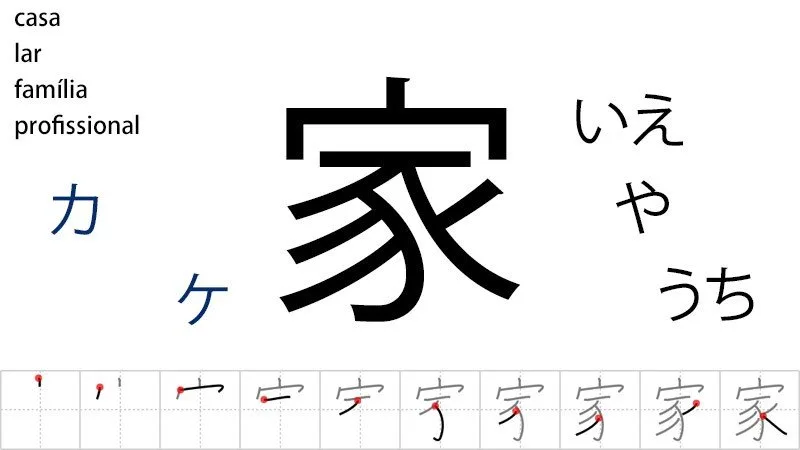
In this article, we will study the kanji 家 and learn some words. This kanji can mean house, home, family, professional, specialist, performance, and other related words.
The Kanji [家] is ranked 133rd on the list of most used kanji in newspapers. It is considered a JLPT N4 level kanji.
Kun yomi: いえ, や, うち
On yomi: カ, ケ (ka, ke)
In names: り, え, く, つ か, べ
Radical: 宀 (roof)
Strokes: 10
This kanji has few readings and is easy to memorize.
うち VS いえ
UCHI (うち) or IE (いえ) are 2 different words that share the same kanji and both mean house. いえ is used to refer to any physical house, while うち is used to refer to your own house, home, and family. うち is used to say “the place I live” instead of just the physical structure.
Since both have the same Kanji, how do I know which word is in a text? First, you will know by the context, but most of the time うち will start the sentence while いえ is easily found in the middle of sentences.
An interesting fact is that うち is cognate (or familiar) with 内 (uchi) which means interior, inside, among, and home.
Since IE and UCHI are Japanese readings (KUN), it is less common to find them in compound words with other kanji, but there are some exceptions. (How to know if the reading is ON or KUN).
Below we will see some words that have the readings IE and UCHI but are composed of kanji:
家出 – iede – Run away from home
家路 – ieji – Way home
家々- ieie – Each house, residences
家筋 – iesuji – Lineage, pedigree, family line
家中 uchiju / iieju – the whole family; all (members) of the family
We note that despite the kanji compound words having a KUN reading, they are merely unions of words, as was the case of 家 + 中.
In some words, the うち may end up hiding the “U” and only becoming “CHI”. Example: 俺んち – orenchi – my house.
カ – KA
The reading KA of the kanji 家 often ends words like a suffix that indicates a specialist, professional, or a person who performs a certain action in a certain area. See some examples below:
Most words that start and end with the kanji 家 have the reading KA. Most of these words refer to something related to or within a home, family, or house.
ケ- KE
KE can be a suffix that represents a family relationship, a group, etc. It can indicate the house of a family (example: 徳川家 – Tokugawa ke – Tokugawa family).
See the examples below to get an idea of the meaning and feeling that words ending in “KE” convey:
摂家 – sekke – Regents, advisors, counselors;
裏千家 – urasenke – One of the main schools of tea ceremony
両家 – ryōke – Both families
王家 – ouke – Royal family
分家 – bunke – Branch family, offshoot
後家 – goke – Widow
良家 – ryōke – Good family; respectable family; decent family
The reading KE can also start words like:
家来 – kerai – Retainer, entourage, servant
や – YA
Some words ending with the kanji 家 will be pronounced や as a suffix. This suffix is used to refer to a house of something, a place where business is conducted, and for people who performed a certain action.
Remember that this suffix is not used in any random word, but is present in certain words. Another kanji that has a similar function and ends with YA is 屋 which means house, roof, shop, seller. So some words can be written with 屋 or 家.
Some words may simply end with YA and have no meaning beyond “house” or “family”.
Below are some words ending in や:
大屋 / 大家 – ooya – Owner, landlord
貸家 – shikaya – House for rent (借家 – yakushiya)
我が家 – wagaya – Your house; a family home; the family
空き家 – akiya – Empty house; vacant house
長屋 – ganaya – Residential building
母屋 – omoya – Main hall, Main building
一つ家 – hitsuya – One house; the same house
The reading YA can also start words like:
家賃 – yachin – rent
家主 – yanushi – landlord, owner of the house
There is also the word 家鴨 – ahiru – Domestic duck – which has a different reading from the others, as if the 家 were hidden.
Examples of use
Now let’s see in practice some sentences that contain words with the kanji 家:
僕は家にいるよ。
Boku wa ie ni iru yo;
I’m going to stay at home
彼らは、画家だ。
Karera wa, gakada;
They are artists
彼は家にいるか。
Kare wa ie ni iru ka;
Is he at home?
わが家にまさる所なし。
Wagaya ni masaru tokoro nashi;
There is no place like home
その家に火がついた。
So no ie ni hi ga tsuita;
His house caught fire
I hope this article has helped you learn more about the kanji 家. Remember that the best way to memorize kanji is by reading as much content as possible.
Oda Nobunaga is famous for conquering and helping to unify Japan during the Sengoku period. Oda Nobunaga, along with Toyotomi Hideyoshi and Tokugawa Ieyasu, shaped the history of Japan. This has resulted in various works, such as movies, doramas, animes, and games. In this article, we will recommend 10 works so you can travel back in time and learn all about the history of Oda Nobunaga.
Nobunaga Concerto
Speaking of time travel, Nobunaga Concerto is a manga series by Ayumi Ishii that tells the story of Saburō, a student who ends up traveling back in time to the Sengoku Period and replaces the famous Oda Nobunaga. This manga has been adapted into an anime and a great dorama. In fact, I wrote an article discussing this work, you can read it by clicking here.
Sengoku Basara
Sengoku Basara is a game similar to Dynasty Warriors released for PS2/Wii/PSP. It also spawned an anime with 2 seasons. The difference in this story is that the protagonist is Date Masamune, and Oda Nobunaga is portrayed as a wicked villain who calls himself “The Sixth Heavenly Demon.” The anime and the game are quite fictional and fantastical, but they are popular among young people. Speaking of games about the Sengoku period that became anime, there is also Koei’s Sengoku Musou.
Oda Nobuna no Yabou
Again speaking of time travel, this anime tells the story of Sagara Yoshiharu, who ends up going back in time to the Sengoku period, but various historical figures from that time are girls, including Oda Nobunaga. Those typical animes transform characters into moe moe, to create a harem and fan service. Despite that, the story received great reviews and comes recommended. Speaking of female versions, another anime with female versions of Nobunaga is Sengoku Otome: Momoiro Paradox.
Onna Nobunaga
It seems that people like to change the protagonist’s gender. In this 2-episode dorama, we tell the story of a female Oda Nobunaga. Oda Nobuhide never had a second son, but a daughter, who is still being raised as his heir and successor.
GO: Hime-tachi no Sengoku
A manga and dorama of 47 episodes that tells the story of Oichi’s daughter, Oda Nobunaga’s sister.
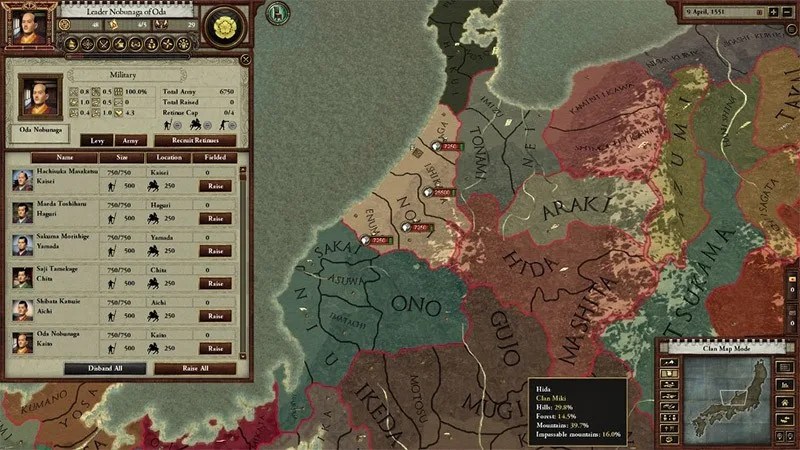
Sengoku – PC Game
Sengoku is a real-time strategy video game developed and published by Paradox Interactive. It takes place in the year 1467, when the civil war between the clans of Japan began.
Movies about Oda Nobunaga
Oda Nobunaga has inspired 2 movies of the same name, one from 1998 based on the novel by Ango Sakaguchi, which tells the story of the 16th-century Japanese warlord Oda Nobunaga in his youth. And another from 1992, but I don’t know many details.
Sengoku Jieitai 1549 – A film based on a manga of the same name, released in 2005, where Oda Nobunaga is killed by time travelers.
You can also see other works such as books, novels, games, animes, and mangas inspired by Oda Nobunaga by clicking this link in English.
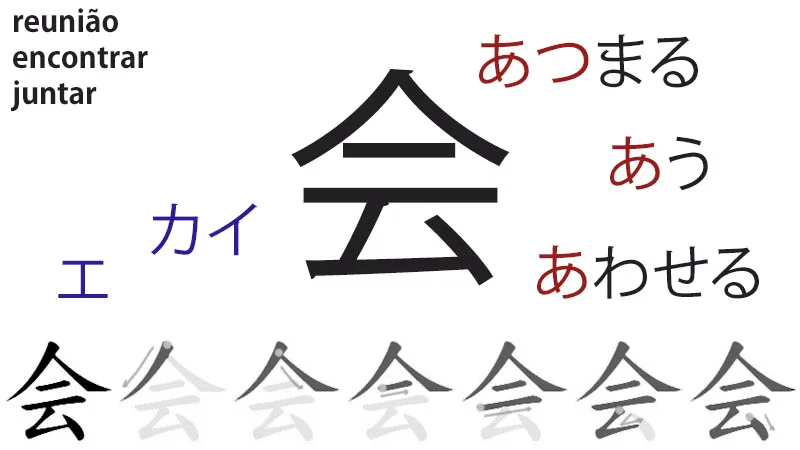
In this article, we will study the kanji 会 and learn some words and verbs where it is used. This kanji means “to meet and gather,” and various words related to groups and societies often use this kanji.
The kanji 会 is the 4th most used in newspapers in Japan. It is considered an N4 kanji in the JLPT. More than 1000 words contain this kanji.
Kun yomi: あ.う、 あ.わせる、 あつ.まる
On yomi: カイ、 エ
In Names: あい、 い
Radical: 人
Strokes: 6
This kanji is easy to memorize, has few readings, and most of the words containing 会 are pronounced “kai.”
We must be careful not to confuse the kanji 会 with the kanji 合, as they are quite similar and have the same readings and some verbs and words with similar meanings.
Verbs with 会
会う (au) – To meet, see, encounter, confront, come across something;
会わせる – To make meet (to introduce);
会わす – Causative form of the verb 会う – to make meet
Words that start with 会
会 – Kai – Meeting, Club (Noun)
会議 – Kaigi – Conference, meeting
会話 – Kaiwa – Conversation
会員 – Kaiin – Member
会見 – Kaiken – Interview
会長 – Kaichō – President
Words ending with 会
社会 – Shakai – Society, community
宴会 – Enkai – Banquet
機会 – Kikai – Opportunity, chance, another time.
大会 – Taikai – Tournament, convention, large meeting
社会 (Shakai) means society, but if we simply reverse the kanji, we create 会社 (Kaisha) which means company or business.
Example Sentences
会を脱退する – Kai o dattai suru – He will leave the meeting
会を抜ける – kai o nukeru – To leave the Club
来月お会いしましょう. – Raigetsu o ai shimashou. – See you next month.
明日会社でね – Ashita kaishade ne – See you tomorrow at the office.
The best way to memorize kanji is to read as much content as possible. We recommend creating sentences using the verb 会う or some of the words examined in this article. As an exercise, you can comment a sentence to help yourself and other students.
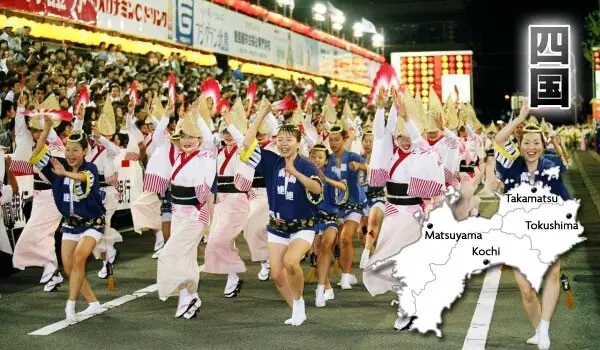
Shikoku (四国 – 4 provinces) is the smallest and least populated of the four main islands of the Japanese archipelago. It is located south of the island of Honshu and east of the island of Kyushu, being formed by four provinces:
The population of Shikoku is small with just over 4 million and its area is 18,783 km². Shikoku has pleasant and explorable nature, with more than 88 temples and shrines scattered throughout the valleys and historic cities. In this article, we will see the main tourist attractions of this small region of Japan.
Ehime Province
Province famous for its castles located in Ozu, Matsuyama, and Uwajima. What stands out the most is the Dogo Onsen, one of the most famous and oldest hot springs located east of downtown Matsuyama. The area is popular among tourists for its beautiful baths and many Ryokan.
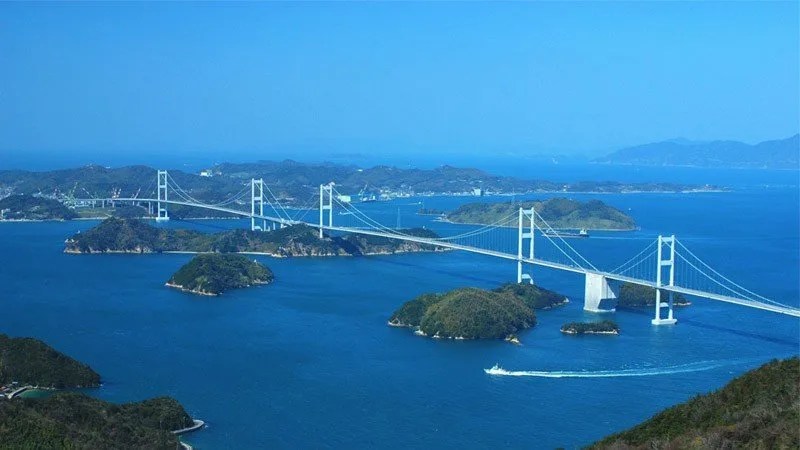
Another notable place is the Shimanami Kaido road that connects the island of Shikoku with the main island of Japan Honshu. It spans over 60 km of roads that pass through several islands for pedestrians and cyclists to cross.
Kagawa Province
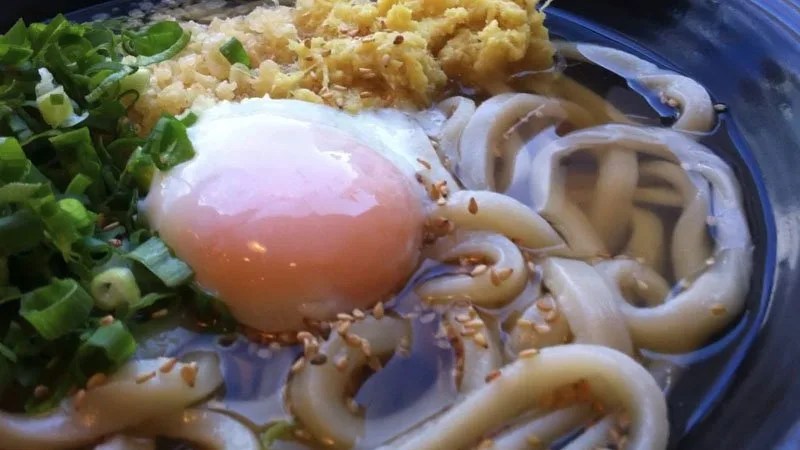
Kagawa [香川県] is the smallest province in Japan and is known for its udon noodles. It has 2 islands filled with modern art, Naoshima and Teshima, with many museums.
The capital of Kagawa is Takamatsu, a port city, with gardens, museums, and temples like most cities in Japan. Kagawa was formerly known as Sanuki Province. It also used to be part of Ehime Province.
In Takamatsu, Mount Yashima was a battlefield between the Heike and Genji clans. The name Yashima literally means ‘roof island’ due to its shape resembling the roof of a traditional Japanese house.
Tokushima Province
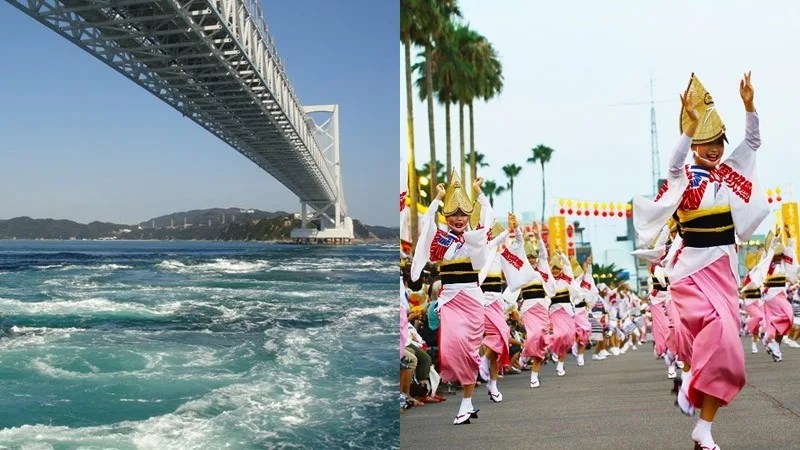
The province and city of Tokushima (徳島) is famous for its typical dance called Awa Odori, a highly popular dance that takes place during the Obon festival in mid-August.
City of Naruto
There is a city located in the northeast of Shikoku in Tokushima province named Naruto. The city is known for its whirlpools in the water. These whirlpools can be seen on the bridge that connects Naruto to Awaji Island.
Iya Valley
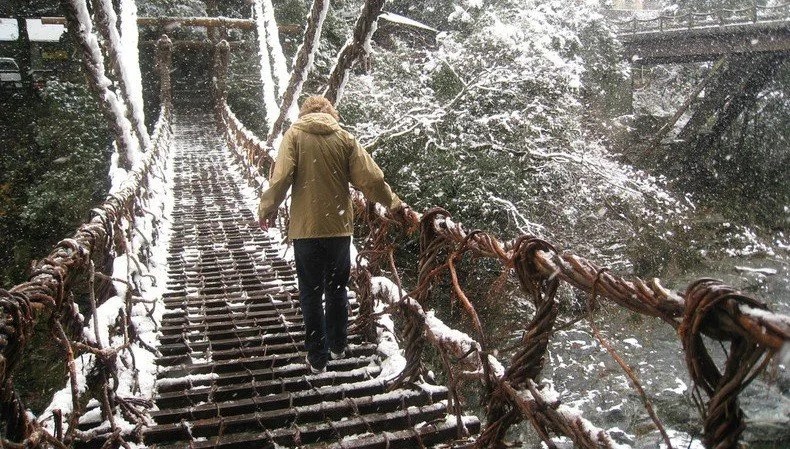
Iya is a mountainous valley located in the center of Shikoku in Tokushima province. The isolated valley is characterized by steep slopes and deep stone gorges that were used to form bridges. Currently, 3 of these vine bridges remain intact and are the main attractions of this valley.
In the valley, you will find Mount Tsurugi, the second highest mountain in Shikoku. And the vine bridges Iya Kazurabashi and Oku-Iya Kazurabashi. Additionally, the valley is famous for its hot springs, trails, and other outdoor activities.
Kochi Province
Kochi is located on the southern coast of Shikoku and has the same name as its capital. The city is small and friendly, with a casual atmosphere, featuring a castle in the center, temples, gardens, and museums. To the south of the city, we have the beautiful Katsurahama beach, with several tourist attractions.
There are many other cities, temples, gardens, lakes, valleys, mountains, and museums to explore on this small island of Japan, but we cannot mention them all.
To conclude, we will leave a video below showing various tourist attractions of the island of Shikoku:
With the release of the Star Wars movie in theaters in 2015, we wrote this article for the franchise fans and lovers of the Japanese language. Today I present the most memorable quotes and phrases from the franchise’s films.
It is worth noting that we will keep the quotes from the Japanese dubbing, so it may be a little different from Portuguese.
May the force be with you. (Ⅳ) – May the force be with you
フォースと共にあれ
Fōsu to tomoni are
No, I am your Father. (To Luke) (Ⅴ) – No, I am your Father.
そうではない。私がお前の父親だ。
Sōde wanai. Watashi ga omae no chichioyada;
A Jedi uses the Force for knowledge and defense, never for attack. (Ⅴ)
フォースは知識と防御のためにある。攻撃に使うな。
Fōsu wa chishiki to bōgyo no tame ni aru. Kōgeki ni tsukau na;
A long time ago, in a galaxy far, far away.
遠い昔はるか彼方の銀河系で…
Tōi mukashi Haruka kanata no gingakei de..;
I find your lack of faith disturbing.
私を疑うのか? (Você dúvida de mim?)
Watashi o utagau no ka
I will not forgive those who insult the force
フォースを侮辱するものは許せん
Fōsu o bujoku suru mono wa yurusen
Use the force, Luke!
フォースを使えルーク
Fo-su wo tsukae, Ru-ku!
Do or do not. There is no try. – Yoda
やってみるのではなく,やるのだ.
Yatte miru node wa naku, yaru noda;
Attachment is forbidden, possession is forbidden. But compassion, which I would define as unconditional love, is essential in a Jedi’s life. – Anakin Skywalker
Shūchaku wa kinji rarete iru yo. Shoyū yoku mo gohatto. Demo mushō no aidearu omoiyari wa ―― jedai no seishin’na nda. Ai o daku koto wa shōrei sa rete iru nda yo
It is against my programming to impersonate a deity. – C3po
それはよろしくないかと。神様プログラムはありません。
Sore wa yoroshikunai ka to. Kamisama puroguramu wa arimasen;
You can find these and other quotes and phrases from Star Wars in Japanese here. I hope you enjoyed the article, I thank everyone for the comments and shares. Feel free to comment other phrases here.
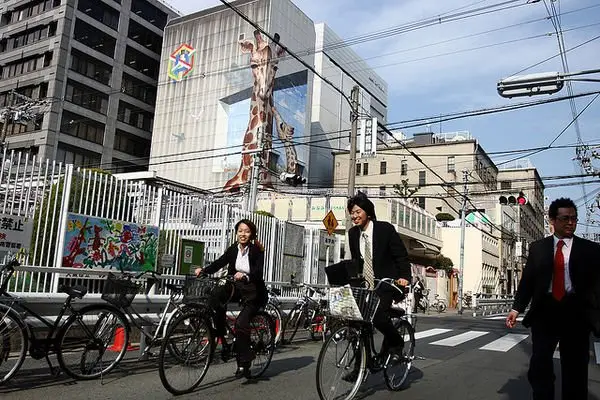
The bicycle is a very used means of transportation in Japan, especially in large metropolises like Tokyo. Japan ranks third in the world for the highest number of bicycles.
The car is not as popular as in Brazil, since it is possible to get around the entire country by trains and subways. So most Japanese people use bicycles to commute to work, markets, shopping, daycare, schools, doctors, and other short-distance trips. Riding a bicycle is often much faster and more convenient than taking a train or driving a car.
Unlike cars, bicycle parking is easier to find and sometimes free. Since there is safety and education in Japan, bicycles can be parked without any worry. Riding a bicycle can be much more practical than facing queues and traffic jams in large metropolises.
Despite the technology, most bicycles in Japan are simple, some tend to have baskets in front, and this does not mean that the bicycle is feminine. Bicycle prices usually range from 10,000 to 30,000 yen, but it is possible to find even cheaper ones in second-hand stores. Bicycles with this basket are known as Mama Chari.
Traffic Laws
The Japanese comply with traffic laws and usually respect pedestrians and cyclists. But cyclists also have several rules to follow. Breaking some of the laws below can result in fines and even imprisonment.
It is possible to register your bicycle at a police station, your bike receives an anti-theft registration number “Jitensha Bouhan Toroku,” in case someone steals your bicycle, it will be easier to find it.
In Japan, cyclists ride on sidewalks only if there is signage and a lane for cyclists. Otherwise, they must ride on the road, along with cars, and always on the left.
It is prohibited to give a ride to someone (who is not a child) on your bicycle. You may receive a fine of 20,000 yen (about 600 reais).
Children under 13 years old are required to wear a helmet, and those under 6 years old must be in a child seat.
Using an umbrella, listening to music, or using your phone while riding a bike can result in a fine of up to 50,000 yen (1600 reais).
You cannot cross a pedestrian crossing while mounted on the bicycle. And remember to always use the headlight at night.
It is prohibited to ride a bicycle while intoxicated. This can result in a fine of 1 million yen and up to 5 years in prison.
Take good care of your safety and your bike. Leaving bicycles abandoned anywhere can also result in a fine. By following these rules and traffic signs, you will be free of problems.
Since Japan is a very safe country, the police spend a lot of their time fining cyclists who violate the laws. So think carefully before doing something wrong. People tend to be more afraid of the police when they are on a bicycle. It may seem that the Japanese are saints, but they often violate the laws for cyclists.
Care
Although Japan is a safe country, some bicycle thefts do occur. Some people sometimes take someone else’s bicycle to go to a certain place. Most of the time they return the bicycle to where it was. But some tend to steal or leave it abandoned anywhere when they no longer need it.
Videos
There are many things to talk about bicycles in Japan, but today we will stop here. To conclude, we will leave some interesting videos about bicycles in Japan.
The video below shows a bit of Japan and its bicycles.
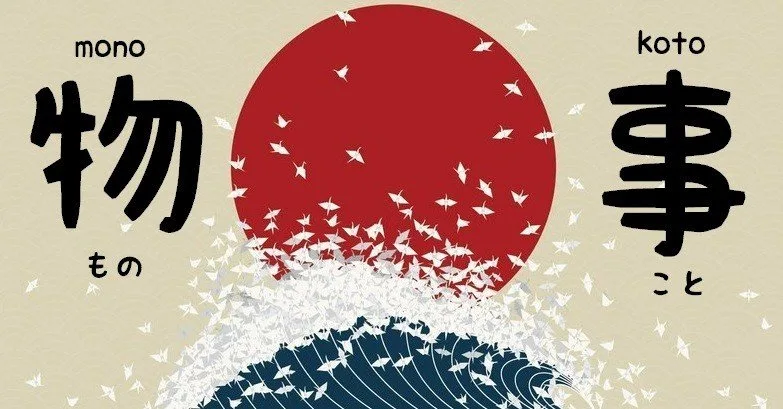
If you still don’t know, in Japanese the word もの (物) and こと(事) means “Thing” but what is the difference between the two? When to use each of them in a sentence or phrase?
Meaning of Mono – もの [物]
The mono is used to refer to a physical, concrete thing, a tangible thing, something that can be touched; a sensitive and touchable thing. Something that is perceived by touch; corporeal, palpable. For example: a wallet, a cabbage, a door, or a coin.
Mono can give the idea of an object, article, material, substance, possessions, property, belongings, and anything. It can also be used to emphasize emotion, judgment, etc. And it can be used to indicate a common occurrence in the past, a general trend, or something that should happen.
もの can also be contracted to もん in informal speech.
Examples of the use of mono:
その黒いものは猫かなあ. sono kuroi mono wa neko kanaa. I would like to know if that black thing is a cat?
おいしいものが食べたい. oishii mono ga tabetai. I want to eat something good.
Meaning of Koto – こと[事]
The koto is a conceptual, intangible thing, that is, something that cannot be touched; something untouchable. Or a thing not perceptible by touch; impalpable and incorporeal. Examples of ungraspable things: a victory, a habit, a desire, or an incident.
Koto can also give the idea of interest, incident, fact, reason, case, work, business, etc.
Examples of the use of koto:
いい事はありません. ii koto wa arimasen. There is nothing good.
大事な事を教えます. daiji na koto o oshiemasu. I will tell you an important thing.
昨日の事はすみませんでした. kinou no koto wa sumimasen deshita. I am sorry about what happened yesterday. (thing from yesterday)
どう いうこと? dou iu koto? What does that mean?
Comparison between Mono and Koto
Let’s make a brief example of 2 identical sentences, one with koto and the other with mono, and this gives a different idea to the sentence.
食べる事 Taberu koto The act of eating, Nutrition
食べる物 Taberu mono Eat something
It is also possible to transform an abstract idea into a concrete/tangible one, see the example below:
どうして行かないの?Dōshite ikanai no?
だって、忙しいもの。Datte, isogashī mono.
A curiosity is that the difference in tangibility between mono and koto has a phonological root. The nasal consonants /m/ and /n/ are associated with subjectivity, but not /k/, which is a velar consonant (in this case, denoting objectivity). There is also the issue of voicing. /m/ and /n/ are voiced sounds, /k/ and /t/ are voiceless consonants, which also contributes to the phonological symbolism of subjectivity vs. objectivity.
The word koto [こと] can literally mean things in a figurative sense. But its use in phrases like I love you [あなたのことが好きだ] is not very clear. When we use the expression koto in a sentence like I love you, we are trying to say that we like all the things about the person. How so?
In many animes, dramas, and in real life, we can see people using the expression I love you in the following way:
anata no koto ga dai suki desu
あなたのことが大好きです
If we remove the koto [こと] from the sentence it will still mean I love you or I like you. So what is the use and meaning of koto in this sentence? Some claim that the koto [こと] adds a layer of indirectness, which is why Japanese people often use koto in sentences like I love you.
Since koto literally means figurative things, we can say that the koto [こと] in the sentence encompasses more the object (you). It would be as if I were saying I love all the things about you, or everything in you.
The koto [こと] makes it clear that you love the person romantically, rather than simply saying that you like the person as someone. It is quite essential, especially when we use the expression suki desu.
If we use koto [こと] we are showing a genuine love that focuses on the quality and inner self of the person, on unseen things. This expression conveys the depth of your love for the person.
To say I love you without koto sounds somewhat superficial; using koto we are saying that we like the person’s presence, their charm, their qualities, everything. It increases the degree of suki (好き) which also means just like.
Diving deeper into the expression koto
We can illustrate koto in the following way:
Imagine that the first point is you, imagine that the second point is you with the koto (あなたのこと). By using koto we are focusing on the object and the verb. We can use koto in sentences with various verbs even if a literal translation to Portuguese doesn’t make sense, such as:
I want to hug you
あなたを抱きしめたい
Anata o dakishimetai
We can change to あなたのこと to focus and concentrate on the object (you). Although it literally means I want to hug all the things in you, the sentence is not wrong at all. The fact that the sentence has the word あなたのこと does not mean that we are literally trying to say all the things about you.
The expression こと can also be more specific, instead of encompassing all things. At no point do we use the expression everything in the sentences mentioned in the article.
Japanese words tend to be very indirect and broad, which makes understanding difficult even among Japanese people. I read a discussion on stackexchange that talked exactly about this, which made me write this article. There I realized that even Japanese people have difficulty understanding the real use of koto.
Although it means things, its kanji can also give the idea of something important, a fact, a reason, and a possibility. It is really complicated to understand the meaning of Japanese words without experiencing and using them daily. What is your opinion? We look forward to your comments to improve this discussion about the word koto.
There is a way to double your learning in Japanese using the expressions mono and koto. We can see this in the video I will leave below from Yamada Tarou, or in our guide Verbs or Nouns? Transform your Japanese studies.
In summary, we can understand that some verbs become words by using koto and mono, try to understand this by looking at a list of words below:
Taberu [食べる] – To eat = Tabemono [食べ物] – Food;
Gataru [語る] – To tell; To narrate = Monogatari [物語] – Story;
Have you ever stopped to think about how the Japanese converse? What are their dialogues like? Each language has its own way of communication. Japanese is a very original language; many people think that the Japanese are particularly polite because of this. In today’s article, we will look at some factors that show how the dialogues of the Japanese are original.
No Swear Words
There are no swear words or sexual slang in most Japanese dialogues. In reality, there are almost no swear words in Japanese; there are some insults like: idiot, die, shit, crazy, etc. There are also immoral conversations like jokes known as shimoneta (下ネタ). But for the most part, Japanese dialogues are pure, polite, and free of any immorality or insult.
In Japanese, there are various slang, abbreviations, and nicknames, but most of them are polite and respectful. To turn the case around, even a way of saying you (teme) can become an insult in the language.
San, Kun, Chan
The Japanese use honorific suffixes after names as a sign of respect, just like Mr. or Mrs. in Portuguese. However, the Japanese always use this; it is disrespectful not to use a suffix after a name. See an article that talks more about these honorific suffixes.
How are you?
Japanese people do not usually ask every time they meet someone “ogenki desuka”; sometimes a simple greeting is more than enough.
Yes or No?
In casual Japanese conversations, yes is un (うん), and no is uun (ううん). Hai and iie are formal. The casual yes and no are very similar, and this can end up confusing some people; you must pay close attention to how the person is speaking.
Keigo
One of the things that differentiates the Japanese language from the rest is its formality. Keigo refers to levels of formal conversations. Keigo is divided into 3 categories: Polite, Respectful, and Humble. There is a different way of speaking for each occasion or class of people.
Similar Words
Japanese is full of similar words making it quite difficult to understand the language, and causing a conversation in Japanese to be amusing to foreign eyes.
Meaningless Words
The Japanese often say words that do have a meaning but that we in our language would not say. Some words for us are something that if we say will seem childish and simple. But really, the Japanese language is simple, using onomatopoeias in formal conversations, or repeating a word to indicate another. These are small things that make the language strange to the eyes of foreign students.
There are several other factors that we notice when studying Japanese. Comment here on a factor that catches your attention the most.
I think many here know that there are more than 100 ways to say “I” in Japanese. But many do not know that there are many ways to say “You” as well.
The pronouns in Japanese are not standardized; many do not use the word “you” to refer to another person. They prefer to say the person’s name or some other respectful way. Thus, there are thousands of ways to say you in Japanese that we will see in this article.
To Your Eternity
You in Formal Japanese
Below are the main ways to say you in Japanese casually:
あなた – anata: The most common and polite way to say you;
そちら – sochira: A polite way to say you, adding 様 (さま) to make it more formal;
己 (おのれ): Usually used by Yakuza in the midst of fights;
おどれ, おんどれ, おどりゃ, おんどりゃ: All variations in the slang おのれ;
貴様 (きさま): Used to be polite;
きさん: Variation of 貴様 used in Kyushu, but it is not offensive;
我 (われ): Used in the north and west of Japan, also means I;
わ: The same as 我
You in Professional Situations
The following words are used in relation to someone representing a:
貴社(きしゃ): company
御社(おんしゃ): company
貴店(きてん): store
貴局(ききょく): Broadcasting company, post office, water agency;
貴紙(きし): news company
貴学(きがく): university
貴校(きこう): school
貴園(きえん): kindergarten
貴サイト(きさいと): website
Position in the company
Within any company (large or small), there are several positions that are used instead of “you”:
店長(てんちょう): store owner
課長(かちょう): section chief
部長(ぶちょう): department head
副社長(ふくしゃちょう): vice president
社長(しゃちょう): president
When speaking with someone from your own company, the honorific -san is usually not added. But if it is someone from another company, it is used.
Used in letters
When writing a letter to someone, we can use some of the expressions below:
貴兄 (きけい): Used for men with equal or higher status than the person;
貴姉 (きし): Used by men and women of the same age or older;
貴君 (きくん): Used by men for men with equal or lower status;
Using the listener’s name
It is very common for a person to call the other by name instead of using the pronoun “you“. It is worth noting that there are different ways to call a person by name.
In Japan, when speaking with a stranger or someone without intimacy, we usually call the person by their surname or family name. There are also respectful honorifics that we should use when calling someone by name.
To understand the different levels and ways to refer to a person by name, we also recommend reading our article titled “How to know if a Japanese girl likes you“.
Other ways to say You in Japanese
汝 (なんじ): Sometimes considered similar to “thou”;
そち, そなた, その方 (そのほう): Used by a person of higher status to a person of lower;
卿 (けい): Monarch uses with their subjects;
此方 (こなた): Also means I or he/she;
先輩 – Senpai: Used in schools to refer to a senior. (higher class)
後輩 – Kouhai: Used in school to refer to a freshman. (lower class)
先生 – Sensei: Used to speak with teachers, masters, authors, doctors, lawyers, and others;
People often use words like mother, father, uncle, aunt, grandmother, grandfather to refer to family members, or even to people who are not family. Example: Some young people use 爺さん (じいさん) when talking to an elderly man.
Some refer to people by calling them man [男 otoko] or woman [女 onna], but this can sound a bit sexist and rude. I hope you enjoyed the numerous ways to say you in Japanese.
In today’s dissection of songs, we will study the song Bad Apple, sung by Vocaloid, based on the background music from the classic super difficult game Touhou. The song has a short version of 3 minutes and another version of 5 minutes. Today we will examine the complete 5-minute version.
Below we have the Karaoke with 2 versions, the short version with original vocaloid audio, and a remix cover with the 5-minute version.
We recommend using the Insert Furigana extension to visualize the reading of Kanji that you do not know. (Download Google Chrome). You can also watch this video, without vocals, a karaoke that has furigana.
Now let’s study the parts of the song… The texts that are in red mean that they have been translated in previous sentences, and there will be no translation. If you forgot the word, look for it in another part of the song.
流れてく 時の中ででも 気だるさが ほらグルグル廻って
Nagarete ku toki no naka de demo kedaru-sa ga hora guruguru mawatte
Even in the flow of time, I feel languid, look spinning around me
Do you know the particle SA (さ)? It is often used by men to indicate a slight emphasis. It is impossible to interact with Japanese people without hearing さあ in sentences. It has great power and makes your sentences quite rich. In this article, we will see details about its function and how to use it correctly.
We are not including romaji in our articles, as it hinders learning. If you haven’t mastered hiragana and katakana yet, we recommend studying.
Ways to use さ
Acting with a little observation, speaking with attitude, and leaving a feeling of “whatever”.
そう心配(しんぱい)することはないさ.
You don’t need to worry about..;
Using さ in a question, showing a rebuttal, reprimand, or blame.
どう して黙(だま)っているのさ?
Why are you keeping silent?
Used at the end of a sentence to indicate an explanation of obvious facts.
彼女(かのじょ)はいないから、ダンスに行(い)かないさ。
I’m not going to dance because I don’t have a girlfriend;
Showing that you are explaining what someone said.
彼(かれ)も行(い)くんだってさ.
He said he is going too;
Using さ when verifying your judgment or giving an opinion strengthens your feeling about the subject.
俺(おれ)にだってできるさ.
Even I can do that!
Used to show the feeling that you are trying to get the listener’s attention.
でもさ,僕(ぼく)はさ,わかってるんだ.
But… I… I understand;
Using the particle さ at the beginning of a sentence is a way to respond to something you don’t know or don’t care about. さ can also imply a “maybe…”
The particle さあ is the feminine version of the particle さ and is often used at the end of sentences as a colloquial version of the particle ね.
With a long time of study, you will get the practice and know the right moment to use the particle さ. Listen carefully to its use in everyday life. The tone and speed vary quite a bit.
Particle SAE さえ “even”
Taking advantage of the article about the particle さ or さあ, let’s talk about the particle さえ. Sae implies (usually) positive emphasis, reaching evidence that something is greater than assumed. It can be followed by も(mo) for additional emphasis. Simplifying, it can mean “Even”, used to emphasize, “If” or “while”.
さえ漢字(かんじ)けるか.
He can even write kanji;
I hope these examples have helped you learn a little about the particle さ.
Everyone knows that Karaoke is something super popular in Japan, there are thousands of establishments where groups of Japanese friends go to sing, eat, drink, and have fun.
1. 残酷な天使のテーゼ / “Zankokuna tenshino teze” by Yoko Takahashi
A very popular song from the anime Evangelion. Below we have a cover by the group Goose house. We wrote an article breaking down this song, you can access it by clicking here.
2. 小さな恋のうた / “Chisana koino uta” by MONGOL800
3. 空も飛べるはず / “Soramo toberuhazu” by Spitz
4. ハナミズキ / “Hanamizuki” by Yo Hitoto
5. 女々しくて / “Memeshikute” by Golden Bomber
It is difficult to define the best songs, the most sung ones. There are countless other popular songs. If you are interested in singing karaoke, there is a YouTube channel where you can find thousands of songs. Click here to access KaraokeJPOP.

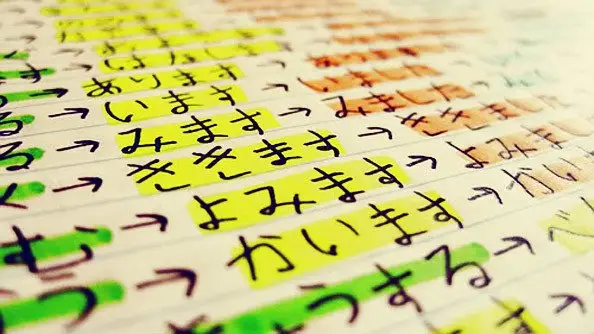
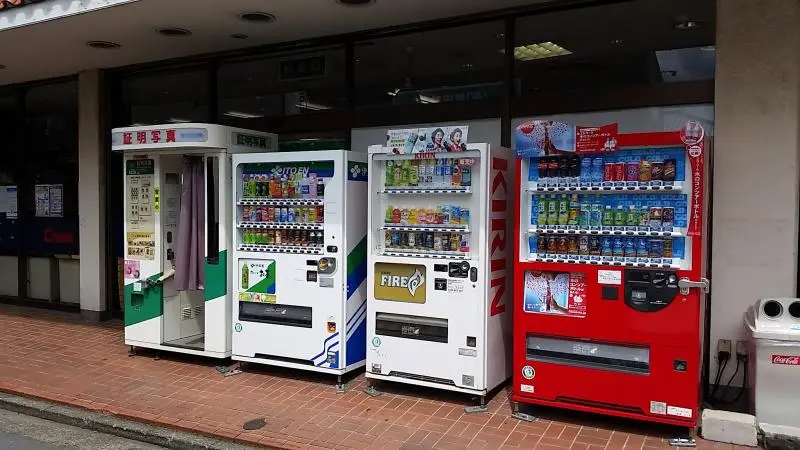


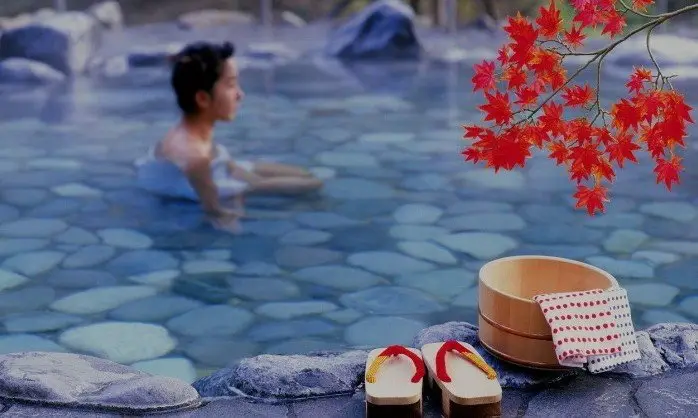


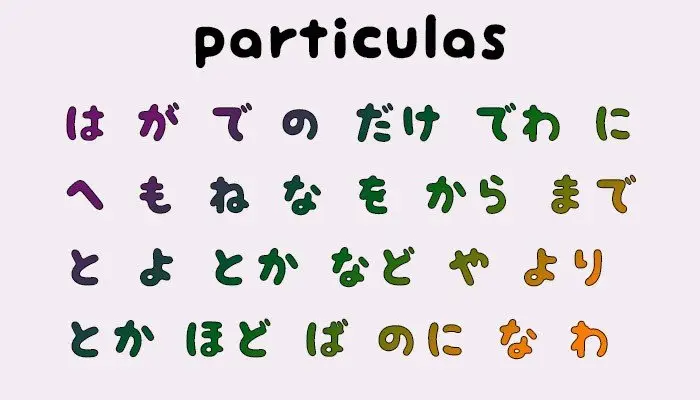
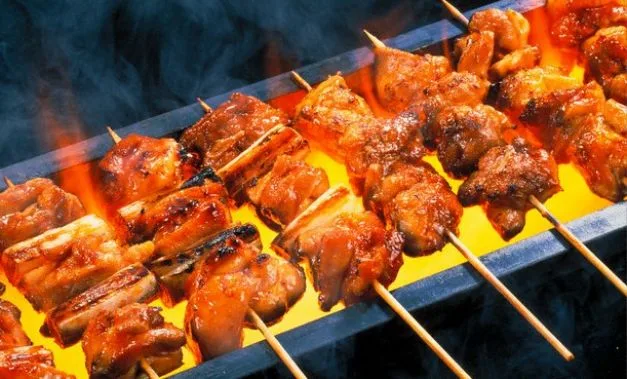


![Japanese adjectives in the form さ[-sa], そう[-sou] and め[-me]](https://skdesu.com/wp-content/uploads/2023/09/mitai.webp)