
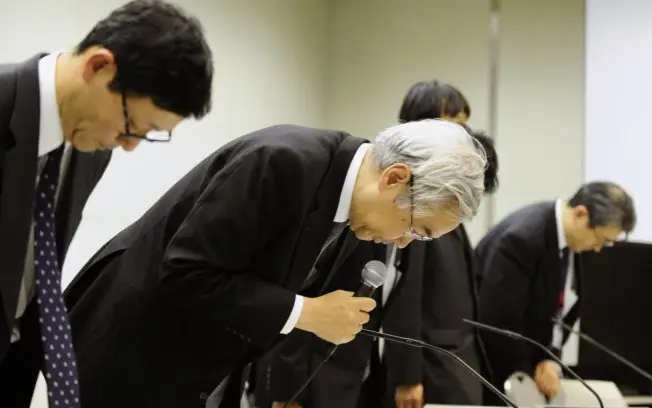
Bowing is still the everyday language of respect in Japan. The gesture is called ojigi [お辞儀], and it is older than a simple “hello”: how deep you bend, how long you hold it, and when you do it all change the message.
That code is so automatic that many Japanese people even bow while talking on the phone, with no one in the room. If you have ever wondered when a nod is enough and when a deeper bow fits, the answer is almost always the situation—not a single rigid rule.
Depending on the moment, a bow can mark greeting, thanks, apology, status, ceremony, or simple politeness. In extreme cases, people lower themselves to the floor in a full kneel known as dogeza. Below are the occasions where ojigi shows up most often—and what each one usually means.
- When apologizing
- During greetings and goodbyes
- When giving thanks
- In introductions
- As a form of respect
- Toward customers
- In sports and martial arts
- In performances
- In religious situations
Contents 11
Three common depths of bow
Before the occasions, it helps to know the three standing bows people learn in everyday and business Japan. They are not exotic names for tourists, but a practical scale of formality:
- Eshaku [会釈] — about 15°. Casual greeting among equals, a quick “thank you,” or a polite pass in the hallway.
- Keirei [敬礼] — about 30°. The standard respectful bow for clients, meetings, and more formal introductions.
- Saikeirei [最敬礼] — about 45° to 70°, held a little longer. Deep gratitude, serious apology, or someone of very high status.
Bend from the waist, keep the back straight, and look slightly down—not into the other person’s eyes. Men usually keep arms at the sides; women often rest hands lightly in front. Visitors are not graded like trainees, but matching a shallow bow with a shallow bow already reads as attentive.
Bowing when apologizing
If you make a mistake, you should apologize and bow. A light apology often comes with a small tilt of the head—closer to eshaku than to a full formal bow.
Imagine you are a waiter and spill hot coffee on a customer. A deeper bow around 45° (saikeirei territory) and a phrase such as mōshiwake gozaimasen [申し訳ございません]—“I’m very sorry”—matches the seriousness of the situation.
For a grave apology, people may kneel and use stronger wording such as makoto ni mōshiwake gozaimasen deshita [誠に申し訳ございませんでした], “I sincerely apologize for what I did.” That is the same emotional space as dogeza: the body goes lower because the regret is heavier.
Bowing during greetings
The most common greeting is a slight dip of the head and shoulders—often so quick that foreigners barely notice it. Japanese people use that small motion both to say hello and to say goodbye.
In formal settings the bow lengthens and deepens. Handshakes also appear, especially with international guests; when both gestures collide, do one after the other rather than at the same time, and turn a little to the side so you do not bump heads. For everyday phrases that travel with these bows, see our guide to Japanese greetings and goodbyes.
Bowing when giving thanks
If someone gives you a place in line, a small head bow is a natural “thank you.” Drivers often tip their head in gratitude for tiny courtesies on the road—letting a car merge, waiting at a narrow street, yielding a shared space.
Any moment that would make you say thanks can be a moment to bow. The person who helped you may answer with an even smaller bow that reads as “it was nothing.”
Bowing in introductions
In casual and formal introductions, a keirei-style bow of about 30° is common. If the person is especially important, the angle can approach 45°. Keep the back straight, arms aligned, and do not stare into the other person’s eyes while you are bent—that is usually read as rude or confrontational outside martial arts.
In business, after exchanging meishi (business cards), people often bow and hold the position for a beat before standing straight again. Leave a little distance so the cards, hands, and heads do not collide—it happens more often than anyone admits.
Bowing as a form of respect
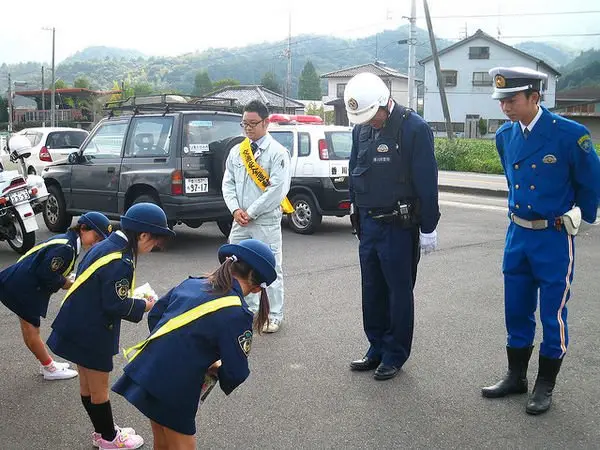
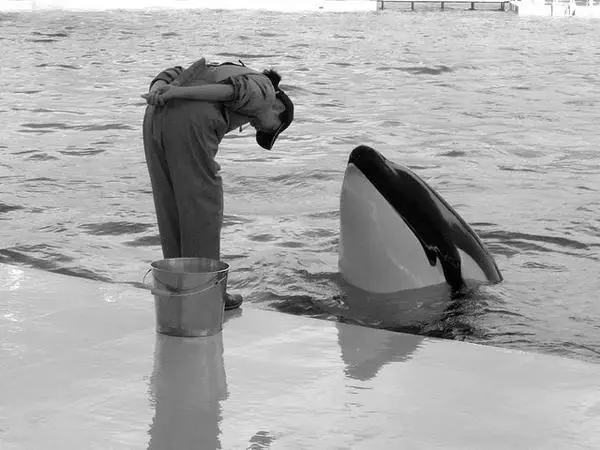
Bowing is an expression of humility: the lower the body, the clearer the respect. Some people even bow toward animals or objects when the situation feels ceremonial or affectionate. In Nara, visitors sometimes see deer that seem to “bow” for food, and caretakers may bow toward animals under their care—the photo that often circulates shows a keeper bowing to a whale.
Bowing to customers
In Japan, customers sit high in the social hierarchy of service. Staff bow when you enter, when they hand something over, and when you leave. Many stores and companies train employees on the correct depth and timing so the gesture looks calm rather than rushed.
As a visitor, you do not need to mirror every staff bow perfectly. A small return nod is enough; the point is reciprocity, not theater.
Bowing in sports
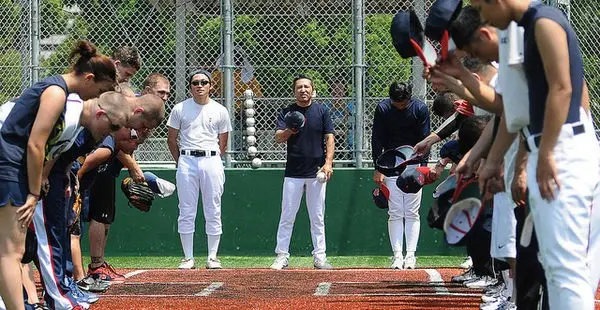
Japanese people also bow before or after matches in sports, martial arts, sumo, and even card games such as karuta. The angle is often modest—around eshaku or a little deeper—because the focus is mutual respect, not ceremony for its own sake.
At the start, competitors may bow and say yoroshiku onegai shimasu; at the end, while bowing, arigatō gozaimashita. In martial arts and karuta, you usually bow not only to your opponent but also to the coach, the dojo, or the person running the match.
Bowing in performances
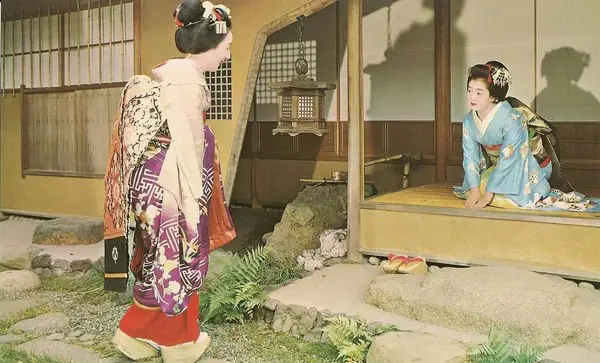
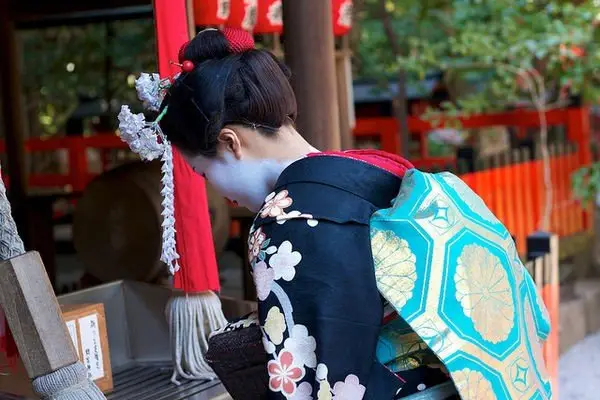
As in the West, artists bow in response to applause—theater, music shows, voice-actor events, and stage performances. In traditional settings with geisha or classical arts, performers often bow fully from a kneeling position (zarei), which reads as more formal than a standing bow.
Bowing in religious situations
At a Shinto shrine, visitors usually bow lightly when entering the precinct and more carefully in front of the hall of worship. A common pattern is two deep bows, two claps, then one more bow—though exact local custom can vary slightly by shrine.
Formal Shinto rites may call for a full kneeling bow. Buddhist funerals and memorials also use deep standing or kneeling bows when offering incense or greeting the family—another reminder that ojigi is not only “hello,” but a full grammar of respect.
Do visitors need to bow perfectly?
No. Japanese hosts rarely expect foreigners to master saikeirei on day one. What matters is the effort: return a bow when one is offered, keep it calm, and avoid joking around mid-bow. If someone extends a hand for a handshake, take the hand; if they stop at bowing distance with feet together, bow first.
Master the occasions above and the three depths of ojigi, and you will already read the room better than most guidebooks that only say “just bow.” The rest is attention—watching how deep the other person goes, and matching the moment rather than performing for a camera.

Community
Comments
0 comments
There are no published comments in this language yet.
Send comment