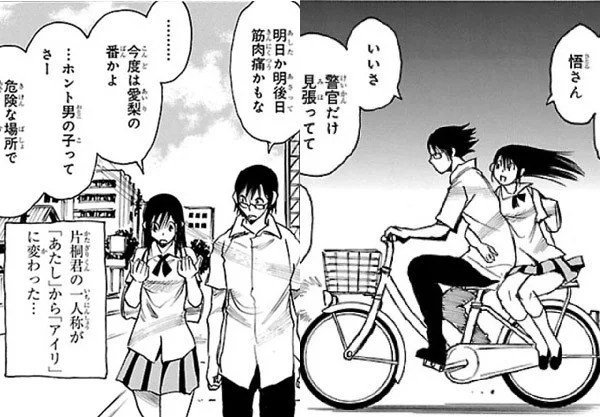
There are countless ways to tell if a girl likes you. Knowing this is very relative; each person thinks differently, especially the Japanese.
But there is a unique way in Japan to know if a girl likes you, through her name. The closer you get to a girl, she will call you by your name in different ways.
Girls in Japan are not usually direct and like to maintain a friendship before getting into a relationship, so the dreaded Friend Zone is a bit more favorable in Japan.
If you don’t live in Japan, this guide isn’t very useful, but it’s quite interesting to note the cultural differences in interaction and dialogue between people. We notice this a lot when watching anime and reading manga, and now we can delve deeper and understand much more.
The way she calls your Name
In the following example, let’s take a very common name “Hiroshi Suzuki”. And remember, since the pronoun “you” is rarely used in Japan, the names below are used instead of the word “you” in a normal conversation.
If a girl calls you in the following way it may mean:
6. Suzuki-san
A distant person, who is not very friendly, or does not know you personally.
5. Hiroshi-san
This person has already called you by your first name, but since she used the honorific -san, she is still a bit out of your reach.
4. Hiroshi-kun
Still a bit distant, perhaps a friend or classmate.
3. Hiroshi
She is using only your first name; you have a certain type of intimacy, but it may mean nothing.
2. Hiroshi-chan
You are close, or she thinks of you as a child. Be careful not to confuse love with friendship.
1. Hiro-chan, Hi-chan, Shi-chan
She called you by nicknames, shortened names, and even added -chan. You now have chances; it may just be a long-standing friendship, but I would try something.
A real tip
So far, this may seem quite normal. But it makes perfect sense to use name endings and politeness to show distance or closeness. But there is another factor that shows she may be interested in you.
If the girl stops using pronouns like わたし (watashi) or あたし (atashi) and starts referring to herself in the third person, she may have romantic interest in you.
Remembering that all the items above may really say nothing; it might just be an attempt to be friendly with you. But who knows, you might be lucky.
What other verbal suggestions have you seen where a Japanese girl shows that she likes a guy?
The photo of the article was taken from the manga: 僕だけがいない街 (Boku dake ga inai machi)
The idea for the article came from the site japaneselevelup
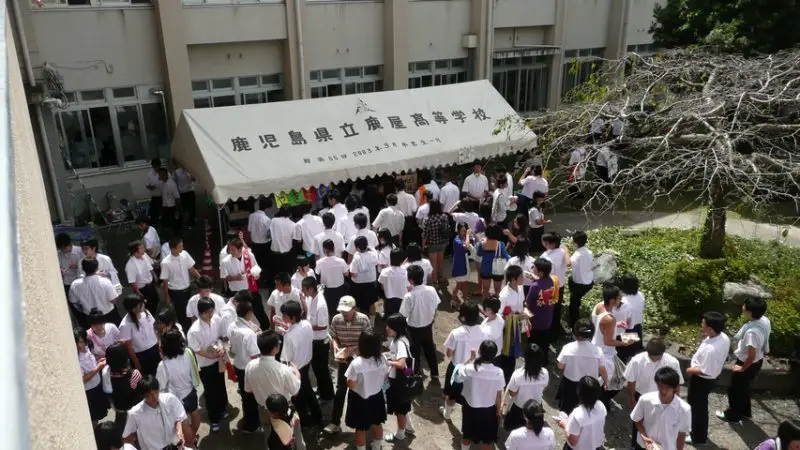
Japan is known for its vibrant and unique culture, where the representation of people in different age groups is widely explored in movies, TV shows, and commercials. High school students, in particular, hold a special place in Japanese pop culture. However, the way they are portrayed is not always conventional and often carries elements of humor, surrealism, or even situations that may be considered eccentric by observers from outside Japan.
The Secrets and Mystery of Youth
Another common representation of Japanese schoolgirls is the idea that they hold secrets, whether emotional or even supernatural. This approach creates a sense of mystery that fascinates the audience and appears in both casual videos and more elaborate productions.
The Baseball Dance
Baseball is a highly valued sport in Japan. Just as much as soccer.
WTF? What dance is this?
Well, I have nothing to say about it… The dance is not bad, but there is a part of the song that, God forbid…
Namawee – Tokyo Bon 2020
This video became popular worldwide for its song showcasing how famous words in English are adapted to the Japanese language. The clip features several Japanese schoolgirls singing and dancing.
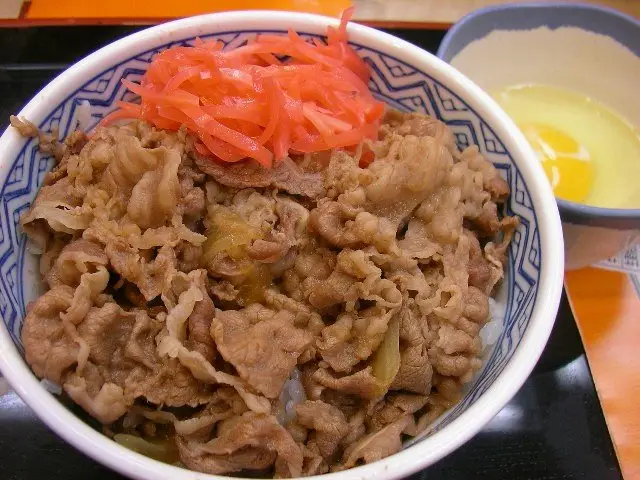
Have you heard of the Japanese dish gyudon? In this article, we will talk about the most common dish in Japan that is usually the meal for most Japanese people on a daily basis; we will discuss the famous Japanese beef bowl.
–
What is Gyudon? What is its History?
Gyudon [ぎゅうどん] or [牛丼] literally means “Beef Bowl”. This dish consists of a bowl of rice topped with thin slices of beef and onion cooked in a slightly sweet sauce.
The delicious sauce of gyudon is made from dashi (seaweed and fish), shoyu, and sake; it can also include shirataki (a type of noodle made from konjac) and tofu. There are different variations of the dish, some with cheese or mayonnaise.
Gyudon emerged during the “Westernization Movement (文明開化 – Meiji Restoration),” when Western customs such as eating beef were adopted and spread throughout the country.
Where can I eat Gyudon?
Gyudon can be found in many Japanese restaurants, and there are some fast-food chains that specialize in the dish. The largest gyudon chains in Japan are Yoshinoya and Sukiya. Another major chain, Matsuya, offers the dish under the name gyumeshi (牛めし).
The dish has also gained other versions with pork called butadon (豚丼) and a version with fish. The most common is still the beef sliced thinly with plenty of onion and sauce. I remember that these fast-food places have unagi, a dish with eel that I think fits into the category.
In Brazil, there are chains of some of the restaurants mentioned above; Sukiya has several stores in Brazil, mostly in the São Paulo region. This dish is also easy to prepare, so even if you don’t live in Japan, you can enjoy it.
The video below shows a bit more about Gyudon:
Recipe – How to Make Gyudon?
There are thousands of ways to prepare Gyudon; you decide the amount of ingredients and seasoning for your recipe, but we will leave one here as an example, accompanied by 2 videos teaching the recipe.
Cooked Japanese rice (Gohan) (500 to 600g)
½ cup of water
500g of thinly sliced beef (sirloin)
¾ cup of shoyu (soy sauce)
¾ cup of mirin sake
4 tablespoons of refined sugar
If possible, add dashi or hondashi to taste
1 cup of white wine
Red pickled ginger (beni shoga) to taste
How to Prepare Gyudon
1 – Wash the rice until the water is almost clear, place it in a pot, add 3 ½ cups of water, let it soak for 30 minutes, cover the pot, bring to high heat, let it start to boil, lower the heat and cook for 15 minutes.
Remove from heat, let it rest with the pot covered for 15 minutes, using a wooden spatula moistened with water, gently stir the rice from the bottom up until it becomes fluffier, and place a dish towel between the lid and the pot to absorb excess moisture.
2 – In a pan, add 4 tablespoons of water, mirin, shoyu, bring to high heat, let it boil, add onion, lower the heat and cook until soft. Increase the heat again, add the meat, cook for 2 minutes, add the pieces of green onion, mix and remove from heat immediately.
Fill 4 bowls halfway with hot rice, place the meat on top, distribute the remaining sauce over the meat and serve immediately. For more details, see the video from Santana:
We have another video from Tabemashou that shows another detailed way to make Gyudon:
In Japanese, there is more than one verb that means “to give, to bring, to receive“. The choice of this verb will depend on the direction of the transaction. In this article, we will examine 3 verbs that have a significant impact on this subject.
Ageru and Kureru
The most common way to say the verb “to give or to receive” is あげる (ageru) and くれる(kureru), but when should each one be used?
あげる – Ageru is used when I give to you, you give to others, I give to others, someone gives to someone;
くれる – Kureru is used when someone gives to me, you give to me, someone gives to you;
We must remember that the giver is the subject of the sentence, and it is accompanied by the particle は or が. The recipient is accompanied by the particle に.
昨日作ってあげたから今日は君の番だよ!
Kinou tsukutte ageta kara kyou wa kimi no ban dayo!
I already did that yesterday, so today it’s your turn!
Just like any verb, they are conjugated as necessary. There is a formal way to say あげる which is 差し上げる(sashiageru) and a formal way to say くれる which is 下さる (Kudasaru).
Morau
もらう – Morau is used when receiving something from someone, from the perspective of the receiver.
But what does that mean? We can compare it in Portuguese:
Lucas gives me a book;
I received a book from Lucas;
While in the case of kureru and ageru the (giver) gives to the (receiver), using morau we give the idea of the (receiver) receiving from the (giver). In the case of morau, we reverse the recipient with the giver.
(Recipient)は/が(giver)に…
(Recipient)は/が(giver) から(kara) + (object) を morau
Example sentences:
私はケビンにお菓子をもらった。
Watashi wa Kevin ni okashi o moratta.
I received sweets from Kevin.
この花は誰からもらったの?
Kono hana wa dare kara moratta no?
From whom did you receive these flowers?
As we noted in the first example of くれる, we can use くれる to ask for things, while we use もらう only to say that we received something. The formal way to say もらう is 頂く(=itadaku).
Using Shite して
We use あげる, くれる, and もらう together with the verb して to say that we are receiving or giving actions. Examples:
(し)てくれる – Someone does a favor for you
(し)てあげる – Someone does something for someone (the speaker’s point of view)
(し)てもらう – Someone did something for you (from your point of view)
Example sentences:
鈴木さんがおごってくれた。
Suzuki-san ga ogotte kureta
Suzuki treated me.
鈴木さんにおごってもらった。
Suzuki-san ni ogotte moratta.
I was treated by Suzuki.
ケビンにおごってあげた。
Kevin ni ogotte ageta.
I treated Kevin.
I hope this article has cleared your doubts about these 3 verbs. We just need to delve deeper into the language, and time will teach us.
Still have questions? This video in English may help a bit, it is entirely illustrative, and it is not necessary to understand English to watch:
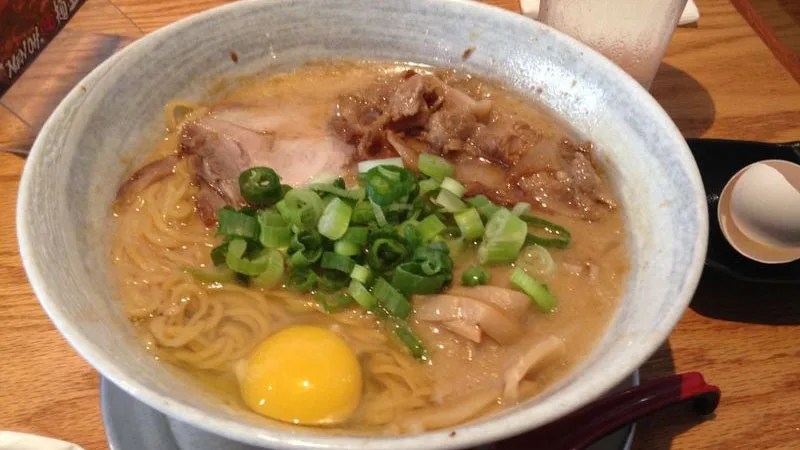
The Japanese routinely consume raw eggs, something that causes strangeness in many countries. This practice, however, is deeply rooted in the culture and the trust that the Japanese have in their strict food safety standards. The question “Why do the Japanese eat raw eggs? Isn’t it dangerous?” is common among curious people and lovers of Japanese cuisine, and the answer reveals a lot about the care for quality and tradition in Japan.
While in countries like Brazil the concern with salmonella and other pathogens makes the consumption of raw eggs something risky, in Japan the reality is quite different. The secret lies in the rigorous production of eggs, combined with customs and culinary techniques that ensure a safe and delicious experience.
Why do the Japanese consume raw eggs?
In Japan, eggs undergo an extremely rigorous inspection and sanitization process before reaching supermarket shelves. This includes:
Washing and disinfection: Eggs are carefully cleaned to remove any residue that may contain bacteria.
Salmonella testing: Entire batches are regularly tested to ensure they are free from the bacteria.
Specific labeling: Many eggs in Japan come with clear information about expiration dates, indicating until when they can be consumed raw.
This production system makes the Japanese trust in the safety of consuming raw eggs, unlike many other countries where the processes are not as strict.
Is consuming raw eggs dangerous?
The concern with salmonella is justified in places where quality control is less rigorous. According to the CDC (Centers for Disease Control and Prevention), only 1 in every 10,000 eggs in the United States has salmonella. In Japan, the incidence is even lower, thanks to the sterilization process and careful handling.
However, there are some important recommendations that the Japanese follow to minimize risks:
Avoid consuming cracked eggs, as they may be contaminated.
Use the egg immediately after breaking it.
Do not leave dishes with raw eggs exposed for too long.
[trp_language language=”pt_BR”]
In Brazil, is it safe to eat raw eggs?
Unfortunately, the Brazilian reality is different. The sanitary control of eggs in Brazil is not as strict as in Japan. This means that consuming raw eggs here can pose real risks of food poisoning.
For those who wish to try Japanese dishes that use raw eggs, it is important to ensure that the egg is fresh and, preferably, pasteurized. It is worth noting that many eggs in Brazil come from free-range chickens and undergo absolutely no supervision, making the risk even greater.
[/trp_language]
Tamago-Kake-Gohan and dishes with raw eggs
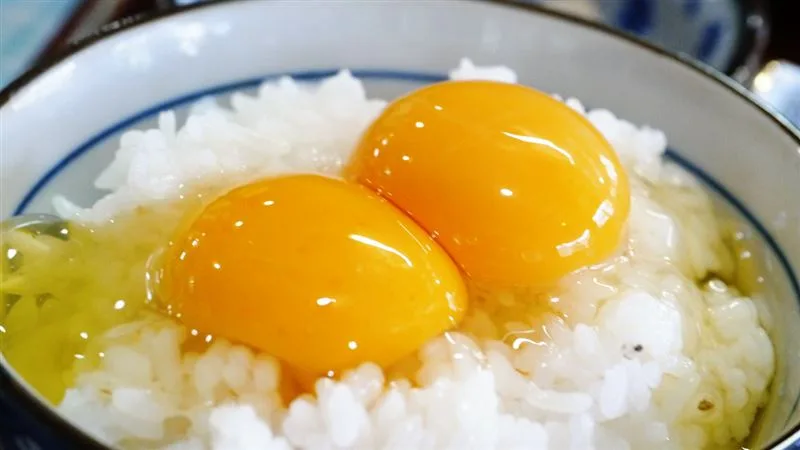
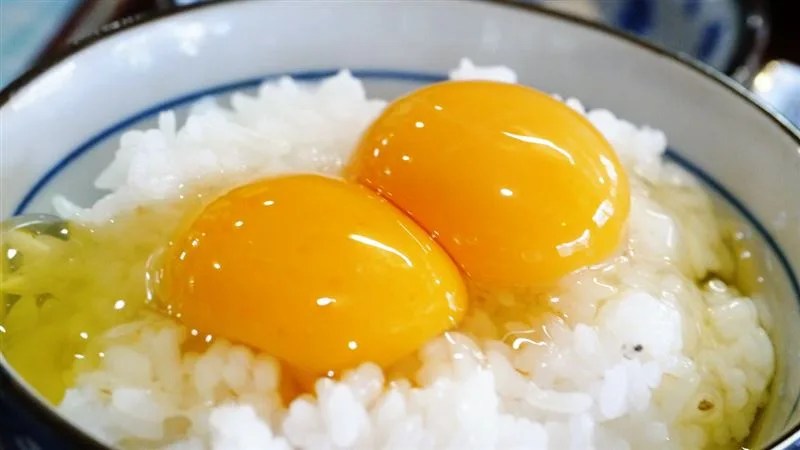
The Tamago-Kake-Gohan is one of the simplest and most popular examples of the use of raw eggs in Japan. The recipe consists of mixing a raw egg into hot rice, seasoned with soy sauce. Despite its simplicity, it is considered a nutritious and comforting meal.
Other famous dishes that use raw eggs include:
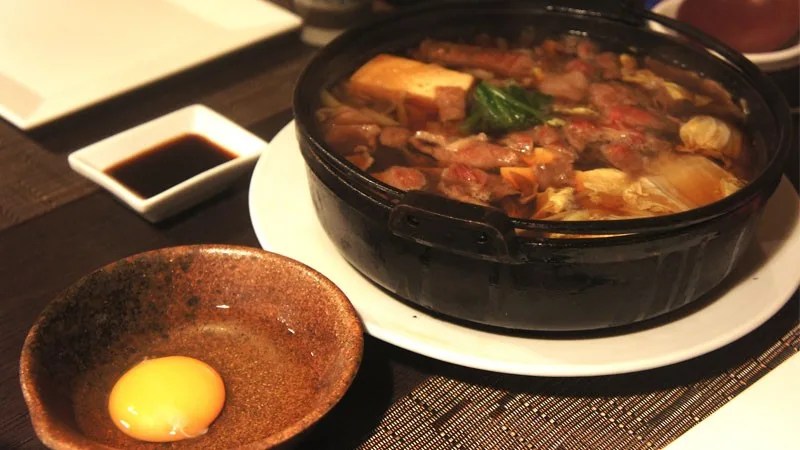
Sukiyaki: a Japanese stew where the ingredients are dipped in a raw egg before being consumed.
Japanese curry: many add a raw egg to the dish to give more creaminess to the sauce.
Gyudon: rice bowls with beef often accompanied by a raw or lightly cooked egg.
These dishes demonstrate the versatility of raw eggs in Japanese cuisine, being used both to enhance texture and to enrich flavor.
Benefits of consuming raw eggs
In addition to the safety provided by the strict quality control in Japan, consuming raw eggs offers significant nutritional benefits:
Preservation of nutrients: Raw eggs retain enzymes and vitamins that can be degraded in the cooking process.
Rich in proteins: Ideal for those seeking a balanced diet rich in essential amino acids.
Source of antioxidants: Nutrients like lutein and zeaxanthin help with eye and skin health.
Conclusion
The consumption of raw eggs in Japan is not just a matter of preference, but also of trust in the quality standards that ensure food safety. This practice is deeply linked to the Japanese gastronomic culture, which values the simplicity and authenticity of ingredients.
For those visiting Japan, trying dishes like Tamago-Kake-Gohan or Sukiyaki is a unique opportunity to immerse oneself in the local cuisine and understand why the Japanese consume raw eggs without fear. However, outside Japan, it is essential to be cautious and respect local food safety conditions.
In the 1990s, visiting a gas station in Japan was a unique experience. Teams of uniformed attendants — men and women — welcomed drivers with great cordiality. In addition to fueling the vehicle, they cleaned the windshields, collected trash, and performed these tasks with friendliness and efficiency. This was the norm, and the impeccable service was part of the Japanese culture of hospitality.
Today, however, this reality has changed. Most gas stations in Japan have become self-service and operate 24 hours a day, seven days a week. The change reflects technological advancement, shifts in consumer behavior, and the growing transition to electric and hybrid vehicles.
Decline of gas stations in Japan
In 1994, Japan had approximately 60,421 gas stations spread across the country. However, this number has drastically fallen, and today there are about 35,000 stations in operation. This reduction of nearly 50% is attributed to several factors:
Increase in the use of electric and hybrid vehicles: There are already more charging stations for these vehicles than gas stations in Japan.
Efficiency of public transportation: The country’s railway system is highly efficient, and many opt for trains and subways instead of private cars.
Technological changes: The popularization of self-service stations, which require fewer employees and less space, has contributed to the closure of traditional stations.
Experience at Japanese self-service stations
Self-service stations are indicated by the word セルフ (serufu) on signs at the entrance. At these locations, drivers are guided by modern machines that explain, step by step, how to refuel.
Despite the automation, there is always an assistant on site to help in case of doubt. Payment can be made in several ways:
Cash (現金で – Genkin de).
Credit card (クレジットカードで – Kurejito Kaado de).
Store-specific cards that offer benefits such as discounts.
Types of fuel available
Japanese gas stations offer three main types of fuel:
Regular gasoline (レギュラー – Regyurā): Most popular fuel.
Premium gasoline (ハイオク – Haioku): Known as 4-star gasoline, it has a higher octane rating.
Diesel (軽油 – Keiyu): Used in diesel vehicles and buses.
Technology and convenience
Even at self-service stations, the experience is efficient and safe. Many have systems that recognize the correct type of fuel for the vehicle, avoiding mistakes. Additionally, the environment is clean, organized, and has additional services such as automatic car washes and ATMs for payments.
Gas prices in Japan
Fuel prices in Japan vary, but they are generally more affordable than in many Western countries due to logistical efficiency and market competition. Currently, prices are around:
Regular gasoline: 140-170 yen;
Premium gasoline (ハイオク): 160-190 yen;
Diesel: 120-130 yen;
These fluctuations reflect both the global market and internal policies on subsidies and incentives for adopting more sustainable technologies.
Essential vocabulary for gas stations in Japan
If you plan to drive in Japan, here are some useful expressions that can facilitate your experience at a gas station:
ガソリンスタンド (Gasorinsutando): Gas station
満タン (Mantan): Fill the tank
現金で (Genkin de): Pay with cash
クレジットカードで (Kurejito Kaado de): Pay with credit card
With the continuous advancement of electric and hybrid vehicles, traditional gas stations are expected to continue decreasing in number. Fast charging stations are becoming a common sight, with large networks like ENEOS already investing in infrastructure to meet this new demand.
On the other hand, the transition is gradual. Many Japanese still rely on gasoline-powered cars, especially in rural areas where public transportation is less accessible.
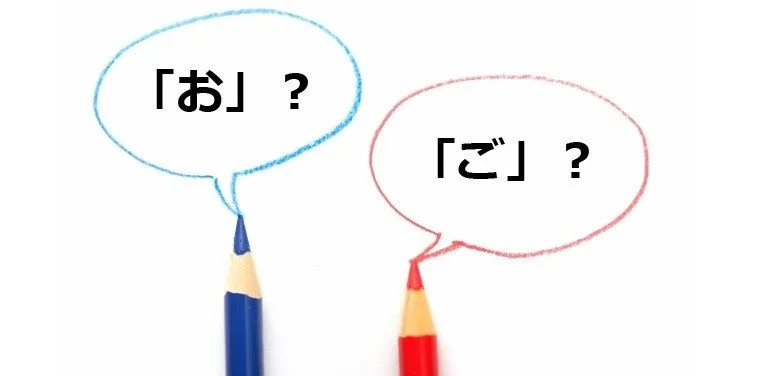
You have probably come across Japanese words that start with “o – お” like okane, ocha, ogenki or that end with “go – ご” like goyukkuri.
But have you ever wondered why the Japanese use these honorifics before some words? When do they use each one? In which words should they be used? In this article, we will clarify all these doubts.
The name of these honorifics is called bikago (美化語) which means language of beautification. As the name suggests, these honorifics are used to beautify words, it is used to express respect and courtesy, making the speech sound more refined, elevating the voice to a very polite style.
お vs ご
The honorific お(o) is added to words, regardless of their origin. Even foreign words like ズボン can have お added before them. お can be used in nouns, adjectives, or adverbs. On the other hand, the honorific ご is used in few words, and only words of Chinese origin.
But don’t be confident and try to use these honorifics in any words. Listen carefully to the natives, learn quite a bit of vocabulary, and you will know which words should use the honorific.
Bikago 美化語
Bikago is not just the use of お or ご but there are other honorifics that are: み-, おみ- and おんみ (mi-, omi-, onmi-) but they are used only in words with religious or imperial importance. For example, the word 子 (ko – Child) when adding the honorific み = み子 means “child of god”. I don’t think it’s a coincidence that priestesses are called Miko (巫女).
Some words are almost or always accompanied by honorific prefixes. To know if a word is always used with an honorific, try to find it in the dictionary without the honorific, some words change completely without its use.
In some words, the use of the honorific can completely change the meaning of the word, or its pronunciation with the honorific:
In other cases, the words are similar or have the same meaning but are written differently when using the honorific:
水⇒ お冷
cold water
うまい ⇒ おいしい
Tasty, delicious
便所 ⇒ お手洗い
Bathroom
Examples
There are many words that use honorifics, we will leave more examples below, and some sentences so that you can study more in depth the bikago that has great importance in the Japanese language.
Japanese
Meaning
Japanese
Meaning
お名前 (Onamae)
Your name
ごゆっくり (Goyukkuri)
Relax, Tranquility
お茶 (Ocha)
Tea
お世辞 (Oseji)
Flatter, praise
お元気 (Ogenki)
How are you?
お金 (Okane)
Money
お庭 (Oniwa)
Garden
お天気 (Otenki)
Weather
お飲み物 (Onomimono)
Drinks
お菓子 (Okashi)
Sweets
お食事 (Oshokuji)
Meal
お店 (Omise0
Shops
お料理 (Oryōri)
Cooking / dishes
ご祝儀 (Goshukugi)
Congratulatory gift
ご機嫌 (Gokigen)
Mood
ご挨拶 (Goaisatsu)
Greetings
ご結婚 (Gokekkon)
Marriage
ご連絡 (Gorenraku)
Contact
It is important to remember again that not all words will use honorifics, and that they should not be used in any word, and that honorifics can completely change the meanings of words.
See an example of a sentence where the word is spoken with and without the honorific:
O-namae wa nan desu ka.
お名前はなんですか.
What is your name?
Watashi no namae wa Miki desu.
私の名前は美樹です.
My name is Miki.
Below is an example of the honorific お being used in a noun, adjective, and adverb:
O-tanjoubi Omedetou.
お誕生日おめでとう。
Noun: Happy Birthday.
O mizu o nonde kudasai.
お水を飲んでください。
Noun: Please drink your water.
O-genki desu ka.
お元気ですか。
Adjective: How are you?
Douzo go-yukkuri.
どうぞごゆっくり。
Adverb: Take your time.
O-naka ga itai.
お腹が痛い。
Noun: My stomach hurts.
Did you like the article? Share it with friends! Do you know any other words that have the honorific Bikago?
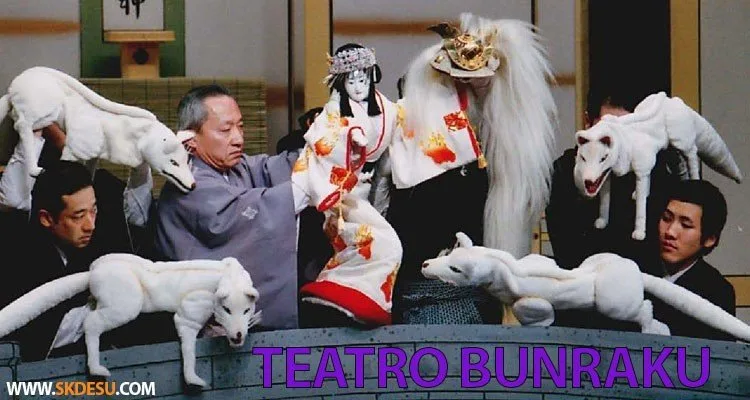
The puppeteers of a bunraku are like incarnate gods. – JeanLouis Barrault (via Jaq Latine @AODCNotícias)
Derived from bunrazuka and also known as Ningyō jōruri (人形浄瑠璃), bunraku is nothing more than a type of theater with a strong cultural root. Its attraction consists of a puppet theater performance manipulated by three puppeteers, making bunraku the only type of puppet theater to use three puppeteers to operate a single puppet.
Bunraku experienced its best moment in the 17th century, through the talent of Chikamatsu and Takemoto Gidayu (1651-1714). It was Chikamatsu who brought human feelings (mostly passion and later suicide for love, being considered a Japanese Shakespeare) and also issues of moral values and ethics to the bunraku atmosphere; while Gidayu created the term Tayu, which is the designation for the one who conducts the narrative form in the theater.
At that time, the puppets were operated by a single manipulator. Soon after, puppets with three manipulators emerged in the mid-18th century, giving greater mobility and emphasis to the main characters of each theatrical attraction. (Adapted fragment from Wikia.)
The role of each Puppeteer
The role of each puppeteer is distinguished by their quantity, being these three functions:
Main puppeteer (Omo-zukai): He inserts his left hand into the hip hole and holds the neck rod between his thumb and index finger, thus supporting the puppet. Then, he uses the remaining 3 fingers of the hand to manipulate the strings that move the eyes, mouth, and eyebrow.
His right hand is used to move the puppet’s right arm. His function is to move the head, support the weight of the puppet, and move the right arm. He usually appears with his face uncovered, wears high clogs (geta), and white gloves.
Secondary puppeteer (Hidari-zukai): his role is to move the puppet’s left hand observing the direction of the head and the other arm, guided by the omo-zukai. He wears black gloves, has his face covered, and wears straw sandals (zori).
Tertiary puppeteer (Ashi-zukai): is the one who moves the feet of the puppets. There is a rule: female puppets do not have feet, so it is up to the manipulator to create the illusion of leg and foot movements, using the hem of their kimono. He also wears straw sandals. This is the most labor-intensive role as the puppeteer needs to remain covered while bent over so that the audience does not see him at all times.
The coordination of each character depends vitally on the perfect synchronization of the three puppeteers. Acting in this way is a technique that comes from years of practice and training, although it is worth noting that there are no schools, strictly speaking, that teach these techniques. In bunraku, one learns by observing and imitating.
Structure of the puppets
With half the size of an average adult, the weight of the puppets ranges from 10 to 15 kilograms. However, there are special puppets that weigh up to 20 kilograms; for example, the puppet “High-Class Courtesan (Keisei)” and the warrior puppet, both heavier due to their special adornments.
There is also a differentiation in the material used for each puppet, according to the refinement needed for a specific character. It is worth remembering that male characters have mouth and eyebrow movements, while female characters have eyelid movements and a hook for attaching the sleeve of the kimono in situations of grief or sadness.
The sound accompaniment
A performance also includes the participation of the Tayu: the one who recites the Joruri, which is a poetic form similar to an epic drama, and the musician of the Shamisen who, with the instrument, provides musical accompaniment for the recitation and manipulation of the puppets.
In simple terms, one can say that the type of story narrated by the Tayu is an epic poem written in a dramatic form, and the Shamisen accompanies the narrative, creating a musical atmosphere for the puppets to act according to the melody, producing a combined effect, similar to an opera performance.
We can emphasize: The Joruri is not just a type of song with melody and rhythm as it explains through music, the unfolding of the spectacle. In this task, the Tayu uses different voice tones to distinguish male and female roles or to demonstrate emotions. Indeed, the interpretation of the Joruri is what can differentiate the presentation of the pieces.
Bunraku today?
At the end of its golden phase, from the mid-18th century, bunraku entered a decline as Western techniques were introduced into the artistic milieu.
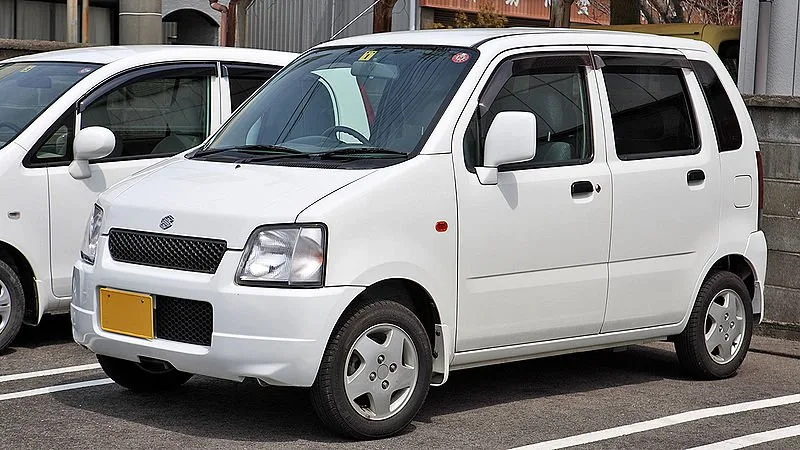
In Japan, there is a category of cars called Kei Car (軽自動車, Keijidōsha), which are ultra-compact vehicles with an engine of only 0.6 liters, designed to be economical, affordable, and perfectly adapted to the needs of Japanese traffic. These automobiles are incredibly popular in the country due to their efficient design and economic advantages, despite not being as successful in other countries.
If you think your 1.0 car is small and modest, Kei Cars will surprise you even more. Manufactured by renowned brands such as Daihatsu, Honda, Mazda, Mitsubishi, Nissan, Subaru, and Suzuki, these vehicles are highly valued in Japan for their practicality and efficiency. They not only represent a cheaper alternative but also a lifestyle that values safety, economy, and respect for traffic rules.
Why Are Kei Cars Popular in Japan?
Economic and Environmental Benefits
One of the main reasons for the popularity of Kei Cars in Japan is the economy. These vehicles offer impressive fuel efficiency, achieving up to 30 km per liter, making them perfect for urban environments. Additionally, the tax burden and fees on these cars are significantly lower. This includes cheaper insurance, reduced taxes, and lower maintenance costs.
Kei Cars are so compact that they have access to exclusive parking spaces, often located in convenient areas of cities. As Japanese streets are narrow and densely populated, the ability to park and maneuver easily is a huge advantage.
Technical Specifications
For a car to be classified as a Kei Jidousha, it must meet specific criteria:
Maximum length: 3.4 meters;
Maximum width: 1.48 meters;
Engine: up to 660ml (0.66 liters) with power limited to 64 horsepower.
Despite these restrictions, Kei Cars come equipped with various modern technologies. Many models feature forced induction in the engine, CVT transmission, all-wheel drive, air conditioning, GPS, and even advanced safety systems. These cars also perform satisfactorily in crash tests, proving that size isn’t everything when it comes to safety.
Variety and Versatility of Kei Cars
Different Models for Diverse Needs
Contrary to what many think, Kei Cars are not just two-seater vehicles. The category includes an impressive variety of designs and functionalities, such as:
Microvans: which can accommodate up to four passengers and offer considerable space for luggage.
Pickups: used in rural areas, ideal for agricultural tasks or transporting light loads.
Compact four-seater cars: perfect for small families or daily use.
These vehicles are so well-designed that, even with a 660cc engine, they manage to deliver a comfortable and safe driving experience. Japanese cutting-edge engineering ensures that they are robust, even with a smaller engine.
Identification and Prices
Kei Cars are easily recognized by their yellow plates, which indicate their special status in the Japanese registration system. If you think these cars are extremely cheap, you are right. A new Kei Car can be purchased for around 600,000 yen (approximately 10,000 dollars). And if the budget is tight, used models can be found at extremely affordable prices — around a thousand dollars for older vehicles.
Why Kei Cars Don’t Work in Other Countries?
Limitations for the Market
If you dream of having a Kei Car in the West, you might need to rethink the idea. Several factors make these vehicles impractical outside Japan:
Road conditions: In countries like Brazil, the streets are full of potholes and bumps, and Kei Cars, with small wheels (usually 13 inches or smaller), may struggle to handle these uneven surfaces.
Taxes and regulations: The tax advantages that make Kei Cars attractive in Japan would likely not apply in Western countries. In Brazil, for example, vehicle taxes are high, and importing cars can be expensive and bureaucratic.
Driving culture: Brazilians generally prefer more powerful cars, and the more aggressive driving style can be dangerous for such light vehicles. While in Japan safety and careful driving are priorities, in Brazil, Kei Cars would be more exposed to risks.
Adaptation to Japanese Culture
The concept of Kei Cars makes sense in Japan, where people value compact space, efficiency, and safety. Organized traffic and well-maintained roads are perfect conditions for these small automobiles. Additionally, the average size of the Japanese population and compact houses make these vehicles even more suitable.
If you really love Kei Cars, the best option would be to move to Japan, where they work perfectly and integrate into the local lifestyle.
Sometimes, understanding the difference between some Japanese words can feel like a maze, right? You’ve probably seen many people asking about onegai and kudasai, but today, the question is another: what is the real difference between sumimasen and gomennasai? After all, when is it right to use each of these words?
Right off the bat, the two — sumimasen (すみません) and gomennasai (ごめんなさい) — can mean something like “sorry,” “excuse me,” “I’m sorry,” or even “forgive me.” But believe me: they are not interchangeable in every situation. There is an important subtlety behind these little words.
Basically, sumimasen is that light apology, used when you do something that socially “you have the right to” — for example, when passing through a crowd, getting a waiter’s attention, or interrupting someone. On the other hand, gomennasai is reserved for when you really do something wrong, something inappropriate, or that causes some more direct discomfort.
Think of it this way: when walking in a crowded place, you can use sumimasen (like a “excuse me”), but if you end up stepping on someone’s foot, then gomennasai comes in (“sorry!” for real).
What does Sumimasen mean?
Sumimasen is a super versatile word in Japanese. It works as “excuse me,” “sorry,” and even as “thank you” in some situations. Whenever you feel that you are causing some inconvenience, interrupting, or asking for someone’s attention, you can use sumimasen without error.
Another important characteristic: sumimasen is more formal and conveys respect. It is usually used with strangers, older people, or superiors. Often, adults and the elderly prefer this word, while young people opt for more informal alternatives. Additionally, sumimasen can be used to thank, especially when you feel that you are giving someone trouble: “Sorry for the inconvenience and thank you for the help,” all in one term.
If you want an even more formal tone, there is sumimasen deshita (すみませんでした), which carries more weight, used when you feel the need to apologize more sincerely or for something that has already passed.
There are informal forms of sumimasen, such as suman (すまん) and sumanai (すまない). They are mainly used among friends or close people and sound very casual — be careful not to use them in formal situations!
What does Gomennasai mean?
Gomennasai is a more direct apology, used when you really did something wrong, especially in closer relationships, such as friends, family, schoolmates, or colleagues in informal situations. It is not used to thank, only to apologize.
Among young people, it is very common to hear variations like gomen ne (ごめんね), which adds a friendly or affectionate tone, and gomen (ごめん), even shorter and more casual. Children and teenagers use it a lot in their daily lives.
For serious or formal situations, there are even more respectful alternatives: mōshiwake arimasen (申し訳ありません) or mōshiwake gozaimasen (申し訳ございません). These are used when the mistake is serious, often accompanied by a bow. They are typical in public apologies, in the workplace, or when apologizing on behalf of a company or group.
Practical summary
Use sumimasen when causing a slight inconvenience, asking for permission, getting someone’s attention, or even humbly thanking.
Use gomennasai when you made a mistake or caused discomfort to someone, especially in informal situations.
For extremely formal contexts or serious apologies, opt for mōshiwake arimasen or mōshiwake gozaimasen.
I hope it is now clear when to use sumimasen and when to use gomennasai. Do you have any doubts or a specific situation?
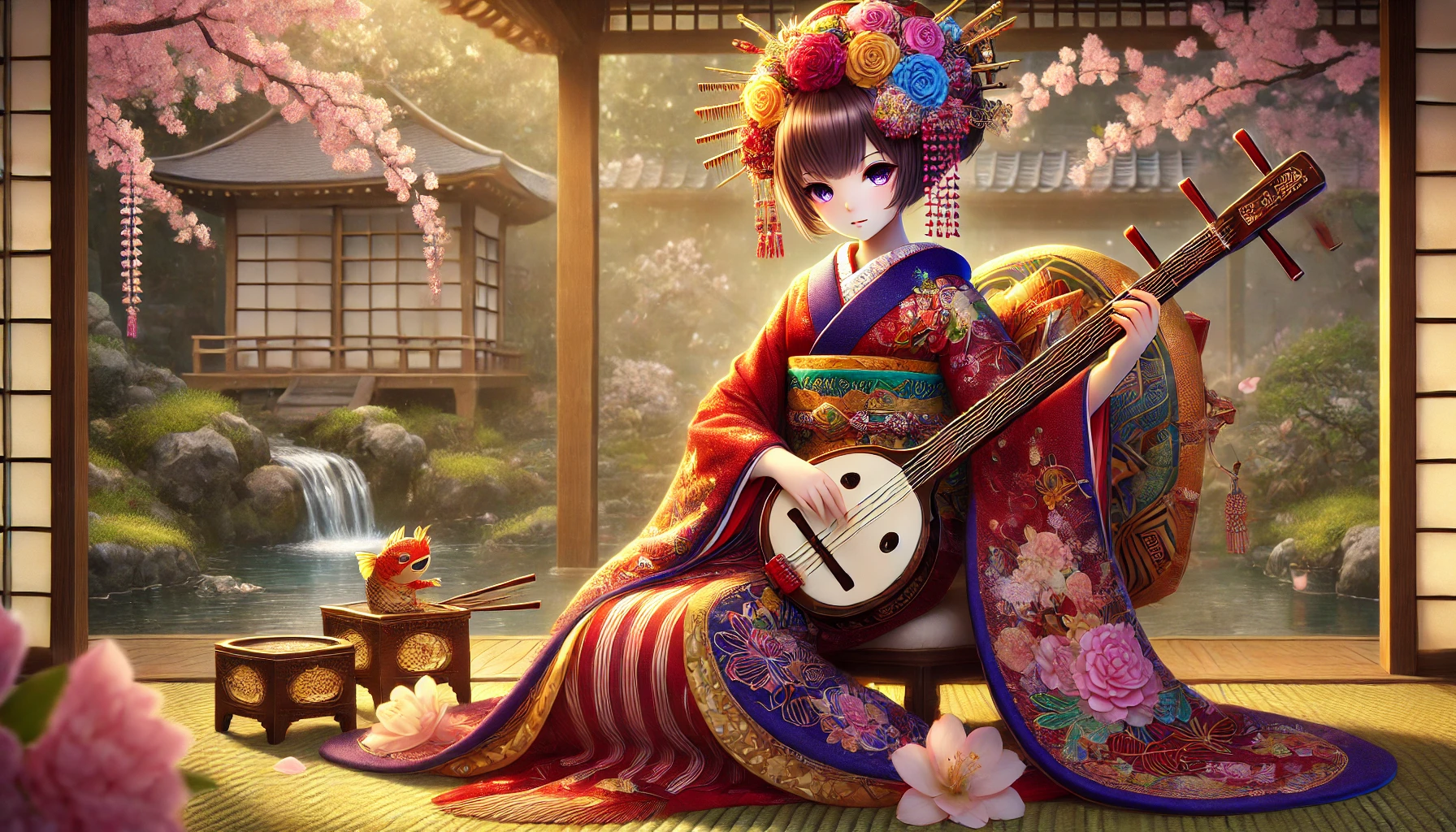
The shamisen is a traditional Japanese musical instrument that captivates with the simplicity of its structure and the richness of its sound. With three strings and a body similar to that of a small drum, it is played with a large plectrum called bachi. This instrument, in addition to its musical relevance, carries centuries of history, being a central piece in theater performances, folk music, and even in modern compositions.
In this article, we will explore the origins of the shamisen, how it is constructed and used, and its cultural relevance in contemporary Japan. Discover how this simple instrument has become a symbol of the Japanese artistic spirit and how it continues to fascinate listeners around the world.
Origin and History of the Shamisen
The shamisen originated in the late 16th century, inspired by a Chinese instrument called sanxian, which was introduced to Japan through Okinawa. Initially, it was more popular in the Kansai region, where it began to be incorporated into traditional music. However, it was during the Edo period (1603-1868) that it solidified as an essential part of Japanese performing arts.
The Influence on Theater and Music
The shamisen quickly gained prominence in kabuki theater and in the narratives of bunraku, puppet theater. Its characteristic sound was used to intensify the emotions of the scenes and create dramatic atmospheres. Additionally, the shamisen also found a place in musical styles such as nagauta (long songs) and jiuta (chamber music), becoming one of the most versatile instruments in Japanese tradition.
Popularity Over the Centuries
Even with the westernization of music in Japan during the 19th century, the shamisen maintained its relevance. It began to be used in modern compositions and even in fusions with other musical styles. Today, it is common to find it in both traditional performances and contemporary arrangements that combine the old with the new.
Construction of the Shamisen
The shamisen is made with carefully selected materials, which contribute to its unique sound. Its simple design hides a complexity that can only be appreciated by observing the details of the instrument.
Parts of the Shamisen
Do (body): made of wood, usually mulberry or sandalwood, and covered with cat or dog skin, although synthetic alternatives are used today.
Sao (neck): long and thin, facilitates the sliding of the hands to different tones.
Strings: traditionally made of silk, but modern versions use nylon.
Manufacturing Process
The construction of the shamisen is a craft that requires precision. The body is assembled carefully to ensure proper resonance, while the neck and strings are adjusted to produce the perfect sound. Each instrument is a unique work, reflecting the skill of the craftsman.
Different Types of Shamisen
There are variations of the shamisen, such as the futozao (thick neck), used in tsugaru shamisen performances, and the hosozao (thin neck), common in nagauta performances. These differences reflect the adaptation of the instrument for specific styles.
The Shamisen in Modern Japan
Today, the shamisen continues to be an important piece of Japanese culture, both in tradition and innovation. It is often featured in festivals and cultural events, attracting both traditional music enthusiasts and curious individuals seeking new experiences.
Adaptation to New Generations
Modern artists have incorporated the shamisen into genres like jazz and rock, creating unique sounds that resonate with younger audiences. This versatility has ensured that the instrument remains relevant in a constantly changing world.
Learning and Preservation
Specialized schools and dedicated masters continue to teach the shamisen to new generations. This ensures that the rich tradition of this instrument is not lost over time, while also allowing for innovations in its use.
A Cultural Symbol
More than just a musical instrument, the shamisen represents the artistic soul of Japan. Its presence in films, animes, and other cultural media reinforces its importance as a timeless icon.
The shamisen is much more than just a musical instrument: it is a link between the past and the present, between tradition and innovation. Whether in a traditional kabuki performance or in a modern fusion, its unique sound continues to enchant and inspire. If you have the opportunity, watching a shamisen performance is an experience that connects you directly to the cultural richness of Japan.
In this article, we will get to know some Japanese beverages made from rice. Japanese people really like rice; they eat rice for breakfast, lunch, and dinner.
Japanese people also drink a lot of rice. There are thousands of different types of sake, rice milk, rice tea, etc. Today we will learn about 6 rice-based beverages: sake, amazake, genmaicha, nigorizake, shochu, and awamori.
Sake
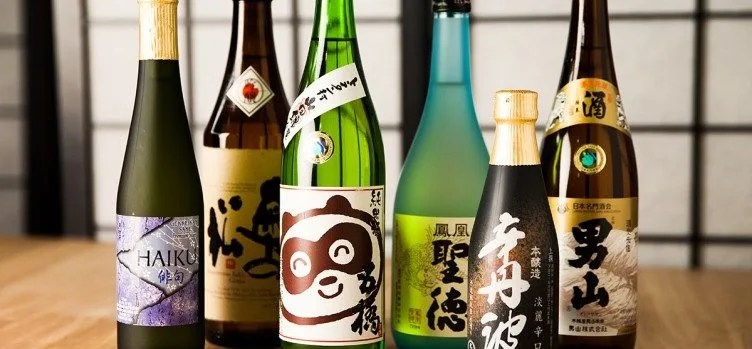
I think most people know what Sake [酒] (or Saquê) is, an alcoholic beverage made from fermented rice. Sake is consumed hot during large celebrations, such as New Year and Shinto ceremonies, and it usually has 16% alcohol.
The best temperature to consume sake is 25º C; it is considered a wine and is made only from rice and water. There are thousands of varieties of sake and other ways to prepare it. To learn more, we recommend reading our article about sake, rice liquor.
Amazake
Amazake is a sweet sake (甘酒) with little or no alcohol content. To produce it, you need: Aspergillus oryzae (a fungus), heat, moisture, and a cereal that is usually rice.
The process of creating amazake allows for the production of a type of natural sweetener that can accompany your desserts and other dishes in a natural way. Its use is also present in ceremonies and festivals, such as on Children’s Day.
Genmaicha
Genmaicha (玄米茶) is a green tea combined with roasted brown rice. Sometimes this tea is called “popcorn tea” because some grains of rice pop when roasted.
The tea obtained from these leaves has a light yellow color. Its flavor is mild and combines the taste of green tea with the aroma of roasted rice. This tea was consumed by the poor, who added roasted rice to fill and reduce the price of the tea.
Nigorizake
Nigorizake (濁り酒) or doburoku (濁酒) or simply nigori is a type of sake (wine) from Japan made from rice. Nigori is usually the sweetest of the sakes, with a fruity smell and a smooth taste.
Unlike regular sake, it is not filtered during fermentation, resulting in a drink with a cloudier appearance (not transparent).
Shochu and Awamori
Shochu (焼酎) is a distilled beverage made from barley, sweet potato, or rice, and has about 25% alcohol. Awamori (泡盛), like Shochu, is also a distilled beverage made from rice, but it is made on the island of Okinawa, using rice from Thailand and a different fermentation mold, and has about 25% to 43% alcohol.
There are many other beverages made from rice, such as milk, various types of wine, cachaça, and sweet drinks. Many of these beverages are made in the same way, using different techniques and flavors. I hope you enjoyed the article; see you next time!
One of the things that scares you when studying Japanese is the fact that there is no future tense in the verbs. The verbs are conjugated only in the present and the past. So the big question remains: How can I indicate the future? How do I know if a sentence is indicating the future? In this article, these doubts will be answered.
In reality, the verbs are indeed conjugated in the future, the problem is that the basic form of all verbs is both present and future at the same time. So it is through the context of the sentence that you will know if a sentence is in the present or the future. Japanese verbs are always ending the sentence, and in a large number of these sentences, the verb does not need to be conjugated.
Why is there no future tense in Japanese?
This is a complicated answer to give. But if we stop to think, is the present tense not always in motion? It is easier to ask why there are so many different verb tenses.
The Japanese verb in its simple form does not indicate either present or future. It can indicate anything like, an action that is going to happen, that repeats, that happens regularly, at a certain time, in the future, etc.
To indicate that an action is happening at this present moment, we must use its progressive form teiru [ている]. Thus, it is more correct to say that there is no present tense and the simple form is the future tense.
In Portuguese, you may have heard someone using a present verb in a sentence that indicates the future (Example: I come tomorrow). In reality, the verb is almost never necessary to indicate the time of the action; always the context or some word in the sentence will indicate that.
Japanese uses adverbs, intention, and other indications to show that the action will happen in the future or at a certain moment. See some examples of verb conjugations below:
Responsive Table: Scroll the table sideways with your finger >>
Past
映画を見た
eiga wo mita
I watched a movie
Now
映画を見ている
eiga wo miteiru
Watching a movie
No future
映画を見る
eiga wo miru
To watch a movie
Invitation
映画を見よう
eiga wo mirou
Let’s watch a movie
Intention
映画を見るだろう
eiga wo mirudarou
You will watch the movie
Tomorrow
明日は映画を見る
ashita wa eiga wo miru
Watch the movie tomorrow
I intend
映画を見るつもり
eiga wo miru tsumori
I intend to watch a movie
The verb [見る] can be translated as see, watch, look…
Indicating the future in the Japanese language
You can use time adverbs or dates and times to indicate when an action is done. You can use words like tomorrow, next year, next week, at a certain time, in the future.
You can indicate an intention to perform a certain action, such as: I intend tsumori [つもり], or use the volitional form of the verb. Or indicate that you are thinking using the verb omou [思え].
Another way to know if a sentence is in the future is by the context of the sentence. If someone asks you what you are going to do tomorrow or later? You can simply respond with a sentence using the simple form of the verb (not past). It is obvious that you are indicating an action in the future.
See the examples below:
Responsive Table: Scroll the table sideways with your finger >>
私は四時に来る
Watashi wa yo-ji ni kuru
I come at four
明日はいい天気でしょう
Ashita wa ī tenkideshou
Tomorrow the weather will be nice
あなたは来年篠山に住むつもりですか。
Anata wa rainen Sasayama ni sumu tsumoridesu ka.
You will live in Sasayama next year.
その仕事にすぐ慣れるだろう。
Sono shigoto ni sugu narerudarou.
You will soon get used to the job.
今日仕事が終わったら、僕らみんなで野球するんだ。
Kyō shigoto ga owattara, bokura min’na de yakyū suru nda.
We will play baseball today after work.
今晩何も食べない
Konban nani mo tabenai
I will not eat anything tonight / Do not eat anything tonight
夏休みに日本へ行こうと思っています。
Natsuyasumi ni Nihon e ikou to omotte imasu.
I am thinking of going to Japan during the summer vacation.
映画に行くつもりです。
Eiga ni iku tsumoridesu.
I am going to the cinema.
私達の先生は8月に外国から帰ってきます。
Watashitachi no sensei wa rokugatsu ni gaikoku kara kaette kimasu.
Our teacher will be back from abroad in August.
将来は、ジャーナリストになりたいと思っています。
Shōrai wa, jānarisuto ni naritai to omotte imasu.
In the future, I would like to be a journalist.
十時半の電車に乗ります。
Jū-jihan no densha ni norimasu.
You take the 10:30 train.
We notice the use of deshou [でしょう] which indicates a guess, a supposition, or speculation.
It is easy to get used to the fact that verbs do not have a determined future or present tense. Over time, you will not even miss it or see any difference in your day-to-day speaking and studying Japanese. I hope this article has helped you understand why there is no future tense in Japanese verbs and how to adapt to it.
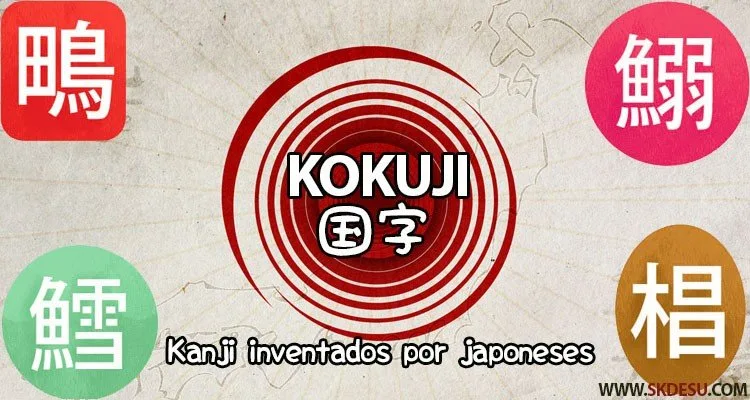
I think most people here know that the Kanji (ideograms) that the Japanese use in their language originated from China. However, there are some Kanji that were invented by the Japanese, they are called Kokuji (国字) which can be literally translated as national characters. In this article, we will discuss a bit about these Japanese kanji.
The Kokuji are created through the combination of existing components (radicals), it is not exactly known how many Kokuji exist, since throughout the history of Japan, anyone could create an ideogram, and many have ceased to be used. It is believed that there are more than 400 Kokuji, but most of them are rarely used.
Kokuji – Ideograms or Kanjis of Japan
Although the national kanji do not have a direct connection to the Chinese language, some have the ON reading, due to their radical, or the combination and similarity with some other kanji. Below is a list of the most common and used Kokuji:
Responsive Table: Scroll the table sideways with your finger >>
Kanji
On
Kun
Meaning
働
ドウ
はたら.く
Work
込
—
こむ、こめる
crowded, mix, in volume
搾
サク
しぼる
Squeeze, squeezer
峠
—
とうげ
Mountain peak, mountain pass, climax, summit
畑
—
はた、はたけ
Farm, field, garden
匁
—
もんめ
Monme (3.75 g) Old weight measure
枠
—
わく
Frame, structure, spool, cylinder
塀
ヘイ
—
Fence, wall
腺
セン
—
Gland
榊
—
さかき
Sakaki tree (Tree)
辻
つじ
crossing, corner, intersection, street
匂
にお.う, にお.い, にお.わせる
fragrant, smell (used in the verb Niou)
躾
しつ.ける, しつけ
Training, upbringing, education
While many know that Japan imported many ideograms from China, in fact, China also took some Kokuji from the Japanese language and imported them into Chinese. For example, they imported the ideogram 腺 (Gland).
Kokuji is not something recent. The first reports of an ideogram created in Japan were before the year 759AD. Meanwhile, the most recent Kokuji was created during the Meiji Era.
Unfortunately, we will not see a new Kokuji anytime soon. Kanji is increasingly losing its space to hiragana and katakana even though it is super necessary. Several words that used Kanji, including Kokuji, are now written with Kana.
I want to show a few more Kokuji even though their use is uncommon. I will leave a table below with some more kanji. Keep in mind that the Kanji in the table below are likely uncommon and written in another more common way.
Responsive Table: Scroll the table sideways with your finger >>
Kanji
ON
KUN
Meaning
杢
もく
woodworker, carpenter, carver
圷
あくつ
low land
噺
はなし
conversation
噸
トン
tonnage
凧
いかのぼり、 たこ
kite
凩
こがらし
winter wind
俣
また; ばた
groin, thigh
麿
まろ
I, you
糎
センチ、 センチメートル
Centimeter
We notice the use of Kokuji to write words of foreign origin that are currently written with katakana.
There are thousands of other Kanji that are Kokuji that we did not mention in the table above, we will not examine them, because their use is rare.
Kokkun – Different Meanings
In addition to kokuji, there is Kokkun (国訓). These ideograms called Kokkun are Chinese ideograms, but they have a different meaning in Japan. There are many ideograms like this. Some of them are listed in the table below:
Ideogram.
Japanese
Chinese
Reading
Meaning
Pinyin
Meaning
藤
fuji
Wisteria
Teng
Cane, vine
沖
oki
open ocean, open sea
Chong
wash, smaller river
椿
tsubaki
Camellia, event
Chun
Toona
鮎
ayu
Ayu (fish)
Nian
Catfish (usually written 鯰)
The ideograms underwent many changes when imported to Japan. Not only in their meaning but also in their pronunciation. This is one of the main reasons for the existence of many readings in a kanji. I hope you enjoyed the article.
This article was written during Japanese Week! Take the opportunity and watch video lessons on how to study Japanese by clicking on the image below:
In this article, we will share with you some phrases (or sentences) that are used or heard in restaurants, snack bars, and fast food places. I hope these phrases help you order food in Japanese or understand the waitress.
If you already have a basic knowledge of Japanese vocabulary, pay close attention to the phrases, because the translation always changes a little. And avoid getting stuck on romaji, try to read the phrases with kanji.
Phrases in Japanese for Restaurants
Below we will share a list of phrases that can be used in restaurants and other similar places:
Ordering Drinks in Japanese
ワインをいただきます。
Wain o itadaki masu;
We would like a little wine.
水を一杯下さい。
Mizu o ippai kudasai;
A glass of water, please.
ジュースをください。
Jūsu o kudasai;
A little juice, please.
コーヒーをもう1杯飲みたいのですが。
Kōhī o mō ichi hai nomi tai no desu ga;
I would like to have another cup of coffee.
紅茶を1杯お願いします。
Kōcha o ichi hai onegai shi masu;
A cup of tea, please.
ワインを一杯いただけますか。
Wain o ippai itadake masu ka;
I would like to have a glass of wine.
オレンジジュースを2杯ください。
Orenji jūsu o ni hai kudasai;
Two glasses of orange juice, please.
コーヒーをもう1杯いただきたい。
Kōhī o mō ichi hai itadaki tai;
I would like to have another cup of coffee.
Ordering Food in Japanese
ビーフをお願いします。
Bīfu o onegai shi masu;
Beef, please.
トースト2枚と紅茶1杯をください。
Tōsuto ni mai to kōcha ichi hai o kudasai;
I would like two slices of toast and a cup of tea.
デザートにはケーキをいただきたい。
Dezāto ni wa kēki o itadaki tai;
I would like to have cake for dessert.
お飲み物は何ですか。
O nomimono wa nani desu ka;
What would you like to drink?
Requesting the menu and information
メニューを見せていただけませんか。
Menyū o mise te itadake mase n ka;
Can I see the menu, please?
日替わり定食にしませんか。
Higawari teishoku ni shi mase n ka;
What is the special of the day?
Calling the waiter and asking for the bill
ウエーターさん、注文お願いします。
Uētā san, chūmon onegai shi masu;
Waiter, I would like to order.
給仕さん水をいただけませんか。
Kyūji san sui o itadake mase n ka;
Waiter, please bring me some water.
会計をお願いします。
Kaikei o onegai shi masu;
The bill, please.
お愛想お願いします。
O aiso onegai shi masu;
The bill, please.
窓側の席がありますか。
Madogawa no seki ga ari masu ka;
Do you have a table by the window?
隅のテーブルがいいのですが。
Sumi no tēburu ga ii no desu ga;
Could we have a table in the corner?
角のテーブルがいいのですが。
Kaku no tēburu ga ii no desu ga;
Could we have a table in the corner?
Remarks and special requests
マスタードを別に持ってきてください。
Masutādo o betsuni motte ki te kudasai;
I would like to have the mustard on the side.
ソースを別にください。
Sōsu o betsuni kudasai;
I would like to have sauce on the side, please.
これは注文したものと違っています。
Kore wa chūmon shi ta mono to chigatte i masu;
This is not my order.
熱いココアを下さい。
Atsui kokoa o kudasai;
I would like to have some hot chocolate.
ケチャップを別に持ってきてください。
Kechappu o betsuni motte ki te kudasai;
I would like to have ketchup on the side.
これは私が注文した物ではありません。
Kore wa watashi ga chūmon shi ta mono de wa ari mase n;
This is not my order.
Phrases in Japanese for Fast Food
Below we will share a list of phrases in Japanese to use in Fast Food or quick snack bars:
持ち帰りですか。それともここでたべますか。
Mochikaeridesu ka. Soretomo koko de tabemasu ka;
Is it for takeout or will you eat here?
こちらで召し上がりますか、それともお持ち帰りにしますか。
Kochira de meshiagarimasu ka, soretomo o mochikaeri ni shimasu ka;
Do you want to eat here, or do you want to take it home?
こちらで召し上がりますか。
Kochira de meshiagarimasu ka;
Is it to eat here?
お持ち帰りですか。
O mochikaeridesu ka;
Is this for takeout?
ここで召し上がりますか、それともお持ち帰りですか。
Koko de meshiagarimasu ka, soretomo o mochikaeridesu ka;
Is this for eating here or taking away?
持ち帰ります。
Mochikaerimasu;
Take home.
フライポテトのラージサイズをください。
Furaipoteto no rājisaizu o kudasai;
Large fries, please.
Japanese Videos for Restaurants
We will conclude the article with Japanese videos for you to use in restaurants, I hope you enjoy them. We appreciate comments and shares. Here are the videos:
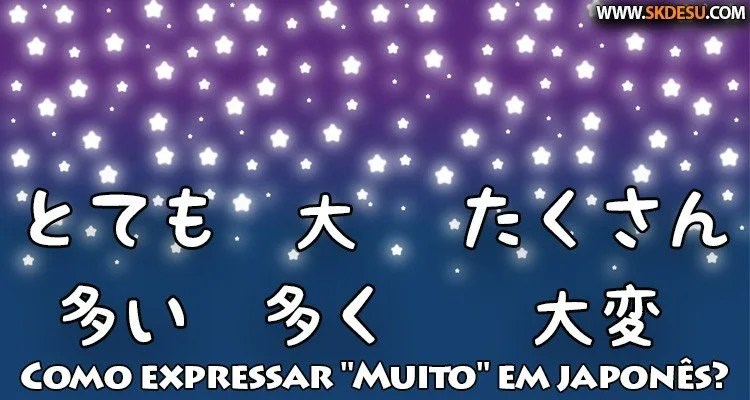
If you are learning Japanese, you must have come across various different ways to express the idea of “very” or “in large quantity.” Among them are words like とても (totemo), たくさん (takusan), 多い (ooi), 多く (ooku) and even more casual expressions like めっちゃ (meccha) or 超 (chou).
But what is the difference between all these forms? When to use each one? And are there other lesser-known alternatives? In this article, you will understand how to express intensity and quantity in Japanese naturally and accurately.
TOTEMO [とても] – Intensity
The adverb とても (totemo) is mainly used to modify adjectives and describe emotional intensity or subjective qualities. It is equivalent to “very” or “really.” Here are some examples below:
彼はとても思慮深い人だ。
Kare wa totemo shiryobukai hito da.
He is a very thoughtful person.
彼はとても疲れていた。
Kare wa totemo tsukarete ita.
He was very tired.
夜、とても暑い。
Yoru, totemo atsui.
At night, it is very hot.
とても大好き
Totemo daisuki
I love it very much.
TAKUSAN [たくさん] – Quantity
たくさん (takusan) is an adverbial noun, used to indicate a large quantity of something. Unlike totemo, it talks about number or volume — not intensity. Here are some examples:
そんなにたくさんくださいました。
Son'nani takusan kudasaimashita.
You gave me so many.
アナは友達がたくさんいる。
Ana wa tomodachi ga takusan iru.
Ana has a lot of friends.
たくさんの人が交通事故で死ぬ。
Takusan no hito ga kōtsū jiko de shinu.
Many people die in traffic accidents.
DAI [大] – Very Big
Dai[大] can also be translated as “very; big” when used with some words like [好き]. [大好き] means a greater love, and together with [とても] it becomes more powerful.
Instead of [とても], you can try using different expressions like:
余計に – yokei ni – Too much; excessive; superfluous; surplus; unnecessary
余程 – yohodo / yoppodo – Very; to a great extent; quite
前代未聞 – zendaimimon – Unprecedented; without parallel; record
Try to step away from [とても] a bit and make your sentences richer by using these different expressions.
OOI [多い] – Adjective
多い (ooi) is a adjective that also means “many,” but cannot be used directly before a noun. It is used after the noun, usually in the structure: [noun] が 多い.
Wrong: 多い人がいます – Ōi hito ga imasu
Correct: 人が多いです – Hito ga ōidesu
Not only this, but there are some adjectives that cannot be used before nouns. Only in cases where you have a relative clause. That is, when the adjective [多い] does not modify the following noun, for example:
人が多い町に行きました – Hito ga ooi machi ni ikimashita
I went to a town where there are a large number of people;
OOKU [多く] – Many
Ooku [多く] means “many; much; largely; abundantly; most of the time” and can be used before a noun, and must be used with the particle の or another particle. Examples:
金は多くの人を破滅させる。
Kane wa ōku no hito o hametsu sa seru.
Money is the ruin of many.
3月になると多くの花が咲く。
Sangatsu ni naru to ōku no hana ga saku.
In March, many flowers bloom.
彼は多くの苦難を経験した。
Kare wa ōku no kunan o keiken shita.
He has experienced many hardships.
TAIHEN [大変] – Many Problems
Taihen [大変] can be translated as “very; big; immense; enormous,” but most of the time it is used to express something bad, terrible, most often used negatively. Examples:
大変寒くなった。
Taihen samuku natta.
It became very cold.
この町で暮らすのは大変だ。
Kono machi de kurasu no wa taihen da.
It is very difficult to live in this city.
それは大変だねえ・・・。
Sore wa taihen da nee...
That is very bad. / That is terrible.
Other Ways to Say Much in Japanese
There are many other ways to say “many; quite; large quantity,” let’s see another list below:
大勢 – Oosei – Many; crowd; large number of people
幾多 – Ikuta – Many; numerous
数々- Kazukazu – Many; numerous
幾つも – Ikutsumo – Many; a series of; large number of
百万 – Hyaku man – One million; thousands; many; millions
幾 – Iku – Some; several; many
万 – Ban – Prefix for many; all
数多 – Omata – Many; much; multitude
夥多 – Kata – Abundant; many
Words that contain the kanji [多] most often refer to a large quantity of something. Examples:
Japan is a country known for its stunning landscapes and iconic mountains. To explore these natural beauties, cable cars have become one of the most popular and practical ways. These aerial transport systems provide incredible panoramic views, connecting visitors to hard-to-reach places, such as mountain peaks, hot springs, and national parks. In addition to functioning as means of transport, cable cars are also tourist attractions in their own right, with spectacular views throughout all seasons of the year.
In this article, we will explore the main cable cars in Japan, their locations, what makes them unique, and why you should include them in your itinerary.
Cable Cars in Japan: Overview
The Japanese cable cars (also known as “ropeways”) are spread throughout the country, from Hokkaido in the north to Kyushu in the south. They serve various roles, such as facilitating access to remote areas and offering an unforgettable tourist experience. Many cable cars have been strategically installed in famous mountains, tourist spots, and national parks.
In Japan, cable cars are called sakudō (索道), which can be literally translated as “Rope Path” and encompasses any type of aerial transport by cable. Colloquially, the Japanese refer to cable cars as elevators (rifuto – リフト) and also as gondolas (kēburukā – ケーブルカー).
Features of Japanese Cable Cars:
Modern Design: Most are equipped with spacious and comfortable cabins designed to offer panoramic views.
Advanced Safety: Cable cars in Japan follow strict safety standards.
Accessibility: Many are accessible for people with reduced mobility, including the elderly and wheelchair users.
Now, let’s dive into the regional highlights of Japan’s most popular cable cars.
Zao Ropeway
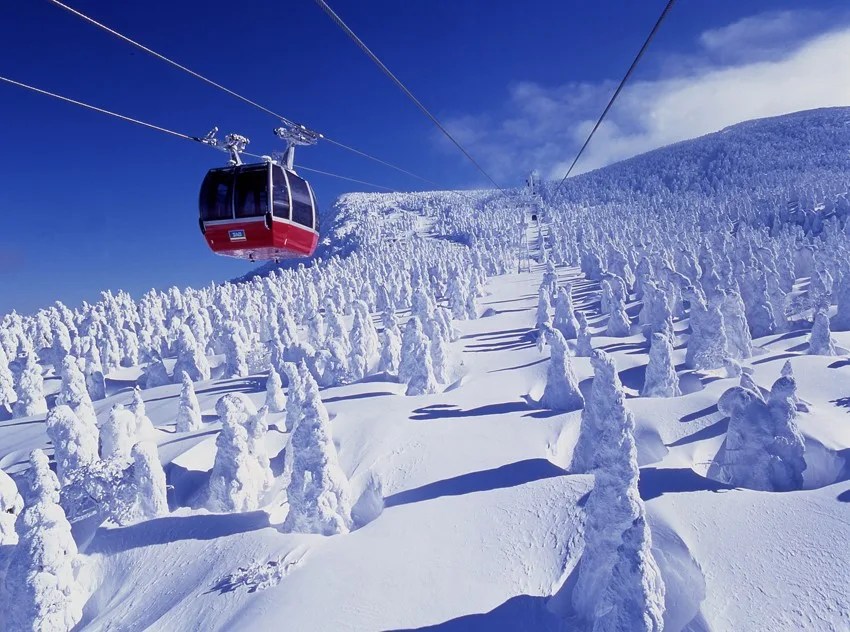
Located in the Yamagata region, the Zao Ropeway covers a distance of 1.8 km, ascending 806 meters in a 14-minute ride. This cable car is famous for its “frozen trees”, a phenomenon that occurs in winter when the trees are covered with ice formations. The name “Zao” refers to the mountain of the same name, an area rich in hot springs and natural views.
Komagatake Ropeway
In the Central Alps, the Komagatake Ropeway takes visitors to an altitude of 950 meters, traversing 2.3 km in just 7 minutes and 30 seconds. Its name, “Komagatake,” means “horse peak,” referring to a local legend about horses that inhabited the mountains. This is an ideal spot to observe the Japanese Alps and, on clear days, Mount Fuji.
Shinhotaka Ropeway
Located in Gifu Prefecture, the Shinhotaka Ropeway is the first two-story cable car in Japan. It covers two sections: one of 573 meters and another of 2.6 km, with a total elevation of 848 meters. The ride lasts about 12 minutes and offers spectacular views of the Northern Alps. The name “Shinhotaka” alludes to the Hotaka area, famous for its mountains and hot springs.
Tateyama Ropeway
Part of the famous Tateyama Kurobe Alpine Route, the Tateyama Ropeway covers 1.6 km, ascending 488 meters in a 7-minute ride. The name “Tateyama” means “standing mountain,” referring to its imposing shape and spiritual connection to nature. This cable car offers stunning views of the Tateyama mountains and is highly sought after in spring when visitors can see the famous snow walls.
Tanigawadake Ropeway
On Mount Tanigawa, in Gunma, the Tanigawadake Ropeway covers 2.3 km in 10 minutes, ascending 573 meters. “Tanigawadake” means “mountain of the river in the valley,” representing the landscapes formed by rivers that cut through the mountains of the region. It is a popular destination in autumn when the leaves tint the mountains in golden and red hues.
Kurodake Ropeway
Located in Hokkaido, the Kurodake Ropeway takes visitors to an elevation of 629 meters, covering 1.6 km in about 7 minutes. The name “Kurodake” means “black mountain,” reflecting the dark color of the rocks in the area. This cable car is the gateway to Daisetsuzan National Park, known for its trails and volcanic views.
Kankakei Ropeway
On Shodoshima Island, the Kankakei Ropeway passes through the Kankakei gorge, covering 917 meters in 5 minutes and ascending 312 meters. “Kankakei” means “valley of splendid views,” a name that perfectly describes the landscapes of dramatic cliffs and lush vegetation, especially in autumn.
Hakone Komagatake Ropeway
The Hakone Komagatake Ropeway, in the Hakone region, covers 3.9 km in a 7-minute ride, ascending 579 meters. Its name combines “Komagatake” (mountain of the horse) with “Hakone,” an area known for its hot springs and proximity to Mount Fuji. It is one of the best options for views of Lake Ashi and Fuji.
Hakkoda Ropeway
In northern Japan, the Hakkoda Ropeway, in Aomori, covers 2.4 km in 10 minutes, ascending 650 meters. “Hakkoda” means “eight peaks,” referring to the interconnected mountains that form the area. This cable car is famous for its autumn foliage landscapes and hiking trails.
Gozaisho Ropeway
In Mie Prefecture, the Gozaisho Ropeway ascends 780 meters in a 12-minute ride, covering 2.1 km. The name “Gozaisho” refers to Mount Gozaisho, known for its panoramic views and rich biodiversity. Ise Bay can be seen from the top, creating an impressive contrast between sea and mountain.
Miyajima Ropeway
The Miyajima Ropeway, located on Miyajima Island, connects visitors to Mount Misen. It covers 1.6 km in about 10 minutes, ascending 330 meters. “Miyajima” means “island of the shrine,” a reference to the famous floating Torii of Itsukushima Shrine. This cable car offers views of the Seto Inland Sea and the surrounding islands.
Unpenji Ropeway
Located in Kan’onji, Kagawa, the Unpenji Ropeway stands out for having the longest free span between towers in Japan, covering a distance of 1.9 km. It connects visitors to Unpenji Temple, one of the 88 temples of the famous Shikoku pilgrimage. The name “Unpenji” means “Temple of Clouds and Moon,” reflecting its location at a high altitude that often crosses the clouds.
Yoshino Ropeway
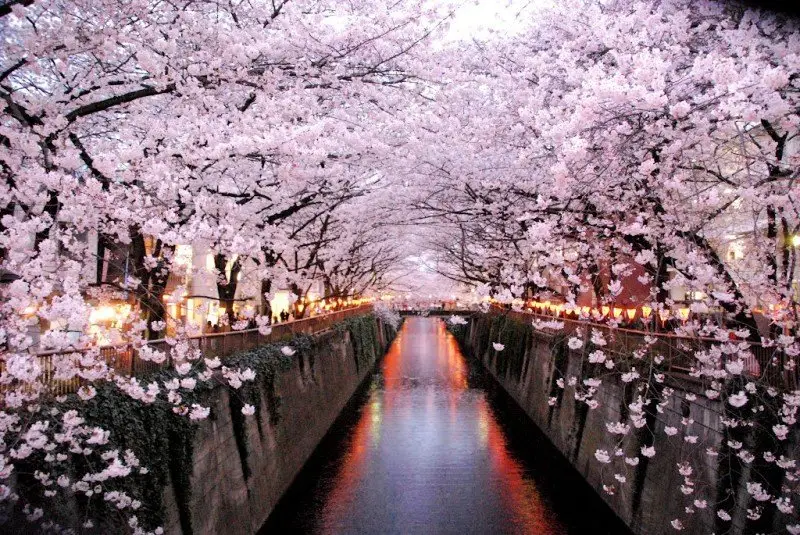
Situated in Yoshino, Nara, this is the oldest operating cable car in Japan, inaugurated in 1929. It connects the city of Yoshino to Mount Yoshino, famous for its cherry blossoms (sakura) that bloom in spring. The name “Yoshino” refers to the region, a place of great historical and cultural significance in Japan, associated with poetry and spirituality.
Awashima Kaijō Ropeway
This unique cable car is located in Numazu, Shizuoka, and was the first maritime cable car in Japan. It spans 500 meters over the ocean, connecting the mainland to Awashima Island, famous for its aquarium and stunning views of Suruga Bay and Mount Fuji. The name “Awashima” means “Island of Awa,” reflecting its insular identity.
Biwako Valley Ropeway
Located on the shores of Lake Biwa in Shiga, this cable car is known for being the fastest in Japan, operating at a speed of 12 meters per second. It takes visitors to Biwako Valley, a ski resort and hiking area. The name “Biwako” refers to Lake Biwa, the largest lake in Japan, while “Valley” describes the mountainous area in which it is located.
Hachikō Ropeway
Located in the city of Hachimantai, Akita, this cable car connects visitors to hiking trails and ski areas on Mount Hachimantai. “Hachikō” is a combination of “Hachi” (eight) and “Ko” (peak), highlighting the various peaks that make up this mountain range. It offers incredible panoramic views, especially in autumn.
Mount Takao Ropeway
The Mount Takao Ropeway, located near Tokyo, connects the base to the middle of Mount Takao, a mountain known for its trails and religious significance. It is used as an alternative for those who wish to reduce the physical effort of the climb. “Takao” means “High Mountain,” reflecting the elevation of the region.
Iya Valley Ropeway
Located in the remote Iya Valley, in Tokushima, this cable car is a unique attraction, providing views of a steep gorge. It is mainly used to access the famous hot springs in the region, including one that is located at the end of a 200-meter path. “Iya” refers to the isolated valley, known for its traditional suspension bridges.
Shodoshima Olive Ropeway
On Shodoshima Island, in Kagawa, the Shodoshima Olive Ropeway connects the base to Kankakei Park, famous for its dramatic rock formations. “Shodoshima” means “Island of Shodo,” while “Olive” reflects the strong tradition of olive cultivation in the region.
Takamatsu Ropeway
Located in Takamatsu, Kagawa Prefecture, this cable car is less known but essential for connecting rural areas to local mountain trails. “Takamatsu” means “Tall Pine,” highlighting the natural vegetation that covers the nearby slopes.
Nokogiriyama Ropeway
On the Bōsō Peninsula, in Chiba, the Nokogiriyama Ropeway connects visitors to Mount Nokogiri, famous for its rock formations that resemble saw teeth. The name “Nokogiriyama” means “Saw Mountain,” referring to the peculiar shape of the terrain. From the top, there are stunning views of Tokyo Bay.
In today’s article, we will dissect the song of the digivolutions from the anime Digimon, the classic Brave Heart by Ayumi Miyazaki. Finally, you will understand all the feeling and emotion of each word that the song tries to convey.
This article is being written in conjunction with the site How to Learn Japanese by our friend Rafael. I wrote a second article dissecting the song ButterFly, the opening of Digimon sung by the late Kouji Wada. To access click here.
Japan is a country that does everything to facilitate and improve your life. Everything in Japan is so simple, fast, and practical, which is why many are attracted to the country and its culture. In this article, we will see some things that have made life easier for those who live in Japan.
Konbini – Convenience Stores
We have already written about the famous convenience stores in Japan called konbini. They are small and sophisticated stores that offer a wide range of services. You can find a konbini on almost every corner, and thanks to this small store, our lives are greatly facilitated.
In konbini, you can find practically everything. It doesn’t matter what it is, if it’s raining, you can find umbrellas at the konbini. If the konbini is near the beach, you can find beach balls. Limited edition products are found only in konbini. If you’re throwing a big party, there are plenty of drinks to choose from. In addition, konbini offer conveniences, bento boxes, bill payments, cash withdrawals, ticket sales, presentations, resting areas, bathrooms, and much more. Moreover, konbini are open 24/7.
Hanbaiki – Vending Machines
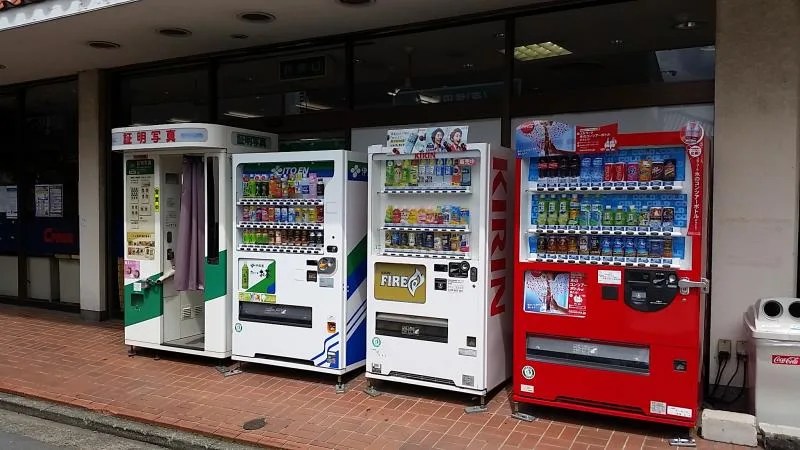
The vending machines in Japan can be quite surprising. There are thousands of machines scattered throughout the country, in deserted places, in front of markets, grouped together, separated, and selling everything. You can buy drinks, cigarettes, snacks, ice creams, sweets, rice, bananas, electronics, and even underwear. Hot and cold drinks are served from the same machine, and some even brew coffee on the spot. We wrote an article about hanbaiki that can be read by clicking here.
Train – Metro
In Japan, there is no need to worry about having cars. Trains run throughout the country, in a practical, fast, and safe manner. In Japan, you don’t have to worry about waiting for hours due to delays; the punctuality and convenience of the trains are incredible. The train is the main means of transportation in Japan and makes life easier for all Japanese people. Because of this, a car is not a necessary item in a Japanese household. If the train station is far from your home, just a bicycle is enough to get to the station, and you can park it peacefully in a designated area.
Economy – Cost of Living
The economy of Japan is full of controversies; for some, taxes are high, salaries are insufficient, and working conditions are poor. But that doesn’t change the fact that Japan’s economy makes your life easier. Despite people finding the cost of living high in Japan, with a salary, it is possible to buy various conveniences that would take almost a year of work to afford in Brazil. Electronics and various industrialized goods have quite humble and accessible prices.
In reality, the prices of things don’t change that much, but the salary is much higher compared to the small minimum wage in Brazil. Not only electronic and industrialized products but even in food, it is possible to save and spend less than in Brazil. If you are complaining about paying 50,000 yen for an apartment, know that in Brazil, rents are more expensive than the minimum wage.
Japanese Education
Sometimes people act wrongly, lacking education while thinking of their own benefit. But in Japan, almost everything is done with the benefit of others in mind. In traffic, in commerce, in daily life, most Japanese people do their best to make life easier for others, being polite and humble.
In Japan, your life is facilitated by education because most people do not cut in line, do not steal, do not arrive late, try to help, and seek not to disturb others with noise and irritating sounds. Japanese people even wear masks when they are sick, thinking of the health of others. They also respect your lifestyle, way of dressing, your privacy, etc.
Home – Shelter
Houses and apartments in Japan are designed to make our lives easier. Most of them have an ofuro (bathtub), the bathrooms are high-tech, houses have hot and cold water faucets, air conditioning or heaters. Despite being small, they have numerous functionalities that make our lives easier. Even the objects and furniture we buy for our home facilitate our lives, like countless crazy inventions and the beloved kotatsu.
Infrastructure
Japan uses all its technology to transform the country into something beautiful and practical. In addition to the mentioned trains, hanbaiki, and convenience stores, Japan has done more. There are over 173 airports in small Japan, another way to get around. The highways in Japan are always kept in perfect condition, with signage and people who obey it.
The education in the country is taken seriously. People enjoy reading and studying, and most choose to pursue higher education. Healthcare in Japan, although paid, is very fast, facilitating everything. Hospitals do everything to make our lives easier.
The environment in Japan is full of technology that makes our lives easier, while at the same time it has a natural air, colorful and beautiful trees, thousands of gardens, mountains, temples, parks, lakes, volcanoes, hot springs, and thousands of things that make people’s lives easy.
There are thousands of things that make your life easier. And you? Have you allowed your life to be made easier?
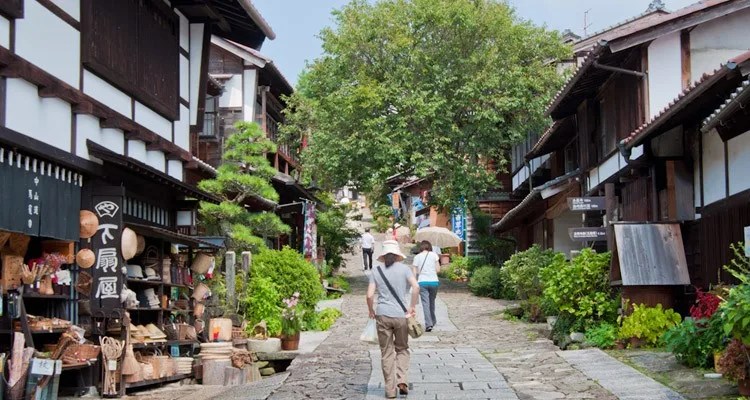
Among the mountains of Gifu Prefecture in Japan lies Magome, a charming village that seems to have come out of a samurai tale. Part of the ancient Nakasendo route, which connected Kyoto to Edo (now Tokyo) during the Edo period, Magome preserves the historical atmosphere of centuries past. This destination, with its stone streets, traditional houses, and stunning landscapes, offers an authentic experience of feudal Japan.
Magome is not just a place of scenic beauty; it is also a living testament to Japanese history, with its connections to the travelers, merchants, and samurais who passed through. In this article, we will explore the history, attractions, and tips for visiting this enchanting village.
The History of Magome
Magome was one of the juku (resting stations) on the Nakasendo route, which was used for foot travel during the Edo period (1603-1868). These stations served as strategic stops to rest, eat, or change horses. Additionally, they were an important point for samurais, who traveled between Kyoto and Edo to fulfill their duties in the sankin-kōtai (alternate attendance system of daimyo).
The name “Magome” literally means “basket of horse,” a reference to the transportation of goods and people at the time. The village thrived as a commercial and cultural center, but with the modernization of Japan, many ancient routes lost their relevance. In recent decades, significant efforts have been made to preserve the appearance and history of Magome, making it an essential tourist destination.
What to Do in Magome
Magome is a place where the past and present meet harmoniously. Here are some activities and points of interest that make this village special:
1. Walk Along the Main Street
The main street of Magome is paved with stones and lined with restored wooden buildings that hark back to the Edo period. The shops sell local products, such as traditional sweets, handicrafts, and souvenirs. Cafés and restaurants serve regional delights, such as gohei-mochi, a grilled rice cake with sweet miso sauce.
2. Magome History and Culture Museum
This small museum offers a detailed insight into the history of the village and the Nakasendo route. Artifacts, old maps, and interactive displays help visitors understand the lives of travelers and samurais who used the route.
3. Magome-Tsumago Trail
One of the most popular activities is the hike between Magome and Tsumago, another historic village on the Nakasendo route. The trail, about 8 km long, passes through cedar forests, streams, and rural landscapes. The route is well-marked and offers a unique opportunity to experience feudal Japan in an immersive way.
4. Eisho-ji Temple
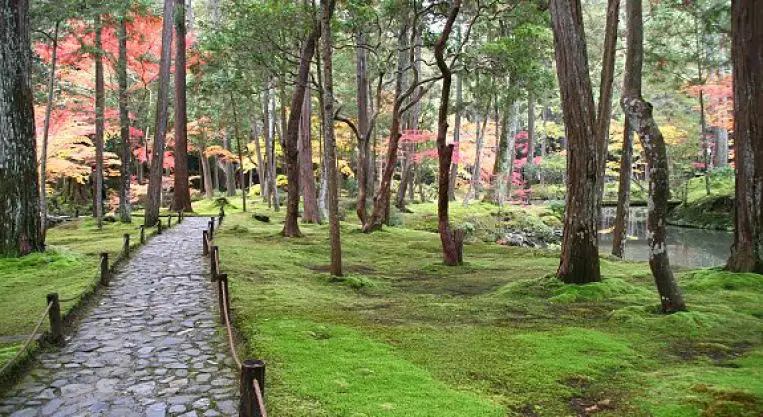
Located on the outskirts of the village, Eisho-ji Temple is a tranquil place for reflection. Its simple architecture and serene garden are perfect examples of Japanese aesthetics, valuing harmony with nature.
5. Panoramic View of Mount Ena
For landscape lovers, the view of Mount Ena from Magome is a must-see. On clear days, the contrast between the green mountains and the blue sky creates a postcard-worthy scene.
Tips for Visiting Magome
Visiting Magome requires a bit of planning, but the experience is worth the effort. Here are some useful tips to make the most of your visit:
Arrival and Transportation: Magome is not accessible by direct train. The closest is Nakatsugawa station, from where you can take a bus to the village. Another option is to rent a car for greater flexibility.
Best Time to Visit: Spring and autumn are ideal, with cherry blossoms blooming in April and autumn leaves turning red in November. Summer offers vibrant green landscapes, and winter gives the village a special charm covered in snow.
Comfortable Footwear: The stone streets can be slippery, especially on rainy days. Wear appropriate walking shoes.
Accommodation: Consider spending the night in a traditional inn (ryokan) for a complete experience, including typical meals and hot baths.
Why Visit Magome?
Magome is not just a historic village; it is a window into a Japan that many only know through films and books. Its preserved streets, the tranquil pace of life, and proximity to nature create a unique atmosphere. For history enthusiasts, it is a place where you can walk the same paths that samurais and merchants trod centuries ago.
Whether to admire traditional architecture, explore the trails, or simply enjoy the serenity of a place untouched by time, Magome is a destination that enchants and inspires. By visiting, you not only learn about the past but also feel the timeless essence of Japan.
Getting to Know the City
The famous writer Shimazaki Toson was born in Magome in 1872. In his novel Yoakemae, he describes life in the area during the early years of the Meiji Restoration. Toson was born in the main inn of the city, known as Honjin. Today, the inn serves as a memorial to the artist. We also have Tsuchimaya Shiryokan, a small restaurant and souvenir shop that features a small museum focused on Toson.
Wakihonjin was another inn in the city that has now become a museum. Inside, there are exhibitions related to the history of Magome as a post-Nakasendo town. Shimizuya Shiryokan is another museum that has wall scrolls, ceramics, clothing, and other goods that belonged to the residents of Magome.
To learn more about this small village, check out the video from our friend Santana Fonseca:
The Japanese language is full of words with the same pronunciation, known as Homophones (同音異義語 – Dōon igi-go), this is one of the major difficulties in learning Japanese. Fortunately, a large part of the words that have the same pronunciation have similar meanings.
All of this is due to words borrowed from Chinese and other languages, and since Japanese consists of only 109 syllables, without accentuation or changes in pronunciation, it results in thousands of identical words.
In this article, we will see some of these words with the same pronunciation. Unfortunately, there are many, and to avoid making the article long, we will look at only a few.
Au – あう – 合う vs 会う vs 遭う
Both of the words above are pronounced “Au” but have their differences.
会う – means “to meet someone in person or to be present at an event;
合う – means “to do something together,” or “to find or encounter something”;
遭う – means “to encounter misfortune, unexpectedly.”
These 3 words, besides having similar pronunciation, also have quite similar meanings. The sentences below will help you understand the difference between these 3 words.
渋谷でぱったりと友達に会った
Shibuya de pattari to tomodachi ni atta
I met a friend in Shibuya
集まってそれを話し合いましょう。
Wakai futari wa sugu ni aishiau yō ni natta.
Gathered, let’s discuss the matter.
帰りに、にわか雨に遭いました
Kaeri ni, niwakaame ni aimashita
On the way home, we encountered the rain.
Aka – あか – 赤 vs 紅 vs 朱 vs 緋
赤 – Refers to all shades of the color red;
紅 – Used for deep red shades like crimson;
朱 – is used for orange-reds, like redness;
緋 – Used for vivid reds, like scarlet, cardinal, or fire-red;
Ashi – あし – 足 vs 脚 vs 葦
足 – refers to the feet
脚 – refers to the legs, from the waist down;
葦 – phragmites, reed
アシ – abbreviation of assistant アシスタント
悪し – bad, evil
Asakiru – おさまる – 収まる vs 納まる vs 治まる vs 修まる
収まる – means “to put inside,” “to unite,” or “to achieve a good result.”
納まる – means “to resolve something in its proper place,” “to put an end to something,” or “to finish.”
治まる – means “to be at peace,” “to suppress,” or “to decrease”;
修まる – means “to be of good character or to perform a splendid action” or “to acquire knowledge or skill.”
Kawaru – かわる – 変わる vs 換わる vs 替わる vs 代わる
変わる – means “to change state or condition.”
換わ – means “to exchange or swap.”
替わる – means “to change to something new.”
代わる means “to replace someone, a role” or “to act in place of someone.”
Shi
There are thousands of kanji, or words that are pronounced “shi,” but in most cases, this pronunciation must be present with another kanji, forming more specific words. But it does not change the fact that “shi” and various other pronunciations are present in many different kanji.
シ
from English “she”
史
history
師
teacher
市
market or city
矢
arrow
士
warrior
使
to use
始
to begin
獅子
shishi “lion”
These were some words that have the same pronunciation, I hope this is enough to instruct a bit on this subject. You can find more on the tofugo website.
Cosplay is the practice of dressing up as characters from anime, manga, comics, movies, games, and other media, which has become a form of art and personal expression in various parts of the world. The term “cosplay” combines the English words “costume” and “play,” reflecting the essence of the hobby: to dress as a character and embody it with passion.
But have you ever wondered how this culture started and how it spread globally? Next, we will explore the fascinating origin and evolution of cosplay, its arrival in Brazil, and some of the most iconic events related to this practice.
The Origin and History of Cosplay
Although cosplay culture is often associated with Japan, its roots trace back to the United States. In 1939, during the first World Science Fiction Convention (Worldcon), Forrest J. Ackerman and Myrtle R. Douglas wore science fiction-themed costumes. Ackerman’s outfit, called a “future-costume,” was a creation of his own, while Myrtle was inspired by the film “Things to Come” (1936). The gesture drew so much attention that it became an annual tradition at science fiction events, laying the groundwork for cosplay.
It was only in the 1970s that cosplay began to gain popularity among fans of manga and anime in the United States. The concept only gained traction in Japan in 1984, when Nobuyuki Takahashi, a Japanese producer, attended an American convention and was impressed by the creativity of the participants. Inspired, he brought the practice to Japan, where it quickly evolved from a science fiction niche to a cultural craze, encompassing characters from manga to games and movies.
In Japan, events like “Comic Market” (Comiket), held in Odaiba, Tokyo, brought cosplay to life. Originally focused on the buying and selling of Dōjinshi (independent manga), the event became a meeting point for cosplayers to showcase their creations, helping to shape the Japanese cosplay scene we know today.
The Cultural Impact of Cosplay in Japan
Cosplay in Japan has transformed into a true cultural phenomenon, transcending otaku events and entering the mainstream. The district of Akihabara, known as the center of geek culture in Tokyo, is one of the most famous places where cosplayers can be found daily. Additionally, places like Harajuku have become famous for the mix of alternative fashion and cosplay, attracting tourists and photographers from around the world.
Another significant impact is the emergence of cosplay-themed cafes, where staff dress as anime characters and interact with customers, providing an immersive experience. Japan also hosts seasonal events, such as outdoor cosplay festivals in historic locations, which help keep the tradition alive and attract different audiences.
The Influence of Cosplay on Fashion and Media
Cosplay has influenced the fashion world in surprising ways. Renowned designers have sought inspiration from the aesthetics of anime and video game characters, incorporating futuristic and fantastical elements into their collections. This influence is evident in fashion shows and the emergence of new trends such as Gothic Lolita, Visual-Kei, and the very Harajuku style, which mixes vibrant colors and bold designs.
In the media, cosplay has also gained popularity in TV shows and documentaries that explore the effort, creativity, and stories behind the costumes. Additionally, social media platforms like Instagram and TikTok have become essential showcases for cosplayers, helping them gain fans and even turn the hobby into a career.
Challenges and Criticisms Faced by Cosplayers
Despite being a joyful and creative practice, cosplay is not without challenges. Many cosplayers face criticism or even harassment, especially at events where interaction with the public is constant. Another common obstacle is the high cost of creating high-quality costumes, leading some to seek sponsorships or start crowdfunding campaigns.
Moreover, there is constant pressure to improve with each new event, which can make the hobby stressful for some. Issues of cultural appropriation are also discussed within the community, as cosplayers from different backgrounds navigate cultural sensitivity when choosing certain characters. It is an ongoing debate that helps define the boundaries of respect and representation in cosplay.
What Defines a Good Cosplayer?
Being a good cosplayer involves more than just wearing an outfit similar to a character. It is an art that requires dedication, research, and, above all, a genuine passion for the chosen character. Here are some aspects that make a cosplayer memorable:
Fidelity to the Character: A good cosplayer pays attention to detail, replicating the costume accurately and with high-quality materials. Many spend months preparing their outfits and accessories.
Attitude and Interpretation: Embodying the character’s personality is essential. Cosplayers go beyond appearance and dedicate themselves to mimicking expressions, gestures, and speech, transforming the experience for fans who interact with them.
Interaction and Charisma: Cosplay is also about entertainment. Those who stand out not only dress well but also know how to make people smile or be impressed by their portrayal. They turn casual encounters into magical moments for admirers of all ages.
Another important point is that many cosplayers do not seek profit. For most, cosplay is a hobby fueled by love for pop culture and the desire to make friends who share that passion. It is not uncommon to see cosplayers paying tribute to other artists or characters that inspire them, adding a touch of authenticity and emotion to their work.
Most Iconic Cosplay Events
Anime Expo (Los Angeles, USA): Considered the largest otaku culture event in North America, Anime Expo attracts fans from all over the world. With over 24 years of history, the event is famous for its cosplay competitions, live shows, panels with voice actors, and even workshops teaching makeup and costume-making techniques.
Japan Expo (Paris, France): Held for over 16 years, Japan Expo is one of the largest Japanese culture events in Europe. Participants can expect an explosion of cosplay, Gothic Lolita fashion shows, Visual-Kei performances, and origami workshops. It is also an opportunity for fans to meet renowned mangaka and J-Pop stars.
World Cosplay Summit (Nagoya, Japan): Known as the “World Cup of Cosplay,” the World Cosplay Summit brings together the best cosplayers from around the world to compete for the championship title. The competition is so intense that many participants dedicate years to preparing. In addition to performances, the event promotes cultural interaction, with parades and parties that celebrate the art of cosplay in grand style.
Cosplay in Brazil
In Brazil, cosplay began to gain traction in the late 1990s, driven by the airing of animes like “Saint Seiya.” At that time, pop culture and anime events were still small, but they quickly grew as the popularity of animes and mangas increased. Conventions like Anime Friends, which is now one of the largest otaku culture events in Latin America, helped popularize cosplay and create a united and passionate community.
Initially, cosplay in Brazil was limited to characters from Japanese animes, mangas, and video games, but it soon expanded to include characters from Hollywood movies, TV series, and even musical bands. The influence of events like Comic Con Experience (CCXP) brought even more diversity, with Brazilian cosplayers showcasing characters from franchises like “Harry Potter” and “Star Wars.” Over time, the practice became a cultural phenomenon, with contests and even cash prizes for the best cosplayers.
Today, Brazil is recognized as one of the most creative nations in terms of cosplay. The talent of Brazilian cosplayers is often highlighted in international competitions, such as the World Cosplay Summit, proving that the country has a prominent place in the global scene.
Cosplay vs. Cospobre: Creativity Without Limits
While some cosplayers spend fortunes to create faithful and detailed costumes, others prefer a more economical approach known as “cospobre.” Cospobre is a fun and creative way to do cosplay, using simple and improvised materials like cardboard, tape, and household items. While it may seem like a joke, cospobre is a legitimate way to express creativity and often attracts as much attention as more elaborate costumes.
Whether you are a fan of detailed cosplays or funny cospobres, the important thing is that cosplay continues to be a vibrant and inclusive form of artistic expression. And you, have you ever done a cosplay or do you plan to? Share your experiences or suggestions in the comments!
One of the biggest challenges when learning the Japanese language is the kanji (Chinese ideograms), and two questions often arise about this topic: How many kanji are there? And how many kanji should I learn in Japanese? In this article, we will discuss these two topics.
How many kanji are there?
It is impossible to know the exact number of existing kanji. In China, thousands of kanji were created in different regions throughout history, and Japan also created its own ideograms. Throughout Japan’s history, some kanji have fallen out of use or are rarely seen. For these reasons, it is impossible to determine an exact number of kanji in the Japanese language.
If we count all the kanji used in Japan’s history, before the existence of hiragana, the numbers can exceed 40,000. The Japanese Ministry of Education established a list called Jouyou kanji (常用漢字), with a total of 2,136 kanji. This list was created to catalog the most commonly used kanji in the Japanese language, in newspapers, TV, books, etc.
1,006 kanji are taught during primary education and 939 kanji are taught during secondary education. The numbers are not exact because over the years various kanji have fallen out of use and some have been added.
How many kanji should I learn?
You should learn as many as possible without worrying about quantities. More than 2,000 ideograms are used in the Japanese language, but you will not need all of them to achieve fluency. Learning the 1,006 kanji taught in primary education is already more than enough for you to understand 80% of the language.
If you want to learn kanji, we recommend not focusing on quantity; try to learn the ideograms in the way that Japanese students learn in schools. That is, if you want to learn the writing and reading of each kanji, try to learn between 100 to 200 ideograms per year.
To improve your learning, we recommend studying words and sentences instead of isolated ideograms. Try to learn the Japanese language and not just kanji. Avoid trying to memorize ideograms and do not waste time counting the number of kanji you have learned.
I personally think it is completely wrong to count the number of kanji we have learned, and I believe many would agree. Luiz Rafael made a video talking exactly about this subject, and you can watch it below:
Suki Desu has been working with Luiz Rafael to provide better education for you. If you are not yet familiar with Luiz Rafael’s work and his closed course, we recommend that you sign up on our website and follow our social media for more information. You can also read this article talking about the Online Japanese Program.
In this article, we will appreciate the blooming of the Plum Trees in Japan. The Plum Trees are called Ume (梅) and are the first to bloom before the Momo (peach tree 桃) and the Sakura (cherry tree 桜).
The period when the plum trees bloom is after winter, starting in February. The famous hanami began with the plum trees before the Nara Period (710-794 AD) and not with the Sakura as some think. The plum trees do not have a stem, and the flowers sprout directly from the branches.
The flowers of Ume are mentioned in various Japanese poems, songs, dances, and arts. For the Japanese, ume serves to revitalize, improve health, and increase longevity. Samurai value ume as an energy booster. The fruit of the Plum Tree, ume, (Japanese plum) is used to season juices, drinks, sauces, and sweets in Japan, such as the famous pickle (umeboshi) and the liqueur (umeshu).
The video below from our friend Santana Channel will help you appreciate the beauty of this flower more:
The photos in this article were also provided by Santana. I hope you enjoyed this short article, don’t forget to share and leave your opinion about these beautiful flowers in the comments.