
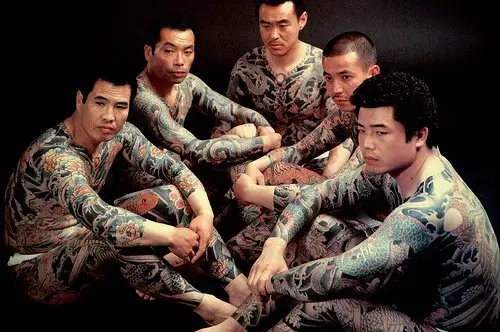
The word yakuza arrives with a ready-made image: dark suits, elaborate tattoos, and a code borrowed from crime films. That image is memorable, but it can flatten several different things into one. In Japan, the word touches a criminal reality, a long cultural history, and a stigma that can fall on people who have nothing to do with organized crime.
To understand the subject, it helps to leave the movie shorthand behind. The yakuza are not a single timeless family, and neither a tattoo nor a scene in Kabukichō tells you who someone is. What survives behind the myth is a history of organized groups, shifting laws, and a vocabulary with meanings that matter.
Contents 9
What does yakuza mean?
Yakuza (ヤクザ) is a common label for Japanese organized crime syndicates and, by extension, for their members. Another word often encountered is gokudō (極道), literally “the extreme path.” Both appear in everyday conversation, journalism, cinema, and fiction, so their tone changes with the setting.
Japanese police use a more formal term: bōryokudan (暴力団), often translated as “violent groups.” The National Police Agency explains that the Anti-Boryokudan Act defines the term as an organization likely to help its members collectively or habitually commit illegal violent acts. That distinction matters: it keeps discussion anchored in criminal conduct rather than treating the yakuza as a colourful social club.
Where did the yakuza come from?
There is no single founding date or one tidy origin story. Accounts of the yakuza often trace strands of their history to the Edo period (1603–1868), especially to tekiya (的屋), itinerant peddlers, and bakuto (博徒), gamblers. Those worlds had their own networks, territories, and rules; later criminal organizations drew on parts of that legacy without making every modern group a direct continuation of either one.
The name itself is commonly linked to 8-9-3, read ya-ku-sa, a losing combination in the card game Oichō-Kabu. It is a useful piece of folklore, not a shortcut to explain everything about organized crime in Japan. History, policing, postwar markets, and local power all shaped the groups that came later.
Family language and hierarchy
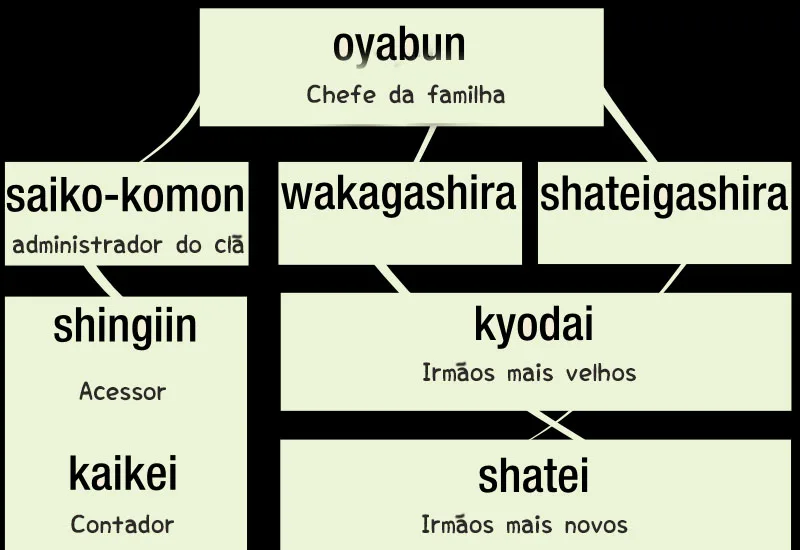
Many groups have used a family metaphor to describe their structure. The leader is an oyabun (親分), while a subordinate is a kobun (子分). The relationship, oyabun-kobun, frames loyalty and obligation as a parent-child bond rather than an ordinary workplace hierarchy.
Terms such as kumichō (組長, group leader), wakagashira (若頭), and shatei (舎弟) appear in reporting and popular culture, but titles and responsibilities are not identical across every organization. The language is worth knowing because it explains why films and games speak of “families”; it should not be mistaken for proof of honour or legitimacy.
The historical resemblance to samurai vocabulary is also easy to overstate. A group may use ritual, seniority, and loyalty to present itself in a certain way, yet those symbols do not erase coercion, fraud, or violence. For the older ethical ideal that is often invoked in comparison, see our guide to bushidō and the samurai path.
Crime, money, and the police view
The most important fact is the least cinematic: bōryokudan groups are treated as organized crime. The National Police Agency describes activities aimed at economic gain through organizational power, including extortion and fraud, and notes that groups have also adapted to less visible forms of fundraising. The point is not to build a list of sensational crimes; it is to recognize why the law and police policy focus on separating these groups from ordinary business and community life.
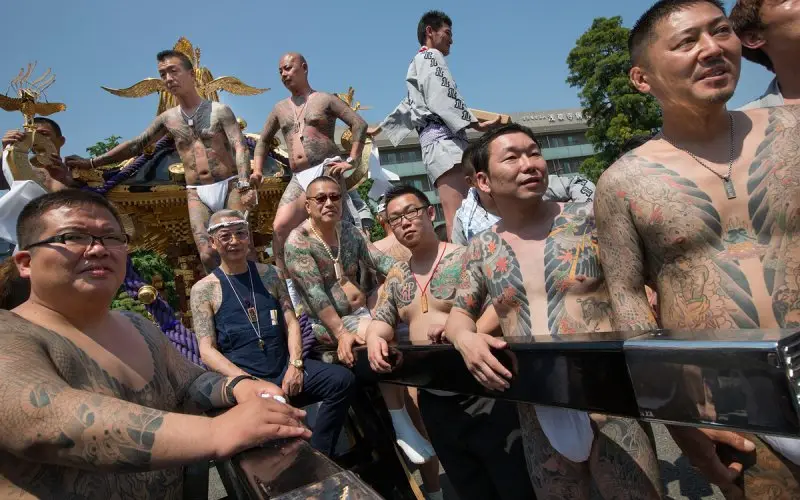
Older portrayals sometimes call the yakuza “semi-legitimate” because some groups were conspicuous in particular neighbourhoods or industries. Visibility was never the same as legality. A public office, a festival appearance, or a polished front can coexist with intimidation and illicit activity. It is safer to read such images as part of the history of public perception, not as a reason to excuse criminal organizations.

Are the yakuza still active?
Yes, but the picture has changed. In its report covering 2020, the National Police Agency recorded about 25,900 bōryokudan members and associate members, after a much larger historical peak and a long decline shaped in part by the Anti-Boryokudan Act. That figure belongs to that report’s period; it should not be repeated as a live count without a newer official release.
Decline does not mean disappearance. The same report describes groups becoming more secretive and diversifying their fundraising. That is why a useful modern explanation avoids two opposite errors: imagining an all-powerful underground empire, or assuming that a smaller membership count makes organized crime harmless.
Tattoos, yubitsume, and the danger of stereotypes
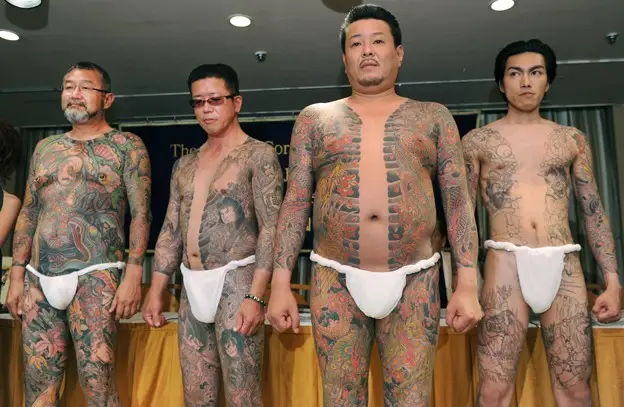
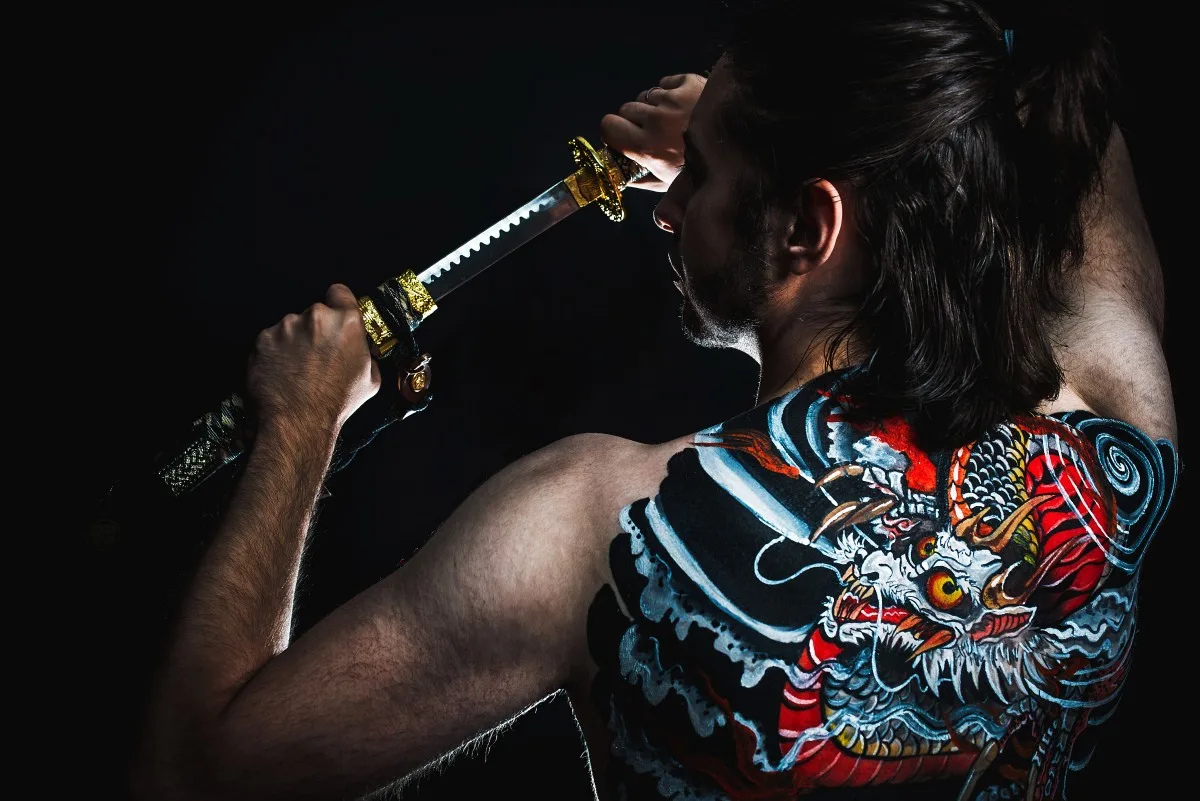
Large traditional tattoos, or irezumi (入れ墨), have a strong association with yakuza in Japanese popular imagination. That association has affected how tattoos are received in some baths, gyms, and other public spaces. Still, a tattoo is not evidence that its wearer belongs to a criminal organization. Tattooing has artistic, personal, and historical meanings far beyond this one association.
The ritual known as yubitsume (指詰め), the severing of part of a finger as an act of apology or submission, is another image repeatedly used in fiction. It has historical links to criminal-group culture, but it should not be treated as a universal rule or a spectacle. Our article on tattoos in Japan gives more context for the broader social response to body art.
Why Kabukichō appears so often in yakuza stories
Tokyo’s Kabukichō has become a familiar setting for stories about nightlife, crime, and urban spectacle. Its name is useful in fiction because it already carries an atmosphere. Real neighbourhoods, however, are lived-in places with workers, residents, visitors, and businesses; a dramatic reputation does not turn every street into a crime scene.
If you are curious about the district itself, read our guide to Kabukichō and Shinjuku’s nightlife district with that distinction in mind. Travel awareness is sensible anywhere, but it is not a reason to approach strangers as though they are characters from a game.
Yakuza in films and games
Crime films, television dramas, manga, and the Yakuza/Like a Dragon game series helped carry the word far beyond Japan. They can be a compelling way to encounter Japanese settings, language, and melodrama. They are also stories: character arcs, rituals, and neighbourhoods are selected and heightened for effect.
The most interesting way to watch or play them is to keep the distance visible. Fiction can reveal how the yakuza has been imagined; it cannot serve as a guide to membership, law, or everyday safety. That small distinction makes the history more interesting, not less.
A clearer way to read the myth
The yakuza remains a powerful symbol because it sits at the meeting point of history, hierarchy, style, and crime. But the symbol can mislead when it turns a criminal organization into a fantasy of loyalty or when it treats every tattooed person as suspect.
Start with the language: yakuza is the familiar label, while bōryokudan is the official policing term. Then keep the layers apart—historical origins, real criminal harm, social stigma, and fictional glamour. That is where the subject becomes more accurate, and far more worth understanding.



Community
Comments
0 comments
There are no published comments in this language yet.
Send comment