

In this article, we will explore 15 different methods that you can use to learn Japanese practically and quickly, with the best possible performance. These are different types of methods or techniques to be explored in different languages.
Remember that the key to learning Japanese is constant practice and exposure to the language. Find the balance between techniques and resources that work for you and stay motivated in the learning process.
Contents 11
Japanese Club - The Best Method
Before we start exploring the secret methods to learn Japanese, I would like to mention my member area, where we try to explore many of these methods through video lessons, study tools, and complete articles teaching everything about the Japanese language gradually.
Unlike other online member areas where a monthly fee is charged, our Japanese Club only requires a one-time payment that grants lifetime access to the platform with everything it can offer to members.
So, if you are looking for a course to study Japanese, trust Suki Desu and be part of our own member area; it is not an affiliate course. I, Kevin, creator of Suki Desu, created the Japanese Club, so expect the same quality of content as our website.
SRS (Spaced Repetition System)
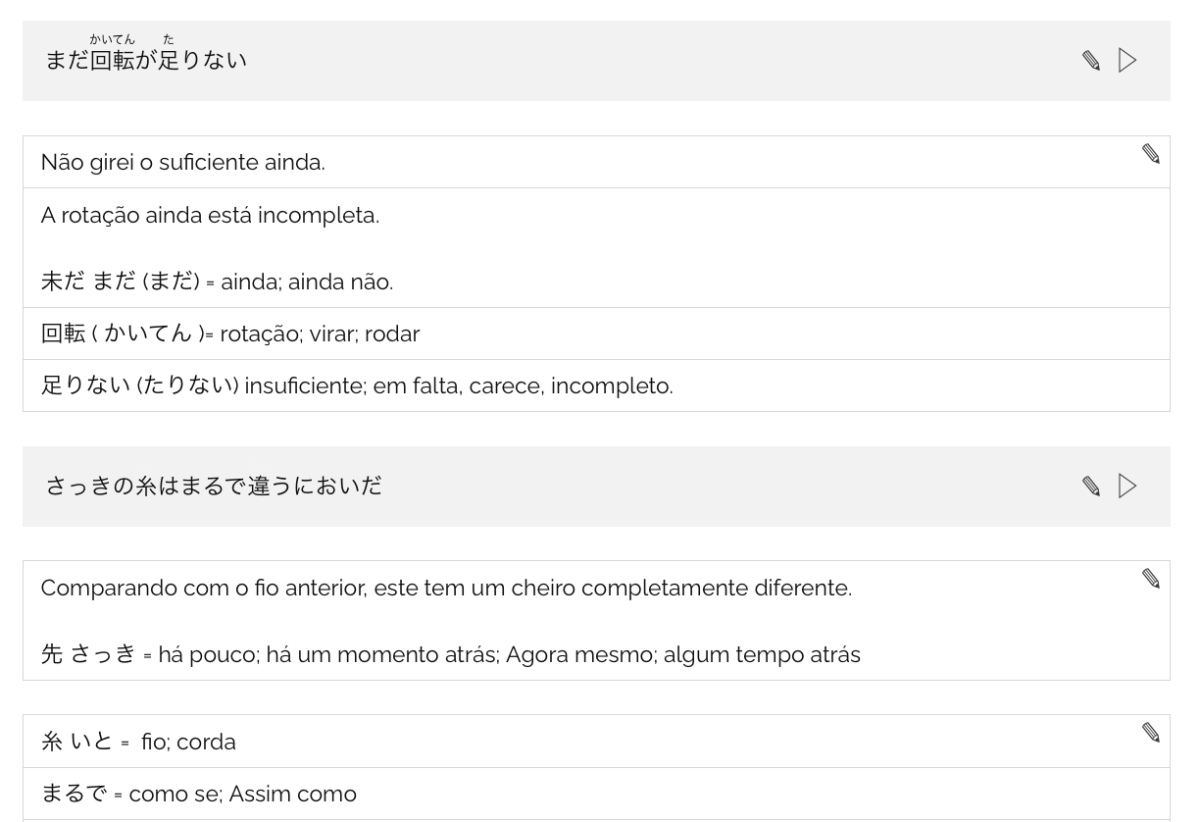
The SRS (Spaced Repetition System) is a learning method that uses spaced repetition to help memorize information more efficiently. This technique is very useful for learning Japanese, as the language has many words and characters that can be difficult to remember.
There are several apps that use SRS to aid in learning the Japanese language, such as Anki, Memrise, and Duolingo. These apps allow users to create their own vocabulary and phrase lists to study, and then use SRS to present this information in a spaced manner, according to the difficulty level of each.
In this way, the user is exposed to each word or phrase several times, at increasing time intervals, until they can easily remember it. This approach is very effective for long-term memorization of information and can be used to learn not only vocabulary but also grammar, idiomatic expressions, and kanji.

Tadoku - Extensive Reading and Japanese
The Tadoku method (多読) is a language learning technique centered on extensive reading, originating from Japan. The word "Tadoku" is an abbreviation of "takusan doku," which means "read a lot." The main objective of this method is to enhance reading comprehension, fluency, and vocabulary through reading large amounts of material in Japanese, suitable for the student's proficiency level.
The fundamental principles of Tadoku involve choosing appropriate reading materials, reading without consulting a dictionary, and enjoying the reading experience. Students should select texts that are interesting and suitable for their level, allowing them to understand at least 95% of the content without resorting to a dictionary. The idea is to learn from context and absorb the language in a natural and enjoyable way.
By applying the Tadoku method and reading extensively in Japanese, students can improve their reading skills, expand their vocabulary, and enhance their grammatical abilities. Tadoku can also be combined with other language learning techniques, such as spaced repetition and conversation practice, to achieve even better results in mastering Japanese.
We recommend reading: Tadoku Method – Extensive Reading

Shadowing (シャドウイング)
The Shadowing method (シャドウイング) is a language learning technique that emphasizes the simultaneous practice of speaking and listening. Developed by Professor Alexander Arguelles, the method involves listening to an audio recording in Japanese or the target language and immediately repeating what was said, trying to imitate the rhythm, intonation, and pronunciation of the native speaker. The idea is to "shadow" the native speaker as if you were their shadow, closely following them as they speak.
The practice of shadowing helps improve listening comprehension, pronunciation, and fluency in speaking Japanese or the target language. By constantly repeating what they hear, students are able to internalize the patterns of the language, such as grammatical structures and vocabulary, more efficiently. Additionally, shadowing helps develop the ability to think and respond quickly in the studied language, as students are encouraged to repeat what they hear without hesitation.
To apply the shadowing method, students should start by selecting audio recordings appropriate to their proficiency level, such as dialogues, news, or podcasts. During practice, students should focus on imitating the native speaker as closely as possible, both in terms of pronunciation and intonation. It is important to practice regularly and with different types of materials to achieve better results and enhance various language skills.

AJATT Method (All Japanese All The Time)
The AJATT method (All Japanese All The Time) is an immersive approach to learning Japanese, developed by Khatzumoto, a successful self-taught learner of the Japanese language. The main idea behind AJATT is to create an environment in which the student is constantly exposed to Japanese, in order to accelerate the learning process and internalize the language more naturally, similar to how children learn their mother tongue.
The AJATT approach involves various practices to ensure constant exposure to Japanese. These practices include listening to recordings in Japanese, watching TV shows and movies, reading books, manga, and websites in Japanese, and trying to communicate with native speakers whenever possible. By doing this, students create a rich Japanese learning environment that allows them to absorb the language more efficiently, improving their listening, reading, speaking, and writing skills.
Although the AJATT method can be intensive and require a significant amount of time and dedication, it has proven effective for many self-taught learners who wish to achieve a high level of proficiency in Japanese. To get the best results with this approach, students should commit to constantly engaging with Japanese materials and creating opportunities to practice their language skills in daily life.
Heisig Method (RTK)
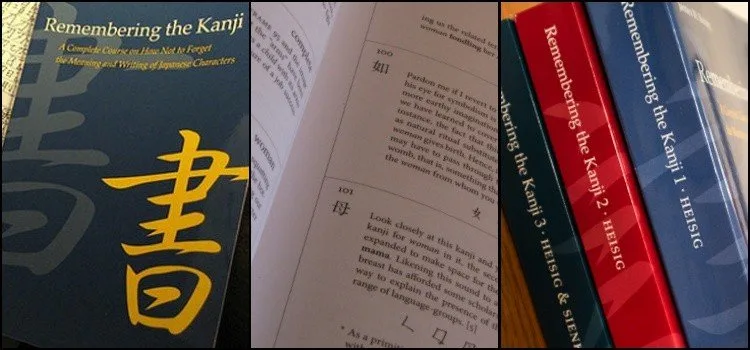
The Heisig Method is an approach to learning to read and write kanji, the Chinese characters used in the Japanese language. Developed by James W. Heisig, an American teacher and scholar, the method is presented in his book "Remembering the Kanji." The central idea of the Heisig Method is to associate each kanji with a keyword in English and then use mnemonic stories to help memorize the characters and their meanings more efficiently.
The Heisig approach is divided into two main stages. First, students learn to recognize and memorize kanji by associating them with keywords in English. These keywords represent the general meaning of the kanji. To facilitate memorization, kanji are presented in a specific order based on their components and stroke complexity. Students also learn to break down kanji into "primary elements," which are simpler components that appear in various characters. These primary elements are used to create vivid and meaningful mnemonic stories that facilitate the memorization of kanji.
In the second stage, students learn to read and write kanji, focusing on the Japanese pronunciations (both On'yomi and Kun'yomi) and common character combinations. By mastering the kanji and their meanings in the first stage, students can focus more on pronunciation and reading in the second stage. Although the Heisig Method can be somewhat controversial and may not be suitable for everyone, many Japanese learners find it an efficient way to learn and memorize kanji, which can be one of the most challenging parts of learning the language.
We also recommend reading: RTK Method – The best way to learn Kanji
Kanji Kentei (漢字検定)
The Kanji Kentei (漢字検定), also known as Kanken, is a standardized kanji proficiency exam conducted in Japan. The main objective of the Kanji Kentei is to assess candidates' ability to read, write, and understand kanji characters at different levels of complexity. The exam is divided into 12 levels, with Level 1 being the most advanced and Level 10 the most basic. Level Pre-2 and Level Pre-1 are intermediate levels between Level 2 and Level 1.
Preparation for the Kanji Kentei is an effective way to learn and practice kanji, as the exams cover a wide variety of skills related to kanji, such as character recognition, reading words and sentences, correct writing of characters, and understanding the meanings and uses of kanji in various contexts. The standardized structure and progressively difficult levels of Kanken help students set clear goals and measure their progress in learning kanji.
To prepare for the Kanji Kentei, students can use a variety of materials and resources, such as textbooks, apps, flashcards, and websites specialized in kanji. Regular practice and repetition are essential for memorization and mastery of kanji. Additionally, studying for the Kanji Kentei can complement other techniques and methods of learning Japanese, such as the Heisig Method, Tadoku, and AJATT, helping students improve their reading and writing skills in the Japanese language.

SMART Goals Method
The SMART method is a widely used technique for setting goals and objectives efficiently and effectively. It can be applied to learn any language, including Japanese.
The acronym SMART stands for the characteristics that a goal should have: Specific, Measurable, Achievable, Relevant, and Time-bound.
We recommend reading: SMART Goals in Language Learning such as Japanese
Immersion Method
Immersion involves engaging with the language and culture through travel, interacting with native speakers, watching movies, and listening to music in the language you wish to learn.
Watch movies, TV shows, and anime, listen to music and podcasts, and play video games in Japanese to practice your listening skills and familiarize yourself with the culture.
Join language exchange groups and meetups, both online and in person, to practice speaking with natives and other students. Make friends with native Japanese speakers or hire a tutor to improve your conversation skills.

Pimsleur Method
The Pimsleur Method is an effective approach to learning Japanese, especially for those who have little time to study and prefer to learn while doing other activities.
Created by Dr. Paul Pimsleur in 1960, the innovative method consists of using only your hearing to learn languages. The method involves a teacher conversing in the student's ear and placing them in imaginary situations that they will have to deal with, simulating everyday situations.
The highlight of the method is the use of the Anticipation Principle. Students are encouraged to actively respond to questions in Japanese, rather than just listening passively. This helps build conversation skills and confidence to speak Japanese.
Pitch Accent Method
The "pitch accent" method is an approach to learning and mastering the tonal accent system present in the Japanese language. Tonal accent, or "pitch accent" (in Japanese, 音類, "on'ryū"), refers to the variation in the height (tone) of a syllable within a word, which can change the meaning of the word. This feature is important for correct pronunciation and listening comprehension in Japanese.
Although the Japanese tonal accent system is not as complex as the Chinese tonal system, it is still important for those who wish to achieve an advanced level of fluency and sound more natural when speaking Japanese.
To master Pitch Accent, you need to learn the basic patterns of intonations, listen to and imitate native speakers, make recordings, analyze, and practice a lot.







Community
Comments
0 comments
There are no published comments in this language yet.
Send comment