
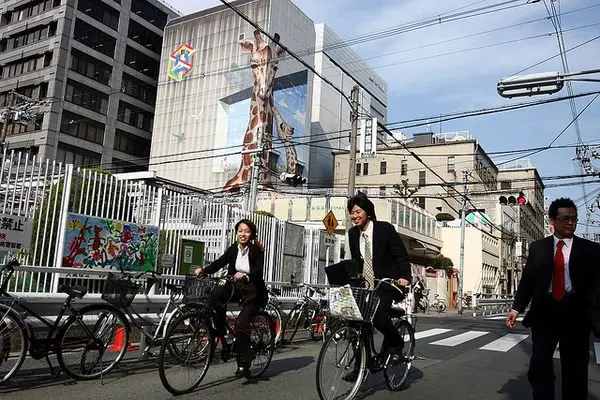
The bicycle is one of the most used ways to get around in Japan, especially in big cities like Tokyo. Japan sits near the top of the world rankings for bicycle ownership, and on ordinary streets that fact is obvious long before anyone quotes a statistic.
A car is less central to daily life here than in many other countries, because much of the country can be crossed by trains and subways. Plenty of people still keep a bike for the last stretch: the station, the supermarket, the clinic, school drop-off, a quick errand after work. On short city hops, two wheels often beat a train transfer or a car stuck in traffic.
Parking a bicycle is usually simpler than parking a car, and some spots are free. Japan’s reputation for order and everyday trust makes it common to leave a locked bike near a station or shop. That comfort only lasts if you park legally and lock it well.
Despite the country’s high-tech image, most everyday bikes are simple. Many have a front basket, and that does not make the bike “for women only.” These practical city bikes are often called Mama Chari. New ones commonly fall somewhere around 10,000 to 30,000 yen, and second-hand shops can go lower. Electric-assist models cost more and are increasingly popular for hills and longer commutes.
Contents 3
Traffic laws cyclists are expected to follow
Drivers in Japan generally respect pedestrians and cyclists, but riders also have clear duties. Bicycles are treated as light vehicles under traffic rules, so several violations can bring fines — and the most serious ones can go much further.
When you buy a bike, register it for anti-theft tracking. The system is called jitensha bouhan toroku (自転車防犯登録). Shops often handle the paperwork for a new purchase; for a used bike, registration can be done at a police station or other authorized counter. The fee is usually small, and the sticker helps if the bike is stolen or seized for illegal parking.
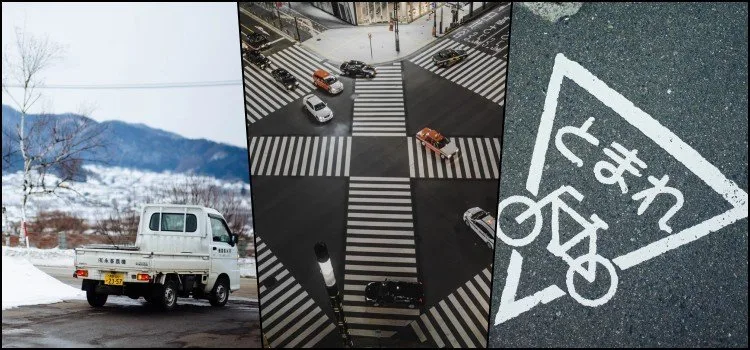
In principle, cyclists ride on the roadway, on the left, with traffic. Sidewalks are only for bikes when signs allow it, or in limited exceptional cases. On a shared sidewalk, slow down, stay toward the road side, and give pedestrians priority.
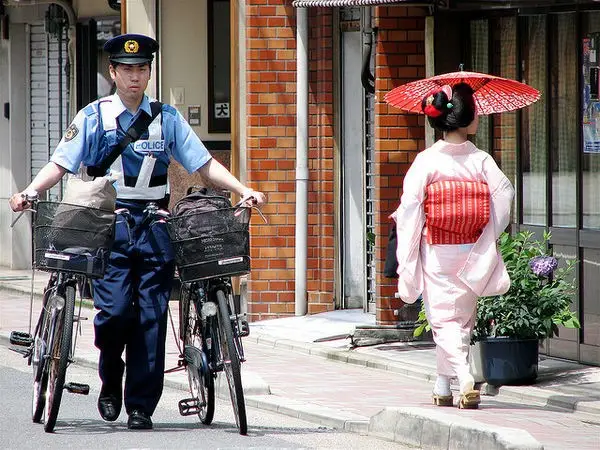
Do not carry another adult on the bike. A small child may ride in a proper child seat; rules for age and seats are strict, and double riding without a legitimate child setup is a common enforcement target.
Children under 13 should wear a helmet. Since April 2023, all cyclists are also expected to make an effort to wear one (a legal “duty of effort”), even though adult non-use is not treated like a simple blue-ticket fine on its own. Helmets still matter for safety and for how liability is discussed after a crash.
Holding an umbrella, handling a phone, or riding with headphones while pedaling can draw penalties. Night riding without a light is another frequent problem. Crosswalks are for walking: dismount if you need to cross as a pedestrian, and keep the headlight on after dark.
Drunk cycling is treated as a serious offense. Penalties can reach a large fine and even imprisonment in the worst cases. Treat alcohol the same way you would before driving a car.
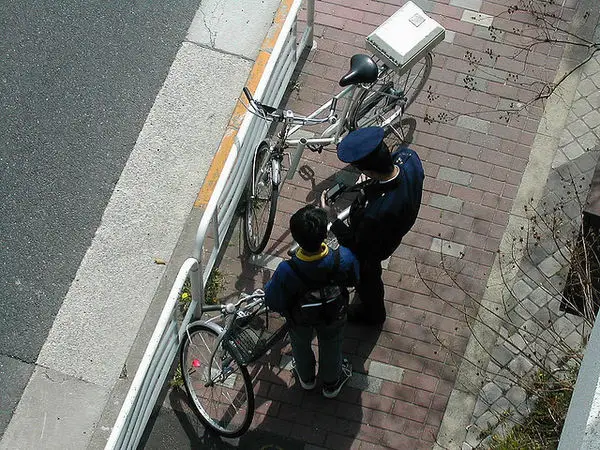
Japan feels very safe, and police often spend real time watching bicycle behavior near stations and busy streets. Locals also cut corners — phone in hand, sidewalk sprints, no light at night — but “everyone does it” is not a defense if an officer stops you. Follow signs, ride predictably, and assume enforcement is stronger than tourist blogs from a decade ago suggest.
Blue tickets, everyday fines, and what changed recently
From April 2026, many bicycle violations for riders aged 16 and over can be handled with on-the-spot blue tickets instead of only a verbal warning. Reported fine ranges often fall somewhere between a few thousand and about 12,000 yen depending on the offense — phone use while riding is among the higher ones. Serious cases, especially drunk riding, still sit outside that lighter ticket path.
Exact amounts and enforcement focus can vary by place and situation, so treat the ticket system as a clear signal: distracted riding, wrong-way riding, ignoring lights or stop signs, and reckless sidewalk behavior are no longer “maybe later” problems. Pay any ticket promptly if one is issued, including as a visitor.
Parking, theft, and taking care of the bike
Japan is safe, but bicycle theft and “borrowing” still happen. Sometimes someone takes an unlocked bike for a short hop and leaves it elsewhere. Use the built-in lock, add a stronger lock if the bike is valuable, and avoid leaving it overnight in a no-parking zone.
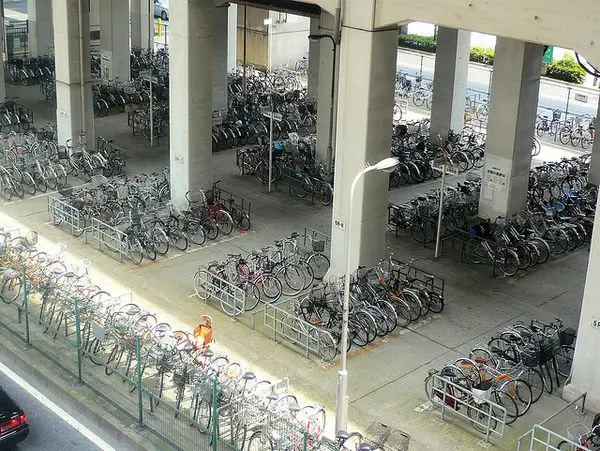
Near stations and shopping areas, use designated bicycle parking. Multi-level bike lots are common in big cities. Illegal parking can lead to removal and a recovery fee. Look for signs reading 駐輪禁止 (no bicycle parking) and do not copy the row of bikes chained to a fence if that fence is clearly marked off-limits.
If you rent, shops often want ID and a deposit. Shared-bike apps may require a Japanese phone number or local payment method, so tourists sometimes find station rental counters easier than city share systems. For longer trips, routes such as the Shimanami Kaido show how far Japanese cycling culture goes beyond the daily commute — but city rules still apply when you leave the dedicated path.
Take care of lights, brakes, and tires the way you would in any dense city. A quiet residential street can still have cars, delivery vans, and sudden door openings. The bike makes short-distance life easier in Japan; the rules keep that convenience from turning into a fine, a seized bike, or a preventable crash.



Community
Comments
0 comments
There are no published comments in this language yet.
Send comment