
There are countless ways to tell if someone likes you. With Japanese girls the reading gets even more relative: people hide feelings differently, and politeness can look like warmth when it is only manners.
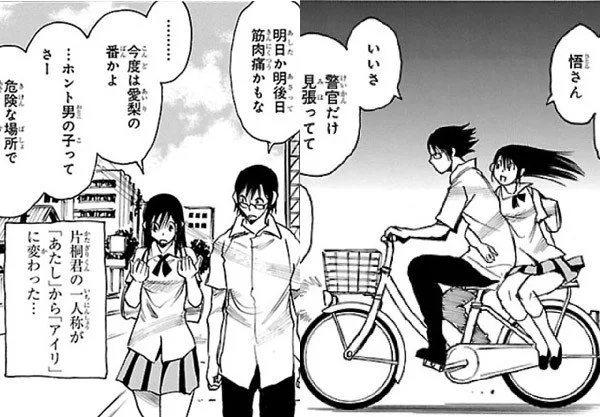
Still, Japanese has one unusually clear dial for distance—the way someone says your name. As she gets closer, the form of address often shifts. That ladder is not a love meter, but it is one of the few signals you can actually hear in everyday speech.
Girls in Japan are often not direct at first and may keep a long friendship stage before any romance. The dreaded friend zone can feel especially wide—and that is not always a dead end so much as a slower pace. Even if you do not live in Japan, the pattern shows up in anime and manga, and it is a useful window into how intimacy is marked in the language.
Contents 3
The way she calls your name
In Japanese, the plain word for “you” is used less than English speakers expect. People often call each other by name instead. So the form of the name is doing real social work: surname or given name, with or without an honorific such as -san, -kun, or -chan.
Take a common example: Hiroshi Suzuki. If a girl calls you one of the ways below, it may say something about distance—not a confession, and not a guarantee.
6. Suzuki-san
A distant or formal address. She may not know you well, may be keeping professional politeness, or may simply be careful. Surname + -san is the safe default for many acquaintances.
5. Hiroshi-san
She has moved to your given name, which already softens the barrier, but -san keeps a respectful frame. Closer than “Suzuki-san,” still not intimate.
4. Hiroshi-kun
Still a step short of full familiarity. -Kun often appears among classmates, juniors, or people who know each other but stay a little formal. Friendly, not automatically romantic.
3. Hiroshi
Given name only—no honorific (yobisute). That usually means real closeness or a long shared context. It can be friendship, family-like comfort, or romance. Context decides.
2. Hiroshi-chan
You are close, or she is treating the name as cute or playful. -Chan carries affection, but it can also mean “I see you as little brother / cute friend.” Do not confuse warmth with a date invitation.
1. Hiro-chan, Hi-chan, Shi-chan
A shortened nickname plus -chan is among the softest forms. You have a real chance of special closeness—or of a long, comfortable friendship. Either way, the name itself has become private territory.
What the ladder does not prove
Using endings and politeness to mark distance makes perfect sense in Japanese. What it does not do is replace a clear conversation. Many people climb this ladder with friends, club mates, or colleagues and never mean romance.
A stronger reading of the name is more useful when several things move together: she uses a closer form with you than with others in the same group; she stays in one-on-one chats instead of only group settings; she initiates contact without a practical reason. Even then, the honest answer is often “closer,” not “in love.”
If you are still learning the culture of dating in Japan, remember that a formal kokuhaku (confession) is how many relationships actually start. Waiting forever for a nickname to “confirm” feelings can leave both people stuck in friendly limbo.
Self-reference and other speech habits
One more speech detail sometimes gets sold as a secret crush signal: when someone drops pronouns like わたし (watashi) or あたし (atashi) and refers to herself by her own name. In real life and in media, that can sound cute, childlike, or playful. It is a style of self-reference, not a reliable romantic test. Treat it as tone, not proof.
Other habits are easier to read in combination: more casual vocabulary when she is with you, longer replies at night, or a gentle teasing that only appears in private. For the vocabulary of affection and friendship itself, a short map of relationship words in Japanese helps you hear what is actually being said.
Every item above may really say nothing on its own. It might only be an attempt to be friendly. But if the form of your name keeps getting softer while her time and attention do the same, you are at least no longer a distant “Suzuki-san.”
What other verbal or everyday cues have you noticed when a Japanese girl shows interest in someone?
- Cover image from the manga: 僕だけがいない街 (Boku dake ga inai machi / Erased)
- The name-ladder idea has circulated for years in Japanese-learning blogs; the steps above are a cultural sketch, not a scientific ranking







Community
Comments
0 comments
There are no published comments in this language yet.
Send comment