Have you ever wondered how to say Resilience in Japanese? There are several Japanese words that express this quality, such as Gaman and Nintai; in this article, we will study the meaning of these and other words and a little about the resilience of the Japanese.
Resilience is like a muscle; the more you use it, the stronger it gets! It is the ability to adapt and overcome difficult challenges, like a plant that keeps growing even after going through a storm.
Imagine an eraser; it can be stretched and twisted, but it always returns to its original shape. Just like the eraser, resilient people can quickly recover from difficult situations and keep moving forward.
Resilience is an incredible skill that we all have, so we must cultivate it to become stronger and more flexible like an eraser.
What does Gaman mean?
“Gaman” (我慢) is a Japanese word that means “self-control” or “self-restraint.” It is an important concept in Japanese culture that refers to the act of enduring or tolerating difficulties or suffering with patience and dignity, without complaining or showing signs of weakness.
This can include enduring physical pain, but it can also refer to difficult social or emotional situations. Gaman is seen as a virtue in Japan, being considered important for maintaining social harmony and emotional stability.
The term has Buddhist origins and is often translated as patience, but it also conveys a strong idea of resilience. Another term worth highlighting as an origin is Gamanzuyoi [我慢強い], which means to endure the unbearable with strength.
In general, Gaman is a valued characteristic in Japan, encouraged from childhood. The act of moving forward, for the Japanese, is a sign of loyalty and a sense of duty.
“Nintai” (忍耐) is a Japanese word that means “patience” or “tolerance.” It is similar to the concept of “Gaman” and refers to the act of enduring or tolerating difficulties and suffering without complaining or showing signs of weakness.
Nintai can refer to both physical patience and emotional or mental patience, being seen as a form of self-control and self-mastery. Nintai is considered important for maintaining social harmony and emotional stability and has been a valued virtue in Japan for many centuries.
Nintai also has its philosophical connotation and is part of other words that have ideograms representing strength and heart, such as:
忍耐力 – Strength; perseverance; stoicism; patience;
忍耐心 – Resistance; perseverance; patience;
忍耐強い – Perseverant, very patient;
Resilience in Japan
Resilience is a valued characteristic in Japanese culture and can be seen in various aspects of daily life. The concepts of “Gaman” (self-control or self-restraint) and “Nintai” (patience or tolerance) are examples of how resilience is valued in Japan.
The practice of Bushido, the ethical code of the samurai, also emphasizes discipline and self-control, which is seen as an important aspect of resilience.
Furthermore, Japan is often affected by natural disasters, such as earthquakes, typhoons, and floods, and the population develops a culture of preparedness and resilience to deal with these challenges.
Resilience is also valued in the Japanese workplace, where dedication and loyalty are highly regarded. Working hard and persevering even in the face of challenges is considered a virtue.
Other ways to express Resilience in Japanese
See below other Japanese expressions that convey the idea of resilience or have similarities with this quality and skill.
“Tairyouku” (体力) – refers to endurance, stamina, energy, and physical strength.
“Shinsō” (辛抱) – Japanese word that means “patience” or “resignation.”
“Shouganai” (しょうがない) – means “inevitable” or “cannot be avoided.” It is used to express acceptance of a difficult or unpleasant situation.
“Shikata ga nai” (仕方がない) – means “there’s nothing to be done” or “there’s no choice.” It is similar to “shouganai” and is used to express acceptance of a difficult situation.
“Ganbaru” (頑張る) – means “to try hard” or “to strive.” It is used to express determination and perseverance in the face of challenges.
“Kinniku” (筋肉) – means “muscle” or “strength.” It is used to express physical strength, but it can also refer to strength of character or mental strength.
“Fudō” (不動) – means “immovable” or “unperturbed.” It is used to express calmness and emotional stability, even in difficult situations.
Tenji [点字] is the Japanese word for referring to Braille, the alphabet used by visually impaired people that uses raised dots of 6 points to represent letters and allow people to read.
The Japanese word Tenji [点字] is literally the combination of the ideograms for point and letter, so it is literally an alphabet of points.
In Japan, Braille is widely used as an accessibility tool for visually impaired people, allowing them to read and write independently.
It is common to find signs and labels with information in Braille in public areas, such as restrooms and elevators, making these spaces accessible to everyone.
Additionally, there are specific Braille printers and displays for personal use, allowing visually impaired people to access information and communicate efficiently.
Japan also has a copyright law that allows the reproduction of published works in Braille, even during the copyright protection period. This is amazing, as it allows everyone to access information and communicate independently and inclusively, without relying on authors to create content.
Furthermore, on the streets of Japan, sounds are emitted at traffic signals so that blind people can identify whether the signal is open or closed. The ground is filled with yellow strips.
Shampoo containers, paper packaging, prepaid card records, forms, and many other objects in Japan are created with visually impaired people in mind.
Yellow blocks on the streets of Japan
Have you seen those yellow blocks on the sidewalks and train stations in Japan? These blocks are used by blind people to navigate their paths safely.
The first Braille block was installed in Japan, invented by Seiichi Miyake in 1965 and developed on March 18, 1967, at the current intersection of Route 250 Haraojima Route in Naka-ku, Okayama.
There are two types of Braille blocks, one block aligned with straight lines (linear block) that indicates the direction of travel and a warning block in dot form (dot block) that indicates the location of dangerous places and guided facilities.
Braille in the Japanese Language
Braille writing in the Japanese language follows the structure of 6 points like most countries. The points are numbered from 1 to 6, with the three points on the left numbered from 1 to 3 and the three points on the right numbered from 4 to 6.
The present points are represented by “●” and the absent points by “○”. It is important to note that this is the reading form and that when writing with the help of devices like the Braille typewriter, the order of the points is reversed due to the technique of pressing the points on the back of the paper.
The Japanese language is traditionally composed of 3 alphabets: hiragana, katakana, and kanji. In Braille, this is simplified; hiragana and katakana are the same, and there is no Kanji.
Basically, Braille in Japanese is what many foreigners and Japanese dream of, having an alphabet composed only of syllabic letters without ideograms, but we know that ideograms are important for understanding grammar and words with similar pronunciations.
How do Dakuten and contracted sounds work in Braille?
Unlike traditional Japanese, when a letter needs to have dakuten or handakuten (バパ), a structure with a dot at number 5 for dakuten and at 6 for handakuten is used before the Japanese letter.
The same happens with the contracted sound (きゃ), which is marked at point number 4. The difference lies in the letter, which usually represents the sound of the small kana, for example: [きゅ] uses [く] and きゃ uses [か].
The dakuten can be combined with the contracted sound, so in the previous case we can mark points 4 and 5 followed by [か] to represent [ぎゃ]. I don’t know if you understood, but to make it easier, let’s leave the images below:
Communication of Braille using fingers
The communication system known as “manual punctuation system” or “finger punctuation system” is a method used by blind and deaf people to communicate.
It uses six fingers (thumb, index, middle, ring, little) to represent the six points of the Braille system. This system was created by Reiko Fukushima in 1981 and was presented in English at the 4th World Helen Keller Conference held in Stockholm in 1989.
The manual punctuation system follows the rules of Braille but has been adapted for use in conversations. For example, it does not use spaces between words, does not use punctuation marks like commas and periods, uses phonetic punctuation, starts with the name of the person communicating, and uses abbreviations for common words.
The manual punctuation system is faster and more accurate than other forms of communication, such as handwritten writing or the manual communication system, and can also be easily learned by those who already know Braille.
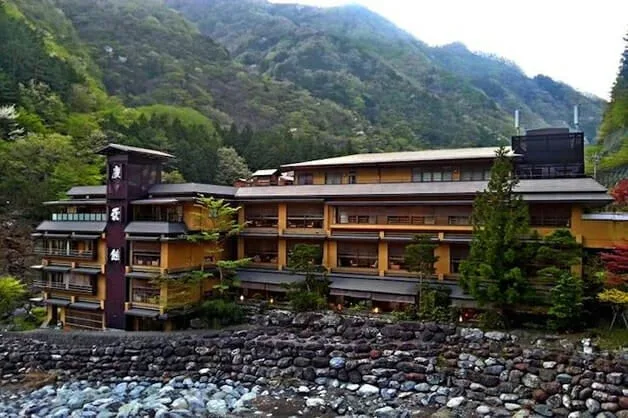
Have you ever wondered what the oldest hotel in the world is? The oldest hotel in the world is the Nishiyama Onsen Keiunkan, a hot spring hotel located in Hayakawa, Yamanashi Prefecture in Japan.
It was founded in 705 A.D. and has been in continuous operation since then. It has over 1,317 years of history, managed by the same family for 52 generations.
The Nishiyama Onsen Keiunkan is a traditional Japanese hotel, known as a “ryokan,” and besides its fame as the oldest hotel, it is known for its natural hot spring water, or “onsen,” outdoors.
The hotel has 37 rooms, each traditionally decorated and equipped with tatami, futons, and wooden flooring. Guests can enjoy traditional Japanese meals, as well as activities such as fishing and hiking in nature.
In 705, Fujiwara no Shinobu, who was hunting in the area, discovered a hot spring gushing abundantly from between the rocks of the river.
It is said that this is where he cleared a path and built a bathtub, thus inaugurating the spring. From then on, it was called Keiunkan, as it was built during the Keiun era, and it was also secretly used by Takeda Shingen and Tokugawa Ieyasu.
The natural spring that belongs to Keigun-kan has a flow rate of 400 liters per minute, making it the largest in the world. In 2005 (17 years into the Heisei period), a new spring was created by drilling, with a flow rate of 1630 liters.
The property has been managed by the same family for 52 generations since its founding in 705 A.D. The family has worked hard to maintain the tradition and history of the hotel, and it is a source of pride for the city of Yamanashi.
This is not exclusive to the hotel; in Japanese culture, it is common for various traditional businesses to be passed down from parent to child for several generations. There are several establishments that exceed 500 years of history.
Questions about Nishiyama Onsen Keiunkan
Let’s finish by answering some questions about the Ryokan with over 1300 years:
How to get to Nishiyama Onsen Keiunkan?
The nearest station to the hotel is Shimobe Onsen, located on the Minobu line of Tokai in Minobu-cho, Yamanashi. There are other routes you can take to reach Nishiyama Hotel.
Is Nishiyama Onsen Keiunkan the oldest in Japan? Is it the first Onsen?
Despite its age, Nishiyama Onsen Keiunkan is certainly not the first onsen nor the oldest hotel in the world. According to Guinness, the first hotel in operation was Hoshi Ryokan founded in 718 and operated by 46 generations.
Credited as the oldest onsen in Japan is Dōgo Onsen, but this information doesn’t make much sense, as hot springs are mentioned in documents from the first century of Japan.
Although Dogo Onsen is newer than Nishiyama Onsen, it is very likely that the traditions spread in onsens had their origins in Dogo Onsen, which is why it is credited as the oldest onsen.
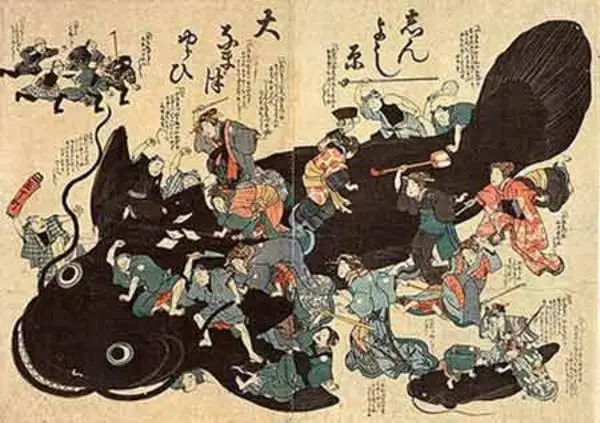
Looking for words and vocabulary related to earthquakes, tsunamis, typhoons, and other disasters in the Japanese language?
Japan is known for its vulnerability to natural disasters, such as earthquakes, typhoons, floods, and landslides. Due to its geographical location, the country regularly faces these events, and the inhabitants need to be prepared to face them.
Preparation includes knowledge of specific terms and words related to disasters, as well as recommended safety measures.
In this article, we will explore some of these words and terms used in Japan for natural disasters, to better understand how the Japanese prepare for and deal with these events.
We recommend using your browser’s search function to find the words you want, as it is an extensive vocabulary list. (You can use CTRL + F)
In this article, we will see a complete list of words in the Japanese language related to gambling and games of chance, including board games, casinos, cards, and bets. Always remembering that gambling is illegal in Japan and we do not recommend that you engage in such activities.
The country has casinos called “pachinko” (パチンコ), where people play on slot machines.
For Japanese language students, we have listed below some related words that may appear in anime on this theme.
Have you noticed that in many old animes after their opening a voice says the following words: “Kono bangumi wa goran no suponsaa no teikyou de okurishimasu”? Want to know the meaning? Today we will study this phrase.
This phrase is used to present sponsorship credits common in radio and television programs. Generally on the radio it is presented by audio and the name of the sponsor, while on television logos are displayed.
This nostalgic phrase is not so common nowadays because most animes are being streamed, thus dispensing with the display of sponsors.
These credits can be displayed in animes, series, movies, television programs in their openings, endings, and even commercial breaks. Now let’s study the meaning of this phrase.
For examples of sponsorship, see the video below:
The meaning of Kono bangumi wa
The phrase in Japanese is written as follows:
この番組はご覧のスポンサーの提供でお送りします。
kono bangumi wa goran no suponsaa no teikyou de okurishimasu
Another common variation of the phrase is:
この番組はご覧のスポンサーの提供でお送りしました。
kono bangumi wa goran no suponsaa no teikyou de okurishimashita
The phrase is used in Japanese television programs to indicate that the program is sponsored by a certain company or brand.
“この番組” means “this program”,
ご覧” means “to see” or “to watch”,
“スポンサー” means “sponsor”
“提供でお送りします” means “is broadcast with the support” or “is provided by”.
Therefore, the complete phrase means “This program is broadcast with the support of the sponsor you are watching”.
Besides indicating that the program is sponsored, the phrase “この番組はご覧のスポンサーの提供でお送りします” can also be used to highlight the specific sponsors of the program, usually in commercial advertisements or sponsor insertions during the program.
This can be done through a specific mention of the name of the sponsoring company or brand in the phrase, such as, for example: This program is broadcast with the support of company XYZ. See the phrase below:
この番組は XYZ株式会社の提供でお送りします
Kono bangumi wa XYZ kabushikigaisha no teikyō de ookuri shimasu
Furthermore, this phrase can also be used to highlight other forms of support, such as, for example: This program is broadcast with the support of the local tourism association. See the phrase in Japanese below:
この番組は地元の観光協会の提供でお送りします
Kono bangumi wa jimoto no kankō kyōkai no teikyō de ookuri shimasu
It is important to emphasize that this phrase is a common way to show the transparency of how the program is produced and who is supporting it, and is generally part of an ethics of showing who the sponsor is and how they are involved in the production of the program.
Looking for Japanese words to refer to nature? In this article, we will share a list of nature words in Japanese. Words like sun in Japanese, forest in Japanese, and so on.
Nature is an endless source of inspiration and beauty, and Japan is a country rich in varied natural landscapes, from snowy mountains to white sandy beaches.
It is not surprising that the Japanese language has a wealth of words related to nature. Let’s explore some of these words and discover how they can help us express our admiration and respect for nature.
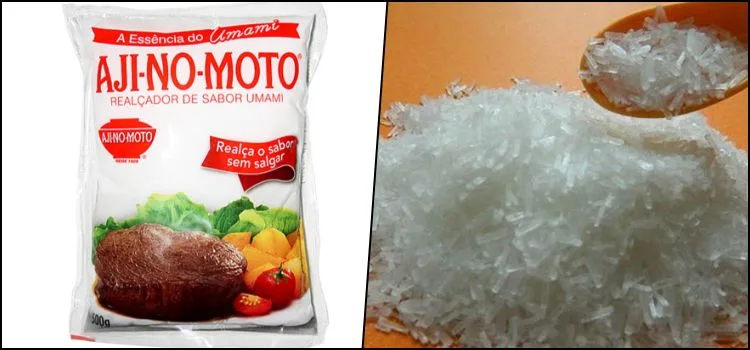
For those who don’t know, aji no moto [味の素] literally means essence of flavor. This company is famous for selling Monosodium glutamate (E621) and related products responsible for umami flavor. Does this product harm health?
The MSG aims to enhance the flavor of food. Monosodium glutamate [E621] (ajinomoto) strengthens the flavor of foods and is commonly found in Japanese and Chinese cuisine, as well as in processed products.
Various controversies involving monosodium glutamate appear on the internet. Many are indecisive about whether it is advisable to use it in food. In this article, we will answer whether Ajinomoto and derivatives of monosodium glutamate are really harmful to health.
How is Ajinomoto made? MSG?
The “aji no moto” is produced from a fermentation process of foods. Products such as fish, dairy, tomatoes, mushrooms, meats, and vegetables are rich in glutamate and in the “umami” flavor.
We usually use these foods daily in our meals, thus giving flavor and taste to our meal. The “ajinomoto” available in 30 countries claims to be an amino acid made from “sugar cane,” but there may be differences and variations in some countries.
Monosodium glutamate is widely used in restaurants and fast food to enhance flavor, which is why we find the snacks from these places so delicious. Just imagine how juicy a roasted meat is; it becomes much juicier when using E621 (the code for monosodium glutamate) because this ingredient enhances the flavor of the food.
The big problem is that some people associate monosodium glutamate with migraines, allergies, hypertension, and other diseases. Shall we find out if this is true?
Monosodium glutamate does not harm
First, we must remember that everything in excess is harmful, even water. Not to mention that monosodium glutamate, the name says it all, contains sodium.
People use monosodium glutamate to enhance the flavor of food, but they also overdo it with salt, since ajinomoto is not meant to season food. In reality, the use of monosodium glutamate can make our meal tastier and healthier if used correctly.
Ajinomoto has only one-third of the sodium present in regular table salt. If we balance the seasoning with salt, we can actually reduce the sodium present in the food.
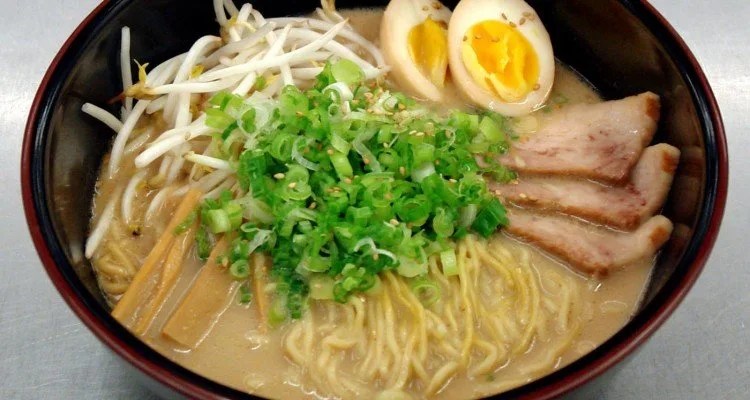
Have you ever eaten in Japan? The Japanese do not usually season their food with a lot of salt; you really won’t feel the food is salty and you won’t easily find salt sachets in restaurants.
The Japanese season with different types of condiments and herbs, and foods rich in umami or ajinomoto help to enhance the flavor of this seasoning, making the food tasty without the excessive salt that we have in our Brazilian cuisine.
If Monosodium glutamate really harmed, Japan would never be one of the countries with the highest life expectancy in the world. The controversial monosodium glutamate is a process that occurs naturally in tomatoes, cheeses, and mushrooms.
Most Brazilians consume tomatoes every day and have never stopped using salt just because it contains sodium. Of course, we live in Brazil, so we don’t know how the industries are really supervised here; after so many controversies regarding meats, it wouldn’t be surprising if ajinomoto had some mixed ingredient with negative effects.
Lies spread on the Internet about ajinomoto
All the controversy on the internet started just due to an article published in 2007 by BJP. The article claims that monosodium glutamate causes colon and gastric cancer. However, there is no scientific evidence to prove this.
The article also states that monosodium glutamate causes headaches, but what does that have to do with cancer? The false article also claims that monosodium glutamate was banned by the World Health Organization, which is completely false.
In fact, WHO stated that monosodium glutamate is in the safe category for food additives. You should know how lies arise on the internet and spread in our society. These lies are so widespread that even today there are people who think that Hello Kitty made a pact with the devil.
Remember that it is much easier for people to share bad news than good. Probably if this article were speaking poorly of ajinomoto, most would have already shared it on their social networks.
I am afraid that people will not share this article because I am defending it, and that is not relevant to those who do not know. Many want to warn people about the dangers of things, but end up spreading things that may not be true.
Of course, it is natural for a person to have an adverse reaction to this food; most Westerners have no idea of the existence of the umami flavor. Foods here are not usually rich in this flavor, so much so that many people, when trying oriental cuisine, end up feeling unwell or not liking it.
What does not harm some may indeed harm others, especially if in excess. E621 is really addictive; there are people who even eat aji salt pure.
Other truths and lies about ajinomoto
Excess ajinomoto (several tablespoons) can indeed cause side effects, such as dizziness and headaches. Just as we can feel unwell from overeating, we can feel unwell from consuming too much ajinomoto.
Remember that ajinomoto enhances the flavor of foods; if something is already strong without monosodium glutamate, imagine with it? The fact is: Have control, but don’t blame monosodium glutamate.
Some claim that E621 harms neurons. Where do people get these crazy ideas? Aren’t the Japanese known for being the most intelligent in the world?
The Japanese have never had an epidemic of brain damage. We know that vitamin C protects our neurons against negative effects, so if you are afraid, just enrich your diet with vitamin C.
Several studies and tests regarding the Chinese Restaurant Syndrome and monosodium glutamate indicate that they have no relation. The tests showed people who did not consume monosodium glutamate complaining of symptoms of Chinese Restaurant Syndrome.
People stop using ajinomoto but forget the following fact: Most proteins in foods contain glutamate and are broken down by endopeptidases in the stomach and small intestine, so that free glutamate is released. The same thing happens with monosodium glutamate, which turns into free glutamate in your stomach.
Should I use monosodium glutamate or not?
Therefore, just use ajinomoto in moderation and you will not have any health problems. In reality, there are so many things we eat that are thousands of times more concerning than monosodium glutamate.
Unfortunately, we cannot escape this generation of industrialized products or those full of pesticides and even poorly preserved, expired, and full of chemicals that industries invent.
Everything today is harmful, so don’t waste your time worrying! Even plastic bottles of mineral water release bisphenol. There is no escaping cancer and death, which is everywhere today!
So far, all research that talks about glutamate says that its toxicity is very low. It takes consuming around 15 kilograms to present 50% lethality. The symptoms spread on the internet are found in only 1% of the studied population.
You can eat it if you don’t have reactions! It doesn’t matter if glutamate is natural; remember that sugars are also natural, but still cause diabetes. Have control! Always seek umami in a natural way!
And if you feel something and are sure it was the responsibility of ajinomoto, avoid it! Each person has a different body, especially if they lack certain vitamins that protect their body. Some people feel unwell eating peppers, eggs, pork; it is not abnormal for someone to feel unwell after consuming glutamate.
We are not saying that glutamate does no harm and can be consumed freely. Just that the studies related to the side effects of monosodium glutamate are a bit misguided. Everything needs control! Have you ever had any problems with this amino acid? Do you usually use it in food? What is your experience?
Currently, many Japanese language students are tirelessly seeking approval in the JLPT exam. For those who do not know or have never heard of it, JLPT stands for Japanese-Language Proficiency Test, and it is divided into five levels: N1, N2, N3, N4, and N5.
Through this test, the student can certify (if approved) their knowledge of the Japanese language.
In this article, we will give some tips on how to prepare for the exam.
This is probably the most important tip of all. When the student chooses the level they will take, they should also focus on the subjects of that specific level. Additionally, it is important to research the topics by categories, such as: Kanji, Vocabulary, Grammar, Reading, and Listening Comprehension. Finally, it is advisable, as a precaution, to have knowledge of the content of the previous levels (if you take N4, for example, it will be necessary to know the content of N5 and so on).
Tip 2 – Take Practice Tests and Exam Questions
It is not very useful to study all the theory and not put the acquired knowledge into practice. Do many questions, as many as you can. In addition to increasing your confidence, it will greatly raise your chances of approval. Not to mention that there are questions with very peculiar structures that, if not practiced beforehand, can become even more difficult to solve.
Tip 3 – Study Through YouTube Lessons
There are several channels on YouTube that teach the content of the Proficiency Exam. We recommend watching Japanese channels, as this way you can practice listening while studying vocabulary and grammar topics. In the article linked below, you can (if you want) check out the main ones: YouTube Channels to Study for the JLPT.
Tip 4 – Take Notes and Summaries
Make summaries, write down the kanjis, and, if possible, write everything by hand. Some research suggests that writing by hand substantially increases memorization capacity. Use pens of various colors, make schematic drawings, and have fun in the process.
Use the books “Nihongo Sou Matome” and “Shin Kanzen Master” for the required level. In my opinion, these are the two best for passing the JLPT. We also recommend the “TRY!” book series. The articles from Suki Desu should also help you in this regard. Go to the search bar on the site and type “JLPT”.
It is quite possible that you will get nervous during the exam, whether because you think you got a question wrong or thought you wouldn’t have time to answer it. In these moments of difficulty, take a deep breath and move on. Focus on the question and have confidence when answering.
Tip 7 – Pay Attention to the Time Issue
The exam is usually divided into alternating sections. Therefore, there is a time limit between each stage of the exam. Stay alert! Especially in the listening comprehension part.
*Extra Tip: Eat properly before the exam. Choose light and healthy foods (this tip applies to practically any exam, even for the ENEM).
If you are studying medicine or working in the health field, it is important to know the specific technical vocabulary of Japan. This can help you communicate better with Japanese colleagues, better understand patient instructions and notes, and provide quality medical care.
In this article, we will present some of the main words related to medicine and health in Japanese, separated by categories, to help you expand your vocabulary and improve your communication skills in Japanese.
Below we include a list of medical terms in Japanese that may be useful for those working in the health field or for those needing medical assistance. These terms can help better understand medical conditions, examinations, and treatments, as well as communication with health professionals.
医者 (isha) – doctor
看護師 (kangoshi) – nurse
医療 (iryō) – medical care
病気 (byōki) – disease
治療 (chiryō) – treatment
診察 (shinsatsu) – medical examination
処方箋 (shohōsen) – medical prescription
症状 (shōjō) – symptom
医学 (igaku) – medicine
看護 (kango) – nursing
薬剤師 (yakuzai-shi) – pharmacist
看護記録 (kango kiroku) – nursing record
疾患 (shikkan) – disease / medical condition
検査 (kensa) – examination / test
看取り (kantori) – palliative care
死亡診断書 (shibō shindan-sho) – death certificate
感染症 (kansensho) – infectious disease
精神障害 (seishin shōgai) – mental disorder
疾患 (shikkan) – medical condition
診断 (shindan) – diagnosis
予防接種 (yobō sesshu) – preventive vaccination
手術室 (shujutsu-shitsu) – operating room
リハビリテーション (rihabiritēshon) – rehabilitation
ドナー (donā) – donor
レントゲン (rentogen) – X-ray
フルネーション (furunēshon) – deep inspiration and forced expiration breathing
心電図 (shin denzu) – electrocardiogram
血液型 (ketsueki-gata) – blood type
検査 (kensa) – examination
看護 (kango) – nursing
ホスピタル (hosupitaru) – hospital
メディカル (medikaru) – medical
スタッフ (sutaffu) – staff
保健所 (hokenjo) – health center
薬局 (yakkyoku) – pharmacy
在宅医療 (zaitaku iryō) – home medical care
患者 (kanja) – patient
Medical Specialties in Japanese
Medicine is a vast and complex field, with various medical specialties. Below we have a list of medical specialties in Japanese, to better understand the different areas of medicine and the diseases and conditions each one treats.
歯科医 (shika-i) – dentist
小児科医 (shōnika-i) – pediatrician
内科医 (naika-i) – internist
外科医 (geka-i) – surgeon
眼科医 (ganka-i) – ophthalmologist
耳鼻咽喉科医 (jibiinkōka-i) – otorhinolaryngologist
皮膚科医 (hifuka-i) – dermatologist
精神科医 (seishinka-i) – psychiatrist
循環器科医 (junkan-ki ka-i) – cardiologist
消化器科医 (shōkaki ka-i) – gastroenterologist
神経内科医 (shinkei naika-i) – neurologist
脳神経外科医 (nōshinkei geka-i) – neurosurgeon
泌尿器科医 (hinyōkika-i) – urologist
腫瘍内科医 (shuyō naika-i) – oncologist
整形外科医 (seikei geka-i) – orthopedist
放射線科医 (hōshasenka-i) – radiologist
リハビリテーション医 (rihabiritēshon-i) – physiatrist / rehabilitation doctor
麻酔科医 (masui-ka-i) – anesthesiologist
産科医 (sanka-i) – obstetrician
看護師 (kangoshi) – nurse
耳鼻喉科 (jibiinkōka) – otorhinolaryngology
麻酔科 (masuika) – anesthesiology
心臓血管外科 (shinzō kekkan geka) – cardiovascular surgery
Diseases affect millions of people worldwide with a significant impact on health and quality of life. In this topic, we include a list of common diseases in Japanese.
Anatomy is the study of the structures of the human body and their relationships. Below we include a list of anatomy terms in Japanese that may be useful for better understanding the human body and its parts, such as bones, muscles, organs, tissues, and systems.
頭 (atama) – head
胸 (mune) – thorax
肋骨 (rokkotsu) – rib
お腹 (onaka) – abdomen
腎臓 (jinzō) – kidney
肝臓 (kanzō) – liver
膵臓 (suizō) – pancreas
大腸 (daichō) – colon
小腸 (shōchō) – small intestine
膀胱 (bōkō) – bladder
子宮 (shikyū) – uterus
卵巣 (ransō) – ovary
睾丸 (kōgan) – testicle
背中 (senaka) – back
腰 (koshi) – lower back
骨盤 (kokan) – pelvis
足首 (ashikubi) – ankle
膝 (hiza) – knee
大腿骨 (daitaikotsu) – femur
肩甲骨 (kōkōkotsu) – scapula
鎖骨 (sakotsu) – clavicle
橈骨 (tōkotsu) – radius
尺骨 (shakkotsu) – ulna
骨髄 (kotsuzui) – bone marrow
筋肉 (kin’niku) – muscle
神経 (shinkei) – nerve
血管 (ketsugan) – blood vessel
Medications and Treatments in Japanese
Medications and treatments are important tools for treating and preventing diseases and improving people’s health. Here is a list of common medications and treatments in Japanese.
In this article, we will explore LGBTQI+ vocabulary in Japanese, including the most common words and phrases used to refer to homosexuals, gays, lesbians, transgender people, and others.
Language and vocabulary play an important role in the acceptance and representation of gender diversity and sexual orientation. LGBTQI+ vocabulary in Japanese is a fundamental part of understanding and representing the LGBTQI+ community in Japan.
It is important to understand and use the correct vocabulary when referring to LGBTQI+ people in Japan and around the world, to promote equality and acceptance.
The Japanese Language is Neutral
The Japanese language does not have grammatical gender, which means that words are not classified as masculine or feminine. A single adjective can be used for any gender, including animal names, which also do not have gender.
This can be an advantage in terms of gender neutrality, as there is no need to specify a person’s gender when referring to them. This can be especially important for people who identify as non-binary or who do not identify with a traditional gender, as there is no need to use pronouns or nouns that may be perceived as inappropriate or offensive.
One of the few things that have gender in the Japanese language is pronouns, but there are still neutral pronouns that can be used by both genders. It is worth mentioning that the Japanese language is quite formal, so it is necessary to know when to use each pronoun.
Additionally, the Japanese language has a cultural tradition of fluid gender concepts, including the concept of “onnagata,” which refers to men who portray female characters in Kabuki theater. This can be seen as an expression of acceptance of gender fluidity in Japanese culture.
However, it is important to highlight that, despite these linguistic advantages, Japanese society still faces some challenges in accepting gender and sexual orientation diversity.
List of LGBTQI+ Words in Japanese
The list of words below contains various terms and words from LGBTQI+ vocabulary, some are repeated, as they have their writing in katakana, kanji, and also some slang and abbreviations.
Homosexual: 同性愛 (douseiai)
Sexual minority: セクマイ (sekumai)
Same-sex marriage: 同性婚 (douseikon)
Homosexual: ホモ (homo)
Hetero: ノンケ (nonke)
Lesbian: レビン (rebin)
Bi: バイ (bai)
Intersex, androgynous: 中性 (chuusei)
Asexual: 無性愛 (museiai)
Gender: 性別 (seibetsu)
Sexual orientation: 性的指向 (seiteki shikō)
Gender equality: 性別平等 (seibetsu byōdō)
Heterosexuality: 异性恋 (isei ren)
Homosexuality: 同性恋 (dōsei ren)
Bisexuality: 双性恋 (sōsei ren)
Transsexuality: 性别变换 (seibetsu henkan)
Intersexuality: 性别多样性 (seibetsu tayōsei)
Gender: 性别 (seibetsu)
Sexual orientation: 性欲方向 (sei yoku hōkō)
Gender diversity: 性别多样性 (seibetsu tayōsei)
Gender equality: 性别平等 (seibetsu byōdō)
Gays: ゲイ (gei)
Lesbians: レズビアン (rezubian)
Bisexuals: バイセクシュアル (baisekushuaru)
Transgenders: トランスジェンダー (toransujendā)
Queer: クィア (kuia)
Intersex: インターセックス (intāsekksu)
Asexual: アセクシュアル (asekushuaru)
Androgynous: アンドロギノ (andorogino)
Non-binary: ノンバイナリー (non bainarī)
Asexuality: 無性愛 (museiai)
Pansexuality: パンセクシュアリティ (pansekushuariti)
Gender fluidity: ジェンダーフリュージョン (jendā furyūjon)
Gender diversity: ジェンダー・ダイバーシティ (jendā daibāsiti)
Heterosexuality: ヘテロセクシュアリティ (heterosekushuariti)
Homosexuality: ホモセクシュアリティ (homo sekushuariti)
Bisexuality: バイセクシュアル (baisekushuaru)
Transsexuality: トランスセクシュアル (toransusekushuaru)
Intersexuality: インターセクシュアル (intāsekushuaru)
The Japanese recognize and also use FTM, MTF, FTX, and MTX slang. If any terms are missing from this list, just get in touch.
The Meaning of Okama, Onabe, and Okege
Okama, Onabe, and Okege are words generally used derogatorily to refer to people who identify as part of the LGBTQI+ community in Japan. Here are the definitions of each of these words:
Okama: It is a vulgar word used to refer to men who exhibit a flirtatious personality or display behaviors considered feminine.
Onabe: It is a word similar to okama, but used specifically to refer to lesbian women.
Okege: It is a pejorative word used to refer to transgender or transsexual people.
These words are considered offensive and should be avoided, as they reinforce negative stereotypes and discrimination against the LGBTQI+ community.
“Daijoubu desho datte kimi yowai mono” is a phrase in Japanese that appears in the anime “Jujutsu Kaisen”. In this article, we will examine and study the meaning of this expression spoken by Gojo Satoru.
大丈夫でしょう。だって、君弱いもん
Daijoubu deshou, datte kimi yowai mon
In a loose translation to Portuguese, this phrase literally means “There is no problem, after all, you are weak.” See below the meaning of each word:
大丈夫 – “Daijoubu”: means “it’s all right” or “there is no problem.”
でしょう – “Desho”: is an informal form of affirmation, equivalent to “isn’t it?” or “certainly.”
だって – “Datte”: is a conjunction that can be translated as “after all” or “since.”
君 – “Kimi”: means “you.”
弱い – “Yowai”: means “weak” or “insecure.”
もん – “Mon”: is an informal ending that indicates that the statement is suggestive or that the person is referring to something as obvious.
The complete phrase, “Daijoubu desho. Datte, kimi yowai mon.”, means something like “There is no problem, certainly. After all, you are weak, aren’t you?” or “There is no problem, you are weak indeed, aren’t you?”
It is a form of provocation for the enemy and a sarcastic reassurance for friends. It is a very frequent and popular phrase in the anime Jujutsu Kaisen.
In the anime, it is also common to hear the variation:
大丈夫です。だって、君弱いもん
Daijoubu desu, datte kimi yowai mon
In practice, it doesn’t change anything and usually has the same meaning, just that the way of affirming is more polite and formal than 「でしょう」deshou.
I hope you enjoyed this article, we recommend checking out our Japanese course, the Japanese Club. Let’s end with a video presenting this phrase in different languages:
Looking for alternatives to the famous Anki to study Japanese, Korean, or English? In this article, we will talk about some flashcard apps that can be useful for language learning.
If you didn’t know, Anki is one of the most famous spaced repetition memorization apps in the world. Spaced repetition is used to help you memorize things you’ve already learned using flashcards in a way and at a frequency that prevents your brain from forgetting.
Many use Flashcards to learn new words, but we recommend using them to review and memorize things you already know. Flashcards can be used in any educational area and not just languages.
Since this site focuses on the Japanese language, our first recommendation will be our Platform! If your goal is not to learn Japanese, you can skip to the next recommendation, or not.
It’s not an app, but it’s one of the best ways to learn Japanese; it’s an online study platform with complete articles examining Japanese sentences with audio and the option to copy to a spaced repetition program.
In fact, Japanese Club is a Japanese course created by Suki Desu, originally in Portuguese, but it is also trying to expand into other languages. Video lessons, support, classes with anime and manga, and much more.
Quizlet is amazing! It is a flashcard learning app and website that will revolutionize the way you study. With Quizlet, you can create your own flashcard sets or use those created by other users.
It offers an incredible variety of tools to help you study, including fun games, quizzes, and flashcard study. Additionally, you can share your flashcard sets with others and explore the active community of users who contribute their own sets.
Best of all, Quizlet is free to use, but it offers a paid version with even more amazing features. Available for computers, mobile devices, and tablets, Quizlet is the perfect choice for anyone who wants to learn more effectively and enjoyably!
Memrise
Memrise is sensational! It is a learning app and website that will surprise you with its effectiveness and fun. With Memrise, you have access to a wide range of courses created by experts and other users.
It uses playful and interactive learning techniques to help you remember and assimilate content more efficiently. Additionally, it has an active and friendly community of users who can help you achieve your learning goals.
Best of all, it is free to use, but it offers a paid version with additional features. Available for mobile devices and computers, Memrise is the perfect choice for anyone who wants to learn in a more fun and effective way.
Cram.com
Cram is a flashcard app and website that allows users to create and share flashcards. It offers a variety of tools to help users study, including flashcard study, games, and quizzes.
Cram also has an active community of users who contribute flashcards. Additionally, it offers the ability to add images and audio to enhance content memorization.
Cram is free to use, but it offers a premium version with additional features.
StudyBlue
StudyBlue is an excellent option for students and teachers looking to share and access study information efficiently and collaboratively.
StudyBlue is a learning app and website that allows users to create and share flashcards and study notes.
Like the other apps, it offers a variety of tools, communities, functions for creating flashcards and study notes. It also offers both a paid and free version.
Tinycards
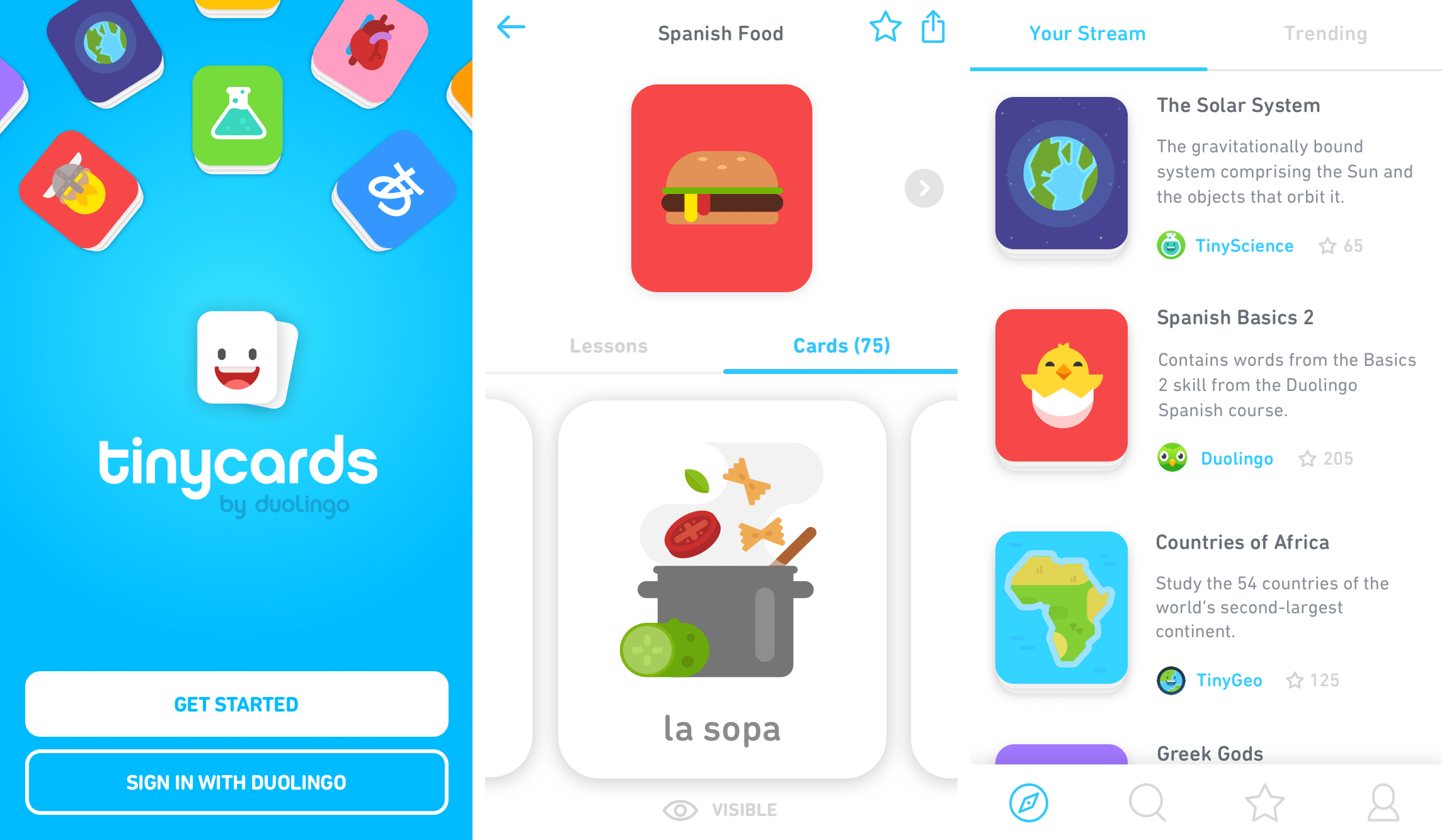
Tinycards is an amazing app created by Duolingo that uses flashcards to help users learn new languages and subjects in a fun and interactive way.
It uses game-based learning techniques to help users remember and assimilate content more efficiently. Additionally, it has an active and friendly community of users who can help you achieve your learning goals.
Tinycards is free to use and is available for mobile devices. With Tinycards, you can learn in a fun and effective way while enjoying the quality and expertise of Duolingo.
Mnemosyne
Mnemosyne is a study platform based on flashcards that was designed in 2003 to help users learn and memorize information efficiently.
Mnemosyne differs from Anki by being open-source and having a simpler and more intuitive design. Additionally, it also offers collaborative learning features.
Overall, Mnemosyne is a good option for people looking for a flashcard-based study platform that is easy to use and offers collaboration features.
Brainscape
Brainscape is a flashcard-based learning platform that uses advanced neuroscience algorithms to optimize information retention.
The platform allows users to create their own flashcards or access a wide library of flashcards created by other users to help them study specific topics.
The name “Brainscape” suggests a learning approach that maximizes the brain’s potential. Software is also available for iOS and Android and offers both a free and a paid version.
SuperMemo
SuperMemo is a flashcard-based learning platform considered one of the main alternatives to Anki. The difference is that SuperMemo offers language courses.
Choose from over 200 high-quality courses to learn up to 20 foreign languages. In the case of the Japanese language, it offers two courses: “Memo” the Dragon and another titled Power Words.
Japanese folklore is rich in myths, legends, and fairy tales that depict family life. It is through these that the main representations of the family constellation in Japanese culture can be found. These stories are based on models of family relationships, kinship concepts, and social patterns established by Japanese society.
Family concepts in Japanese folklore
In Japanese culture, the family is considered the basic unit of society. Leadership is generally exercised by the oldest man and a hierarchy follows for the other members, where each has their role to play. For example, the father is seen as the leader of the family, responsible for making important decisions and ensuring the family’s survival. The mother plays an important role regarding household tasks, the education of the children, and the maintenance of the home. Children are taught to respect their parents and obey their orders.
Representations of kinship in Japanese culture
The representations of kinship in Japanese culture vary according to age, gender, and degree of kinship. For example, the term iki is used to refer to older siblings, while kōhai is used to refer to younger siblings. The term obaa-san is used to refer to grandmother and the term oji-san is used to refer to grandfather.
S symbolic aspects of the family constellation
In Japanese folklore, the family constellation is represented through a group of characters. These characters exhibit symbolic characteristics that depict family members, as well as their roles and relationships. For example, the father is often portrayed as a strong and protective leader. The mother is depicted as loving, compassionate, and nurturing. The children are portrayed as obedient to their parents.
Models of family relationships in Japanese folklore
In Japanese culture, there are several models of family relationships. Although traditional models may still be followed today, family roles and dynamics are changing over time. For example, the role of women in society and in the family is becoming more important, which has contributed to the diminution of family hierarchy. In addition, there are various models of modern families, such as single-parent families, adoptive families, same-sex families, among others.
Social patterns and myths about family in Japanese culture
In Japanese culture, there are several social patterns and myths related to family. These include the idea that the family should stay united, even in difficult times. Another common myth is that the man is the leader of the family, while the woman is responsible for household tasks. Finally, there is also the myth that children should be obedient and respectful to their parents.
The role of kinship in Japanese legend
Kinship plays a fundamental role in Japanese legend. The stories are often based on family relationships, such as siblings, parents and children, and grandparents. These are portrayed as heroic figures, responsible for overcoming challenges and triumphing over evil forces. These relationships also serve as models for modern family relationships.
The role of leadership in the family according to Japanese folklore
According to therapist Fabiola Martins, a specialist in Systemic Family Constellations in Curitiba, leadership in the family is exercised by the oldest man. The father or grandfather is seen as the leader figure of the family, and it is up to them to make important decisions. However, in modern Japanese culture, this role is becoming increasingly shared among family members.
Myths and superstitions about family in Japanese folklore
There are several myths and superstitions related to family in Japanese folklore. For example, it is believed that the family should stay united during all difficult times. Additionally, the use of amulets and other superstitions to protect the family and ward off evil is common.
From heroic figures to family figures in Japanese folklore
In Japanese folklore, heroic figures also play an important role in the representation of the family. For example, the main character in various stories is usually a family member who fights to protect their loved ones. These heroes are seen as models for family life and serve as examples of devotion and compassion.
Comparison between representations of the Japanese family and those of other cultures
Although the concept of family may vary from culture to culture, it is interesting to note that many of the representations of family in Japanese folklore are similar to family representations in other cultures. For example, stories from other countries also depict the importance of leadership, loyalty, and love among family members. These themes are often common across cultures, showing that representations of family are often interconnected.
In summary, Japanese folklore contains numerous representations of the family constellation, depicting models of family relationships, kinship concepts, and social patterns established by Japanese culture. These representations are also comparable to those of other cultures, demonstrating the importance of love and loyalty among family members.
If you are interested in investments, personal finance, or the financial market of South Korea, it is important to have a basic understanding of financial vocabulary in the Korean language. In this article, we list a series of Korean words related to the financial niche of Korea. These words are essential for understanding financial news, investment reports, and documents related to the Korean financial market.
Financial vocabulary is essential for those working in the financial industry, as well as for those studying finance or accounting. This list covers several sub-topics within the financial niche, including accounting, investments, banking, personal finance, financial markets, and financial statements.
Each sub-topic is accompanied by a list of words and phrases in Korean that are commonly used in their respective area.
We hope this list helps those studying or working in the financial field in Korean, as well as those who are just starting to learn the language and want to expand their vocabulary.
Accounting is an essential area for the financial management of a company. It involves the organization and recording of financial transactions, the creation of financial reports, and the provision of useful information for financial decision-making.
The list of vocabulary in Korean related to accounting includes important keywords used in daily accounting.
회계 (hoe-gye) – Accounting
재무 (jae-mu) – Finance
자산 (ja-san) – Assets
부채 (bu-chae) – Liabilities
순자산 (sun-ja-san) – Net worth
수익 (su-ig) – Revenue
비용 (bi-yong) – Expense
이익 (i-ig) – Profit
손실 (son-sil) – Loss
재고 (jae-go) – Inventory
자본 (ja-bon) – Capital
부채비율 (bu-chae-bi-yul) – Debt ratio
차입금 (cha-ib-geum) – Loan
상환 (sang-hwan) – Debt repayment
세금 (se-geum) – Tax
회계기록 (hoe-gye-gi-rok) – Accounting record
원가 (won-ga) – Cost
계정 (gye-jeong) – Account
재무제표 (jae-mu-je-pyo) – Financial statement
지출 (ji-chul) – Expense (spending)
채권 (chae-gwon) – Debt security (bond)
지분 (ji-bun) – Equity
자산회전율 (ja-san-hoe-jeon-yul) – Asset turnover ratio
금융비율 (geum-yung-bi-yul) – Financial ratio
주식 (ju-sik) – Stock (in a company)
Investments in Korean
Investments are an important part of personal and business financial planning. The goal of investing is to achieve long-term financial returns.
The list of vocabulary in Korean related to investments includes words used in portfolio management, risk analysis, and investment decision-making.
투자 (tu-ja) – Investment
주식 (ju-sik) – Stock (in a company)
증권 (jeung-gwon) – Securities
포트폴리오 (poteu-polio) – Portfolio
배당 (baedang) – Dividends
주식시장 (ju-sik-sijang) – Stock market
증시 (jeung-si) – Stock market
주가 (ju-ga) – Stock price
주가지수 (ju-ga-ji-su) – Stock price index
펀드 (peon-deu) – Investment fund
투자수익률 (tu-ja-su-ig-ryul) – Investment return rate
리스크 (ri-seu-keu) – Risk
적자 (jeok-ja) – Loss
투자자산 (tu-ja-ja-san) – Investment assets
증거금 (jeung-geo-geum) – Margin
레버리지 (le-beo-ri-ji) – Leverage
거래비용 (geo-rae-bi-yong) – Transaction cost
수익률 (su-ig-ryul) – Return rate
자금 (ja-geum) – Capital
가치평가 (ga-chi-pyeong-ga) – Valuation
투자전략 (tu-ja-jeon-raeg) – Investment strategy
주식매수 (ju-sik-mae-su) – Stock purchase
주식매도 (ju-sik-mae-do) – Stock sale
Banks and Personal Finance in Korean
Banks and personal finance are important areas of personal financial management. They involve managing bank accounts, loans, investments, budgets, and other financial aspects of daily life.
The list of vocabulary in Korean related to banks and personal finance includes important words used in personal and banking financial management.
은행 (eunhaeng) – Bank
계좌 (gye-jwa) – Bank account
예금 (ye-geum) – Deposit
대출 (dae-chul) – Loan
이자 (i-ja) – Interest
상환 (sang-hwan) – Debt repayment
금리 (geum-ri) – Interest rate
보험 (bo-heom) – Insurance
보험료 (bo-heom-ryo) – Insurance premium
적금 (jeok-geum) – Savings
신용카드 (sin-yong-ka-deu) – Credit card
현금카드 (hyeon-geum-ka-deu) – Debit card
이체 (i-che) – Money transfer
환전 (hwan-jeon) – Currency exchange
자산 (ja-san) – Assets
부채 (bu-chae) – Liabilities
수입 (su-ib) – Income
지출 (ji-chul) – Expense (spending)
예산 (ye-san) – Budget
저축 (jeo-chuk) – Saving (savings)
신용등급 (sin-yong-deung-geub) – Credit rating
상담 (sang-dam) – Consultation (financial advice)
세금 (se-geum) – Tax
자산관리 (ja-san-gwan-ri) – Wealth management
Financial Market in Korean
The financial market is the place where investors buy and sell securities, stocks, and other financial assets. It plays an important role in financing companies and the economy as a whole.
The list of vocabulary in Korean related to the financial market includes important keywords used in trading securities and stocks, as well as other aspects of the financial market.
증권 (jeung-gwon) – Securities
주식 (ju-sik) – Stock (in a company)
증시 (jeung-si) – Stock market
주가 (ju-ga) – Stock price
주가지수 (ju-ga-ji-su) – Stock price index
선물 (seon-mul) – Futures contract
옵션 (op-syeon) – Option
선물옵션 (seon-mul-op-syeon) – Futures and options
파생상품 (pa-saeng-sang-pum) – Derivatives
코스피 (ko-seu-pi) – KOSPI index
코스닥 (ko-seu-dak) – KOSDAQ index
외환 (oe-hwan) – Foreign exchange
환율 (hwan-yul) – Exchange rate
금융상품 (geum-yung-sang-pum) – Financial products
투자 (tu-ja) – Investment
투자자 (tu-ja-ja) – Investor
수익률 (su-ig-ryul) – Return rate
이자율 (i-ja-yul) – Interest rate
선물거래 (seon-mul-geo-rae) – Futures trading
증권거래 (jeung-gwon-geo-rae) – Securities trading
외환시장 (oe-hwan-si-jang) – Foreign exchange market
Financial Statements in Korean
Financial statements are accounting reports that provide information about the financial health of a company. They include a series of reports, such as the balance sheet, income statement, and cash flow statement, which are used to assess a company’s financial performance.
These reports help to understand the current financial position of the company and assist in financial decision-making. The list of vocabulary in Korean related to financial statements includes important keywords used in the preparation and analysis of these accounting reports.
재무제표 (jae-mu-je-pyo) – Financial statements
자본변동표 (ja-bon-byeon-dong-pyo) – Statement of changes in equity
Anya Forger from “Spy x Family” helped us learn different words in the Japanese language like “waku waku” and “chichi” and “haha,” but what are the meanings of these and other expressions in Japanese?
“Waku Waku” is a Japanese expression that means “excited” or “animated.” It is used to describe a feeling of joy and enthusiasm. It is an onomatopoeia, something very common in Japanese.
The onomatopoeia waku waku indicates the sound of something trembling, someone nervous, agitated, and enthusiastic. It is often used to describe a feeling of expectation or anticipation for something exciting that is about to happen.
The expression “waku waku” actually originates from two Japanese verbs [湧く] and [沸く] pronounced “waku.” Here are the meanings of the verbs:
[沸く] means something like to boil, to get excited, to erupt, to ferment, and to melt.
[湧く] also conveys the idea of boiling, but in this case, it means to jump out, to increase, to appear, to feel emotions, to shock, to create, to propagate, to infest, and others.
In other words, the word “waku waku” refers to a feeling that overflows and unsettles the heart. Despite the notion of its origin, this word is commonly used mainly in animes and games.
[湧く] means to jump out, to increase, to appear, to feel emotions, to shock, to create, to propagate, to infest, and others.
Why does Anya say Chichi and Haha?
Chichi [父] and Haha [母] are common words in the Japanese language that mean father and mother, but it is not common to use these words to talk to one’s own parents; they are usually used to talk about one’s parents to other people.
Anya calls her adoptive parents “haha” and “chichi” even though she is a child, where it is more common to use “mama” and “papa,” but since Anya often appears talking with her thoughts, we understand the purpose of using the expressions “chichi” and “haha” to talk to her parents.
Anya has a habit of speaking as if she is in the third person, so she feels like she is talking about her parents to someone else. The fact that the anime takes place in a foreign country also makes the incorrect use of the word father not a concern.
This move is also perfect, as it stands out among manga readers and anime viewers. Something that generates discussions, videos, and articles like this. The fact is that seeing Anya say these words is something cute, kawaii!
This article presents a list of 20 animes where the protagonist is overpower, that is, extremely powerful compared to the other characters in the plot.
The term overpower is commonly used in games and animes to describe characters who can easily defeat their opponents, often through incredible and powerful abilities.
These characters tend to be attractive to viewers because they can face seemingly impossible challenges and win against all odds.
The selected animes for this list feature incredibly strong characters who face dangerous and impressive challenges. From Naruto to Death Note, this list covers a variety of genres and styles of anime, all with overpower protagonists that will delight and excite anime fans.
One Punch Man tells the story of Saitama, an ordinary man who, after training tirelessly, becomes so powerful that he can defeat any enemy with a single punch.
However, despite his incredible strength, he feels bored and discouraged by the lack of challenges in his life as a hero.
He constantly seeks opponents who can offer a truly exciting and interesting battle while trying to maintain his secret identity as an unknown hero.
2. Naruto
Naruto Uzumaki is a young ninja who was born with the nine-tailed fox sealed inside him. Despite being despised by his teammates, Naruto is determined to become the greatest ninja of all time.
He has incredible abilities, including the ability to control the fox’s chakra and the Rasengan technique, which allows him to deal massive damage to his opponents.
Over time, Naruto becomes increasingly powerful and is able to face some of the most fearsome ninjas in his village.
3. Dragon Ball Z
Dragon Ball Z tells the story of Goku, an alien who was sent to Earth as a child and was raised as an ordinary human.
However, he has incredible abilities, including the ability to transform into a super saiyan and use a variety of powerful fighting techniques.
Goku fights against increasingly strong enemies to protect the world and his loved ones. In addition, he continuously trains to become even more powerful and surpass his limits.
4. Fullmetal Alchemist
Edward Elric is a skilled alchemist who lost an arm and a leg in a failed attempt to bring his mother back from the dead.
He is capable of using alchemy without transmutation to fight and also has access to a variety of powerful techniques, such as the ability to create weapons from his own matter.
With his brother Alphonse, who has a full suit of armor instead of a human body, he travels across the country in search of the Philosopher’s Stone, which can grant them the ability to recover their bodies.
5. Sword Art Online
Sword Art Online follows the story of Kirito, a video game player who is trapped in a virtual world where he is forced to fight for his survival.
He is incredibly skilled with a sword and is able to face enemies much stronger than him, thanks to his agility and intelligence.
In addition, he possesses special abilities that allow him to fight against higher-level bosses, which is uncommon for lower-level players. Kirito fights to escape the virtual world and return to the real world.
6. My Hero Academia
My Hero Academia follows the story of Izuku Midoriya, a young man who dreams of becoming a hero, despite having no special powers. However, he is chosen by the number one hero, All Might, to receive his power, becoming extremely strong and capable of facing any challenge.
With his new power, Izuku enters U.A. High School, where he and his classmates face a series of challenges and dangerous villains.
Over time, Izuku further develops his abilities, becoming one of the most powerful heroes of his generation.
7. Bleach
Ichigo Kurosaki is a young man who can see ghosts and, after gaining the powers of a shinigami, is able to fight against the evil spirits that threaten the human world.
He is exceptionally skilled with a katana and has special abilities that allow him to face powerful enemies.
In addition, he is able to transform into a more powerful state, known as Bankai, which makes him even stronger and able to face even more dangerous enemies.
8. Attack on Titan
Attack on Titan takes place in a world where humanity is forced to live in cities surrounded by huge walls to protect themselves from titans, giant cannibals that threaten human existence.
Eren Yeager is a young man who joins the military unit fighting against the titans. He is able to transform into a titan, which gives him incredible abilities and makes him capable of facing the most powerful enemies.
With the help of his companions from the military unit, Eren fights to protect humanity from the titans and discover the truth behind their existence.
9. Hunter x Hunter
Hunter x Hunter follows the journey of Gon Freecss, a young man who dreams of becoming a hunter, a special type of adventurer who can do almost anything.
He has incredible abilities, including the ability to use Nen, a form of energy that allows him to perform special abilities.
With his friends, Gon embarks on a journey to become a hunter and faces various challenges, including powerful and dangerous enemies.
10. JoJo’s Bizarre Adventure
JoJo’s Bizarre Adventure follows the story of the Joestar family, who have a lineage of heroes facing various powerful and strange enemies.
Each part of the series follows a different JoJo, each with special abilities and unique personalities. The series is known for its impressive action scenes and memorable characters, as well as its intense and bizarre battles.
11. Black Clover
Black Clover follows the story of Asta, a young man without magic in a world where magic is everything. However, he is able to use a rare magical grimoire that allows him to cancel the magic of his opponents, making him incredibly strong and able to face powerful mages.
Together with his best friend and rival, Yuno, Asta joins the Magic Knights, an organization dedicated to protecting the Clover kingdom. Over time, Asta further develops his abilities and becomes one of the strongest and most respected Magic Knights.
12. Tokyo Ghoul
Tokyo Ghoul follows the story of Kaneki Ken, a college student who becomes half-ghoul after being attacked by one.
Ghouls are beings that feed on human flesh and possess incredible abilities, such as rapid regeneration and superhuman strength. Kaneki finds himself caught between the human world and the world of ghouls, trying to balance his two natures and face powerful enemies.
Over time, he becomes increasingly strong and is able to face even more powerful and dangerous ghouls.
13. Death Note
Death Note follows the story of Light Yagami, a brilliant student who finds a supernatural notebook that allows him to kill anyone whose name is written in it.
Light uses the notebook to eliminate criminals and create a world free of evil, but his plans are thwarted when a detective known only as L begins to investigate him.
Although Light does not have superhuman physical abilities, he is incredibly intelligent and is able to use his mind to manipulate his enemies and overcome challenges.
14. Demon Slayer
Demon Slayer follows the story of Tanjirou Kamado, a young man who becomes a demon hunter after his family is massacred by one. He discovers that his younger sister, Nezuko, has been turned into a demon and seeks a cure to reverse her condition.
Tanjirou is exceptionally skilled with a sword and has special abilities that allow him to face powerful demons. With the help of his teammates, he fights to protect humanity and save his sister.
15. Akame ga Kill!
Akame ga Kill! follows the story of Tatsumi, a young man who joins an organization of assassins known as Night Raid. He has incredible skills with a sword and is able to easily face powerful enemies.
The series is known for its intense action scenes and interesting characters, each with unique abilities and captivating personalities. Tatsumi and his teammates fight against the corrupt empire in an attempt to restore peace and justice to the kingdom.
16. The Seven Deadly Sins
The Seven Deadly Sins follows the story of the Seven Deadly Sins, a group of legendary warriors who were accused of betraying the kingdom of Liones. They are led by Meliodas, a young man who is exceptionally strong and possesses incredible abilities, such as rapid regeneration and superhuman strength.
Meliodas and his teammates fight to clear their names and protect the kingdom from dangerous enemies. The series is known for its exciting action scenes and captivating characters, each with unique abilities and distinct personalities.
17. High School DxD
High School DxD follows the story of Issei Hyoudou, a high school student who is killed by a girl on his first date. However, he is resurrected as a demon by a girl named Rias Gremory and becomes one of her servants.
Issei has incredible abilities as a demon, including superhuman strength and the ability to use magic. Over time, he becomes stronger and is able to face more powerful and dangerous enemies.
18. Fate/Zero
Fate/Zero takes place in a world where humans are able to summon legendary heroes from the past, known as Servants, to fight in a battle for the fulfillment of a wish. The story follows several characters, each with their own motivations and unique abilities.
Among them is Kiritsugu Emiya, an assassin who wishes to save the world from an impending disaster. He is able to use magic and is exceptionally skilled in combat, making him a formidable opponent for his enemies.
19. Tensei Shitara Slime Datta Ken
Tensei Shitara Slime Datta Ken follows the story of Satoru Mikami, a middle-aged man who is killed and reincarnates in a fantasy world as a slime.
However, he quickly discovers that his abilities as a slime are incredibly powerful, including the ability to absorb abilities from other monsters and transform into different forms. Over time, he becomes a respected leader in the fantasy world and faces various dangerous challenges.
20. Overlord
Overlord follows the story of Momonga, a player of a virtual reality game who becomes trapped in the game world when the servers are shut down. He is the leader of the guild Ainz Ooal Gown, a group of powerful players who were transported to the game world with him.
Momonga has incredible abilities, including the ability to control the game world and transform into a powerful skeleton form. Over time, he becomes one of the most powerful beings in the game world and fights to uncover the truth behind his situation.
List of Animes with Overpower Protagonists
To conclude, we will leave more animes for you to research, with the name of the protagonist:
Mahouka Koukou no Rettousei – Tatsuya Shiba
Code Geass – Lelouch Lamperouge
One Piece – Monkey D. Luffy
Fairy Tail – Natsu Dragneel
Highschool of the Dead – Takashi Komuro
Hellsing Ultimate – Alucard
The Rising of the Shield Hero – Naofumi Iwatani
The Irregular at Magic High School – Tatsuya Shiba
No Game No Life – Sora and Shiro
Black Butler – Sebastian Michaelis
Drifters – Shimazu Toyohisa
Gundam Wing – Heero Yuy
Akame ga Kill! – Akame
Re:Zero − Starting Life in Another World – Subaru Natsuki
I think most people know about mangas, but have you heard about manhwa and manhua? In this article, we will talk a little about these comics of Chinese and Korean origin and their differences with Japanese mangas.
The famous stories from the East intrigue thousands and thousands of readers from the West. Captivated by the fantastical plots of Korean, Chinese, and Japanese narratives, the comics from the other side of the world are certainly a success in the Americas and Europe.
Being manga the most popular among Asian comics, few people know about the variations from Korea and China known as manhwa and manhua. Today you will finally learn about them and their differences!
What are Manhwa? Korean Comics
The first item on our list is manhwa. Of Korean origin, the term literally means comic book. They are often marketed as mangas.
The manhwa differ from the traditional Japanese style and are closer to Western comics. Their reading is from left to right, and their creators are called manhwaga.
Adaptations into animated versions of manhwas are rare. Animated films are more popular than series and live-actions. An example of a live-action that yielded good results was the film Priest(2011). An adaptation of the manhwa by Hyung Min-Woodo.
A curiosity is the difference between North Korean and South Korean manhwas. Due to the socialist government, the works of manhwagas always exalt the homeland and love for the nation. Meanwhile, South Korean works are completely free of political concepts.
What are manhua? Chinese Comics
On the other hand, manhua are of Chinese origin, and their literal translation means “irresponsible drawings.” Their first appearance was in the 18th century through the artistic works of painters of the time.
We cannot talk about manhuas without mentioning the work from the 80s that was a pioneer in the market: Chinese Hero: Tales of the Blood Sword. The author Ma Wing-Shing brought Japanese influence to his realistic, innovative, and detailed drawings.
However, in 1954, with the cultural opening of Hong Kong, there was a significant American influence – stemming from Walt Disney cartoons – in the manhua of Little Angeli (1954).
An interesting point about manhua is that it has local influence. Some authors use the Japanese reading standard, starting from back to front with dialogues from right to left. Others take advantage of the Western style.
What caused some changes in manhua was the Chinese communist government. Several times, they altered the writing standard. At one point, they adopted horizontal writing, just like in the West. At another, they used the more conventional writing of countries that use ideograms, the vertical writing.
Like the previous ones, mangas are the Japanese comics responsible for popularizing the genre throughout Asia and globally. We don’t have much to describe beyond their possible origin.
The origin of manga can be traced back to the 19th century when Japanese artists began producing illustrations in Western style for newspapers and magazines.
In the early 20th century, artists began producing comics in Japanese style, which evolved into what we know today as manga.
Since then, manga has expanded and diversified, encompassing a wide range of genres, including action, comedy, drama, science fiction, and fantasy. Mangas are also frequently adapted into other media, such as television animations and films.
Today, manga is a popular form of artistic and cultural expression worldwide, enjoyed by millions of fans of all ages.
What are mangas and what are the differences with MANHUA and MANHWA?
Finally, mangas are the most known by the audience passionate about Eastern culture. The term is, once again, a reference to “comic books”, or “graphic novels”.
With the largest audience among the three, manga has its own publication styles. There are the famous shonen, which is the style of manga aimed at young male audiences. Shoujo is aimed at young female audiences, and Josei is for adult female audiences. In contrast, Seinen is classified for adult men.
As the Japanese have a more fertile culture for books and reading than other countries, there is also the Kodomo style of manga, aimed at children. Thus, from a young age, boys and girls are influenced to develop the habit of reading.
The reading pattern of manga follows the model: reading from back to front, with dialogues organized from right to left.
An important point to highlight is that the overwhelming majority of animes arise due to the eminent success of their manga. Many productions have followed this model. Among them, we can cite the most famous: One Piece, Dragon Ball, Naruto, Death Note, Fullmetal Alchemist, Bleach, and so on…
While for Westerners the word manga has the meaning of “Japanese comics” – strictly for the Japanese, it is just a designation for comic stories. It is also a cognate of the other words presented here: manhwa and manhua.
Disney had a great influence on Japanese comics after World War II. If you want to understand a little about the history of mangas, I recommend reading our article about Osamu Tezuka, considered the God of Manga.
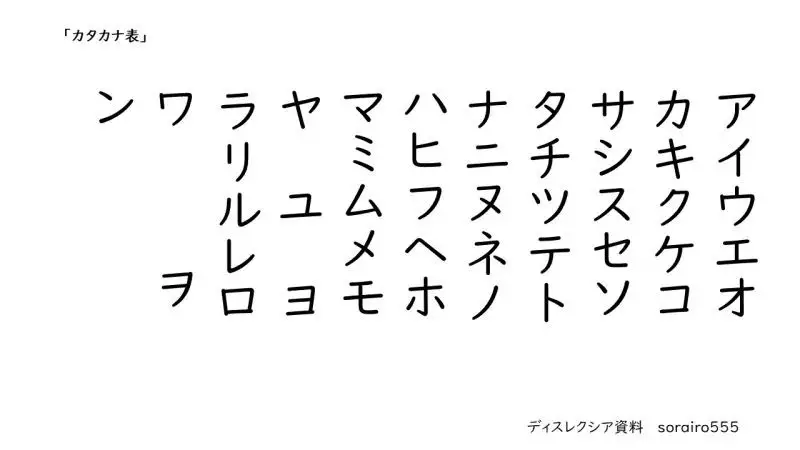
Katakana is one of the three Japanese alphabets, which is used to write words of foreign origin and others. In this article, we will share some curiosities and tips for you to learn Katakana in the best way possible.
This article is a supplement about Katakana; we will not show the Katakana table nor explain details of its strokes, just pass days to learn. If you want to see all of Katakana, we recommend the article below:
Katakana is one of the two syllabic alphabets used in Japanese, along with Hiragana. It is used to write foreign words and technical terms, as well as to emphasize certain words.
The Katakana characters are composed of straight and short strokes. It is important to know what they look like in order to be able to recognize and write them correctly.
There are many online resources, such as apps, books, courses, and tutorials, that can help you learn Katakana. Find the ones that work best for you and use them frequently.
Learning the 46 basic letters is the foundation for being able to read words in Katakana. You can learn the letters in various ways, such as memorizing letter tables, writing them several times, or playing memory games to help you remember.
Once you have learned the basic letters, it is time to practice reading and writing complete words. Choose simple words in English or other languages and try to write their versions in Katakana.
Should I Learn Katakana or Hiragana First?
Some people find that Katakana is quite easy to learn, as its strokes are straight and simple, but its difficulty is greater than many imagine.
Many recommend learning Katakana first, but I personally advise anyone to first learn Hiragana, which makes up more than 80% of Japanese writing when accompanied by Furigana when there are words in Kanji.
This fact makes it harder for a person to memorize and remember Katakana, even though the strokes are much simpler. The frequency with which the student reads Katakana is much lower than that of Hiragana.
This means that the process of learning to read Katakana perfectly will take much longer, so it is best to focus on Hiragana, and over time, Katakana will sink in.
[ー] Chōonpu – Katakana Dash or Long Vowel Mark
The dash “ー” is known as “chōonpu” in Japanese and is used to indicate long or prolonged syllables. It is placed between two Katakana syllables to indicate that they should be pronounced together, as a single long syllable.
For example, the word “トマト” (tomato) is written as “トマト” with two separate Katakana characters, while the word “トースト” (toast) is written as “ー” using the chōonpu to indicate the long syllable “too.”
The use of chōonpu is important for correctly representing the pronunciation of foreign words in Japanese and for aiding in the reading and understanding of texts written in Katakana.
The chōonpu can be used in Hiragana, but it is rarely added; usually, a vowel is used to elongate the tone.
Katakana is Not Just for Foreign Words
Most people studying Japanese should already be aware that Katakana is generally used to write words of foreign origin or names of foreign people.
In fact, Katakana is also used to emphasize certain Japanese words, write certain titles, and also the famous onomatopoeias that are frequent in the Japanese language.
In summary, Katakana can be used for:
Foreign words: words that have no equivalents in Japanese;
Proper names: including names of people, companies, and places.
Technical and scientific terms: areas such as technology, science, and medicine.
Advertising and publicity: used in advertisements, promotions, and other forms of advertising to attract consumers’ attention.
Also used in song lyrics, movie titles, and other forms of entertainment.
How Did Katakana Originate?
The history of Katakana dates back to the Heian period, which occurred in Japan between 794 and 1185 AD. During this period, Japanese writing was based on Chinese writing and was mainly used by members of the upper class of society.
However, over time, the syllabic writing was developed to be used by common people and became a distinct form of writing. Katakana emerged as a simplified form of Chinese writing to write foreign and technical words.
Over the centuries, Katakana evolved and became an important form of writing in Japan.
The Difficulties of Learning Katakana
Besides the low frequency with which you will consume words in Katakana, another difficulty will be the simplicity of the strokes that can end up confusing, especially in some fonts.
There are 4 Katakana characters that are very similar, which can end up confusing most people. We have already written an article discussing these kana and how to differentiate them; we will leave the link below:
Even the differences taking hold in your mind takes quite a bit of time, but one tip is to be aware that “tsu” is the only kana that becomes small to elongate the consonant that comes after.
Learn Katakana with Anime Titles
Another thing you can do to learn Katakana is to use logos, movie names, and anime titles that have their writing in Katakana. They are usually titles derived from English.
Using anime titles will help you learn Katakana from different sources and perspectives, in addition to helping you get to know words that are not always of foreign origin.
We recommend watching a snippet of our class below. The video kind of summarizes the tips in this article and shows learning using anime logos:
Use the Japanese Club
Katakana is just the beginning; you will need to learn everything about the Japanese language, and to help you, we recommend you check out our complete Japanese course: Japanese Club.
The Japanese Club is a members’ area of Suki Desu where we post various video lessons, often accompanied by an article with phrases that have pronunciation and can be copied to a spaced repetition software.
In addition, we also offer games and interactive activities and a module entirely dedicated to content about Japanese culture such as Animes and Mangas.
Did you know that in Japan it is common to ask for extra noodles for your ramen soup at no additional cost? This act is called Kaedama [替え玉], and today we will study this Japanese word.
Kaedama is an additional request to replenish only the noodles after eating all the noodles from the broth in a ramen restaurant. This request is usually common and free.
“Tae-dama” [替え玉] means “to exchange” or “to replace,” while “dama” means “ball” or “sphere.” Therefore, “tae-dama” generally refers to a scoop of additional noodles.
It is believed that this custom was invented at the “Ganso Nagahama-ya” shop located in Nagahama, Fukuoka.
The custom arose because the noodles served stretched easily while being eaten, so they offered it in small quantities and allowed the customer to request more noodles.
This system spread to other ramen shops in Fukuoka and then to the whole country, but it is only offered in some places, usually shops that offer thin ramen from Fukuoka or Nagahama.
Do all restaurants offer Kaedama?
Not all ramen shops in Fukuoka, as well as outside of Kyushu, offer the kaedama system, and some shops also do not offer taedama during peak hours.
In eastern Kanto, many ramen shops, even those that offer Kyushu or Fukuoka ramen, do not provide the kaedama service.
Some shops may also require the customer to hand over the container to the shop staff, while others may provide noodles in the already boiled container or directly from the pot.
Some shops also offer additional ingredients, such as “ramen dare” or sesame and goma. The type of noodles offered is usually thin due to the history of its origin in Fukuoka and cooking time.
Some restaurants allow you to choose between thick or thin noodles, while others only offer thin. It is possible to choose the firmness of the noodles, just like in the first serving, and some shops also offer homemade noodles.
Even if an establishment does not have a custom of providing this type of service, it doesn’t hurt to ask; many may add noodles without any problem.
In some places, it may offer an extra portion of noodles in dishes like udon and soba. One of these places is known as Maki’s Udon. There are other similar customs like wadama.
Japan is a market that has great opportunities for foreigners with the necessary qualifications
The IT (Information Technology) market is constantly growing, and each year the need for qualified professionals increases; however, the number of professionals with the necessary qualifications in the market is still not sufficient to meet this demand. Japan is one of the most technologically advanced countries in the world and has been struggling with this shortage of skilled labor for some time. Because of this, the country has been opening its doors to the entry of foreigners to work in these areas.
Although the country values tradition highly, Japanese ancestry has become an increasingly less important factor for those who want to work in technology in the country. According to a survey conducted by the Japanese portal TimeJP, some of the most common professions among foreigners were listed, including language teachers, translators, interpreters, and IT professionals.
According to the survey, 16% of foreigners work in the IT field, 19% in education, 16% in sales, and the rest in office work, translation, interpretation, marketing, design, and art. The number of foreigners living in Japan exceeds 1 million.
Japan is one of the most developed countries in the world, with a quality of life above average, and can offer many opportunities for foreigners with the necessary knowledge who wish to start a career in the country.
What knowledge is necessary to work in IT in Japan?
Japan is a country well known for its discipline and quality in everything it does. Therefore, the requirements for people who want to enter the IT field are not few. It is essential that candidates have complete digital literacy, in addition to being a technologist or graduate in courses focused on technological areas, programming, software engineering, among others.
It is also necessary to have specific knowledge in areas such as JavaScript and HTML/CSS, basic or advanced, embedded programming with C++, PL SQL, Excel, as well as the ability to develop web applications with plans for integration into mobile systems, as these skills make the resume more robust and impactful for hiring.
In addition to technical knowledge, other factors can greatly help people who wish to immigrate to Japan with the intention of working and having experience in the technology market, such as having a level of familiarity with Japanese and English sufficient for communication, being willing to relocate between Japanese cities, ease of teamwork, creativity, the ability to innovate, and knowing how to handle criticism. Another very common factor in Japanese companies is the long-term employment in one company, as job turnover is not common among Japanese people.
IT Passport Certification
The IT Passport certification is a national certification that proves that a person has the necessary requirements to work in the Japanese industry. It is a significant differentiator when looking for a job in the country, as it assures companies that you are qualified to perform your role.
This certificate is very common in Japan and can only be obtained on Japanese soil, so it is very important for people planning to move to Japan to start studying in advance, so that when they make the move, they can obtain their certification as quickly as possible.
Japanese Language Proficiency Test (JLPT)
Not all companies require candidates to speak Japanese fluently; however, this can be another significant differentiator. This certification measures your fluency in the country’s native language and has 5 levels, ranging from N1 to N5, with N1 being the highest.
Many companies have programs to qualify foreigners, teaching the language, or even have translators so that foreigners can communicate, but those who already have a certain level of fluency will always be one step ahead when it comes to hiring.
Another important point in learning the native language of the country concerns personal matters or even potential freelance opportunities, as many clients do not speak other languages besides Japanese.
Look for jobs in large cities
Job openings and positions for IT professionals, just like in Brazil, are concentrated in Japan’s large urban centers. The larger and more developed the city, the more companies and opportunities it has. Cities like Tokyo, Yokohama, Osaka, Nagoya, Sapporo, and Kobe are major technological hubs.
It is very common in large cities to find foreigners occupying positions they held in their countries of origin. In smaller cities, the vast majority of foreign labor performs operational services in factories, and the few positions in technology are held by Japanese.
Benefits and salaries of a programmer in Japan
As mentioned earlier, the IT market in Japan is quite heated and offers many opportunities. It is important to remember that the salaries paid to professionals in any field can vary according to the position, function, company, city, among other factors, just like anywhere else in the world.
Positions for programmers, analysts, systems engineers, and specialized developers earn an average of ¥350,000 (yen), which is approximately $3,189 (dollars).
Regarding the benefits offered by companies, they typically provide employees with:
Health plan: Typically, the plans offered are quite comprehensive and extensive;
Pension plan: A large part of companies offers this benefit;
Career plan: Most companies focus on the professional development of employees;
Training: It is very common for companies to offer internal and external training for employee adaptation;
Minimum working hours: Although it is common for Japanese to exceed working hours, the workload in the country is 8 hours a day and 40 hours a week.
Paid time off: A large part of Japanese companies offers about 10 to 11 paid time off days per year;
Standard working time: The country’s standard is to work from Monday to Friday, with time off on holidays.
Working with systems analysis and development in Japan can be a great opportunity for people who want to live abroad, as it is an extremely developed country and one of the world references in technology. Knowing how to deal with impacts and risks is essential when moving to a new country. The adaptation process may be slower for some people, as it involves a culture completely different from ours, but this is temporary.
The income tax or national tax is one of the main ways in which governments collect resources to finance their projects and investments. In Japan, the income tax is known as Shotokuzei and is applied to all individuals and companies that receive an income above a certain annual limit. In this article, we will explore what Shotokuzei is, who needs to declare it, what the tax rate is, and how to declare it.
What is Shotokuzei?
Shotokuzei is a progressive income tax that is applied to all individuals and companies that receive an income above a certain annual limit.
This tax is one of the main sources of revenue for the Japanese government, being used to finance a series of public projects and programs, from infrastructure to social programs.
The word “shotokuzei” (所得税) is composed of two Japanese ideograms: “sho” (所), which means “possession” or “property,” and “toku” (得), which means “obtaining” or “acquisition,” and “zei” (税), which means “tax.” Together, these ideograms form the term that means “income tax.”
The origin of the term “shotokuzei” dates back to the early 20th century when Japan began implementing a modern tax system, following the Western model.
In 1922, the first income tax law of the country was enacted, establishing the foundations of the system that is still in effect today. It is a civic obligation and a means of financing government activities.
What is the rate of Shotokuzei?
The rate of Shotokuzei is progressive and varies according to the taxpayer’s annual income. The higher the income, the higher the rate applied. The rate table is updated annually by the Japanese government and can be found on its official website.
For illustration, in 2022, the rates range from 5% to 45%, depending on the income bracket. See below a table with the tax percentage according to the income of each Japanese citizen.
Annual income range
Rate
Up to ¥1,950,000
5%
From ¥1,950,001 to ¥3,300,000
10%
From ¥3,300,001 to ¥6,950,000
20%
From ¥6,950,001 to ¥9,000,000
23%
From ¥9,000,001 to ¥18,000,000
33%
From ¥18,000,001 to ¥40,000,000
40%
Above ¥40,000,000
45%
The rate is applied to the taxpayer’s taxable net profit, that is, the difference between taxable revenues and expenses throughout the fiscal year.
It is important to remember that these rates may change annually; we recommend checking the information on the official government website or with a professional.
What can be deducted from Japanese income tax?
There are several deductions allowed by law that can be used to reduce income tax in Japan. See below some examples:
Personal deduction: An automatic and standard deduction of ¥480,000 is allowed for each taxpayer, which is reduced by ¥8,000 for each ¥1,000,000 of taxable income above ¥24,000,000. Additionally, additional deductions are allowed for dependents, spouses, and elderly parents living with the taxpayer.
Medical expenses deduction: It is possible to deduct medical and dental expenses paid during the fiscal year, up to a limit of ¥100,000 per person. This includes expenses for medical consultations, treatments, exams, medications, among others.
Education deduction: Deductions for education expenses, such as school tuition, books, teaching materials, among others, are allowed. The limit for this deduction is ¥120,000 per person.
Donation deduction: It is possible to deduct donations made to non-profit organizations, up to a limit of 40% of the taxpayer’s taxable income.
Health insurance and social security contributions deduction: Contributions to health insurance and social security are also deductible, up to the maximum limit established by law.
Private pension deduction: Contributions to private pension plans can also be deducted, as long as they are within the limits established by law.
There are other specific deductions for certain types of income and expenses, such as rents, mortgage loan interest, housing expenses, among others.
Japan’s Income Tax Form
The income tax declaration form in Japan is called “Kakutei Shinkoku.” The form consists of several sections where taxpayers need to provide detailed information about their income, expenses, deductions, and other relevant items.
Below is a summary of the main sections of the income tax declaration form in Japan:
Taxpayer identification: This section includes personal information of the taxpayer, such as name, address, foreign registration number, among others.
Income: In this section, the taxpayer needs to report all types of income received during the fiscal year, including salaries, investment income, rents, pensions, among others.
Expenses: In this section, the taxpayer can declare their deductible expenses, such as medical expenses, contributions to pension plans, donations to charity, among others.
Personal deductions: The taxpayer can request personal deductions for themselves and their dependents, which are calculated based on income and number of dependents.
Withholding tax: This section includes information about the withholding tax on payments received throughout the fiscal year, such as salaries and pensions.
Calculation of tax due: Based on the information provided in the previous sections, the tax authority calculates the tax due by the taxpayer.
Tax payment: In this section, the taxpayer can indicate how they wish to make the payment of the tax due, which can be made in installments or in full.
What happens if income tax is evaded in Japan?
Tax evasion is an illegal practice and can have even more serious consequences than simply not paying income tax in Japan. Tax evasion occurs when the taxpayer omits information or falsifies documents to avoid paying taxes.
If a taxpayer is caught evading taxes, they may face the following legal and financial consequences:
Fines and interest: The taxpayer may be fined up to 50% of the tax due, in addition to daily interest on the amount owed until payment is made.
Criminal prosecution: Tax evasion is considered a criminal offense in Japan and can lead to criminal prosecution. The taxpayer may be summoned to appear in court and may be sentenced to imprisonment, additional fines, and court costs.
Loss of reputation: Tax evasion can have a negative impact on the taxpayer’s reputation. If they are convicted of tax evasion, it can harm their professional and personal image, which is very important in Japan.
Asset seizure: The tax authority may seize the taxpayer’s assets, such as bank accounts and real estate, to recover the amount owed.
Prohibition of conducting business activities: In extreme cases, the tax authority may prohibit the taxpayer from conducting business activities until the debt is paid.
Prohibition of leaving the country: In extreme cases, the tax authority may prohibit the taxpayer from leaving the country until the tax due is paid.
Seizure of assets: If the taxpayer does not make the payment even after a court decision, the tax authority may execute an asset seizure order. This means that the authority can confiscate the taxpayer’s assets, such as real estate, vehicles, investments, or other assets, until the amount owed is recovered.
Credit cards make life easier for many people, but their popularity in some economically strong countries seems to be low. What about Japan? Do the Japanese like to use credit cards? How do I get a credit card in Japan? What are the best cards? In this article, we will address this and other topics.
Credit card for foreigners in Japan
For foreigners, obtaining a credit card in Japan can be a slightly more complicated process than for Japanese residents. Typically, the following requirements are necessary to apply for a credit card in Japan:
Valid residency status: You must have a valid residency status in Japan, such as a work visa or student visa.
Credit history: Some credit card companies may require a credit history in Japan to assess the risk of granting credit. This can be difficult for newcomers to the country, as they do not have a credit history in Japan. In this case, some credit card companies may require additional guarantees or a guarantor.
Proof of income: Most credit card companies in Japan require proof of income to assess repayment ability. Foreigners working in Japan must provide a document that proves their income, such as a payslip or tax return. Students may need to provide a financial support statement.
Proof of residence: Some credit card companies in Japan may require proof of residence in the country. This can be a rental contract, a utility bill, or a confirmation letter of address issued by the city hall.
Identification documents: In addition to a passport, foreigners must provide a valid identification document in Japan, such as a driver’s license or residence card.
Language proficiency: Some credit card companies may require applicants to speak Japanese to communicate with customer service or to understand the terms and conditions of the contract.
For foreigners who wish to apply for a credit card in Japan, some companies are known for being more friendly and offering more accessible requirements. Some offer cards specifically for foreigners and students.
Companies such as Rakuten, JCB, Sumitomo Mitsui, Aeon, and Orico are famous for making it easier for foreigners to obtain cards and even offer online applications.
What types of credit cards are available in Japan?
In Japan, there are various types of credit cards available, offered by different companies and financial institutions. Here are some of the main types:
Bank credit cards – Issued by local or international banks, these credit cards are widely used in Japan and usually offer advantages such as point accumulation and cashback.
Credit cards issued by retail companies – Many retail companies in Japan, such as department stores and supermarket chains, issue their own credit cards. These cards offer exclusive advantages for purchases at their respective stores and may be easier to obtain compared to bank cards.
Co-branded credit cards – These cards are issued in partnership with other companies, such as airlines or hotel chains. They offer specific advantages for customers of these companies, such as discounts on airline tickets or accommodations.
Point and Pre-Paid Cards – Stores and companies may also offer point cards with credit functions or that are more easily accepted in their store networks. Even railway usage cards allow purchases and are options for many in addition to traditional credit cards.
Regardless of the type of card chosen, it is important to carefully evaluate the advantages offered and the fees and interest rates applied before making an application.
The Sumitomo Mitsui Card Company, also known as SMCC, is one of the largest credit card issuers in Japan. The company is a subsidiary of the Sumitomo Mitsui Financial Group, one of the largest financial groups in the country.
The credit cards issued by SMCC are known for offering exclusive benefits, in addition to traditional points, cashback, discounts on purchases, and concierge services.
SMCC cards are known for having a relatively high approval rate and a quick and easy application process.
The traditional card has no fee, while the gold card has a low annual fee of only 5,000 yen, while the platinum card has an annual membership fee of 33,000 yen and returns up to 10% in points.
The card company offers discounts of up to 5% at convenience stores, doubles points at specific stores, and even sends sweets and gift vouchers. The gold card even includes travel insurance, point bonuses, and much more.
JCB Credit Cards
JCB credit cards are one of the main types of credit cards in Japan, issued by JCB Co., Ltd. The Japan Credit Bureau was founded in 1961 and currently has a presence in over 190 countries.
JCB is a type of card brand like VISA and Mastercard. JCB credit cards are widely accepted worldwide, especially in Asia and the Pacific countries.
The company has various proprietary and co-branded cards, in addition to having its brand on various cards such as AEON, Rakuten, Saison, Apollo Station.
Other cards in order of power are:
JCB Aquos Card
JCB Card
JCB Classic Card
JCB Gold Card
JCB JAL Card
JCB Kyash Card
JCB NEXUS Card
JCB Platinum Card
JCB Premier Card
JCB WAON Card
American Express Cards
American Express is a credit card issuing company with its own brand, widely present in Japan. The company offers a wide range of credit cards to Japanese customers, from personal credit cards to corporate cards.
It is a traditional company with high-end cards but with a high application and annual fee. The company is also present via co-branded cards in Japan.
An example of an accessible AE card is the Saison Pearl American Express Card, which has no annual fee and an annual membership fee of only 1,100 yen. One of its advantages is a return of up to 2% on QUICPay.
American Express Centurion
The American Express Centurion, also known as the Amex Black Card, is one of the most exclusive credit cards in the world, issued by American Express. This card is made of titanium and is only available to selected clients who meet certain income and spending requirements.
The Centurion Card offers exclusive benefits, such as access to VIP lounges at airports, 24-hour concierge services, an exclusive rewards program, and other premium benefits. Centurion Card holders also have access to exclusive events, such as shows and sports, and benefits at luxury hotels and restaurants worldwide.
It is important to note that the Centurion Card is not available for public application and is only offered by invitation from American Express. The eligibility requirements to receive an invitation for the Centurion Card are kept secret, but generally require a very high income and a significant spending history with other American Express cards.
Due to its exclusivity and premium benefits, the American Express Centurion is often considered a status symbol for cardholders. Some say it is a credit card with no limits, but it is said that its annual fee exceeds 380,000 yen.
List of Credit Card Companies in Japan
To conclude, we will leave a list of all credit card companies in Japan:
Japan is one of the largest economies in the world and an important center for international business. When doing business with Japanese companies or working in a Japanese company, it is helpful to have knowledge of business vocabulary in Japanese. This can help establish more effective communication and better understand the cultural nuances in the Japanese business environment.
Business in Japan is governed by cultural norms and values that may be different from those in other parts of the world. Japanese business culture values harmony and cooperation, and communication is often indirect and implicit. Hierarchy is important, and titles are frequently used to show respect. Additionally, personal relationships are valued and can be crucial for establishing trust and closing deals in Japan.