
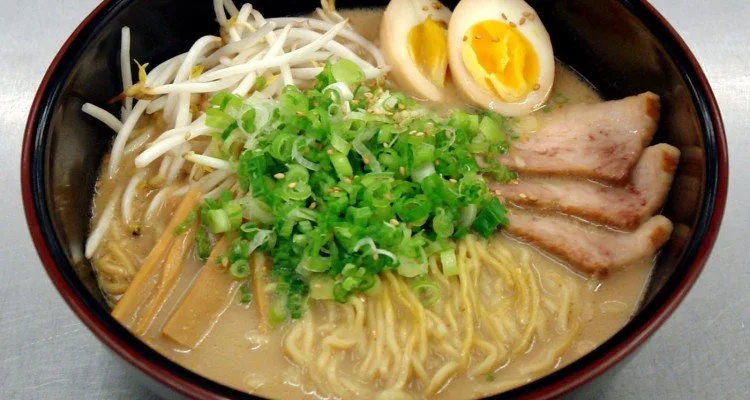
Did you know that in Japan it is common to ask for extra noodles for your ramen soup at no additional cost? This act is called Kaedama [替え玉], and today we will study this Japanese word.
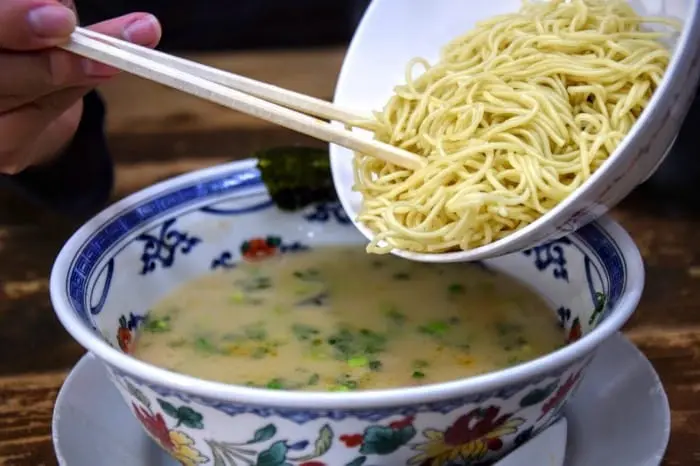
Kaedama is an additional request to replenish only the noodles after eating all the noodles from the broth in a ramen restaurant. This request is usually common and free.
"Tae-dama" [替え玉] means "to exchange" or "to replace," while "dama" means "ball" or "sphere." Therefore, "tae-dama" generally refers to a scoop of additional noodles.
We also recommend reading:
- Ramen Guide – Types, Curiosities, and Recipes
- 15 Types of Japanese Noodles
- Kogashi Ramen – The Noodles That Catch Fire
What is the origin of Kaedama?
It is believed that this custom was invented at the "Ganso Nagahama-ya" shop located in Nagahama, Fukuoka.
The custom arose because the noodles served stretched easily while being eaten, so they offered it in small quantities and allowed the customer to request more noodles.
This system spread to other ramen shops in Fukuoka and then to the whole country, but it is only offered in some places, usually shops that offer thin ramen from Fukuoka or Nagahama.
Do all restaurants offer Kaedama?
Not all ramen shops in Fukuoka, as well as outside of Kyushu, offer the kaedama system, and some shops also do not offer taedama during peak hours.
In eastern Kanto, many ramen shops, even those that offer Kyushu or Fukuoka ramen, do not provide the kaedama service.
Some shops may also require the customer to hand over the container to the shop staff, while others may provide noodles in the already boiled container or directly from the pot.
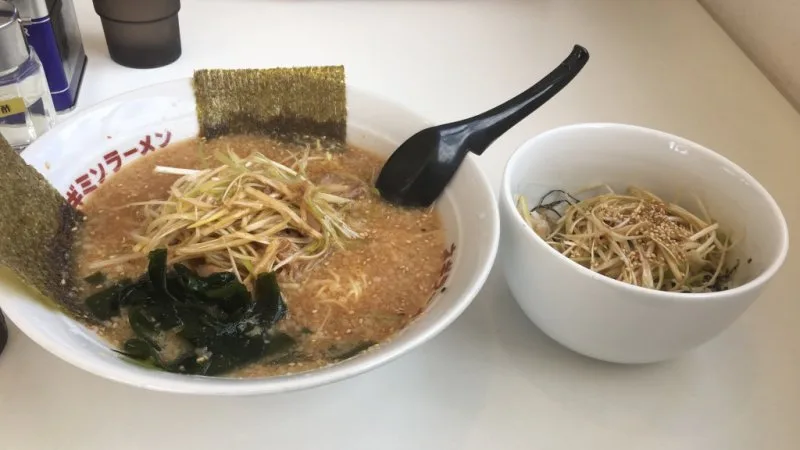
Some shops also offer additional ingredients, such as "ramen dare" or sesame and goma. The type of noodles offered is usually thin due to the history of its origin in Fukuoka and cooking time.
Some restaurants allow you to choose between thick or thin noodles, while others only offer thin. It is possible to choose the firmness of the noodles, just like in the first serving, and some shops also offer homemade noodles.
Even if an establishment does not have a custom of providing this type of service, it doesn't hurt to ask; many may add noodles without any problem.
In some places, it may offer an extra portion of noodles in dishes like udon and soba. One of these places is known as Maki's Udon. There are other similar customs like wadama.

Community
Comments
0 comments
There are no published comments in this language yet.
Send comment