
Clips of ramen catching fire travel fast. Someone always drops the word kogashi under the video, as if the noodles themselves were the fuel. In Japanese the word does mean burnt or toasted — and the dish is real — but the flare happens in a wok of lard and tare, not on top of the bowl you photograph.
Gogyo, the shop that made this style famous, used to cook that char in Nishi-Azabu, a short walk from Roppongi. My friend Rodrigo Coelho ate there when the dining room was still open. The bowl looked ruined. It wasn't.
Contents 5
What kogashi ramen actually is
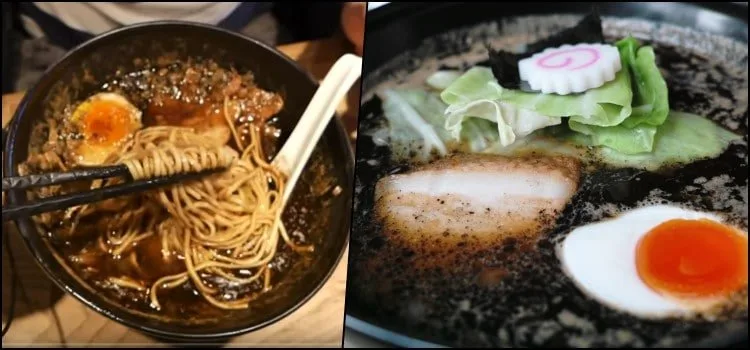
Japan already has more ramen styles than anyone reasonably memorizes. Kogashi is not a new noodle. It is a way of treating the seasoning — the tare — until it takes on smoke, bitterness, and a color that looks almost burnt. The soup underneath is usually a chicken chintan, clearer than tonkotsu, then stained dark by that charred miso or shoyu.
Kogashi ramen is chicken broth stained by miso or shoyu tare flashed in smoking-hot lard. The noodles do not catch fire; the seasoning does, for a few seconds, in a wok.
The flavor is savory with a roasted edge, closer to caramelized paste than to a kitchen accident. Miso comes out richer and a little sweet under the smoke. Shoyu stays sharper and more aromatic. A well-timed bowl should smell of roast, not of ashtray.
How the charred broth is made
At Gogyo the cook heats pork lard in a wok until it is brutally hot — around 300°C for miso, a little higher for shoyu. The paste or soy sauce hits the fat, the wok erupts in smoke and sometimes flame, and after a few seconds the chicken broth goes in. Timing is the whole trick: too soon and you get no char; a beat too late and the tare is ash.
That charred residue is what dyes the bowl. The noodles, chashu, cabbage, and a seasoned egg go in after the soup is already dark. If you came looking for a tableside torch show, this is not that restaurant. The fire lives in the kitchen.
A home wok will not behave like a ramen-ya burner. If you want to chase the idea without pretending you run Gogyo, start from a real ramen broth and a small amount of miso or shoyu toasted until fragrant, not carbonized. The shop version is a few seconds of heat you cannot fake with a packet.
Gogyo, Hakata, and a shop that felt like an izakaya
The style was built in Hakata in 2000 by Shigemi Kawahara, the cook behind Ippudo and the Chikaranomoto group. Gogyo was the house for kogashi: miso or shoyu, plus shio and tonkotsu for anyone who did not want the black bowl. The miso version is the one most people remember first.
The Nishi-Azabu shop did not look like a six-stool ramen-ya. It was spacious, with appetizers and sake, the kind of place you could linger instead of slurping and leaving. That is still how people describe it. Other Gogyo rooms opened in Kyoto near Nishiki Market and in Nagoya, and the group later took the idea overseas. Each kitchen keeps its own touch — same idea, never the same bowl.
Where to look for a bowl now
The Tokyo shop in Nishi-Azabu is closed. Branches in Japan have opened and shut over the years, so a 2014 address is not a reservation. Before you plan a trip, check a current listing for Gogyo or for another shop that actually writes kogashi miso or kogashi shoyu on the menu.
Outside Japan the name has shown up in Hong Kong, Sydney, and more recently New York. Availability moves. The useful search is the technique, not a single street near Roppongi.
Kyoto's fire ramen is a different show
Menbaka Ichidai in Kyoto pours flaming oil over Kujo green onions at the counter. That fire ramen started in the 1980s. You sit through a short flare, then eat a lighter shoyu bowl. It is not kogashi. Mixing the two is how the internet ended up claiming the noodles catch fire.
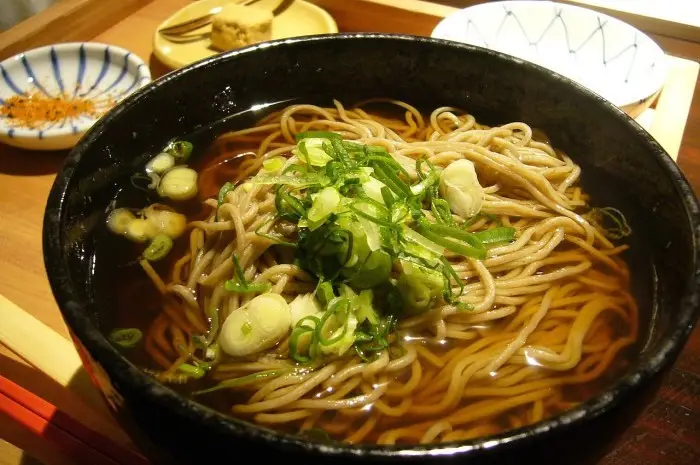
Japan does set other things alight on purpose — teppanyaki at the table, a scallop (hotate) kissed with a torch. Those are cousins of the same appetite for smoke. They still are not this soup. If you would rather stay with Japanese noodles that never see a wok of lard, soba is a calmer cousin.
If you have had a kogashi bowl that was not Gogyo's, the char will already have told you: every cook burns the tare a little differently. That is the point.

Community
Comments
0 comments
There are no published comments in this language yet.
Send comment