
Japan stacks mountains, volcanoes, and island ridges so steep that a road would feel like a detour. That is why ropeways matter: a cabin glides over cedar forests, snow bowls, and gorges, and in a few minutes you stand somewhere that used to cost half a day of climbing. The ride itself is often the attraction—especially when the season paints ice on trees, maple fire on cliffs, or cherry blossoms on ridges you can only see from above.
What follows is a traveler-oriented map of standout ropeways and aerial lifts across Japan—not a rigid ranking, but a practical selection of lines people seek for views, access, and character. Before the catalog, a quick note on Japanese terms helps you read signs without mixing up a gondola and a funicular.
Contents 22
Ropeways in Japan: names and what they mean
In Japanese regulation, aerial cable transport falls under sakudō (索道), literally a “rope path.” It covers aerial tramways, gondola lifts, funitels, and similar systems. Colloquially, enclosed mountain lines are often called ropeway (ロープウェイ / ロープウェー, rōpuwei). Open chairlifts are usually rifuto (リフト)—ski lifts, not elevators. The word kēburukā (ケーブルカー) is different again: in Japan it points to cable railways and funiculars on rails, not to hanging gondolas. English “cable car” can blur those categories, which is why many guides simply say ropeway for the aerial ride.
Lines run from Hokkaido to Kyushu. Some exist mainly to reach a trailhead, onsen town, or shrine; others sell the panorama. Cabins tend to be wide and glass-heavy; operators emphasize safety standards; many stations handle strollers and wheelchairs, though mountain weather can still close a line without much warning.
- Design: modern cabins built for wide views, sometimes double-deck.
- Season: the same line can feel like a different trip in snow, autumn leaves, or summer haze.
- Access: useful for hikers who want to save energy for the ridge, not only for “sightseeing only” visitors.
When the ride changes with the season
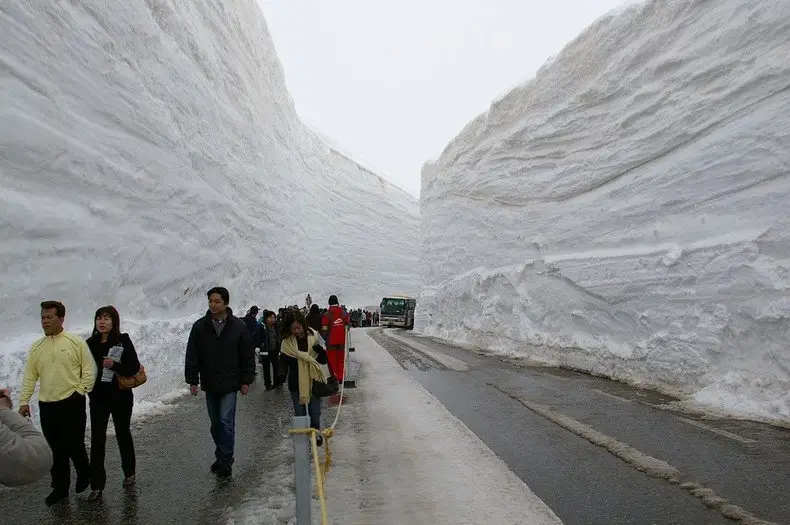
Winter is when Zao’s ice-covered trees and northern snowfields become the reason people board. Spring puts Yoshino’s sakura and Alpine snow walls (on routes like Tateyama Kurobe) in the same mental calendar. Autumn is peak for gorges such as Kankakei and Tanigawa-dake foliage. Summer haze can mute distant peaks—including Fuji—so clear mornings matter more than brochure photos. Always check the day’s operation status; wind and ice shut stations even on popular holidays.
Zao Ropeway
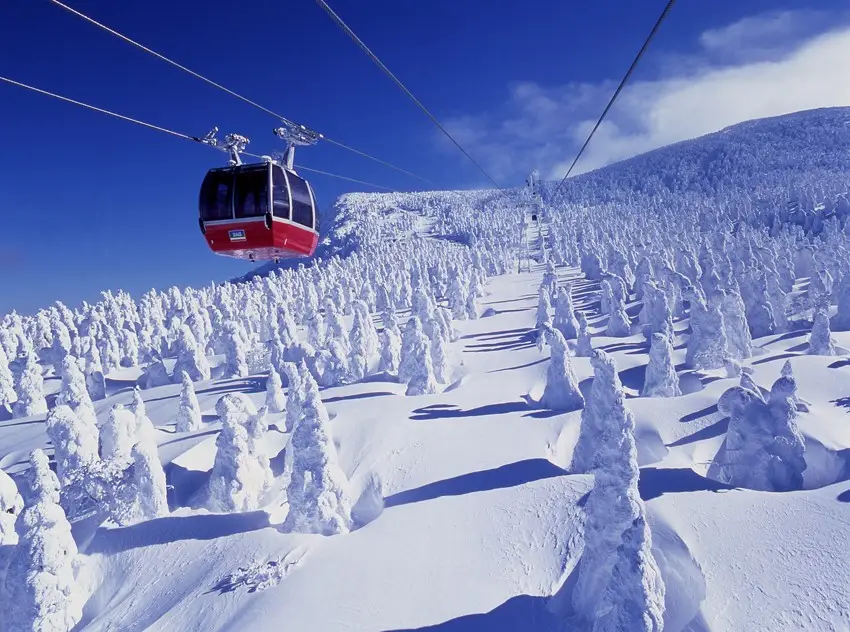
In Yamagata, the Zao Ropeway climbs toward the high slopes of Mount Zao, known for onsen and for winter “soft rime” trees—the famous ice monsters that turn the forest into a white sculpture park. The line is long enough that the landscape keeps changing under the cabin: forest, ski terrain, then open mountain air. It is one of the classic cold-season reasons to ride rather than only hike.
Komagatake Ropeway
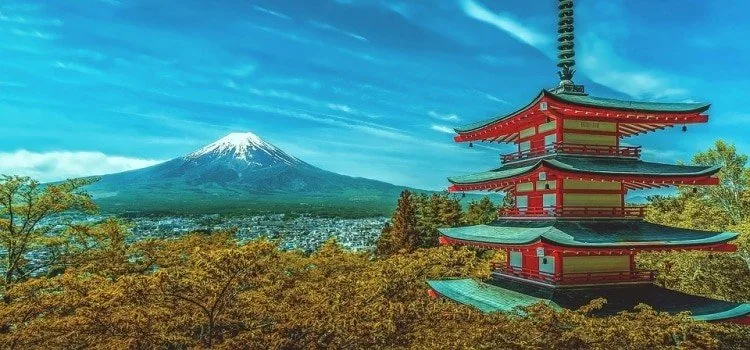
In the Central Alps, the Komagatake Ropeway is known for a steep rise and one of Japan’s highest terminal areas, with a name that nods to a “horse peak” legend. On a clear day the Japanese Alps open wide, and Mount Fuji can appear as a distant cone. It suits hikers heading for cirques and ridges who want to start already high.
Shinhotaka Ropeway
In Gifu’s Okuhida area, the Shinhotaka Ropeway is famous for Japan’s double-deck gondolas on the upper section. Two connected segments lift visitors deep into the Northern Alps, with observation decks and onsen villages below. The upper station sits above the tree line feel of many day trips—wind and clouds can rewrite the view in minutes.
If you are planning hot-spring days around alpine towns, the etiquette and bath types in our onsen guide pair naturally with a high ropeway morning.
Tateyama Ropeway
Part of the Tateyama Kurobe Alpine Route, the Tateyama Ropeway is a short, high-impact segment among cable cars, trolley buses, and mountain stations. “Tateyama” suggests a standing, imposing mountain, and the ride is often linked with spring snow walls and the spiritual weight of the Tateyama range. It is less a standalone half-day and more a chapter inside a longer Alps crossing.
Tanigawadake Ropeway
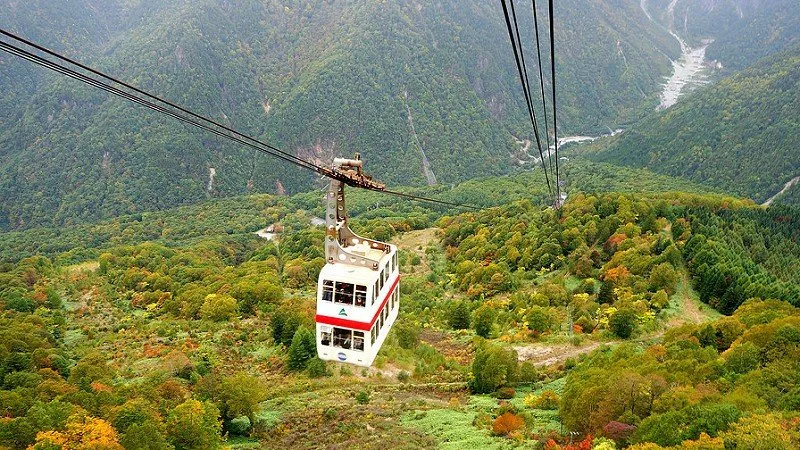
On Mount Tanigawa in Gunma, the Tanigawadake Ropeway rises from the valley toward Tenjindaira ski and hiking terrain. Autumn color is the usual headline, but the line also serves winter sports and summer ridge walks. The name evokes a mountain shaped by rivers and valleys—matching the scenery under the cable.
Kurodake Ropeway
In Hokkaido’s Daisetsuzan area, the Kurodake Ropeway (Sōunkyō side) is a gateway into volcanic plateaus and alpine trails. “Kurodake” (“black peak”) fits the dark rock of the massif. It is a strong choice if your Japan trip includes northern national parks rather than only Honshu classics.
Kankakei Ropeway
On Shodoshima Island, the Kankakei Ropeway crosses dramatic gorge scenery in a short ride. Cliffs, layered rock, and autumn foliage explain the “splendid views” sense of the name. Pair it with the island’s olive and coastal culture for a day that is not only mountain-focused.
Hakone Komagatake Ropeway
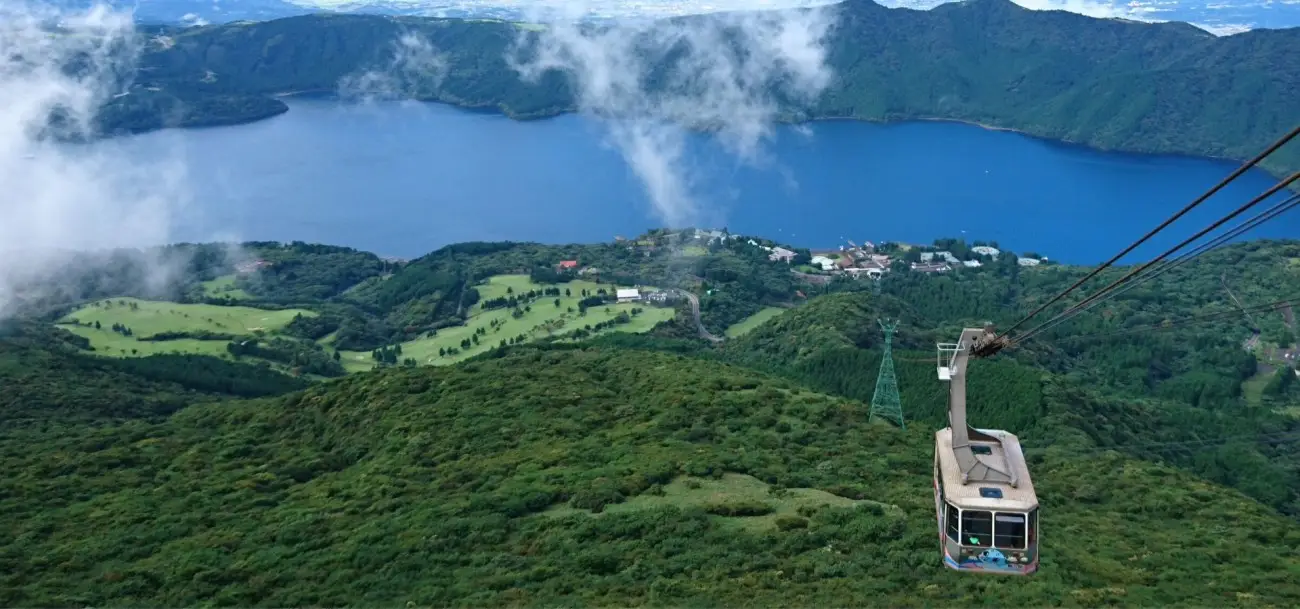
In Hakone, the Hakone Komagatake Ropeway climbs toward the summit area of Mount Komagatake with views that can include Lake Ashi and, on clear days, Mount Fuji. Hakone is already dense with ropeways and cable railways; this one is the mountain-top viewpoint version. For the wider circuit of onsen, lake, and volcanic valleys, see our guide to Hakone around Mount Fuji.
Hakkoda Ropeway
In Aomori, the Hakkoda Ropeway lifts visitors into a range whose name is often linked with multiple peaks. Autumn leaves and hiking trails are the usual draws; winter turns the same slopes into serious snow country. It is a Tohoku alternative when you want northern mountain air without going all the way to Hokkaido.
Gozaisho Ropeway
In Mie Prefecture, the Gozaisho Ropeway climbs Mount Gozaisho with a long vertical gain and, on clear days, a contrast between mountain ridge and the gleam of Ise Bay. Biodiversity and panoramic decks make it more than a simple ski-access lift.
Miyajima Ropeway
On Miyajima (Itsukushima), the ropeway system helps visitors reach Mount Misen after the shrine shore and the famous torii. Cabins look out over the Seto Inland Sea and island silhouettes. “Miyajima” as “shrine island” is not marketing fluff—the sacred geography is the reason the trail and the cable share the same day.
Unpenji Ropeway
In Kan’onji, Kagawa, the Unpenji Ropeway is known for a long free span between towers and for access to Unpenji, one of the 88 temples of the Shikoku pilgrimage. The name’s cloud-and-moon imagery matches stations that often sit above the haze layer. It is a pilgrimage-and-view combination more than a ski resort ride.
Yoshino Ropeway
In Yoshino, Nara, this is widely described as Japan’s oldest operating aerial ropeway, opened in 1929. It links the town side with Mount Yoshino, famous for staged cherry blossoms in spring and for a deep literary and religious history. The cabins feel vintage compared with double-deck Alps lines—and that is part of the charm.
Awashima Kaijō Ropeway
In Numazu, Shizuoka, the Awashima Kaijō Ropeway was notable as an early maritime aerial line, spanning water toward Awashima and its marine park setting. Views can take in Suruga Bay and, when the air is clean, Mount Fuji. Local operation status has varied over the years, so confirm before you plan a detour only for this span.
Biwako Valley Ropeway
Above Lake Biwa in Shiga, the Biwako Valley line is often promoted for high operating speed and for access to ski and hiking terrain overlooking Japan’s largest lake. “Valley” here means mountain recreation above the water, not a quiet lakeside stroll. Night and winter lighting sometimes add a different mood from daytime hiking trips.
Hachimantai area lifts
Around Hachimantai on the Akita–Iwate side of Towada-Hachimantai National Park, visitors find ski-area lifts and mountain access rather than a single nationwide celebrity ropeway. The name points to a multi-peak volcanic highland with hiking in summer and snow sports in winter. Treat it as regional mountain infrastructure—check which lifts run in the season you visit—rather than as a guaranteed “must-ride” monument.
Mount Takao Ropeway
Near Tokyo, the Mount Takao ropeway (and related hillside transport) shortens the climb on a mountain famous for trails, temples, and easy day-trip logistics from the capital. It is the practical choice when you want forest air without a full alpine expedition. Weekends fill quickly; early trains from the city still matter.
Iya Valley access
Deep in Tokushima’s Iya Valley, small cable systems and mountain access serve remote onsen and gorge country known for vine bridges and steep terrain. The atmosphere is isolated Japan more than polished resort. Schedules can be limited; build buffer time if you are chaining buses and mountain rides the same day.
Nokogiriyama Ropeway
On the Bōsō Peninsula in Chiba, the Nokogiriyama Ropeway climbs “Saw Mountain,” named for jagged rock formations. From the upper area you get Tokyo Bay views and cliff-temple walking. It is a strong half-day when you are based in Tokyo or Chiba and want a mountain edge without heading to the Japan Alps.
How to choose a line for your itinerary
Match the ropeway to the trip, not the other way around. Alps lines (Shinhotaka, Tateyama, Komagatake) reward clear weather and mountain clothing. Island and gorge rides (Kankakei, Miyajima, Nokogiri) mix culture with short aerial segments. Near-city options (Takao, Hakone) fit tight schedules. If a brochure promises “the best in Japan,” read it as marketing: the best ride is the one that fits your season, region, and tolerance for height and cold.
Tickets, last departures, and weather holds change by operator. Official station pages and same-day notices beat any static list—including this one—when wind rises or snow piles on the cables.

Community
Comments
0 comments
There are no published comments in this language yet.
Send comment