
Do you know how to write and say the days, months, and years in Japanese? In this article, we will examine in detail how to write and pronounce dates in the language. The writing is usually similar to that of Chinese, which can help you recognize both.
The days, months, and years can be written both with Arabic numerals (123) and with the ideograms of the Japanese language (一二三). There is no single rule for when to use each of these forms; they usually coexist on different occasions. Of course, when pronouncing them, it is recommended to use the common reading in Japanese.
Contents 5
How are the days of the week said in Japanese?
Although the focus of this article is on days, months, and years, we should start by looking at the days of the week in Japanese (from Monday to Sunday), which are practically the names of the planets or the five elements.
| Sunday | 日曜日 | nichiyoubi |
| Monday | 月曜日 | getsuyoubi |
| Tuesday | 火曜日 | kayoubi |
| Wednesday | 水曜日 | suiyoubi |
| Thursday | 木曜日 | mokuyoubi |
| Friday | 金曜日 | kinyoubi |
| Saturday | 土曜日 | doyoubi |
How are the days of the month said in Japanese?
The days of the month are accompanied by an ideogram that is pronounced nichi [日], which means sun and day. The same character can also be read ka, depending on the date, a kind of ON or KUN split. The table below explains the ways to pronounce the days of the month in Japanese.
We provide below two readings; both are correct, but they are used differently. When referring to a specific day of a month, we usually use the special reading in bold.
| Day | Romaji | Kanji | Special romaji |
| 1 | ichi nichi | 一日 | tsuitachi |
| 2 | ni nichi | 二日 | futsuka |
| 3 | san nichi | 三日 | mikka |
| 4 | yon nichi | 四日 | yokka |
| 5 | go nichi | 五日 | itsuka |
| 6 | roku nichi | 六日 | muika |
| 7 | nana nichi | 七日 | nanoka |
| 8 | hachi nichi | 八日 | youka |
| 9 | kyuu nichi | 九日 | kokonoka |
| 10 | juu nichi | 十日 | tooka |
| 11 | juu ichi nichi | 十一日 | |
| 12 | juu ni nichi | 十二日 | |
| 13 | juu san nichi | 十三日 | |
| 14 | juu yon nichi | 十四日 | juu yokka |
| 15 | juu go nichi | 十五日 | |
| 16 | juu roku nichi | 十六日 | |
| 17 | juu shichi nichi | 十七日 | |
| 18 | juu hachi nichi | 十八日 | |
| 19 | juu ku nichi | 十九日 | |
| 20 | ni juu nichi | 二十日 | hatsuka |
| 21 | ni juu ichi nichi | 二十一日 | |
| 22 | ni juu ni nichi | 二十二日 | |
| 23 | ni juu san nichi | 二十三日 | |
| 24 | ni juu yon nichi | 二十四日 | ni juu yokka |
| 25 | ni juu go nichi | 二十五日 | |
| 26 | ni juu roku nichi | 二十六日 | |
| 27 | ni juu shichi nichi | 二十七日 | |
| 28 | ni juu hachi nichi | 二十八日 | |
| 29 | ni juu ku nichi | 二十九日 | |
| 30 | san juu nichi | 三十日 | |
| 31 | san juu ichi nichi | 三十一日 |
How are the months said in Japanese?
In everyday Japanese, months do not have unique names like January or February. They usually say the number followed by the ideogram tsuki (月), which means moon (tsuki) and month (gatsu). It may seem strange to say Month 1 Month 2 Month 3, but when you think about it, it is much simpler and easier.
- 1月 (Ichigatsu) - January
- 2月 (Nigatsu) - February
- 3月 (Sangatsu) - March
- 4月 (Shigatsu) - April
- 5月 (Gogatsu) - May
- 6月 (Rokugatsu) - June
- 7月 (Shichigatsu) - July
- 8月 (Hachigatsu) - August
- 9月 (Kugatsu) - September
- 10月 (Jūgatsu) - October
- 11月 (Jūichigatsu) - November
- 12月 (Jūnigatsu) - December
April stays shigatsu, July stays shichigatsu, and September stays kugatsu. Those three readings do not switch to yon, nana, or kyuu. For weather and season words that sit next to these months, see seasons, weather, and climate in Japanese.
The Japanese also have an old traditional way of saying the months that is rarely used. Nowadays, it is usually used in horoscopes, lunar calendars, and other traditional things.
This calendar is called wafuu getsumei [和風月名], which literally means names of the months in the Japanese style.
| 月 | Kanji | Romaji |
| 1月 | 睦月 | mutsuki |
| 2月 | 如月 | kisaragi |
| 3月 | 弥生 | yayoi |
| 4月 | 卯月 | uzuki |
| 5月 | 皐月 | satsuki |
| 6月 | 水無月 | minazuki |
| 7月 | 文月 | fumizuki |
| 8月 | 葉月 | hazuki |
| 9月 | 長月 | nagatsuki |
| 10月 | 神無月 | kannazuki |
| 11月 | 霜月 | shimotsuki |
| 12月 | 師走 | shiwasu |
Note that not all months in this traditional list have the ideogram for moon.
How is the year said in the Japanese language?
The year works the same way as the day and month: the number accompanied by the ideogram "nen" [年], which literally means year. See an example below of how to say "April 1, 2005":
- 2005年4月1日 (nisen go nen / shigatsu / tsuitachi) 二千五年 四月 一日
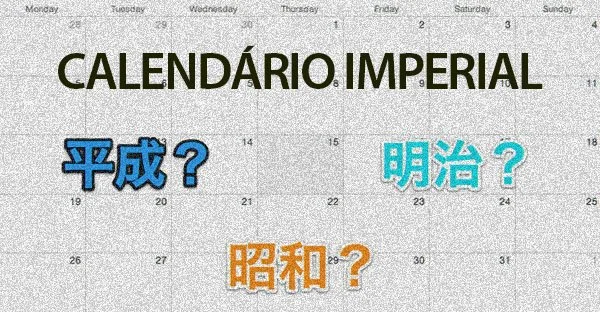
We notice that the year comes first, then the month, and finally the day. If we know all the numbers in Japanese, we can easily write the days, months, and years in the language. Official papers may also ask for era years such as Heisei or Reiwa; that system is explained in the Japanese imperial calendar. Form fields such as 生年月日 are covered in how to fill dates of birth in Japanese.
Words related to the Calendar in Japanese
We cannot talk about years, days, months, and dates without mentioning calendars and other related words such as leap year in Japanese, lunar calendar, and other words related to dates. Make good use of the vocabulary list below:
- karendaa (カレンダー) - Calendar
- koyomi (暦) - Calendar
- taiyoureki (太陽暦) - Solar calendar
- taiinreki (太陰暦) - Lunar calendar
- heinen (平年) - Common year
- uruudoshi (閏年) - Leap year
- seireki (西暦) - Western calendar / Common Era
I hope you enjoyed this simple article. Once you know the numbers and the special day readings, writing a Japanese date is mainly a matter of putting the year first, then the month, then the day.



Community
Comments
0 comments
There are no published comments in this language yet.
Send comment