Blog

  • How to write my name in Japanese?

    How to write my name in Japanese?

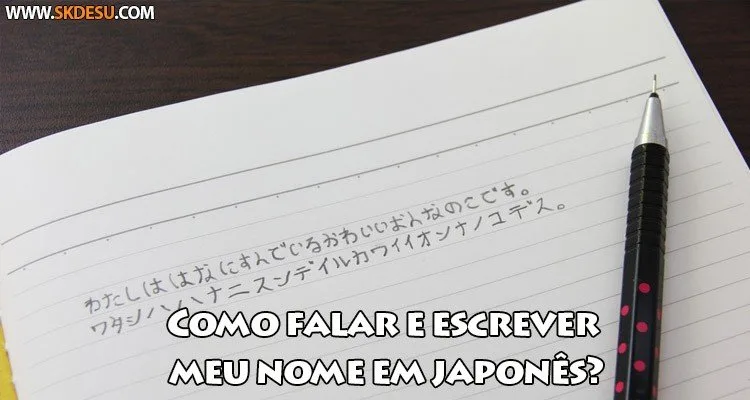
    On this page, you will be able to write your name in Japanese, pronounce it, and many other details about writing Japanese names.

    Do you want to learn how to write your name in Japanese? Do you want to get a tattoo but don’t know how to write your name? Do you want to learn to write your name using ideograms? Do you want to learn how to pronounce your name in Japanese?

    Write your name in Japanese

    The translations are done automatically, without interference from human translators. We cannot guarantee that the translated names are 100% correct, so we recommend paying attention to the rules below:

    • If your name ends with a consonant, do not write the consonant.
    • If your name has a letter with a long vowel, write the vowel 2 times. Example: If your name is “Sarah”, write “Saraa”.
    • If your name has syllables with “C”, consider replacing it with “K”.
    • Do not use H and other isolated silent consonants;

    Japanese has 3 different scripts: Hiragana, Katakana, and Kanji. The script used to write foreign names is “katakana”. If you have an original Japanese name, you can also write your name using hiragana or kanji (ideograms).

    It is worth remembering that in Japan and in some Asian countries, the family name comes first, and your personal name (first name) comes last.

    How to say and write my name in Japanese?
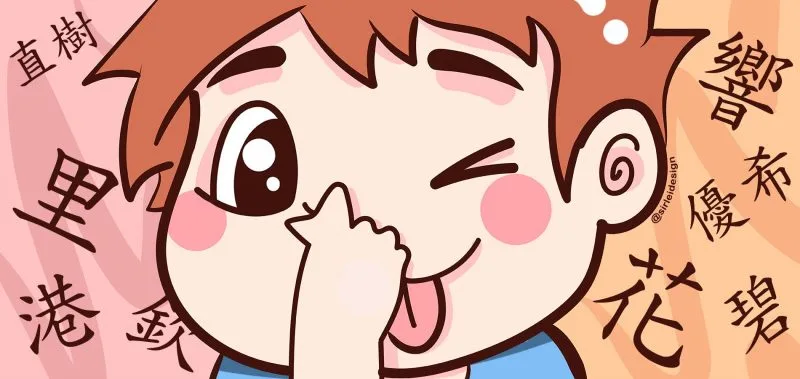
    Arty by @Sirleidesign

    Various ways to write your name

    The Japanese write foreign words phonetically. Thus, depending on your name, it can have several ways to be written. When writing your name, you can decide whether or not to include a long vowel; the absence of a syllable or letter in Japanese may give you choices.

    For example, my name is Kevin; it can be written as ケビン or ケヴィン, pronounced Kebin, all due to the absence of letters and syllables with “V” in the Japanese language. Other changes when converting foreign words to Japanese writing are:

    • Syllables and phonemes that start with “L” become “R” in Japanese;
    • The silent letters “L(R) or S” end up gaining a vowel “U”;
    • Words that end with a consonant end up gaining a vowel “U” or “O”;
    • Syllables of 3 letters like BRA are written BURA;
    • “TI” transforms into “CHI”;

    There is a pattern of names that some claim is the correct way to write, but in my opinion, the name belongs to the person; they write and pronounce it however they want. Just like we have Kevin, Keven, and Kelvin. If my name were Keven, I could write ケべン.

    See a small table with some names that can be written in various ways:

    Thiagoチアゴ / チアグ / ティアゴChiago / Chiagu / Tiago
    Adriana / Adrianeアドリアンナ / アドリアンネ / アドリアンニィAdorianna / Adorianne, Adorianyi
    Ikaroイーカロ / イーカルĪkaro / Īkaru
    Yagoイアーゴ / ヤーグIāgo / Yāgu
    Marcos / Marcusマルコス / マルクスMārukosu / Mārukusu
    Felipeフェリッペ / フィリッペFerippe / Firippi
    Caioカイオ / カユKaio / Kayu

    Names written with Kanji — Ideograms

    If you have a Japanese name, it can be written using Kanji — Chinese ideograms. There are thousands of ideograms with different meanings and pronunciations that you can use to write your name. If you have already been given a Japanese family name, your parents probably chose the ideograms to write it. To learn more about Japanese names, click here.

    Some people with foreign names tend to create a Japanese version of their own name to use ideograms and give a meaning to their name. I once met a Noemi who changed her name to Naomi. Choosing ideograms to put in a name is quite complicated; we do not recommend doing this without knowledge.

    Access now: See how to write your name in Kanji – Ideograms!

    Most Japanese, as they find ideograms complicated to write, tend to write their names using hiragana or even katakana. But if you are a foreigner with a foreign name, do not use hiragana.

    The video below talks a little about this:

    How to say my name in Japanese?

    It is not wrong to pronounce your name in the original way, but for the Japanese, it can be difficult to pronounce due to the lack of syllables in Japanese. Japanese syllables are very easy and similar to Portuguese syllables, and they do not have stress.

    We recommend pasting it into Google Translate and seeing how the name is pronounced by Google’s voice.

    I hope you enjoyed the article! If you have any questions or suggestions, leave your comment. To finish, we will leave a video for you to get to know the pronunciation and Japanese syllables.

    Brazilian Names in Japanese

    Suki Desu also has a huge list of foreign names written in Japanese, especially Brazilian names. If you want to access this list, we will leave the link below:

    Access List: Brazilian names written in Japanese

    PortugueseJapaneseRomaji
    AdrianaアドリアーナAdoriāNa
    AlineアリネAline
    AmandaアマンダAmanda
    AnaアナAna
    AntoniaアントニアAntonia
    AntonioアントニオAntonio
    BrunaブルネットBurunetto
    BrunoブルーノBurūNo
    CamilaカミラKamira
    CarlosカルロスKarurosu
    DanielダニエルDanieru
    EduardoエドゥアルドEdouarudo
    FelipeフェリペFeripe
    FernandaフェルナンダFerunanda
    FranciscaフランシスカFuranshisuka
    FranciscoフランシスコFuranshisuko
    GabrielガブリエルGaburieru
    JessicaジェシカJeshika
    JoaoジョアンJoan
    JoséジョセフJosefu
    JuliaジュリアJuria
    JulianaジュリアナJuriana
    LetíciaレティシアRetishia
    LucasルーカスRūKasu
    LucianaルシアナRushiana
    Luis ルイスRuisu
    Luiz ルイスRuisu
    MarceloマルセロMarusero
    MarciaマルシアMarushia
    MarcosマルコスMarukosu
    MariaマリアMaria
    MarianaマリアナMariana
    PatriciaパトリシアPatorishia
    PauloポールPōRu
    PedroピーターPīTā
    RafaelラファエルRafaeru
    RaimundoライムンドRaimundo
    RodrigoロドリゴRodorigo
    SandraサンドラSandora
  • Do you know the Dark Side of Japan?

    Do you know the Dark Side of Japan?

    Japan is often portrayed as a paradise of technology, rich culture, and impeccable safety. But does this idyllic image reflect the complete reality? In this article, we will dive into the dark side of Japan, exploring the social, cultural, and economic issues that are often overlooked. Get ready to discover a side of Japan that you probably have never seen.

    It is undeniable that Japan has countless admirable qualities. Its millennia-old culture, stunning landscapes, and technological advancements are sources of inspiration for the whole world. However, like any other country, Japan also faces complex challenges.

    A country for foreigners (Not so much)

    Although Japan is recognized for its education and as a great destination for financial prosperity and quality of life, it is important to note that, like anywhere else, there are different facets in Japanese society. Just like in Brazil, where there are bad people, there are also unpleasant individuals in Japan.

    The Japanese have an intense approach in many areas of life, often described as “HARD mode,” which can make it difficult to keep up with or understand their nuances. Therefore, when considering a move to Japan, it is essential to be prepared for possible challenges.

    Some foreigners may be lucky enough not to face prejudice or humiliation, but unfortunately, others experience difficult situations, including depression. For this reason, it is highly recommended to have knowledge of the Japanese language to facilitate interaction and allow people to truly get to know you.

    Prepare yourself for possible negative experiences, as there are cases where individuals may not behave civilly, contradicting the overall image of Japanese society. However, there is also the possibility of finding genuine friendships and positive relationships.

    It is crucial to highlight that one should not generalize the Japanese as racists. Like in many countries, Japan also faces issues of racism and prejudice; however, in certain cases, these problems may be more intense. In situations of discrimination, it is advisable to walk away and seek support, especially in school environments where bullying (ijime, 虐め) is a serious concern, contributing to high suicide rates in the country.

    We recommend reading: Ijime – Bullying in Japanese schools

    The dark side of Japan! Not everything is flowers

    It is a fact that even some Japanese have prejudice against their own people, who are usually individuals that do not fit the standards that society demands.

    So, be prepared; the social pressure is very high, but it is the same pressure we feel when we are tempted to do something we consider wrong and end up being humiliated for it.

    We also recommend reading:

    We also recommend watching our video on racism and prejudice in Japan and following our channel:

    Government, Public Agencies in Japan

    Japanese hospitals, the way taxes are collected, the speed of fixing things, are practically perfect. But they also have their downside, a lot of bureaucracy, especially if you are a foreigner; arranging interpreters and documents can be quite tiring.

    Not to mention the taxes and fines that are quite expensive, but fortunately, this is more beneficial than in many other countries that tend to steal tax money and do nothing for the population. However, remember, do not trust the Japanese government; there are many problems they cannot solve; every human government is flawed.

    The dark side of Japan! Not everything is flowers

    Food and Money

    Japan offers a variety of products, some more accessible than others, but aligned with local salary standards. It is important to mention that many products are imported from China and can be questionable.

    It is common for many Japanese to consume processed products. Although Japan is known for its cleanliness and hygiene, the origin of some foods can be questionable, especially the imported ones. Reports of contaminants, such as pieces of insects, are not uncommon. Unfortunately, greed sometimes compromises quality.

    If you are short on time to prepare your meals, you may need to ponder a bit about the issue of health versus convenience. Certainly, the balance between both is essential for a satisfying dining experience in Japan.

    FOOD AND MONEY

    Safety and Crime

    Despite being one of the safest countries in the world, crimes also occur frequently, and when they do, they are bizarre. Even living in one of the safest countries in the world, even though the occurrence of earthquakes and tsunamis, which cause mass deaths, is rare; no one knows what tomorrow holds. Especially in a country with volcanoes, radiation, earthquakes, typhoons, and tsunamis always lurking.

    The dark side of Japan! Not everything is flowers

    Perfection and Suicide

    The majority of suicides in Japan are related to stress, job loss, and financial difficulties. In Japan, making a mistake once means having your life condemned forever; at least, that is what usually happens. Car accidents, involvement in fights, drunk driving, and legal issues. Even if committed by children or spouses, they directly affect the person, as companies do not want in their workforce individuals who are not 100% molded within the perfect Japanese society. This can be one of the main reasons some Brazilians do not get along with Japanese people.

    Housing

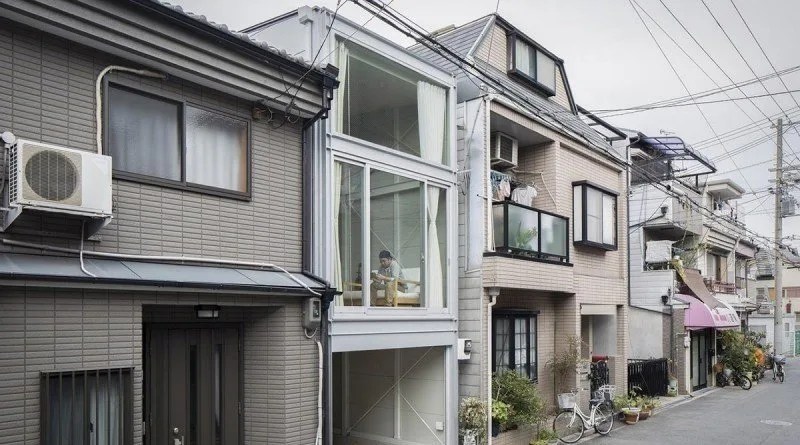
    Although houses may be small or made of wood [in the countryside], this bothers some, and some even like it. But the worst part is that if you are a foreigner, prepare to pay rent for your entire life; land in Japan is absurdly expensive, and you should get used to living in apartments.

    The dark side of Japan! Not everything is flowers

    Immorality

    There is a big reason why Japanese people are called perverts. Japan is one of the countries that consumes the most pornography; even child pornography is, in a way, allowed in manga, we clearly see the exposure of breasts and panties in children’s anime (not much different from Brazilian soap operas).

    Not to mention people who are arrested for collecting saliva, machines that sell used panties, bars to talk about masturbation, tentacles, and other disgusting forms of sexual relations. The positive side is that there you will not hear immoral songs in cars nor people saying sexually connotative words in conversations; exposure to immorality there is your choice, remembering that you should be careful with the Stalkers, lolicons and other perverts that exist. ( ͡° ͜ʖ ͡°)

    The dark side of Japan! Not everything is flowers
  • Kakigori – Japanese Shaved Ice

    Kakigori – Japanese Shaved Ice

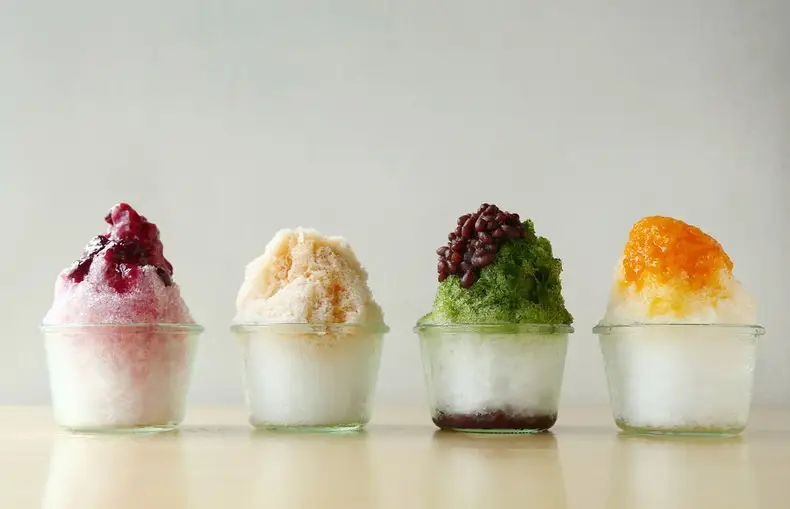
    Kakigori (かき氷) is a shaved ice dessert that is very popular at beaches, festivals, events, and cafes in the summer. It is also common for families in Japan to have an ice shaver and make homemade Kakigori.

    Kakigori, a refreshing Japanese dessert, is typically sweetened with colorful sugar syrups and condensed milk. In exceptional cases, it can be enhanced with traditional ingredients such as “Kinako” (roasted and ground whole soybean flour) or anko (sweet red bean paste, known as azuki).

    This delicacy has remained virtually unchanged over the past 50 years, evoking a unique nostalgic feeling. With an endless variety of flavors, from fruit syrups to sweet and colorless options, Kakigori offers a refreshing and tasty experience that transcends generations.

    Kakigori – かき氷 – Japanese Shaved Ice
    Kakigori – かき氷 – Japanese Shaved Ice

    The Origin of Kakigori

    Kakigori dates back to the Heian period, around the 11th century, when ice was carefully shaved by hand and served in metal bowls, accompanied by syrups and sauces of various flavors. In that era, this dessert was considered a luxury, as the ice used came from the mountains.

    During the Meiji period, around the 19th century, Kakigori became more accessible to the public, although it still had a high price due to the importation of ice from the United States. It was only with the initiative of food entrepreneur Kahe Nakagawa that ice from Hokkaido began to be used in Kakigori in Yokohama.

    The first store dedicated exclusively to Kakigori was opened by Nakagawa in 1872, in the Bashamichi area of Kanagawa. The ice crushing machine was invented around 1930, boosting the popularity of Kakigori as one of the most loved and consumed desserts in Japan.

    Kakigoori_machine_by_king_nikochan_in_Nara

    Kakigori Videos

    Machine – Kakigori Hanbaiki in Action

    A Kawaii video of 2 Kids using a Hello Kitty kakigori machine

  • Dango Daikazoku – Studying Songs

    Dango Daikazoku – Studying Songs

    “Dango Daikazoku” is a popular Japanese song that became quite well-known for being the ending theme of the anime “Clannad”. It is performed by Chata, a Japanese singer known for her contributions to various anime soundtracks. Let’s explore a bit more about this song, its history, and meaning, as well as studying the lyrics of the song.

    History and Origins

    “Dango Daikazoku” was composed and arranged by Jun Maeda and Shinji Orito, members of the musical group Key Sounds Label. The song is part of the soundtrack of the visual novel game “Clannad”, released by Key in 2004. Later, in 2007, “Clannad” was adapted into an anime series by the studio Kyoto Animation.

    The song became iconic as the ending theme of the first season of the anime “Clannad” and is mainly associated with the character Nagisa Furukawa, one of the protagonists of the series. The lyrics of the song talk about everyday life and the importance of family, themes that are central to the story of “Clannad”.

    Meaning and Themes

    “Dango Daikazoku” is a sweet and catchy song that speaks about the importance of family and the bonds that unite us. The term “Dango Daikazoku” translates approximately as “the big family of dumplings” in Japanese. In this context, the “dumplings” symbolize the family members, united and supporting each other.

    The song conveys a sense of warmth, comfort, and nostalgia. It evokes feelings of love, care, and family connection, something that resonates deeply with many viewers. The simplicity and tenderness of the melody perfectly match the message of unity and family affection that permeates “Clannad”.

    Reception and Legacy

    “Dango Daikazoku” was received with great enthusiasm by fans of “Clannad” and anime in general. The song became extremely popular and is often remembered as one of the most memorable and emotional anime ending songs.

    In addition to its popularity as an ending song, “Dango Daikazoku” has also been covered and reinterpreted by various artists and musicians over the years, highlighting its lasting influence on anime music culture.

    Translating and Studying

    だんご だんご だんご だんご だんご だんご 大家族 (2x)
    dango dango dango dango dango dango daikazoku

    Big Dango Family

    やんちゃな焼きだんご 優しい餡だんご
    yanchana yakidango yasashi andango

    A naughty and disobedient dango, a sweet and gentle dango

    • やんちゃ – naughty, mischievous, rascal, playful boy
    • 焼きだんご – Grilled dango
    • 優しい – gentle, graceful, affectionate, kind
    すこし夢見がちな月見だんご
    Sukoshi yumemigachi na tsukimi dango

    The dango that sees the moon is a bit dreamy

    • すこし – a little
    • 夢見 – dream, have a dream
    • 月見 – moon viewing
    おすましごまだんご 4つ子串だんご
    Osumashi goma dango yotsu ko kushi dango

    The neat sesame dango, the four dango on the skewer

    • おすまし – neatness, proper, prim person
    • ごま – 胡麻 – sesame seeds
    • 4つ – four
    • 子 – Child (4 small dango)
    • 串 – Skewer
    みんな みんな あわせて 100人家族
    Minna minna awasete hyakunin kazoku

    Everyone comes together and becomes a family of one hundred

    • みんな – people, everyone
    • あわせて – together, total, collectively
    • 100人家族 – family of one hundred
    赤ちゃんだんごは いつも幸せの中で
    Akachan dango wa itsumo shiawase no naka de

    A baby dango is always cradled in happiness

    • 赤ちゃん – baby
    • いつも – always
    • 幸せの – happiness
    • 中 – inside, in the midst
    年寄りだんごは 目を細めてる
    Toshiyori dango wa me o hosometeru

    An old dango looks with his narrow eyes

    • 年寄 – elderly, old
    • 目 – eyes
    • 細めてる – narrow (is)
    仲良しだんご 手をつなぎ 大きなまるい輪になるよ
    Nakayoshi dango te o tsunagi ooki na marui wani naruyo

    The friendly dango will hold hands and make a big circle

    • 仲良し – close friends, dear friend, best buddies
    • 手 – hand
    • つなぎ – tie, unite, connect, join
    • 大きな- big
    • まるい – circle
    • 輪になるよ – circle, tie, wheel
    町を作りだんご星の上 みんなで笑いあうよ
    Machi o tsukuri dango boshi no ue minna de waraiau yo

    They will create a village on a dango planet and everyone laughs together

    • 町 – town, village
    • 作り – make, produce, build, manufacture
    • 星 – star, celestial body, planet
    • 上 – on top, above
    • みんな – everyone, people
    • 笑い – laugh, smile
    • あうよ – invitation to action (together)
    うさぎも空で手を振って見てる でっかいお月さま
    Usagi mo sora de te o futte miteru dekkai otsuki-sama

    The rabbits are waving from the big moon

    • うさぎ – rabbit
    • 空 – sky
    • 手 – hand (waving hands)
    • 振って – shake, swing
    • 見てる – watching
    • でっかい – huge; big; gigantic
    • お月さま – Moon (respectful way)
    嬉しいこと 悲しいことも 全部丸めて
    Ureshii koto kanashii koto mo zenbu marumete

    Enjoy all things, happy and sad

    • 嬉しい – happy, pleasant, cheerful
    • こと – things
    • 悲しい – sad
    • 全部 – all, everything
    • 丸めて – roll up, twist, pile up (enjoy?)

    From here the song returns to the chorus, so we won’t explain, ending with:

    lalala・・・・・ララララ。。。
    だんご だんご だんご だんご だんご だんご 大家族 (4x)
  • School supplies list in Japanese

    School supplies list in Japanese

    If you are studying or planning to study in Japan, or simply wish to expand your knowledge of the Japanese language, it is essential to know the school supplies in Japanese. This comprehensive list includes the names of the most common items found in a classroom, presented with their respective romanizations and kanjis.

    From basic items like pens and notebooks to more specialized materials like protractors and encyclopedias, you will find everything you need to communicate effectively in the Japanese school environment. Let’s dive into the vocabulary and learn together!

    We also recommend reading: 

    Gakkou Youhin – 学校用品

    School supplies in Japanese are called “学校用品” (gakkou youhin), which literally means “school supplies.”

    Japanese school supplies combine functionality, durability, and aesthetics, reflecting the country’s rigorous and detail-oriented educational culture.

    If you have the opportunity to visit a stationery store in Japan, you will see how even the simplest items can be designed with care and attention to detail.

    School Supplies in Japanese

    See below a list of school supplies in Japanese:

    • Adhesive tape – serohanteepu [セロハンテープ]
    • School – gakkou [学校]
    • Pen – pen [ペン]
    • Pencil case – fudebako [筆箱]
    • Textbook – kyouka sho [教科書]
    • Ballpoint pen – boorupen [ボールペン]
    • Magnet – jishaku [磁石]
    • Bookshelf – hondana [本棚]
    • Stapler – hochikisu [ホチキス]
    • Crayon – kureyon [クレヨン]
    • Reference book – sankou sho [参考書]
    • Chair – isu [椅子]
    • Backpack – oi / bakkupakku [笈 / バックパック]
    • Notebook – nooto [ノート]
    • Whiteboard – howaito boodo [ホワイトボード]
    • Calculator – keisan ki [計算器]
    • Marker – maakaa [マーカー]
    • Book – hon [本]
    • Eraser – keshi gomu [消しゴム]
    • Folder – buriifukeesu [ブリーフケース]
    • Desk – tsukue [机]
    • Ruler – jougi [定規]
    • Encyclopedia – hakkajiten [百科事典]
    • Blackboard – kokuban [黒板]
    • Chalk – chooku [チョーク]
    • Calculator – dentaku [電卓]
    • Protractor – bundoki [分度器]
    • Pencil sharpener – enpitsukezuri [鉛筆削り]
    • Reference book – sankou sho [参考書]
    • Scissors – hasami [鋏]
    • Pencil – enpitsu [鉛筆]
    • Paper – kami [紙]
    • Magazine – zasshi [雑誌]
    • Table – teeburu [テーブル]
    • Rubber band – wagomu [輪ゴム]
    • Glue – nori [のり]
    • Folder – foruda [フォルダ]
    • School uniform – gakuseifuku [学生服]
    • Compass – konpasu [コンパス]
    • Eraser – kokubankeshi [黒板消し]
    • Mechanical pencil – shapen [シャーペン]
    • Classroom – kyoshitsu [教室]
    • Dictionary – jisho [辞書]
    • Sketchbook – gashietto bukku [ガシェットブック / gassatsu [画冊]
    • Pencil case – fude bako [筆箱 / pen keesu [ペンケース]
    • Correction tape – shuusei teepu [修正テープ / shuusei eki [修正液]
    • Colored markers – karaa maakaa [カラーマーカー]
    • Construction paper – irogayooshi [色画用紙]
    • Colored pencil – iroenpitsu [色鉛筆]
    • T-ruler – T-jougi [T定規]
    • Brush – fude [筆]
    • Paint palette – paretto [パレット / eguzara [絵具皿]
    • Notepad – memo chou [メモ帳]
    • Graph paper – hougan shi [方眼紙]
    • Triangle ruler – sankaku jougi [三角定規]

    Example Sentences

    See below some example sentences involving school supplies from Japan:

    これは私の新しいノートです。
    Kore wa watashi no atarashii nooto desu.

    This is my new notebook.

    学校で毎日鉛筆を使います。
    Gakkou de mainichi enpitsu o tsukaimasu.

    I use pencils every day at school.

    新しい筆箱を買いました。
    Atarashii fudebako o kaimashita.

    I bought a new pencil case.

    先生は黒板にチョークで書きます。
    Sensei wa kokuban ni chooku de kakimasu.

    The teacher writes on the blackboard with chalk.

    教科書を忘れないでください。
    Kyoukasho o wasurenaide kudasai.

    Please do not forget the textbook.

  • Omedetou – How to say Congratulations in Japanese?

    Omedetou – How to say Congratulations in Japanese?

    Do you know the word omedetou? Would you like to know its real meaning? In this article, we will learn some interesting information about the famous Japanese word Omedetou (おめでとう) which primarily means congratulations.

    We will also see some curiosities, some synonyms, and alternative words you can use to congratulate someone. The perfect word to say happy birthday, congratulations on your wedding, and many other phrases.

    What does omedetou mean in Japanese?

    The word Omedetou (お目出度う) literally means congratulations on some auspicious occasion such as a birthday, wedding, or promotion. The word is composed of the adjective medetai (目出度い) which means happy, auspicious, cheerful, and favorable.

    The word is composed of the ideograms eye [目] exit [出] and occurrence [度]. This word is usually accompanied by the famous expression gozaimasu (ございます) which makes the expression a bit more formal.

    Ironically, the adjective medetai can also mean naive, innocent, foolish, good-humored. There are Japanese sweets that are also called omedetou (御目出糖) and are made from glutinous rice and azuki beans.

    Other strange ways of writing “Medetai” that have fallen out of use are [芽出度い] and [愛でたい]. Nowadays, the word is more often written in hiragana when it is a congratulatory expression (omedetou) and sometimes with kanji if used as an adjective.

    Omedetou - Congratulations in Japanese - Meaning, curiosities, and synonyms

    How to use the word Congratulations in Japanese

    Below we will share some example sentences that can help you understand the use of the word omedetou:

    • 明けましておめでとう (Akemashite omedetou) – Happy New Year
    • 誕生日おめでとう (tanjoubi omedetou) – Happy Birthday
    • ご婚約おめでとうございます (Go kon’yaku omedetōgozaimasu) – Congratulations on your engagement
    • クリスマスおめでとう (kurisumasu omedetou) – Wishing you a Merry Christmas
    • 優勝おめでとう (Yūshō omedetō) – Congratulations on the victory
    • ハローウィンおめでとう (Harōu~in omedetō) – Happy Halloween

    Synonyms and alternatives to omedetou

    Before we start, I want to briefly mention the verb moushiageru (申し上げる) which means to express, declare, or extend and is usually used after some words that we will study below.

    • 目出度し目出度し (medetashimedetashi) – And they all lived happily ever after
    • お祝い(申し上げる) (oiwai (moushiageru)) – Congratulations, celebration, festival
    • おめでとうさん (omedetousan) – Congratulations (Kansai dialect)
    • お喜び(申し上げる) (oyorokobi (moushiageru)) – To express pleasure, happiness
    • 寿 (kotobuki) – Congratulations, happiness, long life
    • 祝賀 (shukuga) – Celebration, congratulations
    • 慶賀 (keiga) – Congratulation
    • コングラチュレーション (kongurachurēshon) – From the English congratulation
    • 慶弔 (keichuu) – Congratulations, condolences
    • やった! (yatta!) – To express excitement!

    Phrases using the word omedetou

    Below we will see some phrases teaching how to say happy birthday, happy new year, and other similar phrases in Japanese.

    Happy Birthday (formal)

    お誕生日おめでとうございます。
    O-tanjoubi omedetou gozaimasu.

    Congratulations on your wedding!

    ご結婚おめでとうございます。
    Go-kekkon omedetou gozaimasu. (formal)

    They congratulated the seniors on their promotion.

    彼らは先輩に昇進おめでとうと言った。
    Karera wa senpai ni shoushin omedetou to itta

    Congratulations on Thanksgiving

    感謝祭おめでとう。
    kanshasai omedetou

    Congratulations on Valentine’s Day

    バレンタインデーおめでとう
    Barentaindē omedetō
  • 50 Japanese Surnames with Strange, Rare, and Uncommon Meanings

    50 Japanese Surnames with Strange, Rare, and Uncommon Meanings

    Have you ever asked what the most unusual surnames in Japan are? Those rare and strange names with bizarre and funny meanings? We have prepared a list of the 50 rarest surnames in Japan, some with only 20 people.

    Japanese surnames have a long history, as they reflect characteristics or locality of families since their formation. Nowadays, it is common to have repeated surnames, but on rare occasions, we find unique surnames.

    We recommend reading: List of Japanese Surnames 200+ Origin and Meanings

    The origin of unique and unusual Japanese surnames

    Generally, Japanese surnames, despite being strange, can have a history related to the person’s work; their family may have originally worked in hair cutting or salt production.

    In addition to occupations, many Japanese surnames have geographical origins or are based on natural characteristics of the region where the family lived. For example, names like “水溜” (Mizutame) indicate proximity to water reservoirs, while “昆布” (Kombu) suggests a connection to the harvesting of seaweed, common in coastal areas.

    Other surnames, such as “白髪” (Shiraga) and “禿” (Hage), are physical descriptions that could have been nicknames based on an ancestor’s appearance, such as white hair or baldness.

    Moreover, some surnames are deeply influenced by cultural and historical elements. Names like “大仏” (Daibutsu) reflect a connection to large Buddha statues, possibly indicating an association with Buddhist temples. Surnames like “八月一日” (Hozumi), which literally means “first of August,” may have roots in significant events or festivals held on that date.

    Other names, like “満月” (Mangetsu), which means “full moon,” have a poetic origin, possibly related to events or natural characteristics observed and appreciated by their ancestors.

    The 50 rarest and strangest surnames in Japan

    1. 毛受 (Menjo, Mozu) – Hair receiver, 1,200 people
    2. 塩 (Shio) – Salt, 990 people
    3. 白髪 (Shiraga) – White hair, 880 people
    4. 文字 (Moji) – Letter, character, 790 people
    5. 鉄 (Tetsu) – Iron, 770 people
    6. 水溜 (Mizutame) – Water reservoir, 740 people
    7. 和歌 (Waka) – Japanese poem, 500 people
    8. 二股 (Futamata) – Fork, 440 people
    9. 髭 (Hige) – Beard, mustache, 420 people
    10. 幸福 (Kōfuku) – Happiness, 410 people
    11. 鴇 (Toki) – Japanese ibis, 390 people
    12. 禿 (Hage) – Bald, 390 people
    13. 取違 (Toritagai) – Wrong exchange, 370 people
    14. 百足 (Mukade) – Centipede, 360 people
    15. 明治 (Meiji) – Name of the Meiji era, 290 people
    16. 燕 (Tsubame) – Swallow, 260 people
    17. 和食 (Washoku) – Japanese food, 240 people
    18. 見学 (Kengaku) – Study visit, 210 people
    19. 法華津 (Hokkezu) – Unknown, 200 people
    20. 今度 (Kondo) – This time, 200 people
    21. 大仏 (Daibutsu) – Great Buddha, 170 people
    22. 留守 (Rusu) – Absence, out of home, 170 people
    23. 昆布 (Kombu) – Seaweed used in cooking, 150 people
    24. 浮気 (Uwaki) – Infidelity, 150 people
    25. 満月 (Mangetsu) – Full moon, 140 people
    26. 味噌 (Miso) – Fermented soybean paste, 130 people
    27. 胡麻 (Goma) – Sesame, 130 people
    28. 毛穴 (Keana) – Pores, 130 people
    29. 洪水 (Kōzui) – Flood, 120 people
    30. 先生 (Sensei) – Teacher, 110 people
    31. 満足 (Manzoku) – Satisfaction, 90 people
    32. 八月一日 (Hozumi) – First of August (peculiar reading) – 80 people
    33. 父母 (Fubo) – Parents, 80 people
    34. 時計 (Tokei) – Clock, 60 people
    35. 国宝 (Kokuhō) – National treasure, 60 people
    36. 可愛 (Kawai) – Lovely, 50 people
    37. 大蜘蛛 (Ōkumo) – Giant spider, 50 people
    38. 出会 (Deai) – Meeting, 50 people
    39. 指輪 (Yubiwa) – Ring, 40 people
    40. 祭 (Matsuri) – Festival, 30 people
    41. 記録 (Kiroku) – Record, 30 people
    42. 途中 (Tochū) – On the way, 30 people
    43. 秀吉 (Hideyoshi) – Historical proper name (Toyotomi Hideyoshi) – 30 people
    44. 砂糖 (Satō) – Sugar, 30 people
    45. 鼻毛 (Hanage) – Nose hair, 30 people
    46. 御薬袋 (Mikuburo) – Medicine bag, 30 people
    47. 川童 (Kawatarō) – Kappa (mythical water creature) – 30 people
    48. 回り道 (Mawari Michi) – Detour, 20 people
    49. 微笑 (Hohoemi) – Smile, 20 people
    50. 醤油 (Shōyu) – Soy sauce, 20 people

    The ranking of this article was published by Myoji-yurai.net and on this site, you can find not only the ranking but also the origin of each name, where people with these names are located, and other interesting information.

  • Birds in Japanese – Vocabulary

    Birds in Japanese – Vocabulary

    In this article, we will see a list of Japanese words related to birds. I hope you enjoy this extensive list of birds in Japanese. Besides the birds in Japanese, at the end of the article, we will have a list of onomatopoeias and related words.

    It is worth remembering that although the names of birds in Japanese are written with kanji (ideograms), it is more common to write them in katakana or sometimes hiragana. This happens quite often with the names of animals and birds.

    • Bird in Japanese is called tori [鳥];

    We also recommend reading:

    Birds and Birds in Japanese

    List of Birds in Japanese

    To make searching easier, we recommend using (CTRL + F) in your browser.

    PortugueseJapaneseRomaji
    vulture ハゲワシhagewashi
    albatross アホウドリahōdori
    swallow tsubame
    swift 雨燕ama tsubame
    ostrich 駝鳥dachō
    hawk taka
    hummingbird 蜂鳥hachidori
    canary 金糸雀kanaria
    stork シュバシコウshubashikō
    great tit 四十雀shijūkara
    swans 白鳥hakuchō
    quail ウズラuzura
    condor コンドルkondoru
    owl トラフズクtorafuzuku
    great horned owl ワシミミズクwashi mimizuku
    crow 渡鴉watari garasu
    lark 雲雀hibari
    cuckoo 郭公kakkō
    dom-fafe uso
    starling ムクドリmukudori
    pheasant キジkiji
    falcon hayabusa
    flamingo フラミンゴfuramingo
    seagull kamome
    wood hen エゾライチョウezo raichō
    goose ガチョウgachō
    heron sagi
    gray jay karasu
    white-tailed jay 深山烏miyama garasu
    gray-necked crow ニシコクマルガラスnishikokumaru garasu
    crane tsuru
    blackbird クロウタドリkurōtadori
    parrot オウムōmu
    sparrow suzume
    duck kamo
    peacock 孔雀kujaku
    magpie kasasagi
    pelican ペリカンperikan
    gray partridge ヨーロッパヤマウズラyōroppa yamauzura
    woodpecker キツツキkitsutsuki
    penguin ペンギンpengin
    dove hato
    birdtori
    nightingale サヨナキドリsayonakidori
    finch ズアオアトリzuaoatori
    capercaillie ヨーロッパオオライチョウyōroppa ōraichō
    lyrebird クロライチョウkuro raichō
    song thrush 歌鶫uta tsugumi
    fieldfare ノハラツグミnohara tsugumi
    eagle washi
    Birds and Birds in Japanese

    Bird Sounds in Japanese

    To conclude the article, we will complement it with some bird sounds in Japanese. If you liked the article, share this amazing site that teaches Japanese for free with your friends.

    • clucking – kokkotto naku [コッコッと鳴く]
    • singing – kokekokkō to naku [コケコッコーと鳴く]
    • singing – saezuru [さえずる]
    • chirping, warbling – saezuru [さえずる]
    • cock-a-doodle-doo – kokekokkō [コケコッコー]
    • cawing – kākā to naku [カーカーと鳴く]
    • quacking – gāgā naku [ガーガー鳴く]
    • screaming – naku [鳴く]
    • tweeting – pīpī naku [ピーピー鳴く]

    We also recommend reading: Names of Animals in Japanese – Doubutsu

  • Why did Abe Uta cry so much after losing at the Paris Olympics? Was it ugly?

    Why did Abe Uta cry so much after losing at the Paris Olympics? Was it ugly?

    On July 28, 2024, during the Paris Olympics, Japanese judoka Abe Uta competed in the women’s 52 kg category. Abe Uta, gold medalist at the Tokyo Olympics, carried the hope of repeating her achievement. However, an unexpected defeat in the second round triggered an intense emotional reaction that divided opinions and sparked debate.

    Abe Uta’s Journey in Paris

    In the first round, Abe Uta won with an ippon, advancing to the second round where she faced Uzbek judoka Diyora Keldiyorova, the number one in the world. Despite scoring a waza-ari, Abe Uta was surprised by a counterattack from Keldiyorova, losing by ippon. Devastated, Abe Uta broke down in tears, embraced by her coach Yukihide Hirano.

    Reactions to Abe Uta’s Tears

    Abe Uta’s tears elicited a range of reactions, both sympathetic and critical. While many understood her pain and expressed support, others viewed her reaction as exaggerated and inappropriate for an athlete of her stature. Below, we explore the main critical arguments.

    Reasons for the Criticism of Abe Uta’s Tears

    1. Childish Behavior

    Some critics compared Abe Uta’s tears to those of a child, deeming them disproportionate and inappropriate for a professional athlete. The intensity of her tears, audible throughout the venue, was seen as a sign of emotional immaturity.

    2. Incompatible with a Judoka’s Conduct

    Judo values discipline and respect, starting and ending with a bow. Abe Uta’s inability to compose herself to properly greet her opponent was considered a significant breach of judo etiquette.

    3. Lack of Respect for the Opponent

    Although Abe Uta shook Keldiyorova’s hand after the match, her reaction was perceived as disrespectful. Keldiyorova, in turn, demonstrated great sportsmanship and respect by containing her celebrations in light of Abe Uta’s emotional defeat.

    4. Interference with the Competition’s Progress

    Abe Uta’s prolonged crying fit delayed the competition schedule, requiring intervention from the organizers. This behavior was deemed inappropriate for a high-level athlete, who should avoid disrupting the flow of the event.

    5. Disturbance to Other Athletes

    Abe Uta’s behavior was also criticized for potentially distracting other competitors who were preparing for their own matches. In a highly competitive environment, maintaining focus is crucial, and her emotional display was seen as an unnecessary distraction.

    6. Selfish Attitude

    Some spectators interpreted Abe Uta’s behavior as selfish, suggesting that she disregarded the impact of her actions on other competitors and the organization of the event.

    7. Reaction of the Coaches

    Abe Uta’s coaches were criticized for not acting quickly to calm her down and remove her from the venue, allowing her emotional reaction to prolong in public.

    Reasons for Abe Uta’s Tears

    Abe Uta’s defeat was particularly devastating due to her history of success and high expectations. Furthermore, she was pursuing the dream of winning gold alongside her brother, Hifumi Abe, repeating the feat of the Tokyo Olympics. The pressure and weight of these expectations may have significantly contributed to her intense emotional reaction.

    Japanese athletes, especially judokas, carry immense pressure to perform well in international competitions due to Japan’s strong tradition and success in judo. This sport, which has its roots in Japan, is more than just a physical activity; it is an essential part of the national culture and identity. Consequently, Japanese judokas do not compete only for themselves but also for a legacy and national expectations.

    Abe Uta’s defeat at the Paris Olympics can be seen as a reflection of the enormous pressure she faced. As a gold medalist at the Tokyo Olympics, there was an expectation for her to repeat her success. Additionally, Abe Uta was not only competing for a medal but also for the pride of her country and the continuation of her personal and family legacy, as her brother, Hifumi Abe, is also a renowned judoka.

    The pressure to uphold national and personal honor can be overwhelming. In Abe Uta’s case, the unexpected defeat in the second round, after being considered one of the favorites, was a hard blow. The intensity of her tears can be seen as an expression of accumulated frustration, disappointment for not meeting expectations, and the pressure of being in the spotlight of an entire nation.

    The Culture of Excellence in Japan

    In Japan, the pursuit of excellence is deeply rooted in various areas, including sports. Athletes are often trained from a young age to achieve the highest level of performance, which involves a rigorous training regimen and a mindset of total dedication. While this pursuit of excellence produces many champions, it also places an enormous emotional burden on athletes.

    Conclusion

    Abe Uta’s tears at the Paris Olympics were a moment that elicited empathy and criticism. Her vulnerability brought to light important discussions about the pressure on elite athletes and public expectations. While some saw her tears as a genuine expression of frustration and pain, others criticized her inability to maintain the composure expected of a judoka.

    Regardless of opinions, it is undeniable that Abe Uta is an athlete of immense talent and determination. It is hoped that she can recover from this experience and come back even stronger in future competitions, continuing to inspire both through her achievements and her humanity.

  • Japan and the influences of the West

    Japan and the influences of the West

    The millennia-old history of Japan exerts a strong influence on the West. References and adaptations of Eastern practices are everywhere. There is a true adoration for Japanese cultural products that have won legions of fans around the world. However, the logic also exists in the opposite direction: the West conquering Japan.

    Japan, a nation with a rich cultural heritage and millennia-old traditions, is also a country that enthusiastically embraces cultural and sporting elements from the West. This integration of cultures is visible in various aspects of Japanese society, where Western phenomena find fertile ground to grow and prosper.

    The field of entertainment is the expressway of this import. Music, movies, series, and also sports modalities, such as the NBA, are successful in the Land of the Rising Sun.

    Next, we will explore some striking examples of how Western culture and sports succeed there. Check it out:

    Foreign Rhythms

    Music is a form of integration that has been very well received by the Japanese. There is a huge appeal for genres like rock, pop, and hip-hop, with Japan being a stop for the most exclusive tours in the world, such as Taylor Swift, who performed in Tokyo.

    Other groups that are successful are rock classics, such as The Beatles, KISS, and Guns and Roses, the latter of which held one of its most iconic shows in the Japanese capital in 1992. And before that, the Beatles had a lasting impact since their first visit to the country in 1966.

    The Journey of Videos

    Even with geniuses like Hayao Miyazaki, director of the classic Spirited Away (2001), Japan also knows how to appreciate films and series created on the other side of the world. Marvel movies, such as Avengers: Endgame (2019), and franchises like Star Wars attract large audiences in theaters, creating a fan base.

    The advancement of technology has helped accelerate the process of audiovisual migration, and through streaming platforms, series like Game of Thrones and Stranger Things have gained a loyal audience. The ability of these films and series to create engaging narratives and charismatic characters resonates deeply with the Japanese audience.

    Digital Fun

    Japan is home to the largest video game companies, with Sony, Nintendo, and SEGA being created in the country. Even with a generous domestic offering, the gaming market in Japan is an attractive destination for various companies, including some titles from the past that have gained strength in the digital world.

    In this case, chess and poker have grown in popularity and practitioners in the country. The former gained new momentum with specialized websites and the Netflix series The Queen’s Gambit, which brings the modality to the forefront. Meanwhile, the famous card game has managed to gain prominence with digital versions that capture the competitive and strategic essence, as well as featuring various game modes, such as Texas Hold’em poker as the most practiced, and it is also the most popular.

    The Good Sports News

    Western sports hold a special place in the hearts of the Japanese. Baseball, introduced to Japan in the late 19th century, is one of the most popular sports in the country. The Nippon Professional Baseball (NPB) has millions of followers, and Japanese players who stand out in Major League Baseball (MLB) in the United States, such as Ichiro Suzuki and Shohei Ohtani, are considered national heroes.

    Soccer is another Western modality that has won the hearts of the population. Several stars from the past helped create and consolidate Japan’s national league, the most notable of which was Zico, who taught the beauty of the sport while wearing the Kashima Antlers jersey. Currently, the Japanese national soccer team is a team that competes in World Cups and frequently reaches the knockout stage.

    Japan, with its unique ability to blend the traditional with the modern, embraces various aspects of Western culture and sports. This cultural exchange not only enriches Japanese society but also strengthens global ties, creating an environment where different cultures can coexist and thrive. In this way, Japan not only consumes Western culture but reinvents it and integrates it into its own cultural fabric, resulting in a vibrant and multifaceted society.

  • What is Akira Toriyama’s favorite character?

    What is Akira Toriyama’s favorite character?

    Akira Toriyama, the legendary mangaka and creator of Dragon Ball, is known for his iconic characters and exciting stories. But which character holds a special place in his heart? Is it the unbeatable protagonist Goku, the stubborn rival Vegeta, or the mysterious Piccolo?

    In interviews, Toriyama revealed that his favorite character in Dragon Ball is, in fact, Piccolo. He is drawn to the character’s complex journey, which starts as a relentless villain and transforms into a valuable ally and mentor to Gohan. Piccolo’s calm and reserved personality also fascinates him, contrasting with most of the other explosive characters in the series.

    Although Goku is the protagonist and the most recognized face of Dragon Ball, Toriyama acknowledges Piccolo’s importance to the development of the story and the growth of other characters.

    Revelations about Akira Toriyama’s Favorite Characters

    Officially, Akira Toriyama has never released a complete list of his favorite characters from all his works. In interviews, he usually mentions some characters that he particularly likes or finds interesting, but this varies depending on the moment and context of the interview.

    However, we can highlight some characters that have received more emphasis in his statements and show a special fondness from the author:

    Dragon Ball:

    • Piccolo: In 2022, during an interview for the Comic Book website to promote the movie Dragon Ball Super: Super Hero, Toriyama revealed that Piccolo was his favorite character from Dragon Ball. He described him as a complex and deep character, with an intriguing redemption arc and admirable evolution throughout the series.
    • Gohan: On several occasions, Toriyama expressed great appreciation for Gohan, especially for his potential and early development. He considers him a character with much to offer and a promising future.

    Other Works:

    • Arale Norimaki (Dr. Slump): Toriyama frequently mentions Arale as one of his favorite creations. He considers her a funny, charming, and energetic character.
    • Jaco, the Galactic Patrolman: This character from Jaco, the Galactic Patrolman, also receives frequent praise from Toriyama. The author considers him a fun character with a memorable design.

    But what about other animes?

    Various sources confirm his appreciation for memorable characters from other titles that inspired and influenced his works. Animes like Trigun, Cowboy Bebop, Berserk, and Evangelion have been mentioned in interviews.

    Characters like Dr. Slump, Spike Spiegel, and Guts have been highlighted by Akira Toriyama. Of course, he maintained friendships with other mangaka and watched various other works, but we will not highlight them in this article.

    However, these characters serve as a glimpse into his inspirations and what he appreciates in the world of Japanese animation. If you liked this information, share it!

  • 20 Sites to Watch Anime Online (Free and Paid)

    20 Sites to Watch Anime Online (Free and Paid)

    Watching anime online has become more accessible than ever, thanks to the growing availability of streaming platforms dedicated to this type of content. Whether you are a fan of classics like “Naruto” and “One Piece” or are looking for the latest trends and releases, there is a variety of options for all tastes.

    In this article, we present an updated and international list of the best sites to watch anime online, both free and paid. Our selection covers legal platforms that offer a high-quality viewing experience and help support creators and the anime industry.

    In addition to well-known services like Crunchyroll and Netflix, we have included lesser-known but equally valuable alternatives that may offer exclusive titles and a differentiated experience.

    Crunchyroll

    Crunchyroll is one of the largest and most popular anime streaming platforms in the world. It offers a vast library of subtitled and dubbed anime, ranging from classics to the latest releases. The platform also features Asian dramas, digital mangas, and games.

    Users can watch many contents for free with ads, but the premium subscription removes ads and provides access to new episodes one hour after airing in Japan, as well as allowing downloads for offline viewing. With a user-friendly interface and support for multiple devices, Crunchyroll is the ideal choice for anime fans worldwide.

    Main Features:

    • Large library of anime, including popular titles like “Naruto,” “One Piece,” and “Attack on Titan.”
    • Option to watch for free with ads or subscribe to the premium service for an uninterrupted experience.
    • Access to new episodes one hour after airing in Japan.
    • Available on multiple devices, including smartphones, tablets, game consoles, and smart TVs.
    • Offers additional content such as digital mangas and Asian dramas.

    Link: Visit Crunchyroll

    Crunchyroll Anime List + DUBBED

    Netflix

    Netflix is one of the largest streaming platforms in the world, known for its vast selection of series, movies, and documentaries. In recent years, Netflix has heavily invested in anime, offering a growing library that includes both popular titles and exclusive original productions.

    Main Features:

    • Diverse catalog of anime, including classics and exclusive titles like “Castlevania” and “Aggretsuko.”
    • High-quality original productions and simultaneous releases with Japan.
    • Availability of subtitles and dubbing in multiple languages, facilitating access for a global audience.
    • User-friendly interface and personalized recommendation algorithm that helps users discover new anime based on their preferences.
    • Support for offline viewing, allowing users to download episodes to watch later without an internet connection.
    • Compatible with a wide range of devices, including smartphones, tablets, smart TVs, and game consoles.

    Link: Visit Netflix

    We recommend reading: The Best Animes on Netflix.

    The Best Animes to Watch on Netflix

    Animes Onegai

    Animes Onegai is a streaming platform dedicated exclusively to anime, focused on the Latin American audience. Recently launched, the platform offers a growing selection of subtitled and dubbed anime in Spanish and Portuguese. With a user-friendly interface and carefully selected content, Animes Onegai has stood out as a quality option for anime fans in the region.

    Main Features:

    • Expanding library of anime, with popular titles and recent releases.
    • Content available with subtitles and dubbing in Spanish and Portuguese.
    • Focus on the Latin American audience, with titles that cater to regional preferences.
    • Free access with ads and a premium subscription option for an uninterrupted experience.
    • Support for multiple devices, allowing users to watch their favorite anime anywhere.

    Link: Visit Animes Onegai

    HiDive

    HD Hive is a streaming platform that offers a wide selection of anime in high definition. Although it is not as well-known as some of the major platforms, HD Hive stands out for the quality of its content and the immersive viewing experience it provides. The platform has both free and paid options, catering to a global audience of anime fans.

    Main Features:

    • Large library of high-definition anime, ensuring a high-quality viewing experience.
    • Availability of subtitles in multiple languages, facilitating access for a global audience.
    • Option to watch for free with ads or subscribe to the premium service for an uninterrupted experience and access to exclusive content.
    • Intuitive and easy-to-use interface, with features that help users discover new anime.
    • Compatible with a wide range of devices, including smartphones, tablets, smart TVs, and game consoles.

    Link: Visit HD Hive

    - 10 Best Apps to Watch Anime
    10 best apps to watch anime

    Anime Planet

    Anime-Planet is a popular platform among anime and manga fans, offering a vast library of anime to watch online, as well as additional resources such as manga lists and personalized recommendations. Founded in 2001, Anime-Planet has established itself as a robust community where users can create anime lists, share reviews, and discover new content based on their preferences.

    Main Features:

    • Extensive library of anime, including both classic titles and recent releases.
    • Availability of subtitles in English, facilitating access for a global audience.
    • User-friendly interface that allows users to create anime lists, track their progress, and receive personalized recommendations.
    • Active community where users can share reviews and participate in discussions about their favorite anime.
    • Free access to content, supported by official partnerships that ensure the legality of the streams.
    • Additional features such as manga lists, character rankings, and anime recommendations based on user tastes.

    Link: Visit Anime-Planet

    Amazon Prime Video

    Amazon Prime Video also has a large selection of anime in its library. Some titles have been dubbed, while others have kept the original language, Japanese, with subtitles.

    There are classics like “InuYasha,” “Mahou Shoujo Rayearth,” “Street Fighter,” among others. And, of course, there is room for recent animations like “pet” and the acclaimed Beatless.

    Main Features:

    • Included in the Amazon Prime subscription, which also offers other benefits such as free shipping on purchases and access to other Amazon services.
    • Diverse catalog of anime, including popular titles.
    • High-quality original and exclusive productions, released simultaneously with Japan.
    • Availability of subtitles and dubbing in multiple languages, facilitating access for a global audience.
    • Intuitive interface and recommendation algorithm that helps users discover new anime based on their preferences.
    • Support for offline viewing, allowing users to download episodes to watch later without an internet connection.
    List of Animes available on Amazon Prime

    Looke

    Looke is a Brazilian streaming platform that offers a vast selection of movies, series, and anime. In addition to popular content, Looke also provides exclusive and classic titles, providing a diverse experience for its users. The platform allows both rental and purchase of content, as well as a subscription service.

    Main Features:

    • Diverse library of anime, including both popular titles and classics.
    • Option to watch for free with ads or subscribe to the premium service for an uninterrupted experience.
    • Availability of subtitles and dubbing in Portuguese.
    • Intuitive and easy-to-use interface, with personalized recommendation features.
    • Compatible with a wide range of devices, including smartphones, tablets, smart TVs, and game consoles.

    Link: Visit Looke

    Pluto TV

    Pluto TV is a free streaming platform that offers a variety of live channels and on-demand content, including a good selection of anime. Funded by ads, Pluto TV allows users to watch content without the need for a subscription. The platform is available in various regions and offers an accessible and convenient viewing experience.

    Main Features:

    • Library of anime available for free with ad support.
    • Availability of subtitles in multiple languages.
    • Intuitive interface with live channels and on-demand content, facilitating the discovery of new anime.
    • Compatible with a wide range of devices, including smartphones, tablets, smart TVs, and game consoles.
    • Constant updates to the catalog, with new titles and channels added regularly.

    Link: Visit Pluto TV

    AnimeTV

    Another place where you can watch anime and have fun is AnimeTV. A unique feature of AnimeTV is a section dedicated to recommendations, where you can find specific series or movies that the developers have chosen and recommend to you.

    For more efficient navigation, new episodes are added to the front page. Additionally, you can read the comments on each episode using just your email address. It also features movies related to the anime.

    - 10 Best Apps to Watch Anime

    AnimeLab

    Availability: Australia and New Zealand (VPN recommended for other countries);

    AnimeLab is a streaming platform dedicated exclusively to anime, offering a vast selection of popular and new titles. Primarily focused on the audience in Australia and New Zealand, the platform stands out for the quality of its content and ease of use. With both free and paid options, AnimeLab is an excellent choice for anime fans in the region.

    Main Features:

    • Extensive library of anime, including popular titles like “My Hero Academia,” “Attack on Titan,” and “Sword Art Online.”
    • Availability of subtitles and dubbing in English.
    • User-friendly and intuitive interface, with features that help users discover new anime.
    • Option to watch for free with ads or subscribe to the premium service for an uninterrupted experience.
    • Compatible with a wide range of devices, including smartphones, tablets, smart TVs, and game consoles.

    Link: Visit AnimeLab

    Hulu

    Availability: United States (VPN recommended for other countries)

    Hulu is a streaming platform that offers a wide variety of content, including TV series, movies, and anime. With a growing library of popular anime, Hulu is a great option for anime fans in the United States. The platform offers both free and paid options, with the option to add extra packages like HBO and Showtime.

    Main Features:

    • Diverse library of anime, including popular titles like “My Hero Academia,” “Attack on Titan,” and “One Punch Man.”
    • Availability of subtitles and dubbing in English.
    • Option to watch for free with ads or subscribe to the premium service for an uninterrupted experience.
    • Intuitive interface and personalized recommendation features.
    • Compatible with a wide range of devices, including smartphones, tablets, smart TVs, and game consoles.

    Link: Visit Hulu

    Wakanim

    Availability: Europe

    Wakanim is a streaming platform dedicated to anime, offering a vast selection of subtitled titles in various European languages. With a user-friendly interface and high-quality content, Wakanim is an excellent choice for anime fans in Europe.

    Main Features:

    • Large library of anime, including popular titles and recent releases.
    • Availability of subtitles in multiple European languages.
    • Option to watch for free with ads or subscribe to the premium service for an uninterrupted experience.
    • Easy-to-use interface and features that help users discover new anime.
    • Compatible with a wide range of devices, including smartphones, tablets, smart TVs, and game consoles.

    Link: Visit Wakanim

    Tubi TV

    Availability: International

    Tubi TV is a free streaming platform that offers a wide selection of movies and TV series, including a good variety of anime. Funded by ads, Tubi TV allows users to watch content without the need for a subscription.

    Main Features:

    • Library of anime available for free with ad support.
    • Availability of subtitles in English.
    • Intuitive and easy-to-use interface, with personalized recommendation features.
    • Compatible with a wide range of devices, including smartphones, tablets, smart TVs, and game consoles.
    • Constant updates to the catalog, with new titles added regularly.

    Link: Visit Tubi TV

    Disney Plus

    Availability: International

    Disney Plus is Disney’s streaming platform, known for its vast selection of movies and series from Disney, Pixar, Marvel, Star Wars, and National Geographic. In recent years, Disney Plus has also begun to add anime to its catalog, offering a growing selection for fans of the genre.

    Main Features:

    • Diverse catalog that includes popular anime and exclusive productions.
    • Availability of subtitles and dubbing in multiple languages.
    • User-friendly interface and personalized recommendation features.
    • Support for offline viewing, allowing users to download episodes to watch later without an internet connection.
    • Compatible with a wide range of devices, including smartphones, tablets, smart TVs, and game consoles.

    Link: Visit Disney Plus

    Retro Crush

    RetroCrush is a streaming platform dedicated to classic anime. Offering a vast selection of titles from the 70s, 80s, and 90s, RetroCrush is ideal for nostalgic anime fans and those interested in exploring the rich history of the genre. The platform is free and ad-supported, providing easy access to a unique collection of old anime.

    Main Features:

    • Extensive library of classic anime, including iconic titles like “Fist of the North Star,” “Lupin the Third,” and “Galaxy Express 999.”
    • Availability of subtitles in English.
    • Intuitive and easy-to-use interface, with features that help users discover and explore classic anime.
    • Free access with ad support, allowing users to watch content without the need for a subscription.
    • Compatible with a wide range of devices, including smartphones, tablets, smart TVs, and game consoles.

    Link: Visit RetroCrush

    Funimation

    Funimation merged with Crunchyroll in 2022, and much of Funimation’s content has migrated to the Crunchyroll platform. However, in some countries, Funimation may still operate independently while the full transition occurs. It is important to check specific availability in each region to confirm.

    Pirate Streams

    Legal Notice: Although the popularity of pirate streaming sites is high due to free access to a vast selection of anime, it is important to note that using these sites is illegal and may violate copyright. Additionally, these sites often change names and domains due to forced shutdowns, making it difficult to maintain an accurate and updated list.

    Popular Pirate Streams of All Time:

    • Kissanime: One of the most well-known pirate sites, which offered a huge library of anime until its shutdown in 2020.
    • 9anime: Known for its clean interface and vast selection of anime, it still continues to change domains frequently.
    • AnimeFreak: Another popular site that offered a large amount of subtitled and dubbed anime.
    • Gogoanime: Famous for its variety of anime and quick releases, it also faces constant domain changes.
    • Masterani: Widely used before it was shut down, it offered a user-friendly interface and a wide selection of anime.
    • Anitube: Was considered the largest anime streaming site in Brazil of all time until it was bought by a Japanese company and ceased operations in Brazil.

    Changes and Shutdowns: Pirate streaming sites are constantly changing due to legal actions and forced shutdowns. This results in new domains and names emerging regularly, making it difficult to maintain an accurate and updated list. Additionally, many of these sites are often targets of malware and misleading ads, posing an additional risk to users.

  • What is the best Japanese translator?

    What is the best Japanese translator?

    What is the best Japanese translator? Would it be Google Translate, Deepl, Bing, ChatGPT, or some other artificial intelligence or translation tool?

    The Japanese language, despite being simple, is not easy to translate automatically with tools, as there are cultural and ideological differences. The fact that it is an SOV language also makes this process more difficult. We conducted research to present a ranked list of the best Japanese translators, their peculiar differences and errors, as well as tips on how to use each tool appropriately.

    Online Japanese Translators

    The list of Japanese translators we will display below focuses only on complete online translators like Google Translator, Deepl, and other tools where you input text and receive the complete translation in Japanese. Throughout the article, we will also present other types of translators, some specific, others that resemble dictionaries, and some extensions and tools.

    Deepl Japanese Translator

    As the name suggests, the translation here is quite deep and detailed; known for being one of the best translators for Asian languages, Deepl is recognized for providing natural translations and also presenting alternatives.

    The only problem with Deepl is that for large-scale use and other features, it is paid and tends to be expensive. With it, you have some functions like alternative words, automatic substitution, and learning that improves translation over time.

    If you want a high-quality translation into Japanese, this might be your best option.

    Google Translate

    Google Translate is a widely accessible tool, probably the most well-known translator in the world. It is known for its convenience and additional features, such as voice input and camera translation, which are useful for quick translations on the go.

    However, its accuracy may be lower when it comes to complex phrases and nuances of Japanese, often resulting in less natural translations and more prone to contextual errors.

    For quick and casual translations, Google Translate is a practical choice, especially due to its free accessibility. Another advantage is its presence in other Google tools like documents and spreadsheets, in addition to API and mobile devices with offline translation.

    Bing Translator

    Bing Translator, offered by Microsoft, is a robust option for everyday Japanese translations. It is especially effective for basic translations and offers integration with other Microsoft products, making it easy to use in an already established ecosystem.

    However, it may not capture the cultural and contextual nuances of Japanese as well as Deepl.

    If you need quick translations and are integrated into the Microsoft ecosystem, Bing Translator is a solid choice.

    Systran

    Specializing in technical and industrial translations, Systran offers precision in specific terms, making it ideal for companies and professionals who require technical translations.

    It provides quick translations and support for large volumes of text, with customization options for businesses. However, its use can be expensive, and the interface is less intuitive for average users.

    For accurate technical translations at scale, Systran is an excellent choice.

    Yandex Translate

    Yandex Translate offers a wide variety of input options, including text, images, and websites. It is effective for simple phrases and kanji, but may struggle with complex or idiomatic phrases.

    Its free accessibility is an advantage, but the lack of capturing cultural nuances can be a disadvantage.

    For quick checks and basic translations, especially in the context of language learning, Yandex Translate is a useful option.

    Papago (Naver)

    Developed by Naver, Papago is particularly strong in Asian languages such as Japanese, Korean, and Chinese. It offers high accuracy and naturalness in Japanese translations and supports voice, image, and text input.

    However, it may have limitations in highly technical or specific texts and is less known outside of Asia.

    For everyday translations and informal contexts, Papago is an excellent choice, especially useful for travelers and students of Asian languages.

    ChatGPT and Artificial Intelligence

    With the advancement of artificial intelligence in recent years, the previous translators may have fallen behind in some aspects such as improvisation and understanding the sentence and its context.

    Artificial intelligences like ChatGPT, Llama, Gemini, and other LLMs can provide better translations if used correctly.

    ChatGPT

    ChatGPT can provide high-quality translations when properly instructed, with the ability to add additional context to improve accuracy.

    It is flexible and can be used for more personalized and interactive translations, although it was not specifically designed for translation, which can result in inconsistencies in technical or specific texts.

    Despite its potential, the translation process with ChatGPT can be more labor-intensive and costly, depending on usage and text complexity.

    Mirai Translate

    As the name suggests, Mirai Translate offers deep and detailed translations. Developed by Fujitsu, this translator is widely recognized for its accuracy and naturalness when dealing with Asian languages, especially Japanese. Utilizing advanced neural networks, Mirai Translate is capable of capturing nuances and complex contexts, providing high-quality translations that are faithful to the original text.

    Mirai Translate uses artificial intelligence to enhance its translations. The advanced neural networks allow the platform to analyze and understand the context of each sentence, offering more natural and accurate translations. The use of AI also enables Mirai Translate to learn from each translation, continuously improving its accuracy and adapting to new terms and expressions.

    If you want a high-quality translation into Japanese, especially for technical and business texts, Mirai Translate is an excellent choice.

    Japanese Translation Tools

    In addition to translators and the use of artificial intelligence, there are other tools to translate Japanese or review them for better accuracy.

    Linguee

    Linguee is more than just a simple translator; it is a tool that combines a dictionary with a search engine. It offers word-for-word translations with real usage context, utilizing a vast database of example sentences taken from bilingual documents found on the web.

    • Provides real context for each word or phrase, helping to understand how terms are used in different situations.
    • Free and ad-free, which enhances the user experience.
    • Mainly focused on word-for-word translations, not ideal for long or complex texts.
    • Does not offer flashcard or favorite options for later study.

    For Japanese students who want to understand the use of words in context, Linguee is an invaluable tool.

    Mazii

    Mazii is a versatile tool that functions as a dictionary and a browser extension. It allows for quick translations by clicking on words, in addition to offering learning features such as flashcards.

    • Highly customizable, with options to adjust pop-up speed and activate different features.
    • Supports translation from Japanese to 13 different languages, including French, Chinese, Korean, and Russian.
    • The free version has usage limits.
    • Many features require a premium subscription.

    Mazii is ideal for students and professionals who need an interactive dictionary with additional learning features.

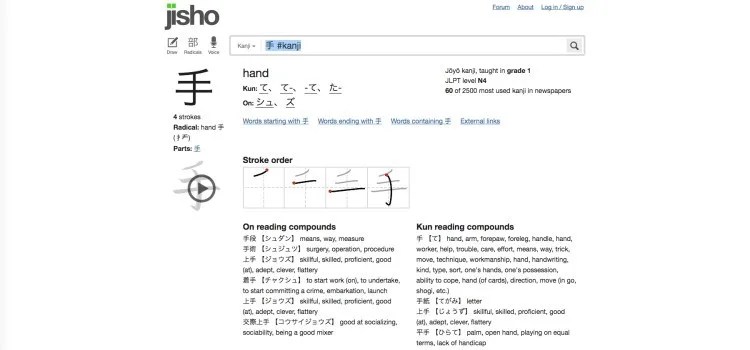
    Jisho

    Jisho is an online dictionary focused on Japanese that offers a wide range of resources, from word searches to complete sentence analysis. It is highly valued by Japanese students due to its intuitive interface and comprehensive functionality.

    • Allows detailed searches using romaji, kanji, hiragana, and katakana.
    • Offers detailed information about kanji, including meanings, readings, and usage examples.
    • Does not have automatic translation of complete texts, focusing more on being a dictionary.
    • May be limited for users who need quick and complete translations.

    For those studying Japanese and needing a robust tool to better understand kanji and vocabulary, Jisho is an excellent choice.

    How to translate and learn Japanese using jisho?

    Comparative of Tools

    Phrase Comparison

    Despite the brief explanation of the tools, it may be better to analyze in practice how the translator performs when translating certain phrases. All translators can translate the phrase correctly, but some may sound less or more natural or formal. It is up to you to analyze which translation performed better, as there is no right or wrong.

    The phrase we chose to translate is as follows:

    “Although we planned every detail meticulously, the execution was hindered by a series of unforeseen events that required quick and creative solutions.”

    Translation according to GPT:

    私たちがすべての詳細を綿密に計画したにもかかわらず、一連の予期しない出来事によって実行が妨げられ、迅速かつ創造的な解決策が求められました。

    Translation from Google Translate:

    私たちは細部に至るまで綿密に計画を立てましたが、迅速かつ創造的な解決策が必要となる一連の予期せぬ出来事によって実行が妨げられました。

    Translation from Apple:

    「私たちはすべての詳細を徹底的に計画しましたが、実行は迅速かつ創造的な解決策を必要とする一連の予期せぬ出来事によって妨げられました。」

    Translation from Deepl:

    "細部まで綿密に計画したものの、迅速かつ創造的な解決策を必要とする不測の事態が相次ぎ、実行は妨げられた"

    Comparative Table

    To conclude the article, let’s make a comparison of tools for you to reach a conclusion about which is the best translator for you:

    ToolTypeAdditional FeaturesMain FocusAdvantagesDisadvantages
    LingueeContextual DictionaryReal Context, FreeLanguage StudentsProvides detailed contextNot ideal for long texts
    MaziiInteractive DictionaryFlashcards, Customizable Pop-upsJapanese LearningCustomizable, Supports multiple languagesLimits in the free version
    JishoOnline DictionaryKanji Details, Usage ExamplesJapanese StudentsDetailed information about KanjiDoes not have automatic translation
    TakobotoOffline DictionaryWorks OfflineQuick ConsultationsUseful without internet accessLimited features compared to online
    Mirai TranslateAI TranslatorHigh Accuracy, Complex ContextTechnical and Business TranslationsHigh accuracy and qualityCostly for large-scale use
    Google TranslateMultilingual TranslatorVoice Input, CameraQuick TranslationsWide range of languages, freeLess accurate for complex phrases
    DeepLAI TranslatorTranslation Alternatives, GlossaryPrecision and Context TranslationsNatural and accurate translationExpensive for large-scale use
    SystranTechnical TranslatorCustomization, Technical TermsCompanies and ProfessionalsHigh accuracy for technical termsLess intuitive interface
    Yandex TranslateMultimodal TranslatorImage, Website TranslationQuick ChecksFree, versatileDifficulties with complex phrases
    PapagoMultilingual TranslatorSupport for Voice, ImagesEveryday TranslationsHigh accuracy in Asian languagesLimitations in technical texts
  • Staying in Japan – Phrases and vocabulary

    Staying in Japan – Phrases and vocabulary

    In today’s article, we will learn some phrases and words that we will need to speak and hear in hotels and hostels in Japan. If you still don’t know where to stay in Japan, we recommend that you check our article on different types of accommodation.

    If you are going to stay in a hotel where there are Brazilian attendants, or if you speak English, it will make things much easier. But not always the best and cheapest options speak these languages, and the English of the Japanese is not easy to understand.

    Henn-na Hotel - Strange or Revolutionary?

    Phrases for accommodation

    Let’s learn some phrases that can help you during your visit to Japan. We recommend having a basic knowledge of the Japanese language to understand similar phrases and know how to respond to them.

    If you still don’t know even the basic words and phrases, we recommend reading the following articles first:

    imperial hotel

    Questions you will ask

    See below some Japanese questions and phrases that you will ask when staying in a hotel, checking in and out, and other topics related to accommodations in Japan:

    チェックインをお願いします。名前は__です。
    chekkuin o onegaishimasu. Namae wa __desu

    I want to check in. My name is ___.

    ちょっと聞いてもいいですか
    chotto kiite mo ii desu ka

    Can I ask you something?

    手伝ってくれませんか
    tetsudatte kuremasen ka

    Can you help me?

    朝食は含まれていますか?
    choushoku wa fukumarete imasu ka?

    Is breakfast included?

    預けた荷物を返して下さい。
    azuketa nimotsu o kaeshite kudasai

    Please return my luggage.

    領収書下さい。
    ryoushuusho kudasai

    Can I have the receipt?

    カードでいいですか?
    kaado de ii desu ka?

    Can I use a card?

    チェックインお願いします。
    chekkuin onegaishimasu

    I would like to check in.

    予約をしていませんが、今晩、泊まれますか?
    yoyaku o shite imasen ga, konban, tomaremasu ka?

    I don’t have a reservation, but can I stay tonight?

    今払いましょうか、それとも後で?
    ima haraimashou ka, soretomo atode?

    Do you want me to pay now or later?

    タオルが必要です。
    taoru ga hitsuyou desu

    I need a towel.

    スミスで予約をしてあります。
    sumisu de yoyaku o shite arimasu

    I have a reservation under the name Smith.

    タクシーを呼んで下さい。
    takushii o yonde kudasai

    Could you call a taxi?

    チェックアウトお願いします。
    chekkuauto onegaishimasu

    I would like to check out.

    WiFiは使えますか?
    waifai wa tsukaemasu ka?

    Can I use the WiFi?

    あと1泊できますか?
    ato ippaku dekimasu ka?

    Can I stay one more night?

    セーフティーボックスの使い方がわかりません。
    seefutiibokkusu no tsukaikata ga wakarimasen

    I don’t know how to use the safe.

    この料金には税金とサービス料は含まれていますか?
    kono ryoukin ni wa zeikin to saabisu-ryou wa fukumarete imasu ka?

    Does this price include taxes and service fees?

    キャンセル料はおいくらですか?
    kyanseru ryou wa o ikura desu ka?

    How much is the cancellation fee?

    Phrases you will hear

    See below some Japanese phrases that you will probably hear:

    お荷物はこちらでお預かり致します。
    onimotsu wa kochira de oazukari itashimasu.

    We will keep your luggage here.

    綴りを教えて頂けますか?
    tsudzuri o oshiete itadakemasu ka?

    How do you spell your name?

    それではお待ちしております。
    soredewa omachi shite orimasu.

    We will be waiting for you!

    ここに書いてください。
    kokoni kaite kudasai.

    Please write here.

    予約確認書はお持ちですか?
    yoyaku kakunin-sho wa o mochidesu ka?

    Do you have the reservation confirmation?

    かしこまりました。
    kashikomarimashita.

    Understood / Yes, sir/ma’am.

    あなたのお部屋は二号室です。
    anata no o heya wa ni-gōshitsu desu.

    Your room is Number 2.

    あいにく、空いている部屋はございません。
    ainiku, aiteiru heya wa gozaimasen.

    Unfortunately, there are no available rooms.

    こちらのフォームにご記入下さい。
    kochira no foomu ni go kinyuu kudasai.

    Please fill out this form.

    ご滞在をお楽しみ下さい。
    go taizai o o tanoshimi kudasai.

    Enjoy your stay.

    外出の際は、鍵をフロントにお預け下さい。
    gaishutsu no sai wa, kagi o furonto ni o azuke kudasai.

    Please leave your key at the front desk when you go out.

    五階でございます。
    gokai de gozaimasu.

    It is on the fifth floor.

    大変失礼致しました。すぐに修正致します。
    taihen shitsurei itashimashita. Sugu ni shūsei itashimasu.

    We are very sorry. We will correct this immediately.

    部屋にセーフティボックスがございます。
    heya ni sēfutibokkusu ga gozaimasu.

    There is a safe in the room.

    パスポートをお預かりしてもよろしいでしょうか?
    pasupōto o oazukari shite mo yoroshii deshou ka?

    Can I see your passport?

    Japanese Vocabulary for Accommodation

    Let’s finish by leaving a complete list of words related to hotels and accommodations.

    • エアコン (eakon) – Air conditioning
    • ロッカー (rokkaa) – Locker
    • 観光地 (kankouchi) – Tourist attraction
    • 手荷物 (te nimotsu) – Hand luggage
    • 荷物 (nimotsu) – Luggage
    • トイレ (toire) – Bathroom
    • 温泉 (onsen) – Hot spring bath
    • 金庫 (kinko) – Safe deposit box
    • 追加ベッド (tsuika beddo) – Extra bed
    • ベッド (beddo) – Bed
    • キャンセル (kyanseru) – Cancellation
    • インフォメーションセンター (infomeeshon sentaa) – Information center
    • 鍵 (kagi) – Key
    • チェックイン (chekku in) – Check-in
    • チェックアウト (chekku auto) – Checkout
    • 旅行者用小切手 (ryokou shayou kogitte) – Traveler’s check
    • シャワー (shawaa) – Shower
    • 毛布 (moufu) – Blanket
    • 宿泊代 (shukuhakudai) – Room cost
    • いくら (ikura) – Cost
    • 旅行費用 (ryokou hiyou) – Travel expenses
    • 旅費 (ryohi) – Travel expenses
    • 旅行先 (ryokou saki) – Destination
    • エレベータ (elebeeta) – Elevator
    • 入る (hairu) – To enter (verb)
    • 歯ブラシ (ha burashi) – Toothbrush
    • 案内所 (annaijo) – Information office
    • 喫煙 (kitsu-en) – Smoking
    • ユースホステル (yu-su hosuteru) – Hostel / Youth hostel
    • ホステル (hosuteru) – Hostel
    • カプセルホテル (kapuseru hoteru) – Capsule hotel
    • ホテル (hoteru) – Hotel
    • 通訳 (tsuu yaku) – Interpretation
    • 通訳者 (tsuu yaku sha) – Interpreter
    • 髭剃り (higesori) – Razor
    • 禁煙 (kin-en) – Non-smoking
    • 部屋番号 (heya bango) – Room number
    • 貴重品 (kichouhin) – Valuables
    • パックツアー (pakku tsuaa) – Package tour
    • パック旅行 (pakku ryokou) – Package trip
    • 払う (harau) – To pay
    • トイレットペーパー (toiretto peepa) – Toilet paper
    • パスポート (pasupooto) – Passport
    • ツアー (tsuaa) – Tour
    • 歯磨き (hamigaki) – Toothpaste
    • 旅館 (ryokan) – Japanese-style inn
    • ダブル (daburu) – Double room
    • ツインルーム (tsuin ruumu) – Double room
    • ツイン (tsuin) – Double room
    • 和室 (washitsu) – Japanese-style room
    • シングル (shinguru) – Single room
    • 部屋 (heya) – Room
    • フロント (furonto) – Reception
    • 予約 (yoyaku) – Reservation
    • リゾート (rizooto) – Resort
    • ボディーソープ (bodii soopu) – Body soap
    • 石鹸 (sekken) – Soap
    • ドライヤー (doraiyaa) – Hair dryer
    • 旅行保険 (ryokou hoken) – Travel insurance
    • ティッシュペーパー (tisshuu peepaa) – Tissues
    • テレビ (terebi) – Television
    • タオル (taoru) – Towel
    • 招待旅行 (shoutai ryokou) – All expenses paid
    • 観光旅行 (kankou ryokou) – Sightseeing
    • 旅行者 (ryokou sha) – Tourist / Traveler
    • 観光客 (kankoukyaku) – Tourist
    • 講演旅行 (kouen ryokou) – Lecture tour
    • シャンプー (shanpuu) – Shampoo
  • Meaning of the Names of the Moves in Street Fighter

    Meaning of the Names of the Moves in Street Fighter

    Street Fighter is one of the most iconic and globally recognized fighting game franchises. Released by Capcom, the series is famous not only for its charismatic characters and intense battles but also for the names of its moves, which often have deep meanings and cultural roots, especially in the Japanese language. In this article, we will explore the meaning of the names of the moves of the main characters in Street Fighter with a focus on learning Japanese.

    Names of Ryu’s Moves

    Ryu is one of the main and most iconic characters in the Street Fighter series. Trained in martial arts since he was young, he constantly seeks to improve his skills and understand the true meaning of fighting. The name “Ryu” (リュウ) means “dragon” in Japanese, symbolizing power and strength. His moves are known and admired by fans around the world.

    The main moves of Ryu are:

    • Hadouken (波動拳)
    • Shoryuken (昇龍拳)
    • Tatsumaki Senpukyaku (竜巻旋風脚)

    What does Hadouken mean?

    Hadouken is composed of three kanji: 波 (ha) means “wave”, 動 (dou) means “movement”, and 拳 (ken) means “fist”. Together, “Hadouken” can be translated as “Fist of the Energy Wave”. This move is represented by a sphere of energy launched from Ryu’s hands, which has become one of the most recognizable moves in the world of fighting games.

    The concept of Hadouken goes beyond just a physical movement; it encapsulates the idea of channeling internal energy and manifesting it externally. This is deeply rooted in martial arts practices and Eastern philosophy, where control and manipulation of ki (vital energy) are essential.

    What does Shoryuken mean?

    Shoryuken is composed of 昇 (shou) which means “ascend” or “rise”, 龍 (ryuu) which means “dragon”, and 拳 (ken) which means “fist”. Thus, “Shoryuken” can be translated as “Fist of the Ascending Dragon”. This move is characterized by an upward punch, often executed as an anti-air move.

    The image of an ascending dragon is symbolic of power and strength in Eastern folklore, and Ryu’s Shoryuken embodies that power. The move requires precision and timing, reflecting the discipline and skill necessary to master martial arts.

    What does Tatsumaki Senpukyaku mean?

    Tatsumaki Senpukyaku is composed of 竜巻 (tatsumaki) which means “tornado”, 旋風 (senpuu) which means “whirlwind” or “hurricane”, and 脚 (kyaku) which means “leg” or “kick”. Therefore, the move can be translated as “Kick of the Whirlwind Tornado”. This move is marked by a spinning kick that causes the character to twirl in the air.

    The Tatsumaki Senpukyaku demonstrates the fluidity and dynamic strength of martial arts. The ability to generate devastating spinning power symbolizes the harmony between control and chaos, something often explored in Japanese martial traditions.

    Names of Ken’s Moves

    Ken is Ryu’s best friend and rival. Although he shares many of the same techniques, Ken adds his own style and flair to the moves, reflecting his more extroverted and aggressive personality. The name “Ken” (ケン) means “fist” [拳] in Japanese, which is fitting for a martial arts fighter. Ken is known for his speed and intensity, which is reflected in the names and execution of his moves.

    We will not repeat the moves here, as they are the same as Ryu’s; if you haven’t had a chance to read it, just scroll back a bit. It is worth noting that ken can also mean sword [剣] in Japanese.

    Names of Chun-Li’s Moves

    Chun-Li is the first female character in the Street Fighter series and is known for her speed and agility. The name “Chun-Li” (春麗) means “beautiful spring” in Chinese, reflecting her grace and beauty. Her moves are fast and powerful, often focused on kicks.

    List of Chun-Li’s Moves:

    • Kikoken (気功拳)
    • Hyakuretsukyaku (百裂脚)

    What does Kikoken mean?

    Kikoken is composed of 気 (ki) which means “energy” or “spirit”, 功 (kou) which means “work” or “achievement”, and 拳 (ken) which means “fist”. Thus, “Kikoken” can be translated as “Fist of Spiritual Energy”. This move is represented by a sphere of energy launched from Chun-Li’s hands.

    The Kikoken demonstrates Chun-Li’s ability to channel her internal energy into a powerful attack. This move reflects the importance of ki in Eastern martial arts, where spiritual and physical energy are used together to create powerful movements.

    What does Hyakuretsukyaku mean?

    Hyakuretsukyaku is composed of 百 (hyaku) which means “hundred”, 裂 (retsu) which means “to split” or “to tear”, and 脚 (kyaku) which means “leg” or “kick”. Together, “Hyakuretsukyaku” can be translated as “Kick of the Hundred Splits”, referring to the speed and strength of Chun-Li’s kicks.

    This iconic move of Chun-Li showcases her incredible speed and ability to deliver multiple kicks in a short span of time. The technique requires both speed and control, reflecting the agility and dexterity of the character.

    Names of E. Honda’s Moves

    E. Honda is a sumo wrestler who seeks to prove that sumo can be a respectable martial art worldwide. The name “Honda” (本田) means “main field” or “true field”. He is known for his powerful and fast moves, which often surprise his opponents with their speed.

    The name of Honda’s move is Hundred Hand Slap in English, but in Japanese it is called Hyakuretsu Harite [百裂張り手]. Another move we will mention from the character is the Oicho Throw [大銀杏投げ].

    What does Hyakuretsu Harite mean?

    百 (hyaku) means “hundred”, 裂 (retsu) means “to split” or “to tear”, and 張り手 (harite) refers to a “slap” or “strike with the palm of the hand”. Thus, the move can be translated as “Slap of the Hundred Splits”.

    The Hundred Hand Slap is a move that reflects the brute strength and speed of E. Honda’s arms, delivering multiple quick strikes with the palms of his hands. This move demonstrates the efficiency and power of sumo strikes, adapted for a more dynamic and aggressive fighting style.

    What does Oicho Throw mean?

    Oicho Throw is known in Japanese as 大銀杏投げ (Oicho Nage). 大 (dai) means “big”, 銀杏 (icho) refers to the top knot in a sumo wrestler’s hair, and 投げ (nage) means “throw”. Thus, the move can be translated as “Throw of the Big Knot”.

    This move demonstrates E. Honda’s ability to use traditional sumo techniques to grab and throw his opponent with impressive force. The move is a combination of technique and brute strength, reflecting Honda’s unique fighting style.

    List of Akuma’s Moves:

    • Gou Hadouken (豪波動拳)
    • Shakunetsu Hadouken (灼熱波動拳)
    • Zanku Hadouken (斬空波動拳)
    • Gou Shoryuken (豪昇龍拳)
    • Tatsumaki Zankukyaku (竜巻斬空脚)
    • Metsu Shoryuken (滅昇龍拳)

    What does Gou Hadouken mean?

    Gou Hadouken (豪波動拳)
    Gou Hadouken is composed of 豪 (gou) which means “strong” or “magnificent”, 波動 (hadou) which means “energy wave”, and 拳 (ken) which means “fist”. Thus, “Gou Hadouken” can be translated as “Fist of the Magnificent Energy Wave”. This move is a more powerful variation of Ryu and Ken’s Hadouken.

    What does Shakunetsu Hadouken mean?

    Shakunetsu Hadouken (灼熱波動拳)
    Shakunetsu Hadouken is composed of 灼熱 (shakunetsu) which means “scorching heat”, 波動 (hadou) which means “energy wave”, and 拳 (ken) which means “fist”. Thus, “Shakunetsu Hadouken” can be translated as “Fist of the Scorching Energy Wave”. This move is a fiery version of Hadouken.

    What does Zanku Hadouken mean?

    Zanku Hadouken (斬空波動拳)
    Zanku Hadouken is composed of 斬 (zan) which means “cut” or “slice”, 空 (kuu) which means “sky”, 波動 (hadou) which means “energy wave”, and 拳 (ken) which means “fist”. Thus, “Zanku Hadouken” can be translated as “Fist of the Cutting Energy Wave of the Sky”. This move is launched in the air, differentiating it from the traditional Hadouken.

    What does Gou Shoryuken mean?

    Gou Shoryuken (豪昇龍拳)
    Gou Shoryuken is composed of 豪 (gou) which means “strong” or “magnificent”, 昇 (shou) which means “ascend” or “rise”, 龍 (ryuu) which means “dragon”, and 拳 (ken) which means “fist”. Thus, “Gou Shoryuken” can be translated as “Fist of the Magnificent Ascending Dragon”. It is a more powerful version of the traditional Shoryuken.

    What does Tatsumaki Zankukyaku mean?

    Tatsumaki Zankukyaku (竜巻斬空脚)
    Tatsumaki Zankukyaku is composed of 竜巻 (tatsumaki) which means “tornado”, 斬空 (zanku) which means “cutting the sky”, and 脚 (kyaku) which means “leg” or “kick”. Thus, “Tatsumaki Zankukyaku” can be translated as “Kick of the Cutting Tornado of the Sky”. This move is an aerial variation of Tatsumaki Senpukyaku.

    What does Metsu Shoryuken mean?

    Metsu Shoryuken (滅昇龍拳)
    Metsu Shoryuken is composed of 滅 (metsu) which means “annihilation” or “destruction”, 昇 (shou) which means “ascend” or “rise”, 龍 (ryuu) which means “dragon”, and 拳 (ken) which means “fist”. Thus, “Metsu Shoryuken” can be translated as “Fist of the Annihilating Ascending Dragon”. It is an extremely powerful Shoryuken, used as a devastating finishing move.

    Names of Sakura’s Moves

    Sakura is a fighter who idolizes Ryu and uses moves similar to his, with Japanese names. Her name “Sakura” (さくら/桜) means “cherry blossom”, a symbol of beauty and ephemerality in Japan.

    List of Sakura’s Moves:

    • Hadouken (波動拳)
    • Shouoken (昇桜拳)
    • Sakura Otoshi (桜落とし)
    • Shunpukyaku (春風脚)

    What does Shouoken mean?

    Shouoken is composed of 昇 (shou) which means “ascend” or “rise”, 桜 (ou) which means “cherry blossom”, and 拳 (ken) which means “fist”. Thus, “Shouoken” can be translated as “Ascending Fist of the Cherry Blossom”. This move is a variation of Shoryuken, adapted to Sakura’s fighting style.

    What does Sakura Otoshi mean?

    Sakura Otoshi is composed of 桜 (sakura) which means “cherry blossom”, and 落とし (otoshi) which means “fall”. Thus, “Sakura Otoshi” can be translated as “Fall of the Cherry Blossom”. This move involves an aerial attack where Sakura quickly descends upon her opponent, similar to the fall of cherry blossom petals.

    Conclusion

    The names of the moves of the characters in Street Fighter are not only eye-catching but carry deep meanings and often have roots in the Japanese language and culture. These names help enrich the player’s experience, adding an extra layer of depth and authenticity to the characters and their abilities.

    Unfortunately, not all characters in the game have names for their moves in Japanese; the vast majority have their names in English, so we will conclude this article with just these characters.

  • List of Japanese Surnames 200+ Origin and Meanings

    List of Japanese Surnames 200+ Origin and Meanings

    Looking for a list of Japanese surnames? What are the most common Japanese surnames? Do you know the meaning of the main surnames? Why do Japanese people usually have only two names? Why does the surname come first in Japan? These and other questions will be answered in this article.

    The History of Japanese Surnames

    Do you know the history of Japanese surnames? Not long ago, during the Meiji Era (1868-1912), common people did not have surnames. Only people in positions such as nobility, artists, and clan leaders did.

    Sometimes some warriors, doctors, monks, and merchants managed to acquire a surname by purchasing one. Common people were identified by their profession or location; merchants often used the name of their shop as identification or a surname.

    Japanese Surnames - How they originated and which are the most common

    How did people differentiate themselves from one another?

    If in a city two people are named Souta, the one living in the mountain would end up being called Yamamoto no Souta, which literally means Souta from the foot of the mountain 山本 (foot of the mountain). This is yet another reason why the surname comes before the first name.

    For this reason, Japanese names and surnames tend to be simple and have common meanings that identify personality, family origin, the place they lived, their social class, and history.

    Moreover, the ideograms help Japanese names to be more complex, allowing various ways to read an ideogram and write using other ideograms. Not to mention that a name can have multiple meanings thanks to kanji.

    Research reveals that there are between 100,000 to 300,000 surnames in Japan, making it one of the countries with the highest number of surnames in the world. This seems ironic, because the Japanese language has few syllables compared to other languages.

    Examples of Origins of Japanese Surnames

    As mentioned, many Japanese surnames referred to specific locations or characteristics about a particular family. Here are some popular examples:

    • Derived from the name of the place – Watanabe, Takahashi, Sasaki, Ishikawa, Hasegawa, Miura, Chiba..;
    • Derived from topography and landscape – Yamamoto, Yamada, Mori, Ikeda..;
    • Derived from directional or positional relation – Minami, Kita, Tatsumi..;
    • Derived from occupation – Hattori, Shoji, Tokairin, Inukai, Ukai, Kobun..;
    Japanese Surnames - How they originated and which are the most common

    Myouji – Family Name in Japanese

    Surnames or family names in Japanese are called myouji [名字 or 苗字], sometimes referred to as sei [姓]. In the past, the surname in Japanese was called naazana [名字]. Below are some related words that can help expand your Japanese vocabulary:

    JapaneseRomajiMeaning
    同姓douseiSame surname
    元姓genseiPrevious, original surname
    他姓taseiAnother surname
    異姓iseiDifferent surname
    宮号miyagouImperial surname
    漢姓kanseiChinese surname
    名前namaeFirst name
    ラストネームrasutoneemu Last Name
    家名KameiFamily name, house

    The Most Common Surnames in Japan

    The most common surname in Japan is Satou, with more than 1,928,000 people having this surname. Satou is mainly written with the ideograms [佐藤], which together mean wisteria field. Below you can see a list of the 10 most common surnames in all of Japan, the number of people who have that surname, and its meaning.

    SurnamePopulationIdeogramMeaning
    1Satou 1,928,000佐藤Wisteria field
    2Suzuki 1,707,000鈴木Bell tree
    3Takahashi 1,416,000高橋Long bridge
    4Tanaka 1,336,000田中In the middle of the rice field
    5Watanabe 1,134,000渡辺 / 渡邊To cross over
    6Itou 1,080,000伊藤Wisteria of Ise
    7Yamamoto 1,077,000山本Person from the mountain
    8Nakamura 1,059,000中村Inside the village
    9Kobayashi 1,019,000小林Small forest
    10Saitou 980,000斉藤 / 斎藤Affecting wisteria.

    The first ideogram of the name Saitou (斉) can be used to refer to a meal made by monks and priests. It also conveys an image of purity and divine worship.

    It is worth remembering that Japanese names often represent their meaning in reverse. The ideograms can be written in the order High (高) Bridge (橋) but mean High Bridge (or Long Bridge). And we cannot always take the literal meaning of the ideogram.

    Japanese Surnames - How they originated and which are the most common

    Are Surnames Nicknames?

    As we can see throughout this article, surnames are practically nicknames, since the definition is to expose a person’s characteristic in an affectionate or pejorative way. Japanese surnames are basically a characteristic of the person and the place where they live.

    Since Japanese names are practically nicknames, how do Japanese people usually call each other affectionately? This happens by making alterations to the name or adding suffixes.

    If you want to know more about Japanese Nicknames, we suggest reading our complete article by clicking the following: >> All about Japanese Nicknames!

    List of 200 Common Surnames in Japan

    Below we will provide a small list of the 200 most common names in the Japanese language. This list was shared by the website Studiare Giapponese and is in alphabetical order.

    KanjiRomajiMeaning
    阿部AbePleasant Group
    秋山AkiyamaAutumn Mountain
    安藤AndouTranquil Wisteria
    青木AokiGreen Tree
    青山AoyamaBlue/Green Mountain
    新井荒井AraiNew WellNew Residence
    荒木ArakiWild Tree
    浅野淺野AsanoShallow Plain
    馬場BabaHorse Riding Land
    千葉ChibaThousand Leaves
    遠藤EndouDistant Wisteria
    藤井FujiiWisteria Well
    藤本FujimotoOrigin of Wisteria
    藤田FujitaWisteria Plantation
    藤原FujiwaraWisteria Field
    福田FukudaLucky Rice Field
    福井FukuiGood Luck Well
    福島FukushimaIsland of Good Luck
    古川FurukawaOld River
    後藤GotouBehind the Wisteria
    萩原HagiwaraClover Plain
    浜田HamadaBeach Rice Field
    HaraField
    原田HaradaPlantation in the Field
    長谷川HasegawaLong river running through the valley
    橋本HashimotoBase/Origin of the Bridge
    服部HattoriAlliance Clothes
    早川HayakawaFast River
    HayashiForest
    樋口HiguchiWater Spout
    平井HiraiWell Placid
    平野HiranoFlat Field
    平田HirataPeaceful Rice Field
    広瀬廣瀬HiroseWide and Shallow
    本田HondaOriginal Rice Field
    本間HonmaName of a clan that ruled the province of Sado
    HoriDitch
    星野HoshinoField of Stars
    市川IchikawaCity River
    五十嵐IgarashiFifty Storms
    飯田IidaCooked Rice Husk
    池田IkedaPlantation with Pond
    今井ImaiCurrent Well
    井上InoueAbove the Well
    石橋IshibashiStone Bridge
    石田IshidaRocky Plantation
    石原IshiharaRocky Plain
    石井IshiiStone Well
    石川IshikawaRocky River
    伊藤ItouWisteria of Ise (city of Mie)
    岩本IwamotoBase of the Rock
    岩崎IwasakiEnd of the Rock
    岩田IwataRocky Rice Plantation
    鎌田KamataSickle Rice Field
    金子KanekoFortunate Child
    片山KatayamaSingle Mountain
    加藤KatouWisteria of Kaga (Old name of Ishikawa)
    川口KawaguchiRiver Entrance
    川上KawakamiAbove the river
    川村KawamuraRiver Village
    川波KawanamiRiver Wave
    川崎KawasakiEnd of the River
    菊地菊池KikuchiLand of ChrysanthemumsChrysanthemum Pond
    木村KimuraVillage with Trees
    木下KinoshitaUnder the Tree
    北村KitamuraNorth Village
    小林KobayashiSmall Forest
    小池KoikeSmall Pond
    小島KojimaSmall Island
    小松KomatsuSmall Pine
    近藤KondouNear the Wisteria
    小西KonishiSmall West
    河野Kouno (Kawano)River with plain
    小山KoyamaSmall Mountain
    久保KuboUneven Land
    久保田KubotaRice Plantation with uneven land
    工藤KudouSkillful Wisteria
    熊谷KumagaiBear Valley
    栗原KuriharaChestnut Plain
    黒田KurodaBlack Rice Field
    前田MaedaIn front of the Rice Field
    丸山MaruyamaRound Mountain
    増田MasudaExpanded Plantation
    松原MatsubaraPine Plain
    松田MatsudaRice Field with Pine
    松井MatsuiPine Well
    松本MatsumotoBase of the Pine
    松村MatsumuraPine Village
    松尾MatsuoPine Tail
    松岡MatsuokaPine Hill
    松下MatsushitaUnder the pine
    松浦MatsuuraPine Bay
    MinamiSouth
    三浦MiuraThree Bays
    三宅MiyakeThree Houses
    宮本MiyamotoOrigin of the Temple/Palace
    宮田MiyataRice Plantation of the Sanctuary
    宮崎MiyazakiEnd of the Temple/Palace
    水野MizunoWater Field
    望月MochizukiFull Moon
    MoriForest
    森本MorimotoBase of the Forest
    森田MoritaPlantation in the Forest
    村上MurakamiAbove the village
    村田MurataPlantation of the Village
    長井永井NagaiVery LongForever
    長田永田NagataLong Rice Field
    内藤NaitouInterior Wisteria
    中川NakagawaCentral River
    中島NakajimaNakashimaCentral Island
    中村NakamuraMiddle of the village
    中西NakanishiCenter of the West
    中野NakanoCentral Field
    中田NakataNakadaCentral Rice Field
    中山NakayamaInside the Mountain
    成田NaritaFormation of the Rice Field
    西田NishidaRice Plantation of the West
    西川NishikawaRiver of the West
    西村NishimuraWest Village
    西山NishiyamaWest Mountain
    西沢NishizawaWest Marsh
    野田NodaRice Plantation in the Field
    野口NoguchiField Entrance
    野村NomuraField Village
    小田OdaSmall Rice Plantation
    小川OgawaSmall River
    岡田OkadaHill Rice Field
    岡本OkamotoBase of the Hill
    岡崎OkazakiHill of the Cape
    奥村OkumuraIsolated Village
    小野OnoSmall Field
    大橋OohashiBig Bridge
    大石OoishiBig Stone
    大久保OokuboBig Hollow
    大森OomoriBig Help
    大西OonishiBig West
    大野OonoBig Plain
    大沢大澤OosawaBig Marsh
    大島OoshimaBig Island
    太田OotaFertile Rice Field
    大谷OotaniBig Valley
    大塚OotsukaBig Ancient Mound
    尾崎OzakiEnd of the Cape
    小沢小澤OzawaSmall Marsh
    斎藤齋藤SaitouAffecting Wisteria
    斎藤 / 齋藤SaitouAffecting Wisteria
    酒井SakaiSake Well
    坂本SakamotoBottom of the Descent
    桜井櫻井SakuraiCherry Blossom Well
    佐野SanoSmall Field
    佐々木SasakiSupport Tree
    佐藤SatouWisteria Field
    沢田SawadaRice Plantation in the Marsh
    関/關SekiBarrier/Gate
    柴田ShibataPlantation with Twigs
    島田ShimadaIsland Plantation
    清水ShimizuPure Water
    篠原ShinoharaBamboo Grass Plain
    菅原SugawaraRush Field
    杉本SugimotoOrigin of Cedar
    杉山SugiyamaCedar Mountain
    須藤SutouSudouMandatory Wisteria
    鈴木SuzukiBell Tree
    田口TaguchiEntrance to the Rice Field
    高田TakadaTakataHigh Plantation
    高木TakagiHigh Tree
    高橋TakahashiHigh Bridge
    高野TakanoHigh Field
    高山TakayamaHigh Mountain
    武田TakedaWarrior’s Rice Field
    竹内TakeuchiInside the Bamboo Grove
    田村TamuraVillage with Rice Field
    田辺田邊TanabeNext to the rice plantation
    田中TanakaMiddle of the rice field
    谷口TaniguchiOpening of the Valley
    土屋TsuchiyaClay House
    TsujiCrossroads (Transverse Road)
    内田UchidaInside the Plantation
    内山UchiyamaInside the Mountain
    上田UedaUetaTop/Upper Plantation
    上野UenoOn top of the Plain
    和田WadaHarmonious Plantation
    渡辺WatanabeCrossing by the edge
    山田YamadaMountain Rice Field
    山口YamaguchiOpening to the Mountain
    山本YamamotoBase of the mountain
    山中YamanakaCenter of the Mountain
    山下YamashitaUnder the Mountain
    山内YamauchiInside the Mountain
    山崎YamazakiYamasakiEnd of the Mountain
    矢野YanoEighth Field
    安田YasudaCheap Rice Field
    横田YokotaRice Field Next to
    横山YokoyamaNext to the Mountain
    吉田YoshidaAuspicious Plantation
    吉川YoshikawaAuspicious River
    吉村YoshimuraAuspicious Village
    吉岡YoshiokaAuspicious Hill

    How can I discover the meaning of my name?

    We recommend using an online dictionary like jisho to look up the various meanings of each ideogram and try to create a relationship between the two. It is worth remembering that Japanese names can have different pronunciations and ideograms, so do not rely on a list without knowing how to write your name.

    If you want to delve deeper into Japanese names, we recommend a Japanese Names Dictionary from JBC (click for details). We will leave a video explaining how you can discover the meanings of Japanese names on your own:

  • Guide – All 12 Major Baseball Teams in Japan

    Guide – All 12 Major Baseball Teams in Japan

    The baseball is a passion of the Japanese. The sport is watched and practiced by millions of Nippon fans, and its success extends to various provinces of the archipelago. In this article, we will get to know the main baseball teams in Japan.

    Koshien and the industrial leagues

    One of the most significant events with enormous popular appeal is the Koshien (甲子園), which, besides being the name of the main stadium of the competition, is often the name given to the national high school baseball tournament. Teams of young talents from all over the country compete in this tournament. Koshien is frequently mentioned in Japanese pop culture, especially in anime, manga, and films. The audience for the event is huge, and the competition is highly valued.

    In addition to the various high school baseball teams, there are also teams from the industrial leagues, representing famous companies such as Yamaha and many others.

    The professional teams of Nippon Professional Baseball (NPB)

    Guide – All 12 Major Baseball Teams in Japan

    The professional baseball league in Japan is the Nippon Professional Baseball League (NPB), also known as Puro Yakyuu (プロ野球) and has existed since 1950, although there was already a professional tournament since 1936 (under a different name). Currently, the NPB is organized as follows:

    • The teams are divided into two main leagues: The Pacific League and the Central League, each with 6 teams.
    • The Pacific League consists of Saitama Seibu Lions, Tohoku Rakuten Golden Eagles, Hokkaido Nippon Ham Fighters, Orix Buffaloes, Chiba Lotte Marines, and Fukuoka SoftBank Hawks.
    • The Central League is made up of Hiroshima Toyo Carp, Tokyo Yakult Swallows, Chunichi Dragons, Hanshin Tigers, Yomiuri Giants, and Yokohama DeNA BayStars.
    • Each team plays 144 games during the regular season.
    • Interestingly, unlike what happens in MLB (Major League Baseball), a tie can indeed occur in an NPB game. A tie is declared if the score is tied after 12 innings.
    • It is estimated that nearly 30 million (about 27 million) Japanese watch the NPB, and almost 50% (48%) have baseball as their favorite sport.
    • The country has the best player in the world today: Shohei Ohtani.
    • The most popular teams are: Yomiuri Giants, Hanshin Tigers, and Hiroshima Carp.
    • Many Brazilians have played in Japanese baseball, such as: Henrique Shigeo Tamaki, Daniel Matsumoto, Reinaldo Sato, Thyago Vieira, Felipe Natel, Vitor Ito, among others.

    Read also: Shohei Ohtani – The genius of world baseball

    Below, you can learn more about each of the teams:

    Yomiuri Giants

    Central league team that plays at the Tokyo Dome (東京ドーム Tōkyō Dōmu) and is widely considered the greatest team in the history of Japan. It has 22 Nippon Series titles, being so far the team with the most tournaments won in the NPB. It has a huge fan base and many idols, including the legendary Sadaharu Oh, the “king of home runs”.

    Hanshin Tigers

    Another very traditional and popular baseball team. It has 2 Nippon Series titles, with the last one won in 2023. The first time the team won the tournament was in 1985. It usually holds its matches at Koshien Stadium, in Nishinomiya (Hyogo).

    Hiroshima Carp

    The Hiroshima Toyo Carp also has a large number of fans in Japan. The Brazilian pitcher Shigeo Henrique Tamaki played for over a decade with the Carp. They are part of the central league and have 3 Japan Series titles, one more than the Hanshin Tigers. They hold their matches at Mazda Zoom-Zoom Stadium Hiroshima, the municipal stadium of Hiroshima.

    Yakult Swallows

    It has had several Brazilians on its roster, including Daniel Matsumoto and Reinaldo Sato. It has 5 Japan Series titles and its stadium is Meiji Jingu Stadium (明治神宮野球場 Meiji Jingu Yakyuujou), located in Tokyo. The team’s mascot is a swallow.

    Chunichi Dragons

    Based in Nagoya, the Dragons are an old franchise, founded in 1936. It is characterized by its two mascots: a small Blue Dragon (Chunichi Dragons Shaolon) and a Koala (Chunichi Dragons Doala). It has accumulated 2 Japan Series titles in its history and its stadium is Vantelin Dome Nagoya バンテリンドーム ナゴヤ (Banterin Doomu Nagoya). It is also part of the Central League.

    Yokohama BayStars

    Since 2012, the BayStars have been managed by the online services company DeNA, which operates in the mobile and mobile platform sector. In their trophy room, they have 2 Japan Series titles (1960 and 1998), although they have not won again in 25 years.

    Based in Kanagawa, the team plays at Yokohama Stadium and has as its mascot a Hamster with a star painted on its face. The main colors are white and blue.

    Seibu Lions

    The team where the Brazilian Bo Takahashi currently plays. It is the second greatest champion in history, with 13 Japan Series titles. It is among the teams that play in the Pacific League. Its main stadium is Seibu Dome (西武ドーム), located in Saitama.

    Tohoku Rakuten Golden Eagles

    Champion of the Japan Series on only one occasion, in 2013. Brazilians have also been part of the team, such as Fernando Luciano and Shigeo Tamaki (Henrique Tamaki). The team’s headquarters is in Sendai, in Miyagi Prefecture, where they hold their matches (Miyagi Baseball Stadium).

    Hokkaido Nippon Ham Fighters

    Representing the northernmost island of the archipelago, the Ham Fighters have 3 Japan Series titles in their history and hold their matches at Sapporo Dome, which was inaugurated in 2001. The stadium is quite peculiar, with two fields (one for soccer and another for baseball), movable grass, and a design resembling a frog with its tongue out (the tongue being the soccer field, uncovered).

    Orix Buffaloes

    Resulting from the merger of Orix BlueWave with Osaka Kintetsu Buffaloes. Ichiro Suzuki, one of the greatest legends of Japanese baseball, played for the team for nine seasons. The team, which has a buffalo as its mascot (the “buffalo bell”), has won the Japan Series five times, the last being in 2022. They hold their matches at Kyocera Dome Osaka Stadium (Osaka Dome), a futuristic stadium that has a capacity of over 50,000 people (51,000).

    Fukuoka SoftBank Hawks

    Representative of the Pacific League, it was bought by the SoftBank group in January 2005, when it became known as Fukuoka SoftBank Hawks. Previously, the team was called Fukuoka Daiei Hawks (1988-2005) and Nankai Electric Railway Company (1938-1988). It has 11 Japan Series titles and holds its matches at Fukuoka Dome.

    Chiba Lotte Marines

    The last team in the Pacific League has 4 Japan Series titles and is based in the Chiba region, where it holds its games at ZOZO Marine Stadium (Chiba Marines Stadium). The mascot is a duck named Mar-kun (マーくん). There is also Zuu-chan (ズゥちゃん) and Riin-Chan (リーンちゃん), the female version of the mascot.

    Useful pages about Japanese baseball

    To learn more about Japanese baseball, I recommend that you follow the following pages on Instagram: @beiseboljapones and @reidasrebatidas.

  • Everything About Hossomaki: History, Types, and Curiosities

    Everything About Hossomaki: History, Types, and Curiosities

    The Hossomaki (細巻き) is a traditional variety of sushi that delights lovers of Japanese cuisine with its simplicity and delicate flavor. This type of sushi, whose name in Japanese means “thin roll,” is recognized for its compact shape and for using only one main ingredient, wrapped in seasoned rice and nori seaweed. In this article, we will explore the history, origin, and all variations of Hossomaki, as well as provide valuable tips for preparing this delicacy at home.

    We also recommend reading: 130 Types of Sushi – Urumaki, Hossomaki, Nigiri

    History and Origin of Hossomaki

    The Hossomaki (細巻き) has its roots in the Edo period of Japan, which lasted from 1603 to 1868. During this time, Japanese society underwent many cultural and social transformations, and cuisine was one of the areas that evolved the most. The sushi as we know it today began to take shape during this period.

    Sushi in the Edo Period

    Originally, sushi was a technique for preserving fish, where fermented rice was used to keep the fish for long periods. This practice was known as narezushi (馴れ寿司), and the fermented rice was not consumed, serving only as a means of preservation.

    Over time, the technique evolved, and sushi began to be consumed in different ways. In the Edo period, the need for quick and practical meals led to the development of haya-zushi (早ずし), a form of sushi where the rice was mixed with vinegar to speed up the fermentation process. This was a crucial step in the evolution of sushi, as it made the dish more accessible and convenient for the growing urban population.

    The Innovation of Hossomaki

    The Hossomaki emerged as an innovation within this context. With its thin and compact shape, it became a practical and tasty way to consume sushi. The simplicity of Hossomaki, using only one main ingredient, reflected the Japanese philosophy of minimalism and respect for ingredients.

    The sushi chefs of the time began to roll small pieces of fish, vegetables, or other ingredients in nori seaweed and seasoned rice, creating thin rolls that were easy to eat and transport. This innovation quickly gained popularity in Edo (now Tokyo) and spread to other regions of Japan.

    Influence on Japanese Cuisine

    The popularity of Hossomaki is due to its versatility and simplicity. It not only became a staple in sushi restaurants but also a common option in bento boxes (Japanese lunch boxes) and home meals. The technique of rolling sushi influenced the development of other forms of sushi, such as futomaki (thick roll) and uramaki (inside-out roll).

    Today, Hossomaki is enjoyed not only in Japan but also around the world. Its simple and practical origin continues to inspire chefs and enthusiasts of Japanese cuisine, who find new ways to reinvent this classic.

    Types of Hossomaki

    The Hossomaki (細巻き) is a category of sushi that offers a wide range of flavors, thanks to its simplicity and versatility. Below, we explore the most popular types of Hossomaki, each with its unique characteristics.

    Kappamaki (かっぱ巻き)

    Kappamaki, also known as cucumber roll, is a refreshing and vegetarian choice in the world of Hossomaki. This type of sushi is ideal for those who prefer a lighter and crunchier flavor. It is low in calories and high in water and fiber, making it a healthy and hydrating option.

    Kappamaki (かっぱ巻き)

    Tekkamaki (鉄火巻き)

    The Tekkamaki, or tuna roll, is a classic loved by many. Made with fresh tuna, this Hossomaki stands out for its rich flavor and soft texture. Tuna is an excellent source of protein and omega-3 fatty acids, which are beneficial for cardiovascular health.

    Tekkamaki (鉄火巻き)

    Nattomaki (納豆巻き)

    The Nattomaki is made with natto, which are fermented soybeans. This type of Hossomaki has a strong flavor and a sticky texture, being highly appreciated by those who enjoy more pronounced flavors. Natto is rich in protein, vitamins, and probiotics, which are great for digestion and overall health.

    Nattomaki (納豆巻き)

    Sakemaki (鮭巻き)

    The Sakemaki, or salmon roll, is known for its soft texture and mild flavor. It is a popular choice both in Japan and abroad. Salmon is an excellent source of protein and omega-3 fatty acids, which help improve heart and brain health.

    Sakemaki (鮭巻き)

    Avocadomaki

    The Avocadomaki, made with avocado, offers a creamy and nutrient-rich combination. This type of Hossomaki is popular among vegetarians and those looking for a healthy alternative. Avocado is rich in healthy fats, fiber, and various vitamins, including vitamin E and potassium.

    Avocadomaki

    Kyurimaki

    The Kyurimaki, also known as cucumber roll, is similar to Kappamaki but may include other vegetables or seasonings to add complexity of flavor. This type of Hossomaki is refreshing and low in calories, ideal for a light and nutritious meal.

    Kyurimaki

    Unagimaki (うなぎ巻き)

    The Unagimaki is a roll made with grilled eel, known as unagi. This type of Hossomaki has a rich and slightly sweet flavor due to the eel sauce used. Eel is an excellent source of protein and vitamins, especially vitamin A.

    Unagimaki (うなぎ巻き)

    Shinkomaki (新香巻き)

    The Shinkomaki is a roll that uses takuan, which are pickled Japanese radishes. This Hossomaki is crunchy and has a sweet and sour flavor that contrasts well with the seasoned rice. Takuan is rich in fiber and has digestive properties.

    Shinkomaki (新香巻き)

    Kanpyomaki (干瓢巻き)

    The Kanpyomaki is made with kanpyo, dried strips of gourd. This roll offers a unique texture and a slightly sweet and earthy flavor. Kanpyo is low in calories and contains dietary fiber, making it a healthy choice.

    Kanpyomaki (干瓢巻き)

    Oshinkomaki (お新香巻き)

    The Oshinkomaki uses Japanese pickles, known as oshinko. This type of Hossomaki is colorful and flavorful, adding a sweet and sour touch to the sushi. The pickles are rich in probiotics, which are beneficial for gut health.

    Negitoromaki (ねぎとろ巻き)

    The Negitoromaki combines fatty chopped tuna (toro) with green onions. This Hossomaki is creamy and full of flavor, with the green onions adding a touch of freshness. Toro is a highly prized part of the tuna, known for its rich flavor and soft texture.

    Umeshisomaki (梅しそ巻き)

    The Umeshisomaki is a roll made with umeboshi (pickled plum) and shiso (perilla leaf). This Hossomaki has a tangy and refreshing flavor, with the pickled plum offering an interesting contrast. Shiso is rich in vitamins and has anti-inflammatory properties.

    Kampyomaki (かんぴょう巻き)

    The Kampyomaki is a roll made with strips of dried gourd cooked in soy sauce and sugar. This Hossomaki is sweet and salty at the same time, with a firm and flavorful texture. Kampyo is a healthy choice, rich in fiber and low in calories.

    How to Prepare Hossomaki at Home

    Preparing Hossomaki (細巻き) at home may seem challenging, but with some tips and practice, it’s possible to create perfect rolls. Below is a step-by-step guide to help you make Hossomaki.

    Necessary Ingredients

    • Sushi rice (shari)
    • Nori seaweed
    • Main ingredient (cucumber, tuna, salmon, etc.)
    • Rice vinegar
    • Sugar and salt
    • Water to wet hands
    • Bamboo mat (makisu)
    • Sharp knife

    Step by Step

    1. Prepare the Sushi Rice
    • Wash the rice: Wash the rice several times until the water runs clear. This removes excess starch and makes the rice less sticky.
    • Cook the rice: Cook the rice according to the package instructions.
    • Season the rice: Mix rice vinegar, sugar, and salt. Add this mixture to the cooked rice and gently stir until well incorporated. Let the rice cool to room temperature.

    2. Prepare the Ingredients

    • Cut the main ingredients: Cut the cucumber, tuna, salmon, or other ingredients into thin strips, sized appropriately to be rolled in the Hossomaki.

    3. Assemble the Hossomaki

    • Prepare the bamboo mat: Place the bamboo mat on a flat surface and cover it with a piece of plastic wrap to prevent the rice from sticking.
    • Place the nori seaweed: Place a sheet of nori seaweed on the bamboo mat, with the shiny side down.
    • Add the rice: Wet your hands to prevent the rice from sticking. Take a small amount of rice and spread it evenly over the nori seaweed, leaving a border of about 1 cm at the top.
    • Add the main ingredient: Place the main ingredient in the center of the rice, in a horizontal line.

    4. Roll the Hossomaki

    • Start rolling: Lift the edge of the bamboo mat closest to you and begin to roll the nori seaweed over the filling, pressing firmly.
    • Continue rolling: Continue rolling until the Hossomaki is completely rolled and the edge of the nori is sealed. Use a little water to help seal the edge if necessary.

    5. Cut the Hossomaki

    • Cut the rolls: Use a sharp and wet knife to cut the roll into equal pieces. Clean the knife between each cut to ensure clean cuts.

    Tips for Perfect Hossomaki

    • Keep your hands wet: This prevents the rice from sticking to your hands and makes handling easier.
    • Even pressure: Apply even pressure while rolling so that the Hossomaki is firm and the ingredients do not slip.
    • Use fresh ingredients: The quality of the ingredients directly impacts the flavor and texture of the Hossomaki.

    With these steps and tips, you will be ready to prepare Hossomaki at home. Experiment with different ingredients and techniques to create unique and delicious variations of this classic of Japanese cuisine.

  • Rare and Uncommon Japanese Names

    Rare and Uncommon Japanese Names

    In this article, we will analyze rare and unusual Japanese names for females and males, we will understand their meaning and highlight why the use of these names is not common.

    In Japan, the choice of a baby’s name is a careful process full of meaning. Each kanji (character) that makes up the name has its own meaning, and the combination of these kanjis creates a name with a special message. Rare names are often chosen by parents looking for something unique and special for their children, reflecting their desires and aspirations.

    What makes a Japanese name rare? 

    Several factors contribute to the rarity of a Japanese name:

    1. Frequency of Use: The main characteristic of a rare name is its low frequency of use in the population. Popular names like Akira, Yumi, or Hiro are common, while names like Chiyo, Isamu, or Umeko are less used and, therefore, rarer.
    2. Kanji and Combinations: The choice of kanjis (characters) and their combinations influence the rarity of a name. Kanjis with poetic, ancient, or uncommon meanings tend to create rarer names. Additionally, unique combinations of kanjis, that do not follow traditional patterns, also contribute to rarity.
    3. Trends and Fads: Naming trends change over time. Names that were popular at a certain time can become rare over the years, while other names may emerge as fleeting trends.
    4. Meaning and History: Names with deep meanings, related to nature, history, or Japanese culture, can be considered rare due to their uniqueness and cultural value.
    5. Influence of Famous Characters: Characters from anime, manga, movies, or historical figures can popularize certain names, making them less rare. On the other hand, naming obscure characters or from lesser-known works may be considered rarer.
    6. Regionalism: Some names may be more common in certain regions of Japan and rare in others. Local culture and traditions can influence the choice of names, creating regional variations in frequency of use.

    Japanese with Foreign Names

    Except for those with some history or descent, a Japanese person rarely receives a foreign name in Katakana or even a compound of ideograms with a Western pronunciation.

    You may know many Japanese people with similar names, but unfortunately, the frequency of use of the surname or family name has made us find Japanese with similar names.

    The family name in Japan is something highly valued, so even if a person has a unique personal name, the family name will end up making them an ordinary person. Of course, as mentioned in the previous article, there are strange, rare, and unusual surnames.

    List of Japanese male names with meanings
    Arty by @Sirleidesign

    Unknown and Charming Japanese Names

    Below are rare Japanese names, but they are still popular:

    Rare Japanese Female Names

    • Umeko (梅子): Means “plum child,” representing the beauty and delicacy of the plum blossom.
    • Hotaru (蛍): Means “firefly,” evoking the image of a bright and magical light in the night.
    • Suzume (雀): Means “sparrow,” a name that refers to nature and freedom.
    • Kinu (絹): Means “silk,” a name that conveys a sense of softness and elegance.
    • Chiyo (千代): Means “thousand generations,” representing longevity and continuity of family.
    • Shizuka (静): Means “calm” or “quiet,” a name that evokes peace and serenity.
    • Tomoko (智子): Means “wise child” or “intelligent child,” a name that expresses the desire for intelligence and wisdom for the child.
    • Hisako (久子): Means “long-lasting child” or “child of long life,” a name that symbolizes the hope for a long and prosperous life.

    Rare Japanese Male Names

    • Isamu (勇): Means “courage” or “bravery,” a name that conveys the idea of strength and determination.
    • Takeshi (武): Means “warrior” or “martial,” a name that evokes the image of a strong and valiant man.
    • Raiden (雷電): Means “thunder and lightning,” a powerful and imposing name.
    • Haruto (陽翔): Means “fly to the sun,” a name that conveys the idea of ambition and optimism.
    • Hideaki (秀明): Means “excellent and bright,” a name that expresses the desire for success and intelligence for the child.
    • Katsuo (勝男): Means “victorious man” or “man who wins,” a name that symbolizes the hope for success and triumph in life.
    • Tadashi (忠): Means “loyal” or “faithful,” a name that conveys the idea of honesty and integrity.
    • Yukio (幸男): Means “happy man” or “fortunate man,” a name that expresses the desire for happiness and good luck for the child.
  • How to Get Out of Automatic in Japan?

    How to Get Out of Automatic in Japan?

    Japan is a wonderful land that offers countless leisure and entertainment options, as well as safety and a vast cuisine. Despite this, many Japanese and Brazilians living in the country do not have the opportunity to enjoy everything Japan has to offer, as Japanese capitalism forces many to chase after the wind. In this article, we will explore how to get out of the automatic mode and enjoy life more in Japan.

    The Automatic Routine of Residents in Japan

    The Intense Work

    In the three times I have been to Japan, I spoke with several Brazilians and Japanese. Most of them did not have the chance to know other provinces, and many were unaware of the existence or had never visited the mentioned tourist spots. At the tourist attractions I visited, most of the attendees were students, retired elderly, or foreigners. The fact is that many residents of Japan do not have time to enjoy their earnings, travel, and enjoy life. Most are forced to follow a work contract, performing a significant number of overtime hours, usually in factories where the work is heavy.

    The Salary Reality

    Although the Japanese salary is much higher than the Brazilian salary, and even the cost of living and the price of things are cheaper than in Brazil, many who live in Japan are at the limit of their salaries. This may occur due to saving money with the aim of returning to Brazil and buying land, or spending in Japan on expensive cars and new products. A single person can comfortably survive in Japan working only three times a week and enjoying the rest of their free time, leading a simple life. However, many who live in Japan are married and have children, which further increases monthly expenses.

    Living on Automatic

    Many Brazilians and Japanese live on automatic, waking up early to work all day in factories, arriving home after seven in the evening to watch television or eat at a fast food place, sleep, and start the day again in the same way. Just to reach the weekend and spend the day resting, or at most, going to some interesting spot in their city.

    Alternatives to Get Out of Automatic

    Simplifying Life

    One option to get out of automatic mode is to simplify life by seeking jobs that do not require overtime. I have several friends who work in Japan three days a week taking care of the elderly, leaving four free days in the week. There is an illusion that the Japanese work a lot. It is true that they are dedicated, but I observed that many work little. Businesses open later and close earlier than in Brazil.

    Challenging Yourself

    Another option is to challenge yourself and increase your qualifications. Many Brazilians who have lived on automatic for decades have never had the opportunity to learn Japanese. How will they qualify for jobs with shorter hours if they do not learn the language? The same happens in Brazil. Many were born into poverty and cannot see a path for growth. Social inequality is indeed great worldwide, but that does not mean you should give up. Many remain in these precarious conditions because they do not have the strength to change the scenario.

    Seeking New Opportunities

    Japan offers many alternatives and opportunities. Job openings for office and technology work are always available, even remote jobs. However, the requirements are high. A high level of Japanese is necessary, in addition to specific experiences. I cannot simply tell you to quit your factory job and find a better one. Although it is a great option, it is not accessible to everyone.

    Strategies to Enjoy Life Better in Japan

    Community Involvement

    To give you an idea, 1 in every 3 people from the religious organization I belong to volunteers in a service that requires 50 hours of dedication per month. In the past, this number was 70 hours, making Japan the country with the highest proportional number of volunteers in the world. There is no excuse that the Japanese work too much and have no time for anything, as 71,000 Japanese managed to take 70 hours of their monthly time for volunteer service.

    Using Free Time

    You can simplify your life and use your free time to immerse yourself in Japanese culture, visit other cities and tourist spots, make new friends, and expand your horizons. Free time can also be used to challenge yourself and increase your qualifications.

    Personal Development

    Do not make excuses or stop fighting for your desires. Just as it is extremely difficult for some to go to the gym and exercise, learning a language is also a difficult task and takes a lot of time. So, do not waste your time any longer. You have already done the hardest part, which is being in Japan. Now, just organize your time and dedicate yourself to studying, whether through an in-person or online course, like Suki Desu itself. Aim to deepen your knowledge of the Japanese language and culture.

    Dealing with Pressure

    Another reason many Brazilians in Japan are on automatic mode is that they cannot handle the pressure they face in Japan and end up isolating themselves. Perhaps you have created a wrong concept about the Japanese due to having suffered ijime in a factory or school, but if you do not learn to deal with these feelings of anger, hatred, and generalization, you will not be able to face the challenges of life. We live in a generation where people have lost patience and cannot deal with their fragile emotions. What we find most on the internet are people filled with hatred commenting on negative situations and realities they faced in Japan. But have you stopped to think and focus on the positive things?

    Conclusion

    It is common for humans to always focus on the negative and forget the good things. After all, if we take a white sheet of paper with a black dot, most will focus on the black dot and not on the white of the paper. If you have faced a traumatizing situation in Japan that brought you down, do not let that affect your emotions or control your future. Try to forget, forgive, and not take into account the damage caused.

    Take care of your emotions, dedicate yourself to working less, and try to challenge yourself. If you do these things, you will certainly be able to get out of automatic mode in Japan and enjoy everything it has to offer.

    I hope you enjoyed this article. Don’t forget to share it with as many people as possible so they can also get out of automatic mode. Thank you and see you next time!

  • Kaibun – Palindromes in Japanese

    Kaibun – Palindromes in Japanese

    Palindromes, known in Japanese as 回文 (kaibun), are a fascinating manifestation of linguistic creativity, where words, phrases, or sequences of characters can be read the same way backward.

    Although palindromes are popular in many languages, Japanese presents a series of challenges and peculiarities due to its syllabic structure and use of different writing systems, such as hiragana, katakana, and kanji.

    In this article, we will explore the richness of palindromes in Japanese, providing an in-depth view of their formation, notable examples, and the cultural and linguistic importance of this form of expression.

    The Fascination of Japanese Palindromes

    Japanese palindromes are particularly intriguing due to the unique combination of characters and sounds that define the language. Unlike Western languages, where palindromes are constructed from letters, Japanese palindromes are formed by syllables, allowing for a vast range of creative combinations.

    Classic examples such as “しんぶんし” (shinbunshi – newspaper) and “たけやぶやけた” (takeyabu yaketa – the bamboo grove burned) illustrate how these symmetrical constructions can be found in both simple words and complete phrases.

    Why Study Palindromes in Japanese?

    1. Cultural Enrichment: Understanding palindromes in Japanese offers a window into the culture and linguistic history of Japan. They are not just word games but also reflect the evolution of the language and the creativity of its speakers.
    2. Challenges and Learning: For students of Japanese, exploring palindromes can be a fun and challenging way to improve language comprehension and familiarity with its different writing systems.
    3. Literary Application: Japanese authors and poets often use palindromes to add a layer of depth and beauty to their works, demonstrating the flexibility and charm of the language.

    Characteristics of Palindromes in Japanese

    • Syllabaries: Japanese uses the syllabaries hiragana and katakana, in addition to kanji. This makes the creation of palindromes interesting, as each symbol represents a syllable rather than an individual letter, as in the Latin alphabet.
    • Sound Symmetry: Since palindromes depend on sound symmetry, they can be formed by combinations of syllables that sound the same when read backward.

    Cultural Considerations

    • Linguistic Creativity: Palindromes in Japanese are often used playfully or in word games, showcasing the richness and flexibility of the language.
    • Challenges: The syllabic nature and use of kanji in Japanese can make the creation of palindromes more challenging, but also more interesting when they occur.

    List of Palindromes in Japanese

    Japanese palindromes can be categorized into 3 types: those that are simply words made from the repetition of syllables, words with more than two syllables that fit together, and complete phrases.

    2-Syllable Palindromes

    • 父 (chichi) – Father
    • 母 (haha) – Mother
    • 耳 (mimi) – Ear
    • 桃 (momo) – Peach
    • 七 (nana) – Seven
    • やや (yaya) – A little
    • 筒 (tsutsu) – Pipe
    • 笹 (sasa) – Bamboo leaf
    • ほほ (hoho) – Cheek
    • 九九 (kuku) – Times table
    • 笹 (Sasa) – Bamboo grass
      獅子 (Shishi) – Temple lion
      煤 (Susu) – Soot

    Word Palindromes

    • 衣類 (Irui) – Clothes
    • カジカ (Kajika) – A type of fish
    • 妃 (Kisaki) – Empress
    • 汽笛 (Kiteki) – Steam whistle
    • 子猫 (Koneko) – Kitten
    • 寒さ (Samusa) – Coldness
    • 色紙 (Shikishi) – Square plate
    • 印 (Shirushi) – Sign
    • トマト (Tomato) – Tomato
    • ナザナ (Nazuna) – A plant called “shepherd’s purse”
    • 夫婦 (Fuufu) – A couple
    • 南 (Minami) – South
    • やおや (Yaoya) – Greengrocer
    • やどや (Yadoya) – Inn
    • キツツキ (Kitsutsuki) – Woodpecker
    • 新聞紙 (Shinbunshi) – Newspaper
    • 田植え歌 (Taueuta) – Rice planting song
    • アジア (Ajia) – Asia
    • 痛い (Itai) – Painful
    • 奇跡 (Kiseki) – Miracle
    • 子猫 (Koneko) – Kitten
    • しかし (Shikashi) – But
    • いかにもにがい (Ika ni mo nigai) – Very bitter
    • このこねこのこ (Kono ko neko no ko) – This baby is a kitten
    • いかとかい (Ika to Kai) – Squid and shellfish
    • たけやぶやけた (Takeyabu yaketa) – The bamboo grove burned
    • たしかにかした (Tashika ni kashita) – I definitely lent
    • いろしろい (Iro shiroi) – White
    • だんすがすんだ (Dansu ga sunda) – The dance is over
    • なつまでまつな (Natsu made matsu na) – Don’t wait until summer
    • くいにいく (Kui ni iku) – Go eat
    • なくななくな (Nakuna nakuna) – Don’t cry, don’t cry
    • にしがひがしに (Nishiga higashi ni) – The west is east
    • たいがいた (Tai ga ita) – There was a sea bream
    • みがかねかがみ (Mi ga kanekagami) – Loan shark
    • めしにおにしめ (Meshi ni onishime) – Meal with onishime
    • やすいいすや (Yasui isuya) – Cheap chair shop
    • るすになにする (Rusu ni nani suru) – What will you do when I leave?
    • たいふうびうびうふいた (Taifuu biu biu fuita) – The typhoon blew
    • よるいるよ (Yoru iru yo) – I will be here tonight
    • ながさきやのやきさかな (Nagasaki ya no yaki sakana) – Grilled fish from Nagasaki-ya
    • わしのしわ (Washi no shiwa) – My wrinkles
    • へいのあるあのいえ (Hei no aru ano ie) – That house with the fence
    • かるいきびんなこねこなんびきいるか (Karui kibin na koneko nanbiki iruka) – How many light and agile kittens are there?

    Palindromes in Waka and Haiku

    At the end of the Edo period, in Sendai, there was a master of palindromes named Sendai-an (Soya Kanzememon, 1796-1869) who created over a thousand palindromes in the form of waka and haiku.

    わが身かも長閑かな門の最上川  
    (Wakamikamono tokanakatonomokamikawa)

    “Myself, peacefully, at the gate of the Mogami River”

    題目よどんどこどんとよく燃いた  
    (Taimokuyotontokotontoyokumoita)

    “The theme, dondoko don, burns well”

    長し短かししかし短かな  
    (Nakashimikashikashishimikana)

    “Long and short, but short”

    みな草の名は百と知れ、薬なり、すぐれし徳は花の作並  
    (Minakusanohawahakutoshirekusurinarisukureshitokuwa hananosakunami)

    “Know that all the names of the herbs are a hundred, it is medicine, the superior virtue is the flower of Sakunami”

    頼むぞのいかにも二階のぞむのだ  
    (Tanomusonoikanimonikainosomunota)

    “I trust you, on the second floor”

    嵯峨の名は宿りたりとや花の笠  
    (Sakanonahayatoritaritoyahananokasa)

    “The name of Saga is lodged in the flower of the hat”

    はかなの世しばしよしばし世の中は  
    (Hakananoyoshihashiyoshihashiyononakahawa)

    “The world is ephemeral, for a moment, the world is ephemeral”

  • Yaoi Gay Characters from Animes

    Yaoi Gay Characters from Animes

    The world of anime is rich and diverse, presenting a variety of characters that challenge norms and embrace different aspects of human sexuality. Here is a list of notable gay characters from anime, highlighting their orientations and roles in the stories.

    It is worth noting that some characters, despite displaying feminine characteristics, personality, and mannerisms, do not necessarily have an interest in people of the same sex. Some Japanese characters are an enigma!

    The following list highlights the most popular characters from anime who belong to the LGBTQIA+ community or at least have a feminine demeanor. We also recommend reading:

    Gay Characters from Popular Animes

    The following list focuses on characters that are not part of a “Yaoi anime” aimed at highlighting homosexual relationships. The characters below can be found in popular anime across all genres.

    Masumi Okuyama – Nodame Cantabile

    Masumi Okuyama is one of the characters from “Nodame Cantabile.” He is a talented percussionist and openly gay, with an unrequited crush on the protagonist, Shinichi Chiaki. Masumi is a fun and expressive character, whose sexual orientation is approached in a light and inclusive manner.

    Bob – Fairy Tail

    Bob is the flamboyant leader of the Blue Pegasus guild in “Fairy Tail.” Although his sexual orientation is not explicitly addressed in the series, Bob is often portrayed with traits and behaviors that suggest his gay identity. His vibrant and welcoming personality makes him a memorable figure appreciated by the members of his guild.

    Bob - Fairy Tail

    Wolfram Von Bielefeld – Kyo Kara Maoh!

    Wolfram Von Bielefeld is one of the main characters in “Kyo Kara Maoh!” He is engaged to Yuri Shibuya, the protagonist of the series, due to a cultural misunderstanding. Wolfram is openly gay and does not hesitate to express his feelings for Yuri, which adds a layer of complexity and depth to his character, especially when dealing with his explosive temper and sincere love.

    Wolfram Von Bielefeld - Kyo Kara Maoh!

    Kazutaka Muraki – Descendants of Darkness

    Kazutaka Muraki is the antagonist in “Descendants of Darkness.” He is a sadistic doctor with an obsession with Tsuzuki Asato. Muraki’s sexual orientation is an important aspect of his character, adding layers of complexity and perversion to the plot.

    Toshimitsu Kubo – Baka And Test – Summon The Beasts

    In “Baka And Test – Summon The Beasts,” Toshimitsu Kubo is a serious student who develops a secret crush on the protagonist Akihisa Yoshii. Kubo is reserved about his feelings, but his affection for Akihisa is evident in various situations throughout the series. His sexual orientation is an important aspect of his character and contributes to exciting and revealing moments in the plot.

    Toshimitsu Kubo - Baka And Test - Summon The Beasts

    Juuzou Sakakura – Danganronpa

    Juuzou Sakakura is a character in “Danganronpa: The Animation.” He is openly gay and in love with Kyosuke Munakata. Juuzou is a skilled fighter and extremely loyal, whose sexual orientation adds depth to his personality and motivations in the series.

    Pri-pri-prisoner – One-Punch Man

    Pri-pri-prisoner, from “One-Punch Man,” is a gay superhero with a muscular appearance and an extravagant personality. He is known for his incredible strength and his affectionate attitude towards other heroes, especially those of the male gender. His orientation is addressed with humor, but also with respect, making him a unique and memorable character.

    Pri-pri-prisoner - One-Punch Man

    Garterbelt – Panty & Stocking with Garterbelt

    Garterbelt is an African-American priest in “Panty & Stocking with Garterbelt.” Although the series is known for its irreverent humor, Garterbelt is portrayed as a gay character with a complex past. His orientation is a significant element of his personality, and he faces his own internal struggles while guiding the protagonist angels.

    Otohiko – Kamisama Kiss

    Otohiko is a wind deity in “Kamisama Kiss.” He is an androgynous character who often expresses romantic interest in other men, especially Tomoe, the shrine’s familiar. Otohiko adds an element of fun and diversity to the series with his eccentric and carefree personality.

    Hasuta – Haiyore! Nyaruko-san

    Hasuta is an androgynous character in “Haiyore! Nyaruko-san.” Although his sexual orientation is not explicitly defined, Hasuta shows romantic interest in Mahiro Yasaka, the male protagonist. Hasuta adds an element of ambiguity and fun to the series with his sweet and carefree personality.

    Mayotama – I Can’t Understand What My Husband Is Saying

    Mayotama is a supporting character in “I Can’t Understand What My Husband Is Saying.” He is openly gay and works as a bartender. His sexual orientation is portrayed positively and naturally, and he often gives love advice to the main characters.

    Aeon Clock – Air Gear

    Aeon Clock is a character from “Air Gear” known for his androgynous appearance and combat skills. He is openly gay and displays affectionate behavior towards other male characters. Aeon Clock adds a layer of diversity and complexity to the series.

    Yusuke Ono – Antique Bakery

    Yusuke Ono is one of the main characters in “Antique Bakery.” He is a gay pastry chef known for his “demonic charm” that makes all men fall in love with him. Yusuke is a complex and charismatic character, whose sexual orientation is central to his role in the story and interactions with other characters.

    Gay Characters from Yaoi Animes

    Lan Wangji – Mo Dao Zu Shi

    Lan Wangji is one of the protagonists of “Mo Dao Zu Shi,” also known as “The Untamed.” He is deeply in love with Wei Wuxian, another protagonist of the series. Lan Wangji is portrayed as a reserved and highly disciplined character, whose devotion to Wei Wuxian is central to the narrative. Their relationship is one of the most iconic and beloved in the BL (Boys’ Love) genre.

    Ren Kaidou – Super Lovers

    Ren Kaidou is one of the main characters in “Super Lovers.” He develops a romantic relationship with his half-brother Haru. Ren is portrayed as a reserved and free-spirited young man, whose deep emotional connection with Haru is explored throughout the series. The complexity of their relationship is central to the plot.

    super lovers yaoi

    Hikaru Kusakabe – Doukyuusei

    Hikaru Kusakabe is one of the protagonists of “Doukyuusei.” He falls in love with Rihito Sajou, and together they explore love and sexuality while facing the challenges of school life. Hikaru is a cheerful and confident character, whose relationship with Rihito is portrayed sweetly and realistically.

    Takato Saijyo – Dakaichi – I’m Being Harassed By The Sexiest Man Of The Year

    Takato Saijyo is a famous actor in “Dakaichi” who becomes romantically involved with his rival, Junta Azumaya. Takato is initially resistant to Junta’s advances but eventually succumbs to his charm. The series explores the dynamic between the two men in a highly competitive and sexually tense environment.

    Riku Kurose – Ten Count

    Riku Kurose is a therapist in “Ten Count” who helps Shirotani, a man with obsessive-compulsive disorder. The relationship between Kurose and Shirotani develops in a complex and emotional way, exploring themes of love, trust, and healing. Kurose is a dedicated and sensitive character whose sexual orientation is central to the plot.

    Junta Azumaya – Dakaichi – I’m Being Harassed By The Sexiest Man Of The Year

    Junta Azumaya is the heartthrob of the entertainment world in “Dakaichi.” He is in love with Takato Saijyo and does everything to win him over. Junta is persistent and confident, and his relationship with Takato is filled with romantic moments and challenges. The chemistry between them is one of the highlights of the series.

    Rihito Sajou – Doukyuusei

    Rihito Sajou is the other protagonist of “Doukyuusei.” He is a serious and studious student who falls in love with Hikaru Kusakabe. Their love story is portrayed sincerely and sensitively, highlighting the beauty of first love and personal discovery.

    Tetsuhiro Morinaga – Koi Suru Boukun

    Tetsuhiro Morinaga is a graduate student in “Koi Suru Boukun” who is in love with his senpai, Souichi Tatsumi. Despite Souichi’s initial resistance, Morinaga continues to express his feelings persistently. His dedication and love for Souichi are central themes of the series.

    Tadaomi Shirotani – Ten Count

    Tadaomi Shirotani is the protagonist of “Ten Count” who suffers from obsessive-compulsive disorder. His relationship with Riku Kurose is a crucial aspect of the series, exploring how love and support can aid in emotional healing. Shirotani is a vulnerable and complex character whose journey is deeply touching.

    Sora Hashiba – Sukisho

    Sora Hashiba is one of the protagonists of “Sukisho.” He has a complex relationship with Sunao Fujimori, and together they face the challenges of their identities and pasts. The series addresses themes of love and acceptance, highlighting the deep connection between Sora and Sunao.

    Sunao Fujimori – Sukisho

    Sunao Fujimori is the other protagonist of “Sukisho.” His relationship with Sora Hashiba is central to the narrative, exploring the complexity of their emotions and shared experiences. Sunao is a sensitive and loyal character whose love story is both painful and beautiful.

    Alberto Valentino – Ikoku Irokoi Romantan

    Alberto Valentino is a central character in “Ikoku Irokoi Romantan.” He falls in love with Ranmaru, a young Japanese man. Alberto is charming and passionate, and his relationship with Ranmaru is filled with passion and cultural challenges. The series highlights transcultural love and acceptance.

    Ugetsu Murata – Given

    Ugetsu Murata is a talented violinist in “Given.” He has a complicated relationship with Akihiko Kaji, marked by emotional ups and downs. Ugetsu is a deep and introspective character whose music reflects his complex emotions.

  • Nyotaimori – Sushi on the Body of a Woman

    Nyotaimori – Sushi on the Body of a Woman

    Nyotaimori, better known as “body sushi,” is a Japanese culinary practice in which sushi is served on the naked body of a woman. This form of gastronomic presentation is both a visual art and a sensory experience.

    The word “nyotaimori” [女体盛り] comes from the Japanese terms “nyo” (woman), “tai” (body), and “mori” (presentation). The practice, although controversial, is rich in history and tradition. Let’s explore its origins, development over time, and where you can experience this practice today.

    Origins and History

    Edo Period: Samurai Roots

    Nyotaimori dates back to the Edo period (1603-1868) in Japan, an era known for its rigid social hierarchies and samurai culture. The samurai were noble warriors who followed a code of honor known as bushido. Celebrations after victories in battles often involved extravagant banquets, and it is said that Nyotaimori emerged in these contexts. The practice was seen as a demonstration of power, wealth, and sophistication.

    Tradition and Sensuality

    The idea of eating sushi from a woman’s body was linked to an aesthetic and sensory appreciation of food. The samurai believed that the proximity of food to the human body enhanced the dining experience, adding a layer of eroticism and exclusivity to the event.

    Hygiene and Preparation

    The practice of Nyotaimori involves rigorous hygiene procedures. The person whose body will be used undergoes a thorough cleaning process and often lies on a plastic sheet or similar material to avoid direct contact between the food and the skin. The sushi is carefully prepared and arranged on the body in an artistic manner, usually in areas such as the abdomen, legs, and arms.

    Rituals and Presentation

    Before the start of Nyotaimori, there are a series of rituals that may include spiritual purification and meditation for those participating. The presentation is carefully planned to be aesthetically pleasing, with the sushi arranged in a symmetrical and harmonious way.

    Controversies and Criticism

    Ethical and Moral Issues

    Nyotaimori is a controversial practice, both in Japan and internationally. Critics argue that the practice is degrading and objectifies the human body, treating it as a plate or accessory. Additionally, there are concerns about hygiene and food safety, despite the rigorous procedures adopted.

    Cultural Perspectives

    Some people see Nyotaimori as a form of art and a unique cultural expression. Others, however, consider the practice offensive and inappropriate. Public perception of Nyotaimori varies widely, and the practice continues to be a topic of debate.

    Nyotaimori in Modernity

    Private Events and Themed Restaurants

    Today, Nyotaimori is more common at private events, luxury parties, and some themed restaurants. These events are often promoted as exclusive, high-end experiences, attracting those seeking a unique and exotic dining experience.

    Legality and Regulation

    The legality of Nyotaimori varies by location. In some countries, the practice may be considered a violation of health codes or public morality laws. Restaurants and event organizers wishing to offer Nyotaimori must be aware of local laws and health regulations to avoid legal issues.

    Where to Experience Nyotaimori?

    Japan

    In Japan, Nyotaimori can be found in some larger cities like Tokyo and Osaka. Restaurants and event organizers offering this experience are usually discreet and exclusive, often requiring advance reservations and accepting only trusted clients.

    International

    Outside of Japan, Nyotaimori is less common but can still be found in cosmopolitan cities like New York, Los Angeles, and London. These events are often promoted by luxury catering companies and occur in private contexts or during special events.

    Even on television shows, Nyotaimori has appeared in Brazil on the “Domingão do Faustão” program. Probably several other programs wanted to highlight this type of art as it is something that draws attention.

    Conclusion

    Nyotaimori is a cultural practice that combines cuisine, art, and controversy. Its rich history and rigorous procedures reflect a tradition that is both revered and criticized. Regardless of perspective, Nyotaimori remains a fascinating curiosity in the world of gastronomy and pop culture.

    If you wish to experience Nyotaimori, it is important to be aware of the ethical and legal implications, as well as the cultural expectations involved. Be prepared for a unique experience that challenges conventional norms of how food should be enjoyed.

  • Korean Ginseng, what is it for?

    Korean Ginseng, what is it for?

    Korean Ginseng, also known as Panax Ginseng, is a medicinal plant used for thousands of years in traditional Asian medicine. Known for its adaptogenic properties, ginseng is highly valued for its beneficial effects on health. In this article, we will explore the main uses and benefits of Korean Ginseng.

    What is Korean Ginseng?

    Korean Ginseng is a perennial plant of the Araliaceae family, native to the mountains of Korea and China. The root of ginseng is the most valued part of the plant and is known for its bitter taste and medicinal properties. There are different types of ginseng, but the Korean variety is often considered the most potent and effective.

    Main Benefits of Korean Ginseng

    1. Improvement of Energy and Reduction of Fatigue

    Korean Ginseng is famous for its energizing properties. Studies show that it can help combat fatigue and increase energy levels, making it a popular choice among athletes and people facing chronic tiredness.

    2. Strengthening the Immune System

    Ginseng contains active compounds known as ginsenosides, which can strengthen the immune system. It helps increase the body’s resistance to infections and diseases, promoting a more effective immune response.

    3. Improvement of Cognitive Function

    Various studies indicate that Korean Ginseng may improve cognitive function, including memory, concentration, and learning ability. It is often used to combat the effects of aging on the brain and to enhance mental performance.

    4. Reduction of Stress and Anxiety

    As an adaptogen, ginseng helps the body adapt to stress. It can reduce cortisol levels, the stress hormone, and promote a sense of calm and well-being. This makes it useful for people suffering from anxiety and chronic stress.

    5. Improvement of Sexual Health

    Korean Ginseng is traditionally used as an aphrodisiac. Studies suggest that it may improve sexual function and increase libido in both men and women. In men, it may also help treat erectile dysfunction.

    6. Control of Blood Sugar Levels

    Research indicates that ginseng may help regulate blood sugar levels, being beneficial for people with type 2 diabetes. It improves insulin sensitivity and promotes better glycemic control.

    7. Anti-inflammatory Properties

    The ginsenosides present in ginseng have anti-inflammatory properties. They can help reduce inflammation in the body, being useful in the treatment of chronic inflammatory conditions.

    How to Consume Korean Ginseng

    Korean Ginseng can be consumed in various forms, including:

    • Ginseng Tea: Prepared with dried or powdered root.
    • Supplements: Capsules or tablets containing ginseng extract.
    • Fresh or Dried Root: Can be chewed or added to soups and other recipes.

    Recommended Dosage

    The dosage of ginseng can vary depending on the form of consumption and the treatment goal. Generally, a daily dose of 200 to 400 mg of standardized ginseng extract is recommended, but it is important to follow the manufacturer’s guidelines or consult a healthcare professional.

    Possible Side Effects and Precautions

    Although Korean Ginseng is generally safe for most people, it can cause some side effects, such as insomnia, headache, digestive issues, and changes in blood pressure. Pregnant or breastfeeding women or those with specific health conditions should consult a doctor before using ginseng.

    Types of Ginseng

    There are different types of ginseng, each with its characteristics and specific uses. Let’s explore the main types of ginseng available.

    1. Korean Ginseng (Panax Ginseng)

    Characteristics:

    • Scientific Name: Panax ginseng
    • Origin: Korea and northeastern China
    • Appearance: Cylindrical roots with branches, light brown to yellow in color.
    • Active Compounds: Ginsenosides, known for their adaptogenic properties.

    Benefits:

    • Increases energy and reduces fatigue.
    • Strengthens the immune system.
    • Improves cognitive function.
    • Reduces stress and anxiety.
    • Improves sexual health.
    • Helps control blood sugar levels.
    • Has anti-inflammatory properties.

    2. American Ginseng (Panax Quinquefolius)

    Characteristics:

    • Scientific Name: Panax quinquefolius
    • Origin: North America, especially in the United States and Canada.
    • Appearance: Smoother roots and generally shorter than Korean ginseng, with a lighter color.
    • Active Compounds: Ginsenosides, with a different profile than Korean ginseng, offering more calming effects.

    Benefits:

    • Promotes relaxation and relieves stress.
    • Supports immune function.
    • Improves digestion and respiratory function.
    • Helps regulate blood sugar levels.

    3. Siberian Ginseng (Eleutherococcus Senticosus)

    Characteristics:

    • Scientific Name: Eleutherococcus senticosus
    • Origin: Russia and China.
    • Appearance: Different from Panax ginsengs, with thinner and less branched roots.
    • Active Compounds: Eleutherosides, instead of ginsenosides, offering unique adaptogenic properties.

    Benefits:

    • Increases physical and mental endurance.
    • Helps combat fatigue.
    • Improves immune function.
    • Reduces stress.

    4. Japanese Ginseng (Panax Japonicus)

    Characteristics:

    • Scientific Name: Panax japonicus
    • Origin: Japan.
    • Appearance: Similar to Korean ginseng, but with some specific botanical differences.
    • Active Compounds: Ginsenosides, similar to those in Korean ginseng.

    Benefits:

    • Improves blood circulation.
    • Supports cardiovascular health.
    • Promotes longevity and overall well-being.

    5. Korean Red Ginseng

    Characteristics:

    • Scientific Name: Panax ginseng (processed)
    • Origin: Korea.
    • Appearance: Korean ginseng roots that have been steamed and dried, resulting in a red color.
    • Active Compounds: Ginsenosides, potentially in higher concentrations due to processing.

    Benefits:

    • Increases vitality and energy.
    • Improves immune function.
    • Potent adaptogen, helping to balance the body in times of stress.
    • Believed to have anti-aging properties.

    Forms of Consumption of Panax Ginseng

    1. Fresh or Dried Root

    The fresh or dried ginseng root can be chewed directly or used in soups and other culinary recipes. This traditional form is popular in Asia.

    2. Ginseng Tea

    Ginseng tea is prepared with dried or powdered root. It is a simple and popular way to consume ginseng, enjoying its benefits in a hot drink.

    3. Capsules and Tablets

    Ginseng supplements in capsules or tablets are a convenient form of consumption, especially for those who do not like the bitter taste of the root.

    4. Liquid Extract

    The liquid extract of ginseng is concentrated and can be added to drinks or taken directly. This form is effective for those seeking a quick and potent dose of ginseng.

    5. Ginseng Powder

    Ginseng powder can be added to smoothies, juices, yogurts, or foods. This versatile form allows ginseng to be easily incorporated into the daily diet.

    6. Ginseng in Candies or Gummies

    Some people prefer to consume ginseng in more flavorful forms, such as candies or gummies, which are convenient and pleasant to consume.

    7. Tonics and Energy Drinks

    Tonics and energy drinks with ginseng are popular for their stimulating and revitalizing effects. They are often consumed by athletes and people who need a quick energy boost.