
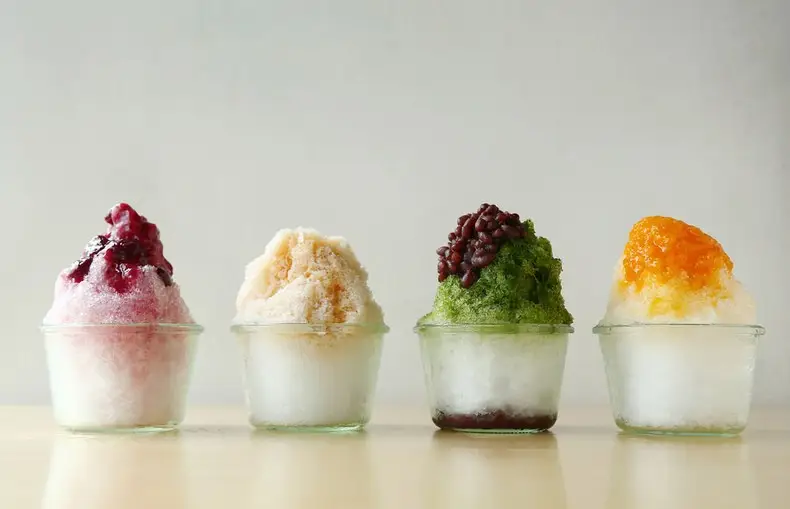
Kakigori (かき氷) is Japan's light, fluffy shaved ice dessert, served cold enough to cool a summer afternoon without feeling heavy. Unlike a crunchy snow cone, good kakigori is shaved into fine flakes that melt quickly on the tongue, then finished with syrup, condensed milk, fruit, matcha, or sweet red bean paste.
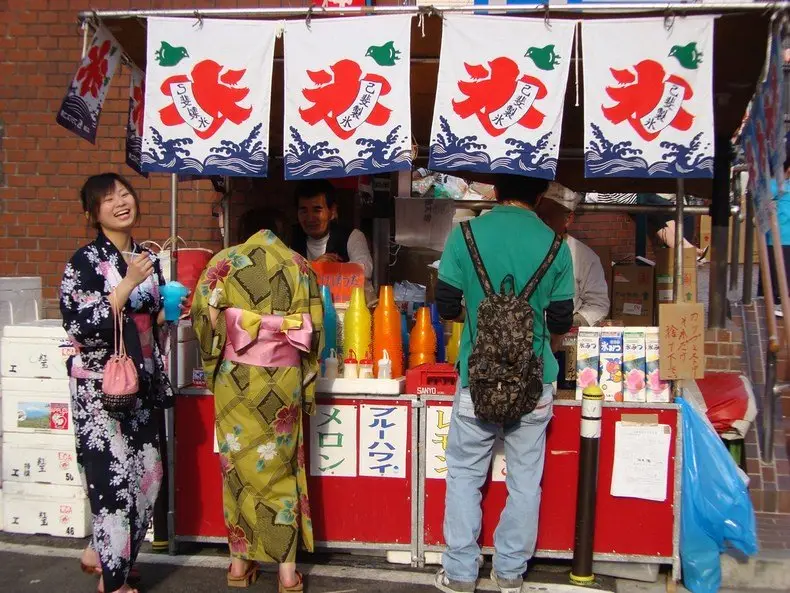
You will see it at summer festivals, neighborhood cafes, specialty dessert shops, and in homes with a tabletop ice shaver. If you enjoy seasonal sweets, it sits somewhere between street food and old-fashioned comfort dessert, especially when topped with classic combinations such as strawberry syrup and milk or matcha with azuki.
Contents 4
What makes kakigori different?
The texture is the biggest difference. Kakigori is built from delicate shavings rather than hard pellets of ice, so the bowl feels airy instead of icy and dense. That is why the same dessert can be simple at a festival stall or surprisingly refined at a shop that uses carefully tempered ice and house-made syrups.
Common flavors include strawberry, melon, lemon, mango, and uji matcha. Popular toppings include condensed milk, anko, shiratama dango, fruit, and sometimes kinako. If you already like Japanese sweets, you may also want to read about wagashi or browse more frozen treats in our guide to Japanese ice cream words and types.
A summer dessert with a long history
Kakigori goes back to the Heian period, when stored winter ice was a luxury enjoyed by the aristocracy during the hottest months. Before refrigeration, that alone made the dessert special, and its early form was much closer to shaved ice with a little sweetness than the colorful bowls many people picture today.
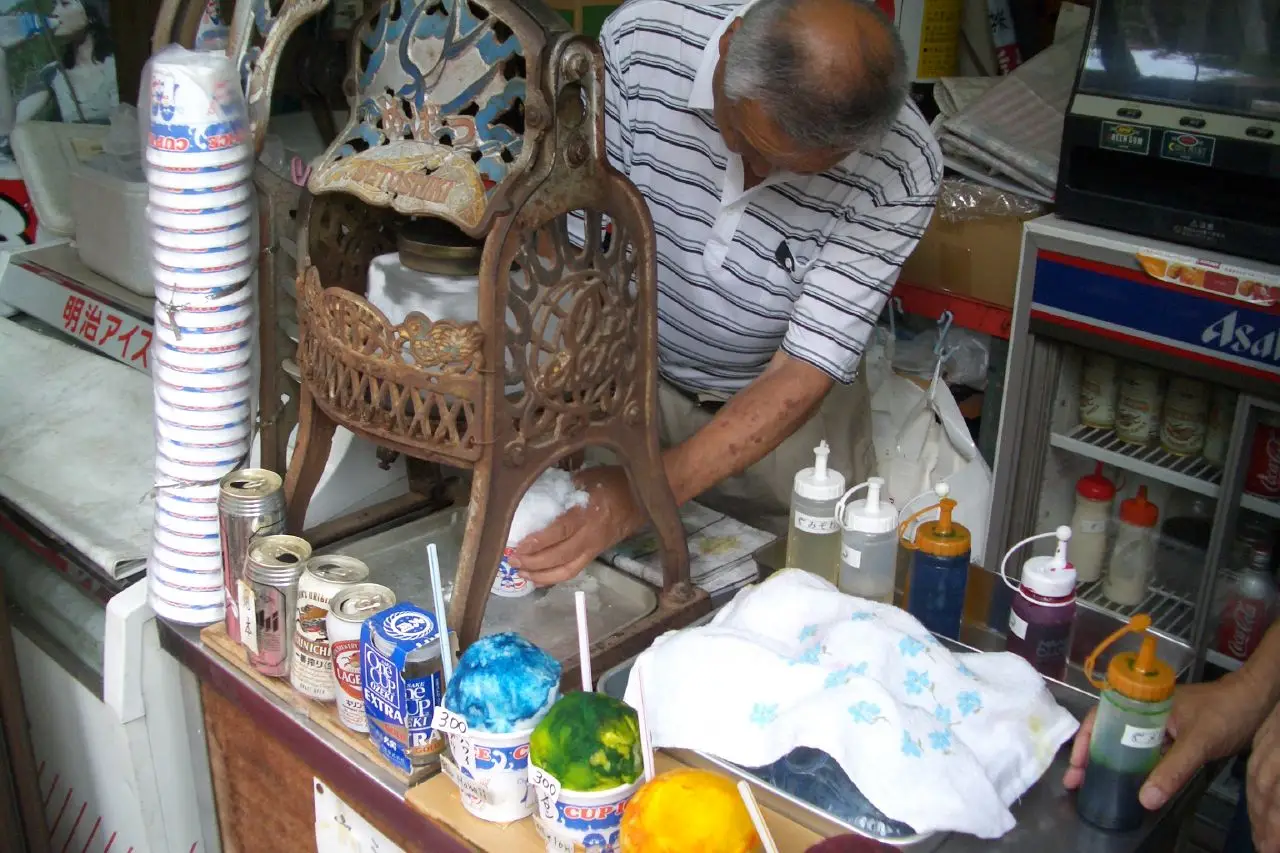
In the late 19th century, better access to stored and transported ice helped turn kakigori into a public summer treat instead of a court privilege. By the time dedicated machines improved shaving technique, the dessert had already become part of the season, especially at matsuri stalls and city sweet shops.
Classic flavors, toppings, and variations
One of the easiest ways to understand kakigori is through its toppings. Festival-style bowls are often kept simple with bright syrups, while cafe versions can add fresh fruit, cream, or layered sauces. Ujikintoki is one of the best-known variations: shaved ice finished with matcha syrup and sweet red bean paste, often with condensed milk or mochi on top.
Regional shops and modern dessert counters now push the format much further, but the appeal stays the same: cold, soft ice with a flavor combination that feels clean and refreshing rather than heavy. If you are planning what to eat beyond dessert, our list of the most popular Japanese foods is a good next stop.
Can you make kakigori at home?
Yes, especially if you have a home shaved-ice machine. The challenge is not the toppings but the texture, since the best bowls depend on fine, fluffy ice and syrups that do not drown it. Even a simple homemade version becomes much better with a balanced topping, whether that means fruit syrup and condensed milk or matcha, anko, and shiratama.
If you want to see the process before trying it yourself, this video shows a straightforward kakigori preparation from machine to finished bowl.

Community
Comments
0 comments
There are no published comments in this language yet.
Send comment