
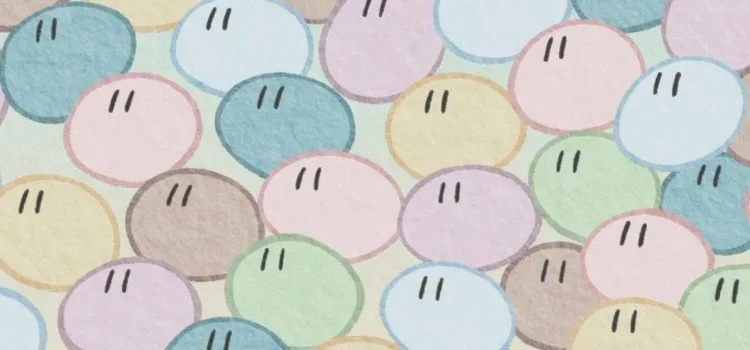
After a few episodes of Clannad, the ending stops sounding like a snack-shop jingle. Dango Daikazoku (だんご大家族), sung by Chata, is the first-season closer: a family of dumplings, in the simplest Japanese, that only really lands once you know who Nagisa is holding onto.
The hook is almost childish. The vocabulary is the kind you meet early in class. What changes is the picture — each dango in the lyric is a type of person in a household, and the chorus keeps rounding happy and sad things into the same circle.
Contents 5
History and origins
Jun Maeda wrote both the lyrics and the melody. Takumaru arranged the vocal version. Chata sings it. Key Sounds Label released the full track on 26 October 2007 on the single Mag Mell / Dango Daikazoku, next to the opening of the Kyoto Animation series.
The tune was already in the house. It grows out of Nagisa's theme from Key's 2004 visual novel — the instrumental Nagisa on the original soundtrack — and the 2007 TV ending simply lets that motif speak. That is why the song feels like her even when the screen is only rolling names.
Meaning and themes
Dango Daikazoku is usually rendered as “the big dango family” or “great dango family.” Dango here is not just a sweet on a stick. The lyric treats each dumpling as a relative: the mischievous grilled one, the gentle anko one, the dreamy tsukimi one, the prim sesame one, the four kids lined up on a skewer.
That is why it sits so tightly on Clannad. The show is about a household that looks ordinary and turns out to be the whole point. The melody stays warm and small; the family in the lyric keeps getting larger, up to a hundred people, a town on a dango planet, a rabbit waving from the moon.
How it lives inside Clannad
On screen, the song belongs to Nagisa Furukawa before it belongs to the credits. She sings the dango family as a silly, beloved little anthem; Fuko immediately steals the idea and turns it into a starfish song. Later it comes back in quieter places — a trinket in a shed, the end of a school play, a parent singing to a child — the same joke that has stopped being only a joke.
If you only know the ending from playlists, that in-world use is the missing piece. It is not a ballad about tragedy. It is a children's family song that the story slowly loads with everything the Furukawas are trying to keep.
Why it stuck
People still treat it as one of the most recognizable anime endings of the 2000s, not because the lyric is complicated, but because it is the opposite. After the story, the same easy words feel heavier. The official single is the version most listeners mean; the rest is karaoke, covers, and the melody leaking out of Nagisa's theme whenever someone sits at a piano.
Translating and studying the lyrics
The Japanese stays close to the classroom. The work is in the pictures, not in rare grammar. Below is the song line by line: the original, a romanization, a reading in English, and the words worth keeping.
だんご だんご だんご だんご だんご だんご 大家族 (2x)
dango dango dango dango dango dango daikazoku
Big dango family
- だんご = 団子 = dango, the Japanese sweet;
- 大家族 = a big family, a large household.
やんちゃな焼きだんご 優しい餡だんご
yancha na yakidango yasashii an dango
A mischievous grilled dango, a gentle anko dango
- やんちゃ = mischievous, naughty, a handful;
- 焼きだんご = grilled dango;
- 優しい = gentle, kind, soft with people;
- 餡だんご = dango with anko, the sweet red-bean paste.
すこし夢見がちな月見だんご
sukoshi yumemigachi na tsukimi dango
A slightly dreamy tsukimi dango
- すこし = a little;
- 夢見がち = prone to dreaming, a bit lost in the clouds;
- 月見だんご = moon-viewing dango, the white dumplings set out for tsukimi — not “a dango that sees the moon.”
おすましごまだんご 4つ子串だんご
osumashi goma dango yotsugo kushi dango
The prim sesame dango, the quadruplet dango on a skewer
- おすまし = prim, composed, sitting up straight;
- ごま = 胡麻 = sesame;
- 四つ子 = quadruplets — four small children, not just the number four;
- 串 = skewer.
みんな みんな あわせて 100人家族
minna minna awasete hyakunin kazoku
Everyone together makes a family of a hundred
- みんな = everyone;
- あわせて = all together, in total;
- 100人家族 = a family of a hundred people.
赤ちゃんだんごは いつも幸せの中で
akachan dango wa itsumo shiawase no naka de
The baby dango is always in the middle of happiness
- 赤ちゃん = baby;
- いつも = always;
- 幸せ = happiness;
- 中 = inside, in the midst of.
年寄りだんごは 目を細めてる
toshiyori dango wa me o hosometeru
The old dango is narrowing their eyes
- 年寄り = an elderly person;
- 目 = eyes;
- 細めてる = is narrowing them — the warm squint of a smile, not bad eyesight.
仲良しだんご 手をつなぎ 大きなまるい輪になるよ
nakayoshi dango te o tsunagi ooki na marui wa ni naru yo
The close-knit dango hold hands and become a big round ring
- 仲良し = close friends, the ones who stick together;
- 手をつなぎ = holding hands;
- 大きな = big;
- まるい = round;
- 輪になるよ = become a ring, a circle.
町を作りだんご星の上 みんなで笑いあうよ
machi o tsukuri dango boshi no ue minna de waraiau yo
They build a town on the dango planet, and everyone laughs together
- 町 = town;
- 作り = make, build;
- 星 = star, and here a whole little world;
- 上 = on, above;
- 笑いあう = laugh together.
うさぎも空で手を振って見てる でっかいお月さま
usagi mo sora de te o futte miteru dekkai otsuki-sama
The rabbit in the sky is waving and watching too — that huge moon
- うさぎ = rabbit — the one living on the moon in the old story, pounding mochi;
- 空 = sky;
- 手を振って = waving;
- 見てる = watching;
- でっかい = huge;
- お月さま = the moon, said with affection.
嬉しいこと 悲しいことも 全部丸めて
ureshii koto kanashii koto mo zenbu marumete
Happy things and sad things too — roll them all up together
- 嬉しい = happy;
- 悲しい = sad;
- 全部 = all of it;
- 丸めて = roll into a ball, gather up. The line is not “enjoy everything.” It is the same round shape as the dango and the ring of hands: you take the good days and the bad days and you hold them in one place.
From here the song returns to the chorus, so there is nothing new to unpack, and it ends on the family name again:
lalala・・・・・ララララ。。。
だんご だんご だんご だんご だんご だんご 大家族 (4x)
If you like taking an anime song apart this way, the same kind of walkthrough works on Nandemonaiya from Your Name — another lyric that looks simple until the story sits on top of it.





Community
Comments
0 comments
There are no published comments in this language yet.
Send comment