
Search for rare Japanese names and you will often get a pretty list that mixes three different things: names almost nobody receives now, names that filled whole classrooms two generations ago, and names that only look unusual from the outside. Haruto written 陽翔 is a good example of that last trap. It sounds bright and a little cinematic, yet in the 2024 Meiji Yasuda baby-name survey it sat at the very top for boys, not in some hidden corner of the registry.
In Japan, the choice of a baby's name is a careful process full of meaning. Each kanji that makes up the name has its own reading and message, and the combination is meant to leave something behind — longevity, courage, a season, a hope. Parents looking for a rare name usually want a child who will not share it with half the class. That wish is honest. The hard part is telling an actually uncommon name from one that only feels uncommon to people who do not live with Japanese attendance lists.
Contents 6
What makes a Japanese name rare?
Several factors decide whether a Japanese given name is rare. Frequency is the obvious one, but it is not the only one.
- How often it is used. A rare name appears little in the population. Names such as Akira or Yumi still feel familiar; Chiyo, Isamu, or Umeko show up far less among children born now.
- Kanji and combinations. The choice of characters and how they are paired changes everything. Poetic, older, or uncommon kanji, and combinations that do not follow the usual patterns, make a name harder to guess and less likely to be copied.
- Trends and fads. Naming fashions move. A name that was everywhere in one decade can become scarce in the next. The reverse is also true: a name that feels fresh abroad may already be topping charts in Japan.
- Meaning and history. Names tied to nature, old court language, or a family story can stay uncommon simply because they ask more of the people who write them.
- Famous characters. Anime, manga, films, and historical figures can pull a name out of rarity overnight. Names taken from obscure works stay quieter.
- Region. Some given names cling to a prefecture or a local tradition and stay unusual everywhere else.
Rare, old-fashioned, or just trendy?
This is where most English lists go wrong. They treat “rare” as a synonym for “pretty” or “hard for foreigners to pronounce.” Inside Japan the split is sharper.
Old-fashioned names, especially girls’ names ending in -ko (子, “child”), were once the default. Umeko, Hisako, and Tomoko belonged to whole generations. They are uncommon on birth certificates today, but they are not mysterious. Grandmothers still answer to them. Calling them secret Japanese names is a stretch.
Then there are names that look unusual because the kanji are flashy, while the sound is already fashionable. Haruto (陽翔, “sun” + “to soar”) is the clearest case: Meiji Yasuda’s 2024 tally put that writing first among boys, and the reading Haruto has led the sound ranking for years. If you want a name that will not be shared, this is the opposite of a shortcut.
A third group is the so-called kira-kira names — “sparkly” readings that twist kanji into sounds people cannot guess from the characters. Pikachu written as 光宙, or a name meant to sound like Nike, belongs here. Since May 2025, parents have to declare the reading on the family register, and local offices can push back when the pronunciation is too far from any accepted reading. Unusual is not the same as unregulated anymore.
Japanese people with foreign names
Except for people with a foreign parent or some other family history, a Japanese child rarely receives a Western name written in katakana, or a set of kanji forced into a Western sound. The given name can be unique and the person will still be easy to place, because the family name does so much of the social work.
You may know many Japanese people with similar names. The frequency of surnames is a big part of that. Even someone with an unusual personal name becomes another Satō or another Suzuki the moment the family name is said first, as it always is in Japan. Of course, as mentioned in a previous article, there are strange, rare, and unusual surnames as well.
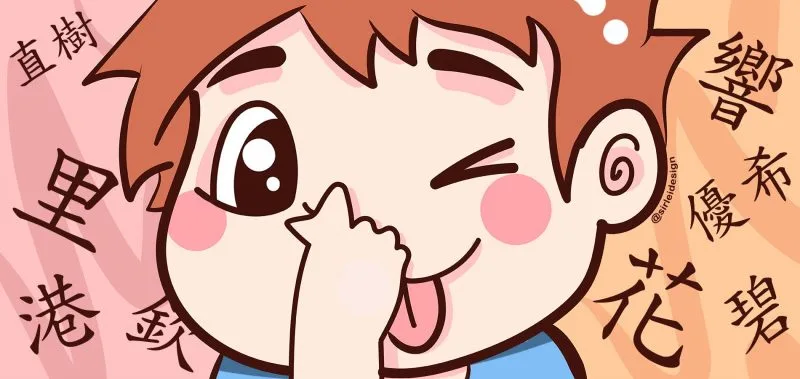
Unknown and charming Japanese names
The names below are uncommon among children born now, or they have slipped out of fashion. They are not a ranking, and they are not all equally rare. The kanji shown is a usual writing, not the only one possible. For the broader picture of how a name is put together, there is a separate guide to how Japanese names are chosen.
Rare Japanese female names
- Umeko (梅子): Means “plum child,” pointing to the beauty and delicacy of the plum blossom. An old -ko name that almost never appears on new birth certificates.
- Hotaru (蛍): Means “firefly,” a night light that still feels more poetic than fashionable.
- Suzume (雀): Means “sparrow,” a nature name that stayed quieter than Sakura or Hana.
- Kinu (絹): Means “silk,” a short name that suggests softness and elegance without the usual modern endings.
- Chiyo (千代): Means “thousand generations,” a wish for family continuity that now sounds distinctly old.
- Hisako (久子): Means “long-lasting child” or “child of a long life,” another -ko name that belongs more to grandmothers than to nurseries.
- Shizuka (静): Means “calm” or “quiet.” Familiar from stories and older generations, not a hidden name — just no longer a baby-chart regular.
- Tomoko (智子): Means “wise child.” Very common in the mid-20th century; rare among newborns, instantly recognizable to anyone who grew up in Japan.
Rare Japanese male names
- Isamu (勇): Means “courage” or “bravery.” A solid older name that no longer fills first-grade roll calls.
- Raiden (雷電): Means “thunder and lightning.” As a given name it is genuinely uncommon and a little theatrical, which is why it stands out.
- Hideaki (秀明): Means “excellent and bright,” a hope for success that sounds more Showa than 2020s.
- Katsuo (勝男): Means “victorious man.” The -o ending already dates it; you will meet more Katsuo at a neighborhood festival than in a kindergarten.
- Yukio (幸男): Means “happy man” or “fortunate man,” another older masculine pattern that slipped out of fashion.
- Takeshi (武): Means “warrior” or “martial.” Classic, not rare. It left the baby charts without ever becoming obscure.
- Tadashi (忠): Means “loyal” or “faithful.” Same story: a well-known traditional name, not a secret one.
If you are choosing a name for a story, a character, or just out of curiosity, start from the kanji and from how often that reading actually appears — not from how exotic it looks in romaji. A name can be beautiful, old, trendy, or hard to read. Very few are all four at once.




Community
Comments
0 comments
There are no published comments in this language yet.
Send comment