
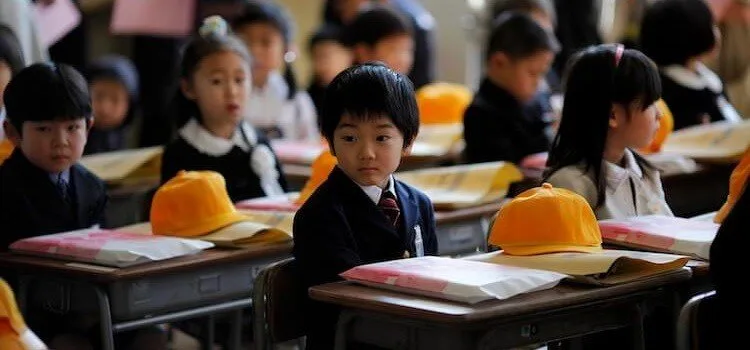
Walk into a Japanese stationery aisle and the first thing that hits you is not the price tags — it is how seriously small tools are designed. A mechanical pencil has a name and a nickname, the eraser has its own shelf logic, and the hard red school backpack has a word of its own. If you are learning Japanese for school, anime, or a trip into a 100-yen store, those names stop being “cute labels” and start becoming real vocabulary.
School supplies in Japanese sit at the crossroads of classroom life and the country’s stationery culture. Below you will find the core list — English, romaji, and kanji — plus a few cultural notes that help the words stick when you hear them in class, in manga, or on packaging.
Contents 4
Gakkou youhin and bunbougu
School supplies are often called 学校用品 (gakkou youhin), literally “school goods.” In shops and everyday speech you will also hear 文房具 (bunbougu) or the shorter 文具 (bungu) for stationery more broadly — pens, notebooks, tape, and the tools students carry every day.
Japanese school and stationery items tend to blend function with careful design. That is why a simple pencil case or notebook can look over-engineered from the outside: durability, clarity, and small conveniences matter in a system where students write a lot by hand and care for their own materials.
If you ever step into a stationery store in Japan, even basic items show that attention to detail. Learning the words first makes browsing labels, asking a clerk, or following a shopping list far easier — and it pairs well with pieces on school supplies in Japan and how real Japanese schools compare with anime.
School supplies list in Japanese
Here is a practical list of common school and classroom supplies. Format: English — romaji — Japanese script.
- School — gakkou [学校]
- Classroom — kyoushitsu [教室]
- School uniform — gakuseifuku [学生服]
- Randoseru (hard school backpack) — randoseru [ランドセル]
- Backpack — ryukku / bakkupakku [リュック / バックパック]
- Pencil case — fudebako / pen keesu [筆箱 / ペンケース]
- Pencil — enpitsu [鉛筆]
- Mechanical pencil — shaapen / shaapu penshiru [シャーペン / シャープペンシル]
- Pen — pen [ペン]
- Ballpoint pen — boorupen [ボールペン]
- Eraser — keshigomu [消しゴム]
- Pencil sharpener — enpitsukezuri [鉛筆削り]
- Notebook — nooto [ノート]
- Notepad — memochou [メモ帳]
- Paper — kami [紙]
- Graph paper — houganshi [方眼紙]
- Construction paper — irogayoushi [色画用紙]
- Textbook — kyoukasho [教科書]
- Reference book — sankousho [参考書]
- Dictionary — jisho [辞書]
- Book — hon [本]
- Magazine — zasshi [雑誌]
- Encyclopedia — hyakkajiten [百科事典]
- Desk — tsukue [机]
- Chair — isu [椅子]
- Bookshelf — hondana [本棚]
- Blackboard — kokuban [黒板]
- Whiteboard — howaito boodo [ホワイトボード]
- Chalk — chooku [チョーク]
- Blackboard eraser — kokubankeshi [黒板消し]
- Ruler — jougi [定規]
- Triangle ruler — sankaku jougi [三角定規]
- T-ruler — Tii-jougi [T定規]
- Protractor — bundoki [分度器]
- Compass — konpasu [コンパス]
- Calculator — dentaku [電卓]
- Scissors — hasami [はさみ / 鋏]
- Glue — nori [のり / 糊]
- Adhesive tape — serohanteepu [セロハンテープ]
- Rubber band — wagomu [輪ゴム]
- Stapler — hochikisu [ホチキス]
- Correction tape / fluid — shuusei teepu / shuusei eki [修正テープ / 修正液]
- Folder / file — forudaa / fairu [フォルダー / ファイル]
- Magnet — jishaku [磁石]
- Marker — maakaa [マーカー]
- Colored markers — karaa maakaa [カラーマーカー]
- Colored pencil — iroenpitsu [色鉛筆]
- Crayon — kureyon [クレヨン]
- Brush — fude [筆]
- Paint palette — paretto / enoguzara [パレット / 絵具皿]
- Sketchbook — sukecchibukku / gasatsu [スケッチブック / 画冊]
Two pairs worth separating early: keshigomu is the rubber eraser you keep in the pencil case; kokubankeshi is the felt eraser for the blackboard. And while “backpack” can be ryukku, elementary students’ iconic boxy bag is almost always the randoseru — a word that shows up constantly when people talk about Japanese school life, alongside the school uniform.
Example sentences
Short sentences help the list leave the flashcard and enter real speech:
これは私の新しいノートです。
Kore wa watashi no atarashii nooto desu.
This is my new notebook.
学校で毎日鉛筆を使います。
Gakkou de mainichi enpitsu o tsukaimasu.
I use a pencil every day at school.
新しい筆箱を買いました。
Atarashii fudebako o kaimashita.
I bought a new pencil case.
先生は黒板にチョークで書きます。
Sensei wa kokuban ni chooku de kakimasu.
The teacher writes on the blackboard with chalk.
教科書を忘れないでください。
Kyoukasho o wasurenaide kudasai.
Please do not forget the textbook.
ランドセルは小学校でよく使います。
Randoseru wa shougakkou de yoku tsukaimasu.
Randoseru bags are commonly used in elementary school.
How to use this vocabulary
Start with what you would actually pack: enpitsu, keshigomu, nooto, fudebako, kyoukasho. Say each word out loud with the example sentence, then try swapping items — “I bought a new notebook,” “Please do not forget the eraser.” Once those feel automatic, add classroom furniture (tsukue, isu, kokuban) and geometry tools (jougi, bundoki, konpasu).
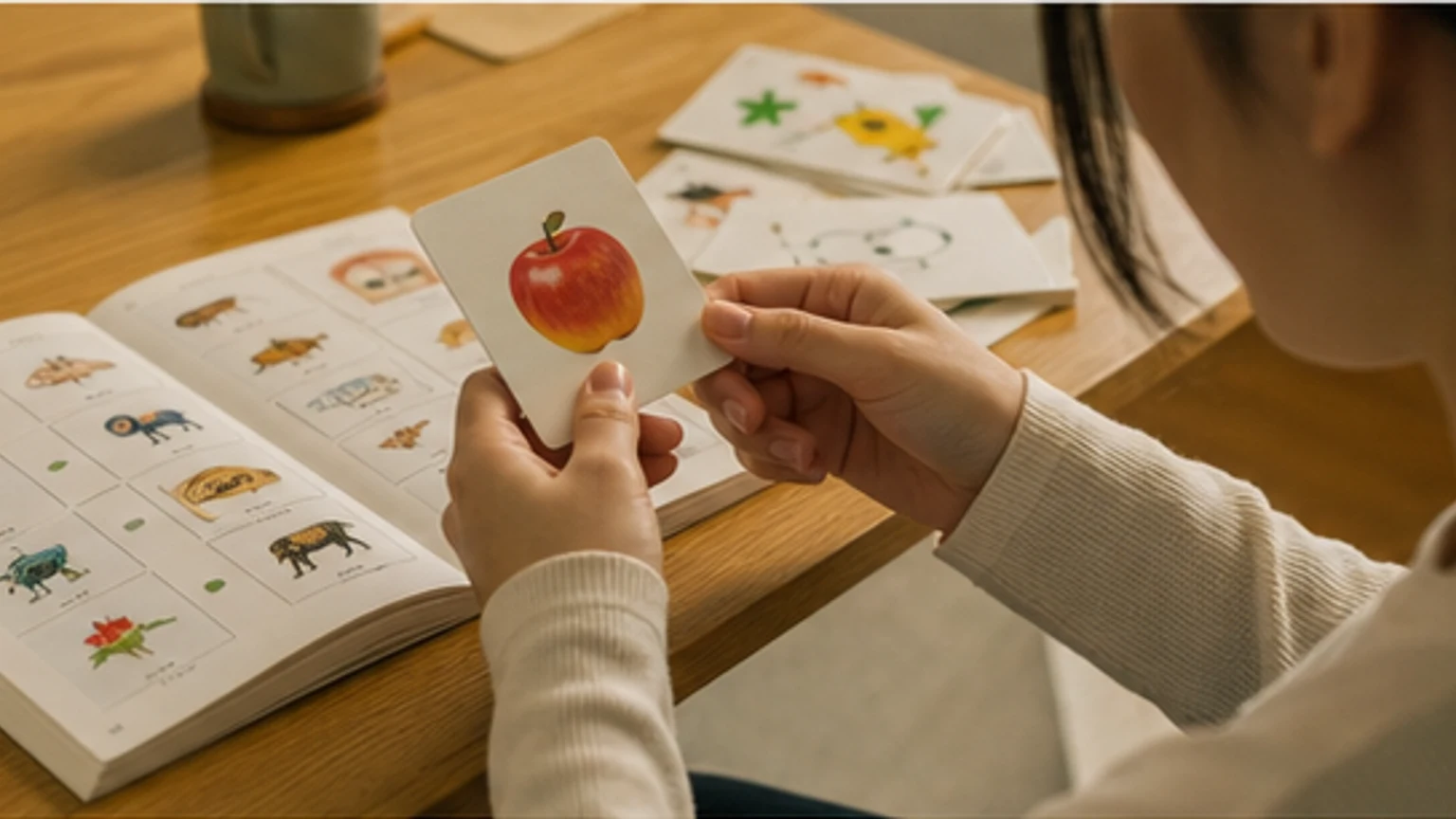
When you watch a school anime or walk through a Japanese stationery section, listen for the same labels on packaging. Matching the sound to the object is faster than memorizing an isolated list — and it is exactly how these words appear in real Japanese school culture.





Community
Comments
0 comments
There are no published comments in this language yet.
Send comment