
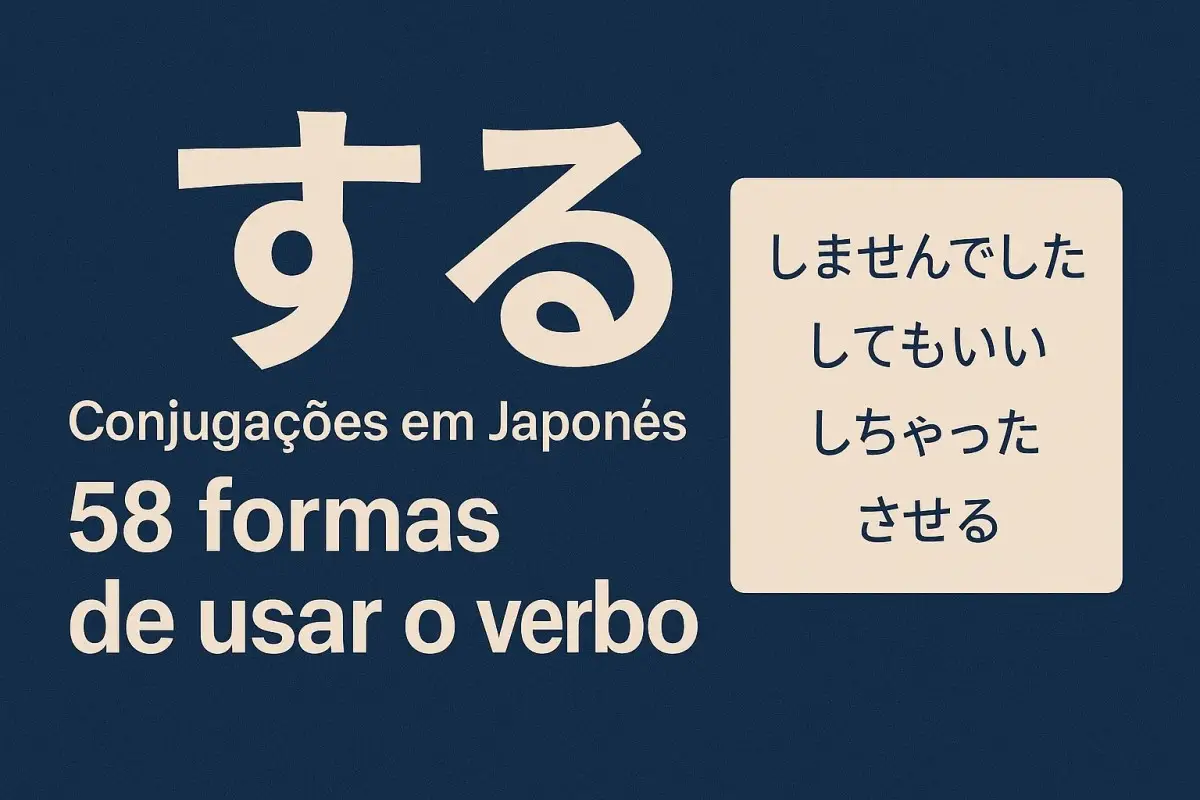
The verb suru (する) is one of the columns of the Japanese language. Behind the simple translation of "to do," it hides a multiplicity of uses that range from everyday actions to complex constructions of formal language. Those who master suru can navigate more clearly through conversations, texts, and Japanese cultural expressions.
This guide brings 58 fundamental conjugations, separated by usage groups. Each conjugation is accompanied by clear explanations and practical sentences so that you can internalize and apply them with confidence.
So, are you ready to transform your understanding of Japanese?
Contents 73
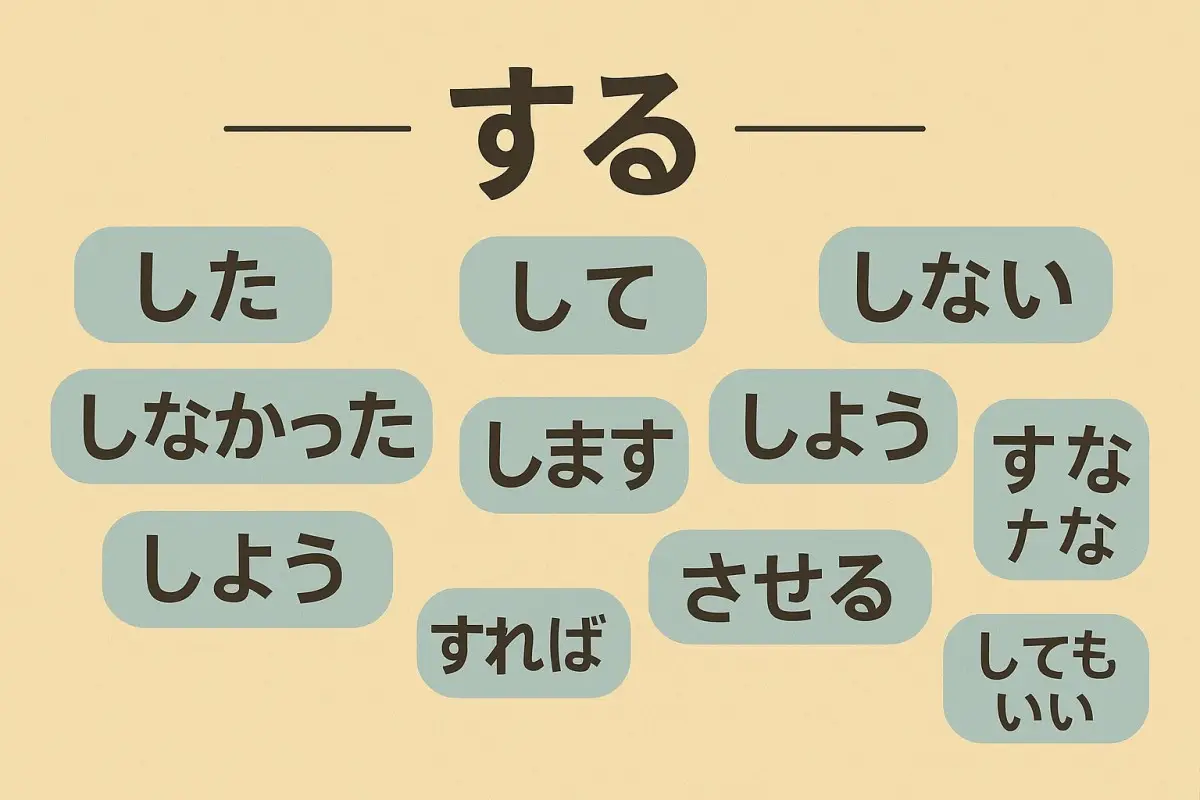
Affirmative and Negative Forms — Present and Past
These are the essential forms for talking about simple actions in the present or past, affirming or denying.
する
The dictionary form. Used in neutral sentences, titles, combinations with nouns. The starting point for all others.
毎日運動する。
Mainichi undō suru.
I exercise every day.
しない
Negative in the present (informal). Used to indicate that something is not done or will not be done. Very common in everyday conversations.
今日は何もしない。
Kyō wa nani mo shinai.
Today I will not do anything.
します
Polite form of する. Ideal for professional contexts, customer service, or any respectful interaction.
あとで電話します。
Ato de denwa shimasu.
I will call later.
しません
Polite negative. You will use it in situations where denying an action needs to maintain a polite tone, such as in emails or stores.
魚は食べませんし、料理もしません。
Sakana wa tabemasen shi, ryōri mo shimasen.
I do not eat fish and I also do not cook.
した
Informal past. Indicates that the action was done. Quick, direct, and casual.
昨日、掃除した。
Kinō, sōji shita.
I cleaned yesterday.
しなかった
Informal negative past. Perfect for reporting that something was not done. Very used in everyday life.
週末に宿題をしなかった。
Shūmatsu ni shukudai o shinakatta.
On the weekend, I did not do the homework.
しました
Polite version of した. Used when reporting something that was done in a more respectful tone.
先月、大きな決断をしました。
Sengetsu, ōkina ketsudan o shimashita.
Last month, I made a big decision.
しませんでした
Formal negative past form. You say that you did not perform an action and still sound polite.
昨日は運動をしませんでした。
Kinō wa undō o shimasen deshita.
Yesterday, I did not exercise.
Te Form and Derivatives
The て form serves as a base to connect sentences, create requests, instructions, and many compound constructions.
して
て form of する. Used to link actions (“do this and...”), or to use with auxiliaries like いる (to be), ください (please), しまう (to end up doing), みる (to try to do), among others.
部屋を片付けて、勉強して。
Heya o katazukete, benkyō shite.
Clean the room and study.
しないで
Negative form of て. Used to instruct someone to not do something before another action, or to deny an instruction.
心配しないでください。
Shinpai shinai de kudasai.
Please, do not worry.
Willingness, Intention, and Desire
These forms indicate willingness, plans, and desires, both of the speaker and of others.
したい
Expresses personal desire to do something. Very used in informal contexts to indicate willingness.
日本に行って、旅行したい。
Nihon ni itte, ryokō shitai.
I want to go to Japan and travel.
したくない
Negative form of desire. Used to say that you do not want to do something.
今日は外出したくない。
Kyō wa gaishutsu shitakunai.
Today I do not want to go out.
したかった
Past form of desire. When you wanted to do something, but the time has passed.
実はずっとそれをしたかった。
Jitsu wa zutto sore o shitakatta.
Actually, I always wanted to do that.
したくなかった
Negative past form of desire. When you did not want to do something, but need to report it.
本当は行きたくなかったし、何もしたくなかった。
Hontō wa ikitakunakatta shi, nanimo shitakunakatta.
I really did not want to go, nor do anything.
したがる
Used to indicate that another person seems to want to do something, describing perceived willingness of others. The desire is perceived through actions or attitudes, not directly stated.
子供は一人でやりたがる。
Kodomo wa hitori de yaritagaru.
The child wants to do it alone.
したがらない
Negative of したがる. Indicates that the other person shows not wanting to do something.
彼は全然話したがらない。
Kare wa zenzen hanashitagarana i.
He does not want to talk at all.
Causative and Permissive
These forms show situations in which someone is induced, forced, or allowed to do something.
させる
Causative form. You make someone do or allow someone to do. Can be used in a tone of authority or permission.
先生が生徒に挨拶をさせる。
Sensei ga seito ni aisatsu o saseru.
The teacher makes the students greet.
させない
Negative of the causative. Indicates that you do not allow or do not force someone to perform an action.
彼は私に説明させない。
Kare wa watashi ni setsumei sasenai.
He does not let me explain.
させた
Causative in the past. Shows that someone was induced to do something previously.
母が私を料理させた。
Haha ga watashi o ryōri saseta.
My mother made me cook.
させなかった
Negative of the causative in the past. You prevented someone from performing an action.
彼女は彼を行かせなかった。
Kanojo wa kare o ikasenakatta.
She did not let him go.
Prohibitions and Direct Orders
These forms are used to give orders, prohibit, or directly instruct someone. Some are harsh, others more polite.
しろ
Direct and informal order. Can sound authoritative, common among men or in military/anime contexts.
黙ってしろ!
Damatte shiro!
Shut up and do it!
するな
Negative imperative form. Means: “Do not do that!”. Can be harsh.
それをするな!
Sore o suru na!
Do not do that!
やれ
Another imperative. It is an alternative form, commonly used with verbs like やる (to do), which replaces する in some contexts.
早くやれ!
Hayaku yare!
Do it quickly!
やるな
Imperative negative of やる. Also means “Do not do!”, but with a rougher tone.
ふざけるな、やるな!
Fuzakeru na, yaru na!
Stop joking, do not do that!
Expressions of Intention, Plans, and Expectations
These forms show planning, intention, or something expected to happen.
しよう
Informal volitional form. Used to say “I will do” or “let's do”. It is a way to suggest or motivate oneself.
明日は早く起きて勉強しよう。
Ashita wa hayaku okite benkyō shiyō.
Tomorrow I will wake up early and study.
しましょう
Formal volitional. Used for polite invitations, meetings, or respectful proposals.
一緒に手伝いましょうか?
Issho ni tetsudaimashō ka?
Shall we help together?
するつもり
Indicates firm intention. It is like saying “I intend to do.”
来週からダイエットするつもりです。
Raishū kara daietto suru tsumori desu.
I intend to start a diet next week.
Others' Desires and Requests
These forms allow you to express what you want someone to do, or what someone shows they want to do. This is where respect, empathy, and reading the other come in.
してほしい
Expresses that you wish for another person to do something. Very common in interpersonal relationships and used carefully not to sound bossy.
もっと早く返事してほしい。
Motto hayaku henji shite hoshii.
I wish you would respond faster.
してほしくない
Negative form. Used to say that you would prefer the person not to do a certain action. Ideal for conveying limits delicately.
そんなこと言ってほしくない。
Sonna koto itte hoshikunai.
I would prefer you not to say that.
Involuntary Action or Regret
These constructions indicate that something was done unintentionally, was inevitable, or had an undesired consequence.
してしまう
Means “end up doing” or “do unintentionally.” It is a useful form to report slips or actions that got out of control.
寝坊してしまった。
Nebō shite shimatta.
I ended up oversleeping.
しちゃう
Informal and contracted version of してしまう. Very used in everyday speech and among young people.
またスマホ見ながら寝落ちしちゃう。
Mata sumaho mi nagara neochi shichau.
I will end up falling asleep again while looking at my phone.
しちゃった
Informal past of しちゃう. Equivalent to “I ended up doing...”.
間違えて送信しちゃった。
Machigaete sōshin shichatta.
I ended up sending it by mistake.
しちゃいました
Polite past form. Good for when you want to admit a mistake or something inevitable with respect.
すみません、間違えて押しちゃいました。
Sumimasen, machigaete oshichaimashita.
Sorry, I pressed wrong unintentionally.
Vulgarity and Rustic Language
These forms are not recommended for formal contexts. They appear in animes, movies, or conversations among close people with rude language.
しゃがる
A vulgar form of “to do” with a disdainful or aggressive tone. Can sound offensive depending on the context.
また変なことしゃがるなよ。
Mata hen na koto shagaru na yo.
Here he goes again doing something silly.
しゃがった
Past of the previous form. Carries the same emotional weight or rudeness as the base version.
あいつ昨日も騒ぎしゃがったよ。
Aitsu kinō mo sawagi shagatta yo.
That guy caused a scene again yesterday.
Expressions of Prohibition and Permission
Here come structures that indicate what is or is not allowed to do. Very common in rules, warnings, recommendations, and social interactions with limits.
してもいい
Indicates permission: “you can do.” Used to give authorization or confirm if something is acceptable.
ここに座ってもいいですか?
Koko ni suwatte mo ii desu ka?
Can I sit here?
しなくてはいけない
Obliges to do something: “must do.” Used with a sense of duty.
早く準備しなくてはいけない。
Hayaku junbi shinakute wa ikenai.
I need to prepare quickly.
してはいけない
Prohibition: “you cannot do.” Common phrase in school rules, manuals, and social norms.
試験中はスマホを使ってはいけない。
Shikenchū wa sumaho o tsukatte wa ikenai.
You cannot use your phone during the exam.
しなければならない
More formal version of しなくてはいけない. Expresses inevitable or normative obligation.
この書類は提出しなければならない。
Kono shorui wa teishutsu shinakereba naranai.
This document must be submitted.
してはならない
More rigid and formal. Used in legal, educational, or institutional contexts.
公共の場で大声で話してはならない。
Kōkyō no ba de ōgoe de hanashite wa naranai.
You should not speak loudly in public places.
Expressions of Planning and Expectation
These forms are used to convey planned intention or opinion about what is right.
するつもり
Shows intention: “I intend to do.” Used for defined plans, but still future.
するべき
Means “should do.” Points to something morally or logically correct.
約束は守るべきだと思います。
Yakusoku wa mamoru beki da to omoimasu.
I think promises should be kept.
するべきだった
Expresses regret: “should have done.” A reflection on something that was not done in the past.
もっと早く準備するべきだった。
Motto hayaku junbi suru beki datta.
I should have prepared earlier.
するべきじゃなかった
Opposite of the previous: “should not have done.” Carries emotional weight or guilt.
あの話はするべきじゃなかったと反省している。
Ano hanashi wa suru beki janakatta to hansei shite iru.
I regret having said that.
するべきでした
Polite and formal version of するべきだった.
ご連絡するべきでしたが、遅れてしまいました。
Gorenraku suru beki deshita ga, okurete shimaimashita.
I should have contacted you, but I was late.
するべきではありませんでした
Extremely polite form. Used to apologize formally or demonstrate regret with great respect.
本当に申し訳ありません、言うべきではありませんでした。
Hontō ni mōshiwake arimasen, iu beki de wa arimasen deshita.
I am very sorry, I should not have said that.
Assumptions, Opinions, and Indirects
These forms serve to suggest, suppose, remind, or comment on actions indirectly.
するらしい
Expresses assumption: “it seems that (someone) will do” or “I heard that (someone) does.” Light and useful in gossip or indirect information.
彼は明日も来るらしいよ。
Kare wa ashita mo kuru rashii yo.
It seems he is coming tomorrow too.
するそうですよ
A slightly more assertive and conversational form. Passes the information as something that was said by someone.
田中さん、今夜飲み会に行くそうですよ。
Tanaka-san, kon'ya nomikai ni iku sō desu yo.
Tanaka is going to the party tonight, you know.
するんだっけ?
Used to confirm something forgotten: “was it supposed to do, right?”. Very common in informal dialogue.
これって自分でするんだっけ?
Kore tte jibun de suru n da kke?
Was this supposed to be done by me, right?
するんでしたっけ?
A slightly more polite version of the previous. Also seeks confirmation about something heard or planned.
宿題を提出するんでしたっけ?
Shukudai o teishutsu suru n deshita kke?
Was it supposed to submit the homework, right?
Conditions and Hypotheses
Here are forms that talk about possibilities, conditions, and hypothetical consequences, very useful in dialogues and argumentative writing.
するかもしれない
It might be done. Expresses uncertainty or a possibility.
彼はまだ来るかもしれない。
Kare wa mada kuru kamo shirenai.
He might still come.
しないかもしれない
Negative of the previous. Indicates that perhaps it will not be done.
明日は雨だから出かけないかもしれない。
Ashita wa ame da kara dekakenai kamo shirenai.
I might not go out tomorrow because of the rain.
すれば
A positive conditional. “If (someone) does…” — introduces a consequence or suggestion.
努力すれば、夢は叶う。
Doryoku sureba, yume wa kanau.
If you make an effort, your dreams will come true.
しなければ
A negative conditional. “If (someone) does not do…” — shows the risk or consequence of omission.
参加しなければ、結果も出ない。
Sanka shinakereba, kekka mo denai.
If you do not participate, you will not have results.
したとしたら
“If (someone) had done…” — used in hypotheses or reflections. Carries the idea of assumption about the past.
もし彼が嘘をついたとしたら?
Moshi kare ga uso o tsuita to shitara?
What if he had lied?
しなかったとしたら
Opposite of the previous: “if (someone) had not done…”. Excellent for speculating or imagining alternative scenarios.
勉強しなかったとしたら、今ごろ大変だった。
Benkyō shinakatta to shitara, imagoro taihen datta.
If I had not studied, I would be in trouble now.
Other Conjugations of する
To finish, let's share other conjugations that do not appear in other categories.
するって
Contracted or informal form of reporting that someone said “that (someone) will do.” Common in casual conversation.
せしめる(為しめる)
An ancient and extremely formal form of the causative of する. Practically dead in modern use, but appears in documents or classical literature.
王は民に命令を為しめた。
Ō wa tami ni meirei o seshime ta.
The king made the people obey.
す(為)
Classical form of する used in ancient texts, poetry, Buddhism, and traditional Japanese literature. Appears in hymns and teachings.
善をすれば善が返る。
Zen o sureba zen ga kaeru.
If you do good, good will return.


Community
Comments
0 comments
There are no published comments in this language yet.
Send comment