Japan is known for its unique experiences that combine hospitality and interaction with animals. Among these, themed hotels and cafes dedicated to capybaras, the largest rodents in the world, famous for their gentle and sociable behavior, stand out. In this article, we will explore the Izu Resort Villa, a unique hotel that allows guests to closely interact with capybaras, and we will present some of the most notable cafes where it is possible to enjoy the company of these charming animals while savoring a drink.
How Did Capybaras Become Famous in Japan?
Japan’s relationship with capybaras began in the 1960s when these animals were introduced to Japanese zoos. The capybaras’ affinity for hot baths was discovered in 1982 at the Izu Shaboten Zoo when a caretaker noticed that they enjoyed warming up in hot springs during the winter.
This discovery led to the creation of specific hot baths for capybaras, becoming a popular attraction and contributing to the growing fame of these animals in the country.
At the Izu Resort Villa, capybaras do not have a dedicated onsen, but in places like the Izu Shaboten Zoo and the Nasu Animal Kingdom, visitors can observe these animals relaxing in hot baths, often surrounded by citrus fruits like yuzu, which help keep the water aromatic and pleasant.
Izu Resort Villa: Accommodation with Capybaras
Located in the Izu region, approximately three hours from Tokyo, the Izu Resort Villa offers a unique experience for animal lovers. In this resort, capybaras roam freely around the villas, allowing guests to interact with them in a natural and relaxing environment. In addition to the interaction with capybaras, the resort features comfortable accommodations and various recreational activities, providing a memorable stay.
The Izu Resort Villa is not just a hotel for interacting with capybaras, but also a complete destination for relaxation and sports activities. The resort has 22 tennis courts, some with lighting for night games, as well as a public bath with sauna, perfect for those looking to relax after an active day. There is also a restaurant with a terrace, providing a beautiful view of the central tennis court, and a Café & Book Hotel, where guests can enjoy a tranquil environment with access to around 700 books.
The accommodations include the exclusive Animal Villa, where guests can closely interact with capybaras, making the experience unique in Japan. Additionally, there are villas designed for direct access to the tennis courts, ideal for sports enthusiasts. The resort also offers multifunctional rooms that can be used for seminars, parties, or training, ensuring a versatile and comfortable stay for all types of visitors.
Capybara Cafés in Tokyo
For those who want a brief interaction with capybaras, Tokyo is home to several themed cafes where it is possible to enjoy the company of these animals while savoring a drink.
Café Capyba
Opened in April 2023, the Café Capyba is located in the Sumida district of Tokyo. The establishment allows customers to interact closely with two capybaras, Pinsuke and Kohaku, who roam freely around the space. Visitors can pet them, feed them with snacks available on-site, and relax in the company of these adorable rodents while enjoying coffee, tea, or juice. Due to the café’s popularity, advance reservations are required, and the number of customers is limited to ten at a time to ensure the well-being of the animals.
Capyneko Café
Located in the Kichijōji neighborhood, the Capyneko Café offers a unique experience by combining the presence of capybaras and cats. Visitors can interact with a friendly capybara and various felines in a cozy environment. The café is designed to provide a tranquil space where customers can relax and take photos while enjoying the company of the animals.
Capybara Land PUIPUI
Located in Yokohama, near Tokyo, the Capybara Land PUIPUI is another popular destination for capybara enthusiasts. The café houses several capybaras that interact freely with visitors. The owner is known for his care and dedication to the animals, ensuring they are always healthy and happy. Customers praise the welcoming atmosphere and the opportunity to spend quality time with the capybaras.
Places to Interact with Capybaras in Japan
In addition to the Izu Resort Villa, several parks and zoos in Japan offer opportunities to interact with capybaras:
Izu Shaboten Zoo: Located in Shizuoka, this zoo is famous for its hot baths for capybaras during the winter.
Nagasaki Biopark: Located in Nagasaki, it allows visitors to feed and pet capybaras in a natural environment.
Nasu Animal Kingdom: In Tochigi, it offers the opportunity to observe capybaras relaxing in onsens specially prepared for them.
Final Considerations
Whether staying at the Izu Resort Villa or visiting one of the themed cafes in Tokyo, Japan offers unique opportunities to interact with capybaras in environments carefully designed for the well-being of the animals and the satisfaction of visitors. These experiences provide unforgettable moments and a special connection with nature, reflecting the Japanese culture of respect and harmony with living beings.
Honesty, trust, and a sense of community are part of Japanese culture and are present in various everyday situations. One of the most striking examples of this behavior is the Mujin Hanbai (無人販売), a sales system without sellers, where market stalls operate autonomously, fully trusting the integrity of customers.
These small stalls can be found in both rural and urban areas, offering fruits, vegetables, and other products without any type of supervision. The customer simply chooses what they want, deposits the corresponding amount in a box, and goes on their way. It seems unthinkable in many countries, but in Japan, this model works surprisingly well. In this article, we will better understand how these stalls originated, how they operate, and some curiosities that you may not know!
How Do Mujin Hanbai Stalls Work?
The seller-less market stalls are common in the countryside of Japan, where farmers and small producers need a practical way to sell their products without having to attend to customers all the time. Thus, they set up simple structures by the roadside, in residential neighborhoods, or near train stations, leaving fruits, vegetables, flowers, and other items available for purchase.
The operation is quite simple:
The customer chooses the desired product.
Checks the indicated price.
Deposits the money in a small box or specific compartment.
In some cases, change is available or a way to make digital payments.
There are no attendants or sophisticated security cameras, just trust in the honesty of the buyers. Prices are usually quite affordable, around 100 yen (about 3 reais) per item, as many of the products sold do not meet the aesthetic standards required by supermarkets but are still completely consumable.
Japanese Honesty and the Culture of Trust
The Mujin Hanbai is not just a sales model, but a direct reflection of Japanese culture, where honesty is a deeply rooted value from childhood. In Japan, education emphasizes the importance of respecting others, responsibility, and the impact of individual actions on society as a whole.
The concept of meiwaku (迷惑), which means “not causing inconvenience to others,” is one of the pillars of social behavior in the country. Stealing or cheating at a Mujin Hanbai stall is not just a matter of illegality, but also of shame and dishonor for the person committing the act.
Moreover, the low crime rate in Japan contributes to the success of these stalls. While in other countries it would be common for not only the products to disappear but also the structure itself, in Japan people follow the rules, ensuring that this system continues to function.
But Does Mujin Hanbai Always Work?
Although Japan is an example of honesty, this does not mean that all seller-less sales are theft-proof. There are isolated cases of people trying to take advantage of the lack of supervision, but they usually end up being discovered and punished.
In July 2017, three Vietnamese were arrested for stealing three watermelons from one of these stalls. The case drew attention precisely because it was a rare situation and because the value of the stolen products was low, showing how seriously punishment for minor offenses is taken in the country.
To avoid losses, some producers adopt security measures, such as:
Installation of cameras to monitor movement.
Digital payment systems, such as QR codes.
Locks and cabinets, where the customer can only take the product after inserting payment.
Notices appealing to consciousness and morality, reinforcing the sense of responsibility of buyers.
Mujin Hanbai in Other Countries
Although Japan is the most well-known country for this sales model, seller-less stalls also exist in other places in Asia, such as Taiwan and South Korea. In the West, similar initiatives have been tested in small towns in Europe and even in Brazil, but cultural and security challenges make implementation more difficult.
Imagine if this concept could become popular here. Would it work? Or do we still have a long way to go regarding honesty and trust in the collective?
The Mujin Hanbai stalls are a fascinating example of how the culture and values of a people can directly influence the way society functions. Japan shows that a system based solely on trust can be successful when there is a strong sense of community and respect for rules.
Opening a company in Japan can be an excellent opportunity for entrepreneurs looking to expand their businesses into one of the most innovative and stable markets in the world. The country offers advanced infrastructure, incentives for foreigners, and a favorable business environment, but it also has strict rules and a bureaucratic process that requires planning.
In this comprehensive guide, you will learn how to open a company in Japan, what the legal requirements are, the types of businesses allowed for foreigners, and the costs involved in the process.
Advantages of Opening a Company in Japan
Japan is the third largest economy in the world, with a dynamic business environment and a highly qualified consumer market. Some of the advantages of establishing a business in the country include:
Access to a sophisticated market and consumers with high purchasing power.
Incentives for startups and foreign investors, especially in sectors such as technology, innovation, and manufacturing.
Advanced infrastructure and logistics, facilitating import, export, and distribution of products.
Low crime rate and economic stability, ensuring security for long-term investments.
If you want to start a business in Japan, it is essential to know the legal structures available for foreigners.
Types of Companies in Japan
In Japan, there are various business structures, but the most common for foreigners are:
1. Kabushiki Kaisha (KK) – Joint Stock Company
The Kabushiki Kaisha (KK) is the most formal and prestigious structure for companies in Japan, equivalent to a Joint Stock Company (S.A.). It is ideal for medium to large businesses and offers credibility in the market.
Advantages: More reliability in the market and the possibility of attracting investments.
Disadvantages: More bureaucracy and higher initial costs.
Recommended minimum capital: ¥1,000,000 ($6,700).
2. Godo Kaisha (GK) – Limited Liability Company
The Godo Kaisha (GK) is a more flexible and accessible alternative, similar to a Limited Liability Company (Ltda.). It is recommended for small and medium enterprises.
Advantages: Simpler and less bureaucratic opening process.
Disadvantages: Less prestige in the market compared to KK.
Minimum capital: There is no legal requirement, but ¥500,000 ($3,300) is recommended to avoid issues when opening a bank account.
3. Representative Office and Branch
If you already have a business outside Japan and want to operate in the country without opening a new company, you can opt for a representative office or branch.
Representative Office: Cannot engage in direct commercial activities, only market research and administrative support.
Branch: Functions as an extension of the parent company, able to operate in Japan without the need to register as a new company.
Each type of company has its advantages, and the choice depends on your business model and goals in Japan.
Step by Step to Open a Company in Japan
1. Choose the Type of Company and Structure Your Business
Before starting the registration process, define the type of company that best meets your needs and develop a detailed business plan. Having a solid plan helps in the visa acquisition and investments.
2. Choose a Business Address in Japan
Every company in Japan needs to have a registered physical address. You can rent an office, use a coworking business center, or even hire virtual office services for smaller companies.
3. Define an Appropriate Capital
Although there is no mandatory minimum capital to open a KK or GK, having at least ¥500,000 to ¥1,000,000 ($3,300 to $6,700) facilitates the opening of the bank account and the registration process.
4. Open a Business Bank Account
To register the company, you will need a Japanese business bank account. Initially, it may be necessary to open a personal account and transfer the initial capital before creating the corporate account. Banks such as MUFG, SMBC, and Mizuho are some of the most commonly used options.
5. Prepare and Register the Company Documents
The registration process involves submitting documents to the Commercial Registry of Japan (法務局 – Homukyoku). The main required documents are:
Company Articles of Incorporation (for KK and GK).
Company name and address.
List of directors and partners.
Proof of deposit of the capital.
Official company seal (Hanko/Inkan).
The registration process can take 2 to 4 weeks, depending on the complexity of the business.
6. Obtain an Investor Visa or Work Visa
If you do not have permanent residency in Japan, you will need an Investor/Entrepreneur Visa to operate legally in the country. The requirements include:
Solid and detailed business plan.
Proof of initial investment of at least ¥5,000,000 ($33,000).
Registered business address and bank account.
Ability to generate jobs for residents in Japan.
If your company is small and does not meet the investor visa criteria, it is possible to hire a Japanese partner to act as the company’s director.
7. Register for Tax Payment
Every company in Japan needs to register to pay taxes, such as:
Corporate tax: Between 15% and 23.2%, depending on revenue.
Consumption tax (equivalent to VAT): 10% on sales.
Payroll tax: If you hire employees.
Tax registration must be done with the National Tax Agency of Japan.
How Much Does It Cost to Open a Company in Japan?
Costs vary depending on the type of company, but approximate values include:
Registration fee: ¥150,000 to ¥200,000 ($1,000-$1,350) for KK and ¥60,000 ($400) for GK.
Company seal (hanko): ¥5,000 to ¥20,000 ($35-$135).
Business address: ¥10,000 to ¥50,000 ($70-$350) per month.
Fees for accountants and lawyers (optional): ¥100,000 to ¥300,000 ($670-$2,000).
The minimum initial investment to open a company in Japan, including the recommended capital, is usually around ¥1,000,000 ($6,700).
Conclusion
Opening a company in Japan can be challenging, but with planning and knowledge of the process, it is possible to establish a successful business in the country. Japan offers a favorable environment for entrepreneurs, especially in the areas of technology, export, e-commerce, and services.
If you wish to expand your business to Japan or start a new venture, follow the steps in this guide to ensure a smooth and legally secure transition. With proper planning, your company can thrive in this innovative and dynamic market.
If you live in Japan or have watched animes like Mashle: Magic and Muscles or Hunter x Hunter, you have probably heard characters exclaiming an energetic “Osu!”. But what does this word really mean? Is it just a casual greeting or is there a deeper meaning? In this article, we will explore the origin, different uses, and cultural impact of the term “Osu” (or “Oss”), as well as analyze how it appears in popular animes.
The Origin and Meaning of “Osu”
The word “Osu” (押忍) originates from Japanese culture and can be written with the characters 押 (osu, meaning “to press” or “to push”) and 忍 (shinobu, meaning “to endure” or “to persevere”). This combination reflects a concept of resistance and determination, something essential in Japanese martial arts.
The term became popular especially in karate, where it is used to greet, show respect, or acknowledge an instruction from the instructor. However, its use has expanded to various situations in Japan, from casual conversations to sports and gyms.
The Main Meanings of “Osu”
Greeting and Respect: In many martial arts, “Osu” is a respectful form of greeting among practitioners.
Affirmation and Agreement: In training or challenges, saying “Osu!” can mean “Understood!” or “Yes, sir!”.
Determination and Perseverance: It represents the mindset of enduring difficulties with strength and courage, an essential concept in samurai culture.
The Use of “Osu” in Animes
In animes, “Osu” is often associated with determined, tough characters or those linked to martial arts. Let’s see how it appears in some popular series.
1
In Mashle, the protagonist Mash Burnedead is known for his absurd physical strength, compensating for his lack of magic with superhuman muscles. Mash has a simple and straightforward way of speaking, and one of the words he frequently repeats is “Osu”.
Mash uses this word in various situations:
As a short response to direct questions;
To show that he understood an instruction;
In moments of calm acceptance, without much emotion.
His use of “Osu” reflects his carefree personality, but also his mental strength and unwavering determination.
Anime Characters that Say Osu
Another anime where “Osu” appears frequently is Hunter x Hunter, especially in the “Heaven’s Arena” arc. Unlike Mash, Gon uses “Osu” in a more energetic and friendly way, often as a greeting to friends or as a way to show enthusiasm.
Besides Mashle and Hunter x Hunter, there are other animes where “Osu” appears often, such as:
Baki: Being an anime focused on martial arts, “Osu” is often said by fighters.
Naruto: Ninjas and warriors like Rock Lee and Guy Sensei often use “Osu” in motivational contexts.
Conclusion
“Osu” is not just a simple greeting, but a term loaded with meaning. It represents strength, respect, and determination, being widely used both in martial arts and in everyday life.
Whether on the mat, at the gym, or among friends, “Osu” is a word that carries the spirit of perseverance and camaraderie. So, the next time you watch a fighting anime or train, you already know what to respond with confidence: Osu!
A luxury trip to Japan is a dream for many travelers who wish to explore Japanese culture with comfort and exclusivity. However, costs can vary greatly, depending on the desired level of luxury, the season of travel, and the chosen experiences. In this article, we will detail the main expenses for a luxury itinerary in Japan, from airfare and accommodation to exclusive experiences and VIP transportation.
Airfare: first class or business class?
The first major investment of a luxury trip to Japan is airfare. Opting for first class or business class ensures a much more comfortable journey, with seats that turn into beds, gourmet meals, and access to exclusive lounges at airports.
The average prices of tickets can vary depending on the airline and the time of year:
Business Class: between US$ 3,500 and US$ 7,000 per person (round trip).
First Class: from US$ 8,000 to US$ 20,000, depending on the airline and itinerary.
The best airlines for luxury travel to Japan include ANA (All Nippon Airways), Japan Airlines (JAL), Emirates, and Singapore Airlines, all known for their top-notch service.
High-end accommodation
Japan has some of the most luxurious accommodations in the world, from five-star hotels in Tokyo to traditional ryokans with exclusive services. Prices vary depending on location and the experience offered.
Five-star hotels in Tokyo, Kyoto, and Osaka: nightly rates between US$ 500 and US$ 2,500. Renowned options include Aman Tokyo, The Ritz-Carlton Kyoto, and Park Hyatt Tokyo.
Luxury ryokans: nightly rates between US$ 800 and US$ 3,000, offering rooms with onsen (private hot spring bath), kaiseki meals prepared by award-winning chefs, and personalized services. Highlights include Gora Kadan (Hakone) and Hoshinoya Kyoto.
VIP transportation in Japan
For a truly luxurious experience, transportation needs to match. In Japan, there are several sophisticated options, from luxury trains to private car services.
Shinkansen (bullet train) in Green or Gran Class: tickets between US$ 150 and US$ 500, depending on the route.
Private car service with driver: around US$ 100 to US$ 300 per hour.
Helicopter rental for scenic tours: starting at US$ 2,000 per flight.
Yacht tours in Tokyo or Yokohama: between US$ 5,000 and US$ 10,000 for an exclusive event.
Gastronomy: starred restaurants and exclusive experiences
Japanese cuisine is an attraction in itself, and a luxury trip would not be complete without meals at some of the best restaurants in the world. Japan has over 400 Michelin-starred restaurants, ensuring unforgettable dining experiences.
High-end sushi (such as Sukiyabashi Jiro or Sushi Saito in Tokyo): tasting menus between US$ 300 and US$ 600 per person.
Kaiseki (traditional multi-course meal): between US$ 250 and US$ 500 per person.
Private dinners with renowned chefs: can cost from US$ 1,000 to US$ 5,000, depending on exclusivity.
Unique and personalized experiences
In addition to luxury in accommodation and transportation, a premium trip to Japan can include exclusive experiences that make all the difference. Some high-end options include:
Private sessions with tea ceremony masters: around US$ 300 to US$ 1,000.
VIP access to historical temples and gardens: between US$ 500 and US$ 2,000.
Private training with samurai or ninja masters: starting at US$ 800 per session.
Private tour to Mount Fuji with a specialized guide: from US$ 1,500 to US$ 3,000.
Shopping experience with a personal shopper in Ginza or Omotesando: around US$ 500 to US$ 2,000.
Total cost of a luxury trip to Japan
The total cost of a luxury trip to Japan can vary greatly, but below we have an estimate for two weeks of travel for a couple:
Category
Estimated cost (per person)
Airfare (business class)
US$ 5,000 to US$ 10,000
Accommodation (hotels and ryokans)
US$ 8,000 to US$ 20,000
Luxury transportation
US$ 2,000 to US$ 6,000
Gourmet dining
US$ 3,000 to US$ 7,000
Exclusive experiences
US$ 5,000 to US$ 15,000
Total estimated
US$ 23,000 to US$ 58,000
If the idea is a super exclusive experience, including first class, ultra-luxurious accommodations, and private activities, the cost can easily exceed US$ 100,000.
Is it worth investing in a luxury trip to Japan?
For those seeking comfort, exclusivity, and unique experiences, a luxury trip to Japan is worth every penny. The country offers impeccable service, stunning landscapes, and a fascinating culture, making any trip unforgettable.
If the budget allows, investing in a high-end itinerary provides unmatched memories, with experiences that few have access to. And, of course, there is always the option to customize the trip according to personal interests, ensuring a balance between luxury and added value.
Are you planning your trip to Japan? Consider these options and get ready for a unique experience!
Staying in a ryokan with a private onsen is one of the most authentic and relaxing experiences one can have in Japan. These traditional hotels combine classic Japanese architecture, impeccable hospitality, and natural hot springs, providing a perfect refuge for those seeking tranquility and sophistication.
For those who wish to avoid common areas and enjoy the hot springs with total privacy, some ryokans offer exclusive onsens in the rooms. In this article, we explore the best ryokans in Japan that offer this unique experience, ensuring comfort, exclusivity, and a complete immersion in Japanese culture.
What is a Ryokan and why choose one with a Private Onsen?
The ryokan are traditional Japanese accommodations that have existed for centuries, maintaining a classic style with tatami floors, futons, and elaborate kaiseki meals. Many of them are located in mountainous areas or near hot springs, providing a unique connection with nature.
The main advantage of choosing a ryokan with a private onsen is exclusivity. In many public onsens, the rules require bathers to be nude and follow strict protocols, which may not be comfortable for everyone. With a onsen in your own room, you can relax at your own pace, worry-free and with total privacy.
Now, let’s get to know some of the best ryokans in Japan that offer this unique experience.
1. Gora Kadan (Hakone)
Located in the famous region of Hakone, known for its hot springs and stunning views of Mount Fuji, the Gora Kadan is one of the most luxurious ryokans in Japan. Formerly a residence of the imperial family, this ryokan combines tradition and modernity in a sophisticated setting.
The rooms feature private outdoor onsens, surrounded by Japanese gardens that create a serene atmosphere. Additionally, guests can enjoy an award-winning kaiseki menu and exclusive spa treatments. Rates start at ¥100,000 (about $650), reflecting the exceptional quality of the experience.
2. Beniya Mukayu (Ishikawa)
In a tranquil location in the province of Ishikawa, the Beniya Mukayu is an award-winning ryokan that stands out for its minimalist design and integration with nature. Each room features a private onsen with a view of the forest, creating a perfect environment for absolute relaxation.
The ryokan also offers meditation, therapeutic massages, and refined cuisine that values local ingredients. It is ideal for those seeking a refuge away from the hustle and bustle of big cities. Room rates start at ¥80,000 (about $520).
3. Zaborin (Hokkaido)
If the idea is to stay in a luxury ryokan surrounded by snow and stunning landscapes, the Zaborin, located in Niseko, Hokkaido, is the perfect choice. This modern ryokan follows the concept of shaku-yu, offering an environment of silence and contemplation.
All rooms have two private onsens – one indoor and one outdoor – fed with natural volcanic waters. In winter, it is possible to enjoy the hot springs while watching the snow fall, making the experience even more special. Rates start at ¥120,000 (approximately $800).
4. Hoshinoya Kyoto (Kyoto)
For those who wish to stay in a ryokan within Kyoto, the Hoshinoya Kyoto offers an unforgettable experience. Located along the Oi River in the Arashiyama district, the ryokan can only be accessed by boat, further enhancing the sense of exclusivity.
The rooms are decorated in a refined traditional style, and some feature private hot spring bathtubs, overlooking the ryokan’s gardens. The cuisine is one of the highlights, with dishes inspired by local kaiseki cuisine. Rates start at ¥90,000 (about $600).
5. Araya Totoan (Yamashiro Onsen)
Situated in the historic region of Yamashiro Onsen, known for its hot springs for over 1,300 years, the Araya Totoan combines traditional hospitality with modern luxury. This family-run ryokan has been in operation for 18 generations and maintains a warm and sophisticated atmosphere.
The rooms with private onsens offer views of beautiful Japanese gardens, while meals are carefully prepared with fresh local ingredients. The average room rate starts at ¥60,000 (about $400), making it an excellent option for those seeking luxury at a more accessible cost.
Tips for Choosing the Perfect Ryokan with a Private Onsen
Choosing a ryokan with a private onsen depends on the type of experience you want to have. Some important tips for making the right choice include:
Location: Regions like Hakone, Kyoto, Hokkaido, and Ishikawa are famous for their ryokans with natural onsens.
Type of onsen: Some ryokans offer private wooden bathtubs (ofuro), while others have outdoor hot spring pools carved in stone.
Additional services: Some establishments include massages, cultural experiences, and elaborate dinners.
Budget: Prices can vary widely, so it is important to set a comfortable amount for your stay.
Conclusion
Staying in a ryokan with a private onsen is a unique experience that combines luxury, privacy, and immersion in Japanese culture. Whether amidst the snowy mountains of Hokkaido, the volcanic landscapes of Hakone, or the historic streets of Kyoto, there are options for all tastes and budgets.
Whatever your choice, a stay in a ryokan with a private onsen will surely provide unforgettable moments of relaxation and contemplation. If you want to experience Japan in a more authentic way, this is undoubtedly one of the best ways to experience the country.
Learning Japanese online can be challenging, but choosing the right platform makes all the difference. If you are looking for a live online Japanese course with native teachers and interactive classes, Japonin might be the perfect choice. But is it suitable for you? Do you need to know English to study there? Is the course accessible for beginners? Let’s analyze all the details so you can make the best decision!
How does Japonin work?
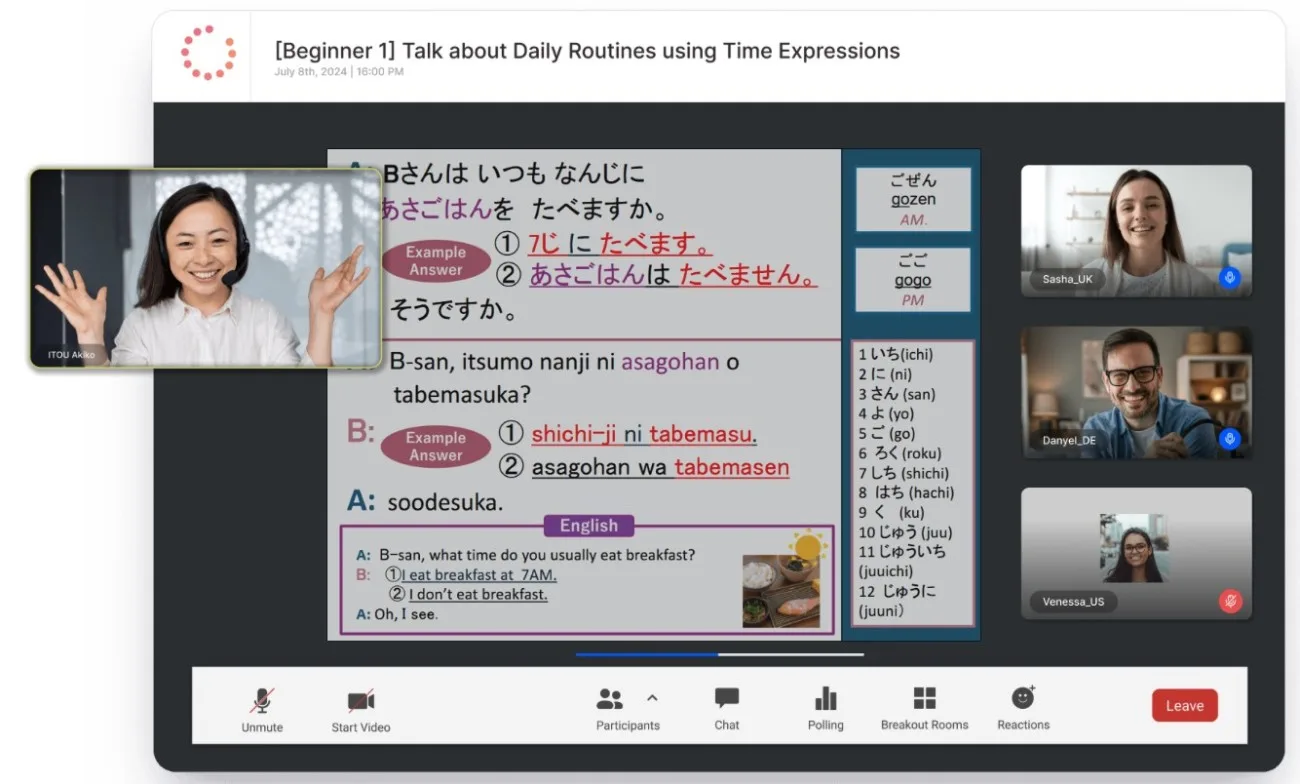
Japonin is a Japanese teaching platform that offers live and interactive classes taught by native teachers. The main differentiator of the course is its practical methodology: instead of just watching recorded videos, students actively participate in classes, practicing conversation and developing the four language skills (speaking, listening, reading, and writing).
Classes take place via Zoom and are organized in two main formats:
FlexLessons: group classes with up to 7 students, allowing for greater interaction. You choose the topics you want to study and create your own schedule.
Private lessons: ideal for those who want a more personalized learning experience, focused on specific goals, such as passing the JLPT or improving pronunciation.
In addition, there are special courses for business, writing, and even for those who just want to practice conversation.
A common question among students is whether it is necessary to speak English to use the platform. Since the Japonin website and interface are available only in English and Japanese, it is helpful to have a basic knowledge of English to navigate and schedule classes.
However, the classes are 100% in Japanese! This means that, from the very beginning, you will be encouraged to think and express yourself in the language. This immersion method accelerates learning and improves your fluency naturally.
If you are still a beginner, don’t worry! The teachers use visual aids, gestures, and simple explanations to help with understanding. Additionally, some teachers speak English and can clarify specific doubts in that language if necessary.
Therefore, even if you are not fluent in English, you can study at Japonin without any problems. The most important thing is your willingness to learn and practice Japanese!
Is Japonin suitable for beginners?
Yes! Japonin offers classes for all levels, from absolute beginners to advanced students. If you have never studied Japanese before, you can start at the Beginner 1 level, where you will learn the basics of pronunciation, essential phrases, and the structure of the language.
The most interesting thing is that, from the first day, teachers encourage students to speak Japanese, which accelerates adaptation to the language. For those who already have some knowledge, there are placement tests that help find the most suitable class.
If your goal is to pass the JLPT, improve conversation skills, or learn Japanese for business, Japonin has specific classes for each of these purposes.
If you are interested but still have doubts, here’s some great news: Japonin offers a free trial class!
This means you can test the methodology, meet the teachers, and see how the platform works without any commitment. This is an excellent opportunity to feel if the style of the classes suits you before making any investment.
To schedule your free class, just visit the Japonin website, create an account, and choose an available time.
Is it worth studying at Japonin?
If you are looking for a Japanese course that is practical, flexible, and with experienced teachers, Japonin is an excellent choice. The possibility of studying with natives, practicing conversation in a dynamic environment, and choosing your own pace of learning makes the platform ideal for those who really want to progress in the language.
The best way to find out if it is for you? Try it for free! Take your trial class and see firsthand how Japonin can help you achieve fluency in Japanese.
For those learning Japanese with a focus on the job market, the J.TEST (Test of Practical Japanese) is one of the most relevant certifications and, at the same time, less known outside Japan. While the JLPT is widely used in academic environments and immigration processes, the J.TEST focuses on measuring real communication ability in everyday life and in the corporate environment.
In this article, you will understand how the J.TEST works, its differences compared to the JLPT, scoring levels, test structure, dates, and application locations and why this certification can be a great differential on your resume.
What is the J.TEST?
Created in 1991, the J.TEST (Practical Japanese Test for Business and Everyday Use) is an exam designed to assess practical mastery of the Japanese language. It is maintained by the Japanese Language Examination Association and is administered not only in Japan but also in several countries in Asia and, in some cases, Europe and America.
The main difference between the J.TEST and the JLPT is its focus on everyday communication and the professional environment, with an emphasis on listening comprehension and rapid reading, as well as the contextual use of the language.
Japanese companies — especially those working with foreigners — highly value the J.TEST for providing a more accurate measure of the practical communication ability of candidates.
Differences between the J.TEST and the JLPT
Although both are proficiency tests, the J.TEST and the JLPT have quite different purposes and structures. See the comparison:
Characteristic
J.TEST
JLPT
Objective
Assess practical use of Japanese in real situations
Assess general knowledge of the language (grammar, vocabulary, and listening)
Frequency
6 times a year
2 times a year
Speaking and Writing
Includes written production (levels E-F)
Does not assess written production or speaking
Evaluation System
Score from 0 to 1,000, divided into levels A-F
5 fixed levels (N5 to N1), without continuous scoring
Application
More used by companies and in the corporate world
More used for immigration, scholarships, and universities
Difficulty Level
Considered more dynamic and practical
More theoretical, focused on textual and auditory comprehension
Format
Objective (marking alternatives) + writing (in some levels)
Objective (marking alternatives), without writing
Structure of the J.TEST
The exam is divided into two main versions, according to the candidate’s level of knowledge:
1. Levels A–D (Intermediate to Advanced)
This version is for those who already have an intermediate or higher level of the language. The score ranges from 0 to 1,000 points and defines the candidate’s level:
A (900–1,000 pts) – Extremely high proficiency, capable of functioning fluently in any area.
B (800–899 pts) – High command of the language, ideal for demanding work environments.
C (700–799 pts) – Able to maintain business conversations and handle complex documents.
D (600–699 pts) – Good command of the language, able to communicate with natives in various situations.
2. Levels E–F (Basic to Intermediate)
This version is aimed at beginner students. It includes handwriting questions (kanji and basic vocabulary), simple reading, and listening.
The score defines the level:
E (500–599 pts) – Understands basic sentences and common expressions.
F (400–499 pts) – Recognizes key words and everyday expressions.
How is the test?
The structure of the J.TEST for levels A–D is divided into three main sections:
Part 1 – Listening Comprehension:
Includes short conversations, announcements, and instructions. Assesses the ability to understand spoken Japanese in a natural and rapid manner.
Part 2 – Reading and Vocabulary:
Tests the ability to identify the meaning of words and phrases, fill in gaps, recognize idiomatic expressions, and choose the correct grammar.
Part 3 – Text Interpretation:
Features long texts, such as news articles, emails, manuals, and formal letters. Assesses speed and accuracy in reading.
In levels E–F, there is also a simple written section, which requires the production of kanji or short sentences.
When and where to take the J.TEST?
The J.TEST is administered six times a year (usually in January, March, May, July, September, and November).
Although more common in Japan and Asian countries like China, Korea, and Vietnam, some centers outside Asia also offer the exam. The complete list of locations is available on the official J.TEST website.
Registration is done online and usually needs to be completed at least one month before the test date.
How much does it cost?
The registration fee varies by country, but in Japan, the standard amount is ¥4,000 to ¥5,000 (approximately $30 to $35 USD).
Why is the J.TEST valued by Japanese companies?
Unlike the JLPT, which is more static and theoretical, the J.TEST is frequently updated and uses content based on real work and everyday life situations.
Companies use the exam to:
Evaluate new foreign employees.
Measure the progress of international employees.
Grant salary bonuses based on the level achieved.
Verify if candidates are capable of functioning in multilingual environments.
Having a J.TEST with a high score (level B or higher) can mean access to above-average salaries, especially in areas such as customer service, tourism, technology, and foreign trade.
Conclusion
The J.TEST is a highly practical, dynamic certification recognized by Japanese employers. If you want to work in Japan, operate in Japanese companies, or simply test your real communication ability in the language, this test is an excellent choice.
More than memorizing grammatical rules, the J.TEST assesses your ability to use Japanese in the real world, making it a valuable differential on your resume.
Consider adding this certification to your study plan — it could be the bridge between your current Japanese and the career you wish to achieve.
Japan is one of the few countries that allows foreigners to buy real estate without restrictions, regardless of residency status. This makes the country an attractive destination for investors, expatriates, and Japanese culture enthusiasts who wish to own property.
However, buying real estate in Japan involves bureaucratic processes, specific taxes, and challenges such as language barriers and difficulties in obtaining financing. In this guide, we explain how foreigners can buy real estate in Japan, what costs are involved, and how to ensure a safe investment.
Yes! Unlike many Asian countries that impose restrictions on foreign buyers, Japan does not require citizenship or residency visa for property acquisition. Foreigners can buy apartments, houses, and land without limitations, and the property can be registered in their name.
However, there is an important detail: owning property in Japan does not guarantee residency visa or citizenship. Purchasing property does not facilitate immigration processes, so it is necessary to have an appropriate visa if you wish to live in the country.
Step by Step to Buy Real Estate in Japan
1. Choose the Type of Property
In Japan, properties can be classified into different categories, each with its advantages and disadvantages:
Apartments (Manshon) – Modern buildings, with good appreciation, but may have high maintenance fees.
Single-family Homes (Ikkenya) – More spacious properties, but with lower long-term appreciation.
Land – Allows for the construction of a custom house, but requires more bureaucracy.
Commercial Properties – Good options for those looking to start a business or invest in the real estate sector.
If the idea is an investment, cities like Tokyo, Osaka, and Kyoto offer better appreciation opportunities and rental demand.
2. Set the Budget and Check Financing
The value of real estate in Japan varies depending on the city, location, and type of property. On average:
Small apartments in Tokyo: ¥40,000,000 to ¥80,000,000 ($270,000 to $550,000).
Houses in residential neighborhoods: ¥50,000,000 to ¥150,000,000 ($330,000 to $1,000,000).
Properties in the countryside: Starting from ¥10,000,000 ($70,000).
Payments are usually made in cash, as obtaining bank financing as a foreigner is extremely difficult without permanent residency or a long-term visa. Some banks offer mortgage loans to foreigners, but require proof of income in Japan.
3. Hire a Real Estate Agent and Research the Property
To facilitate the process, it is ideal to have the help of a real estate agent (Fudousan), who can assist in the search and negotiation. Some real estate agencies that serve foreigners include:
Sotheby’s International Realty Japan
Plaza Homes
Real Estate Japan
When finding a property of interest, check details such as building age, condition, accessibility, and maintenance fees.
4. Make an Offer and Sign the Purchase Agreement
Once the property is chosen, the next step is to make a formal offer to the seller. If accepted, a purchase agreement will be prepared, and it will be necessary to pay a deposit (shokikin) of 5% to 10% of the total value.
The contract will include details such as deadlines, taxes, and buyer obligations. It is advisable to hire a lawyer to review the terms before signing.
5. Property Registration and Final Payment
After signing, the process of transferring the property to the buyer’s name is carried out at the Real Estate Registration Office of Japan. At this time, it will be necessary to pay the remaining amount for the property and the mandatory fees.
The buyer will receive a document called “Toukibo” (Property Registration), confirming that the property has been legally transferred.
What Are the Costs and Taxes When Buying Real Estate in Japan?
In addition to the property price, there are additional costs that can represent between 6% and 10% of the total value. The main ones are:
Property Acquisition Tax: 3% to 4% of the registered value of the property.
Registration Fee: 0.1% to 2% of the property price.
Agent Fees: About 3% of the property value + ¥60,000 ($400).
Annual Property Tax: 1.4% per year of the registered value of the property.
Home Insurance (optional): Usually costs ¥20,000 to ¥50,000 ($135 to $350) per year.
It is essential to plan for these costs before finalizing the purchase to avoid financial surprises.
Tips for Safely Buying Real Estate in Japan
Buying real estate in Japan can be a smooth process, as long as some precautions are taken:
Consider new or well-maintained properties: Older properties can lose value quickly and may require expensive renovations.
Check the documentation and history of the property: Some properties may have associated debts or structural problems.
Prefer areas with good infrastructure and transport: This ensures greater appreciation and ease of resale or rental.
Avoid unknown intermediaries: Always choose registered real estate agencies and agents.
If possible, visit the property before buying: This avoids unpleasant surprises after the purchase.
Conclusion
Buying real estate in Japan is an accessible process for foreigners, with no restrictions regarding nationality. However, it requires financial planning and knowledge of the costs and bureaucracies involved.
Whether for personal residence or investment, the Japanese real estate market offers interesting opportunities, especially in major cities like Tokyo, Osaka, and Kyoto. With the right preparation and professional assistance, it is possible to acquire property safely and enjoy the benefits of owning real estate in Japan.
If you are planning to buy real estate in Japan, follow this guide and take the first step to make that dream come true!
Seeing Tokyo and Mount Fuji from above is a unique experience that combines adventure, luxury, and a new perspective on Japan. Helicopter tours have become one of the country’s most exclusive attractions, allowing visitors and locals to appreciate the stunning urban and natural landscapes on a panoramic flight.
Whether for a special occasion or just to experience Japan from a different angle, a helicopter tour can be the best way to appreciate the grandeur of Tokyo and the majestic beauty of the Mount Fuji. In this article, we will explore the available options, the best routes, and what to expect from this experience.
Why Take a Helicopter Tour in Japan?
Flying over Tokyo and Mount Fuji provides a privileged view of the country’s iconic landscapes. While Tokyo shines with its futuristic skyscrapers and vibrant lights, Mount Fuji, with its grandeur and perfect symmetry, offers an impressive contrast to the metropolis.
Unlike the panoramic views offered by observation towers, such as the Tokyo Tower and the Tokyo Skytree, a helicopter flight provides an unobstructed 360° experience, allowing you to observe every detail of the city and the surrounding mountains. Additionally, the thrill of taking off and feeling the freedom in the sky makes this an unforgettable experience.
Helicopter Tours over Tokyo
Tokyo is a vibrant city, full of contrasts between technology and tradition. Flying over it by helicopter allows you to see landmarks in a completely new way.
The tours usually depart from heliports in the Tokyo Bay area, such as the Tokyo Heliport, located in Shin-Kiba. The flights last between 15 and 30 minutes, depending on the chosen route.
Main Attractions Seen from Above
During the tour, you can spot:
Tokyo Tower and Tokyo Skytree, the iconic observation towers of the city.
Shibuya and Shinjuku, the busiest neighborhoods, with their bright signs and chaotic intersections.
Tokyo Bay, including the Rainbow Bridge and Odaiba.
Imperial Palace, home to the Japanese imperial family.
Asakusa and Senso-ji Temple, one of the oldest and most famous in Japan.
How Much Does a Helicopter Tour in Tokyo Cost?
Prices vary depending on the duration of the flight and the type of package offered. The average prices are:
Short tours (15 minutes): Starting from ¥25,000 ($170) per person.
Medium tours (20-30 minutes): Between ¥40,000 and ¥80,000 ($270-$550) per person.
Private flights and VIP experiences: Can exceed ¥150,000 ($1,000), depending on additional services, such as champagne and personalized photos.
Helicopter Tours over Mount Fuji
Mount Fuji is one of the most emblematic natural landscapes in Japan. Flying over this sacred mountain by helicopter offers a privileged view of its grandeur and perfect symmetry.
The flights depart from various locations, including Tokyo, Yokohama, and Shizuoka. The best time to take the tour is between autumn and winter, when the sky is clearer and the chances of spotting the summit of Fuji without clouds are higher.
Most Popular Routes
Classic panoramic flight: Departs from Tokyo and flies over Fuji for approximately 50 minutes.
Mount Fuji and the Five Lakes: A more comprehensive route that includes the Kawaguchi, Yamanaka, and Motosu lakes, providing a spectacular view of the mountain reflected in the water.
Sunset tour: Offers an even more magical experience, with Mount Fuji tinged by the golden hues of the setting sun.
How Much Does a Helicopter Tour over Mount Fuji Cost?
Prices can vary significantly, depending on the departure location and flight duration:
Short flights (30 minutes): Starting from ¥80,000 ($550) per person.
Full tours (50-60 minutes): Between ¥120,000 and ¥200,000 ($800-$1,300).
Customized experiences or private flights: Can exceed ¥300,000 ($2,000).
Tips for Making the Most of Your Helicopter Tour
Whether in Tokyo or over Mount Fuji, some tips can make the experience even more special:
Choose the right time: Flights at sunrise or sunset usually have more impressive views.
Wear comfortable clothing: The space in the helicopter is limited, so light and practical clothing is ideal.
Avoid cloudy days: Mount Fuji can be covered by clouds, so check the weather forecast before booking.
Bring a quality camera: Taking photos from above can be challenging, so a phone with a good camera or a professional camera makes a difference.
Book in advance: Helicopter tours are in high demand, especially during peak season.
Conclusion
Taking a helicopter tour over Tokyo and Mount Fuji is an experience that combines exclusivity, excitement, and spectacular views. Whether to celebrate a special occasion or simply to see Japan from a unique perspective, this is one of the most unforgettable activities you can experience in the country.
With options for different budgets and preferences, this experience promises to transform any trip to Japan into something truly memorable. If you are looking for an extraordinary way to explore the country, a panoramic flight may be the perfect choice!
Mastering Japanese is already, in itself, a powerful differential in the job market. But those seeking better salaries and more professional opportunities can go beyond fluency: achieving recognized certifications in the language. These certificates officially prove your skills and can open doors in companies, selection processes, promotions, and even work visas.
In this article, you will learn about the Japanese certifications that most enhance your resume, how they work, where to obtain them, and, most importantly, how they can impact your income.
Why invest in Japanese certifications?
In an increasingly globalized world, multinational companies and academic institutions require formal proof of language proficiency. With Japanese, it is no different. Having a certification can be the decisive factor in securing a position or even negotiating a better salary.
Moreover, some work or residence visas in Japan require proof of language level. In business contexts, mastering Japanese at an advanced level can increase salaries by up to 30% to 50%, especially in sectors such as IT, translation, customer service, and international trade.
1. JLPT (Japanese-Language Proficiency Test)
The JLPT is the most well-known and globally accepted certification. Organized by the Japan Foundation, the exam is administered twice a year in dozens of countries and measures proficiency in reading and listening comprehension.
Levels and Professional Impact
The JLPT is divided into five levels:
N5 and N4: Basic — shows that you understand simple sentences.
N3: Intermediate — allows for broader communication.
N2: Advanced — required by many companies and educational institutions.
N1: Fluent — opens doors to high-level positions and academic careers.
N2 and N1 are the most valued certificates in the market. A professional with N2 can work in bilingual customer service, technical support, simple translation, and earn salaries between ¥250,000 and ¥400,000 monthly. With N1, it is possible to work as a technical translator, project manager, or in administrative positions, with earnings exceeding ¥600,000 monthly.
How to Prepare
The JLPT does not require speaking or writing skills. Therefore, study should focus on grammar, reading, vocabulary, and listening. There are free practice tests, books like “Nihongo Sou Matome,” and online platforms specifically for the exam.
2. J.TEST – Test of Practical Japanese
Less known outside Japan, the J.TEST is widely accepted by Japanese companies. Unlike the JLPT, it focuses on the practical application of the language in corporate daily life, including listening, reading, and vocabulary.
Advantages of J.TEST
Applies to real-world contexts: emails, meetings, reports.
Includes professional vocabulary and expressions from everyday business.
Accepted by Japanese companies during hiring.
The test is divided into levels from A to F. To secure positions with good salaries, it is recommended to achieve level A or B, equivalent to JLPT N2/N1.
Companies that use J.TEST as a hiring criterion generally offer more competitive salaries, bonuses for language performance, and faster growth opportunities.
3. BJT – Business Japanese Proficiency Test
Targeted at those who intend to work with Japanese for business, the BJT is an excellent option for professionals in areas such as foreign trade, marketing, international relations, and management.
Distinctive Features of BJT
Evaluates real communication in a corporate environment.
Uses videos, emails, graphs, and authentic business situations.
Scoring scale of 0 to 800, with above 600 considered excellent.
Companies that work with foreign clients or wish to expand into international markets highly value candidates with BJT. A good performance can mean not only higher salaries, but also promotions and bonuses for qualifications.
The BJT is administered by the Japan Kanji Aptitude Testing Foundation and can be taken online, making it easier for foreigners outside Japan to access.
4. Kanken – Kanji Aptitude Test (漢字検定)
Although not directly related to overall proficiency, the Kanken measures knowledge of kanji, the ideograms used in the Japanese language. For those working with writing, technical translation, literature, or education, this certification is a powerful differential.
High levels of Kanken (1 to 2) are rare even among natives, and mastering this content demonstrates a level of linguistic excellence. Specialized translators in academic or legal texts who possess the Kanken can charge higher rates per page.
Additional Certifications Worth Considering
Some specific sectors may require or value other complementary certifications in Japanese, such as:
Japanese Proficiency Test for Nursing and Elderly Care – used for the immigration of healthcare professionals.
Internal company certificates – large Japanese companies train and certify employees with corporate Japanese courses.
Technical courses with language certification – culinary, fashion, or technology schools in Japan sometimes include language tests in their curriculum.
Conclusion
Investing in Japanese certifications is one of the most effective ways to increase salary, achieve promotions and secure a place in competitive markets.
If your goal is to work with the language — whether in person in Japan or remotely — certifying your level of proficiency is more than a differential: it is an increasingly common requirement.
Choose the certification that best fits your profile and area of expertise, and start preparing now. Investing in your level of Japanese can yield returns far beyond linguistic recognition — it can be the key to boosting your career.
Looking for a short romantic anime? How about watching romantic anime movies? In this article, we will recommend the best Japanese romance animations for you to watch at night with your loved one.
With so many exciting and artistically beautiful works, choosing the best romantic anime movies can seem like an almost impossible mission. The genre is rich, sensitive, and often surprising. It’s not just about conventional love stories — many of these films dive deep into themes like loss, reunions, maturity, and, of course, those inexplicable coincidences that only fate can offer.
The magic of Japanese animation allows for the exploration of feelings with an intensity hard to find in other formats. Anyone who has been moved by the silent rain falling as two characters part ways, or by a reunion at the top of a mountain accompanied by an unforgettable soundtrack, knows what I’m talking about.
To guide you through this delicate and passionate world, we have gathered the best romantic anime movies — from cult classics to the most recent productions that have been moving audiences and gaining recognition in awards and in the hearts of fans.
1
If there is a movie that redefined the romance genre in anime, it is Your Name (Kimi no Na wa). Directed by Makoto Shinkai, this masterpiece combines fantasy and realism in a narrative that plays with time and destiny.
The connection between Taki and Mitsuha, two young people who mysteriously swap bodies, grows amidst impeccably animated urban and rural landscapes. The engaging soundtrack by the band RADWIMPS sets the right tone for the emotions, making the experience even more unforgettable.
With over 350 million dollars grossed worldwide, it became a global phenomenon and solidified Shinkai as one of the masters of animated romance.
1
Despite the strange title, Kimi no Suizou wo Tabetai is one of the most moving films in the genre. The plot follows a reserved boy who accidentally discovers the diary of a classmate with a terminal illness.
Over time, the friendship between them transforms into something deeper, more sensitive, more human. But fate does not relent, and the film is unafraid to take the more painful path.
Without forcing emotions, it delivers a heart-wrenching ending — and at the same time, warms the soul.
Howl’s Moving Castle (2004)
Among the many successes of Studio Ghibli, Howl’s Moving Castle (Howl’s Moving Castle) is undoubtedly one of the most charming romances. Directed by Hayao Miyazaki, it mixes magic, war, and self-discovery with a touch of unexpected love.
Sophie, transformed into an elderly woman by a curse, meets Howl, an eccentric and insecure wizard. The relationship between the two grows subtly, while the moving castle becomes a home and a refuge for everyone there.
It is a story about love beyond appearances — and beyond time.
Josee to Tora to Sakana-tachi
Josee to Tora to Sakana-tachi is not just a beautiful romance — it is a coming-of-age story. Tsuneo dreams of studying abroad, while Josee lives in her closed world, trapped in a wheelchair and her insecurities. When the two meet, the clash between their worlds turns into a journey of self-discovery for both.
What makes this film special is how love arises from respect. They learn from each other, challenge their own limits, and create a bond that goes beyond words. It is a story of affection, empathy, and the courage to live.
Kotonoha no Niwa
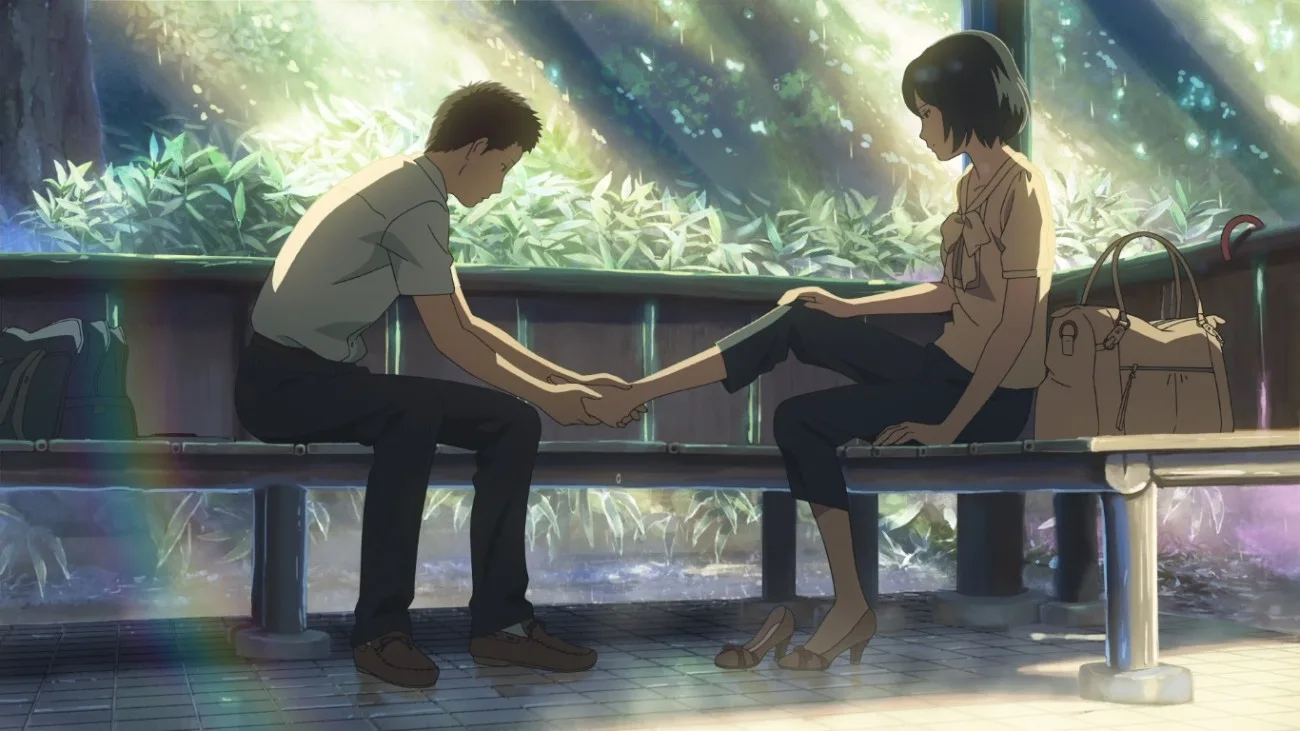
Kotonoha no Niwa is pure animated poetry. With only 46 minutes, it delivers an intense and sensory experience. The rain, the sounds of the city, the silences between the dialogues — everything contributes to an atmosphere of contemplation. It feels like we are peeking into something intimate, fragile, and profoundly human.
Takao, a student who dreams of being a shoemaker, meets Yukino, an older woman, in a garden during rainy mornings. Not quite knowing why, they keep returning to that same place until a connection forms. There are no exaggerated declarations or miraculous endings, but rather a beauty in the unspoken.
Tenki no Ko (Weathering With You)
In Tenki no Ko, Makoto Shinkai returns to explore love and destiny with his unmistakable style. The story follows Hodaka, a teenager who runs away to Tokyo, and Hina, a young girl who has the power to control the weather. Amidst a city flooded by constant rain, a romance is born that challenges even the laws of nature.
Visually stunning, with scenes that look like paintings, the film also questions what we are willing to sacrifice for love. Hodaka chooses the heart over the world — and this choice, controversial for some, is what makes the story so human and true.
Kimi to, Nami ni Noretara
Directed by Masaaki Yuasa, Kimi to, Nami ni Noretara blends fantasy, grief, and romance in a completely unique way. Hinako is a surfer who lives in the moment, and Minato, a responsible and determined firefighter. When a tragedy shakes this relationship, the film transforms into a journey about moving forward without forgetting those we love.
Instead of focusing only on loss, the film speaks about transformation. About how love can continue to exist even when the person is gone. It is fun, sad, and surprisingly comforting. A rollercoaster of emotions with catchy music that sticks in your head and heart.
1
Although it involves time travel, Toki wo Kakeru Shoujo is, at its core, a love story. Makoto, the protagonist, discovers that she can literally jump through time — and like any teenager, she starts using it to make life easier. But she soon realizes that her choices have consequences.
The romance discreetly blossoms, between one time jump and another, until it reaches a point where Makoto must decide what truly matters. The film is light, fun, and reflective just enough. And yes, it will leave you with a sense of longing when it ends.
1
If you watched Tamako Market, then this movie is the perfect closure. Tamako Love Story is exactly what the title promises: the love story of the cute and distracted Tamako with the dedicated and quiet Mochizou.
It is a calm, everyday, and very sweet film. No big twists or dramatic conflicts — here, the charm lies in the simplicity and tenderness of a shy and expected confession. Ideal for those who love light and comforting romances.
List of Romantic Anime Movies
To conclude, here is a list of the best romantic anime movies for you to research and watch:
your name.
2016
Howl’s Moving Castle
2004
Josee, the Tiger and the Fish
2020
Given
2020
Rascal Does Not Dream of a Dreaming Girl
2019
Kimi no Suizou wo Tabetai
2018
Hotarubi no Mori e
2011
Doukyuusei
2016
Fate/stay night: Heaven’s Feel III. spring song
2020
The Stranger by the Shore
2020
Fate/stay night: Heaven’s Feel II. lost butterfly
2019
Saekano: How to Raise a Boring Girlfriend Fine
2019
The Girl Who Leapt Through Time
2006
Whisper of the Heart
1995
Fate/stay night: Heaven’s Feel I. presage flower
2017
Love, Chunibyo & Other Delusions! : Take On Me
2018
Redline
2009
Sekai-ichi Hatsukoi: Yokozawa Takafumi no Baai
2014
Sekai-ichi Hatsukoi: World’s Greatest First Love – Proposal-hen
2020
From Up on Poppy Hill
2011
The Wind Rises
2013
Ride Your Wave
2019
The Night is Short, Walk On Girl
2017
The Garden of Sinners 2: …And Nothing Heart. (Murder Speculation Part A)
2007
Kase-san & Morning Glories
2018
Tamako Love Story
2014
The Garden of Words
2013
Anohana: The Flower We Saw That Day
2013
Hanasaku Iroha: Home Sweet Home
2013
Pretty Guardian Sailor Moon Eternal 2
2021
Macross Frontier 2: Sayonara no Tsubasa
2011
Orange -Mirai-
2016
Meiji Tokyo Renka : Yumihari no Serenade
2015
Words Bubble Up Like Soda Pop
2021
Sora no Aosa wo Shiru Hito yo
2019
Haikara-San: Here Comes Miss Modern Part 1
2017
DAKAICHI: I’m being harassed by the sexiest man of the year- Spain Arc
2021
The Princess and the Pilot
2011
Twittering Birds Never Fly ~The Clouds Gather~
2020
Pretty Guardian Sailor Moon Eternal 1
2021
Children Who Chase Lost Voices
2011
Yes ka No ka Hanbun ka
2020
Macross Frontier 1: Itsuwari no Utahime
2009
Super Dimensional Fortress Macross: Do You Remember Love
1984
The Place Promised in Our Early Days
2004
Macross Plus Edition
1995
Hello World
2019
5 Centimeters per Second
2007
Date a Live : Mayuri Judgement
2015
Big Fish & Begonia
2016
Urusei Yatsura 2: Beautiful Dreamer
1984
Kimagure Orange Road: I Want to Return to That Day
1988
Omoi, Omoware, Furi, Furare
2020
Meiji Tokyo Renka 2: Hanakagami no Fantasia
2016
Over the Sky
2020
Hal
2013
Urusei Yatsura 5: The Final Chapter
1988
New Kimagure Orange Road: Summer’s Beginning
1996
Fuse: Memoirs of a Huntress
2012
Bungaku Shoujo
2010
I’ve Always Liked You
2016
Aura: Koga Maryuin’s Last War
2013
The Red Turtle
2016
Marmalade Boy
1995
Haikara-San: Here Comes Miss Modern Part 2
2018
Burn the Witch
2020
Maison Ikkoku: Kanketsuhen
1988
Love, Chunibyo, & Other Delusions! Rikka Version
2013
Dance with Devils : Fortuna
2017
Air
2005
Hayate the Combat Butler! Heaven is a Place on Earth
2011
Eureka Seven: Good Night, Sleep Tight, Young Lovers
2009
They Were Eleven
1986
Revolutionary Girl Utena: The Adolescence of Utena
In “Solo Leveling”, the universe is shaped by a unique system that divides hunters into well-defined levels. This system of hunter ranking is much more than a simple hierarchy of strength — it dictates social status, access to resources, and even the degree of risk faced in dungeons. But what does it really mean to be an S-rank hunter, or how is someone ranked in the first place? Let’s explore this clearly and engagingly.
For those who have just started venturing into the world of Solo Leveling, you might wonder why so many characters are obsessed with climbing the ranks. After all, the protagonist, Sung Jin-Woo, started as the weakest of all — an E-rank hunter — yet still faced deadly dangers. It is precisely in this disparity between rank and the reality of challenges that the system begins to show its flaws and complexities.
This level structure, while seemingly objective, has a series of nuances. Understanding this classification is fundamental to diving deeper into the plot and appreciating the moments when Jin-Woo challenges the rules of the system itself. Hunter ranking goes far beyond a power chart — it is a veiled critique of meritocracy and one of the narrative engines of the story.
In a world where interdimensional portals have opened and monstrous creatures have begun to invade Earth, some people awakened special abilities and were classified as “hunters.” These individuals are responsible for fighting the monsters and closing the portals.
To organize and control these people with powers, a ranking system was created that goes from rank E (the weakest) to rank S (the most powerful). This division is based on a test conducted after awakening, which measures attributes such as strength, agility, endurance, and mana.
However, this test presents a major problem: it only measures initial potential. In other words, if the hunter evolves after the test, their rank does not change automatically. This was the case for Jin-Woo, who had a second awakening and became a living exception to the system.
Existing ranks:
Rank E: Extremely weak hunters, often unable to deal with simple monsters.
Rank D: A bit stronger, but still limited to low-level dungeons.
Rank C: Considered average, they have a certain professional stability, but are not stars.
Rank B: They already possess good skills and begin to gain recognition.
Rank A: Rare, powerful, with great influence within guilds.
Rank S: Extremely rare. The elite. Their abilities defy any human logic.
There are also the so-called National Hunters, who are like the “rank S plus,” designated directly by governments, with capabilities capable of altering the balance of power between nations.
Ranking based on mana
In the work, there is no official ranking solely by mana, like a public table with defined numerical limits. However, there is a direct relationship between the amount of mana and the rank obtained in the evaluation test. In other words:
The greater the amount of mana detected at awakening,
The higher the rank assigned to the hunter.
Therefore, most S-rank hunters have extremely high mana levels, while those of rank E or D have almost no significant mana reserves.
How does mana influence rank?
The measurement of mana occurs through technological devices developed after the emergence of the portals. These devices can estimate the volume of magical energy flowing in the individual’s body. However, this process is not perfect:
It only measures the potential at the moment of awakening.
It does not consider subsequent growth or evolution.
Hunters with physical abilities may be underestimated, even with high mana control.
For example, Jin-Woo, even possessing a growing reservoir of mana after his second awakening, did not have his rank changed automatically, as the system did not recognize his internal growth.
General estimate (unofficial, based on dialogues and contexts from the work):
Mana
Rank
< 500
Rank E/D
500 – 1000
Rank C
1000 – 3000
Rank B
3000 – 5000
Rank A
> 5000
Rank S
> 10.000
National Rank / Monarch
These numbers are based on estimates made by fans of the work, analyzing dialogues and measurements described in the chapters. For example, when Jin-Woo is examined by magical detection artifacts, the equipment even explodes, indicating that his mana level exceeds measurable limits for ordinary humans.
The role of ranking in the society of Solo Leveling
The ranking does not only serve to define a hunter’s strength — it defines their entire life. The higher the rank, the more privileges: better contracts, richer guilds, access to advanced equipment, and of course, fame and prestige.
But there is a dark side to this system. Low-rank hunters are often sent to dangerous dungeons with little support, often dying without even understanding what they faced. This social chasm between ranks is a grim portrait of inequalities, even in a world where everyone has “awakened.”
The ranking is also used as a justification for abuses of power. Guilds exploit weaker hunters, manipulate rankings to maintain dominance, and engage in politics about who can or cannot be promoted. The story shows that the system is far from fair — and Jin-Woo, as he silently grows in power, exposes every structural flaw of it.
Jin-Woo and the collapse of the system
Sung Jin-Woo is the personification of a systemic error. Ranked as E, he barely survives until his “second awakening,” an event that breaks the logic of the system and completely transforms his trajectory. He begins to level up on his own, something theoretically impossible for other hunters.
This phenomenon calls into question the entire structure of the world. If an E-rank can become stronger than all the S-ranks, the evaluation system loses its meaning. The narrative takes advantage of this to raise a larger discussion: can real power be measured? Or are we too dependent on labels?
Furthermore, as Jin-Woo evolves, he begins to deal with threats that are far beyond human comprehension — Monarchs, Rulers, and primordial forces that are not even on the radar of common hunters. The ranking system simply becomes irrelevant.
Cultural curiosity
The concept of “rank” in Solo Leveling closely resembles the ranking system of Asian martial arts, such as the kyū and dan in judo and karate. In these systems, the practitioner goes through tests and challenges until reaching higher levels, but there is always the possibility for someone to transcend their position if they have dedication and discipline. This creates an interesting parallel with Jin-Woo’s journey, who breaks barriers through effort and difficult choices.
Conclusion
The ranking of hunters in Solo Leveling is more than a narrative tool — it is a mirror of the social structures of our own world. It defines who deserves respect, who receives support, and who is discarded. But, as Jin-Woo proves, a person’s worth cannot be measured solely by a system.
In the end, the reader understands that every system can fail — and that the true heroes are those who, even when classified as weak, continue to fight until they change the rules of the game.
Have you heard of the Korean Heart? In this article, we will talk about the famous Korean gesture of making a heart with fingers popularized around the world, mainly by K-Pop and Korean Dramas. Taking the opportunity to also discuss curiosities, origin, and even about heart in the Korean language.
The Korean heart gesture is made with just one hand using the fingers crossing the thumb with the index finger similar to the Western gesture for money, but in this case, we remain still forming a kind of V for heart.
In the West, we usually use both hands or arms to make a heart. Koreans and Japanese also make and know this gesture, but using just one hand and two fingers is more discreet and less embarrassing.
Some may think that Koreans are so greedy that they associate the heart with money. Although the gesture is quite similar, this idea is quite erroneous; it is just a tiny heart that goes far beyond a ♡ or ♥.
The representation of the small V with the fingers well represents the literal heart, since, in fact, the hand perfectly represents the size of a human heart, while the index and thumb fingers in a V shape are the two valves of the heart.
In English, the gesture is known as “Finger Heart” and in Korean as songalag hateu [손가락 하트]. There are rumors that this gesture also means “panties” in Korean sign language and “nipples” if using both hands.
Of course, this gesture can simply be summarized as a demonstration of love and affection for fans and other people. This gesture is currently widely used in photos and when meeting fans. Many fans shout asking for this gesture!
The origin of the Korean heart
The origin of this gesture is quite uncertain; some K-Pop names claim to have made such a gesture since childhood, others presented photos from the 2000s, some claim it is from the year 2002 or say that it was in 2010 that the gesture became popular.
It is difficult to know who is right about the subject, as photos of children could indicate only them performing the money gesture instead of a mini heart. Basically, the origins of this gesture are not clear at all.
Until some time ago, Kim Hye Soo was said to have been responsible for popularizing this gesture. Celebrities of all styles discuss the origin; recently we had Yang Se-hyung and G-Dragon discussing online who originated the gesture.
The meaning behind the Korean heart in dramas
The main reason for the spread of this gesture is the dramas. Many even search for the term “drama heart.” In many dramas, the Korean heart gesture goes far beyond cuteness. It symbolizes contained affection, discreet love, or even that first spark between characters.
In Korean culture, where public displays of affection tend to be more reserved, the finger heart emerges as a visual way to say “I like you” without direct words. This fits perfectly into the narratives of the dramas, where the development of romance tends to be slow, full of tension and small hints.
This silent language of love is one of the reasons why the gesture appears in important scenes — whether between friends, forming couples, or even in comedic moments when the character makes the heart awkwardly just to provoke laughter.
And of course, there are those memorable moments that become GIFs and go viral on social media. How can we forget the protagonist of “Crash Landing on You” making a somewhat clumsy heart? Or the actress from “Weightlifting Fairy Kim Bok-joo” sending a spontaneous finger heart to her crush?
The V for victory vs V for heart in photos
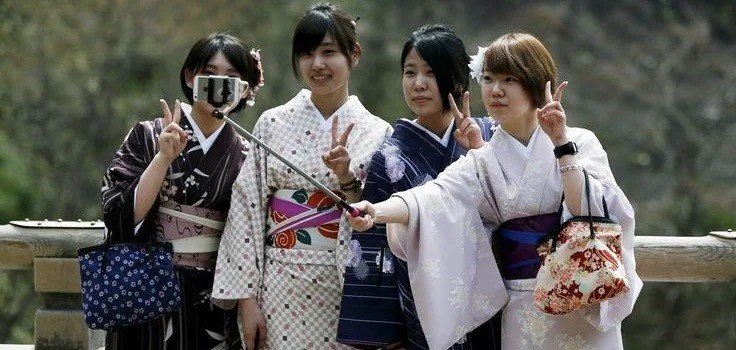
The V sign is quite popular in Asia and around the world, usually used when taking photos showing two fingers open in a V sign. This sign originally means victory, and it is believed to have origins in Japan, but the sign is popular in both countries.
Generally, the V sign is used to take photos without any special meaning. Nowadays, the Korean heart kind of steals the photo poses from the V gesture. Especially among K-Pop fans from the East and West.
Both gestures are a portrait of Aegyo culture, equivalent to the Kawaii culture of Japan. Many K-Pop singers often pose with these fingers to show love to fans. In Japan, it is hard to find a photo without making the V pose.
When I searched for Korean Heart on Google, I only came across articles about Kim Jong-un making this gesture in a group photo. Articles raise the theme of what the sign made by Kim Jong-un in the photo means?
After reading these dozens of sites with the same copied news, I realized that the giant article doesn’t even answer the question about the sign. It only talked about the Koreas, the Korean leaders, Trump, and other unrelated things.
Of course, there were many repercussions due to the subject, many comments, as if Kim were an Alien and did not take photos. Of course, the main reason for the repercussion is the fact that the gesture is South Korean, and the relationship between the Koreas is not good.
Asking for a heart in Korean
Heart in the Korean language is similar to the English word Heart and is pronounced hateu [하트]. Of course, there is a more literal way to say heart, which is simjang [심장] that refers literally to the organ of the body. We also have ma-eum-i [마음이] and many variations.
Many K-Pop fans wonder how to ask for a heart in Korean, some of the options are:
하트 해주세요 (hateu haejuseyo)
하트 만들어 줘 (hateu mandeul-eo jwo)
해줘 하트 해줘 (haejwo hateu haejwo)
The above phrases are not very specific; if you want to specify, you can use son hateu [손 하트] to refer to the hand heart and songalag hateu [손가락 하트] to refer to the finger heart or Korean heart.
Just as the Japanese use the word chest to refer to the heart and vice versa. The Korean language also uses words that can refer to the heart like gaseum [가슴] which refers to the chest. See also love in Korean.
Famous people who make hand hearts
The “finger hearts” are undoubtedly one of the biggest cultural exports of South Korea in recent times, with celebrities using the gesture during photos in Korea and abroad. Which of these photos are memorable and can we remember?
BTS days before becoming the most successful K-pop group in the US;
Tom Cruise during the promotion of “Mission Impossible? Fallout” in Seoul;
Taron Egerton while promoting “Eddie the Eagle” in Korea;
Black Pink in a thank you post on Instagram for fans;
G-Dragon in a childhood photo
The members of Wanna One showed different styles of hearts;
Son Heung-min during a return home after a successful season;
Melania Trump during her visit to Seoul;
Do you remember any other famous person who also usually makes the heart with their fingers?
How to draw a Korean Heart?
In the video below, you can learn how to draw a Korean heart, or the Korean gesture and make a heart with one hand:
The second season of Solo Leveling has ended, and the feeling that remains is a mix of excitement and impatience. Those who have followed Sung Jin-Woo’s journey from the beginning know that each season is more intense than the last — and that this universe still has much to reveal. But with the conclusion of the second season in March 2025, without any official announcement about the sequel, the big question arises: when does the third season of Solo Leveling premiere?
If you are also biting your nails with this wait, take a deep breath. Although we still do not have a confirmed date, there are clues, patterns, and even solid rumors circulating that point to a likely release window. And besides that, we can already know exactly what is coming next in the story — and I’ll give you a heads up: the chaos is just beginning.
When will the Third Season of Solo Leveling be released?
The premiere of the anime was a milestone. The first season of Solo Leveling was released on January 7, 2024, concluding its airing in March of the same year. The adaptation by A-1 Pictures surprised with its quality, but also with the care taken to faithfully follow the original work.
After this success, there was a considerable pause. The second season, informally called Arise from the Shadow, began on January 6, 2025 and ended on March 29, 2025. It was practically a year of waiting, which established a clear pattern between the seasons.
This one-year gap fuels speculation that the third season of Solo Leveling is set to premiere in January 2026. Even without a teaser in the final episode or any announcement on the official social media, the rumors are getting stronger — especially in Japanese and Korean forums. And let’s face it: it is practically impossible for this continuation not to happen.
Why is the third season inevitable?
We are not talking about just any anime. Solo Leveling was one of the most anticipated titles in recent years and delivered numbers that do not go unnoticed by the industry. In the first weeks of airing, it was already among the most-watched animes of the winter 2024 season in Japan and internationally.
Moreover, the original material — the webtoon of the same name created by Chugong — still has plenty of unexplored content. The second season ended exactly when the story begins to delve into the more epic and dark arcs.
More importantly: the narrative has not been concluded. Jin-Woo is just beginning to understand the true role of the Monarchs and the Architects. It would be insane to interrupt the anime now, with so much still to happen and such an engaged global fanbase.
Continuing after the second season in the Manhwa: where to resume reading?
If you don’t want to wait until 2026 to find out what happens to Jin-Woo, the best alternative is to dive straight into the original manhwa. The anime adaptation of Solo Leveling was quite faithful, but like any animation, it had to condense some details — and there is a lot of content beyond what was shown in the second season.
The second season of the anime ends around chapter 110 of the manhwa. It is there that the arc of Jeju Island concludes, with the epic battle against the Ant Nest and Jin-Woo’s consecration as the most feared hunter of the moment. From this point on, the arc of the Monarchs and Rulers begins, which deepens all the mythology behind the portals, shadows, and powers.
For those who intend to continue reading, here’s a quick guide:
Chapter to resume: start from chapter 111
Next arc: Sung Jin-Woo vs. Monarchs
Popular platforms: KakaoPage, Tapas, and Webnovel (English)
This part of the story is considered by many fans to be the absolute climax of Solo Leveling. The battles become even more insane, the scale of the conflicts becomes global, and the plot reaches unexpected emotional and philosophical levels.
Additionally, in the manhwa, there are small scenes and dialogues that were not fully explored in the anime. If you enjoy details and want to feel even more of the protagonist’s journey, it is definitely worth continuing the reading from there.
What to expect from the third season of Solo Leveling?
If the second season was marked by Jin-Woo’s definitive rise as the most powerful Hunter in Korea, the third dives into a much broader and more dangerous scenario. From here on, the anime will adapt the arc of the Conflict with the Monarchs, one of the most intense moments of the webtoon.
Among the highlights that should appear:
The war between Monarchs and Rulers: we will learn the true origin of the portals and the monsters.
The global expansion of the threat: events cease to be local and the entire world goes on alert.
The evolution of Jin-Woo as King of Shadows: his powers reach another level — but this comes at a price.
This is the moment when Solo Leveling stops being just an anime about leveling up and becomes a story about sacrifice, legacy, and destiny.
Rumors, theories, and what’s to come
The community is buzzing with rumors. Some insiders point out that the studio has already started the pre-production of the third season discreetly, to keep the schedule for January 2026. One of the points that reinforces this theory is the relatively short time between the end of the second season and the speculated release window.
Another curious point is that the conclusion of Season 2 was intentionally “clean,” without any extra information. This may have been a strategic move to increase suspense — something common in high-impact animes.
And if you want to prepare for what’s coming, it’s worth revisiting the previous episodes or even checking out the original material. After all, some twists are so insane that you can hardly believe they were planned from the beginning.
In summary:
1st season: January – March 2024
2nd season: January – March 2025
Rumor for 3rd season: January 2026
Expected arc: Conflict with the Monarchs and global revelations
Official confirmation: Not yet, but the continuation is practically guaranteed
The question is no longer if the third season will happen — but when. And while the official date doesn’t arrive, all we can do is theorize, revisit the saga, and hold our anxiety. If the pace of the previous seasons is maintained, get ready for January 2026. It’s going to be big. It’s going to be dark. And Jin-Woo still has a lot to show.
Looking for cute and affectionate nicknames in Korean? Want to know how and when to use a nickname in Korea? In this article, we will see how Koreans use nicknames and share a complete list of nicknames in Korean.
A nickname is a name used instead of a person’s or thing’s real name. Nicknames are created based on appearance, personality, behavior, expression, and career. Nicknames serve to evoke positive or negative emotions.
Nickname in Korean is called Byeolmyeong [별명]. Traditionally, children in Korea received an ugly or offensive nickname to scare away death and wish for a long life; this childhood name was called Amyeong.
Like in Japanese, Korean has rules for addressing someone by their first name only – and this is not very common. Thus, similarly, the first name can be considered a demonstration of affection, like nicknames.
How you address a person defines your relationship, and you must be on intimate terms to start calling them by nicknames. However, unlike Japanese, creative and cute nicknames in Korean are quite common!
Koreans also use honorifics, treatment suffixes, and prefixes. Similarly, some of these honorifics are used especially when nicknaming someone. Some situations are similar to Japan.
Therefore, we recommend reading our article on Japanese Nicknames as well; this way, you will understand how it works, which will help you understand a bit of this article on Korean nicknames.
There are not many ways to alter names in the Korean language, as is the case in Japanese. Generally, nicknames in Korean are made by attaching an object that resembles the person, so they are quite similar to the way nicknames are used in Brazil.
For example, the famous basketball player Mark McGuire has the nickname “Big Mac” both for having Mac in his name and for being big, as basketball players are usually giants. So Big Mac from McDonald’s is a perfect nickname!
Korean nicknames associated with people who wear glasses:
ppololo [뽀로로] – Pororo;
angyeongppal [안경빨];
Nicknames of Famous People in Korean
On the Korean Wikipedia, we find an extensive list of nicknames of famous people, both Western and Asian, who influence the world in some way. Many of these people are known by nickname in Korea. See some below:
Kim Wan-Seon [김완선] is considered the Madonna of Korea: hangug-ui madonna [한국의 마돈나];
Gloria Gaynor is known in Korea as the Queen of Disco;
Amuro Namie is known in Korea as the Queen of J-Pop;
Rihanna is known in Korea as the Princess of Pop;
Korean Nicknames for Boyfriends and Girlfriends
These are the most traditional nicknames, frequently used in dramas, songs, and in real life:
자기야 (jagiya): Means something like “dear,” and is one of the most popular among couples.
여보 (yeobo): Very commonly used among married couples, especially after some time together.
오빠 (oppa): Literally means “older brother” (said by women to men), but in a romantic context, it is used for older boyfriends.
언니 (unnie): Used by women to refer to older sisters, but can also take on a loving tone among lesbian couples.
자기 (jagi): A shortened and more casual form of jagiya.
These terms are quite present in affectionate vocabulary, especially in established relationships. They carry feeling, familiarity, and respect at the same time.
With the influence of K-pop, social media, and the culture of “aegyo” (acting cute), many couples have started creating lighter and funnier nicknames. Here are some of the most used currently:
꿀떡이 (kkultteogi): Means “honey cake,” referring to something sweet and soft.
곰돌이 (gomdori): “Cute bear,” usually used for calm or shy boyfriends.
토끼야 (tokkiya): “Bunny,” a nickname used for those with a cute appearance or big eyes.
강아지야 (gangajiya): “Puppy,” for affectionate, loyal, and lively partners.
내사랑 (nae sarang): Literally “my love.”
List of Affectionate Nicknames in Korean
Honi – From English Honey, means dear.
Jagiya [자기야] – means dear in Korean.
Ippeuni [이쁜이] – means pretty in Korean;
Yaegiva [애기야] – means ‘baby’ in Korean, a very cute nickname used among boyfriends and friends;
Kiyomi [귀 요미]:- means cuteness or sweetness in Korean;
Oppa [오빠] – means honey in Korean;
Wangjanim [왕자님] – prince in Korean;
Gongjunim [공주님] – princess in Korean. 3
Yŏboya [여보야] – Dear, darling. (Used only between husband and wife)
Saran’ah [사랑아] – my love
yeo-bo [여보] – Darling;
aein [애인] – Love;
jjing-jjingi [찡찡이] – Whiner (but it’s cute);
nae sarang [내 사랑] – My love;
Like in the West, you can use these nicknames comfortably even when greeting, affectionately saying something like “Annyeong, nae sarang” which means “Hi, my love!”.
The Japanese language is rich and complex, especially when it comes to expressing feelings. While in most languages we can simply say “I love you,” in Japanese there is an impressive variety of ways to convey this sentiment, depending on the context, intensity, and type of relationship. Let’s explore 50 different ways to declare your love in Japanese, understanding how each one is used and what feeling it carries.
1. Aishiteru (愛してる)
Aishiteru is perhaps the most direct way to say “I love you” in Japanese. The word combines “ai” (love) with “shiteru” (colloquial form of the verb “suru” – to do), creating something like “I am loving you.”
This expression is very strong and rarely used in everyday relationships, being more common in solemn declarations or emotional situations, such as farewells or significant moments. Using “aishiteru” demonstrates a deep and true love, usually reserved for couples who already share an intimate and lasting connection.
2. Suki da (好きだ)
To say “Suki da” is equivalent to “I like you” or “I like you” in a romantic context. This expression is much lighter than “aishiteru” and is widely used by young lovers.
It conveys affection and fondness without the weight of an intense declaration of eternal love. Therefore, it is perfect for couples who are starting a relationship or are still exploring their feelings.
3. Daisuki da (大好きだ)
When you want to intensify the feeling, you can use “daisuki da”, which literally means “I like a lot” or “I adore.” The addition of the prefix “dai” (big) indicates that the feeling is stronger than just a simple “like.”
This expression is popular among couples and close friends, and is often heard in everyday situations, such as when someone expresses their love for food or hobbies.
4. Kimi ga suki (君が好き)
Here, we have a structure similar to “Suki da,” but with a more personal touch, as it includes “kimi” (you). The literal translation would be “You are liked by me” or “I like you.”
This phrase is mainly used by men, as “kimi” has a slightly masculine and casual tone. However, it can sound sweet and sincere depending on the context.
5. Anata wo aishiteru (あなたを愛してる)
This is a more formal and poetic way of saying “I love you,” as it includes the pronoun “anata” (you). Using the explicit pronoun gives a more serious and committed air to the declaration.
Often found in romantic songs and poems, this expression carries an emotional weight that goes beyond simple everyday use.
6. Koi shiteru (恋してる)
To say “Koi shiteru” is like saying “I am in love with you.” Here, “koi” refers to romantic passion and desire. This expression is often used in contexts where love is still blossoming or when the feeling is more impulsive and passionate.
It is more common among young people and couples who are at the beginning of an intense and emotional relationship.
7. Zutto issho ni itai (ずっと一緒にいたい)
This phrase means “I want to be together forever” and reflects a deep desire to be by the side of the loved one.
It is ideal for special moments, such as proposals for dating or marriage, and reveals a serious commitment to the relationship. Using this expression shows that the feeling is lasting and true.
8. Isshou ni iruyo (一緒にいるよ)
Translated as “I will be with you,” this phrase brings a promise of permanence. It is less intense than “zutto issho ni itai,” but still carries a feeling of commitment and protection.
It is a comfortable expression to assure the loved one that you will be by their side, even in difficulties.
9. Kimi wa boku no subete (君は僕のすべて)
It means “You are everything to me.” This expression conveys an absolute and unconditional love, affirming that the loved one is the center of your world.
It is usually used in very emotional moments, such as when someone wants to express the depth of their love clearly and impactfully.
10. Aitai yo (会いたいよ)
“Aitai yo” means “I want to see you” or “I miss you.” This expression is used to show that the absence of the loved one is hard to bear.
It is often sent in text messages or said over the phone, and reflects a mix of affection and longing.
11. Kimi no koto ga daisuki da (君のことが大好きだ)
This expression means “I like you a lot” and is a variation of “Daisuki da”, but with a more affectionate tone by including “kimi no koto” (things about you). This shows that the person not only likes but appreciates every detail of the other.
It is a phrase used especially when you want to emphasize that it is not just the feeling of love, but everything related to the person that attracts you. Ideal for sweet moments and spontaneous declarations.
12. Kokoro kara aishiteru (心から愛してる)
Literally, it means “I love you from the bottom of my heart”. This expression is used to convey a sincere and deep feeling, showing that the love comes from the soul.
Much used in love letters or emotional declarations, it is a poetic way to affirm that the feeling is true and pure, perfect for special occasions like a marriage proposal.
13. Anata ga inakereba ikirarenai (あなたがいなければ生きられない)
Translated as “I can’t live without you”, this phrase is intense and expresses a very strong emotional dependency. It reflects an absolute love, where the presence of the other is essential for happiness.
Being an expression loaded with emotion, it is used in dramatic moments or deep declarations, often in contexts of separation or farewell.
14. Itsumo soba ni iru yo (いつもそばにいるよ)
This expression means “I will always be by your side”. It demonstrates commitment and loyalty, indicating that you will be a constant support for the loved one.
It is common in long-term relationships and can also be said to close friends, as the focus is on presence and ongoing care.
15. Ore no mono da (俺のものだ)
It means “You are mine” and has a possessive tone, but can be used affectionately in relationships where there is intimacy. “Ore” is a more masculine way of referring to oneself, so this expression is more used by men.
It can sound romantic or playful, depending on the situation. It is common in relaxed contexts, but can also be used in a protective manner.
16. Issho ni itai (一緒にいたい)
Translated as “I want to be with you”, this phrase expresses the desire for closeness and companionship. It is a sweet and direct way to affirm that the presence of the person is important to you.
Ideal for calm and comforting moments, showing that love is in the small gestures and everyday company.
17. Kimi wa boku no taisetsu na hito (君は僕の大切な人)
This expression means “You are my special person”. Used to indicate that someone has a unique and important place in the heart, it carries a tone of respect and affection.
Much used in weddings or more formal declarations, it is ideal for reinforcing the value that the person has in your life.
18. Suki yanen (好きやねん)
This expression comes from the Kansai dialect and means “I like you”. Being more casual and regional, it conveys a lighter and more spontaneous feeling.
Frequently used in Osaka and surrounding areas, it demonstrates a fun and relaxed side of love, perfect for those who want to express affection simply.
19. Anata no koto wo omotteru (あなたのことを思ってる)
Translated as “I am thinking of you”, this phrase demonstrates that the person is present in thoughts, even when distant.
Much used in messages and letters, it carries a tone of longing and affection, being great for expressing that the feeling is always alive, even in absence.
20. Taisetsu ni suru (大切にする)
It means “I will cherish you” or “I will take care of you”. Used to show commitment and respect, especially in serious relationships.
It is a promise to treat the other with care and consideration, conveying emotional security and stability.
21. Kimi no egao ga suki (君の笑顔が好き)
This expression means “I like your smile”. More than a simple compliment, it conveys that the happiness of the loved one is important to you.
It is perfect for light and romantic moments, especially when you want to highlight what you appreciate most about your partner.
22. Kimi to iru to shiawase (君といると幸せ)
Translated as “I am happy when I am with you”, this phrase shows that the presence of the person brings joy and peace.
It reinforces the idea that the relationship directly contributes to your happiness, being a great way to value shared moments.
23. Zutto zutto suki dayo (ずっとずっと好きだよ)
It means “I will always, always love you”. The repetition of “zutto” reinforces the idea of permanence and continuity, making the declaration intense and lasting.
Used mainly in emotional contexts, such as relationship anniversaries, this phrase demonstrates that the feeling is constant and true.
24. Kimi wa boku no hikari (君は僕の光)
This phrase means “You are my light”. It shows that the loved one brings hope and joy, as if illuminating your life.
Much used in romantic songs and poems, it is a poetic way to show that the partner is essential for your happiness.
25. Ore wa omae ga inakya dame da (俺はお前がいなきゃダメだ)
Translated as “I can’t live without you”, this expression is strong and somewhat dramatic, typical of more impulsive and passionate declarations.
Although it has a slightly possessive tone, it is used when someone wants to make it clear that the loved one is fundamental to their existence.
26. Omae ga iru kara ganbareru (お前がいるから頑張れる)
This phrase means “I can strive because you are here”. It is a beautiful way to express that the presence of the loved one is a source of motivation and strength.
Much used by men, as “omae” is a more direct way to say “you,” this expression conveys a feeling of gratitude and inspiration, ideal for couples facing challenges together.
27. Issho ni iru to kokoro ga atatakai (一緒にいると心が暖かい)
Translated as “When I am with you, my heart feels warm”, this phrase expresses comfort and joy when being by the side of the loved one.
It fits well with calm and affectionate moments, showing that the relationship provides a warm and comforting feeling.
28. Kimi wa boku no yume (君は僕の夢)
This expression means “You are my dream”. It is a poetic way of saying that the loved one represents everything you have always wished for.
Used in romantic and even artistic contexts, such as songs or poetry, it shows that the presence of the other is like a dream come true.
29. Zutto mamoru yo (ずっと守るよ)
It means “I will protect you forever”. This phrase conveys a feeling of protection and loyalty, very common in serious relationships and promises of commitment.
It is perfect for moments when you want to show that you will always be by the person’s side, caring and supporting.
30. Kimi no koto dake mitsumeteru (君のことだけ見つめてる)
Translated as “I am looking only at you”, this phrase is used to affirm that the loved one is the center of your attention.
It can be used to reassure someone who is insecure or simply to reinforce how dedicated you are to the relationship.
31. Futari de mirai wo tsukurou (二人で未来を作ろう)
This phrase means “Let’s build a future together”. It expresses a desire to share life and plans with the partner.
Much used in marriage proposals or moments of reflection about the future, it demonstrates commitment and hope.
32. Kimi to iru to tanoshii (君といると楽しい)
It means “It is fun to be with you”. This expression is light and cheerful, perfect for young couples or those who like to keep the relationship relaxed.
It shows that the company of the other brings happiness and that the relationship is full of good and funny moments.
33. Kimi no tame ni nani demo dekiru (君のために何でもできる)
Translated as “I would do anything for you”, this phrase demonstrates devotion and willingness to make sacrifices for the loved one.
Generally used in emotional contexts or when wanting to show a strong commitment, it emphasizes the willingness to overcome any obstacle together.
34. Kimi ga iru dake de ureshii (君がいるだけで嬉しい)
This expression means “Just by you being here, I am happy”. It shows that the simple presence of the person is enough to bring joy.
It is a sweet way to express that no grand gestures are necessary, as the company alone is enough to brighten the day.
35. Koko ni ite kurete arigatou (ここにいてくれてありがとう)
Translated as “Thank you for being here”, this phrase expresses gratitude for the presence and support of the loved one.
Used in moments of reflection or after going through something difficult, it reinforces that the relationship is valued and appreciated.
36. Kimi wa boku no daiji na hito (君は僕の大事な人)
It means “You are an important person to me”. This expression is affectionate and conveys that the person occupies a special place in the heart.
It is used in both romantic relationships and deep friendships, showing appreciation and consideration.
37. Aitakute tamaranai (会いたくてたまらない)
This phrase means “I miss you so much I can’t stand it”. It expresses an intense longing, as if the absence of the loved one is unbearable.
Used in long-distance contexts or when the couple is separated, it demonstrates how important presence is.
38. Boku wa kimi ni muchuu da (僕は君に夢中だ)
Translated as “I am completely obsessed with you”, this phrase expresses an overwhelming passion.
It shows that thoughts are always on the loved one, reflecting an intense phase of the relationship.
39. Kimi wa boku no kyoumi no taishou da (君は僕の興味の対象だ)
It means “You are my object of interest”. Although it may sound technical, it is used to indicate that the person arouses curiosity and attention.
Ideal for the beginning of a relationship, where there is still discovery and novelty.
40. Kimi no subete ga suki (君のすべてが好き)
This expression means “I like everything about you”. It shows full acceptance and admiration for all aspects of the loved one.
It is perfect for moments when you want to value not only the qualities but also the small flaws that make the person unique.
41. Kimi no kimochi wo taisetsu ni suru (君の気持ちを大切にする)
Translated as “I will value your feelings”, this phrase demonstrates respect and consideration for the emotions of the loved one.
Ideal for strengthening trust and showing that you take the other person’s feelings seriously.
42. Boku wa kimi ni tokimeku (僕は君にときめく)
This expression means “My heart beats for you”. Used to convey the feeling of butterflies in the stomach, it is perfect for passionate moments.
It shows that just thinking about the person already provokes strong and positive emotions.
43. Kimi wa boku no hikari to yami (君は僕の光と闇)
It means “You are my light and darkness”, indicating that the person brings both happiness and challenges.
This phrase is intense and poetic, ideal for couples who face ups and downs but complement each other.
44. Tsuki ga Kirei desu ne (月が綺麗ですね)
This expression is one of the most poetic and indirect ways to say “I love you” in Japanese. Literally, it means “The moon is beautiful, isn’t it?”, but its romantic meaning goes far beyond.
It is said that this phrase originated in the Meiji period when the writer Natsume Sōseki suggested that, when translating the English “I love you”, the Japanese should use something more subtle, as saying “I love you” directly was considered rude. Thus, the beauty of the moon came to symbolize the loving sentiment.
Used mainly in literary contexts or in calm moments, it is perfect for expressing love discreetly and elegantly, as if the moonlight reflects the warmth of the feeling.
45. Kimi to issho ni itai yo (君と一緒にいたいよ)
Translated as “I want to be with you”, this expression is simple but direct. It demonstrates a sincere desire to be by the side of the loved one, regardless of the circumstances.
Ideal for moments of longing or when you want to express that the company of the other is essential for your happiness. It is used in both new and old relationships, as it conveys genuine affection.
46. Kimi wa boku no nakama da (君は僕の仲間だ)
Although the word “nakama” generally means “companion” or “partner”, in a romantic context, it indicates that the person is someone very close and dear.
This expression shows that the relationship is more than just a simple dating, but a true partnership, where the couple faces life together. It carries a tone of complicity and loyalty, typical of strong and lasting relationships.
47. Boku no kokoro wa kimi dake no mono (僕の心は君だけのもの)
This phrase means “My heart is only yours”. Used to reaffirm fidelity and commitment, it shows that your love belongs exclusively to the loved one.
Ideal for romantic declarations and moments when you want to ensure that your feelings are sincere and unwavering, especially on occasions like relationship anniversaries.
48. Kimi no tame ni ikiru (君のために生きる)
Translated as “I will live for you”, this expression is intense and expresses a sacrificial and unconditional love. It demonstrates that the loved one is the reason for living and that any effort is worth it for them.
Frequently used in dramatic situations, such as farewells or emotional declarations, it is perfect for emphasizing the depth of feelings.
49. Ai wa kesshite kieru koto wa nai (愛は決して消えることはない)
This phrase means “Love will never disappear”. It expresses an eternal feeling, indicating that, regardless of time or distance, love remains intact.
Used mainly in letters or deep messages, it is a way to promise that feelings will not change, even in the face of adversities.
50. Kimi no subete wo uketomeru (君のすべてを受け止める)
This expression means “I accept everything about you”. It is a powerful declaration, showing that you love the person with all their qualities and flaws.
This phrase is ideal for moments of vulnerability, when the partner feels insecure or worried. It guarantees that the love is unconditional and true, without judgments.
Cats are not just beloved in Japan – they are celebrated, idolized, and, in recent years, monetized. This intense relationship between felines and Japanese society has generated a curious but real economic concept: Nekonomics. This expression mixes “neko” (cat, in Japanese) and “economics” (economy, in English), and emerged to describe how the national fascination with cats is generating billions of yen each year.
The term started as an academic joke but was quickly adopted by analysts and the media after studies pointed out the extent of the impact that cats were having on sectors such as tourism, commerce, technology, and even urban planning. Today, Nekonomics is a consolidated and expanding economic force, driven by demographic, digital, and emotional factors.
And it all started with an irony: a playful response to the seriousness of “Abenomics”.
From Politics to Meow: How the Term Nekonomics Emerged
The term Nekonomics (ネコノミクス) was coined in 2015 by Katsuhiro Miyamoto, a professor at Kansai University, after the explosion of popularity of Tama, a cat that became a train station master in Wakayama Prefecture. In analogy to the economic policy of then-Prime Minister Shinzo Abe, called Abenomics, the professor used the pun to highlight how cats were generating real income.
While Abenomics involved fiscal reforms and monetary stimuli, Nekonomics moved the economy through affection and popular culture.
Recent studies have shown that the economic impact was not small. According to a survey by Yano Research, the sector of cat-related products and services generated over ¥2 trillion in 2022. In 2025, the projection is ¥2.9 trillion (about US$19 billion). And growth continues steadily, driven by various pillars.
Feline Tourism: Destinations That Breathe Cat Vibes
The relationship between tourism and cats in Japan is stronger than it seems at first glance. Various regions are reaping the benefits of cat appeal to attract visitors, especially urban Japanese seeking emotional refuge.
The famous “Cat Islands”, such as Tashirojima and Aoshima, are emblematic examples. With feline populations larger than human ones, these islands receive state subsidies to maintain their identity. Between 2021 and 2023, around ¥500 million was invested in tourist infrastructure aimed at protecting and promoting these destinations.
Despite being isolated, the islands received tens of thousands of tourists per year, generating income for small communities and revitalizing areas that were in population decline.
Thematic and Immersive Experiences
In addition to the islands, companies like Felissimo have emerged, organizing paid tours to feed street cats in Tokyo. Tickets, sold for around ¥8,000 (US$55), were sold out until 2024. For many, it is more than a stroll – it is a therapeutic emotional experience.
Cat Cafés: An Expanding Industry
The first cat cafés emerged in Osaka in 2004, offering relief from urban stress. In 2023, Japan hosts over 150 establishments, generating annual revenues of approximately ¥10 billion (about US$68 million). Companies like Neko no Jikan and Cat Cafe Mocha have expanded into franchises, attracting tourists and residents. During the pandemic, some adopted hybrid models, such as virtual sessions, maintaining relevance.
Digital Economy: Cats Dominate the Internet and Startups
It is not enough to be cute in person. Cats are also dominating the digital world, generating income for creators, platforms, and brands.
Feline Influencers and Niche Culture
You have probably heard of Maru, the YouTube cat who loves boxes. In 2022, he generated about US$1.2 million in revenue through partnerships, merchandising, and advertising. He is not alone: Japan has a legion of “nyanfluencers” moving significant figures on Instagram, TikTok, and YouTube.
These cats have become brands, and more and more companies are betting on them for advertising unrelated products – from insurance to automobiles.
Technological Innovation and Virtual Reality
The relationship of the Japanese with their cats is also becoming digital. During the pandemic, the project NekoVR offered experiences of interaction with virtual cats through the Meta Quest 2. There were over 200,000 users in less than 6 months.
Startups like Tailly created collars with AI capable of translating meows, and the interest was so great that stocks ran out even before the official launch.
Cats and Blockchain
Japan also rode the wave of NFTs. Rare examples from the CryptoKitties platform, although not Japanese, gained fans there. In 2021, one of them was sold for ¥18 million (US$123,000).
Luxury Products, Fashion, and Pop Consumption
Physical commerce has also been impacted by feline culture. Cats are in the aisles of the largest department stores, in luxury product designs, and even on beverage labels.
Takashimaya launched a line of cat kimonos with Swarovski crystals, with prices up to ¥300,000 (US$2,050).
The brewery Sapporo created the limited edition “Nyan Lager” with cat labels. In 3 days, over 1 million units were sold.
In stores like Don Quijote, items with cat prints represent up to 20% of regional souvenir sales.
Controversies and Tensions: The Other Side of Nekonomics
Not everything is purring. The growth of this sector has brought to light important ethical and social issues.
Animal Super-exploitation
Reports from 2022 by the NGO Animal Rights Center Japan revealed that about 20% of the cat cafés investigated showed signs of mistreatment. Exhausted cats, lack of rest periods, and absence of veterinary care are among the most cited problems.
Feline Gentrification
The promotion of places like Enoshima as cat paradises has caused real estate appreciation, raising rents by up to 40% and forcing long-time residents, especially the elderly, to leave the area.
These distortions highlight the need for regulation and balance between tourism and animal welfare.
The Future of Nekonomics: Where is the Catocracy Headed?
Experts point to three main trends on the horizon of Nekonomics:
Cats in the Metaverse: Bandai Namco has already announced the game NekoVerse, where players will be able to “adopt” digital cats with blockchain authentication.
Therapeutic Robots: After the success of PARO (the baby seal robot), Japan is preparing a feline version for 2024, focused on the mental health of the elderly.
Charitable Licensing: There are ongoing debates about royalties for shelters when rescued cats become digital celebrities or viral memes.
Conclusion: A Country That Loves, Monetizes, and Reflects on Its Cats
Nekonomics is more than a sociocultural curiosity. It reflects demographic, emotional, and technological trends that shape the new Japan: an urban, aging, and increasingly connected society. Cats, with their independence and charisma, represent much of what the Japanese seek in their relationships – and this translates into consumer behavior.
More than a trend, Nekonomics is an economic mirror of a transforming country, and a reminder that even a meow can move markets.
For fans of Gintama, few characters are as striking as Katsura Kotarou — the idealistic rebel, eccentric strategist, and at the same time, one of the greatest comic reliefs of the anime. However, amidst explosions, alien samurais, and absurd jokes, one phrase stands out for its comedic and symbolic weight: “Zura ja nai, Katsura da”, translated as “It’s not Zura, it’s Katsura.”
This phrase, repeated by Katsura throughout the series, may seem like just a funny catchphrase at first glance. But it represents something much deeper — a struggle for identity amidst chaos, and even a social critique disguised as comedy. Let’s dive into the origin, meaning, and impact of this expression inside and outside the universe of Gintama.
Origin of the phrase and its context in Gintama
Katsura Kotarou is inspired by a real character from Japanese history: Katsura Kogorō, one of the leaders of the Meiji Restoration. In the anime, he is portrayed as the leader of the rebel group Joui, fighting against the current government and the Amanto, aliens who have dominated the country. Despite his seriousness in ideals, he often stars in absurd and hilarious scenes, being called “Zura” by other characters, an informal nickname derived from his name.
It is then that his iconic response comes in: “Zura ja nai, Katsura da”, a constant correction to those who call him by that nickname. Even in ridiculous disguises or embarrassing situations, he insists on reaffirming his true name.
This catchphrase started as a simple joke, but quickly became part of the character’s essence. It reinforces the contradiction between his serious demeanor and the comedic universe around him.
The symbolism behind the phrase
Although it seems silly, this repetition has a deeper meaning. It reflects the resistance to depersonalization, to the loss of identity, something quite present in Gintama. In a world where traditions and values are being crushed by modernity (represented by the Amanto and the oppression of the government), Katsura represents the struggle for the preservation of what is essential — the name, the history, the legacy.
Moreover, the constant correction serves as a way to maintain control amidst chaos. Even when everything is falling apart, he insists on keeping his identity intact. This generates empathy with the audience, as many of us also seek to preserve our essence even in difficult times.
The repetition of the phrase also creates a rhythm in the script, functioning almost like a comic mantra. Amidst so many variations and surreal episodes, it gives consistency and identity to the character.
Cultural influence and appeal among fans
Over time, “Zura ja nai, Katsura da” has transcended the limits of the anime. The phrase has become a meme, t-shirt slogan, catchphrase at anime conventions and even a reference in fan videos. In Japan and the West, this line has transformed into a symbol of the series, recognized even by those who do not follow Gintama.
It is also frequently used on social media, sometimes out of the original context, to indicate stubbornness, self-affirmation, or even as a joke among friends. Its spontaneous use shows how it has transcended the character and become part of otaku pop culture as a whole.
And that’s not all: Katsura, with his insistence on correcting his nickname, teaches something subtle yet powerful — the importance of standing up for oneself, even when it seems silly. Reaffirming his name in a world that wants to label him is, in a way, an act of rebellion.
Why this phrase remains relevant
In a landscape saturated with generic characters and disposable phrases, the longevity of “Zura ja nai, Katsura da” shows its strength. It is more than a catchphrase — it is a declaration of identity. Katsura may be disguised as a lobster, a pizza delivery guy, or even dressed as a bride, but his essence never changes.
Furthermore, the phrase continues to be an inexhaustible source of jokes within the anime itself. Every time it appears, fans know that something hilarious — and perhaps profound — is about to come.
In a world where we are constantly trying to adapt, change, or hide to survive, perhaps the most revolutionary thing is to say, with conviction: “I am not a nickname. I am who I am.”
Have you ever stopped to observe a plant and feel that it carries something more than beauty? The lucky bamboo, despite its name, is not technically a bamboo. Its scientific name is Dracaena sanderiana, and it belongs to the Ruscaceae family — the same as the elephant’s foot. With an elegant appearance and a minimalist charm, this plant has been increasingly gaining space in homes and offices around the world.
Originating from Africa, it gained true fame on the Asian continent, especially in China, where it became a symbol of prosperity and good energy. Within the philosophy of Feng Shui, its presence is almost indispensable. But it is not just about mysticism: the lucky bamboo is also an extremely adaptable plant, perfect for those who want to bring more green into the environment without worrying about too much care.
If you are considering having one of these beauties at home, or even gifting someone special, keep reading. Next, we will show you everything about its meanings, ways of cultivation, and even how to shape it artistically.
The true meaning of lucky bamboo
Perhaps you have heard that the number of stalks in lucky bamboo influences its symbolism. And that is true. In Feng Shui, numbers matter — a lot.
2 stalks: represent love and union.
3 stalks: symbolize happiness, wealth, and longevity.
5 stalks: are linked to creativity and personal growth.
7 stalks: invoke health and well-being.
8 stalks: attract prosperity and abundance.
9 stalks: mean fulfillment and complete success.
On the other hand, arrangements with one or four stalks should be avoided, as in the Chinese cultural context, these numbers are associated with bad luck and even death.
In addition to the quantity, the act of gifting bamboo also carries a powerful symbolic value. For it to truly bring luck, it is said that it must be received as a gift. And more: according to tradition, the gift should come with a red ribbon tied around the stalk — usually satin — as this color represents protection and vital energy in Eastern culture.
These details make lucky bamboo an ideal gift for new beginnings, such as weddings, moving to a new home, the birth of a child, or even a new job.
How to care for lucky bamboo in daily life
One of the biggest attractions of lucky bamboo is the ease of cultivation. Ideal for those with little time or little skill in gardening, it adapts well both in water and in soil, as long as it receives some basic care.
The plant prefers indirect light — sunlight filtered by curtains, for example — and environments with good air circulation. No direct sunlight, or its leaves may yellow quickly.
If you choose to grow it in soil, choose a pot with good drainage and keep the soil always moist, without overwatering. Now, if the choice is to keep it in water, as is quite common, pay attention:
Change the water every two or three days to avoid the proliferation of bacteria.
Use filtered or rested water (without chlorine).
Clean the container regularly.
Place pebbles at the bottom for support and a decorative touch.
If the leaves start to yellow or the stems become limp, it may be a sign of excessive light or that the container is dirty. At these times, it is worth observing closely and adjusting the conditions.
How to plant, shape, and multiply your lucky bamboo
Want to take a step further and plant or propagate your own lucky bamboo? Great choice! The multiplication of this plant is simple and very rewarding. Just cut a piece of the stalk about 5 to 8 cm (with at least one visible node), place it in clean water, and wait for the roots to appear.
As soon as the roots appear, you can leave the sprout in water or transplant it to a pot with light substrate. With the proper care, each stalk can produce new sprouts — and nothing is more symbolic than gifting friends with plants you have grown yourself.
Additionally, you may have seen versions of lucky bamboo with amazing shapes: spirals, hearts, towers, and braids. These shapes are made with patience and technique, usually with the help of ribbons and light guidance. If you want to try, go slowly: the secret is to gently guide the stems as they grow, always respecting their time and structure.
Where to buy lucky bamboo today?
In addition to beauty and symbolism, lucky bamboo also stands out as a versatile decorative element. It fits well in modern, minimalist, or classic environments — and can even be integrated into aquariums, as long as it is not completely submerged.
Want to know where to find it? Nowadays, it is very easy to acquire the plant in florists, supermarkets, gardening stores, and even online marketplaces. Prices vary widely, but it is usually not more expensive than other plants.
If you are thinking of putting together a personalized arrangement, it is worth buying the stalks separately and assembling your own pot, choosing the ideal number and the meanings you want to bring to your home.
Have you ever wondered how the Japanese express their feelings? Did you know that there are several ways to say love in Japanese? In this article, we will deeply explore three of the main ways to express love in the Japanese language: Ai (愛), Koi (恋), and Suki (好き).
In Japan, saying “I love you” is not as simple as it may seem, as each expression carries a unique and special nuance. Depending on the context, relationship, and even the region where you are, the words can have completely different meanings. And of course, we don’t stop at just the most famous words: you will discover other fun and interesting variations that add a special charm to the Japanese language.
So, how about understanding definitively how to express your love in Japanese?
Ai (愛): The Deep and True Love
“Ai” literally means “love” and represents a deep, solid, and lasting feeling. In Japan, this word is reserved for truly special and serious moments. You will hardly see someone casually saying “aishiteru” (愛してる), which is the complete form to say “I love you,” as this implies a very high level of intimacy and commitment, usually between married couples or people in very serious relationships.
If you are in a long-term relationship or want to demonstrate your commitment in a strong and definitive way, this is exactly the expression you should use. However, use it sparingly: for the Japanese, less is more when it comes to such powerful words.
Koi (恋): Fiery and Romantic Passion
Unlike the deep “ai,” the term “koi” expresses an intense passion, something that is blossoming. Imagine those feelings at the beginning of a romance, the excitement of the first exchanges of glances and the first dates. That is exactly “koi.”
“Koi” can evolve into “ai,” but initially represents that initial romantic spark. A common expression with “koi” is “koishiteru” (恋してる), which means something like “I am falling in love with you.” It is the perfect way to express your feelings when everything is still new and exciting.
By the way, did you know that the symbol of romantic and youthful love in Japan is often represented by cherry blossom petals? This is exactly how many Japanese describe the fleeting beauty of a new love.
Suki (好き): Simply Liking (But with a Touch of Love)
“Suki” is undoubtedly the most common and versatile way to express affection in Japan. Literally translated as “to like,” it can mean anything from a simple interest or admiration to a true “I love you,” depending on the context. Want to say you really like something or someone? Use “daisuki” (大好き), which literally means “to like a lot.”
Here’s an interesting fact: the word “suki” is so present in everyday Japanese that it named our site “Suki Desu“, which means exactly “I like.” Simple, direct, and affectionate. Isn’t it perfect?
If you are unsure about which word to use, go for “dai suki desu.” This is the main way to declare your love in Japanese; using this simple form does not mean that your love is less than using koi or aishiteru.
Rabu (ラブ) – Love Derived from English
In addition to these traditional forms, the Japanese have also incorporated some modern variations from other languages, mainly English. One of the most popular among young people is “rabu” (ラブ), directly derived from the English “love.” And when things get more romantic, the Japanese often say that the couple is “raburabu” (ラブラブ), equivalent to saying they are super in love or in the perfect romantic mood.
Another cultural curiosity that symbolizes marital love in Japan is the tsuru bird, known worldwide for origami. A pair of tsurus represents eternal fidelity and luck in love. It is no wonder that many Japanese weddings decorate their celebrations with these beautiful paper birds.
Love Present in Japanese Ideograms
Notice that the ideogram AI [愛] and KOI [恋] contain within them the radical (part) of Kokoro [心], which means heart. This shows us that the Japanese language in its writing can show that the feeling of love is linked to the heart.
The other way to express feelings (好 – Suki) is composed with the ideograms of woman [女] and child [子], showing once again the strong love of a mother for her child and vice versa. It is interesting to know how feelings are expressed in the very word.
Other expressions of affection in kanji, the Japanese ideograms are:
色 – Even the simple kanji for color can relate to love, lust, and sensuality;
情 – Kanji present in some words related to love that can indicate feelings, emotion, passion, affection, and care;
慕 – To follow, idolize, love, adore, admire, have affection, desire;
挑 – Excitement, stimulation, provocation;
参 – This ideogram means confused, but can depict feelings of being in love, defeated, or madly in love;
Did you know that there is a Japanese word called Aiaigasa [相合傘] that means sharing an umbrella, but its true meaning refers to love due to the aiai that resembles [愛愛]?
Other Words Related to Love in Japanese
There are many other words that express love, but you need to be careful because each one conveys a different idea. Below we will list some words related to love in Japanese.
恋愛 – renai – Means love, affection, making love, passion, and falling in love;
愛好 – aijou – Means adoration;
情け – nasake – Sympathy, mercy, affection, and love;
恋慕 – renbo – Tender emotions, passion, and love;
片思い – kataomoi – Unrequited love;
愛読書 (aidokusho) – Favorite book
愛人 (aijin) – Lover
愛情 (aijou) – Love, affection
愛犬家 (aikenka) – Dog lover
愛国心 (aikokushin) – Patriotism
愛車 (aisha) – Favorite car
愛用する (aiyousuru) – Favored, habitual
母性愛 (boseiai) – Maternal love
博愛 (hakuai) – Philanthropy
初恋 (hatsukoi) – First love
悲恋 (hiren) – Tragic love, sad love, ruined love
恋人 (koibito) – Boyfriend
恋文 (koibumi) – Love letter
恋敵 (koigataki) – Rival in love
恋に落ちる (koi ni ochiru) – To fall in love
恋する (koisuru) – To be in love with
恋愛 (renai) – Romantic love
失恋 (shitsuren) – Disappointing love
Love in Japanese Tattoo and Gaara
A very common act is to get a love tattoo in Japanese [愛], even Gaara from the anime Naruto has this red tattoo on his forehead. Undoubtedly, if you want to tattoo love in Japanese, the ideogram AI [愛] is the most indicated. If you wish, you can also tattoo the ideogram of passion KOI [恋] or a mix like [恋愛].
Using koto to say I love you in Japanese
You may have noticed that in Japanese culture the expression Koto [事] is used when someone expresses their feelings by saying I love you, as in the expression: anata no koto ga dai suki desu [あなたのことが大好きです]
By adding Koto, the phrase approaches “I love everything about you” or “everything in you.” This indicates a romantic and genuine love, focused on the inner qualities and non-visible aspects of the person.
Instead of a simple “I like you,” Koto conveys the depth and breadth of feelings. It is especially important with the expression “Suki Desu” to emphasize a deeper love and not just a simple affection.
The act of declaring and exposing your feelings in Japanese even has an expression called Kokuhaku [告白]. This word literally means to confess or declare feelings. Generally, the Japanese do this alone.
Tsuki ga Kirei [月がきれい] – The moon is beautiful
A poetic way to say I love you in Japanese is the expression “The moon is beautiful,” or Tsuki Ga Kirei [月がきれい]. It all started with the famous writer Soukeki Natsumi (1867-1916) who answered the question How do you translate “I Love You” into Japanese?
This writer is so famous that his face is printed on the 1000 yen note. This expression also makes perfect sense, especially for those who cannot easily confess their love and use expressions like this.
It has appeared in various animes; there is even an anime with this name that well represents the meaning of this expression.
月がきれいですね
tsuki ga kirei desu ne
It is very likely that this expression was chosen for the similarity between the word Tsuki [月] and Suki [好き], not to mention the fact that it uses the word beautiful, like the Moon, a quite romantic symbol.
Ki ni naru and Ki ni itteiru – Liking Someone
Although Suki [好き] is commonly translated as liking, it is generally used to show real romantic feelings for the person. And when we are just starting to like or enjoy someone? There are other expressions for that purpose.
Ki ni itteru [気に入ってる] = Enjoying, liking;
Ki ni naru [気になる] = Starting to like or enjoy;
An expression widely used by young people, especially in Reality Shows. Its use can also apply to things and objects. Even the like button on the internet is written using similar ideograms.
Suki Desu in 47 Different Dialects
Everyone knows that a language has dialects, slang, and accents. In Japan, this is even greater as the country is divided into 47 states, it has existed for thousands of years and also has a complexity in the pronunciation of the language due to the various readings of its ideograms.
To conclude this article, we will share a list of 47 different ways to express the term Suki Desu (好きです), often translated as “I love you” in different 47 dialects of Japan:
In recent times, an unexpected trend has taken over YouTube Shorts, TikTok, and social media: anime characters — or people in cosplay — declare their favorite ice cream flavors and finish by saying they like you more. The video is cute, exaggerated, direct, and full of charm. If you’ve seen it and wondered: “What the hell is this?”, get ready to understand everything about the song Ai♡Scream! (愛♡スクリ~ム!) — where it came from, why it went viral, and how it became the new sensation among idol and VTuber fans.
The origin of the Ai♡Scream! trend
愛♡スクリ~ム! (Ai♡Scream!) is a song released on January 22, 2025 as part of the special project AiScReam, which brings together members from the three major units of the Love Live! franchise: Aqours, Nijigasaki and Liella!. The song was created to celebrate the unity between the groups and also to strengthen the bonds with the fans.
The song is performed by:
Ruby Kurosawa (Aqours)
Ayumu Uehara (Nijigasaki)
Shiki Wakana (Liella!)
Each of the idols asks a question or responds cutely, saying they like an ice cream flavor — but then contradicts that with a romantic statement:
“よりも あ・な・た”
yori mo a-na-ta...
But I like you more!
This part of the song became the essence of the trend. See below the complete song from AiScReam:
Why did this go viral? An idol touch with VTuber seasoning
The structure of the song is practically a viral template:
Cute and rehearsed dialogue ✔️
Editing with dramatic pauses ✔️
Alternation between female voices ✔️
Light theme (ice cream and love) ✔️
Final group chorus ✔️
VTubers and content creators quickly realized the trend’s potential for reuse. Many adapted the format using their own characters, changing the flavors but keeping the phrase “よりも あ・な・た (yori mo anata)” as the punchline.
Learning Japanese with Ai♡Scream!
Below, we will analyze a bit of the lyrics of the famous viral excerpt and the meaning of each of the terms present in the song:
ルビィちゃん! 何が好き?
Ruby-chan! Nani ga suki?
チョコミント よりも あ・な・た
→ Chocomint yori mo anata
Ruby, what do you like? Chocomint… but I like you more!
歩夢ちゃん! 何が好き?
Ayumu-chan! Nani ga suki?
ストロベリーフレイバー よりも あ・な・た
→ Strawberry flavor yori mo anata
Ayumu, what do you like? Strawberry… but I prefer you!
四季ちゃん! 何が好き?
Shiki-chan! Nani ga suki?
クッキー&クリーム よりも あ・な・た
→ Cookies & cream yori mo anata
Shiki, what do you like? More than cookies and cream… you!
みんな 何が好き?
Minna nani ga suki?
モチロン大好き AiScReam
→ Mochiron daisuki AiScReam
Everyone, what do you like? Of course we love… AiScReam!
One of the most striking points of the trend is the phrase “チョコミントよりも あ・な・た” — which, at first glance, may seem just cute. But it is also an excellent practical example of Japanese grammar in everyday life.
Understanding the structure: より (yori)
In Japanese, the term より (yori) is used to make comparisons. It works like our “more than” or “compared to”. Note that in the 3 sentences of the song I translated in different ways, as the girl implies she likes an ice cream flavor, but then surprises you by saying she likes you more.
The basic structure is:
A より B のほうが好きです → “I like B more than A”
The connection with Love Live!
What makes Ai♡Scream! so special is its combination of nostalgia, idol aesthetics, and humor. For fans of Love Live!, seeing Ruby, Ayumu, and Shiki interacting this way is charming — but even for those who have never heard of the franchise, the video still works as cute and fun content.
The song also refers to an old tradition in Japanese idols: direct and affectionate interaction with fans. Each line is almost as if it is being said to the viewer. This style of communication, exaggeratedly kind and romantic, is part of what keeps idol culture so alive and influential.
The Japan faces one of the biggest demographic challenges of the century: an aging population and a birth rate in free fall. In response, the Japanese government announced the creation of a new financial contribution that will come into effect in 2026. Although popularly nicknamed the “tax for singles,” this measure is not exclusive to childless individuals, but has sparked intense debates across the country.
The proposal aims to fund policies to encourage childbirth, such as subsidies for families with children and support during parental leave. However, many citizens question the fairness of the measure, especially those who will not have direct access to the benefits. To better understand this new contribution and its impact on Japanese society, it is essential to analyze its objectives, functioning, and the reactions it has provoked.
What is the “Contribution for Child and Education Support”?
The official measure, called “Contribution for Child and Education Support” (Kodomo kosodate shien-kin [子ども・子育て支援金]), will be an additional fee charged along with the health insurance. Unlike what many believe, this contribution will not be exclusive to singles, but will be charged to all age groups and sectors of society. The reason why the new fee has been nicknamed the “tax for singles” is the perception that the benefits will be directed mainly to families with children. Thus, those without children may feel that they are paying without receiving direct advantages.
Why is the Japanese government implementing this measure?
Japan faces a serious problem of population decline, which impacts the economy and the social security system. According to the Agency for Children and Family Policies, the new contribution will help ensure the economic and social sustainability of the country. Furthermore, companies will also be affected by the measure, as labor shortages are a major challenge for the Japanese economy.
The government projects to raise approximately 600 billion yen in the fiscal year 2026 with this new contribution, aiming to reach 1 trillion yen annually by 2028.
But after all, how much will be charged?
The amount of the fee will vary according to the type of health insurance, income, and family composition of the taxpayer. However, the government estimates that the average monthly contribution per person will be:
2026: ¥250
2027: ¥350
2028: ¥450
There will, however, be exemptions and reductions for low-income individuals, as well as the exclusion of charges for children up to 18 years old under the national health insurance. Previous rumors indicated amounts of 500 yen, but we do not know what the final amount will be until the tax is implemented.
Reactions and Controversies
The proposal to introduce the new tax has generated heated debates in Japanese society. A survey revealed that only 20% of respondents consider the average charge of 500 yen per month reasonable, while 31% oppose the measure. Opposition parties have also expressed resistance to the tax, making its approval in parliament uncertain.
Amid these discussions, the Japanese government seeks to balance the need to increase the birth rate with public concern about the introduction of new taxes. The effectiveness of these measures will depend on the careful implementation of policies and acceptance by the population.
My Opinion
Although there are no specific data, we believe that more than 50% of the Japanese population does not have children. The charge is relatively low, costing only two cans of drink per month. As Japan is a country famous for its structure and good use of taxes, I personally see no problem in paying.
If you are a fan of bolder animes and mangas, you may have come across debates about the so-called Anti-Otaku Law, or formally, Law 156. Created with the purpose of protecting the development of young people, this legislation has generated much controversy since its approval. But after all, was the law really approved? Is it still in effect? And how does it affect fans and creators in 2025?
The truth is that this law has already caused quite a stir inside and outside Japan, especially due to its direct impact on publishers, animators, and consumers of otaku culture. Although its initial proposal sounded like a measure to preserve youth, it ended up being interpreted by many as a disguised form of censorship.
First of all, it is important to remember that this legislation is still in effect, but its practical application has changed significantly over the last decade.
Guide for Anime Addicts – What does Otaku mean?
The Origin of the Anti-Otaku Law (Law 156)
The Law 156 was officially approved in December 2010 and came into effect in July 2011, driven by the Tokyo Metropolitan Government. The popular name “anti-otaku law” arose precisely because it directly targeted otaku productions that involved young characters in sexualized or violent situations.
The text of the law refers to the prohibition of selling or distributing works that contain sexual representations involving characters that appear to be minors, even if fictional. Additionally, the law also represses content with excessive violence, incest, and themes considered harmful to the “healthy development of youth.”
Despite this, it does not apply to all of Japan, being valid only for the jurisdiction of the Tokyo metropolitan area. However, since the largest publishers and studios are based there, the impact was felt on a large scale.
How is the Anti-Otaku Law Today?
A lot has changed since 2011. Although the Law 156 still exists, its application has become more symbolic than practical. With the advancement of digital content consumption, many of the criteria applicable to physical media have lost strength.
In practice, what happens today is:
Enforcement is limited to works published physically in Tokyo.
Online platforms and international distribution make effective application of the law difficult.
Creators have adapted their styles to circumvent censorship without abandoning the content they wish to explore.
In other words, the law is still there — but it has become a kind of “legal ghost.” It still serves as a basis for ethical discussions, but it no longer has the same impact on the industry as before. The very resistance from publishers and fans has contributed to the law being applied more sparingly.
What Exactly Does the Law Prohibit?
In summary, the Law 156 prohibits content that:
Depicts sexual acts (or simulations) with characters that appear to be minors, even if there is no explicit indication of age;
Shows incest or relationships between relatives who could not legally marry;
Exaggerates gratuitous violence or explicit sexuality without relevant narrative purpose.
In essence, it has become an institutionalized version of the famous “lolicon hunt,” targeting works with themes that involve more aggressive ecchi, sexualized characters with a childlike appearance, or any content that, in real life, would be considered inappropriate or criminal.
Mangas and Animes Affected by Law 156
In the early years of its enforcement, the law really had direct impacts. Some works were labeled as restricted content (+18) or simply banned from physical distribution in Tokyo.
Among the most well-known are:
Aki Sora – involved incest, school sex scenes, and other problematic themes.
Imouto Paradise 2 – a hentai disguised as ecchi that also explored incestuous relationships.
Mujaki no Rakuen – criticized for sexualizing clearly childlike characters.
These works faced obstacles to being printed or sold freely, although many continue to be distributed digitally to this day.
Yosuga no Sora and the Loopholes of the Law
Interestingly, some works passed unscathed through Law 156, even containing controversial themes. A classic example is Yosuga no Sora, whose story involves a romance between twin siblings.
The responsible council concluded that the anime does not violate the legislation because it does not glorify incest as something socially acceptable. Furthermore, the structure in “alternative routes” (like in Visual Novel games) helped to soften the narrative.
This decision ended up exposing the contradictions of the law: if the content is well-structured or subtle, it passes; if it is too direct, it faces sanctions.
And today, what changes for otakus?
For the average consumer, especially those living outside Japan, almost nothing has changed in 2025. With streaming and international digital distribution, most controversial works can still be accessed. However, for Japanese creators and publishers, the law remains a thorn in their side — albeit a softer one.
The big truth is that the studios themselves have learned to navigate the loopholes of the law, creating works with ambiguous language, metaphors, and a more “acceptable” narrative structure in light of the legislation.