
Have you ever looked at a plant and felt that it carries more than just beauty? Lucky bamboo, despite its name, is not really bamboo. Its scientific name is Dracaena sanderiana, and it belongs to the Asparagaceae family. With its elegant shape and minimalist charm, this plant has found a place in homes and offices all over the world.
It became especially famous through Feng Shui, but it also won people over for a very practical reason: it is easy to care for, looks great indoors, and fits homes, offices, and gifts.
If you want to understand the symbolism of the plant and learn how to keep lucky bamboo healthy and attractive, this guide will take you straight to the point.
Contents 4
The true meaning of lucky bamboo
You may have heard that the number of stalks in lucky bamboo affects its symbolism. That is true. In Feng Shui, numbers matter a lot.
- 2 stalks: represent love and union.
- 3 stalks: symbolize happiness, wealth, and longevity.
- 5 stalks: are linked to creativity and personal growth.
- 7 stalks: invoke health and well-being.
- 8 stalks: attract prosperity and abundance.
- 9 stalks: stand for fulfillment and complete success.
On the other hand, arrangements with one or four stalks are usually avoided, since in the Chinese cultural context these numbers are associated with bad luck and even death.
Beyond the number of stalks, gifting lucky bamboo also carries strong symbolic value. For it to truly bring luck, it is often said that it should be received as a gift. According to tradition, the gift should also come with a red ribbon tied around the stalk, usually satin, since red is associated with protection and vital energy in Eastern culture.
These details make lucky bamboo an ideal gift for new beginnings, such as weddings, moving to a new home, the birth of a child, or even a new job.
How to care for lucky bamboo in daily life
One of the biggest attractions of lucky bamboo is how easy it is to grow. It is ideal for people with little time or little gardening experience, because it adapts well both to water and soil as long as it receives a few basic care steps.
The plant prefers indirect light such as sunlight filtered through curtains. It also does best in spaces with good air circulation. Avoid direct sunlight, or the leaves may yellow quickly.
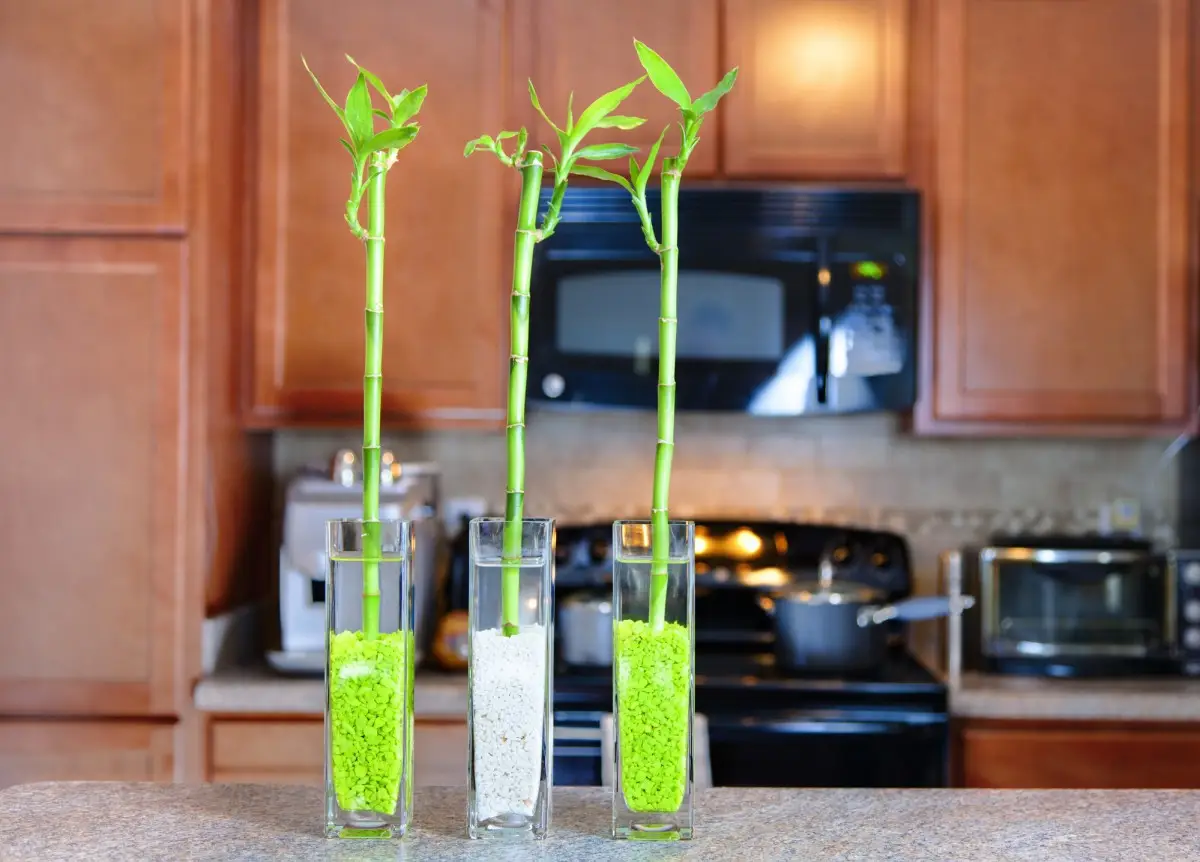
If you choose to grow it in soil, pick a pot with good drainage and keep the soil lightly moist without overwatering. If you prefer to keep it in water, which is very common, pay attention to these tips:
- Change the water every two or three days to help prevent bacteria growth.
- Use filtered or rested water, without chlorine.
- Clean the container regularly.
- Place small stones at the bottom for support and decoration.
If the leaves turn yellow or the stems become soft, it may be a sign of too much light or a dirty container. At that point, it is worth checking the setup closely and adjusting the conditions.
Read also: Ikebana - The Japanese art of floral arrangements
How to plant, shape, and multiply your lucky bamboo
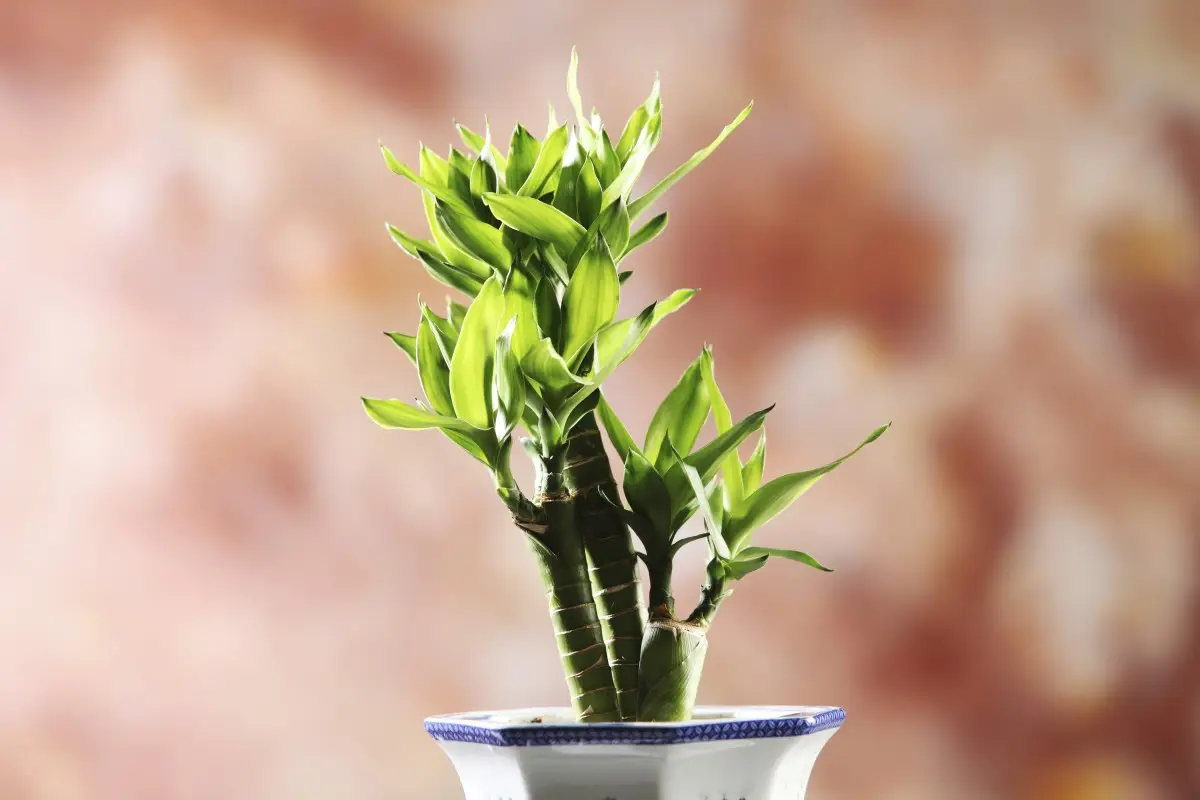
Want to take it a step further and plant or propagate your own lucky bamboo? Great choice. Propagation is simple and rewarding. Just cut a healthy piece of the stalk about 5 to 8 cm long, with at least one visible node, place it in clean water, and wait for roots to appear.
Once the roots appear, you can leave the sprout in water or transfer it to a pot with light substrate. With proper care, each stalk can produce new shoots, and there is something especially meaningful about gifting friends plants you have grown yourself.
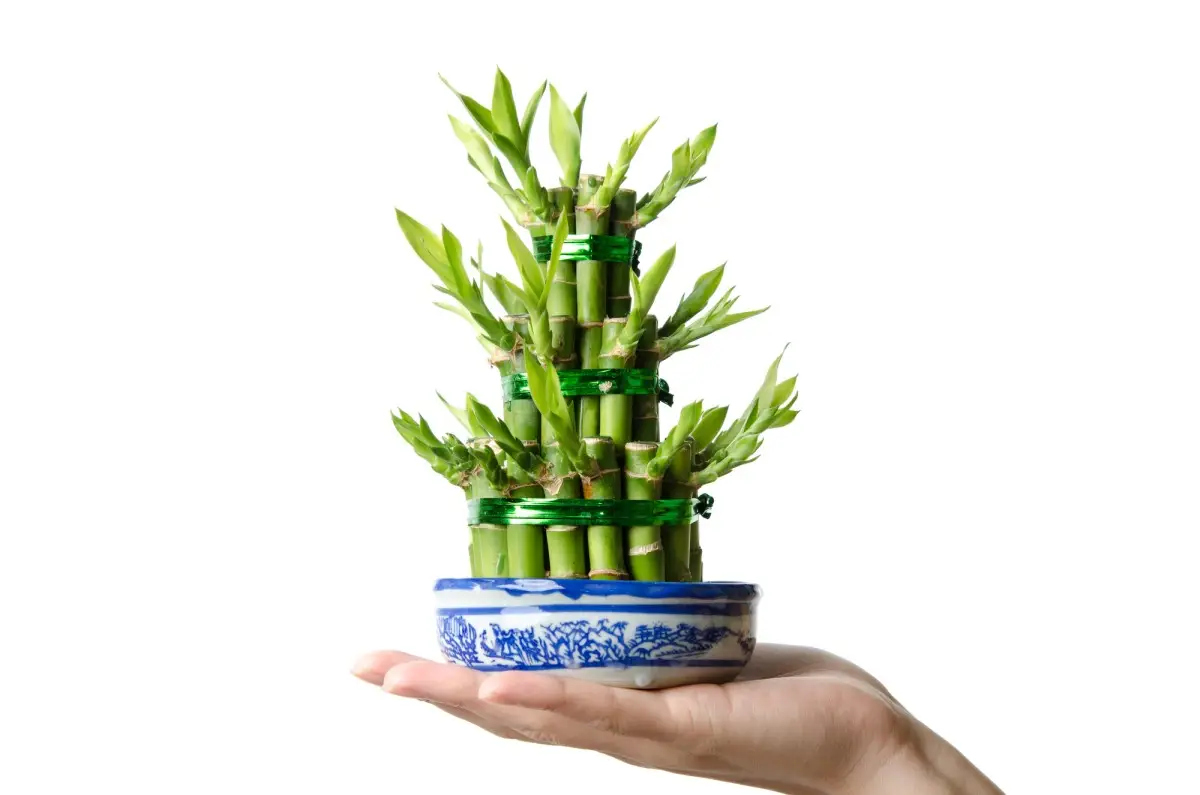
You may also have seen lucky bamboo shaped into spirals, hearts, towers, or braided forms. These shapes are created slowly, with patience and technique, usually with the help of ribbons and light guidance. If you want to try it, take your time: the secret is to guide the stems gently as they grow, always respecting their pace and structure.
Where to buy lucky bamboo today?
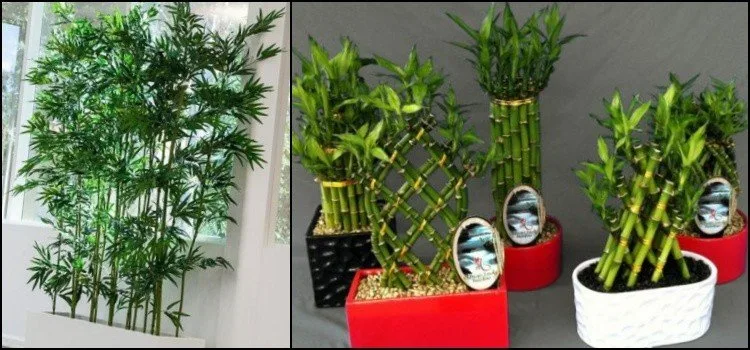
In addition to beauty and symbolism, lucky bamboo also stands out as a versatile decorative element. It fits well in modern, minimalist, or classic settings, and can even be used in aquariums as long as it is not completely submerged.
Want to know where to find it? Today, it is easy to buy the plant in florists, supermarkets, garden stores, and even online marketplaces. Prices vary widely, but it is usually not more expensive than other houseplants.
If you are thinking about putting together a personalized arrangement, it is worth buying the stalks separately and assembling your own pot, choosing the ideal number and meanings you want to bring into your home.





Community
Comments
0 comments
There are no published comments in this language yet.
Send comment