
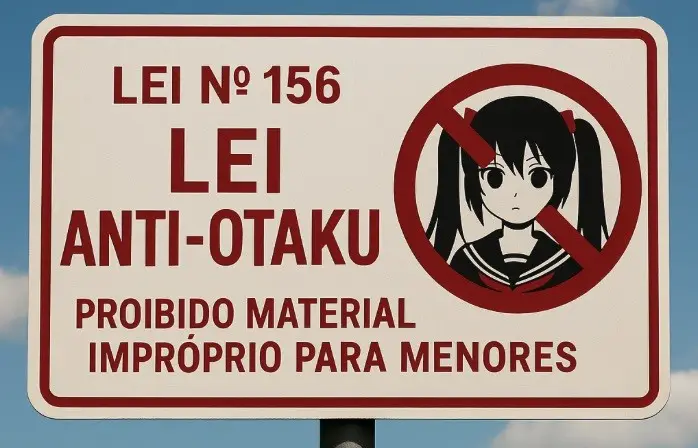
If you follow bolder anime and manga, you have probably heard the nickname Anti-Otaku Law. Officially, people were talking about Bill 156 — a 2010 revision of Tokyo’s youth ordinance that lit up forums, publisher statements, and late-night arguments about censorship.
The nickname stuck harder than the legal text. Outside Japan, the story often sounded like a nationwide ban on otaku culture. Inside the industry, the real fight was narrower, messier, and still worth understanding years later: what Tokyo actually restricted, what it never controlled, and why shelves felt different from the internet.
Contents 6
First the “nonexistent youth” scare, then Bill 156
Tokyo already had a long-standing ordinance on the healthy development of youths (from 1964), used to limit how “harmful” publications reach people under 18. The storm of 2010 was about expanding that toolkit, not inventing youth regulation from scratch.
Early in 2010, a draft aimed at sexualized depictions of fictional characters who appeared under 18 — the infamous idea of hijitsuzai seishōnen (“nonexistent youth”) — drew fierce opposition from creators, publishers, writers’ groups, and lawyers. That version was rejected by the Tokyo Metropolitan Assembly in June 2010.
A revised package, widely remembered as Bill 156, came back in November and passed in December 2010 under Governor Shintarō Ishihara’s administration. Full sales-related effects took hold on 1 July 2011. Self-regulation expectations for the industry started earlier that spring. The popular label “anti-otaku law” never appeared as an official national statute; it is fan and press shorthand for this Tokyo revision and the panic around it.
What the law actually targeted
Bill 156 did not outlaw manga or anime across Japan. It amended Tokyo’s rules for designating materials as harmful to youth and tightened how extreme sexual content could be sold or rented to minors in the capital.
In broad terms, the revision focused on manga, anime, and other images (not real-life photography) that unjustifiably glorify or exaggerate sexual or pseudo-sexual acts that would be illegal in real life, or sexual acts between close relatives who could not legally marry. Designated works could be treated as adult-restricted stock: separate shelves, age checks, and limited mainstream placement.
- Tokyo jurisdiction only — not a national criminal ban on drawing or watching series at home.
- Youth access and retail handling — the pressure lands on how stores and publishers treat “unhealthy” titles in Tokyo.
- Room for artistic judgment — assembly language and later practice left space for case-by-case review rather than a simple keyword blacklist.
That is why lawyers and industry groups fought over vagueness as hard as over morality. “Unjustifiably glorify” is not a checkbox; it is a standard that invites debate every time a title edges into extreme territory.
Why fans heard “anti-otaku”
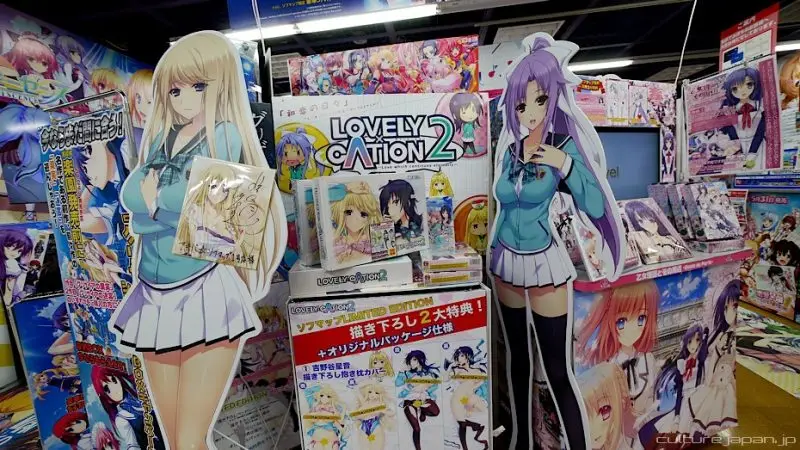
Otaku media thrives on fantasy, taboo-adjacent romance, and visual excess. When Tokyo’s government and Governor Ishihara framed the problem as protecting minors from extreme sexualized fiction, many readers heard an attack on the hobby itself — especially after the earlier “nonexistent youth” wording had already primed the community for the worst case.
Major publishers protested. Industry groups warned about chilling effects on expression. Several publishers even boycotted or pulled back from the Tokyo International Anime Fair around that period as a political signal. For fans abroad reading second-hand translations of headlines, the nuance of “age-restricted retail in one prefecture” often collapsed into “Japan is banning anime.”

Titles that felt the heat
Enforcement was never a midnight purge of every shelf in Japan. It showed up as designation risk, reprint decisions, and quieter self-censorship. Early lists of titles discussed for restriction included extreme sexual content and incest themes. Creators and editors paid attention even when a series was not formally banned nationwide.
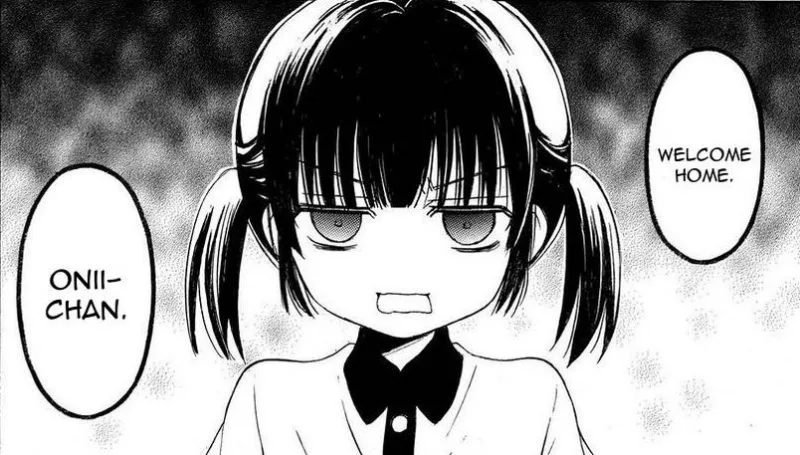
- Aki Sora — sibling romance and explicit school-set material; the author announced that certain volumes would not be reprinted after the July 2011 timing.
- Imouto Paradise 2 — later cited as an official “unhealthy” designation in Tokyo under the revised framework for glorifying incestuous acts (reported around 2014).
- Other extreme or borderline titles faced 18+ labeling, limited Tokyo retail paths, or digital-first survival when paper reprints looked risky.
Works with controversial family romance did not all vanish the same way. Some stayed in circulation with different packaging, routes, or markets; others became cautionary examples in editorial meetings. The pattern that mattered was less “one council banned every incest plot” and more “Tokyo retail risk changed how publishers calculated reprints.”
Physical Tokyo versus the internet
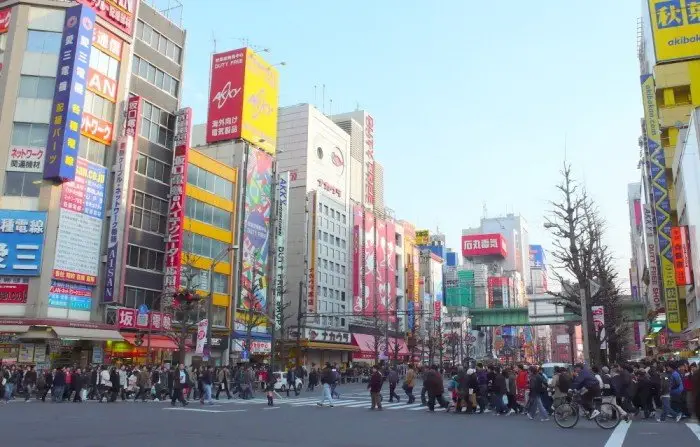
Here is the gap that confuses international fans the most. The ordinance’s practical bite was aimed at physical publications and rental in Tokyo’s regulated channels. Digital sales and overseas streaming live under different pressures: platform rules, payment processors, local laws abroad, and publisher self-rating — not a single Tokyo clerk stamping every download.
That is why a title can feel “dead” on certain Japanese paper shelves and still circulate online, in another prefecture’s specialty store, or through international platforms. It is also why the law can remain on the books while everyday binge-watching outside Japan barely notices a retail rule written for metropolitan bookstores.
What it means for otakus now
For most fans outside Japan, almost nothing about daily watching changed. Streams, imports, and digital catalogs still carry a huge range of mature series. For creators and editors publishing into Tokyo’s physical market, Bill 156 is still part of the background noise: a reason to rate carefully, avoid careless glorification of illegal acts, and think twice before greenlighting the most extreme concepts for unrestricted youth-adjacent shelves.
So what “happened” to the anti-otaku law? It was never a magic ban button. It was a Tokyo ordinance revision that passed, took effect in 2011, produced real designation cases, scared the industry into self-regulation, and then settled into a quieter existence — still relevant for Japanese retail and still misremembered abroad as something larger than it is.
If you want the cultural side of the label that sat in the middle of this fight, read more about what otaku culture means today and how media still portray otaku life in anime.




Community
Comments
0 comments
There are no published comments in this language yet.
Send comment