
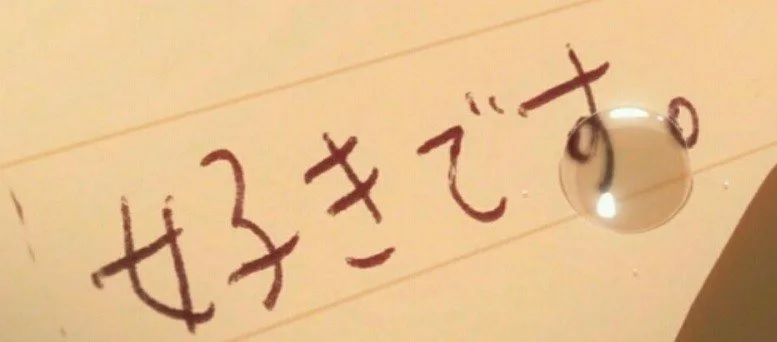
"Suki Desu" sits in the name of this site for a reason — the phrase looks simple on the surface and turns out surprisingly layered in real life. The first time many people hear 好きです, they map it straight onto "I like you." In everyday speech, anime, and genuine confessions, the same words change temperature depending on who is speaking and what they mean.
In plain terms, 好き (suki) covers liking, loving, or being fond of something; です (desu) is the polite copula that rounds off the sentence — closer to a firm "is" or a polite ending than a full English verb on its own. The real nuance lives in context: a hobby, a meal, a movie — or a kokuhaku where a heartbeat is suddenly on the line.
Contents 3
What does Suki mean?
好き can mean to love, to like, or to enjoy, and depending on the moment it may also signal desire, passion, affection, or attraction. The kanji 好 carries ideas of "fond of," "pleasant," and "to take a liking to" — more "held as good" than a pure love verb.

What surprises many learners is that 好き is not a verb but a na-adjective. How can "liking" be an adjective? A useful reading is "desirable" or "liked" — the person or thing is something you are fond of. There is a verb 好く (suku) with a similar meaning, but everyday Japanese clearly prefers 好き.
Because 好き works like an adjective, sentences often need です (or the casual だ) to finish the statement politely or clearly. Common shapes:
- 好きだ – suki da – I like (it/you) [casual]
- 好きじゃない – suki janai – I don't like
- 好きだった – suki datta – I liked
- 好きじゃなかった – suki janakatta – I didn't like
As a na-adjective, 好き also takes な when it modifies a noun — a hobby, a favorite thing, and so on:
- スキーは私の大好きなスポーツです。
- Sukī wa watashi no daisuki na supōtsu desu.
- Skiing is my favorite sport.
With 好きな + a time word, you also get the idea of "whenever you want":
- いつでも好きな時に会いに来てください。
- Itsu demo suki na toki ni ai ni kite kudasai.
- Come see me whenever you want.
Adding 大 (dai, "big") raises the intensity: 大好きです (daisuki desu) lands closer to "I really like (you)" or "I love (it) a lot" — again depending on whether you mean ramen, a band, or a person.

Where do you use Suki Desu?
好きです works for people, animals, food, movies, anime, series, and almost any object of affection. The sentence often stays lean: noun + が/は + 好きです. Instead of stacking extra verbs like "to play," "to do," or "to practice," Japanese frequently just names the thing plus 好きです when the context is clear.
It becomes romantic when someone says 好きです or 大好きです as a confession. In relationships and in anime, that pair shows up far more often than 愛してる (aishiteru) or 恋してる (koishiteru). A word-for-word "I like you" can sound weaker in English than the Japanese situation often intends — especially after a real kokuhaku.
A few everyday examples:
- 太陽が大好きです。
Taiyō ga daisuki desu.
I really like the sun. / I adore the sun.
- 水泳は好きですか?
Suiei wa suki desu ka?
Do you like swimming?
- 旅行が好きです。
Ryokō ga suki desu.
I like to travel.
- ゲーム大好きです。
Gēmu daisuki desu.
I really love video games.
If you want the grammar piece behind the polite ending, there is a full walkthrough of what です and だ mean in Japanese — useful once 好き starts showing up in every other sentence you build.
Suki, Daisuki, and Aishiteru — the thin line
Anyone hunting for ways to say "I love you" in Japanese quickly meets three levels that English often flattens into one word:
- 好きです — the all-rounder: like, be fond of, and in the right moment a quiet love confession without fireworks.
- 大好きです — stronger; "I like you a lot" up to "I love you so much," for people and for things.
- 愛してる — heavy, earnest, rare in daily life; in many situations it sounds too dramatic or "movie-like."
In Japan, couples often show affection through gestures more than grand phrases. That is why 好きです is culturally the realistic line for confessions and relationships — not because the feeling is weaker, but because the language saves the heaviest words. Expand the map with ai, koi, and suki as ways to talk about love, and the pattern becomes clear: context beats the dictionary.
Short version: 好きです is neither only "like" nor always "love." It is the flexible formula for preferences — and, when the look and the moment line up, the sentence Japanese speakers use most often to put real feelings into words.






Community
Comments
0 comments
There are no published comments in this language yet.
Send comment