
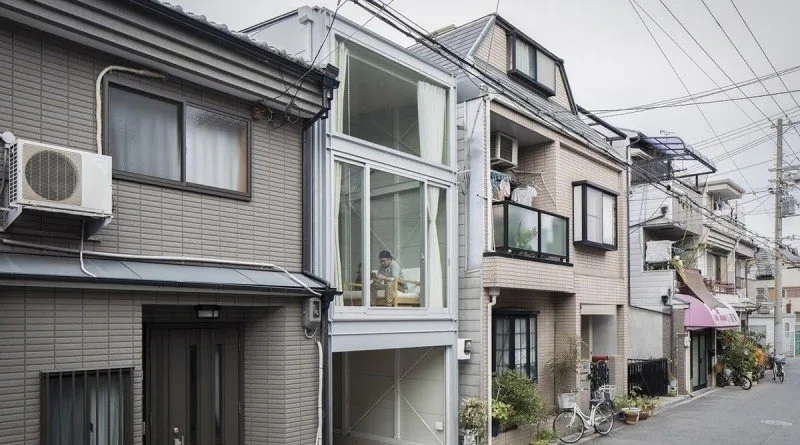
Japan is one of the few countries that lets foreigners buy real estate without citizenship or residency. That openness draws investors, long-term residents, and people who simply want a base tied to the places they love here. The surprise is rarely the law. It is the paperwork, the language, the extra fees, and how hard a local mortgage can be if you do not already live and work in Japan.
Owning a unit in Tokyo or a house in the countryside is legally possible for many nationalities. Closing safely is another story. Below is a practical path through how foreigners can buy real estate in Japan: what is allowed, what the process looks like, which costs usually show up, and where people get stuck.
Contents 8
Can foreigners buy real estate in Japan?
Yes. Unlike markets that limit freehold ownership by nationality, Japan generally allows foreigners to buy apartments, detached houses, and land and register the title in their own name. You do not need Japanese citizenship, and you do not need a residence visa only to complete a purchase.
There is a hard limit on expectations: owning property does not grant residency, permanent residency, or citizenship. Immigration is a separate track. If you plan to live in the home, you still need a valid status of residence such as work, spouse, or another long-term category — see our overview of Japanese visa types.
Special rules can apply to agricultural land, forest land, or areas near certain defense and critical facilities, where notification or extra review may be required. For ordinary residential purchases, the main barriers are practical: identity documents, bank wires, contracts in Japanese, and financing.
Property types: mansion, house, land
Listings and contracts often use Japanese categories. Knowing them early saves time:
- Apartment / condominium (マンション, manshon) — you own a unit plus shared interest in common areas. Expect monthly management fees and a repair reserve fund.
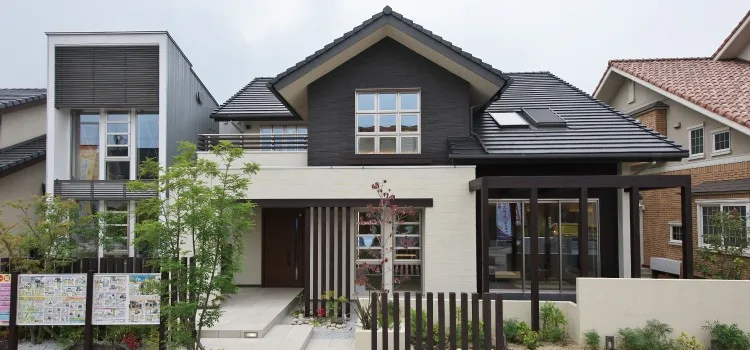
- Detached house (一戸建て, ikkodate / ikkenya) — building plus, usually, the land. More space and control; resale depends heavily on location and building age.
- Land (土地, tochi) — build later or hold land separately. Zoning and building coverage rules matter before you plan a custom house.
- Commercial or whole buildings — for investment or business use; underwriting and management get more complex.
Land and buildings are registered as separate rights in Japan. Many buyers hold freehold (所有権, shoyūken); leasehold land (借地権, shakuchiken) exists and needs careful reading of the term and renewal rules. Buildings often depreciate with age in the resale market, while well-located land tends to hold value better — useful context when you compare a new condo in central Tokyo with a cheap older house inland.
If you are still deciding what “normal” housing looks like, start with how Japanese houses and apartments are sized and the broader picture of renting versus buying in Japan.
Budget, prices, and financing
Prices swing by city, station access, building age, and whether you want new or used stock. Rough illustration only — always check current listings:
- Compact apartments in central Tokyo: often tens of millions of yen (commonly discussed ranges around ¥40,000,000–¥80,000,000+ for smaller units).
- Houses in residential metro neighborhoods: frequently ¥50,000,000–¥150,000,000 depending on land and size.
- Regional and rural stock: can start far lower, including very cheap older homes that need renovation.
Cash purchases are common among non-residents. Japanese bank mortgages for foreigners are possible but selective. Permanent residency, stable local employment, and income history in Japan improve odds. Without permanent residency, some lenders still consider applications, usually with stricter residency history, higher down payments, and stronger income proof. Non-residents buying from overseas often finance from their home country or pay cash. Plan funding before you fall in love with a specific listing.
Documents, agent, and judicial scrivener
Most deals run through a licensed real estate agent (不動産, fudōsan). For foreign buyers, bilingual support and experience with non-resident paperwork matter as much as the listing price. Agencies and portals that regularly serve international clients include names such as Plaza Homes, Real Estate Japan, and Sotheby’s International Realty Japan — verify current service areas yourself.
Identity paperwork differs slightly by status:
- Residents in Japan — residence card, certificate of residence, registered seal (印鑑, hanko) and seal registration certificate when using a seal, plus standard ID.
- Non-residents — passport and usually a notarized signature certificate / affidavit instead of a Japanese seal registration, prepared with a notary or embassy process as your agent and scrivener instruct.
A judicial scrivener (司法書士, shihōshoshi) typically handles title transfer registration at the Legal Affairs Bureau (法務局). They are the professional who turns a signed contract into a recorded ownership change.
Step by step: from offer to registration
- Define use and area — live-in home, second house, or rental investment. Tokyo, Osaka, and Kyoto behave differently from regional markets in liquidity and running costs.
- Shortlist with an agent — check age, earthquake standards, flood maps, condo minutes, management fees, and any liens or restrictions on the registry extract.
- Submit a purchase offer — often a written expression of intent; price and conditions are negotiated here.
- Receive the Explanation of Important Matters (重要事項説明, jūyō jikō setsumei) — a licensed agent must explain legal and property specifics before you sign. Ask for a careful bilingual walkthrough; only the Japanese text has legal force.
- Sign the sales contract and pay the deposit — earnest money (手付金, tetsukekin) is commonly about 5% to 10% of the price. Read refund and default clauses before you wire funds.
- Settlement and registration — pay the balance, settle prorated fixed asset tax and condo fees where applicable, and complete registration through the judicial scrivener. You receive confirmation of the ownership transfer (modern practice issues registration identification information rather than only a paper “deed” in the Western sense).
Non-residents may also face foreign-exchange reporting after certain acquisitions. Your agent, bank, or scrivener should flag whether a report to the authorities is required for your case.
Closing costs and ongoing taxes
Budget roughly 6% to 10% of the purchase price for one-time acquisition costs (sometimes more if you add inspections, translations, or complex remote handling). Typical items include:
- Agent commission — commonly about 3% of the price + ¥60,000, plus consumption tax, under standard brokerage fee rules for many residential deals.
- Stamp duty on the contract — amount depends on the contract price.
- Registration and license tax — rates depend on land vs building and any temporary reduced rates in force; ask for a written estimate using assessed values.
- Judicial scrivener fees — often on the order of tens to low hundreds of thousands of yen depending on complexity.
- Real estate acquisition tax — billed later (often months after purchase), commonly discussed around reduced residential rates of about 3% of assessed value when reductions apply.
After you own the property, expect annual fixed asset tax of about 1.4% of the municipal assessed value, plus city planning tax up to about 0.3% in designated urban areas. Condos also charge monthly management and repair reserve fees. Optional fire or earthquake-related insurance is usually arranged around closing.
Foreign buyers generally pay the same purchase and ownership taxes as Japanese buyers on ordinary residential property. There is no special “foreigner surcharge” built into the standard national rules — but your home-country tax reporting may still apply to worldwide assets and rental income.
Practical tips before you sign
- Check earthquake standards — post-1981 building code reforms (often called the new seismic standards) are a common screening line; for wooden houses, later strengthening rules also matter. Confirm certification rather than guessing from photos.
- Read the building’s long-term repair plan if you buy a condo — large common works can trigger special assessments.
- Prefer clear title and registered agents — avoid informal middlemen who cannot explain the Important Matters document.
- Visit when you can — photos hide noise, slopes, station walks, and neighborhood character.
- Price rural bargains honestly — cheap older homes can need heavy renovation; land rights and vacancy risk are part of the real cost.
- Separate lifestyle from immigration — the house does not fix visa status.
Is buying property in Japan worth it for foreigners?
It can be, when the goal is clear: a place to live with the right visa, a long-horizon second home, or income property with realistic yields and management in place. It is a poor shortcut if the real goal is residency. Japan’s legal door for ownership is comparatively open; the work sits in financing, language, due diligence, and cash-flow planning after the keys change hands.
With a bilingual agent, a judicial scrivener you trust, and a budget that includes closing costs — not only the sticker price — foreigners can complete a purchase and hold title on the same legal footing as local buyers for ordinary residential real estate.



Community
Comments
0 comments
There are no published comments in this language yet.
Send comment