
Fact or Fake? That line shows up every week on social media, and Japan has been collecting the worst of it for decades. One viral clip, one old documentary, one friend who “heard that,” and the whole country turns into a cartoon: raw fish only, thirteen-hour days, tiny boxes, no trees, no freedom.
I have spent months in Japan and still get those lines. Some of them carry a grain of truth. Most of them flatten 47 prefectures into a single rumor. This is a pass through the generalizations that refuse to die — starting with the plate.
Contents 21
Lies and truths about food in Japan
A lot of the noise about Japan starts at the table. Food is supposedly unaffordable. Japanese people supposedly eat only raw fish. A few people even swear they eat dogs. None of that describes an ordinary week of meals.
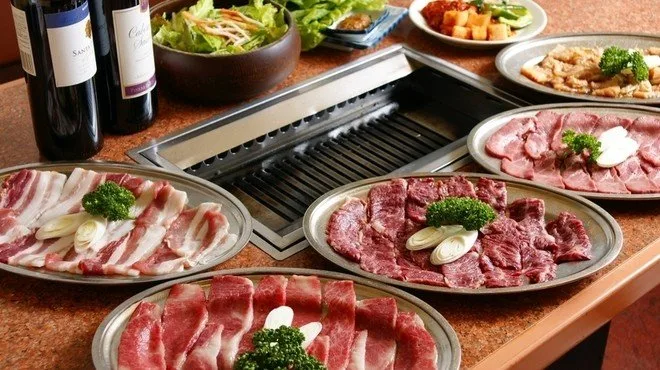
Japanese cooking is not a sushi bar with extra steps. It runs from teishoku set meals and bowls of ramen to yakiniku, curry rice, yakitori, udon, and convenience-store bento. Chains such as McDonald's exist, and so do cheap gyudon counters. Foreigners who live there often gain weight because food is everywhere and portions sneak up on you — which is why people keep asking how Japanese people stay slim.
Is it true that food in Japan is expensive?
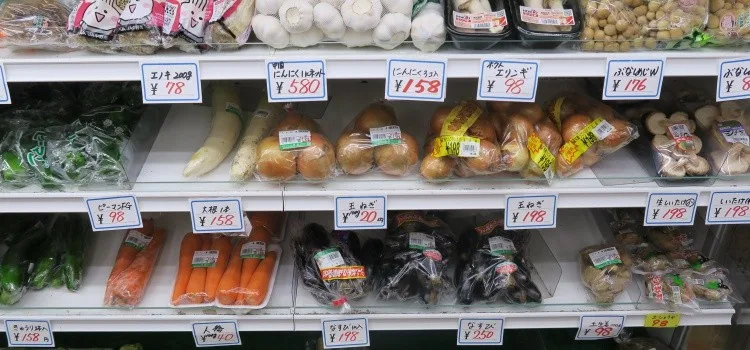
The expensive-Japan story is leftover from the 1980s and 1990s, when the yen made every bowl look like a luxury. Gift-grade muskmelons and boxed fruit can still cost a small fortune. That is presentation fruit, not Tuesday night dinner.
A lunch set, a bowl of ramen, or a konbini meal can be cheaper than the same habit in London, New York, or São Paulo. Imported chocolate and some snacks often surprise people on the low side. Fresh fruit and vegetables can run higher than in countries that grow them next door — but wages are also higher. The national weighted average minimum wage sits around ¥1,121 an hour, with Tokyo higher than that.
Japan is not “cheap.” It is also not the country where a normal meal empties your wallet. You spend a lot if you chase wagyu and hotel breakfasts. You spend much less if you eat the way most people actually eat. For numbers on rent and groceries, see the cost of living in Japan and what the minimum wage looks like.
Is it true that Japanese people only eat sushi or raw fish?
A friend once told me she would never go to Japan because they only eat raw fish there. That sentence is why this article exists.
Japan is an archipelago, so fish and seafood stay important. Consumption is still higher than in most Western countries, even after years of decline. It is not a raw-fish monopoly. Meat is ordinary: yakiniku, karaage, tonkatsu, hamburg steak, pork, chicken, gyudon. In many households, meat shows up as often as fish.
Sushi is one dish among hundreds. People treat it more like a night out than a daily plate — closer to pizza than to breakfast rice. During two trips that added up to three months, I ate sushi twice on each stay. The rest of the time it was noodles, grilled meat, soups, convenience-store rice balls, and whatever the station basement was selling. Yakitori is a better picture of a normal evening than a sushi counter.
If you want the flavor vocabulary behind that range, there is a separate piece on taste words in Japanese, including umami.
Do Japanese people eat insects and dogs?
This rumor usually comes from mixing East Asian countries into one kitchen. Dog meat is not Japanese everyday food, and you will not find it on a normal izakaya menu.
Insects do appear in a few regional dishes — locusts (inago) or bee larvae (hachinoko) in mountain areas — the way some places elsewhere eat frog or rabbit. Most people have never tried them. The strangest thing I actually ran into was horse sashimi, and even that is a specialty, not a national habit.
Lies and truths about Japanese people
All Japanese people are thin and short. Japan has short people and tall people. It also has a rising obesity problem, even if the average body is slimmer than in much of the West. The “tiny and delicate” postcard is a leftover from old photos and anime faces.
Are all Japanese people extremely well-behaved? No. Plenty of people skip rules, hate studying, or would rather stay home. Schools deal with bullying. Offices have slackers. There are opportunists and people who will take advantage of you if you let them.
Is every Japanese person addicted to manga and anime? That is one of the laziest generalizations in the pile. Some adults still watch. Plenty of teenagers do not. It is the same logic as assuming every Brazilian lives for Carnival, or every American lives for football.
Are all Japanese people shy? Many keep a clear line between when to laugh and when to stay formal. First impressions can feel reserved. Give it time and people loosen up. Some never had any shame to begin with.
Is it true that Japanese people only work?
The story says everyone in Japan works 13 hours a day. Some people do, especially in certain offices and among foreigners hired through contractors. The legal standard workday is still in the same family as other rich countries: about eight hours, plus overtime that is common and culturally loaded.
Japan has a real overtime problem, and words like karoshi exist for a reason. It also has part-time jobs, people who refuse extra hours, and people who barely work at all. Hourly pay is the norm in a lot of jobs. Prefectural minimum wages now sit roughly between ¥1,023 and ¥1,226. Overtime often pays a premium, which is one reason some people stay late — money, not a national death wish.
You are not required to live at your desk. Dispatch work can lean harder on overtime. Native office culture can too. That is not the same as “Japanese people never stop.” There is a longer look at that rumor in Do Japanese people really work that much?
Is it true that Japanese people kill themselves because Japan is a terrible country?
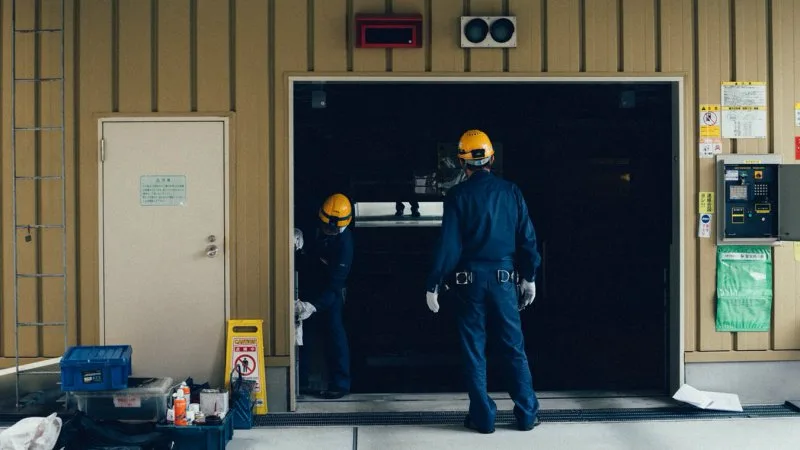
Suicide in Japan is a serious subject, and treating it as a travel punchline is ugly. The country had a brutal peak around 2003, when yearly deaths stayed above 30,000 from the late 1990s through 2011. That history is real. The cartoon version — “Japan is so bad that everyone jumps” — is not.
Preliminary figures for 2025 put the total at 19,097 deaths, or 15.4 per 100,000 people, the lowest rate on record. Japan is not the world leader, and it has not been for a long time. Health problems, depression, money trouble, and school pressure show up in the official motives far more often than “the country itself.” Youth numbers remain a wound, especially after the pandemic years.
Japanese social pressure can be heavy: exams, company loyalty, the feeling of having failed the group. That is a cultural layer, not proof that daily life is unlivable. If you want the longer arc of how the rate fell, there is a separate piece on Japan cutting its suicide numbers.

Is it true that Japanese people have no freedom of expression?
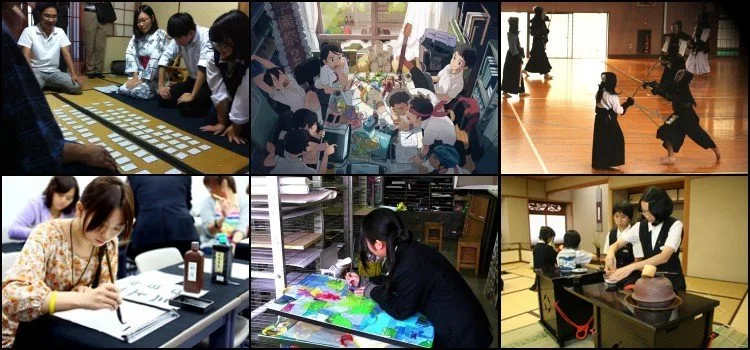
Walk through Harajuku or a weekend in Shibuya and the “no freedom” claim starts to look strange. People dress in ways that would draw comments in a lot of Western cities. Taste is not policed the same way. A man can like cute things without the same locker-room tax. A woman can wear street fashion that would get her labeled in some neighborhoods back home.
Japanese TV and anime can be gentler than a lot of late-night Western programming, and they can also go to odd places. That mix is not the same as a muzzle. What you will not hear as much on the street is the constant sexual slang that some cultures treat as normal conversation. Freedom here often looks like room to be specific, not room to be loud.
Is it true that Japanese people are perverted?
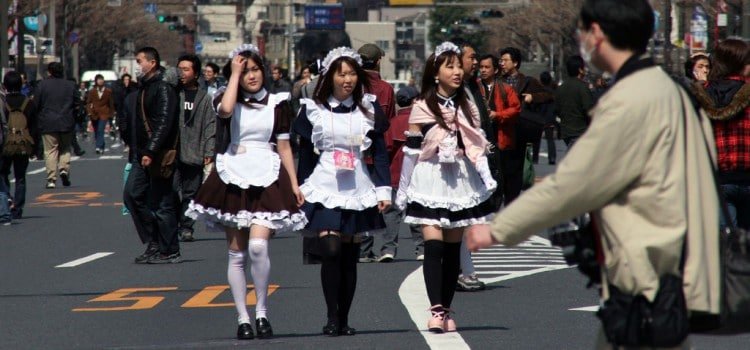
The label usually comes from porn, late-night TV, maid cafés, and words like lolicon that people throw around without knowing what they mean. There is a whole industry of strange adult products. There are also collectors of things most of us would rather not think about. Every country has a shadow. Calling Japan “the most perverted country on Earth” is just another generalization with better merchandising.
If you want the vocabulary behind one of those internet words, read what lolita, loli, and lolicon actually mean. Then walk down an ordinary residential street at 8 p.m. You will not hear the soundtrack of a nightclub. People who want that world go looking for it. It does not pour out of every speaker.
Is it true that Japanese people do not like sex?
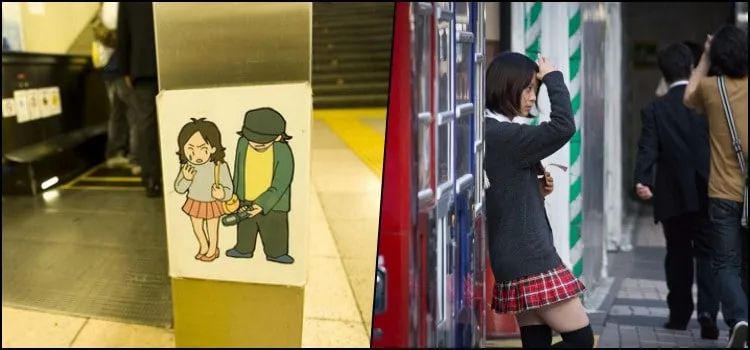
The same people who call Japan perverted will quote a TV report about couples who have sex once a week and sleep in separate rooms. Both things can exist in one country. Work hours, small apartments, and tired marriages explain more than a national lack of desire.
Do not treat a documentary about exhausted couples as a dating warning. People are people. Some of the survey headlines are real; they describe a slice of adult life, not a biological fact about the Japanese. There is more on that contradiction in Have Japanese people lost interest in sex?
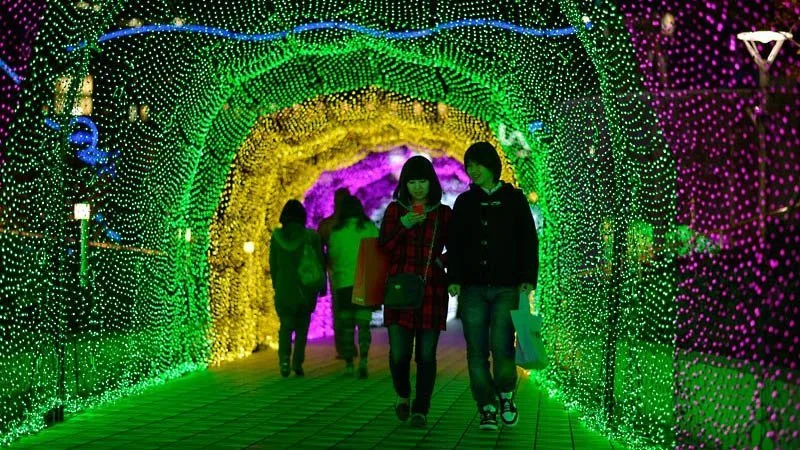
Is it true that Japanese people are racist or prejudiced?
Plenty of foreigners arrive expecting a wall. I have felt more friction at home for liking Japanese culture than I have felt on the street in Japan. That is my experience, not a national certificate of innocence.
Japanese manners can read as cold. Sometimes it is shyness, or panic about not speaking English well enough to help. Sometimes it is real distance, especially among older people who never wanted the country to feel less Japanese. Prejudice exists. So does the habit of blaming 123 million people for one bad encounter.

School ijime hits Japanese kids and foreign kids. A bad person is a bad person in any language. Japan is not a racial paradise, and it is also not a country that exists to hate visitors. Asians in some Western cities still get a kind of casual mockery that would shock people who only talk about Japanese “closedness.” For the school side, see ijime in Japanese schools. For the parts that are genuinely ugly, there is the dark side of Japan.
Lies for tourists and travelers
Japan is just Tokyo. Tokyo is one prefecture. The country has 47, thousands of cities, and thousands of islands. Kyoto, Kanazawa, Fukuoka, the Japan Alps, and a fishing town in Hokkaido do not behave like Shibuya Crossing.
Anyone who goes to Japan comes home rich. Wages can look high on paper. Rent, food, and the temptation to live like a local eat most of that difference. People who save a pile of money usually do it by stacking overtime and cutting a social life, not by landing in Narita.
I will not go to Japan because of earthquakes and tsunamis
Earthquakes are frequent. Most of them are small enough that you feel a sway and go back to your drink. Building codes, drills, and alerts are part of ordinary life. The disaster people remember is March 2011: roughly 20,000 dead or missing after the Tōhoku earthquake and tsunami. That was a once-in-a-generation catastrophe, not a weekly event.
Japan is not “safe from nature.” It is unusually prepared for nature. Day to day, you are far more likely to have a quiet train ride than to meet a tsunami. Skipping the country because the ground moves is like skipping an entire continent because of one famous storm.
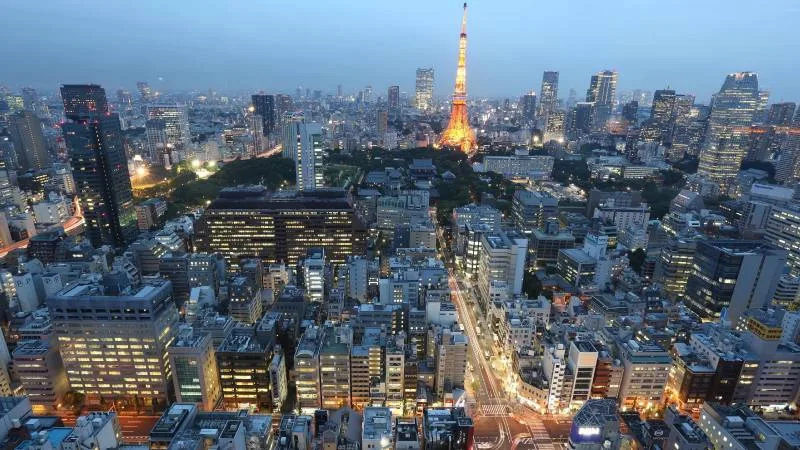
Do Japanese people not like foreigners?
Some older people dislike how Western the cities have become. Some younger people collect English slang and European brands. Most people are busy. Quiet is not hatred.
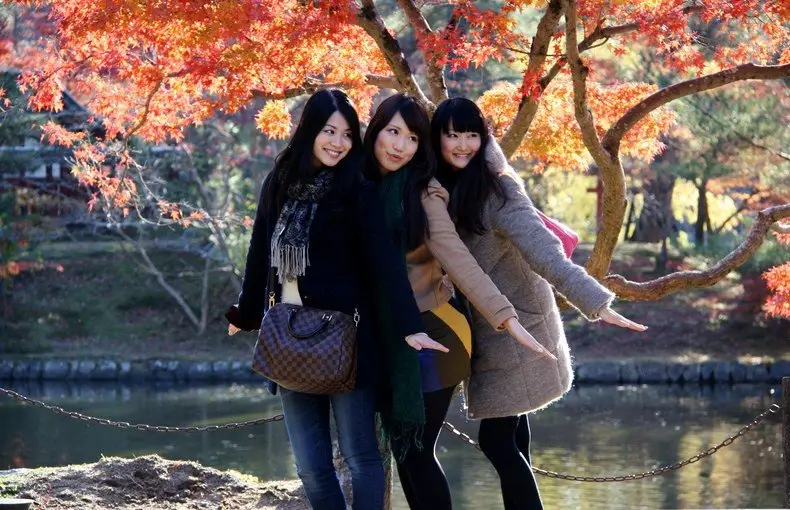
If you make even a small effort — a greeting, a bit of Japanese, basic manners — a lot of doors open. I have struck up conversations with strangers in Tokyo without speaking the language well. That does not cancel every cold stare on a rural train. It does make the “they hate foreigners” line look lazy.
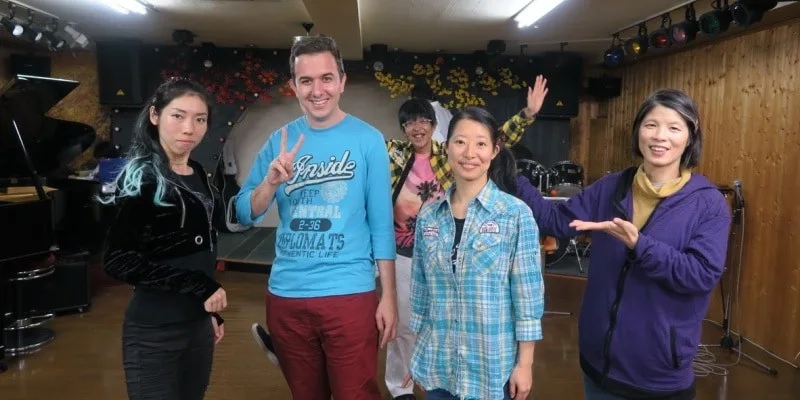
Fear of being locked up as an innocent tourist
Japan’s conviction rate after indictment is extremely high, and police can hold a suspect for a long stretch while they question them. That is a real legal debate. It is not a reason to cancel a vacation because you might be scooped off the sidewalk at random.
Tourists who stay out of obvious trouble — drugs, fights, theft — are not living in a trap. Before someone is charged, investigators usually believe they have a case. If the prison system itself is what you want to understand, start with keimusho, Japan’s prisons.
Lies and truths about the country itself
Is Japan nothing but robots and gadgets? If you arrive hunting androids on every corner, you will be disappointed. Robots show up at expos, a few hotels, and the occasional restaurant gimmick. Daily life still runs on cash in small shops, paper forms, and fax machines that refuse to die. The interesting Japan is often an old street next to a new station, not a science-fiction set.
There is no poverty in Japan. There is. It is less visible than a hillside favela, and a lot of people live close to the edge of their paycheck with better public order around them. Homelessness exists. So do neighborhoods that the tourist maps skip.
Japanese TV is only nonsense? The clips that travel abroad are the loud game shows and the odd segments. The rest of the schedule is dramas, news, food programs, sports, and a lot of ordinary variety. You do not need shock value in every time slot to fill a night of television.
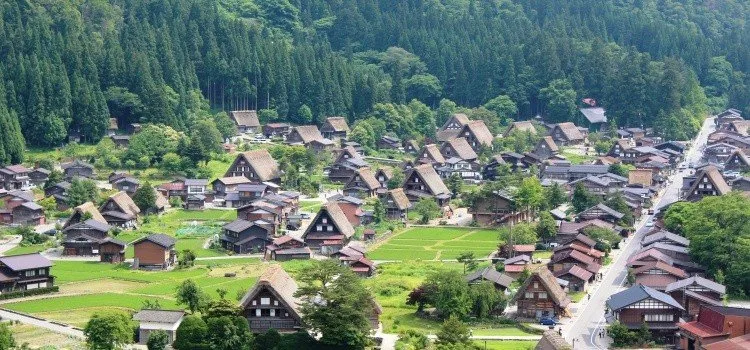
A country with no space, only buildings, and no greenery
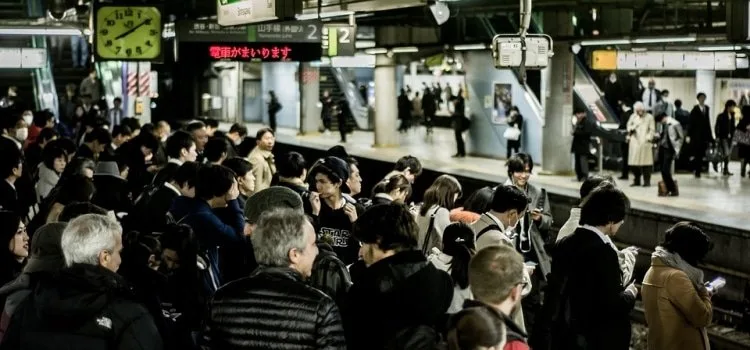
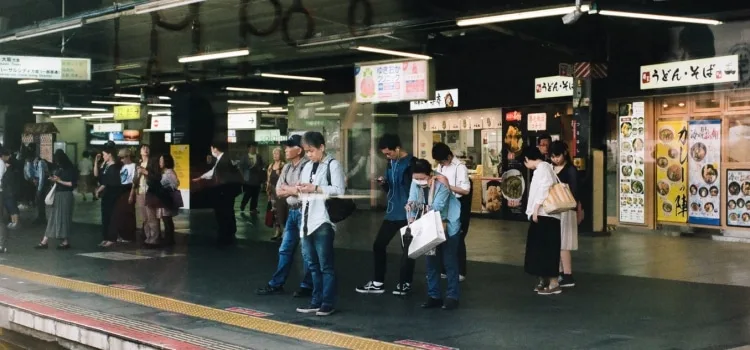
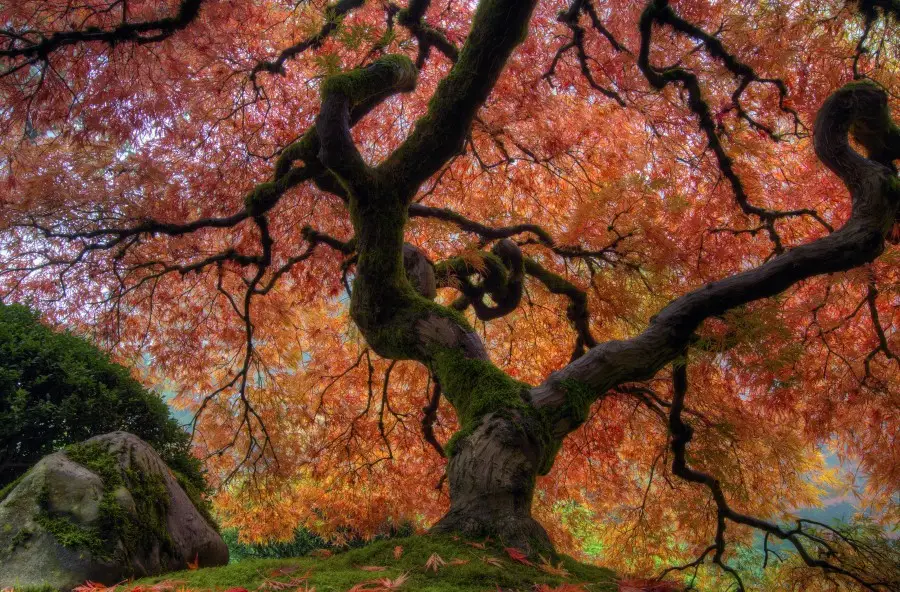
Tokyo photographs like a wall of towers. Leave the Yamanote loop, or take a train for an hour, and the picture changes: rice fields, cedar, rivers, and towns that feel more rural than a lot of “countryside” in bigger countries. About two-thirds of Japan is mountains and forest. The crowded postcard is a few corridors, not the map.
Apartments are often smaller than what North Americans or Brazilians grew up with. They are also usually clean, climate-controlled, and planned around how people actually live. A typical home still separates the toilet from the bath and has an ofuro. Cherry trees, planted streets, and neighborhood parks punch above the square footage. Comfort is a habit, not a floor plan copied from a suburban house.

Does Japan face overcrowding?
Shibuya Crossing and a rush-hour Yamanote car are real. So are empty shopping streets in the prefectures and villages that pay people to move in. Japan has about 123 million residents and falling. The country is not “half of Brazil stuffed into one state.” It is a long, mountainous archipelago with a few dense metro areas and a lot of shrinking towns.
Young people still pile into Tokyo, Osaka, and Nagoya. Greater Tokyo is the largest metro on Earth and still has side streets where you hear birds. The national problem is closer to empty houses (akiya) than to a lack of sidewalk. If you want the opposite of the postcard, read about Kamagasaki, Japan’s best-known day-labor district.
Is Japan closed off and hostile to the West?
Older generations can be conservative. Some of that reads as prejudice. Younger Japan grew up on American movies, European football, and English pop. Convenience stores sell Italian pasta next to onigiri. The country that supposedly “rejects the West” has been remixing it since the Meiji era.
Closed would mean no foreign food, no foreign music, no foreign students, no inbound tourism. That is not the Japan you land in. It is a country that keeps a strong sense of its own rules while wearing other cultures on the same street.
Japanese and Chinese are the same language
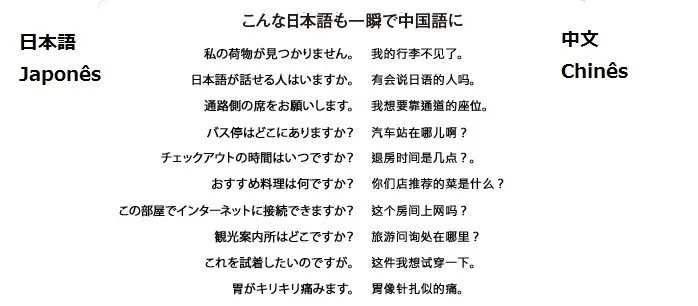
They are not. Japanese uses Chinese characters (kanji) alongside two kana syllabaries. Chinese writing is a different system, and the spoken languages are not mutually intelligible. Jokes about “flango” pastry belong to a Brazilian stereotype about Chinese speakers. Japanese does not even have a native “L”; the usual rendering would come out closer to pasuteru de furango.
If the faces still blur together, there is a practical guide to telling Japanese, Chinese, and Korean apart without turning it into a joke.
The rumor is usually bigger than the country
There are more generalizations where these came from. The ones above are the ones that keep landing in comment sections and family group chats. If another cluster of rumors starts to harden, it deserves its own page — not a sequel promised for the sake of a sequel.
Japan is not a paradise, and it is not the dystopia people build out of three videos. The useful habit is the same in any direction: look at the specific thing in front of you before you turn a whole country into a punchline.


Community
Comments
0 comments
There are no published comments in this language yet.
Send comment