

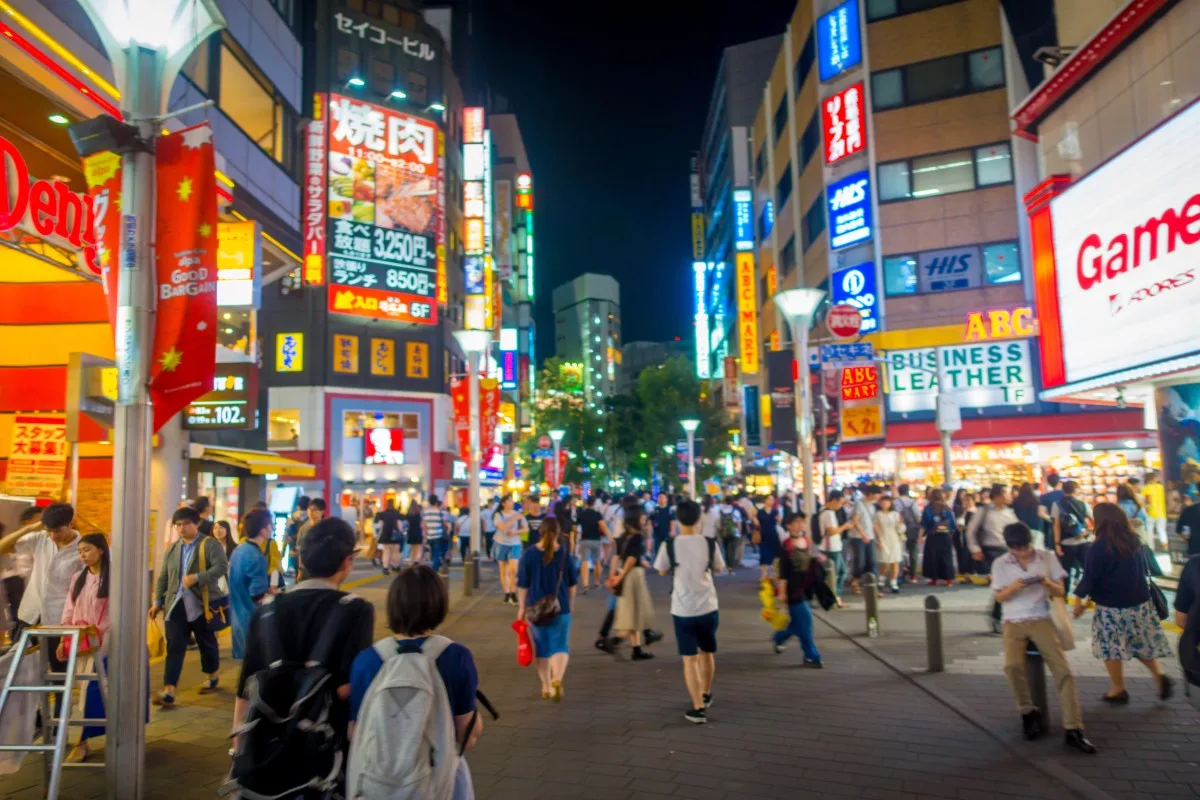
Being thin is treated as part of the beauty standard in Japan, but the picture is more complicated than the cliché suggests. Spend a few days in central Tokyo, Osaka, or Fukuoka and you will see office workers grabbing onigiri at 7-11 at 8 a.m., long-distance commuters walking to the train, and a growing number of bakery and donut chains that look very similar to those in North America or Europe. The image of Japan as a country of small, delicate portions is real for many people, but it is not the whole story. The idea that there is a single Japanese "secret" to weight loss is a Western simplification of a much more ordinary reality: a set of dietary traditions, daily habits, and cultural practices that are associated, on average, with lower obesity rates in Japan — but that do not amount to a magic formula.
According to the World Health Organization, Japan has one of the lowest adult obesity rates among OECD countries, and the country's average life expectancy at birth is among the highest in the world. Both numbers are remarkable, and they have many contributing factors: a diet built around vegetables, fish, rice, and broths; an eating culture that emphasizes small portions and slow eating; a daily life that still involves a great deal of walking and cycling; and a long-standing, though fading, breakfast ritual. This article looks at which of these habits and techniques are still discussed in research, which originated in Japan (such as Hara Hachi Bunme or the Fukutsuji method), and where sweeping claims should be treated with caution. This article is for informational purposes only and is not a substitute for medical or nutritional advice. For questions about weight management, please consult a doctor or registered dietitian.
Contents 13
Body image and beauty standards in Japan
Slenderness is visible in Japanese fashion magazines, idol marketing, and a good deal of public discourse, but the country also has a more complicated relationship with body image than the foreign cliché suggests. Eating disorders are a recognized problem in Japan, where a long-standing concept, sometimes translated as "social eating disorder" (shakai-teki yosoku), describes the pressure some young people feel to eat in ways that match what others expect. OECD data also shows that adult overweight and obesity rates in Japan, while still low by global standards, have been rising over the past two decades, particularly among middle-aged men.
It is worth keeping that in mind when reading any article about Japanese weight loss techniques. The country has a real statistical advantage on average, but it also has its own body-image issues. No single national diet or exercise routine produced that result, and the techniques described below work, where they work, because of broader eating and lifestyle patterns — not because they are uniquely Japanese.
The Japanese diet in everyday life
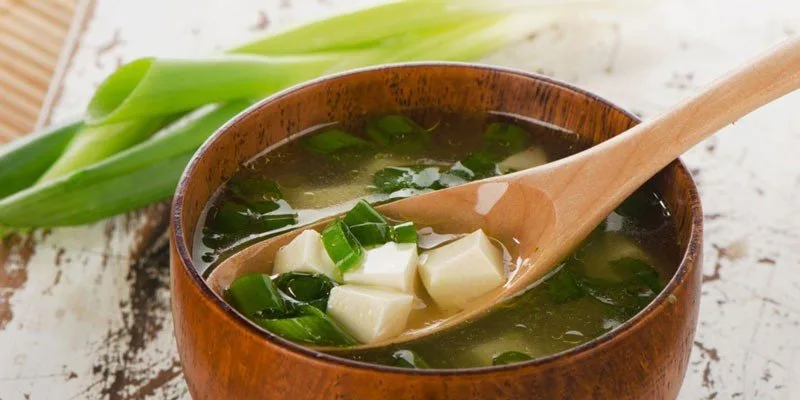
The traditional Japanese diet, sometimes referred to as washoku and recognized by UNESCO as an intangible cultural heritage in 2013, is built around a few simple building blocks: rice as the base, miso soup (a fermented soybean broth often served daily), a protein such as fish, tofu, or eggs, and several vegetable side dishes. The meal usually ends with fruit or a small dessert, and the portions are noticeably smaller than what is common in many Western countries.
A traditional breakfast, called asagohan (morning meal), is one of the clearest illustrations of this pattern. Instead of toast, cereal, and juice, the morning plate often features a bowl of rice, miso soup, a small piece of grilled fish, a bit of tamagoyaki (rolled omelet) or natto (fermented soybeans), and a few pickled or steamed vegetables. The same logic travels through lunch and dinner: rice in the center, several small dishes around it, a clear soup, and tea rather than a sweetened soft drink.
Cooking methods are also distinctive. Vegetables and fish are often steamed, simmered, or briefly grilled rather than deep-fried. Seasoning tends to rely on dashi (a stock made from dried bonito flakes and kelp), soy sauce, mirin, and miso, rather than on large amounts of butter, cream, or sugar. Salt and sodium intake is still relatively high by WHO recommendations, but the overall cooking style is light, and the use of oil is modest.
Hara Hachi Bunme: the eighty percent rule
One of the most-cited Japanese eating practices is the Okinawan proverb Hara hachi bunme, usually translated as "eat until you are 80 percent full." The idea is simple: stop before the stomach feels completely full, wait 20 to 30 minutes, and only then decide whether more food is actually needed. The brain takes time to register satiety, and the pause is meant to let that signal arrive.
Okinawa, the southern Japanese island chain where the saying originated, has long been studied for its high proportion of centenarians, though a 2018 study from the University of Tokyo also warned that obesity and metabolic disease in younger Okinawan generations have been rising. Researchers generally describe the 80 percent rule as a habit associated with lower average calorie intake and better metabolic markers, not as a clinical recommendation. There is no single dose of "right" food, and the same approach can easily be done in any cuisine.
Smaller portions and slower eating
Portion size is one of the most consistent differences between a traditional Japanese meal and a typical Western one. Rice is served in a small bowl, soup in a small cup, fish or tofu in a small piece, and vegetables in a few bite-sized portions. The Japanese Food Pyramid, issued by the Ministry of Health, Labour and Welfare, reflects that balance: grains at the base, vegetables and fruit above, then fish, meat, eggs, and dairy, and finally sweets and snacks at the top in small amounts.
Eating is also slower. Chopsticks make it harder to take huge bites, and the rhythm of a Japanese meal — a bit of rice, a spoonful of soup, a piece of fish, a few vegetables — naturally stretches out the time at the table. If you want a place to start, swap the single large plate for the Japanese pattern: a bowl of rice, a clear soup, and two or three small side dishes. The total volume of food is often smaller than you would expect, and that is part of the point.
Breathing, movement, and daily life
Alongside diet, a number of breathing and movement techniques are widely circulated in Japanese popular media. One of them, sometimes called the "long breathing diet" and associated with the actor Miki Ryosuke (also written Ryosuke Miki), involves two minutes a day of slow, deliberate breathing: inhaling for around 3 seconds and exhaling for 7 seconds, tensing the abdominal and gluteal muscles. He has said the practice started as a way to ease back pain.
There is no strong clinical evidence that this specific breathing routine causes weight loss. Slow, deep breathing can help with stress and posture, and stronger engagement of the core muscles can support the lower back. If a routine like this helps you move better, sleep better, and eat more calmly, those are real benefits. It is not, by itself, a path to a slimmer waist.

The Fukutsuji towel method
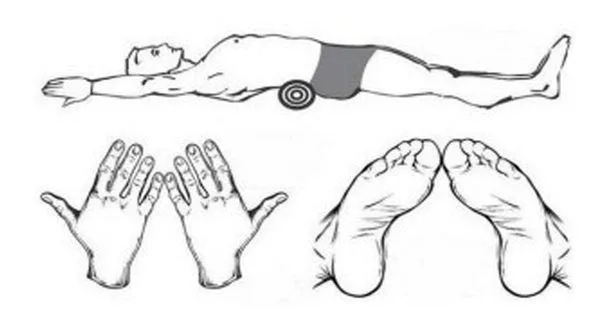
Another well-known technique is the Fukutsuji method, developed by the Japanese doctor Toshiki Fukutsuji. The exercise is simple: roll a bath towel into a long sausage shape, lie on your back on a hard, flat surface, place the towel at the level of the navel (where the lower back begins to curve), and rest in that position for about five minutes, with feet hip-width apart, toes pointing slightly inward, arms stretched above the head, and pinkies touching.
A small Japanese study, often cited in secondary literature as coming from a national health-sciences institution, suggested that this position can help align the pelvis and reduce the visible rounding of the lower back. It is not a weight-loss method in the strict sense. If you try it, the goal is posture and back comfort, not a number on the scale. You can read more about it in our dedicated article on the Japanese Fukutsuji method.
Walking as a mode of transport
One of the least glamorous but most consistent differences between Japan and many Western countries is how much people walk. Train commutes often end with a ten- to twenty-minute walk on either side. Errands, school runs, and shopping frequently happen on foot, and a 2017 review of the practice of shinrin-yoku (forest bathing) noted measurable reductions in stress and blood pressure after time spent walking in green spaces.
You do not need a forest or a Japanese rail pass to benefit. The relevant habit is incidental movement built into the day, not a dedicated gym session. Brisk walking of 30 to 60 minutes a day, on most days of the week, is the dose most often associated with measurable health benefits in adult populations, according to the American College of Sports Medicine.
Green tea and other beverages
Green tea is the default hot drink at Japanese meals and is usually served without sugar. A typical cup of sencha or gyokuro contains a small amount of caffeine and a category of antioxidants called catechins, which a 2011 review in the American Journal of Clinical Nutrition associated with modest improvements in body composition when combined with regular exercise. Those results are not dramatic, and green tea is not a substitute for dietary change.
The bigger beverage story is what is not on the table. Soft drinks and large sugary juices are not part of a traditional Japanese meal, and water or hot tea is. Most Japanese restaurants serve tap water or iced barley tea (mugicha) by default. If you are looking for one swap that is easy to copy, replacing a daily sugar-sweetened drink with water or unsweetened tea is a reasonable place to start.
Fish and seafood as a protein source
Japan is one of the largest consumers of fish per capita in the world; FAO data places annual seafood consumption at roughly 50 kilograms per person. Fish tends to be grilled, simmered, or eaten raw as sashimi, with a small amount of soy sauce or a slice of citrus. It replaces the larger portions of red and processed meat that are common in many Western diets, and it brings omega-3 fatty acids along with the protein.
If you want to bring that pattern into your own cooking, the move is to treat fish as the default protein a few times a week and red meat as an occasional option. This is a useful, realistic adjustment for many people, though anyone with specific dietary needs or allergies should adapt the principle to their own situation.
Sleep and stress management
Lifestyle factors outside the kitchen also matter. The Japanese Ministry of Health, Labour and Welfare has published data showing that sleep duration in Japan, especially on work nights, tends to fall short of the seven-to-eight-hour range often recommended for adults. Short and irregular sleep is associated in research with higher calorie intake, lower physical activity, and weight gain over time.
Slow breathing, short walks, time in green spaces, and warm baths are all common Japanese ways of decompressing. None of them is a weight-loss technique on its own, but they are part of the broader pattern that supports steadier eating and better sleep, which in turn makes it easier to maintain a healthy weight over months and years.
What the research supports, and what it does not
Pulled together, the habits that have the strongest research support are also the least exotic: a diet built around vegetables, fish, rice, and broths with small portions; slow, mindful eating; regular incidental walking; enough sleep; and limited sugar-sweetened drinks. The NIH body weight planner, for example, frames weight management in terms of energy balance over time — calories in versus calories out — rather than around any one cultural practice.
The more specific techniques — Hara Hachi Bunme, the Fukutsuji method, the long-breathing routine — are interesting cultural practices, and they may help with posture, stress, and eating pace. They are not, on the basis of current research, reliable ways to lose weight on their own. Treat them as small additions to a broader pattern, not as a stand-alone solution.
Practical guidance for daily life
If you want to borrow from the Japanese pattern, the simplest steps are usually the most sustainable. Eat rice, soup, and two or three small side dishes rather than one large plate. Add a serving of fish or tofu a few times a week. Drink water or unsweetened green tea, and reach for miso soup at breakfast (our miso soup guide explains the basics). Walk or cycle for part of your commute or errands. Slow down at the table, and pause before deciding whether you need a second helping.
None of this requires a trip to Japan, a special supplement, or a strict rule. And none of it replaces personalized advice: a doctor or registered dietitian can take your own health history into account, which no general article can do. If you have questions about weight management, please consult a professional.
Final observation
There is no Japanese secret to weight loss. There is, instead, a collection of small, repeated habits — smaller portions, slower eating, more walking, less sugar, more fish and vegetables, and reasonable sleep — that on average add up. None of them is uniquely Japanese, and most of them are easy to adapt to other kitchens and other routines.
The Western simplification of "the Japanese secret" is useful as a marketing hook, but it loses something important: the techniques work, where they work, because they fit into a daily life, not because they come from a particular country. If you borrow from them, borrow the principles, adapt them to your own situation, and check in with a medical professional if you have specific concerns about your health.




Community
Comments
0 comments
There are no published comments in this language yet.
Send comment