
Japan still has the reputation of being one of the countries with the highest suicide rates. Whenever good news about Japan is published on social media, some unfortunate person comments that "in Japan people commit suicide" or that "in Japan people work themselves to death." Outraged by this misinformation and widespread news, I decided to write this article.
The reputation comes from a real crisis. The latest year is a different picture. In 2003 the statistics compiled by the Ministry of Health, Labour and Welfare from National Police Agency records reached 34,427 deaths, a rate of 27.0 per 100,000 people. The confirmed figure for 2025 is 19,188 deaths, a rate of 15.6. That is the lowest annual total since this series began in 1978, and the first time it has gone under 20,000. From the 2003 peak, the number of deaths is down by about 44 percent. The comments usually talk as if that peak were still the present.
Contents 6
Why does Japan have a reputation for suicide?
Before the rankings, it helps to separate two counts. One is the rate, deaths per 100,000 people. The other is the raw total. A small country can have a frightening rate and a modest total. A large country can dominate a raw list even when its rate is less extreme.
Japan is no longer among the ten most populous countries. About 123 million people live in the archipelago, down from roughly 128 million around the end of the 2000s, and about two-thirds of the land is forest, so most of those people are concentrated in cities. The size of Japanese houses is a separate question from these deaths.

A rate of 15.6 means about 16 deaths in every 100,000 people over a year. Of course, it is a high and unfortunate number, but out of those 16 people, we have about 99,984 people living in Japan normally. That smaller figure cannot be stretched into a portrait of the whole country. Japan is a rich country, and news from a rich country travels, which is why this rate gets repeated more often than higher rates in places with less media attention.
How have people in Japan understood suicide?
There is a history here, and it gets flattened into a personality. Samurai stories include seppuku, a ritual death tied to defeat, capture and honor. Christian teaching in much of the West treated suicide as a sin. Those two traditions still get pasted onto modern statistics, as if a man who loses a job in Tokyo today were following a warrior manual.
The police records do not describe the deaths that way. In the ministry's recent releases, health problems are the most commonly recorded factor, followed by livelihood and family problems, with work also on the list. One death can carry more than one recorded factor, so the categories overlap. Since the 2007 government principles, the public line has been that people are driven to it by circumstances that can be changed.
Suicide remains the leading cause of death in Japan from the ages of 10 to 39, in the 2024 vital statistics. From the early forties, cancer takes that place. Among people aged 15 to 29, the 2024 count was 3,125, the fifth straight year above 3,000. I believe the rate could be much lower if the Japanese were a little more sociable and valued life a bit more, instead of thinking that life is only work and money. The tables show the age pattern. That belief is my reading of them, beside the recorded factors of health, livelihood, family and work.
How did the numbers get so high?
The year to remember is 1998. The count went from 24,391 in 1997 to 32,863, a rise of about 35 percent, and the rate went from 19.3 to 26.0. Japan was in a banking crisis after the bubble economy. The annual total then stayed above 30,000 through 2011. The peak year was 2003, with 34,427 deaths and an overall rate of 27.0. The male rate that year was 40.0, and the female rate was 14.5. Talk of a national rate "over 30" or "around 35" is that male figure.
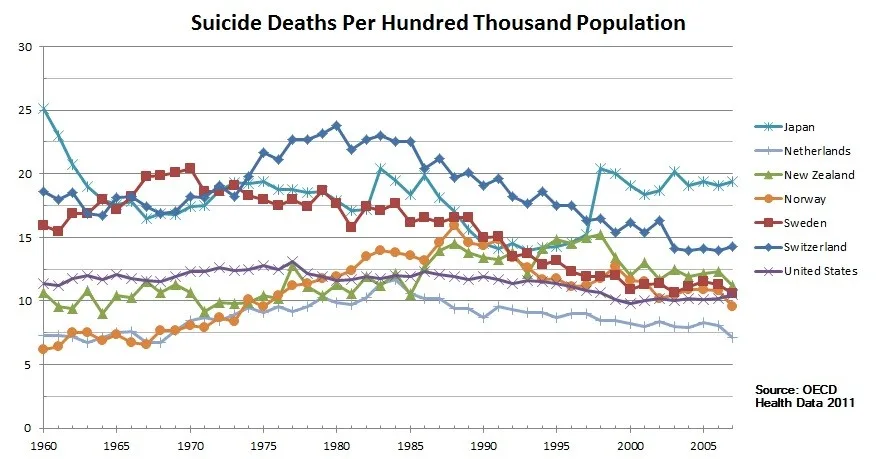
The chart above is older than the police series I am using for 2025. The label on it is OECD Health Data 2011, and the years run from about 1960 to about 2005. Japan's line is high in the early 1960s, lower through the 1980s and early 1990s, then climbs again at the end of that decade. Other rich countries on the same chart spend long stretches in a similar band. Japan was a hard case in those years. It has not been the country with the highest rate.
The war, the food shortages and the atomic bombings are part of the country's memory. Tsutomu Yamaguchi survived both Hiroshima and Nagasaki, and grief on that scale lasts longer than a news cycle. The jump in 1998 lines up with the banking crisis and with job and debt trouble among working-age men, which is the break the modern prevention policy was built to answer. Agencies in the United States have also spent years documenting suicide among veterans. War trauma is wider than Japan.
The same decades pushed hard on education and work, and Japan became one of the largest economies in the world. On nominal GDP it now ranks fourth, behind the United States, China and Germany. Overtime and job loss sit in the public memory next to that growth. They explain a part of the crisis. The counts still have to be read year by year.
What brought the numbers down?
In June 2006 parliament passed the Basic Act on Suicide Prevention, and it took effect that October. The law treats suicide as a social problem, because conditions such as work, debt and health sit behind it. In June 2007 the cabinet adopted the General Principles of Suicide Prevention as the government's guide. The target written there was to reduce the 2005 suicide rate by at least 20 percent by 2016. Unemployment, bankruptcy, multiple debts and long working hours were named among the conditions to work on.
The principles grouped the work into nine lines: research, public awareness, training people who might notice someone in trouble, community mental health, easier access to care, support in the local area, help after an attempt, support for the families left behind, and cooperation between public offices and private groups. In the fiscal 2009 supplementary budget, the Cabinet Office put 10 billion yen into a fund for prefectures to use over about three years. A white paper on suicide countermeasures is the report that follows that work.
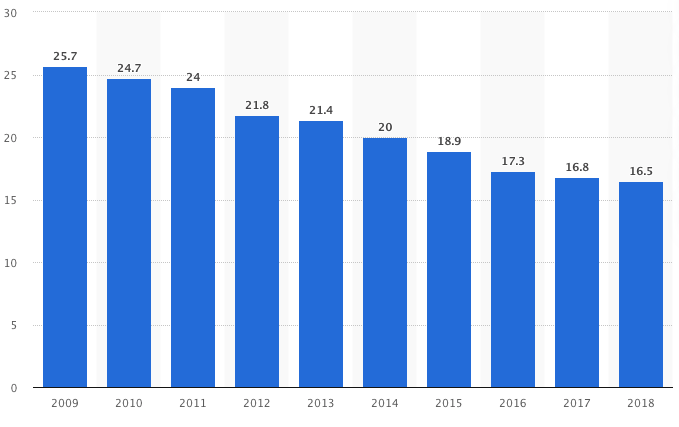
From 2009 through 2018 the national rate fell from 25.7 to 16.5 per 100,000, which is what those bars show. The annual count reached 20,169 in 2019. In 2020 the total rose again, and the straight decline stopped. The confirmed total for 2024 was 20,320, a rate of 16.4. For 2025 the confirmed total is 19,188, a rate of 15.6, down 1,132 from 2024. That was the third year in a row of decline, and the lowest total since 1978.
Men accounted for 13,176 of the 2025 deaths, a rate of 22.0. Women accounted for 6,012, a rate of 9.5. The largest age groups were people in their fifties, with 3,743 deaths, and people in their forties, with 2,968. The count fell in most age groups and rose among people under 20. Suicides of elementary, junior high and high school students reached 538: 10 in elementary school, 172 in junior high and 356 in high school. That was nine more than in 2024, and the highest number since those student records began in 1980. The improvement in the national total leaves the students out.

Working hours have been under a legal cap since the work-style reform. For large companies the cap started in April 2019, and for smaller companies in April 2020. In principle, overtime is limited to 45 hours a month and 360 hours a year. A labor-management agreement can raise that, inside hard ceilings: under 100 hours in any single month once holiday work is included, and 720 hours of overtime in a year. The idea that the Japanese die from overwork, which I still think is a bit exaggerated, has a grain of truth in offices that lean on unpaid extra time. It leaves out the ordinary week of most workers, and plenty of people are simply not in an office for most of the day.
There is still a long way to go, and another economic shock would test the decline. A country with less money can have a much lower rate. In the WHO estimates for 2021, the Philippines had a crude rate of about 3.5 per 100,000. That gap shows how wide the international range is. It says little about an ordinary day in Japan.
Where does Japan sit in the comparisons?
Rankings move, and two offices can publish different numbers for the same year, because one uses police records and another estimates an age-standardized rate. When I compared lists, the figures for a single year did not match. Declaring a world champion from a mixed list is a shaky business. The list below keeps the series and the year on every row.
WHO's estimates for 2021 put the age-standardized rate at 36.7 in Lesotho, 31.8 in Eswatini and 26.3 in Guyana. Those top estimates for smaller countries come with wide uncertainty ranges. Lesotho's 36.7, for example, sits inside a range of about 22.3 to 66.1, so the exact order among the highest countries is softer than the fact that they sit above Japan. Japan's age-standardized rate in that set was 14.7, and its crude rate was 17.4. In the same crude series, Belgium was at 18.4, the United States at 15.6, Brazil at 7.6 and the Philippines at 3.5.
| Place | Rate per 100,000 | Series and year |
|---|---|---|
| Lesotho | 36.7 | WHO, age-standardized, 2021 |
| Eswatini | 31.8 | WHO, age-standardized, 2021 |
| Guyana | 26.3 | WHO, age-standardized, 2021 |
| Japan | 14.7 | WHO, age-standardized, 2021 |
| Belgium | 18.4 | WHO, crude, 2021 |
| Japan | 17.4 | WHO, crude, 2021 |
| United States | 15.6 | WHO, crude, 2021 |
| Brazil | 7.6 | WHO, crude, 2021 |
| Philippines | 3.5 | WHO, crude, 2021 |
| Japan | 15.6 | National police rate, 2025 |
Age-standardized rates adjust for the age structure of the population, so a young country and an old country can be compared. Crude rates skip that adjustment. The 15.6 for the United States in 2021 and the 15.6 for Japan in 2025 are the same digits from different years and different methods, so they stay in separate rows.
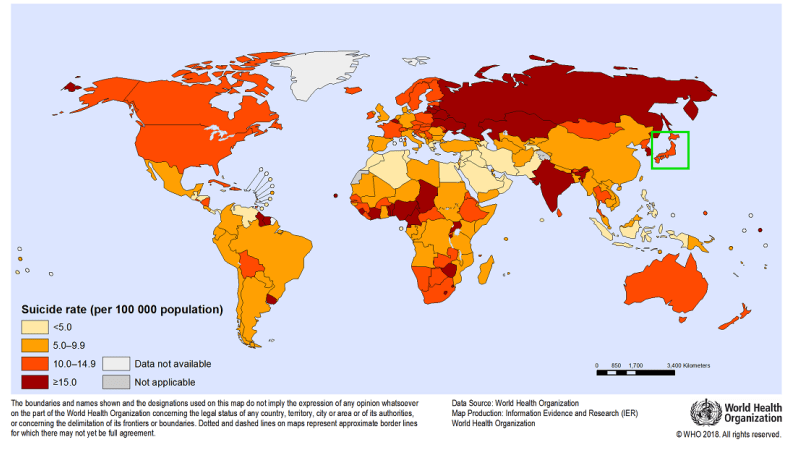
The map is a WHO graphic with a 2016 copyright line. Japan is outlined, and it falls in the band of 15 or more deaths per 100,000. That is a picture of the older dataset. The 2025 national rate of 15.6 would still sit in that same top band. The drop from 2003 is real, and Japan remains high among rich countries.
Are suicides in Brazil higher than in Japan?
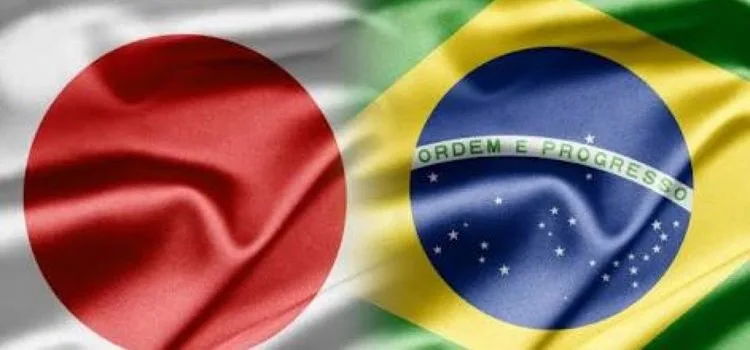
This is the comparison that pushed me to write. People love to cite suicide to tarnish Japan's image and say that the Japanese people are unhappy, and they often do it from Brazil, where I am used to a different set of headlines.
On the suicide rate, Japan is the higher of the two. In the WHO crude rates for 2021, Brazil was at 7.6 and Japan at 17.4. Japan's 2025 police rate of 15.6 is still well above that Brazilian estimate. Brazil's population is much larger, so a lower rate can still mean a large number of deaths. The rate is the comparison that answers the insult. On that comparison, Japan remains higher.
Brazil's grim international headlines are about violence, a different count from suicide. Homicide and suicide are different deaths, and both are serious. Thousands of Brazilians also live happily in the country and love it, with no plan to leave, even while violent crime is a real risk. The same courtesy runs in the other direction. A suicide rate is a reason for prevention policy. It is a bad reason to tell 123 million people that their lives are a stereotype.
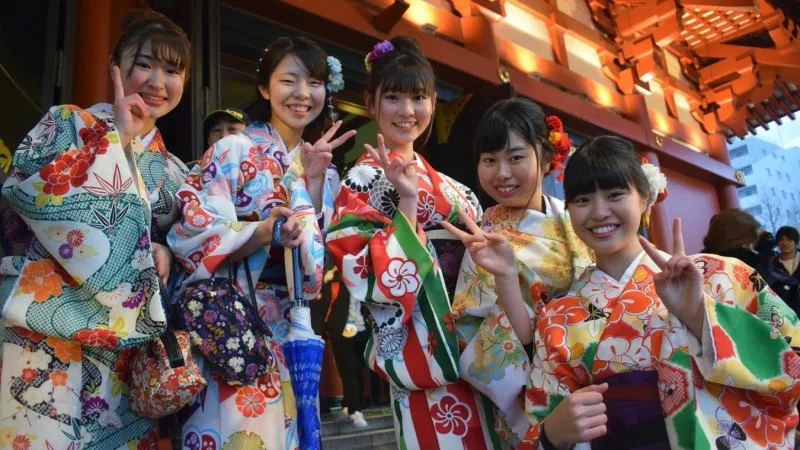
Just as no one likes it when we label Brazilians as criminals, there is no reason to label Japanese people as suicidal or unhappy. The label misses the majority, who are at school, at work, or out on a day off. Brazilians often talk about earthquakes and tsunamis as if those were the daily weather in Tokyo. People in Japan live with that risk by getting on with the day, the way people everywhere live beside their own dangers.
I hope this article has not been a bit biased or confusing. My only goal is to end the generalization that Japanese people commit suicide or that Japanese people are unhappy. If a figure here needs a correction, leave it in the comments. If you can, share this article with as many people as possible.



Community
Comments
0 comments
There are no published comments in this language yet.
Send comment