
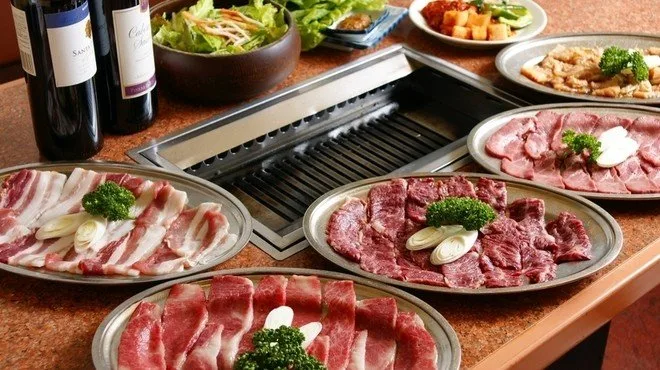
Brazil is the land of barbecue, but Japan has its own table-side version called yakiniku. Same fire and meat energy, different rhythm: thin slices, a grill in the middle of the table, and sauces waiting after the sizzle—not a skewer parade of thick cuts.
The word yakiniku points both to grilled meat and to the restaurants where you cook it yourself. Below is how that Japanese barbecue works, which cuts show up on the menu, and what the meal actually feels like once you sit down.
Breaking a myth — Many people assume meat in Japan is always out of reach. A good yakiniku night, especially all-you-can-eat, can still be a regular treat if you pick the right place and time.
Contents 6
The meaning of yakiniku
The word yakiniku [焼肉] literally means grilled meat: yaki [焼] for grilled or cooked on heat, and niku [肉] for meat. It also names the popular restaurants that put meat at the center of the table, whether over charcoal, gas, or an electric griddle.
Yaki is a broad idea. Frying on a hot plate can still count as yaki, the same root you hear in takoyaki.
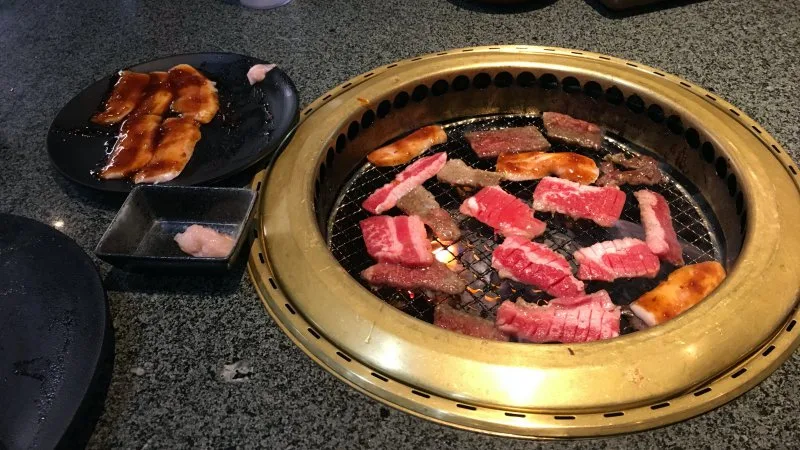
Outdoor-style barbecue can also be called barbecue [バーベキュー] in Japanese. Brazilian-style churrasco often shows up as shurasuko [シュラスコ].
In restaurant practice, yakiniku usually means bite-size pieces of meat grilled over charcoal, gas, or an electric grill—then dipped in sauce, salt, or lemon. It is not the same ritual as stacking thick steaks on a backyard rack.
What is Japanese barbecue like?
Japanese diners rarely gather outside to roast huge slabs the Brazilian way. They head to a yakiniku restaurant, order thin cuts, and cook them a few pieces at a time.
When meat goes on a skewer in Japan, it is often chicken or pork—think yakitori—rather than the giant beef skewers of a Brazilian churrascaria.
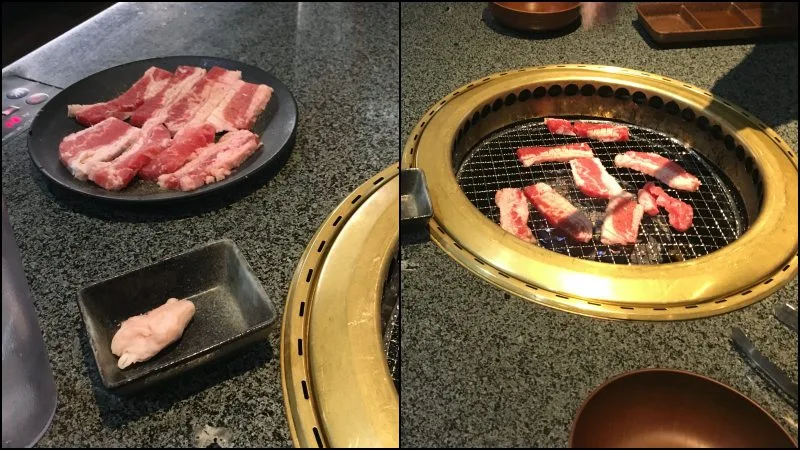
Many places serve meat rare-friendly and thin, so it cooks in minutes. You dip each piece in tare (soy-based sauce), ponzu-style citrus, sesame sauce, or a simple salt-and-lemon combo. That last step is half the fun.
Modern table yakiniku grew with Korean-influenced grilling in Japan—think of the family of dishes around bulgogi and galbi—and became a mainstream restaurant style in the postwar decades. Today the Japanese version often leans on unmarinated or lightly seasoned cuts so the beef itself stays the star, while Korean BBQ menus more often push bold marinades and banchan. Plenty of shops in Japan still blend both worlds on the same menu.
What is a yakiniku restaurant like?
There are two easy traps for first-timers. The classic format is table grilling: a built-in or portable grill in the middle, raw plates arriving, and everyone cooking together. Some places still put yakiniku in the name but serve plated beef and pork dishes with no grill at the table—I once walked into the wrong kind expecting all-you-can-eat.
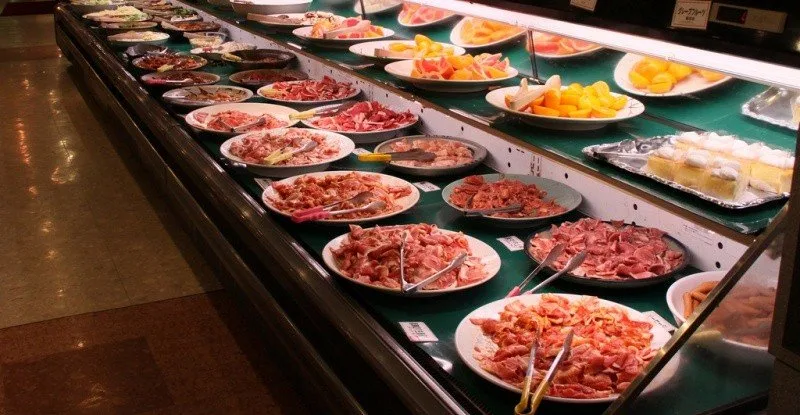
On all-you-can-eat (tabehodai) nights you may see beef, pork, chicken, seafood, vegetables, and sometimes extras like sushi, soba, udon, tempura, or even crepes and dessert. Soft-drink bars or drink packages are common; prices and time limits change by lunch, dinner, weekday, and weekend.
On trips I took, tabehodai around 1,000–1,500 yen for about two hours still existed in some cities if you hunted lunch deals—those figures age fast, so treat them as a personal snapshot, not a current price list. The value is the pace: thin meat cooks quickly, so one focused hour can fill you up.
Some shops make you pick plates from a fridge wall; others bring meat to the table. Premium cuts, wagyu upgrades, and specialty dishes may sit outside the base plan.
How to order and grill without stress
Most tables start with a course, a moriawase platter, or a timed tabehodai. Order a few cuts first—tongue, loin, short rib—then reorder once the grill has space. Staff light the fire; you handle tongs and timing.
A practical flow: start with lightly seasoned or salt-and-lemon cuts (beef tongue is a classic first plate), then move to richer karubi and marinated pieces so leftover sauce does not dominate the grate early. Flip once when the underside sizzles; crowding the mesh dries everything out. Root vegetables and thicker produce can go on first if the group wants something slow cooking while the meat arrives.
Sauces usually live on the table: house tare, sesame, raw egg for dipping at some shops, chili oil, garlic. Wrap a piece in lettuce or cabbage when the restaurant offers leaves. If the mesh gets sticky, ask staff to swap it—common mid-meal.
Types of meat at yakiniku
Menus jump between beef, pork, chicken, seafood, and offal. Premium nights may include wagyu or regional names such as Kobe beef—always check what the course actually covers.
Common labels you will see:
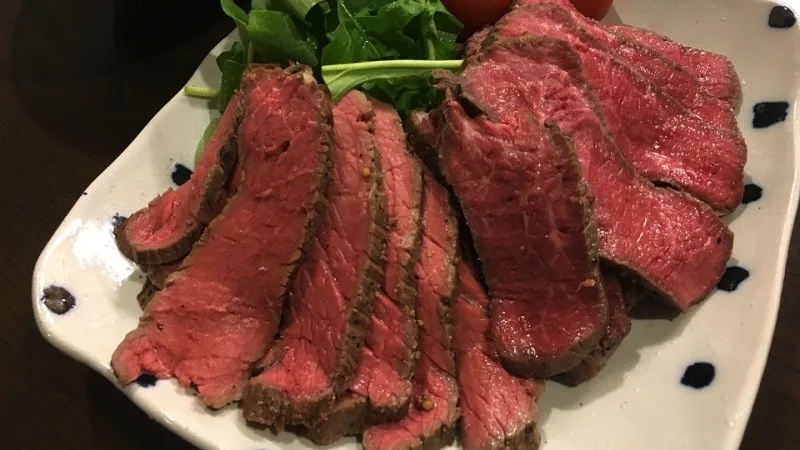
- Beef
- Rōsu – loin or chuck slices
- Karubi (or baraniku) – short rib, often boneless; from Korean galbi
- Harami – skirt / diaphragm area, bold flavor
- Tan – tongue, often with salt and lemon
- Misuji – tender shoulder cut
- Pork
- Butabara – pork belly
- P-toro / tontoro – fatty cheek and neck
- Horumon or motsu (offal)
- Rebā – liver
- Tetchan – intestine
- Hatsu – heart
- Kobukuro – pig uterus
- Tēru – oxtail slices
- Mino / hachinosu – tripe
- Gatsu – pig stomach
- Chicken
- Seafood – squid, shellfish, shrimp
Vegetables share the grill: bell pepper, carrot, mushrooms, onion, eggplant, cabbage, bean sprouts, garlic, kabocha. Every shop has house cuts beyond this list.
My experience at yakiniku
In Hamamatsu I once paid about 1,000 yen for two hours with dozens of meat options plus sushi, tempura, crepes, and ice cream. In under an hour I was done—cheap for the spread, and everything tasted sharp and fresh that day.
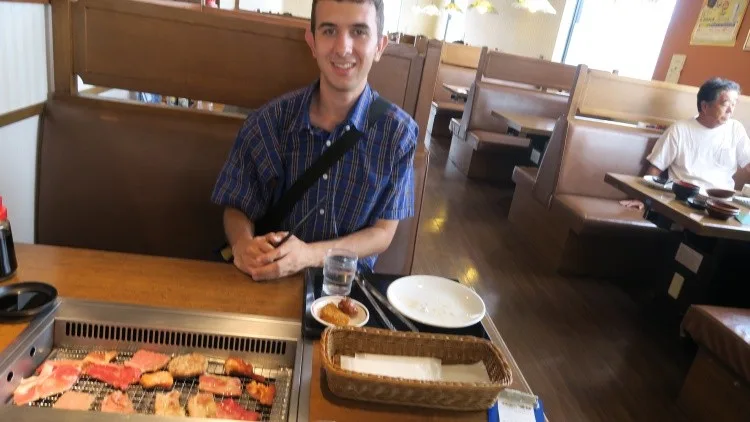
I also left my bag with camera and passport at the restaurant and only returned three hours later. It was still there, as I half expected in Japan.
Outside, a group of young Brazilians sat on the stairs blocking the entrance the whole time I was gone. No need for that—good food does not need a blocked doorway.
In Osaka’s Nipponbashi I tried a place with yakiniku in the name that was just a regular restaurant: order a dish, no table grill. I picked something extremely spicy and regretted the heat more than the flavor.
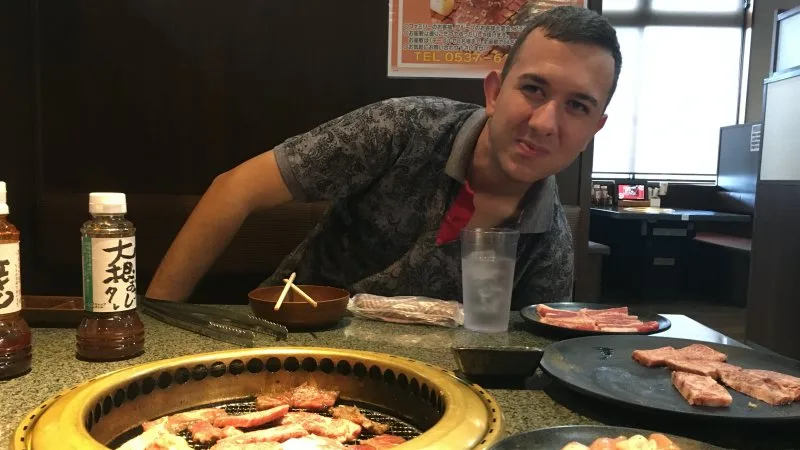
On a later trip I went three more times: once in Kakegawa with my friend Roberto Pedraça, back again in Hamamatsu, and in Sapporo for lamb jingisukan, Hokkaido’s famous grilled mutton that sits in the wider yakiniku family.
If you like meat and a social table, put a real table-grill yakiniku on your Japan list—just double-check whether the shop means DIY barbecue or only the word on the sign.

Community
Comments
0 comments
There are no published comments in this language yet.
Send comment