

In today’s article, we will see some slang in Japanese among the thousands that exist and are used in Japan. In Japanese, there are millions of slang, abbreviations, and others, all due to the number of ideograms, readings of kanji, and the Japanese dialects.
Slang can be informal, regional, foreign, abbreviations, or just different ways of saying a certain word. In this article, we will see various slang that are widely used in everyday Japanese.
Table of Contents
Wakamono Kotoba – Slang for Young Japanese
Generally, young people are the ones who most often use slang in their daily lives. The Japanese have a specific word to refer to the slang used by young people. That word is wakamono kotoba [若者言葉], which literally means words of youth.
Most of the slang and words mentioned in this article fit into this category of wakamono kotoba. Remember that sometimes simple alterations of existing words, sounds, and some expressions can fit into the slang and jargon of young people.
The language of Wakamono is mainly used by teenagers around 20 years old, but it is rarely used in other generations, even though recently people of all ages have been using it. There are some youth words that have started to be used recently, and some that have been passed down to young people for generations.
The youth language did not originate in the modern era, but in the ancient book of observations and reflections “Makurasoshi“. This book treats the language of the youth of the time as a disturbance that often received social criticism.

Main Slang in Japanese
Let’s start by showing some simple slang that doesn’t need much explanation. Then we will see the main Japanese slang explained a little more in depth. We will see many slang from Japan in this article, I hope you enjoy:
- Shitakke [したっけ] – Slang that appears at the end of the anime/manga Boku dake ga inai machi from the Hokkaido region that means “bye, see you later”;
- Baito [バイト] – Slang for the word “arubaito”, used to refer to part-time jobs or some services. It comes from the German “Arbeit”;
- Chotto ii? [ちょっといい?]- A gentle way to say, do you have a second? Do you have a moment? Can we talk a bit?
- Dame [だめ] – A colloquial word for “not good” or “cannot”;
- Eto [えと] – A way to say “Umm…” It is also used to soften questions or requests. It is also common to make it more like “Ettoo…” to match the amount of perplexity or thought;
- Faito!– [ファイト!] – A word borrowed from English “Fight” that means “fight” and is used in sports or competitions like “Do your best!” or like “Gambatte!”;
- Hara Heta [腹へた] – A colloquial way to say “I’m hungry”. It is not very polite with older people;
- Hora [ほら] – Means “Look!” or “See?”. If elongated to “Horrraaaa…” (with a certain tone) it can mean “I told you…”;
- Iyada [イヤだ] – Means “I don’t want to do this” or “I don’t want to see” (aversion or fear). Usually, the “I” at the beginning is omitted or reduced so much that it is hard to hear;
- Ki ni shinaide [気にしないで] – Means “Don’t worry about it”;
- Nandake [何だけ] – Used to say when the person doesn’t remember or didn’t hear, ironically or not, and used for oneself. “What was it again?..”;
- Osu [オス] – An informal way to greet someone (usually used with friends);
- Shimatta [しまった] – A way to say “Damn” when you did something you didn’t want to;
- Suge [スゲ] – A more informal way to say “sugoi“
- Uso [嘘-うそ] – Lit. “Lie”, can also mean “No way!”, “You must be kidding me!” and etc;
- Wagamama [わがまま] – A term for a spoiled and/or selfish person;
- Zannen [ざんねん] – Meaning “what a pity”. often used for insults;

Mendokusai – When something is not good
The word mendoukusai [面倒くさい] means “smells like trouble” where mendou means problems and kusai means stink. The word mendokusai is used to express dissatisfaction with something. To say that something is a nuisance, annoying, difficult, and problematic.
We wrote an article that talks in detail about the Meaning of Mendokusai! In it, you will see that this word is used for various irritating, annoying, difficult, problematic, and laborious situations. Besides mendokusai, we also have slang like:
- Mazui [まずい] – Literally used for food that is not good, can also be applied to other things that are not good.
- Kimoi [キモイ] – The slang of the word kimochi warui, which means “bad feeling”, “bad sentiment” or “gross”.
- Zurui [ずるい] – An adjective with a negative sense. Means something along the lines of “sneaky” or “playing dirty”.
- Hidoi [ひどい] – Used to say “you are mean”, “you are bad” and other related terms.
There are many other slang and insults, we recommend reading our other article: Warui Kotoba – Swear Words in Japanese by clicking here.

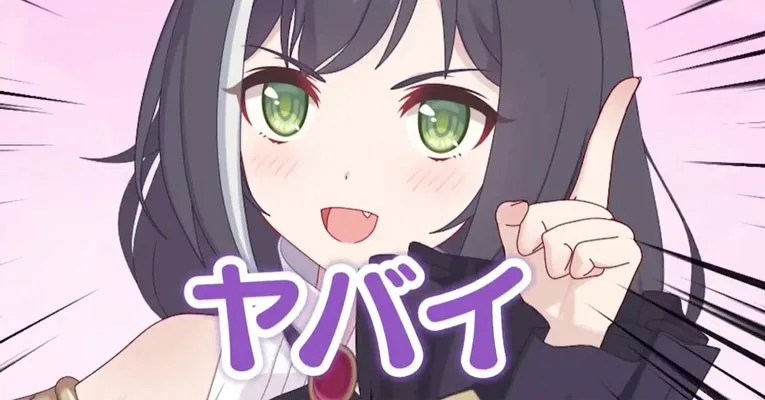
Yabai – Japanese slang for something good and bad?
One of the most popular slang in Japan is yabai [やばい]. This word can mean both something good and something bad depending on the use. Primarily, the word yabai [やばい] means something dangerous, inconvenient, risky, unexpected, and terrible.
In summary, yabai means not good, but over time the word began to mean “I was unexpectedly surprised and shocked“. Young Japanese people started to invert its meaning to something good, cute, delicious, cool, and amazing.
Of course, yabai is not just that, so much so that we have our own article showing in detail the meaning of yabai. We recommend reading the article to understand how to use this very popular and controversial slang.
Japanese slang derived from English
Freeter (フリーター) – Pronounced as furiitaa, literally means freelancer or temporary employee. The difference between the word baito (バイト) and freeter is that baito usually refers to students or housewives who work temporarily in a job. On the other hand, freeter usually works in various jobs and chose this freelance or small service life.
Arasa (アラサー) – A Japanese expression derived from English that refers to women around 30 years old. It is based on the English expression around thirties which means around 30.
Rafu (ラフ) – A term taken from English (rough) that can mean rough, rude, and hard. This expression is used to refer to an initial plan or draft, and is currently often used for people who are casually dressed (rafu na kakkou -ラフな格好) or to refer to casual attire (rafu na fukusou – ラフな服装).
Suru (スルー) – Born from the English word through. Often means to go through something or to ignore something (mushisuru [無視する]).
Dantotsu (ダントツ) is an expression somewhat derived from English that means by far the best. It is an abbreviation of danzen toppu (断然トップ). I think most people know that top means top in English.
NG – Pronounced enuji, an abbreviation of no good that expresses that something is not good or not okay.
OL – Pronounced o-eru, is an abbreviation to indicate an office lady, the female form of salesman.
Mazakon (マザコン) – An expression that refers to a person who is excessively attached to their mother.
Nau – (なう) from the English now meaning now, is often used on the internet.

Abbreviations, expressions, and Japanese slang
Ahiru-guchi and Ochobo-guchi – This expression represents the act of moving the lips or pushing them together while taking a photo. In the West, it is known as duck face. Another expression that indicates fish face is called tarako-kuchibiru.
Torusoo – A modern word (not trunk) that refers to a mannequin. It arose from the expression display sarete iru which means clothing displayed.
Dotakyan (ドタキャン) – Means last-minute cancellation, it is an abbreviation of the expression dota nba kyan seru.
Majide (マジで) – An expression that means “seriously?”.
Kuri botchi (クリぼっち) – An expression that indicates someone who is spending Christmas alone. Kuri comes from kurisumasu which is Christmas and bocchi comes from the expression hitori botchi.
Ossu (おっす) – A military greeting that was once considered highly formal and is still common among martial artists. It is often used by children instead of hello.
Nori nori (ノリノリ) – Derived from the verb noru (乗る) which means to drive or move forward. This expression is often used to indicate a fun person, excited with high spirits.
Guroi (グロい) – Used to describe something grotesque, horrible, repulsive, scary, or bloody.
- For more abbreviations and acronyms, we recommend reading our article on Acronyms and Abbreviations in Japanese.
Internet slang used by Japanese
Many slang mentioned in this article are constantly used by Japanese people on the internet and social media, but there are some specific ones that deserve highlighting and are somewhat exclusive to the internet. Ready to get to know them?
Before we see the main ones, I want to list the slang that doesn’t need much explanation:
乙 – An internet slang that means otsukaresama (お疲れ様) or thank you for your hard work. All because the reading of the kanji 乙 is otsu.
△ (ema, taro) – Used on the internet and on niconico, 2chan to say that something is cool.
- 鯖 – Ideogram of the saba fish, but on the internet refers to some bad and dubious service.
- Mjk – Abbreviation of majika which means seriously?
- Baka – Fool in Japanese;
- DQN – Abbreviation of Dokyun which means stupid;
- 888 – Means congratulations and applause;
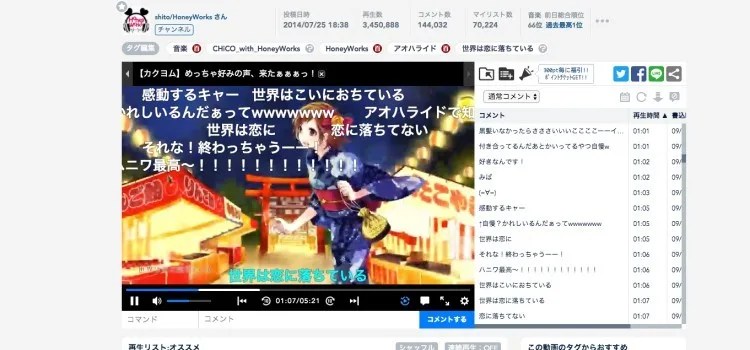
The Online Laughter – wwwww
Japanese people use the letter “W” as if it were our Brazilian “kkkkkk”. Some use several wwww or even a W at the end of the sentence to express laughter on the internet. So whenever you see a bunch of WWWW on niconico douga, you already know what it means.
The reason why W is used is because it was derived from warau [笑う] which means to laugh in Japanese. Another theory is that its origin comes from [はは] which is also a laugh, but in short, its writing can be wawa. Another way to express laughter online is by typing the kanji for laughter in parentheses (笑).
On the internet, people also use the ideogram for grass kusa [草] to express laughter, something similar to lol. For example: 寝たい〜草 in Portuguese means “I want to sleep lol”. The reason is that several W together resemble grass [wwwwwwwwwwwwww].
Best Friends in Japanese
Japanese people have a slang commonly used on the internet to refer to close and best friends or best friends in English. In Japanese, the word zuttomo [ずっ友] is used, an abbreviation of zutto which means always and tomo which means friend.
orz – Seiza in Japanese
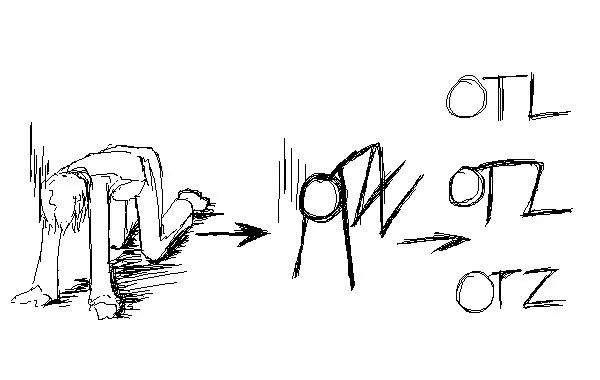
Moving on to the world of emoticons, orz is not literally the letters orz but rather an emoticon like xD. Try looking at it sideways and connecting the O with Z and R, you will see a figure in the form of seiza. Therefore, this is used to pay homage or apologize.
Owakon – Old Content
Owakon is an internet slang that means something like old content. You know that old video or article that is already outdated? Japanese people may call it owakon, which is the combination of owatta [終わった] which means finished with kontento [コンテント] which means content.
Leave a Reply