
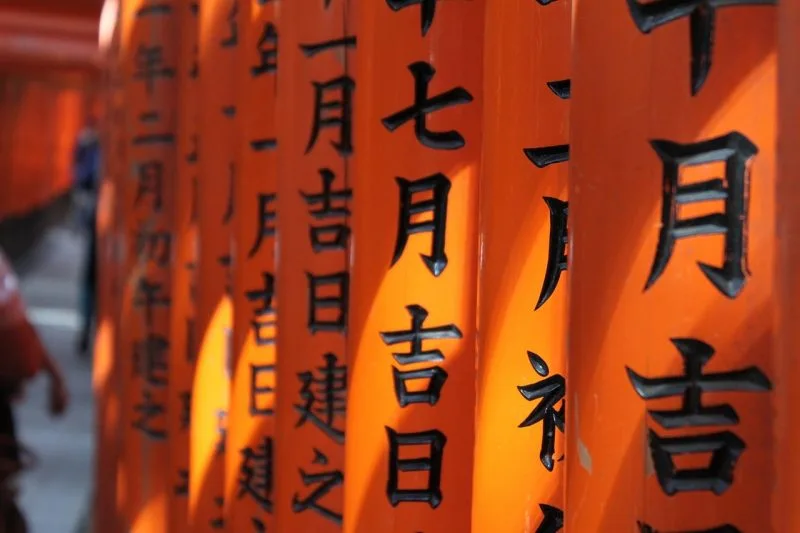
Japanese, Chinese and Korean characters attract people who are passionate about Asian culture, and many of them end up choosing an ideogram for a tattoo. The real difficulty is the choice itself, because a single character can carry several meanings, and the Japanese, Chinese and Korean versions are not always written in the same way.
Don't know which ideogram to choose? This page brings together the characters people tattoo most often in the three languages, explains what each one means and shows how to confirm the right character before it becomes permanent.

How to Choose a Tattoo Ideogram
Start with the meaning you want to carry. A word like freedom, luck or friendship gives you a direction; after that, decide which language you want on your skin, because the same idea can take a different character or a different order in Japanese, Chinese and Korean.
The four steps below keep the order that avoids most mistakes:
- Choose a word or a short phrase with personal meaning, rather than a character you saw in a photo.
- Decide the language and the script variant: Japanese kanji, Chinese hanzi in its traditional or simplified form, or Korean hanja.
- Look the character up in a dictionary that shows its readings and meanings, and compare it with the word you have in mind.
- Save the character in a clean image and show it to your tattoo artist, who can adapt the strokes to the size and the place of the tattoo.
The three languages share many characters, but they use them in different ways. Japanese writes with kanji, Chinese with hanzi, and Korean with hanja, which today appear mainly in names and in a limited set of words while everyday Korean is written in Hangul. Chinese also has simplified and traditional forms: 愛 is the traditional version of 爱, and 運 becomes 运 in mainland China.
For Japanese, a dictionary such as jisho.org shows the readings and the meanings, and the same kind of check works for Chinese and Korean. Confirm whether the character keeps the meaning when it appears alone or inside a compound, since that is where many tattoo mistakes start.
Popular Ideograms for Tattoos
These ten characters appear again and again in tattoo work inspired by Asian scripts. Most of them exist in all three languages with related meanings, so the notes below point out where the usual form changes or the character is read differently. If you want a longer list, we also have 60 Japanese words for tattoos with kanji.
- Love (愛): the most popular character on this list. In Japanese it is ai, in Chinese ài, and both languages use it for love and affection; in mainland China it appears in the simplified form 爱.
- Bravery (勇): courage and the will to face a difficult situation; the same character serves Japanese (yū) and Chinese (yǒng).
- Balance (平衡): Japanese and Chinese use this pair, heikō and pínghéng, for balance and equilibrium, whether in the physical sense or in the balance between work and rest, mind and body.
- Wisdom (智): the character for wisdom and intelligence, read chi in Japanese and zhì in Chinese; the everyday Chinese word for wisdom, 智慧, begins with it.
- Strength (力): physical strength as well as force and power (chikara in Japanese, lì in Chinese).
- Freedom (自由): the two characters are written in the same way in Japanese, Chinese and Korean, read jiyū, zìyóu and jayu, and they mean freedom and liberty.
- Peace (平和): Japanese and Korean share this pair, heiwa and pyeonghwa, for peace. In Chinese the meaning is close but the order changes, because 平和 (pínghé) describes something mild or peaceful, while the usual word for peace is 和平 (hépíng), with the characters reversed.
- Luck (運): it means luck and fortune (un in Japanese, yùn in Chinese, where it also appears in the simplified form 运). In Chinese it also works as a verb, to move or to carry.
- Respect (敬): respect, honor and reverence (kei in Japanese, jìng in Chinese).
- Friendship (友): friend and companion (tomo in Japanese, yǒu in Chinese); the pair 友情 is yūjō in Japanese and yǒuqíng in Chinese, and the Korean reading of 友 is u.
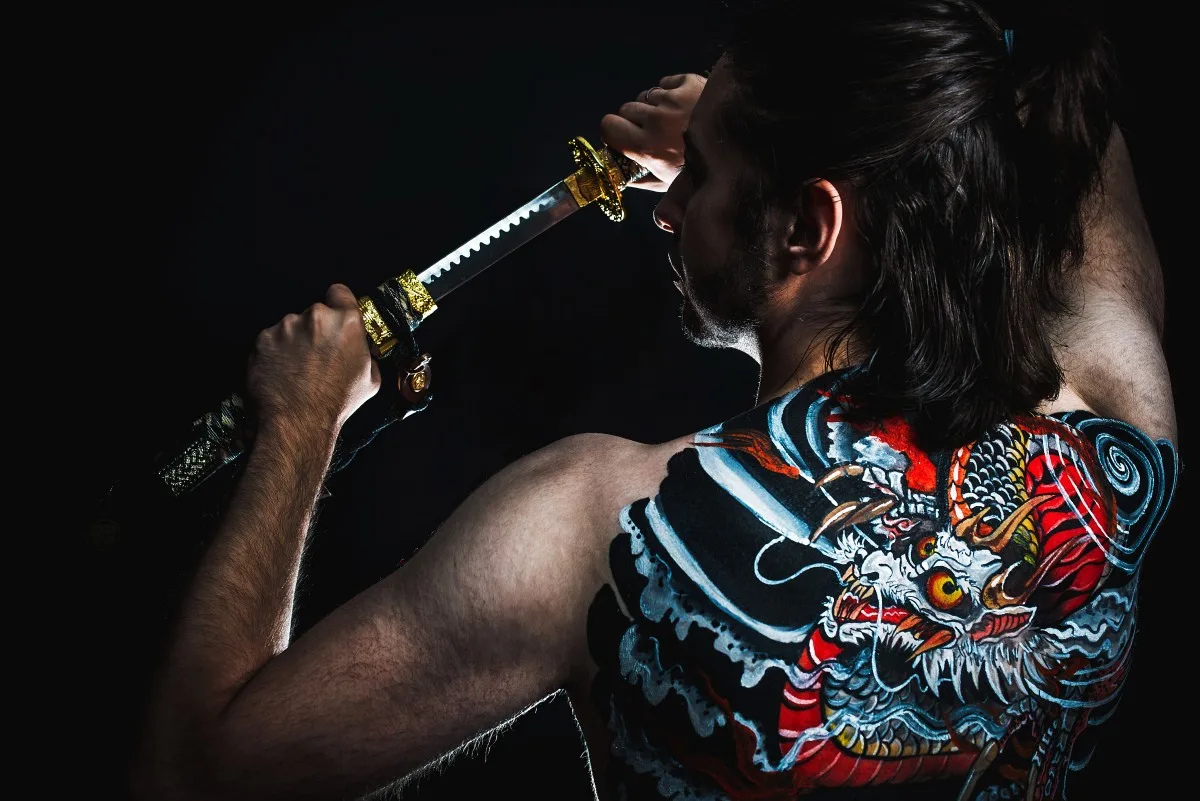
Before booking the session, show the character to someone who reads the language and ask what it means to them, without revealing what you had in mind. If the answer matches your intention, take the character to an artist who is used to working with these strokes, so the proportions stay correct at the size you chose. Japanese tattoos have a long history of their own, and our article on the meaning of yakuza tattoos explains where that tradition comes from.





Community
Comments
0 comments
There are no published comments in this language yet.
Send comment