
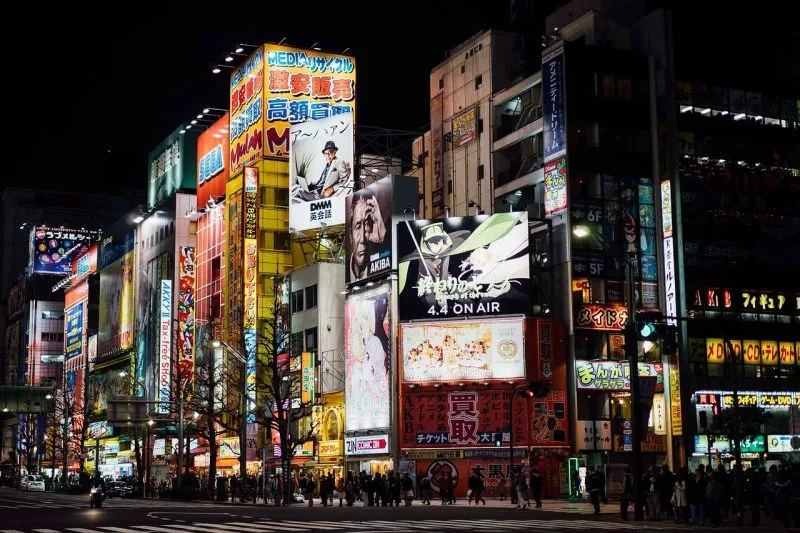
People shorten long Japanese names in conversation. The University of Tokyo is Tōkyō Daigaku (東京大学) in full and Tōdai (東大) when someone is actually saying it. A convenience store becomes konbini. A broadcaster such as NHK stays in Roman letters.
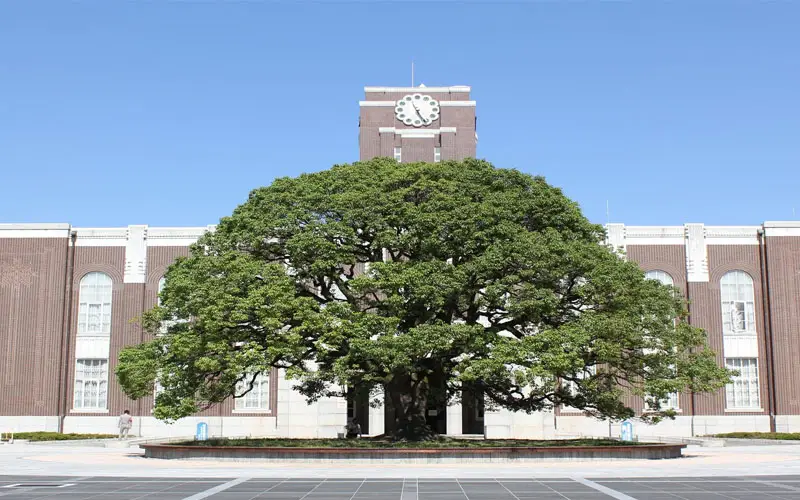
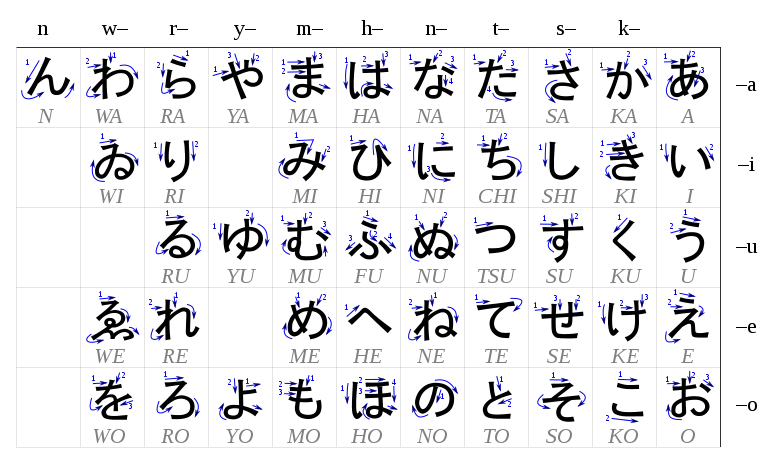
Kana stand for morae, the beats of a word, so a short form keeps those beats rather than a string of single letters. The beats that remain are usually enough to recognize the longer word. In a kanji compound the common cut is the first character of each part. Tōkyō plus daigaku leaves 東 and 大, read together as Tōdai. Kyōto Daigaku (京都大学) follows that cut and becomes Kyōdai (京大).
Some cuts also change the reading. Nagoya Station is Nagoya-eki (名古屋駅). In the city, people say Meieki (名駅): the character 名 is read mei, its on reading, in place of the na of Nagoya.
One pronunciation can belong to two names. Staff at the National Institute for Environmental Studies, Kokuritsu Kankyō Kenkyūjo (国立環境研究所), may call the institute Kanken (環研). The public word 漢検 is the short form of the Kanji Kentei (漢字検定). Match the kanji before you decide which kanken you heard.
Contents 3
Kanji contractions
携帯 (keitai) clips 携帯電話 (keitai denwa), the mobile phone. 電話 (denwa) is the full word for a telephone. The rows below are cuts you can meet on a campus, a timetable, or a newspaper masthead.
| Clipping | Kanji | Longer form | Kanji | English |
|---|---|---|---|---|
| akiba | 秋葉 | Akihabara | 秋葉原 | the Akihabara district |
| bukatsu | 部活 | bukatsudō | 部活動 | after-school club |
| keitai | 携帯 | keitai denwa | 携帯電話 | mobile phone |
| kōkō | 高校 | kōtō gakkō | 高等学校 | high school |
| kokuren | 国連 | Kokusai Rengō | 国際連合 | the United Nations |
| kyōdai | 京大 | Kyōto Daigaku | 京都大学 | Kyoto University |
| meieki | 名駅 | Nagoya-eki | 名古屋駅 | Nagoya Station |
| nikkei | 日経 | Nihon Keizai Shinbun | 日本経済新聞 | the Nikkei newspaper |
| nōdai | 農大 | Tōkyō Nōgyō Daigaku | 東京農業大学 | Tokyo University of Agriculture |
| nyūkan | 入管 | Nyūkoku Kanrikyoku | 入国管理局 | immigration bureau |
| odakyū | 小田急 | Odawara Kyūkō Dentetsu | 小田原急行電鉄 | Odakyu Electric Railway |
| ondai | 音大 | ongaku daigaku | 音楽大学 | music university |
| Tochō | 都庁 | Tōkyō-to Chōsha | 東京都庁舎 | Tokyo Metropolitan Government Building |
| Tōdai | 東大 | Tōkyō Daigaku | 東京大学 | University of Tokyo |
| kanken | 漢検 | Kanji Kentei | 漢字検定 | the kanji proficiency test |
Keitai is the older clip for a mobile phone. Once smartphones spread, sumātofon (スマートフォン) was cut to sumaho (スマホ). That one sits with the katakana rows below.
Loanwords cut down in katakana
Borrowed words are written in katakana, and the full spelling is often too long for a sentence. The usual clip takes the first two morae of each half. Famirī resutoran becomes famiresu. Konbiniensu sutoa becomes konbini.
Companies shorten their own titles in this pattern too. The anime Pretty Cure, Puriti Kyua (プリティキュア), is the name on posters as purikyua (プリキュア).
| English | Short form | Katakana | Longer form | Katakana |
|---|---|---|---|---|
| animation | anime | アニメ | animēshon | アニメーション |
| air conditioning | eakon | エアコン | ea kondishonā | エアコンディショナー |
| personal computer | pasokon | パソコン | pāsonaru konpyūtā | パーソナルコンピューター |
| remote control | rimokon | リモコン | rimōto kontorōrā | リモートコントローラー |
| digital camera | dejikame | デジカメ | dejitaru kamera | デジタルカメラ |
| email address | meado | メアド | mēru adoresu | メールアドレス |
| family computer (Nintendo) | famikon | ファミコン | famirī konpyūtā | ファミリーコンピューター |
| American football | amefuto | アメフト | amerikan futtobōru | アメリカン・フットボール |
| love hotel | rabuho | ラブホ | rabu hoteru | ラブホテル |
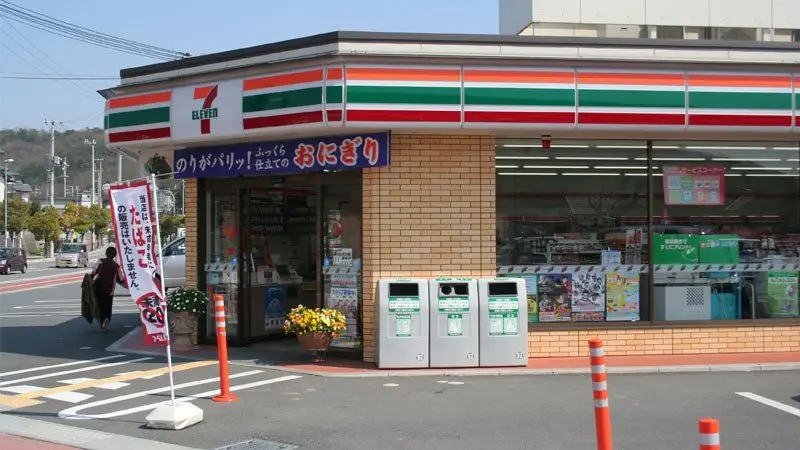
| convenience store | konbini | コンビニ | konbiniensu sutoa | コンビニエンス・ストア |
| department store | depāto | デパート | depātomento sutoa | デパートメント・ストア |
| professional wrestling | puroresu | プロレス | purofesshonaru resuringu | プロフェッショナル・レスリング |
| family restaurant | famiresu | ファミレス | famirī resutoran | ファミリーレストラン |
| sandwich | sando | サンド | sandoitchi | サンドイッチ |
| McDonald's | makku | マック | Makudonarudo | マクドナルド |
| Starbucks | sutaba | スタバ | Sutābakkusu | スターバックス |
| Pokémon | pokemon | ポケモン | poketto monsutā | ポケットモンスター |
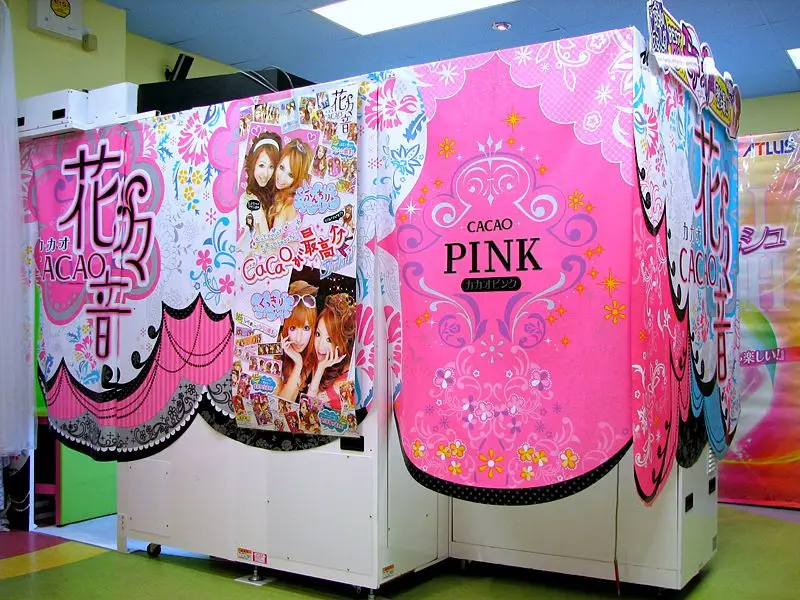
| photo sticker | purikura | プリクラ | purinto kurabu | プリントクラブ |
| magazine plus book | mukku | ムック | magajin and bukku | マガジン and ブック |
| mechanical pencil lead | shāshin | シャー芯 | shāpupen no shin | シャープペンの芯 |
| smartphone | sumaho | スマホ | sumātofon | スマートフォン |
Roman letters on signs and in chats
Japanese also keeps a set of labels in Roman letters. Some are the names of broadcasters, railways, and companies. Others take the first letter of each word in a Japanese phrase, so the letters have to be learned with that phrase attached.
| Letters | Said as | Stands for | Where it shows up |
|---|---|---|---|
| NHK | enu eichi kē | Nippon Hōsō Kyōkai (日本放送協会) | the public broadcaster |
| JR | jē āru | Japan Railways | station signs |
| OL | ō eru | office lady | a woman working in an office |
| OB / OG | ō bī / ō jī | old boy / old girl | a former member of a school, club, or company |
| CM | shī emu | commercial message | a television advertisement |
| GW | jī daburyū | Golden Week | the cluster of holidays at the start of May |
| NG | enu jī | no good | a failed take, or something unacceptable |
| SNS | esu enu esu | social networking service | social media |
| HP | eichi pī | home page | a website |
| LDK | eru dī kē | living, dining, kitchen | apartment ads for a combined living, dining, and kitchen |
| JLPT | jē eru pī tī | Japanese-Language Proficiency Test | the proficiency exam for non-native speakers |
| OP | ō pī | opening | the opening sequence of an anime or drama |
| ED | ī dī | ending | the ending sequence |
| JC | jē shī | joshi chūgakusei (女子中学生) | a middle school girl |
| VTR | buī tī āru | video tape recording | a recorded clip played during a television program |
Two transit cards hide an extra phrase in the letters. A Ministry of Land, Infrastructure, Transport and Tourism sheet on JR East cards derives Suica from Super Urban Intelligent CArd, with CA taken from Card. The sound also matches suika, watermelon, and sui sui, the ease of walking through a ticket gate. ICOCA, the JR West card, expands to IC Operating Card. Those letters also match the Kansai invitation 行こか (iko ka), shall we go.
KY, read kē wai, comes from kūki ga yomenai (空気が読めない): someone who misses the mood of the room. The phrase drew wide attention in 2007. JK is joshi kōsei (女子高生), a high school girl. In online writing the same letters can stand for jōshiki-teki ni kangaete (常識的に考えて), a nudge to use common sense. A lone w in a chat stands for 笑 (warai), a laugh, and a row of them stretches that laugh out.
When you meet a short form for the first time, split it. Two kanji point to the first character of two longer words, as Kyōdai points to Kyōto Daigaku. Four katakana point to the opening beats of a borrowed compound, as famiresu points to famirī resutoran. Roman letters need the expansion used in Japan: KY from kūki yomenai, Suica from Super Urban Intelligent CArd. If the letters are JK, ask which of the two JK meanings the writer meant.



Community
Comments
0 comments
There are no published comments in this language yet.
Send comment