
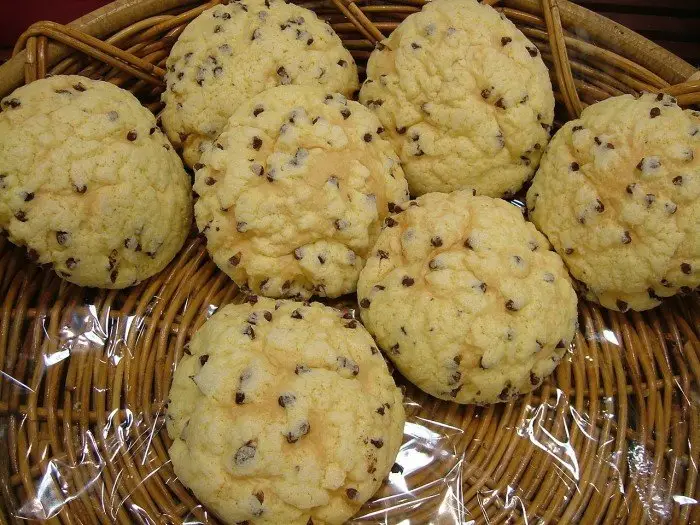
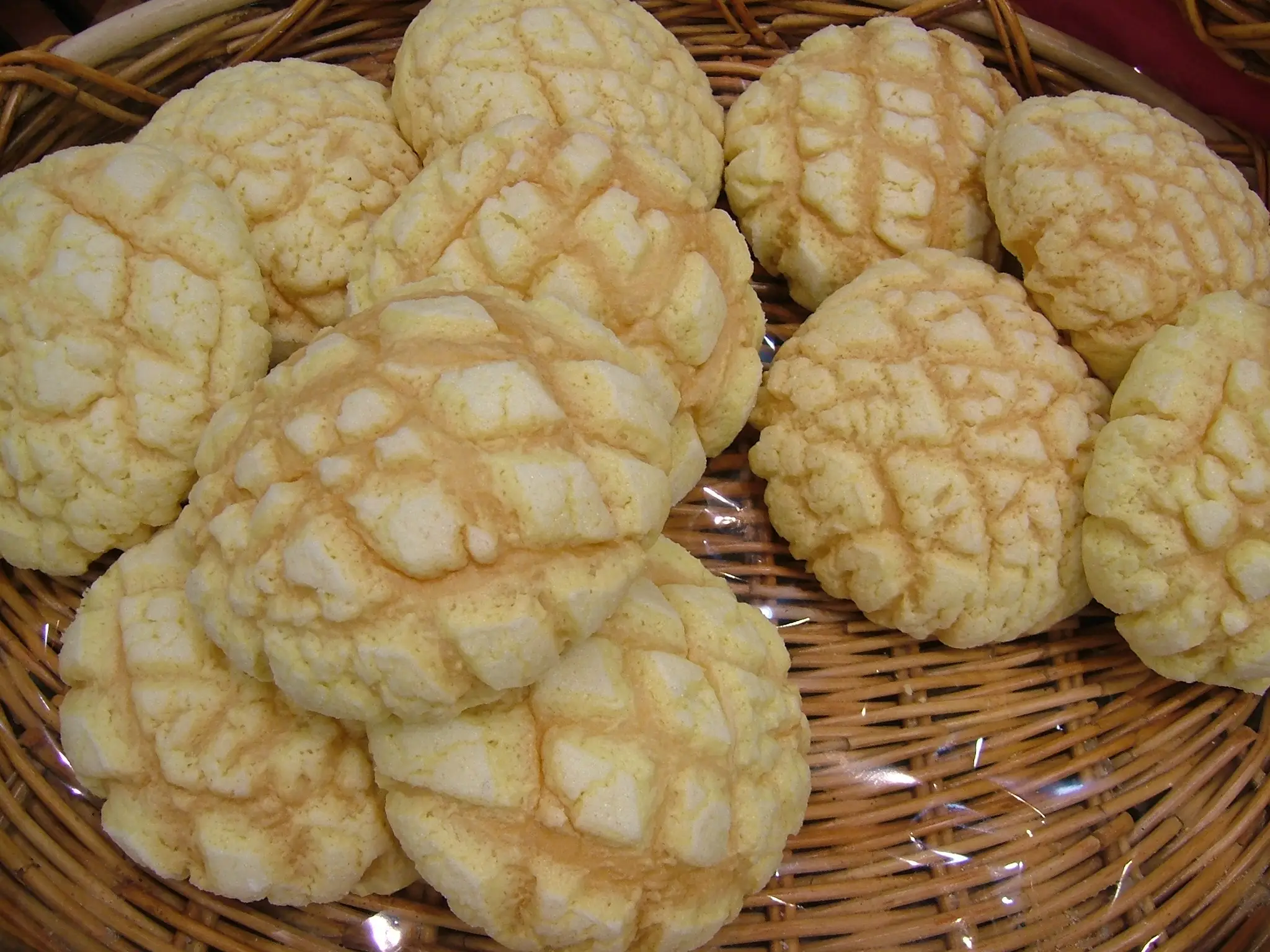
The meron-pan [メロンパン], or melon pan, is a Japanese sweet bread that looks ready to taste like fruit — and usually does not. Soft and round on the inside, it wears a thin cookie shell scored like melon rind, which is why the name stuck even when the dough itself is plain and buttery.
That contrast is the whole charm: fluffy enriched bread under a lightly toasted crust, sometimes with a hint of melon essence, chocolate chips, cream, or custard. You will find it in convenience stores, neighborhood bakeries, and specialty shops across Japan — and in the recipe below if you want the same crunch-and-soft bite at home.
Contents 6
Why is it called melon pan?
In Japanese, pan (パン) comes from the Portuguese word for bread, pão — the same root used for most bread names in Japan. Meron is simply “melon,” borrowed from English. Together they describe the look more than the flavor: the grid or net pattern on the cookie layer recalls the skin of a muskmelon.
Classic melon pan is not traditionally melon-flavored. Bakeries sometimes add essence, green color, cream filling, or chocolate for variety, but the standard version is a sweet bun with a crisp, sugary shell. If you expected fruit filling and got plain dough, that is normal — the fruit is mostly in the name.
How melon pan became a Japanese bakery staple
Melon pan is popular throughout Japan and shows up in Taiwan, China, and other places that borrowed similar sweet-bun styles. It is made from enriched bread dough covered with a thin layer of cookie (biscuit) dough that bakes firm and lightly dry compared with softer cousins abroad.
There is no single agreed origin story. Historians and bakers cite several competing theories: an Armenian baker, Ivan Sagoyan (Hovhannes Ghevenian), working at Tokyo’s Imperial Hotel after World War I; 1930s bakery experiments that put cake-like dough over bread; and western Japan’s “Sunrise” (サンライズ) buns with a biscuit crust sold in places such as Kobe. Related treats exist elsewhere — Hong Kong’s pineapple bun is the closest everyday comparison — but Japanese melon pan tends to be a bit lighter, slightly drier, and firmer on top so the cookie layer flakes less.
Mexico’s conchas and other streusel-topped sweet breads look related in spirit, and some food historians connect global cookie-topped buns through migration routes, but treating melon pan as “invented in Mexico” oversimplifies a messy, multi-origin trail. Safer to say Japan made the style its own under the melon name.
Regional vocabulary adds another twist. In parts of Kansai, Chūgoku, and Shikoku, the round cookie-crusted bun many people call melon pan is still known as sunrise, while “melon pan” can mean a spindle-shaped bun filled with white bean paste or cream — the kind associated with Hiroshima and Kure. Names travel; shapes do not always follow.
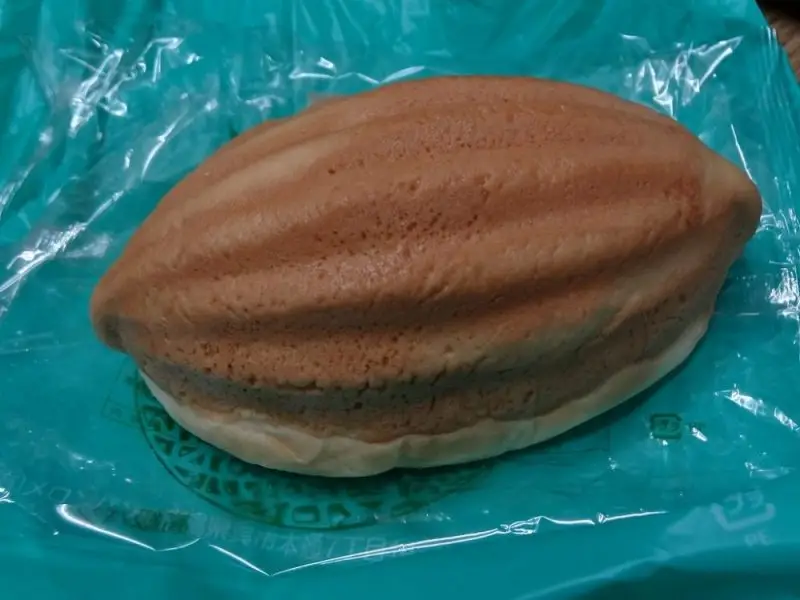
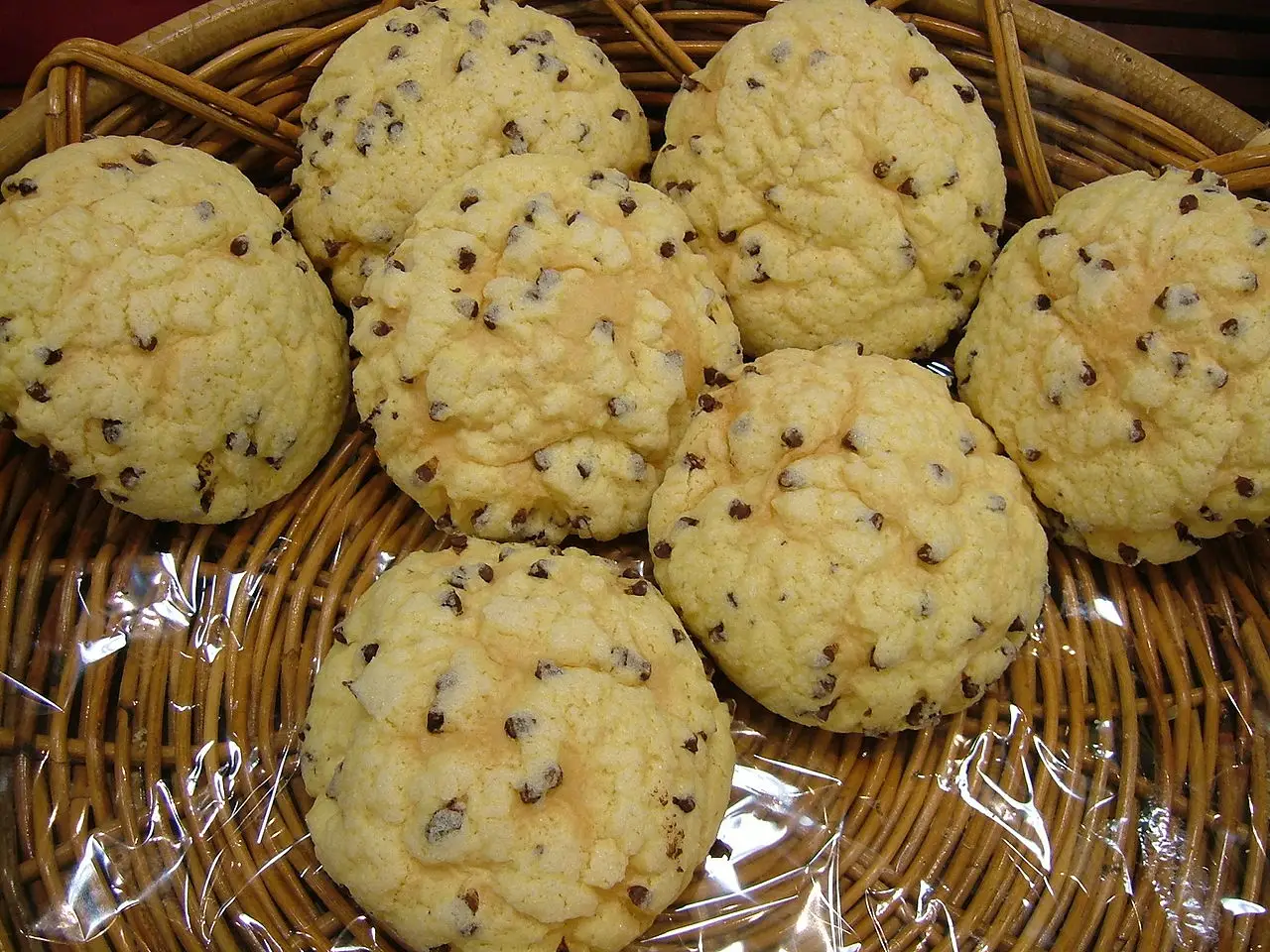
Today you will also see chocolate-chip shells, matcha dough, caramel notes, whipped cream or custard fillings, and oversized “jumbo” melon pan sold as street snacks. For more bakery context, see our guide to bakeries in Japan and Japanese breads. Fans of cooking anime might also enjoy five anime about bakery and confectionery.
Melon bread recipe
Below is a home recipe with two doughs: the soft bread base and the cookie shell that bakes into the crunchy outer layer. Weigh ingredients when you can, chill the cookie dough well, and work gently when wrapping each bun so the bottom stays mostly bread and the top keeps its pattern.
Dough ingredients
- 300g bread flour
- 40g sugar
- 1 medium egg plus water to make 200g total liquid with the egg
- 24g softened butter
- 6g milk powder
- 6g dry yeast for bread
- 5g salt
Cookie ingredients
- 60g unsalted butter at room temperature
- 85g sugar
- 40g beaten egg
- 180g wheat flour
- 1/2 teaspoon baking powder
- Chocolate chips (optional)
- Granulated sugar for coating
How to prepare melon pan
1 — Make the cookie dough first. Beat the butter until creamy. Add the sugar and beat until lighter in color. Add the egg in two or three additions, beating well after each. Sift the flour with baking powder over the mixture and stir until a consistent dough forms. Fold in chocolate chips at the end if you want them.
2 — Shape into a cylinder and wrap in plastic wrap.
3 — Refrigerate for at least 30 minutes. If the dough is not well chilled, it will stick and tear when you roll it out.
4 — Prepare the bread dough as you usually would for enriched rolls. Suggestion: divide the flour into two bowls. In one, put the butter and salt; in the other, the remaining ingredients. Mix the wet bowl until bubbles form and the mass becomes elastic.
5 — Combine both bowls and mix gently until all the flour is incorporated.
6 — Turn the dough onto the table and knead until smooth and soft. Avoid dumping extra flour on top; keep kneading until it releases from your hands. Patience pays off: more kneading usually means a softer crumb.
7 — Return the dough to the bowl, cover, and let rise about 1 hour or until doubled. Punch down lightly to release gas.
8 — Divide into 12 portions (about 50g each). Shape into balls and rest 15 minutes.
9 — Take the cookie dough from the refrigerator and divide into 12 slices. Work one slice at a time and keep the rest cold.
10 — Roll each slice between two sheets of plastic wrap into a circle about 10–12 cm wide. Flatten a bread ball slightly, re-round it, set it in the center of the cookie disk, and wrap the sides up using the plastic underneath. Do not seal the entire bottom with cookie dough — leave bread dough exposed underneath.
11 — Score a grid on the cookie surface and dip the top in granulated sugar. Arrange on a baking sheet with space between pieces.
12 — Proof another 20–30 minutes while you preheat the oven to 200°C (about 390°F).
13 — Bake about 15 minutes or until lightly browned. Cool a little before eating so the shell sets and the crumb finishes.
If you like Japanese savory cooking next, try our notes on okonomiyaki — the Japanese pancake.

Community
Comments
0 comments
There are no published comments in this language yet.
Send comment