
Have you ever wondered what footwear people in Japan wear? Have you heard of geta, zori, uwabaki, surippa, setta, okobo, waraji and others? In this article, we will get to know 10 sandals, shoes, slippers, and other traditional footwear from Japan.
Traditional Japanese footwear is an important part of the history of Japan — and, in some ways, the world. Many of the slippers we use today have roots in Japan, so much so that in the Brazilian state of Maranhão, flip-flops are casually called japonesa. Havaianas, the most famous Brazilian sandal brand, is part of that story: a clear case of these designs traveling well beyond their country of origin. Ready for this little adventure?
Contents 12
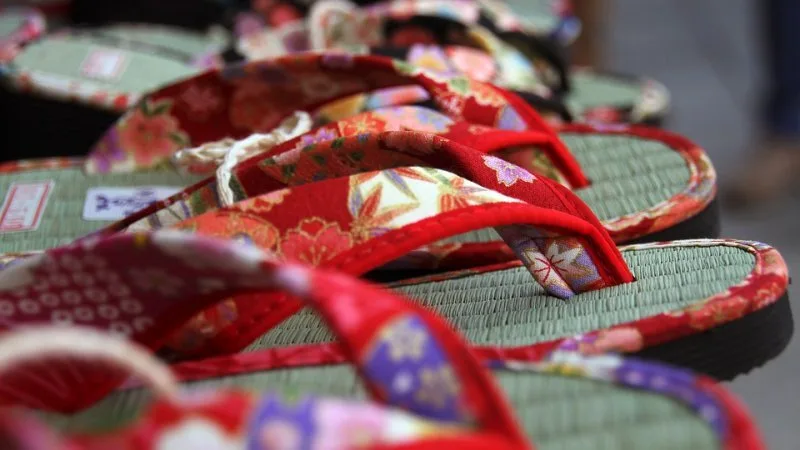
Zori — The Japanese Flip-Flops
The zori [草履] are flat Japanese sandals with straps, traditionally made of rice straw, leather, lacquered wood, fabric, rubber, or synthetic material. The zori are basically Japanese slippers with Y-shaped straps, very similar to flip-flops.
Traditional zori are usually worn with a kimono, together with a split-toe sock called tabi. They are open in design to keep the feet from getting too sweaty in Japan's humid climate. The vast majority are made of rice straw, but some are made of wood.
It is generally believed that these sandals were created under the influence of China and Egypt, with origins that date back to the Heian period (794–1192). Modern flip-flops were clearly inspired by the zori; if you would like to dig deeper into that connection, our article on zori and their similarity to flip-flops is a good place to start.
Geta — The Traditional Wooden Sandal
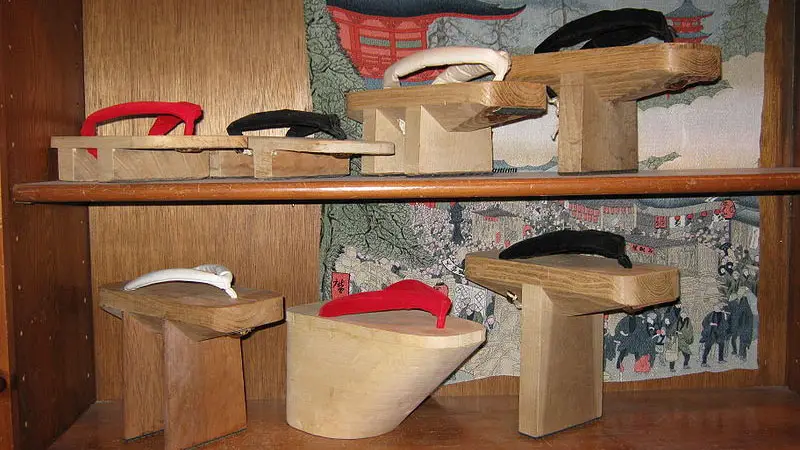
Geta [下駄] is a traditional Japanese sandal with a wooden base, similar to a clog; it is designed to keep the foot from coming into direct contact with the ground. Geta are worn with traditional Japanese clothing, such as kimono or yukata, and they are also common in summer.
The geta is the oldest form of footwear in Japan. It was widely used in swamps and rice paddies, both to keep clothes and feet clean and to handle mountainous, uneven terrain. When you walk in geta, the wooden teeth strike the ground and make a characteristic clacking sound, known in Japan as karankoron.
Today, the geta is mainly worn by geisha; some modern shoes try to imitate the look, but the traditional version is made of wood with either one or two teeth. If you would like to know more, our guide to geta, the Japanese wooden footwear, goes into more detail.
Surippa — Japanese Slip-On Slippers
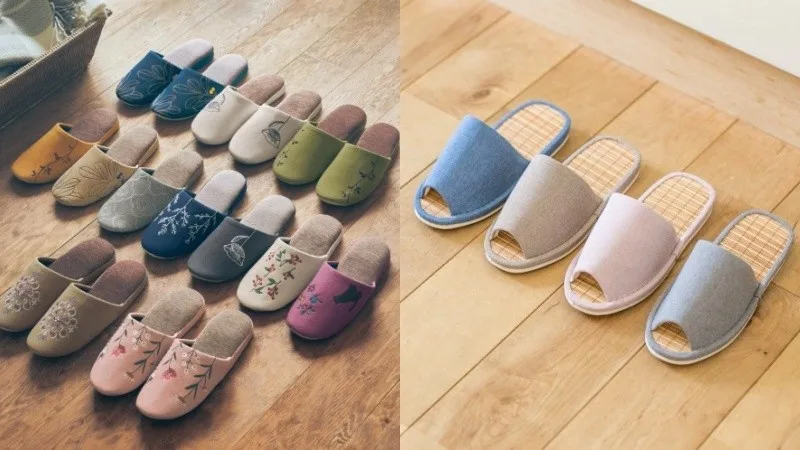
Surippa [スリッパ] comes from the English word slip and literally means to slide. The name fits: these slippers are designed to be worn just by sliding the feet in. The shape resembles a shoe, but the back is open and so is sometimes the front.
They have no closures, buckles, or ties, and come in different sizes and models for indoor and outdoor use. Because they are so easy to slip on, a pair is often left in the genkan (the entryway of a Japanese home) for visitors to use.
The surippa was originally created in the Meiji era to be worn over shoes. The idea was to make things easier for foreign visitors who were not used to taking off their shoes when entering a home. The concept was a hit and quickly turned into widely used indoor footwear in its own right.
Uwabaki — Traditional Indoor Shoes
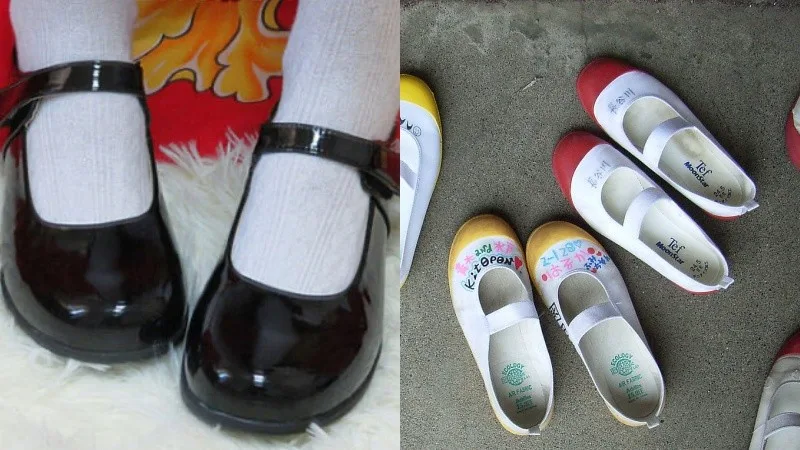
Uwabaki [上履き] are indoor shoes widely used in public places such as schools, gyms, offices, theaters, and other public buildings. They are also called "upper shoes" or Uwagutsu [上靴].
Unlike surippa, uwabaki have straps that hold the foot in place; the shoe is open only at the top, and the silhouette is a bit moccasin-like. They are most often seen in schools, especially in elementary school, where students even write their names on them.
Uwabaki are usually made of rubber and cover both the toes and the heel. They are not always tied; some are simple slip-ons, since schools sometimes encourage students to go barefoot in certain situations.
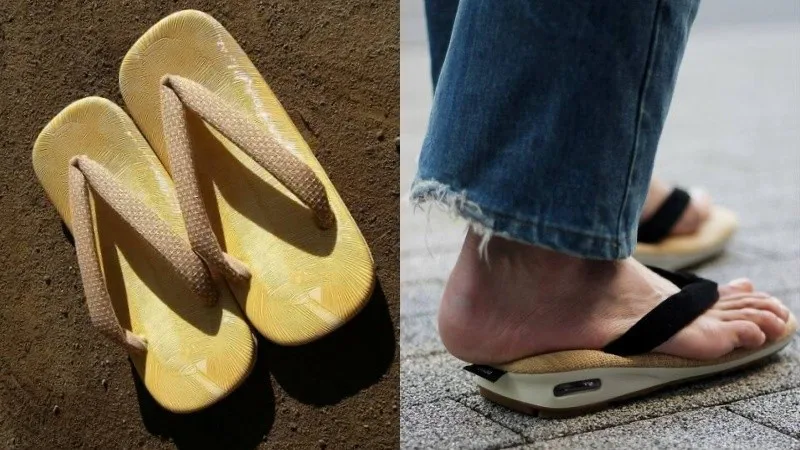
Setta — Sandal with Leather Sole
Setta [雪駄] are Japanese sandals with a leather sole designed to be water-resistant. They have a small iron cap on the underside, which makes them durable, moisture-resistant, and damage-resistant. The upper part is woven from bamboo, leather, or synthetic material.
Some people consider setta a type of geta, but it actually looks more like the zori and has traditionally been popular among men. The name setta literally means "snow footwear." The construction technique jikazuge attaches the leather sole directly to the upper part.
The shoe was originally called sekida and was created for the tea master Sen no Rikyū, so he could walk through the garden of his tea house on snowy days without getting his feet wet. The name later shifted from sekida to "setta" as the design spread to eastern Japan.
Okobo — Japanese High Clogs
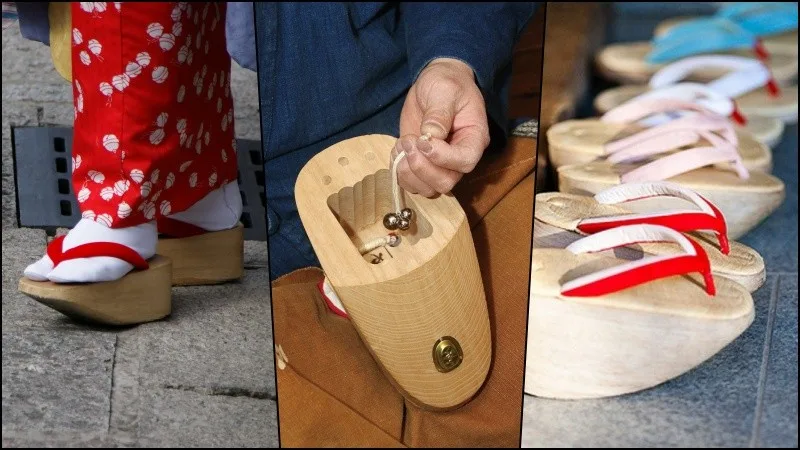
Okobo [おこぼ] are thick wooden clogs, a type of elevated platform traditionally worn by geisha apprentices (maiko). The name varies by region — you may also hear pokkuri, koppori, pokkuriko, or bokkurigeta. Some versions have a small hole in the sole with a bell, which makes a sound with every step.
As with the geta, the practical purpose is to keep the hem of the kimono from dragging on the ground. This style of footwear has also had a fashionable side: the wood was often lacquered and decorated with patterns or small artistic details. In some cases, okobo are worn together with a split-toe sock called tabi.
Children sometimes wear this kind of footwear too, especially during the shichigosan festival. The okobo has a large base cut from a single piece of wood, usually paulownia. The height can reach up to 15 centimeters.
Waraji — The Sandal of the Common People
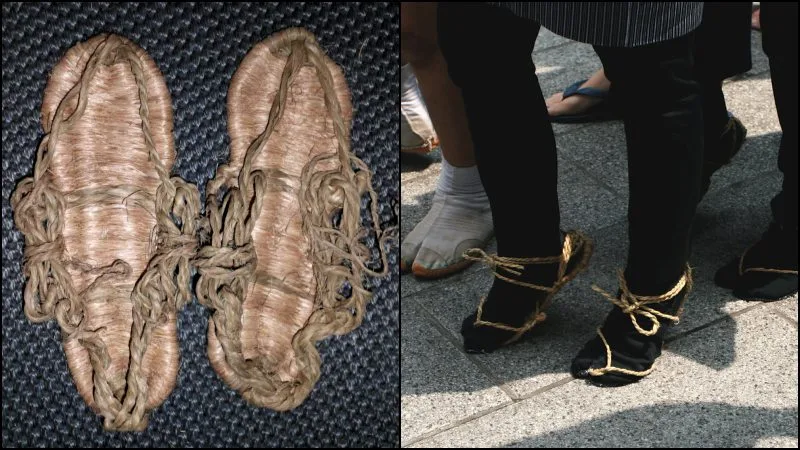
Waraji [草鞋] is a traditional Japanese sandal used in the past by common people, made from straw rope. Traditionally the toes stick out a little past the front edge of the waraji.
The waraji is made from rice straw, hemp, cotton, or palm fiber. Ropes of the same material are wrapped around the ankle to secure the sole to the foot. Today, waraji are still used at festivals and by Buddhist monks.
It is not meant to be worn on hard or paved ground, since the surface wears it out quickly. In earlier times, when there were no paved roads, the setup was actually helpful: soil that worked its way into the straw's gaps reduced friction and made the sandal last longer.
Other Traditional Footwear from Japan
Kigutsu — Wooden Boots
Kigutsu [木靴] are wooden boots, either entirely or mostly made of wood, including the sole. The term can also be used more loosely to refer to other wooden shoes, such as asagutsu or geta, as well as wooden shoes of foreign origin.
Shigai — Silk Shoes
Shigai [絲鞋] are silk-thread shoes worn by minor members of the imperial family, by children in dance costumes, and by young shrine maidens taking part in Shinto ceremonies.
Jika-tabi — Socks That Turn into Shoes
Jika-tabi was invented and popularized in the early 1900s. These are essentially tabi socks with a tougher rubber sole, and they are commonly worn by people who work outdoors, such as jinrikisha (rickshaw) pullers.
More Varieties of Traditional Japanese Footwear
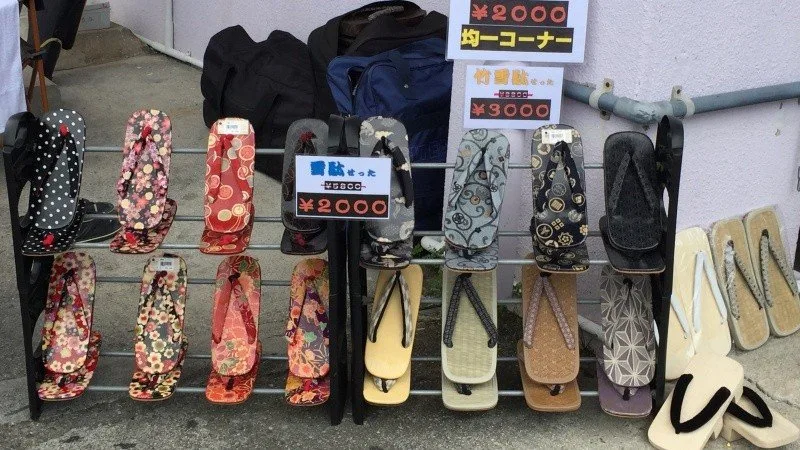
As promised, here are 10 traditional Japanese shoes, but there are many more — modern inventions and variations on the classic geta and zori. Here is a short list of additional styles:
- Taka-ashida geta — wooden sandals made to be worn in the rain and bad weather;
- Hiyori geta / Masa geta — traditional wooden sandals with two teeth, used in good weather;
- Ashida [足駄] — tall clogs, often used as rain clogs;
- Yamageta [山下駄] — mountain geta, a rougher geta, usually made of Japanese cedar;
- Hachitsuwari [八ツ割] — clog without teeth;
- Kōshi [厚歯] — clogs with thick teeth in the anterior-posterior direction;
- Sandaru [サンダル] — a term of Western origin used in Japan for some sandal styles.
For more on footwear in Japan, including sizes and useful vocabulary, our guide to buying shoes in Japan is worth a read. Which of these 10 styles have you already spotted — or even tried on?




Community
Comments
0 comments
There are no published comments in this language yet.
Send comment