
If you have opened a beginner textbook, you have already met desu [です] and da [だ]. They show up after names, jobs, nationalities, and half the sample dialogues in Japanese. People still argue about whether they are “the verb to be,” a particle, or something else entirely—and that confusion usually starts with a translation that is a little too neat.
In real speech, the pair is less about finding a perfect English word and more about how you close a sentence: politely with です, casually with だ, linking what you are talking about to what you say it is. Once that clicks, the “is / am / are” translation becomes a useful shortcut instead of a trap.
Contents 6
What does desu mean in Japanese?
Desu [です] is the polite counterpart of da [だ]. Both sit near the end of the sentence and carry the idea of equating or affirming something—often rendered as “is,” “am,” or “are,” depending on English.
Use is simple in outline: after a noun (or certain predicates), です / だ say that A relates to B. They can affirm, identify, or declare. They are not mandatory in every casual line—speakers sometimes drop the copula when context is obvious—but they are central to sounding finished and natural in many patterns.
A more formal alternative you will hear in business and set phrases is de arimasu [であります], and in high politeness de gozaimasu [でございます]. Those are still in the same family of endings, not a different idea of “being.”
Important correction: da [だ] is not the past tense of an action verb, and it is not the imperative of verbs. Past of the copula is datta [だった] (plain) / deshita [でした] (polite). Imperative forms belong to regular verbs (and special commands), not to だ as a free “command ending.”
Is desu really the verb “to be”?
Some materials call desu the verb “to be.” Others refuse to call it a verb at all. The practical answer for learners is that desu / da function as the Japanese copula: a linking element that relates a topic or subject to a noun or description. English “to be” also covers existence (“there is…”) and progressive auxiliary (“I am eating”); Japanese splits those jobs—existence uses ある / いる, progressive uses ~ている—so です is not a one-to-one map of every English “be.”
Linguistically, the copula behaves like a small closed class of predicate endings: it has tense and polarity forms, even though it does not conjugate like a normal る-verb or う-verb. That is why you see both “it works like ‘is’” and “it is not a regular verb” in good explanations—they are describing different angles of the same tool.
The plain form da [だ] is the everyday informal twin of desu [です]. In casual talk it can feel as light as a sentence-closing particle, but its job is still to land the predicate. Both forms are often described as copular / auxiliary endings rather than action verbs like “eat” or “go.”

Simplifying desu: think “equals”
Desu and da are among the first pieces of grammar you meet, and they are still easy to overthink. A clean mental model is to treat です / だ like an equals sign: A is B.
In Japanese, a complete sentence often ends in one of three ways:
- With the copulas だ / です;
- With a conjugated verb;
- With an い-adjective (which already carries its own ending).
Sometimes です is added after an い-adjective purely for politeness (kawaii desu), not because the adjective needed a second “to be.” Do not sprinkle です after every word just because it “sounds Japanese.” Place it where the predicate needs a polite copula—or where politeness is the only missing piece.
| 私はケビンです | I am Kevin | watashi wa kebin desu |
| 可愛いですね | Isn't it cute? | kawaii desu ne? |
| 何時ですか | What time is it? | nanji desu ka? |
Basic forms of desu and da
If です only lived in the present, textbooks would be thinner. The copula also marks past and negative; learning a small grid stops the myth that だ itself means “past action.”
| Meaning | Polite | Plain |
| Non-past affirmative | です | だ |
| Past affirmative | でした | だった |
| Non-past negative | ではありません / じゃないです | ではない / じゃない |
| Past negative | ではありませんでした / じゃなかったです | ではなかった / じゃなかった |
In speech, じゃ… forms are extremely common; では… sounds a bit more careful or written. Either way, the past lives in でした / だった, not in “using だ as a verb tense.”
Variations and compound patterns with desu
Desu also appears inside fixed patterns. Some are true politeness upgrades; others are different grammar that only looks related because of the shared で / です sound.
| Form | Meaning / role |
| でございます | Very polite desu (service / formal speech). |
| でござる | Archaic / period-drama style (samurai speech stereotype). |
| でした | Past polite copula (“was / were”). |
| であります | Formal polite variant of desu. |
| ですから | “So / therefore” (reason → consequence). |
| ですか | Question with polite desu. |
| ですら / でさえ | “Even” (emphasis on an extreme example)—not “but / however.” |
| ですが / だが | “But / however” (contrast). |
| のです / んです | Explanatory tone: “the thing is… / it's that…” |
| ですね | Soft confirmation: “isn't it?” / seeking agreement. |
| そうですね | “That's right / let me see…” (agreement or thinking pause). |
You will also hear ですよ for assertive soft emphasis. Some playful styles stack ですです or overuse です for a cute effect—fine as character speech, weak as default classroom Japanese.
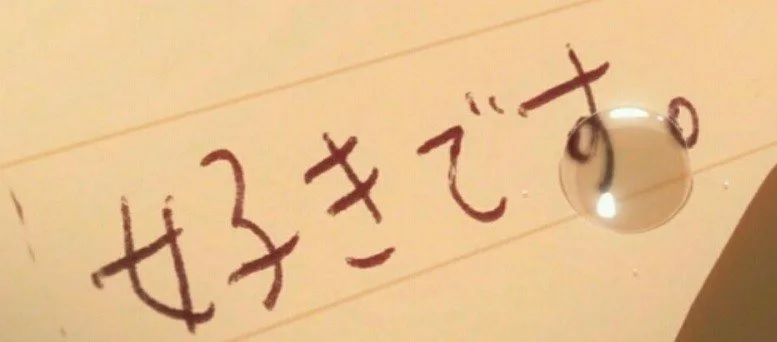
- What does Suki Desu mean? (好きです)
- Kanpai — what is the true meaning of kampai?
- What is the difference between Sumimasen and Gomennasai?
Example sentences with desu [です] and da [だ]
Below are lines where the copula (or a clear explanatory ~んだ / ~んです) is doing real work—identity, judgment, or soft explanation—not random verb pasts that only happen to end in だ by coincidence.
10年は待つには長い時間だ。
jū-nen wa matsu ni wa nagai jikan da.
Ten years is a long time to wait.
潔白であることは美しいことだ。
keppaku de aru koto wa utsukushii koto da.
Being innocent is a beautiful thing.
またいつか風のように走るんだ。
mata itsuka kaze no yō ni hashiru n da.
One day I'll run like the wind. (explanatory ~んだ)
愛のない人生など全く無意味だ。
ai no nai jinsei nado mattaku muimi da.
A life without love is completely meaningless.
病院にいるよ。雷に打たれたんだ。
byōin ni iru yo. kaminari ni utareta n da.
I'm in the hospital. I got struck by lightning. (~んだ explaining the situation)
税金を払ったら実生活の始まりだ。
zeikin o harattara jisseikatsu no hajimari da.
Once you pay taxes, real life begins.
お金を稼ぎたいならアメリカが一番だ。
okane o kasegitai nara Amerika ga ichiban da.
If you want to make money, America is the best—at least in this speaker's claim.
うるさくて眠れないんです。
urusakute nemurenai n desu.
I can't sleep because of the noise. (polite explanatory ~んです)
マリアさんの髪は長いです。
Maria-san no kami wa nagai desu.
Maria's hair is long. (い-adjective + polite です)
冬は私の一番好きな季節です。
fuyu wa watashi no ichiban suki na kisetsu desu.
Winter is my favorite season.
彼女たちは真面目な子たちです。
kanojo-tachi wa majime na ko-tachi desu.
They are serious kids.
残念ながらそれは本当なのです。
zannen nagara sore wa hontō na no desu.
Unfortunately, that is true.
イタリアはとても美しい国です。
Itaria wa totemo utsukushii kuni desu.
Italy is a very beautiful country.
あなたは私の好みのタイプです。
anata wa watashi no konomi no taipu desu.
You are my type.
奈良は静かで、きれいな町です。
Nara wa shizuka de, kirei na machi desu.
Nara is a quiet, beautiful town.
私の趣味は音楽を聞くことです。
watashi no shumi wa ongaku o kiku koto desu.
My hobby is listening to music.
明日図書館で勉強するつもりです。
ashita toshokan de benkyō suru tsumori desu.
I plan to study at the library tomorrow. (つもりです as a set intention pattern)
パスワードは「Muiriel」です。
pasuwādo wa “Muiriel” desu.
The password is “Muiriel.”
彼の誕生日に贈り物をあげたいんです。
kare no tanjōbi ni okurimono o agetai n desu.
I want to give him a gift for his birthday.
あなたが戻って来てくれて嬉しいです。
anata ga modotte kite kurete ureshii desu.
I'm glad you came back.
Once you can hear the difference between a real copula landing (X は Y です), an explanatory ~んです, and a plain verb past that only ends in た, desu stops being a mystery ending and starts being a choice of register—and that is where Japanese sentences get their shape.






Community
Comments
0 comments
There are no published comments in this language yet.
Send comment