
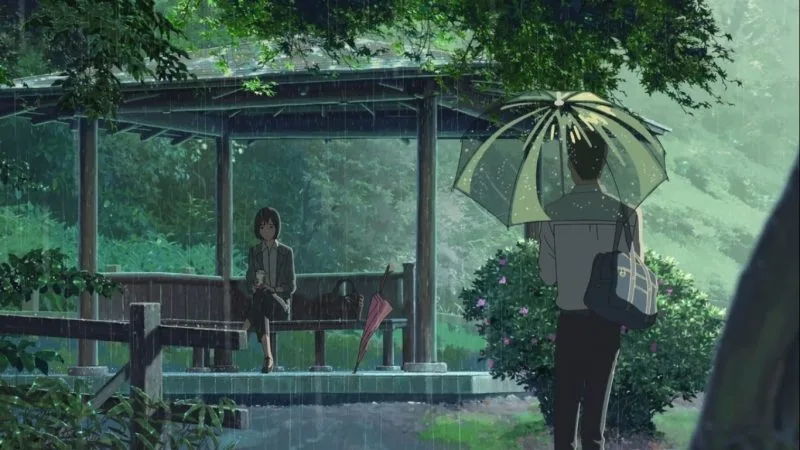
Talking about films takes more than knowing the title of your favourite movie. This vocabulary walks through a trip to the cinema and the work behind the screen: the people in front of and behind the camera, the genres, and the words you hear at the box office or in conversations about films. Each entry gives the Japanese term with kanji, romaji and English meaning.
The list works both for reference and for learning in small doses. One tip before you start: linking each word to something in your own routine, such as planning your next cinema visit in Japanese, makes it much easier to remember. More lists such as the YouTube vocabulary in Japanese complement this set.
Contents 6
People in front of and behind the camera
These words describe the people who make a film. Notice the difference between 俳優 and 男優: the first is the general word for an actor, the second explicitly refers to a male actor.
- 女優 (joyū) actress
- 俳優 (haiyū) actor
- 男優 (dan’yū) male actor
- 声優 (seiyū) voice actor
- 監督 (kantoku) director
- 主演 (shuen) lead actor
- 助演 (joen) supporting actor
- 脚本家 (kyakuhonka) screenwriter
- 撮影監督 (satsuei kantoku) cinematographer
- プロデューサー (purodyūsā) producer
- 主人公 (shujinkō) protagonist
- 敵対者 (tekitaisha) antagonist
Genres and types of films
Japanese genre names mix native words with English loanwords. 時代劇 is the period film with sword fights, while 邦画 means a Japanese film as opposed to a Western one.
- 映画 (eiga) film, movie
- アクション (akushon) action
- コメディ (komedi) comedy
- ラブコメ (rabukome) romantic comedy
- ドラマ (dorama) drama
- ホラー (horā) horror
- サスペンス (sasupensu) thriller
- SF (esuefu) science fiction
- 時代劇 (jidaigeki) period film
- 西部劇 (seibugeki) western
- ドキュメンタリー (dokyumentarī) documentary
- アニメ映画 (anime eiga) anime film
- 邦画 (hōga) Japanese film
- 洋画 (yōga) Western film
- 海賊版映画 (kaizokuhan eiga) bootleg copy of a film
At the cinema
From the ticket counter to the seat: these words are what you need when you go to the cinema in Japan. 前売り券 is a ticket bought in advance, and 半券 is the stub that some cinemas let you keep as a souvenir.
- 映画館 (eigakan) cinema, movie theatre
- チケット (chiketto) ticket
- 前売り券 (maeuriken) advance ticket
- 座席 (zaseki) seat
- スクリーン (sukurīn) screen
- 上映 (jōei) screening
- 上映時間 (jōei jikan) running time, screening time
- 入場料 (nyūjōryō) admission fee
- 売店 (baiten) concession stand
- ポップコーン (poppukōn) popcorn
- ドリンク (dorinku) drink
- 予告編 (yokokuhen) trailer
- 字幕 (jimaku) subtitles
- 吹き替え (fukikae) dubbed version
- 満席 (manseki) sold out
Production and technique
For the screen there are 予告編 (yokokuhen) for the trailer and 字幕 (jimaku) for subtitles; 吹き替え (fukikae) is the dubbed version. Behind them sit 撮影 for shooting, 編集 for editing and 配給 for distribution. 興行収入 is the box-office revenue and a key measure of a film's success in Japan.
- 撮影 (satsuei) shooting, filming
- 撮影所 (satsueijo) film studio
- カメラ (kamera) camera
- 映写機 (eishaki) projector
- 照明 (shōmei) lighting
- 音響 (onkyō) sound
- 編集 (henshū) editing
- 配給 (haikyū) distribution
- 興行収入 (kōgyō shūnyū) box-office revenue
- 宣伝 (senden) promotion
- 試写会 (shishakai) preview screening
- 舞台挨拶 (butai aisatsu) stage greeting with the cast
- 公開初日 (kōkai shonichi) opening day
Talking about films
A short opinion needs only a few words. Use あらすじ to summarise the plot, 名作 to praise a classic and つまらない to say plainly that a film did not work for you.
- あらすじ (arasuji) plot, summary
- 物語 (monogatari) story
- 名作 (meisaku) masterpiece
- 大作 (taisaku) big production
- ヒット作 (hitto saku) hit film
- 感想 (kansō) impression
- 批評 (hihyō) review, criticism
- 評価 (hyōka) rating, evaluation
- 面白い (omoshiroi) interesting, enjoyable
- つまらない (tsumaranai) boring
- おすすめ (osusume) recommendation
Japanese details worth knowing
Some words appear only in a Japanese cinema context. 映画泥棒 is the character from the anti-piracy campaign that warns against illegal copies. On television people say お送りします much like "brought to you by" in English, and 提供 is the sponsorship of a programme.
- 映画祭 (eigasai) film festival
- 映画泥棒 (eigadorobō) character of the anti-piracy campaign
- 観客 (kankyaku) audience
- 演技 (engi) acting
- 歌舞伎 (kabuki) kabuki
- 怪獣 (kaijū) monster
- お送りします (ookuri shimasu) brought to you by
- 提供 (teikyō) sponsorship
- 発表 (happyō) announcement
- 恋愛 (ren’ai) love, romance
- 歌 (uta) song
- 楽器 (gakki) musical instrument
Finally, two phrases for your next cinema visit: 映画を見に行く (eiga o mi ni iku) means "to go to the cinema". If the screening is full, say 満席です (manseki desu), and to ask when a film starts, use 何時からですか (nanji kara desu ka), "what time does it start?".
Repeat these words aloud the next time you watch a film and they will stick faster than any list suggests. From here you can continue with the history of cinema in Japan, the highest-grossing Japanese films or the best anime films. If you prefer learning with stories, see how to learn Japanese with manga and anime, and for dictionary work the guide to using Jisho to learn Japanese.





Community
Comments
0 comments
There are no published comments in this language yet.
Send comment