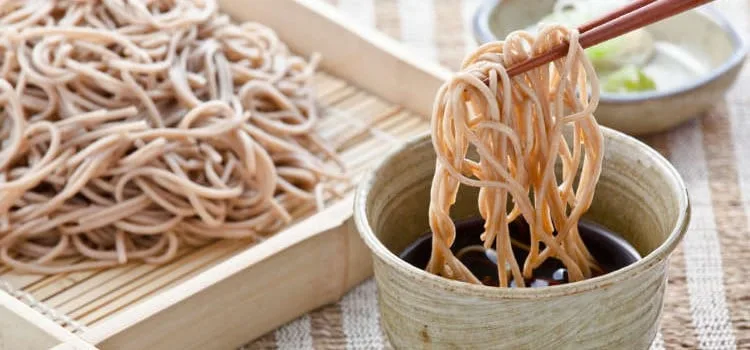
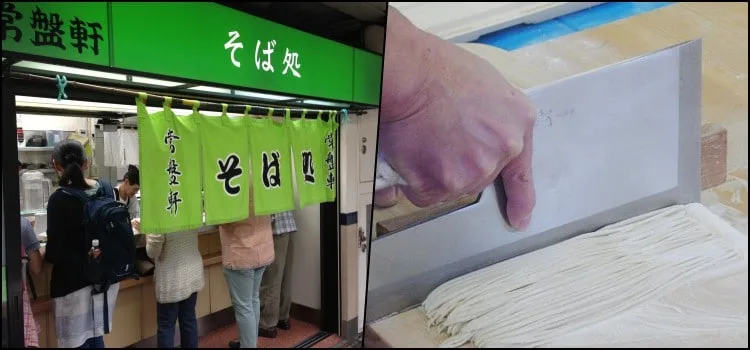
Japan tends to be very hot and humid in the summer. To combat this heat, various dishes get their cold versions. One of them is the famous soba, a buckwheat noodle we already covered in another article. The plate I keep coming back to is zaru soba: chilled noodles you dip, a little at a time, into a soy-and-dashi sauce.
At first glance, it may seem strange to eat cold noodles, but soba pairs perfectly with that dipping sauce. It was one of the greatest delights I had in Japan — a simple, cheap dish, and a staple when the weather turns heavy.
Unlike most Western pasta, Japanese noodles for this dish are rinsed vigorously in cold running water. That cools them down and also removes excess starch, which dulls the flavor. It isn’t enough to splash cold water on them; you have to wash and gently rub the strands so they stay springy and clean-tasting.
Contents7
What is zaru soba?
Japanese cold soba isn’t called zaru soba because the noodles are cold. Zaru (ざる) is the bamboo draining basket they sit on, like a strainer that keeps extra water off the plate. You take a bite-sized bundle, dip it separately in the sauce, and slurp — similar to dipping sushi, except here the sauce is made for noodles.
That sauce is mentsuyu, often just called tsuyu. It’s built from shoyu, mirin, and dashi; the home version below uses hondashi. You can buy a ready-made bottle and dilute it, or simmer a batch with your own tweaks.
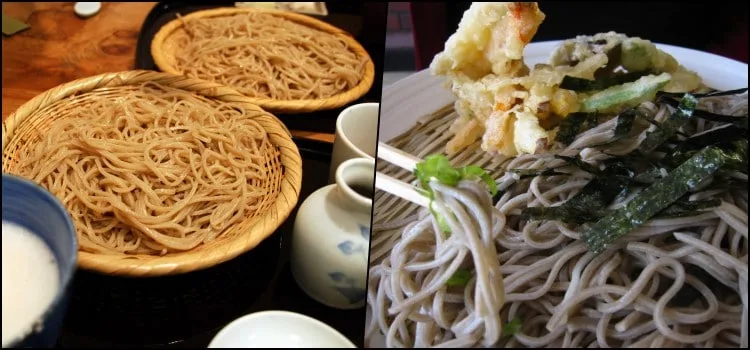
It often comes with chopped green onions or a dab of wasabi. When tempura shares the tray, the dish is tenzaru. Bukkake soba is the cousin that arrives already in a bowl, sauce poured over the cold noodles with extra toppings mixed in — same family, different gesture.
Zaru soba and mori soba
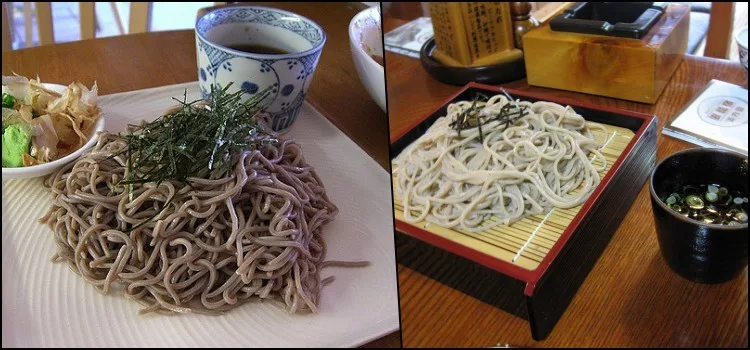
On a soba-shop menu you will often see both zaru soba and mori soba. Today many places treat them as almost the same cold plate with dipping sauce. The difference that still shows up, when the shop bothers to mark it, is the nori: zaru soba is finished with shredded roasted seaweed; mori soba is the plain noodles.
Historically zaru was the slightly more deluxe order — nori used to cost more, and some houses used a sweeter tsuyu. In a lot of shops now, the gap is just that sheet of nori and a few yen on the ticket. If you want the noodle itself with nothing in the way, ask for mori; if you want the toasted-seaweed aroma on top, zaru.
How to eat zaru soba
You get the noodles on the zaru, a small cup of tsuyu, and a side plate of condiments: scallions, wasabi, sometimes grated daikon.
Pick up a few strands with chopsticks. Dip only the lower half into the sauce — don’t dunk the whole clump and don’t let it sit there. The point is to taste the buckwheat, not to drown it in soy. Mix wasabi or onion into the cup a little at a time so each bite stays sharp.
When the noodles are gone, many shops bring a pot of sobayu (そば湯), the starchy cooking water. Pour it into whatever tsuyu is left and drink it as a light broth. At home, scoop out a cup of the boiling water before you drain the pot.
Recipe — how to make zaru soba
This is a two-person home version. The tsuyu below is already mixed to dip, not a restaurant concentrate: if you buy bottled mentsuyu, follow the bottle and add ice water instead of simmering this pan.
Ingredients for the soba
200 g dried soba noodles (about 100 g per person);
If you find kaeshi, just mix it with hondashi;
There are no secrets: cook the soba, place it in a strainer, and eat by dipping it in the sauce. If you want to add green onions, serve them in a separate container. Make the sauce by mixing the ingredients and bringing them to a boil over medium heat, then chill it in the refrigerator. Scatter the nori over the noodles before serving.
A few details that change the plate
Use a large pot of unsalted water. Fan the noodles in so they don’t clump, and stir in the first seconds.
Cook to the package time — usually four to five minutes — and stop while they still have a little chew.
Before draining, ladle out a cup of cooking water for sobayu.
Rinse under cold running water, rubbing gently until the surface starch is gone. Shake the strainer well.
Pile the noodles on a zaru or a plate, top with nori, and pour the cold tsuyu into small cups.
Zaru soba is not the only cold noodle in Japan. There are cold versions of udon and ramen, and in the same season you will also see hiyashi chuka, the Chinese-style cold noodle salad. What do you think of zaru soba? Have you had the chance to try this dish?
Kevin Henrique has written about the Japanese language, culture, anime, games, and travel since founding Suki Desu in 2014. He first visited Japan in 2016.
Community
Comments
0 comments
There are no published comments in this language yet.

 Zaru soba is not the only cold noodle in Japan. There are cold versions of udon and ramen, and in the same season you will also see hiyashi chuka, the Chinese-style cold noodle salad. What do you think of zaru soba? Have you had the chance to try this dish?


Community
Comments
0 comments
There are no published comments in this language yet.
Send comment