
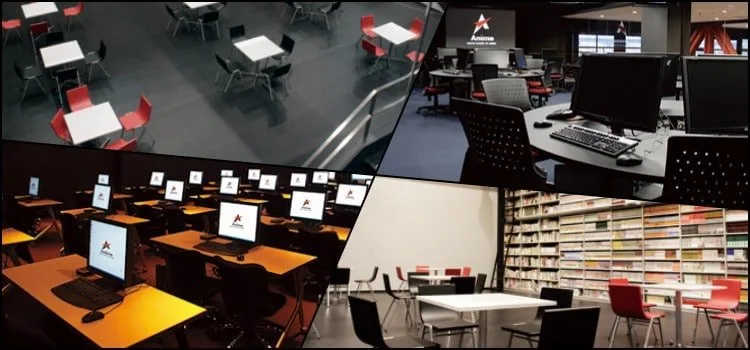
Japan put a gamer school inside an anime and voice-acting college in Tokyo — not in a high-school gym. That still catches people who type “e-sports course in Japan” and picture teenagers in uniform grinding ranked matches all day.
The growth of e-sports competitions has been bringing people from all over the world to dream of becoming a professional electronic games player. Games like League of Legends, Overwatch, CS2 and Apex Legends keep feeding events, competitions, and prizes that look, from the outside, like a career path.
And at the Tokyo School of Anime, you can learn how to be a professional gamer or electronic sports player. The Japanese school — now officially Tokyo Anime, Voice Actor & e-Sports Professional Training College (東京アニメ・声優&eスポーツ専門学校) — was the first vocational school in Japan to launch a course for those who wish to be professionals in the world of video games. The campus sits in Nishi-Kasai, Edogawa, a short walk from the Tokyo Metro Tōzai Line.
Tactics and practical game training such as five mouse clicks in one second, 180º turns with the mouse, game streaming, among other activities, are taught to students, as well as specializations in the field of e-sports such as game professionals, business and promotion of e-sports, commentary, and events.
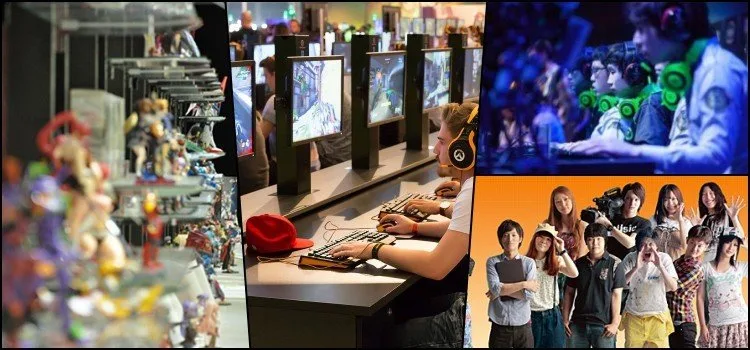
Even professional players come to teach you. In addition to providing training for players, the course also aims to teach how to organize and produce matches and competitions in this field.
Contents 6
A vocational college, not an e-sports high school
This is a senmon gakko (専門学校): a post-high-school vocational college. Students usually arrive after finishing upper secondary school. It is not the same thing as the later wave of e-sports high schools and correspondence programs that mix ordinary subjects with ranked play so teenagers can still earn a high-school diploma. If you want the map of that wider ladder — elementary through university — start with the phases of the Japanese school system.
Confusing the two is the usual trap. A high-school e-sports class can be a way back into school, a club, or a credited elective. The Tokyo course is built as job training: pro player, caster, streamer, manager, event staff. The school still presents itself as Japan’s first vocational college to offer e-sports courses; the track was authorized as a senmon gakko program around 2016, and the majors have been renamed since the first “pro-gamer world” brochure.
What is learned at the gamer school in Japan?
The courses offer practical lessons in various electronic sports title games, such as FPS, RTS, and fighting games, thus training skills to compete in the international arena. Basic business knowledge and the type of marketing used in the industry are also taught.
You will learn how to develop and produce events by organizing and promoting electronic sports, potentially becoming a producer of related events. The courses are not only focused on PC games but also on app games. Some tracks also touch game planning and technical production — debugger, planner, engineer — so the classroom is not only ranked play.
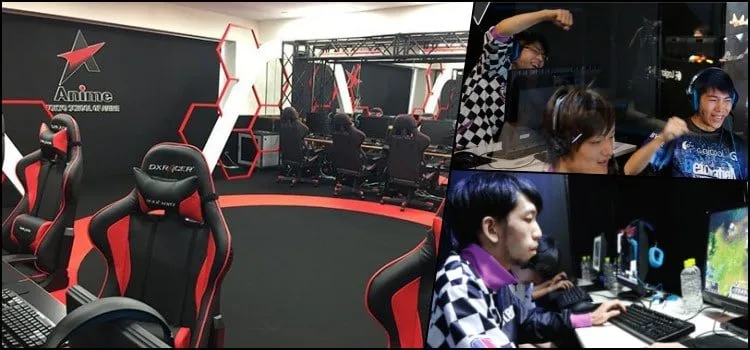
Four majors on the current e-sports track
The official e-sports field now splits into four majors. Names shift over the years; this is the catalog the school publishes now:
- E-sports Management — 4 years. Team building, sponsorship, and how a roster is actually run.
- Professional Gamer — 3 years. Practice, strategy, and the athlete habits the school sells as “e-sports athlete” education.
- Game Commentary & Streamer — 3 years. Casting, voice, and the stream as a job, not a hobby overlay.
- E-sports Event Planning & Management — 3 years. From the rundown to the booth: tournaments, staff, and live production.
Students can add subjects outside their major through the school’s double-major setup, with attendance rules. That matters if someone enters as a player and later wants the event desk more than the server queue.
Classroom work that still looks like a gamer school
See now some courses included in the school:
- Game playing I - Skills and techniques for training professional teams
- English for Gamers - Teaching conversational English skills focused on game terminology
- Communication Skills - In this course, you will work on developing basic social interaction skills, including communicating with other players
- Game Playing Basic - Learn basic knowledge about various famous e-sports games. Things like rules, strategies, and tactics that can work in the international scene
- Self Management - Surviving in the electronic sports arena is tough. This course offers opportunities for greater self-awareness and empowerment
- Business Manner - Learn social manners and mindsets to work in the field of electronic sports
Autonomy and professionalism are essential for evolution towards success. Support is offered to acquire good professional habits in obtaining work and conducting oneself correctly and necessarily in the job. The school's devices are high-performance and are the same ones used in real e-sport competitions. It seems like a dream!
Classes run in Japanese
Lectures are in Japanese. International applicants are expected to show roughly JLPT N2 or N1, or an equivalent score on EJU or BJT, before the entrance writing test and interview. The school also schedules Japanese support classes during the week, but that is support — not an English-medium e-sports degree. If you still need the language first, look at where to take Japanese courses in Japan, then come back to the vocational catalog. Game English in class is terminology for the server, not a bypass of campus Japanese. For typing kana in titles that fight the IME, there is a separate walkthrough on how to type Japanese or Chinese in incompatible games.
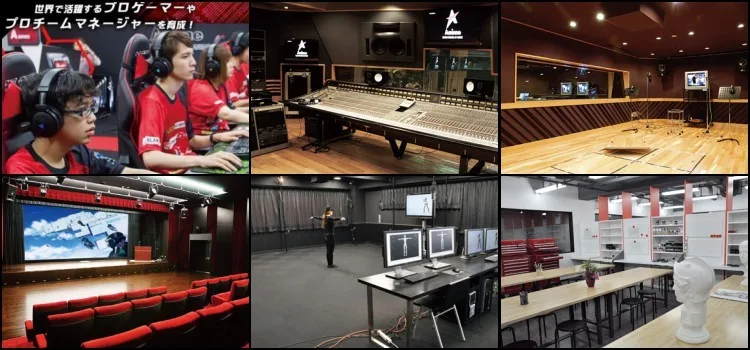
Other courses at the Tokyo School of Anime
Don't like games? The Japanese school Tokyo School of Anime offers courses in the creation and production of animes, 3D and 2D drawings; in the dubbing area the school trains you to become a voice actor for both games and animes; plus sound effects, music, figure modeling, story development and creation, and much more. VTuber and street-culture tracks sit in the same building now, which is why the official name grew longer than “Tokyo School of Anime.”
For more details about the gamer school course in Japan, we recommend visiting the official website: https://www.anime.ac.jp/
Have you thought about working in the e-sports field beyond the player seat — caster, event staff, team desk? The interesting part of this school was never only the APM drills. It was putting that work next to seiyū booths and a motion-capture floor, in a city where how gamers live in Japan still looks different from a Western circuit.




Community
Comments
0 comments
There are no published comments in this language yet.
Send comment