

Science Adventure (Japanese: 科学アドベンチャー, Hepburn: Kagaku Adobenchā) is a series of Visual Novels developed by 5pb. and Nitroplus. The series begins with ChäoS;HEAd, released in 2008. Since then, four more games have joined the main series: Steins;Gate, Robotics;Notes, ChäoS;Child, and Steins;Gate 0. The franchise also includes four spin-off games based on ChäoS;HEAd, Steins;Gate, and ChäoS;Child. Beyond the games, the series has expanded into anime, manga, light novels, drama CDs, and theatrical plays.
All of the Visual Novels in the franchise take place in the same universe and tell their stories in the science fiction genre. ChäoS;HEAd and ChäoS;Child focus on individuals with abilities that can alter reality, while Steins;Gate and its sequel deal with time travel. Throughout each Visual Novel, the reader encounters choices that can change the story's development and even its ending. In ChäoS;HEAd and ChäoS;Child, those choices are tied to the delusions of the main characters, while in Steins;Gate and Robotics;Notes they are triggered through interactions with the protagonist's cellphone or tablet.
Science Adventure was planned by Chiyomaru Shikura, CEO of 5pb., with music by Takeshi Abo and Zizz Studio and writing led by Naotaka Hayashi alongside other writers. Because the series leans heavily on science and science fiction, the developers tried to stay close to real scientific theories. Shikura believed this realism would make the stories more believable. That approach has been well received, both commercially and critically: the games sold more than expected for the genre and helped establish 5pb. as a game developer.
Contents 7
Main Games
The Science Adventure series consists of five main games and four spin-off titles. In Japan, the games are published by 5pb. and Nitroplus; in the West, by JAST USA, PQube, and 5pb.. Of the main line-up, only Steins;Gate and Steins;Gate 0 have received official English releases.
ChäoS;HEAd is the first game in the series. It follows Takumi, a young man who begins experiencing delusions after witnessing a murder. He soon becomes a suspect in a series of killings known as New Generation Madness.
Steins;Gate is the second. It follows Okabe, who accidentally invents a device capable of sending messages to the past, and uses it together with his friends to alter the present.
Robotics;Notes is the third, following Kaito and his high school robotics club as they attempt to build a giant, fully functional robot.
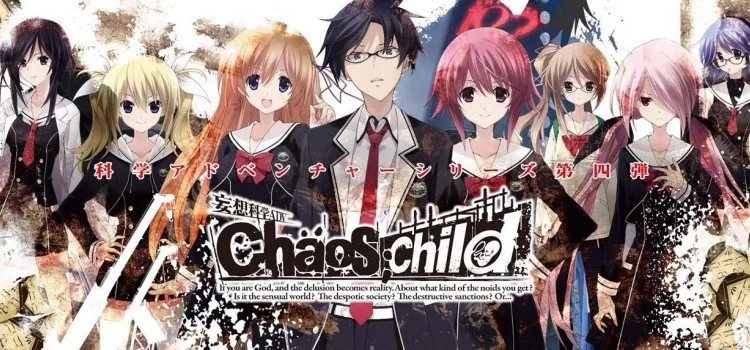
ChäoS;Child is the fourth and a thematic sequel to ChäoS;HEAd. Takuru notices that two recent murders happened on the same dates as the killings in ChäoS;HEAd, and eventually discovers that he and several of his friends are targets of the New-Gen.
Steins;Gate 0 is the fifth and a direct sequel to Steins;Gate, with its story unfolding during the original ending of the first game.

Common Elements
As noted above, Science Adventure is built on the conventions of science fiction: it draws on real concepts and theories while weaving in fictional elements from less rigorous sciences. ChäoS;HEAd and ChäoS;Child explore individuals who can alter reality, touching on perception, the nature of reality, and antimatter. Steins;Gate and Steins;Gate 0 revolve around time travel, searching for an answer to the failure of a machine that was supposed to bend time and space, and along the way they introduce several thought-provoking concepts.
A particularly notable feature of Science Adventure is that all of its entries share a single universe. They are tied together by the Committee of 300, which acts as the recurring antagonist. The Committee is loosely based on a real conspiracy theory and, as cliché as it sounds, seeks world domination. It is always portrayed as an extremely powerful group with total control over corporations, politicians, and religions, and it remains nearly impossible to defeat, even with time travel and superpowers at hand.
Visual Novel Elements
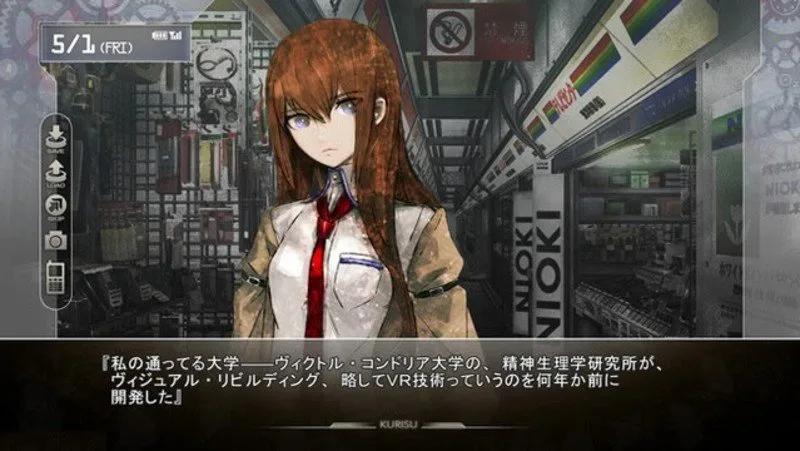
As Visual Novels, the games let players shape the story through choices. In ChäoS;HEAd and ChäoS;Child, those choices are made by selecting the kinds of delusions the characters experience: positive, negative, or none at all, which lets the player consciously stay grounded in reality. In Steins;Gate, the story is steered through Okabe's cellphone. The system works by deciding how to respond to specific messages and phone calls, and by pulling the phone out at key moments. Beyond driving the narrative, the system also reveals more about Okabe Rintarō and how he interacts with the people around him.
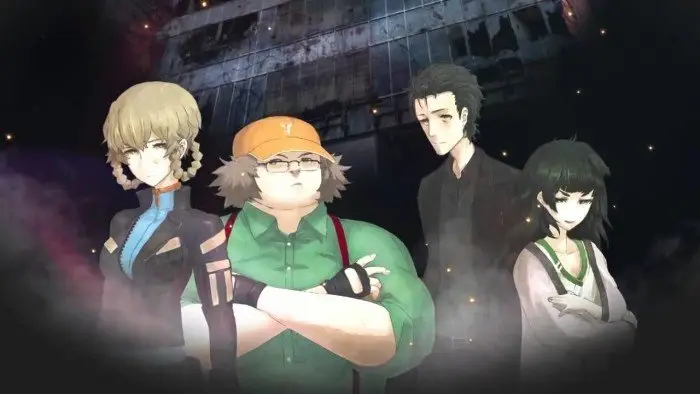
In Steins;Gate 0, this system was simplified: it mostly comes down to answering or ignoring the cellphone at certain points. The core idea is the same as in the original; the player simply has to get used to a more pared-down version.
Robotics;Notes works in a similar way to Steins;Gate, but uses a tablet and its apps in place of the classic flip phone.
Development
The series is developed in partnership between 5pb. and Nitroplus, with Chiyomaru Shikura, CEO of 5pb., serving as the overall planner. He chose to ground the games in realism because he believed it would make the stories more relatable and believable. He has said that he personally struggles to buy into fantasy, and is not convinced audiences can get excited about exaggerated fantasy premises. The Steins;Gate team explicitly aimed for 99% science and 1% fantasy. Shikura has also cited Back to the Future Part II (1989) as a direct influence, pointing to how the film still feels plausible enough that you could believe it might really happen.

The Robotics;Notes team worked with JAXA, the Japan Aerospace Exploration Agency, to add realism to its story. The idea of using a phone as a gameplay mechanic came from Tatsuya Matsuhara of 5pb.. He originally wanted the game to use the player's own cellphone, but dropped the idea over concerns that it could run afoul of Japanese privacy law.
Soundtrack Development
The music across the Novels was composed by Takeshi Abo and Zizz Studio. Abo has noted that, even though all the games belong to the same series, they each carry a different atmosphere. Using weather as a metaphor, he described ChäoS;HEAd as rain, Steins;Gate as overcast skies, Robotics;Notes as clear weather, and ChäoS;Child as a storm. He followed the same composition process for each title: he read the story first to understand the scenarios and characters as deeply as possible, took notes on the emotional flow and the key situations, and then used those impressions to shape the music, paying close attention to the first impression each scene should leave.
This approach was slower than simply assigning tracks to different sections of a game, but in Abo's view it produced higher-quality music that better matched the vision of the Science Adventure world. He was given a lot of creative freedom, and enjoyed making the kind of music he would want to hear himself. Abo also composed the theme song for each main game, and was particularly proud of Gate of Steiner, the theme of Steins;Gate, which he intended to represent the whole game in a single piece.
Reception of the Series
The series was a clear success for 5pb.. The releases of ChäoS;HEAd and Steins;Gate helped establish the studio as a game developer in its own right. In June 2011, Steins;Gate passed the 300,000 (three hundred thousand) copies sold mark, a milestone Shikura described as a real achievement for the genre. A year later, Robotics;Notes was reported to have more than 80,000 (eighty thousand) pre-orders at launch, a significant jump compared with the release of Steins;Gate.
Steins;Gate 0 also performed very well commercially, moving more than 100,000 (one hundred thousand) copies on its first day of release. Combined with the original Steins;Gate, the two titles together surpassed the 1,000,000,000 (one million) copies sold mark! The original version of ChäoS;Child, however, did not manage to enter Media Create's weekly Top 50, selling only around 1,415 copies, a disappointing result compared with the rest of the series.
Across the board, the games received positive reviews, both in Japan and in the West. Many critics praised the story, music, visuals, and the fresh style of gameplay that runs through Science Adventure, although some found certain routes complicated and hard to unlock. A writer for Anime News Network noted that the series delivers well-developed mysteries and creative concepts, but that its conclusions are not always as strong as its setups.
In 2009, Steins;Gate won Famitsu's annual Game of Excellence award. RPGFan included Steins;Gate in a list of 30 games it considered essential for role-playing gameplay between 2010 and 2015, and the game is widely regarded as one of the best Visual Novels on the market. It was also nominated for the Golden Joystick Awards in the best portable/mobile game category in 2015.
Science Adventure in Other Media
In addition to the Visual Novels, the series has expanded into anime adaptations and a wide range of spin-off media, including the audio dramas Alpha, Beta, and Gamma, theatrical plays, light novels, and manga, along with several music albums containing the original soundtracks from the games and additional arrangements. All of the main games in the series have anime adaptations: ChäoS;HEAd (2008), Steins;Gate (2011), Robotics;Notes (2012–2013), ChäoS;Child (2017), and Steins;Gate 0 (2017).





Community
Comments
0 comments
There are no published comments in this language yet.
Send comment